
Wearing the right outfit when horseback riding is crucial. It should fit the body and withstand all weather conditions. And after a long day, staying clean is a bonus. In short, we need to be comfortable while looking stylish.
Riders are athletes at heart. They need clothing that protects them and fits well. Between the helmet, gloves, and vest, safety is paramount. Plus, it can be stylish.
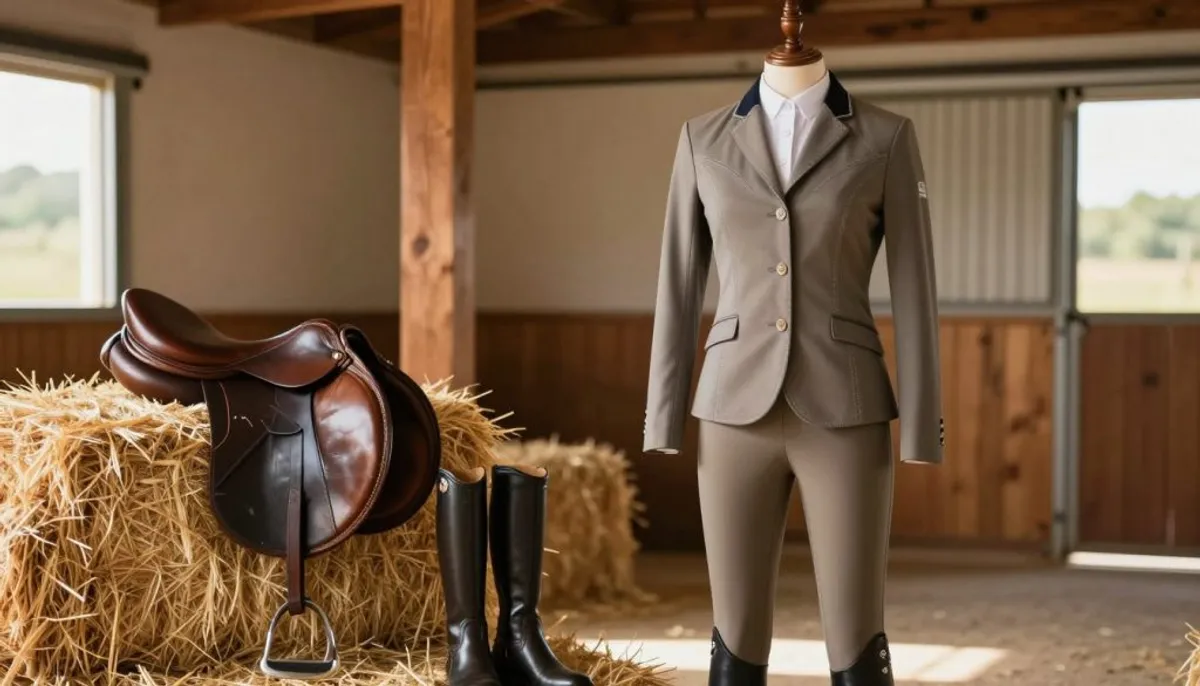
We will explore the essentials of a modern equestrian wardrobe. This ranges from technical pants to tops that allow the skin to breathe. We will also discuss competition outfits, accessories, and eco-friendly choices. Equestrian fashion is improving, and that's great news.
We will also talk about a French luxury option. I will introduce you to La Sellerie Française and their creations from A to Z in France. This highlights the importance of choosing durable items, well beyond the Made in France label.
Key Takeaways
- A modern equestrian outfit must be stylish, comfortable, and safe.
- It is crucial that clothing does not hinder movement in the saddle.
- Protection should be integrated into comfort and not seen as an extra.
- Essentials include gear for training, competition, and all types of weather.
- It is possible to stay chic in equestrian wear with technical and sustainable outfits.
- French expertise is evident in the creation of premium pieces designed to last.
Why an equestrian outfit must combine elegance, comfort, and protection
In horseback riding, it is important to find a good balance. An equestrian outfit is not just about looking good. It helps us ride more effectively and safely. It is essential for moving freely, maintaining balance, breathing easily, and looking polished.
Good riding gear supports our movements and maintains an elegant appearance. With changing weather, intensity, and discipline, it is crucial that our clothing remains functional. From start to finish.
The rider as an athlete: moving freely without sacrificing support
Riding a horse demands a lot from our bodies. Our legs, hips, and hands need to work in harmony. If our clothing is too rigid or not enough, it can be problematic.
Brands like Horse Pilot have revolutionized equestrian equipment. Launched in 2010, Horse Pilot uses designs and materials inspired by outdoor sports. Their slogan Challenge your riding embodies the idea that our outfit should enhance our performance, not limit it.
- Targeted stretch for better flexibility and knee movement
- Breathability to stay cool during exertion
- Support for stable posture without being tight
Safety in the saddle: when equestrian equipment becomes effective protection
Comfort is important, but it is not enough without protection. The equipment must serve as a shield. Let's think about the helmet, gloves, and torso protection. This allows us to ride with confidence.
In the spirit of safety, every detail counts: soft seams, reliable closures, and easy-to-remove clothing. Quality equipment allows us to focus on our riding, especially with an energetic horse.
| Item | Function in action | Point to check |
|---|---|---|
| Helmet | Absorbs shocks and stabilizes the head | Firm fit, no pressure points |
| Gloves | Improve grip and protect against blisters | Flexibility of fingers, no irritating seams |
| Protective vest | Reduces impacts on the torso | Easy shoulder movement, well-ventilated |
| Airbag | Provides additional protection in case of a fall | Must fit well with the jacket, safe deployment |
Equestrian style: a polished aesthetic from the arena to the city
Equestrian style lies in the details. A precise cut, subtle colors, and materials that stay clean make a difference. This allows us to wear our clothes in the city after a session without needing to change.
A good riding garment complements our gear without weighing down our look. Simple and functional pieces give us a coherent style, from the arena to urban life.
equestrian clothing: understanding the essentials of a rider's wardrobe
It is important to have a simple and effective equestrian wardrobe. The pieces should be durable and comfortable. They should also stay clean for a long time, even after several visits to the stable. Finally, the equipment should be practical without making the silhouette bulky.
The essentials for riding all year round
Choose solid basics for all seasons: a technical pant, a breathable top, and a removable warm layer. Brands like Horse Pilot offer suitable clothing that dries quickly. This is ideal after intense effort or light rain. Your equipment should adapt to temperature variations.
- Riding pants: stretch, strong seams, grip suited to your practice.
- Polo or technical t-shirt: breathable, soft under a jacket, easy to care for.
- Thermal layer: thin base layer or fleece, to keep warmth without stiffness.
- Windbreaker: useful outdoors, especially during warm-up or rides.
Differences between training equestrian wear and competition wear
For training, comfort and freedom of movement are key. You can choose thicker clothing and varied colors. For competitions, you must follow specific rules: light-colored pants, white shirt, and dark jacket.
| Key Point | Training | Competition |
|---|---|---|
| Priority | Long-lasting comfort, fluid movements, practical for everyday | Respect for codes, neat outfit, elegant appearance |
| Colors | Free, often dark to better endure the stable | Light for pants, light top, dark jacket in general |
| Materials | Robust, easy to wash, designed for intensive use | More structured, beautiful finishes, neat drape |
| Useful details | Pockets, reinforcements, anti-chafing textiles | Fitted collar, discreet closure, clean lines |
Well matching rider clothing and equestrian accessories for a coherent look
A good outfit boosts your confidence in the saddle. Choose understated clothing and matching accessories. Limit yourself to two or three colors. A black helmet, clean gloves, and boots create an impression of order, even if simple.
Think about style and utility together. Thin gloves offer better rein control. Additionally, fitted mini-chaps prevent uncomfortable folds. Careful coordination between each element makes your equipment more effective and keeps your appearance impeccable.
Equestrian pants: performance, technicality, and elegance every day
An equestrian pant is essential for a good riding outfit. It fits the body perfectly. Moreover, it protects against chafing and stays clean, even after a long session. When chosen well, it makes you look impeccable effortlessly.
It serves for training a horse or simply for strolling around the stables. Fashion in equestrianism is especially shown in these moments. The cuts are fitted, the details subtle, and the finishes impeccable. For practical rider clothing, it is crucial to find the perfect balance between style and functionality.
Comfort and ergonomics: stretchy fabrics and freedom of movement
A good equestrian pant moves with you without restriction. Major brands, like Horse Pilot, use flexible materials. They offer less irritation and a waistband that stays in place. Thus, you feel completely free, like with a second skin.
This piece is often worn, so every detail matters for comfort. Practical pockets, a fitted ankle for boots, and a fabric that wrinkles little. With these elements, comfort is evident from the first time you ride.
Grip and stability: full seat, silicone grip, and support in the saddle
Grip is crucial for leg control, especially on a lively horse. The full seat ensures constant contact, appreciated in all disciplines. The silicone grip adds stability without making the fabric rigid.
The right choice depends on your practice and what you feel. Too much or too little grip can be problematic. Today, equestrian fashion subtly offers these options, but they are decisive for stability.
Heat management: breathable materials and temperature regulation
When exertion increases, the temperature rises, especially in summer or in an indoor arena. Breathable materials and vents reduce humidity. Some products offer thermal regulation, like Tri Factor technology, to stay cool.
In competitions, light-colored pants require special care. They are beautiful but get dirty quickly. Further along, we will provide tips for cleaning and maintaining these garments impeccably, without damaging them.
| Saddle Needs | What to Look For | What It Changes Daily | Equestrian Fashion Tip |
|---|---|---|---|
| Freedom of movement | Stretch fabric, ergonomic cut, anti-chafing seams | Less pulling when mounting, smoother legs | Clean line, sporty and neat silhouette |
| Stability | Full seat or silicone grip depending on the discipline | More stable seat, finer aids, less slipping | Discreet technical details, “pro” look |
| Thermal comfort | Breathable materials, quick drying, temperature regulation | Less damp feeling, prolonged comfort | Current colors and more “premium” fabrics to the touch |
| Maintenance | Durable fabric, color retention, easy washing | Less stress on light pants before an event | Impeccable appearance for longer, even after several washes |
Technical tops: polo, t-shirt, base layer, and competition shirt
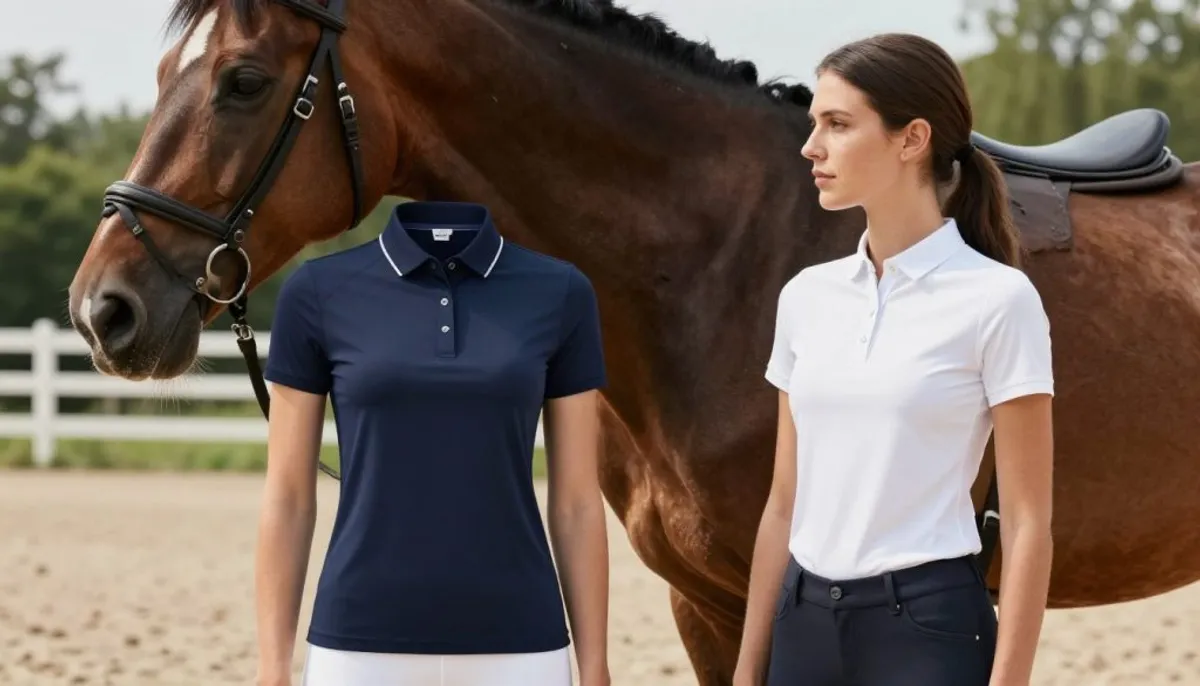
Choosing the right top can make all the difference when riding. It allows for free shoulder movement and helps maintain stability. Additionally, it aids in keeping good contact with the reins. To be well-equipped, consider the cut, fabric, and how to layer these garments.
For training: breathability, quick drying, and long-lasting comfort
When training, you need to choose a polo or t-shirt that breathes and dries quickly. A lightweight and highly flexible fabric follows movements well without hindrance. This is how an equestrian garment makes a difference during a long training session.
If you sweat, ventilation zones and moisture-wicking fabric help you stay dry. You should also avoid clothing with seams that chafe. In France, brands like Decathlon Fouganza, Pikeur, or Cavalleria Toscana are popular for their quality.
For competition: the white shirt, fitted collar, and impeccable appearance under the jacket
In competitions, wearing a white shirt is mandatory for show jumping and dressage. The type of collar is as important as the color, depending on the rules and the jacket worn. A white stock can work as long as the overall look remains white and clean.
A good point is to choose a fabric that stays fresh and dry, even under pressure. A stretchy fabric prevents creasing and the cardboard effect. The goal is to have an impeccable appearance while remaining comfortable.
Adapting layers according to the weather: from indoor arena to outdoors
Indoors, it can be warm while the wind outside changes everything. Starting with a breathable layer, adding a thin thermal layer, then protection if necessary works well. For cross-country, a long-sleeved base layer, sometimes with a zip, is useful for regulating temperature without being too heavy.
You should adjust according to exertion: remove a layer before starting to sweat and choose fabrics that wick moisture. This way, you stay focused, no matter the weather. And with a well-fitted garment, you maintain a great look.
| Type of Top | Key Advantage in the Saddle | When to Favor It | Detail to Check |
|---|---|---|---|
| Technical Polo | Good collar fit, neat look | Flat work, lessons, clinics | Breathable fabric + stretch at the shoulders |
| Technical T-shirt | Freedom of movement, quick drying | Intensive training, summer, long sessions | Sleeves that don’t ride up under the vest |
| Long-sleeved Zip Base Layer | Thermal regulation, light protection | Cool outdoors, cross-country, mid-season | Collar that doesn’t interfere with the airbag |
| White Competition Shirt | Neat appearance under the jacket, codes respected | Show jumping and dressage | Close-fitting collar or high collar, uniform white |
Competition jacket: elegance, rules, and freedom of movement
The jacket defines the silhouette as soon as you enter a competition. It must be clean, comfortable to wear, and match the rest of the outfit, from the pants to the shirt. Choosing your jacket is as crucial as choosing your helmet or boots.
Colors and expectations in competition: the importance of dark tones
In show jumping, dark jackets are preferred. Black and navy blue are popular as they give an elegant look. For dressage as well, elegance is essential, often with a black jacket.
In equestrian shops, the choice of shade is important. A good color remains elegant, even after hours in the sun.
Cut and stretch: staying elegant without feeling restricted in the saddle
You need to be comfortable moving in the saddle, even with a beautiful jacket. Stretch fabrics offer good freedom of movement. The idea is to be close to the body without sacrificing the freedom to move.
Brands like Horse Pilot provide guides for choosing the right jacket. These guides discuss the importance of breathability and ergonomics.
Neat finishes: details that make “high-end” on a paddock
Details make a difference in the look on the paddock. Well-chosen shoulders, lapels, and buttons enhance the whole. Some models even have hidden zippers for a cleaner style.
| Point to Check | What You See Immediately | What It Changes in the Saddle |
|---|---|---|
| Stretch Fabric and Light Lining | Jacket that follows the bust without pulling on the buttons | Free shoulders, better ease in suspension |
| Cut (fitted, straight, length) | Neat silhouette, jacket hem that stays in place | Less discomfort in the saddle, more stable posture |
| Finishes (topstitching, cuffs, collar) | “Clean” appearance up close, uniform look in photos | Less snagging, better durability over time |
| Closure and Buttons | Flat front, understated style, no unnecessary bulk | Less friction, jacket that doesn’t gape |
When choosing your outfit, everything must be coherent: white shirt, understated gloves, and matching jacket. In a good equestrian store, you can try on and ensure everything is comfortable before the competition.
Boots, mini-chaps, and shoes: comfort, support, and style
In the saddle, what’s at the bottom of the leg matters a lot. A good pair stabilizes the ankle. It also slims the leg and enhances contact.
Think about matching shoes, chaps, and socks for comfort. The whole should go well with the rider clothing. This is crucial, especially when going from the stable to the paddock.
Black tall boots: a versatile classic (show jumping, dressage, eventing)
In competition, choosing black tall boots is common. They are expected in show jumping and popular in cross-country. They provide a neat look and match easily.
Quality material is felt in the touch, like with the Ravello boot. Italian calf leather is prized for its suppleness. These details make a difference, even with a simple outfit.
Paddock boots + mini-chaps option: comfort and the illusion of “tall boots”
The combination of paddock boots and mini-chaps is ideal for training. It resembles tall boots but is easier to put on. Comfort is often superior during long sessions.
This option is also economical: you change one piece at a time. It is useful for durable and elegant equipment.
- To prioritize if you walk a lot, between boxes and arena
- To check: sturdy closure, soft inner seam, good fit at the calf
- To adjust: mini-chaps close to the calf, without folds behind the knee
Dressage specifics: stiffer boots for an elegant line
Dressage requires a long and stable leg. The boots are usually straight and stiff. This helps maintain a beautiful line and provides technical support.
A guide on choosing riding boots can help. It details how to choose for size, calf, and more. It’s an important purchase that should be well thought out.
| Option | Strengths | To Watch For | Ideal For |
|---|---|---|---|
| Black leather tall boots | Neat line, calf support, competition look | Breaking in, leather maintenance, precise sizing | Show jumping, dressage, eventing, cross (solid black) |
| Paddock boots + mini-chaps | Comfort on foot, good support, easy maintenance | Chaps that turn, fragile zipper, friction | Training, clinics, long days |
| Stiff dressage boots | Stable leg, straight aesthetic, clean contact | Stiffness at first, calf adjustment | Dressage and neat presentations |
Choose a coherent set: fine socks and clean seat. Discreet finishes are important. Good equipment makes the rider clothing more elegant.
Helmet and gloves: the foundation of equestrian accessories for riding with confidence
When in the saddle, style matters, but not as much as safety. A well-fitted helmet and gloves that fit well make riding safer. These are habits to adopt, whether for training or competitions.
When the equipment is well chosen, everything works better. And with fashionable equipment, you stand out even in the paddock.
Helmet: safety and style (classic black or more personalized depending on disciplines)
For show jumping, the helmet color can vary. Most riders opt for black. It’s chic and matches everything, even a special jacket.
In dressage, black is the norm unless stated otherwise. The goal is to have a clean look, often coordinated with the competition jacket. This gives a sober and elegant style.
Hair and fit: comfort, stability, and aesthetics
A good helmet should not hurt or move. Hair should be secured under the helmet for more safety. This also gives a neater appearance.
Making a low bun or using a hairnet can help. This makes wearing the helmet more comfortable, especially if riding for a long time. It’s a small detail that matters a lot.
Gloves: competition finish and rein control
During competitions, elegant gloves are necessary. Choosing light colors, such as beige or white, is a good idea. They complete the look without dominating.
Gloves also improve rein control. Thanks to them, the rider can guide their horse more finely. They combine fashion and safety.
| Item | Use in Show Jumping | Use in Dressage | Key Point to Check |
|---|---|---|---|
| Classic black helmet | Common choice, easy to match | Often required, very codified look | Adjustment of the chin strap and stability while walking |
| Personalized helmet (finishes, details) | Accepted depending on events, more free style | Rarer, to be validated according to the rules and spirit of the outfit | Good ventilation and absence of hard points |
| Hair under the helmet | Low bun or hairnet to avoid movement | Hair gathered, very clean look in the arena | No thickness that tips the helmet |
| Light gloves (beige, light brown, white) | Appreciated for a neat silhouette in the ring | Very common for a polished presentation | Grip, finger finesse, and non-irritating seams |
Rider protection: vest and airbag, the equestrian equipment that changes everything
When riding a horse, you are always in motion; you must be resilient and reactive. Safety is as important as physical training itself. Good equipment is not just for looks: it boosts confidence, especially in intense moments.
Why protection is essential: “riders are athletes”
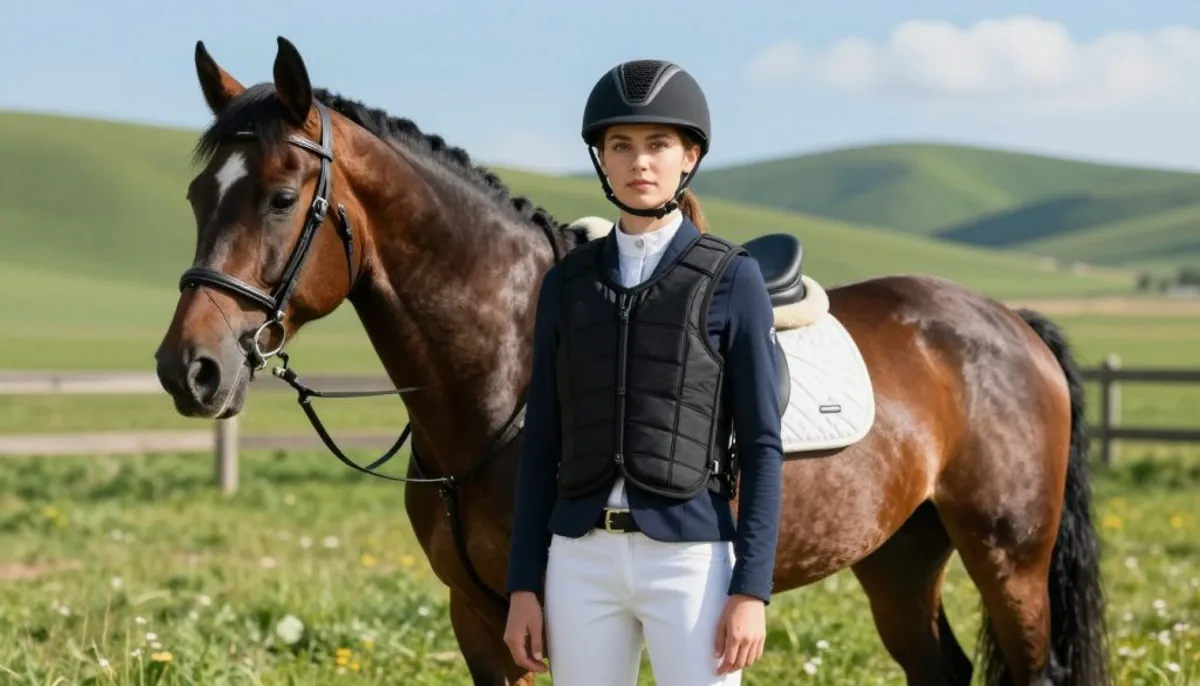
A rider is a true athlete. They must master their balance, stay tight and coordinated, sometimes in a second. That’s why protective equipment must be chosen carefully, just like any sports gear. It must fit well and not hinder.
Before making a purchase, check three things: the size must be right, shoulders free, and it should match the jacket or parka. This gear should accompany your movements without limiting them.
Cross-country: mandatory protective vest and certification requirements
The protective vest is a must in cross-country. For competitions, BETA certification is often required. It’s a good indicator for choosing a model suited to the expected impact.
For the terrain, think about the ideal vest: not too rigid to avoid fatigue, but sturdy enough to reassure. Finding the right balance between comfort, support, and ventilation is essential for all equipment designed for effort.
| Point to Check | Protective Vest (cross) | Equestrian Airbag |
|---|---|---|
| Main Purpose | Absorb shocks and protect the torso | Deploy in case of a fall to cover key areas |
| Typical Use | Cross-country, intense training | Flat, jumping, outdoors, depending on the model |
| Compliance Marker | BETA certification according to competition requirements | Check the standard indicated by the brand and required maintenance |
| Long-term Comfort | Stable, but may hold more warmth | Often light to wear, volume upon deployment |
| Size Choice | Must stay in place at the trot and in suspension | Must be adjusted to deploy correctly |
Equestrian airbag: understanding the benefits of autonomous and cable-free models
The rider airbag is popular for a good reason: it protects without weighing you down. New models are cable-free and autonomous. They offer freedom of movement without being attached to the horse, which is highly appreciated.
This equipment requires a bit of attention: check its condition, recharge according to instructions, and ensure it fits well. A detailed guide can help understand how to use it correctly, so you can integrate it into your practice without stress.
Competition attire according to discipline: show jumping, cross-country, dressage
In competitions, equestrian attire changes depending on the sport. You must be clean, comfortable, and ready to excel. Choosing the right clothing helps you move freely. Equestrian equipment ensures safety and precision.
Following a few simple rules prevents mistakes in the arena. It also helps select garments that are breathable, durable, and chic, even under pressure.
| Discipline | Dress Codes | Technical Points to Aim For | Equestrian Equipment Priorities |
|---|---|---|---|
| Show Jumping | Light pants (often white), white shirt, dark competition jacket, black tall boots | Compression fabric, temperature regulation, silicone grip for stability | Certified helmet, gloves for contact, equestrian outfit clean and fitted |
| Cross-country | More relaxed look, long-sleeved top, often light pants, boots + mini-chaps possible | Breathable layers, quick drying, shoulder freedom for long effort | BETA certified protective vest mandatory, helmet (color free), equestrian clothing designed for endurance |
| Dressage | White pants, white competition collar shirt, frequent white tie, black jacket, helmet often black | Very neat cut, discreet stretch fabrics, clean finishes under the jacket | Stiffer dressage boots, elegant gloves, equestrian equipment understated and neat |
Show Jumping: this is a competition where you must jump bars within a limited time. If you touch the obstacles, you receive penalties. The general rule is to wear light pants, with white being the safest.
Compression fabrics are recommended for their support and temperature regulation. Silicone at the bottom of the pants greatly helps with stability near obstacles.
A white shirt is necessary, with either a crew neck or high collar. Under the black or navy jacket, you can wear a white stock, as long as it remains neat under the jacket. Black tall boots complete the outfit.
Cross-country: it is a long event that takes place outdoors. The effort is continuous. The outfit can be less formal but must be durable and light.
A long-sleeved top protects and helps regulate temperature. Wearing light pants is common, and the choice of boots and mini-chaps is practical. Protective equipment like the BETA vest is essential, and the helmet can be any color. Choose clothing made for endurance, that breathes and dries quickly.
Dressage: this discipline focuses on precision and fluidity of movements. The appearance is strict, with white pants and a competition collar shirt.
A white tie can be added for a more polished effect under a black jacket. Dressage boots support the leg. A black helmet and elegant gloves complete this stylish outfit without distracting the jury.
Responsible equestrian fashion: sustainability, repairability, and labels
Equestrian fashion is changing. We seek clothes that last, without sacrificing quality. For us riders, this is as important as style and comfort. A good equestrian garment must withstand training, washing, and daily surprises.
We think differently when purchasing equestrian equipment. We check the fabric, seams, and whether it is easy to maintain or repair. Style still matters, but in a more mature way.
Towards more sustainable equestrian equipment: materials and design
Durable equipment starts with solid and breathable materials. Brands like Horse Pilot innovate with responsible fabrics that are easy to repair. The goal? Maintain performance while reducing wear.
Sustainability is also in the small details. Sturdy zippers, reinforcements, clean seams: they prevent clothes from ending up in the closet too quickly. Especially when training often.
B Corp™ label: what it implies (audit, reevaluation, social and environmental impact)
The B Corp™ label is serious: obtained after a precise audit. More than just a logo, it evaluates the company on social and environmental impact. Reevaluation occurs every three years to stay on the right path.
More than 8,000 organizations are part of this movement. For riders, it is a benchmark for choosing. You can find technical and responsible equipment. This includes working conditions, transparency, and real impact.
Repair rather than replace: the importance of a repair service for your clothing
Small damages can happen, even on the best garments. A repair service can change everything. It extends the life of your clothes by avoiding replacements. Some brands even promise: “We repair your garment for free to get you back in the saddle.”
When buying online, the conditions matter too. In France, we appreciate practical offers: free returns and exchanges within 14 days, free delivery in 48 hours for orders over €250. These details reassure when investing in a sustainable style and equipment.
| Responsible Lever | What It Changes for the Rider | Points to Check Before Purchase |
|---|---|---|
| Materials and Construction | Better wash retention, stable comfort, less wear at the inseam and elbows | Reinforcements, seam quality, breathability, abrasion resistance |
| Repairability | Keep the same equestrian clothing longer, even after a snag | Access to a workshop, replaceable parts (zip), conditions for a free repair service |
| B Corp™ Label | Benchmark for social and environmental commitment, without sacrificing technicality | Independent audit, reevaluation every three years, consistency of commitments |
| E-commerce Services | Easier purchase, less stress about size and fitting | Free returns/exchanges within 14 days, 48-hour delivery, free shipping over €250 (mainland France) |
La Sellerie Française: high-end equestrian shop, made in France
La Sellerie Française is perfect for riders looking for elegance and quality. You will find well-cut clothing, fabrics suited for movement. And neat finishes, useful in the paddock as well as daily.
Unique pieces, custom or limited series
When equipment fits perfectly, everything becomes easier: moving, breathing, staying in position. La Sellerie Française offers unique items, custom-made, and limited editions. This allows for distinction and increased comfort.
For a harmonious set, consider its use: training, competition, or outdoor sessions. Choosing the right equipment means opting for quality, not quantity. This includes practical details, durable seams, and lasting finishes.
Manufacturing from A to Z in France: beyond the Made in France label
The key concept here is fully French manufacturing, which goes beyond the Made in France label. Every production step influences quality, durability, and consistency of sizes.
For the rider, this means more reliable equestrian gear: uniform sensations, quality materials, and precise finishes. It also brings peace of mind for those seeking uncompromising excellence.
How to choose your equestrian gear and premium clothing on https://laselleriefrancaise.com
To choose well, start by identifying your discipline, then the season. For show jumping, prioritize flexibility and grip. In dressage, look for clean lines and flawless fabrics. For cross-country, freedom of movement is paramount, as well as compatibility with protections.
- Cut: fitted but comfortable, especially at the shoulders and waist.
- Materials: lightweight, flexible, and easy to clean.
- Compatibility: space for a safety vest or airbag, while maintaining good posture.
- Harmony: helmet, gloves, boots, for a complete look in competition.
In practice, navigate the site to create a complete outfit combining elegance and comfort. A well-designed shop effectively combines clothing, equestrian gear, and equipment, without unnecessary purchases.
| Rider Profile | Premium Clothing Priority | Point of Vigilance | Reference for equestrian gear and equipment |
|---|---|---|---|
| Show Jumping (training) | Stretchability, grip, lasting comfort | Avoid cumbersome thickness at the knees and lower legs | Clothing suited for protections, grippy gloves |
| Dressage (competition) | Sleek style, impeccable fabrics | Jackets and shirts that don’t wrinkle | Visual harmony: neutral colors, discreet finishes |
| Cross (outdoors) | Free movement, effective temperature management | No discomfort with layering | Compatibility with vest/airbag, easily adjustable accessories |
| Mixed Practice (all year round) | Versatility, durability, ease of maintenance | Consistency in sizes to vary combinations | Establish a solid base, complete according to needs |
Conclusion
An equestrian outfit combines elegance, comfort, technique, and protection. The rider must move easily and remain precise. Modern clothing is designed to follow the body's movement without hindrance.
For good performance, details matter a lot. A good outfit includes stretch fabrics, comfortable seams, silicone grip, and is breathable. This helps stay cool. In competition, you need to wear light pants, a white shirt, a dark jacket, black boots, and often a black helmet.
Protection is essential, not just an extra. In cross-country, a BETA-approved vest is necessary. An equestrian airbag that works without a cable offers more freedom. You also need a helmet, gloves for better rein grip, and stabilizing shoes.
Choosing your equestrian clothing can be eco-responsible. Opt for durable and repairable pieces. Look for the B Corp™ label, supported by over 8,000 organizations. La Sellerie Française offers quality equipment made from A to Z in France.
FAQ
Why do we say that riders are athletes, and that equestrian clothing must follow?
Horseback riding requires great agility, precision, and endurance. A good outfit must therefore be both elegant, comfortable, and safe. It includes stretchy materials, a cut that fits the body, and good support.
What are the essentials of an equestrian wardrobe for riding all year round?
You need technical pants, breathable tops, a layer for cold or rain, and safe accessories (helmet, gloves, shoes). This way, you will be ready for all seasons.
What is the difference between training equestrian clothing and competition clothing?
In training, seek comfort and functionality. For competitions, you must adhere to standards: white pants, compliant shirt, dark jacket, and more refined equipment.
How to match rider clothing and equestrian accessories for a coherent look, “in the saddle and in the city”?
The secret lies in the harmony of shapes, colors, and finishes. Your outfit should align pants, top, jacket, and accessories. This keeps you elegant, practical, and credible everywhere.
Why is the equestrian pant the pivotal piece of equestrian equipment?
It influences your comfort and stability in the saddle. The best pants combine performance, comfort, and style, with a cut that follows your movements.
Full seat or silicone grip: what to choose for grip?
Full seat and silicone aim for better stability and precision. Silicone, in particular, ensures strong grip, useful in any situation, while being modern.
How does thermal regulation help in competitions, especially under pressure?
Advanced fabrics keep your body cool and dry, even under exertion. Some pants incorporate compression fabric and silicone to support and reduce fatigue.
How to detach a white equestrian pant without damaging it?
Act quickly: remove excess, rinse with cold water, then use a gentle stain remover designed for technical textiles. Follow washing instructions and prefer natural drying.
Which technical tops to favor during training (polo, t-shirt, base layer)?
Opt for breathable, quick-drying garments that stay in place and avoid irritation. This follows the logic of outdoor sports.
What are the rules for competition shirts in show jumping and dressage?
A white shirt is required, with a fitted collar. Sometimes, a white stock may be accepted. Choose a very supple fabric to facilitate movement.
How to dress for cross-country to manage weather and endurance?
For cross-country, wear a long-sleeved top to regulate temperature. Layer according to the weather without sacrificing mobility.
Which competition jacket to choose to respect codes and stay comfortable?
Choose a dark jacket, stretchy to move freely and maintain a neat appearance. The cut should be fitted and stable in motion.
What details give a “premium” look on a paddock?
Focus on a precise cut, discreet finishes, like hidden zippers. Everything should match your basic outfit and remain impeccable.
Black tall boots or paddock boots + mini-chaps: what to prioritize in competition?
Black boots are a flexible must-have. Alternatively, paddock boots and mini-chaps can mimic the look while offering comfort and support.
Which boots to choose for dressage?
For dressage, prefer stiff and elegant boots, often made of quality leather. They ensure an impeccable presentation and support the position.
Helmet: does it have to be a black model in competition?
In show jumping, the color is free, but black is common for elegance. In dressage, a black helmet often harmonizes with the outfit.
Why is it important to secure hair under the helmet?
This improves safety and comfort. Well-arranged hair ensures better helmet stability and a neat appearance.
Are gloves mandatory in competition, and which ones to choose?
They complete the look and help with rein management. Choose them in light colors and well-fitted for good contact.
Why has rider protection become a standard in equestrian equipment?
Equipment protects and supports the rider, considered an athlete. Helmet, gloves, vest, and airbag contribute to optimal safety.
In cross-country, is the protective vest mandatory?
Yes, it is essential and must be certified, with BETA being a frequent benchmark.
Equestrian airbag: what is the benefit of an autonomous and cable-free model?
It offers more mobility and facilitates use. Ideal for intensive training and competitions, for effective protection without hindrance.
What are the dress codes in show jumping?
The classic look includes white pants, a white shirt, a dark jacket, and black boots. The outfit can also incorporate technologies for performance.
What competition outfit in dressage for a refined look?
Favor white pants, a competition collar shirt, a white tie, a black jacket, and dressage boots. A black helmet and elegant gloves will add to the elegance.
Why is Horse Pilot often cited as a performance reference in equestrian equipment?
Since 2010, Horse Pilot has innovated by drawing inspiration from outdoor sports for its clothing. “Challenge your riding” is their motto, offering outfits suited for all situations.
What is the B Corp™ label and why does it matter in responsible equestrian fashion?
B Corp™ validates companies after a demanding audit. It symbolizes a commitment to reduced environmental impact, durable products, and workplace ethics.
Repairability: what is the benefit of a repair service for equestrian clothing?
Repairing your clothes extends their durability and respects the environment. Some even offer this service for free, helping you stay active.
What standards to expect from a premium online equestrian shop (delivery, returns)?
Customers want easy returns and exchanges, with fast delivery. This shows a trustworthy service for purchasing the necessary equipment.
Why does La Sellerie Française stand out in premium equestrian fashion?
It offers luxury products made by renowned artisans. Everything is produced in France, ensuring exceptional quality from design to sale.
How to choose your equestrian gear and premium outfit at La Sellerie Française?
Consider your discipline, level, and the season. Then, choose based on cut, materials, protection, and harmony with helmet, gloves, and boots. Visit https://laselleriefrancaise.com for a premium range.