
The French trotter is at the heart of horse racing in France. It is the result of a demanding selection process and a unique breeding culture. This guide explores its origins, its sports management, and its competition strategies.
Every year, Dr. Aude Lhérété tells us that 10,000 foals are born, mainly in Normandy. Their breed comes from a mix of several, notably Anglo-Normands and Thoroughbreds. This mix creates a high-performing, resilient athlete that is easy to train.
We will examine the various French competitions, from Group I to III and the Listed races. We will also look at categories A to G and the concept of distance penalties. Focus on Vincennes and the famous Prix d'Amérique. We will also discuss how to read the races, shoeing, distance reduction, starts, and managing earnings.
To delve deeper into the subject, we provide tips for buying and engaging a horse. You will also learn how to analyze races. Tools like Equidia, Paris-Turf, Zone-Turf, and LeTrot can assist you. The idea is to make good decisions based on your passion.

Key Points
- A racehorse selected by qualification, a cornerstone of horse racing in France.
- About 10,000 annual births, historic breeding in Normandy.
- Structured stud-book, foundational contributions, and measured American influence.
- Clear hierarchy of events, with distance penalties and categories by earnings.
- Decisive parameters: shoeing, distance reduction, autostart/standing starts.
- Prix d’Amérique at Vincennes: the pinnacle of trotter competition.
- Pro sources: Equidia, Paris-Turf, Zone-Turf, LeTrot for real-time information.
Origins, Selection, and Characteristics of the French Trotter
The French trotter is famous on the racetracks. Its quality is due to strict selection and the expertise of breeders. Its origins, a mix of breeds, give it speed, endurance, and the ability to maintain a fast trot.
Anglo-Norman Roots and Contributions from Norfolk, Orlov, and Thoroughbred
The French trotter has diverse origins. It inherits its cadence from the Norfolk Trotter, its sturdiness from the Russian Orlov, and its energy from the English Thoroughbred. These characteristics make it a fast, enduring horse suitable for various terrains.
Birth of the Breed, Stud-Book, and Historical Breeding Leaders
The official creation of the breed began in 1864. The stud-book opened in 1922. The names Conquérant, Lavater, Normand, Niger, and Phaéton remain famous. Their genetic legacy still marks today's breeding.
American Contributions and Current Closure of the Stud-Book
Two major American influences have shaped the breed. They made the horse more agile and precocious. Today, the stud-book is closed to foreign contributions, which strengthens the breed’s purity.
Conformation, Coats, Size, and Character Qualities
The French trotter varies in shape depending on its use. It typically measures between 1.60 and 1.70 m. It is known for being courageous, resilient, and honest.
Entry Criteria into the Breed and Qualification Tests by Age
A horse must prove its ability over 2,000 m to be recognized. Only 40% succeed; the others do not compete. This demonstrates the rigor of the selection process.
| Age | Period | Driven (distance reduction) | Ridden (distance reduction) | Sporting Objective |
|---|---|---|---|---|
| 2 years | May–October / November–December | 1’22” / 1’21”5 | 1’23” / 1’22”5 | Validate precocity and correctness of the trot |
| 3 years | Jan–Mar / Apr–Jun / Jul–Dec | 1’21” / 1’20”5 / 1’20” | 1’22” / 1’21”5 / 1’21” | Confirm stamina and maneuverability |
| 4 years | Jan–Sept / Oct–Dec | 1’19” / 1’18”5 | 1’20” / 1’19”5 | Stabilize racing speed |
| 5 years and + | Whole year | 1’18” | 1’19” | Access higher categories |
Practical reference: these criteria help define the training program and the competitions to choose.
Breeding and Management of a Trotter Stable: From Normandy to the Racetracks
The French trotter, from the Norman countryside to Vincennes, requires perfect preparation. Its breeding takes place on rich lands, under a mild climate, with a solid network of trainers. These elements ensure the horse's success, from birth to racing.
Objective: to create a calm champion ready for travel. The success of a trotter stable relies on good organization, suitable equipment, and careful observation.
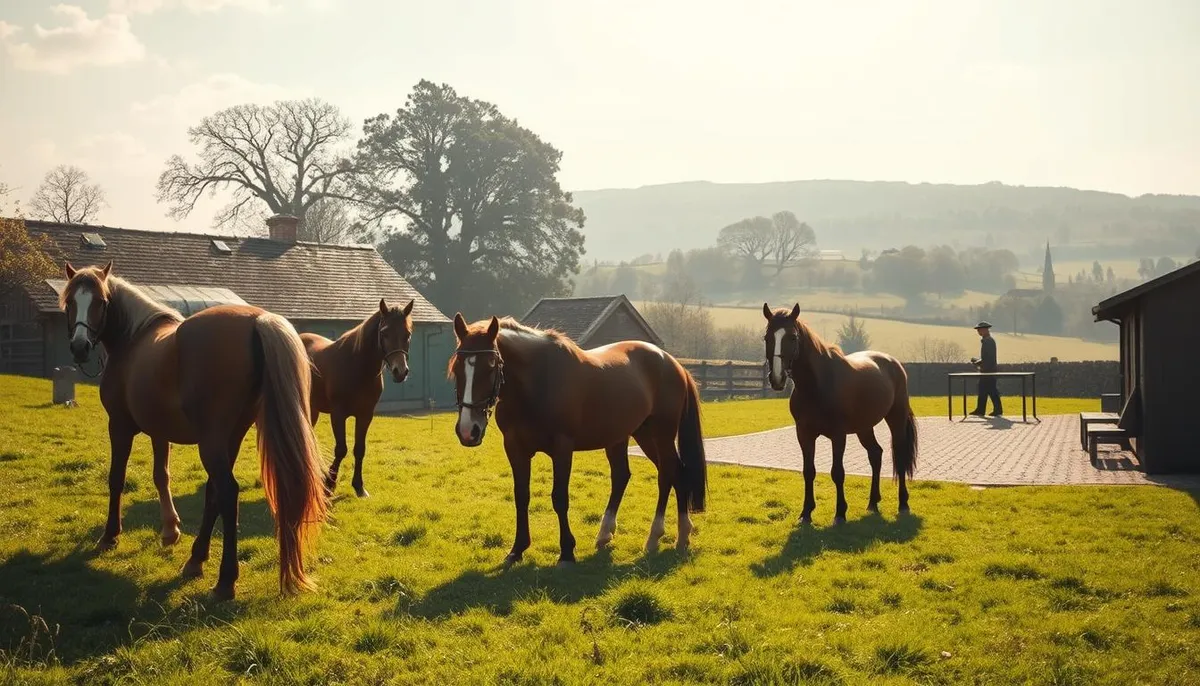
Cradle of Trotter Breeding and Annual Birth Dynamics
Normandy is at the center of French trotter breeding, with about 10,000 births each year. This concentration fosters an ideal environment: fertile pastures, complete facilities, and experts at hand.
Grosbois is an example where training and knowledge sharing are intensified. Breeders, drivers, and jockeys exchange information on performance and animal welfare.
Organization of a Trotter Stable: Care, Paddocks, Trotting, and Travel
The routine includes care, paddock time, and exercises to maintain good physical and mental health. Horses rest and eat in their stalls to avoid boredom and stress.
Before races, specific exercises help evaluate the horses. Travel to the races includes breaks for hydration and monitoring the horses.
High-Quality Equipment: Harnesses, Tack, and Suitable Gear
Quality equipment contributes to success. Sulkys, harnesses, and specific protections for trotting are essential for safety and performance.
The choice of shoes is strategic and can change just before a race. This decision is often communicated by specialized media.
The French Saddle: Made in France, Unique, and Custom-Made Products
The French Saddle produces luxury equipment in France, available in limited series or custom-made. Their artisanal quality and traceability ensure a response tailored to the demands of a trotting stable.
The quality of finishes, materials, and assembly ensures the effectiveness and longevity of equipment in demanding training conditions.
- Pre-heat material check: harness, adjustments, protections
- Observation plan with binoculars and video to validate canters
- Coordination between farrier and trainer on shoeing strategy
Thanks to the expertise of Normandy, precise planning, and quality tools, trotter breeding prepares champions ready to excel and travel under the best conditions.
French Trotter in Competition: Training, Horse Racing, and Event Hierarchy
The racetracks of Vincennes, Caen, and Laval see trotter competition as a precise art. Training varies each week to meet goals while respecting the horse's condition. To succeed in races, one must understand the times, know how to start, and be familiar with the different categories.
Before the presentation circle, every detail counts. Teams ensure everything is perfect, from equipment to the horse's flexibility. They develop their strategy based on winnings, type of start, and race distance.
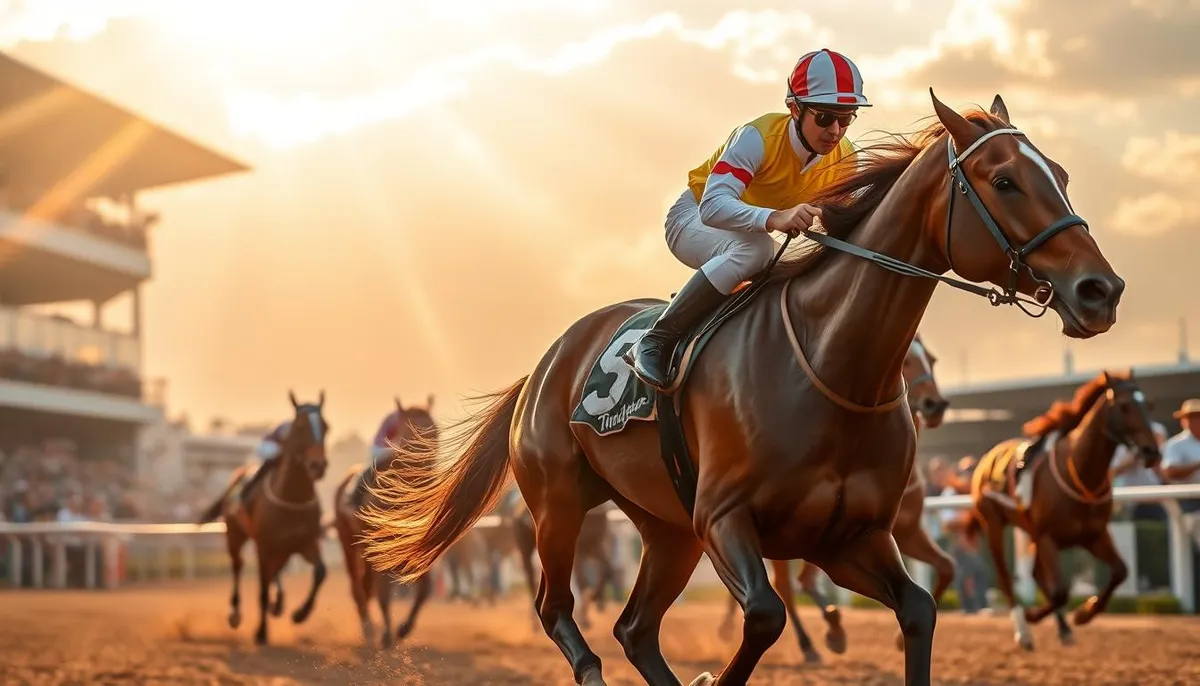
Trotter Training: Preparation, Heats, Canters, and Observation
Warm-up occurs in two stages: a slow first lap followed by a faster one, shortly before the race. This helps assess speed, readiness, and the horse's mental state, essential for trotting competitions.
Between races, training combines paddock rest, trotting, and specific exercises, sometimes even at the beach. Using videos and binoculars, one can observe the horse's movements and identify minor issues before they impact performance.
Disciplines of Driven and Ridden Trot: Times, Autostart, and Standing Starts
The ridden trot has recently reached speeds comparable to those of the driven trot, creating new opportunities for betting. Performances are always measured considering the context: distance, pace, and competition.
With an autostart, performances improve on average by at least one second compared to a standing start. This detail often makes a difference on large tracks, crucial for succeeding in horse racing.
Hierarchy of Trot Races: Groups, Listed, Categories A to G, and Distance Penalties
Trot competitions are organized in a pyramid, from the highest level (Groups I/II/III) to races in categories A to G, ranked by the horses' earnings. The rules of distance penalties, of 25 m or sometimes 50 m, help balance the chances between horses.
A horse's progression is visible through its earnings and category. Participating at the right level can completely change the chances of a horse used to competitions.
Prix d’Amérique and Major Targets: Access Criteria, Earnings, and Schedule
The grand Prix d’Amérique, held at the Paris-Vincennes racetrack at the end of January, is open to horses aged 4 to 10 years, except for geldings, based on a minimum earnings threshold. The Prix de Cornulier rewards the best in the ridden trot.
The Critérium des Jeunes defines the leaders among 3-year-olds. Group II/III and Listed competitions are important milestones, awarded based on performances and earnings, crucial in trotting competitions.
Key Performance Parameters: Shoeing, Distance Reduction, and Earnings Management
Removing shoes can improve a horse's performance by one second per kilometer, a tactic sometimes announced late. It is essential to look beyond the “best time” by also considering distance and start mode.
Making up 25 m requires going faster by about 0.8 s/km over 2,175 m and 0.7 s/km over 2,700 m. A horse with a “earnings deficit” can thus face easier opponents with a better starting position.
| Parameter | Typical Impact | Optimal Context | Practical Reading |
|---|---|---|---|
| Shoeing | Gain of about 1 s/km | Fast tracks, good morale | Compare performance shod vs barefoot over the same distance |
| Autostart vs Standing Start | Autostart faster ≈ ≥1 s | Long straight lines, launched start | Weigh times by start mode |
| Distance Penalty 25 m | −0.8 s/km (2,175 m) | −0.7 s/km (2,700 m) | Tough horse, proven stamina | Estimate the real margin against the first post |
| Earnings Management | More favorable engagements | Horse with “earnings deficit” | Choose the letter and distance aligned with the profile |
| Distance Reduction | Central indicator of form | Comparison against opposition and courses | Never isolate the best time out of context |
Market, Sales, and Buying Advice: French Trotters for Sale and Competition Strategies
The trotter market is dynamic, influenced by the racing world. Finding a French trotter requires a good method, calmness, and precise criteria. It is essential to associate this purchase with a well-defined competition strategy.
Trotter Sale: Origins, Precocity, Stamina, Character, and Pedigree Reading
The origins of a trotter are decisive when buying. Names like Conquérant and Lavater symbolize endurance and seriousness. The American influence brings speed and precocity, important for early competitions.
It is crucial to analyze the mother and her lineage. Certain traits are inherited. Also, look at the quality of the trot, flexibility, and the horse's attitude. A good character is a major asset.
Tip: A good mix of pedigree, precocity, and endurance, combined with a realistic plan, ensures a good investment.
Analyzing Performances and Lines: Contextualized Times and Target Engagements
Direct and indirect lines help understand the strengths at play. This allows establishing a hierarchy for future competitions.
Always contextualize the times. Racing conditions influence performances. Warm-ups provide clues about the horse's condition.
Future engagements reveal much about the owners' intentions. This helps avoid overpaying during a purchase and prepares the horse well.
Trotter Competition and Categories: Moving Up or Down Levels Based on Earnings
Races are classified from A to G, based on earnings. Finding a lower level can be advantageous for a horse “with an earnings deficit.”
Understanding the rules of racing helps with planning. This allows maximizing the horse's form while preserving it.
Choosing the right time to buy a trotter can determine success in competitions.
Mutual Betting and Reading Odds: ALR/PLR, “Earnings Deficit,” and Real-Time Information
Mutual betting distributes bets among winners. Odds vary greatly, offering opportunities to seize.
Be attentive to last-minute information and observe the ridden races. They can be very instructive.
Comparing pedigree, the horse's visual condition, and the odds helps identify the best opportunities.
| Key Criterion | Practical Indicator | Impact on Purchase | Impact in Race | Pro Sources to Consult |
|---|---|---|---|---|
| Origins & Maternal Lineage | Breeding leaders, consistency of lineage | Enhances a coherent French trotter for sale | Stamina, regularity in times | Le Cheval Français, stud-book |
| Gaits & Character | Purity of movement, calmness in heats | Reduces risk in trotter sales | Fewer faults, better starts | Equidia videos, track observations |
| Contextualized Times | Autostart vs standing start, distance, pace | Purchase price aligned with real level | Choice of relevant engagements | Paris-Turf, video archives |
| Categories & Earnings | Ceiling, distance penalties, “earnings deficit” | Readable progression strategy | Successive favorable engagements | SECF bulletins, official programs |
| Odds & Shoeing | ALR/PLR, shoeing decisions | Adjusts final investment | Fine reading of horse racing | Zone-Turf, Equidia live |
Conclusion
The French trotter has a rich history. It comes from rigorous breeding combining several origins. Selection has created a sustainable and high-performing racehorse.
American contributions were significant before closing the stud-book. The qualification of young horses sets a high standard of quality.
The daily life of these horses, from Normandy to training centers, is crucial. Access to paddocks and careful training support their longevity.
Appropriate training is essential. It takes into account the horse's physical condition, mental state, and recovery. The French Saddle offers high-quality equipment, made in France.
At the racetracks, the hierarchy of races dictates the strategy of participants. The different categories guide players' decisions.
Details like the choice of shoeing affect time per kilometer. Understanding the earnings system helps better plan participations.
Success with a French trotter relies on three pillars: good genetics, effective management, and intelligent racing strategy. Analyzing race data is essential to maximize each horse's potential. It is the key to successful and sustainable training.
FAQ
What is a French trotter and how does it differ from other racehorses?
The French trotter is designed for speed and endurance. It can race driven or ridden. It descends from the Anglo-Norman, enriched by Norfolk, Orlov, and Thoroughbred. This horse is strong, maintains distance, and is courageous. To race, it must pass strict tests and participate in organized races.
Where is the cradle of trotter breeding and how many foals are born each year?
Normandy is the center of French trotter breeding. According to Dr. Aude Lhérété, nearly 10,000 foals are born annually. This high number supports a significant network of stables, trainers, and facilities, including training centers like Grosbois.
How does the qualification of a French trotter from 2 to 5 years work?
To be qualified, a trotter must pass a speed test over 2000 m. The requirements increase with age. Generally, only 40% succeed in qualifying, while the others turn to leisure or other sports.
What are the main categories of trotting races in France?
There are races at Group I/II/III levels down to Listed races and classified from A to G. Races often impose an additional distance for the richest horses. This gives everyone an equal chance.
What is the difference between autostart and standing start in terms of times?
With autostart, horses start faster, gaining on average 1 second. It is crucial to consider distance, race strategy, and the day's opponents.
Does removing shoes really improve a trotter's performance?
Yes, removing a horse's shoes can improve its speed by about 1 second per kilometer. The decision to remove two or four shoes is often announced shortly before the start.
How to interpret the concept of “earnings deficit” in a trotter competition?
A horse that has won little but is talented can race against weaker opponents. This gives it a better chance of winning.
What criteria should be prioritized when buying a French trotter for sale?
Check the origins, speed, endurance, and character of the horse. It is also important to observe its trot: its fluidity and balance. Compare its pedigree, videos, and performances.
How to analyze performances: distance reductions and lines?
Consider the distance and the way of starting. Compare results against direct opponents and those faced by common opponents. Direct observation also provides valuable clues.
What is “distance penalty” and what impact does it have on race tactics?
Distance penalties force some horses to run 25 or 50 m more. For a 2175 m course, this requires 0.8 s/km more; for 2700 m, 0.7 s/km. This influences race strategy.
What are the major targets on the calendar, including the Prix d’Amérique?
The Prix d’Amérique attracts the elite of trotters aged 4 to 10 years. Other important races include the Critérium des Jeunes and the Prix de Cornulier.
How is daily trotter training organized?
Training varies between paddock time, trotting, specific work, beach outings, care, and rest. Before a race, tests determine the horse's condition. Horses are transported by truck with their sulky.
What saddle and harness equipment is recommended for a trotter stable?
Adjusted sulkys, protections, check reins, testing equipment, and modifiable shoes are needed. Precise equipment ensures safety, comfort, and performance.
Why choose La Sellerie Française for a trotter stable?
La Sellerie Française offers high-end, custom-made products, manufactured in France. Their quality is designed for competitions, ensuring durability and performance.
How to optimize bets at PMU: ALR, PLR, and timing?
Consider last-minute information such as shoeing or daily form. The best odds are often available just before the race. Base your bets on the latest news.
Where to find reliable information on trotting horse races?
Le Cheval Français, Equidia, Paris-Turf, and Zone-Turf are trusted sources. They offer official stats, videos, and analyses.
How to spot a French trotter for sale with a good price-to-quality ratio?
Look for a horse from a good breeding background, with good performances and earnings potential. A horse “with an earnings deficit” can progress quickly without handicaps.
Does the ridden trot offer specific opportunities in competition?
Yes. Although similar to driven, the ridden trot offers great opportunities. Resilient horses that start well are highly sought after by competitors and bettors.
RelatedRelated articles
- 2 Apr 2026·22 min readEquestrian Show: Horse Jumping in ActionGeneral
 A horse jumps and the audience holds its breath. Each equestrian show relies on key moments: the run-up, the jump, and the landing. It is an experience full of emotion, combining skill and beauty. In France, the shows vary greatly. One can attend dem...