
The world of horses is filled with diversity. There are 300 breeds of horses around the globe. They have adapted to different climates and needs over the centuries. In France, these varieties enrich our fields and riding centers.
This guide is here to help. Whether it's to choose a pony for leisure or a horse for sport. It covers breeding, care, and equipment. It provides useful advice for families, equestrian centers, and horse lovers.
Expectations are evolving rapidly. People want horses capable of doing multiple activities. They enjoy rides, hiking, and even work without a rider. The pony horse is perfect for this. It is suited for everyday life.
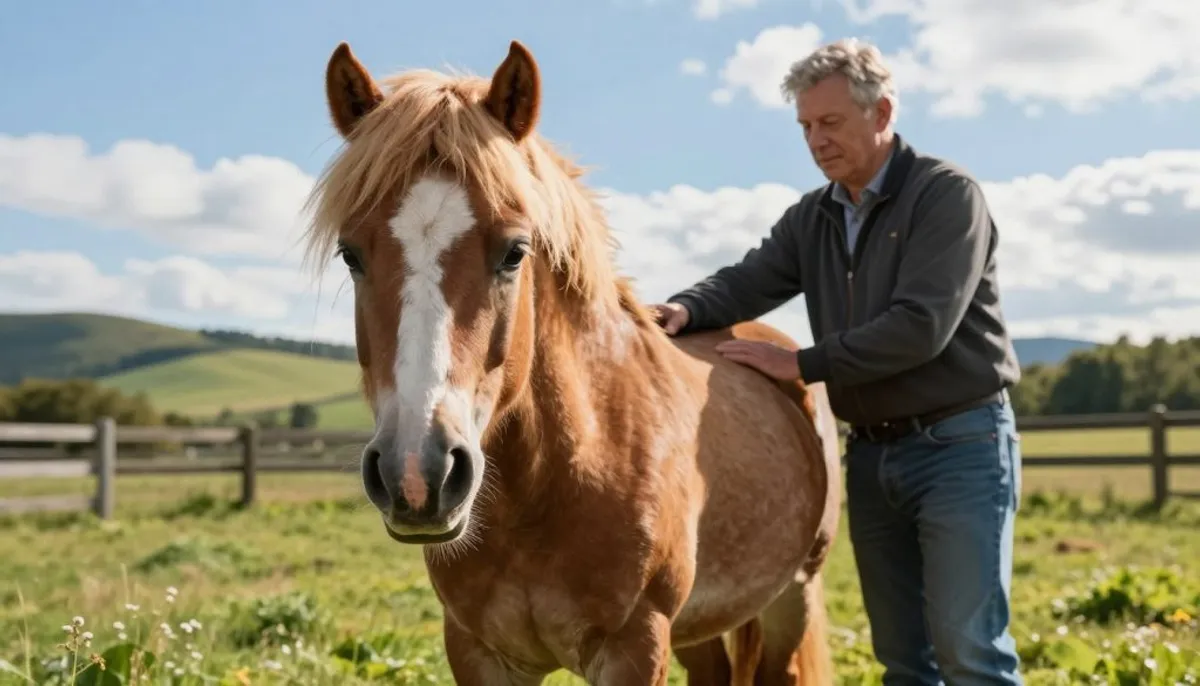
On the ground, details matter a lot. In breeding, it all starts with choosing the right breeders. They must also be well-fed and cared for every day. These decisions influence their health, spirit, and future. It also affects the pleasure of riding.
Key Points
- The equine diversity is immense, with over 300 breeds of horses in the world.
- In France, the pony horse meets the demand for versatile and practical profiles.
- This equestrian guide helps understand, choose, breed, care for, and equip.
- Uses are evolving: leisure, hiking, ground work, and light driving are gaining ground.
- Selection, feeding, and daily care directly impact the herd's health.
- Horse enthusiasts will find suitable benchmarks for their level and objectives.
Understanding the Difference Between Pony and Horse
It is often thought that ponies and horses are the same. But their differences are not just a matter of size. The shape of their body, their gait, and how they use their energy play a role.
Official Definition of a Pony: less than 1.48 m at the withers unshod
Size is a good starting point for distinguishing them. If an animal is less than 1.48 m at the withers and is unshod, it is a pony. Otherwise, it is considered a horse.
This rule helps classify them for competitions. But it does not explain everything about their appearance or what they are capable of.
Small Horses and Large Ponies: Why Size Isn't Everything
Sometimes, it is difficult to distinguish a large pony from a small horse. The differences are seen in bone structure, body shape, and their overall posture.
There are three main categories. Draft horses are large and heavy. Saddle horses are generally medium-sized, perfect for sport. Ponies adapt easily, consume little, and vary according to their breed.
| Type | Common Height at Withers | Equine Morphology | Common Strengths | Usual Precautions |
|---|---|---|---|---|
| Pony | < 1.48 m (unshod) | Compact body, often short back, strong limbs | Hardiness, endurance, economical metabolism | Management of rich grass, risk of overweight |
| Small Horse | 1.48 to 1.55 m | Intermediate model, more “horse” in gaits | Versatility in leisure, comfort for light adults | Appropriate saddle choice, condition monitoring |
| Saddle Horse | 1.55 to 1.70 m | Sport balance, longer neck, amplitude | Performance, locomotion, trained mind | Calibrated ration, progressive training plan |
| Draft Horse | Often > 1.65 m, sometimes > 1.80 m | Very strong build, significant muscle mass | Strength, traction, composed temperament | Joint management, working surfaces, weight |
Temperament, Hardiness, and Metabolism: Often Different Profiles
The pony is seen as more robust and less greedy. This trait helps it live with little. However, be careful if it eats too much on rich pastures – it can gain weight. Ponies often have a strong personality that requires clear rules.
The saddle horse aims for performance. Its training and feeding must be closely monitored. Thus, to understand the differences well, one must look at their size, use, and physical appearance.
pony horse
When looking for an equine that is neither too small nor too large, one thinks of the pony horse. It is more robust than a small pony and less complicated than a large horse. Its intermediate size is ideal for various equestrian activities.
Sometimes, people look for sturdy small horses or large ponies that can go the distance. The important thing is to find a good balance. This includes size, back, and feet, in addition to stable behavior. For many, ease in daily life is crucial, especially for nature walks.
Why This Term is Sought After: Uses, Intermediate Sizes, and Versatility
Searching for a pony horse often means wanting an all-terrain mount. One wishes for it to carry comfortably, walk for long periods, and be a good learner. They are perfect for varying pleasures: riding arena, outdoors, and relaxing little outings.
The choice depends on size, build, and how they move. Sometimes, a compact pony is more pleasant for the rider than a large, skinny horse. In an equestrian center, having versatile horses is a plus, especially if riders have varied levels.
For Which Riders: Children, Light Adults, Families, Riding Centers
Pony horses are perfect for children, thanks to their reliable and consistent character. Lively and intelligent ponies need to be well supervised. With a good routine, sessions become calmer and safer.
For light adults and families, these mounts are ideal. They are hardy, easy to prepare, and perfect for adventure. They are well-suited for group leisure activities on weekends. Moreover, these mounts adapt well to different riders.
In riding centers, these animals are excellent for starting and progressing. They are patient and accustomed to club life. They are also perfect for pony rides with clear rules.
Suitable Disciplines: Leisure, Ground Work, Light Driving, Initiation
The best disciplines for them are those that value consistency. This includes learning, ground work, and outings. The goal is to create a simple relationship based on clear communication.
- Leisure in the arena: learning to steer, finding balance, without demanding too much
- Ground work: learning to respect, stay still, and maneuver calmly
- Light driving: progressing calmly, without rushing
- Pony rides: walking actively, managing breaks well, paying attention to the path
To make the right choice, here’s a tip: think about the most common use according to your needs. This helps you select the most suitable mount, whether you are an individual or an equestrian center.
| Context | Main Objective | Activities That Go Well | Points to Check |
|---|---|---|---|
| Family | Versatility and Serenity | Equestrian leisure, little outings, basics in the arena | Appropriate size, stable temperament, foot maintenance |
| Beginner Children | Learning Safely | Initiation, games, simple ground work | Measured responsiveness, brakes, respect at hand |
| Light Adults | Comfort and Endurance | Outdoors, basic dressage, long pony rides at a walk | Supportive back, breath, regularity of gaits |
| Equestrian Center | Regularity Throughout the Year | Lessons, supervised outings, light driving according to level | Availability, recovery, behavior in groups |
Popular Horse and Pony Breeds in France
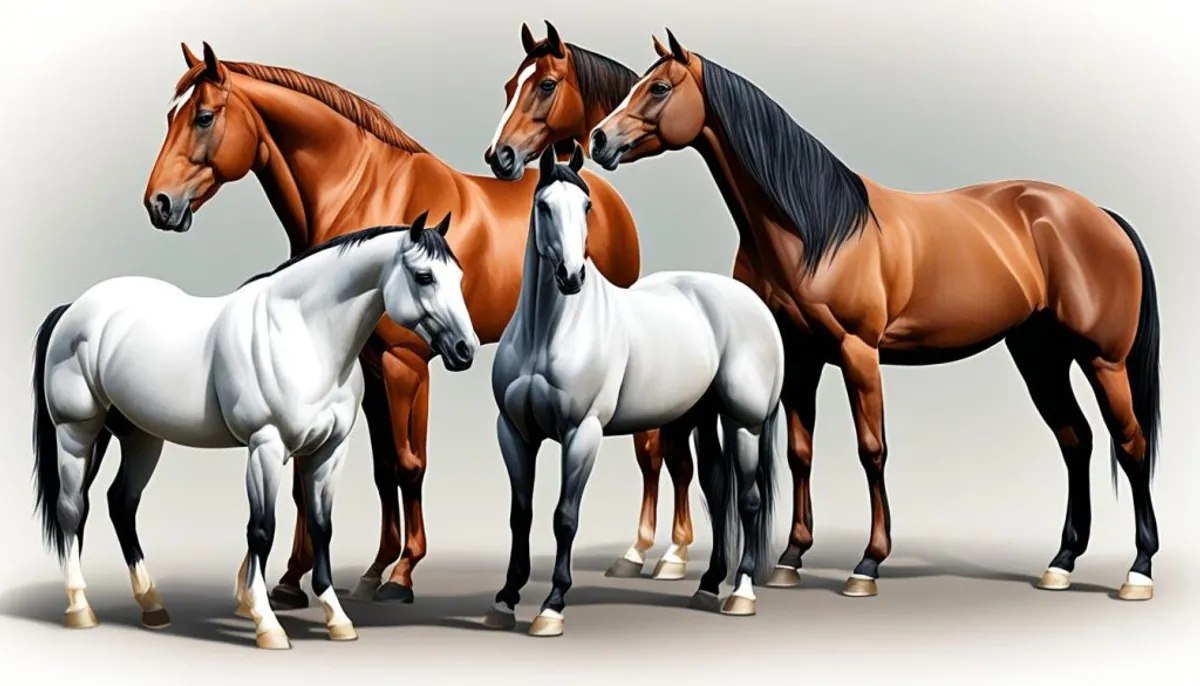
In equestrianism in France, choosing a horse requires knowing its size, character, and use. These criteria are also essential in breeding to guide the care and selection of animals. Depending on your needs, you can choose between a rustic horse, an athlete, or a powerful one for driving.
Rustic and Versatile Ponies
The Connemara is small but solid and good for jumping. The Welsh varies in size, perfect for family and leisure. Their versatility explains why so many people love them.
The Haflinger is known for its golden coat and gentle temperament. The Mérens, perfect for adventure, and the Shetland, ideal for beginners, require good management of their feeding.
Saddle and Sport Horses
The Selle Français excels in show jumping and is suitable for other disciplines. The Thoroughbred is ideal for those seeking speed and endurance. Their energy enhances other breeds.
The Anglo-Arab is known for its dynamism and endurance in competitions. The Lusitano, favored for dressage, shows the importance of a good mentality in sport horses.
Draft Horses
Draft horses are large and heavy, used in various activities. Their training requires patience and specific equipment. They are well-suited for tourism and outdoor leisure.
The Percheron is a pillar in driving and logging. The Breton and Comtois are appreciated for their docile nature. The Ardennais, powerful and versatile, is also a valid option for outdoor work.
| Type | Breed | Typical Height | Notable Strengths | Common Uses in Equestrianism in France |
|---|---|---|---|---|
| Pony | Connemara | 1.32–1.48 m | Robust, versatile, good at jumping | Leisure, club, jumping, versatility |
| Pony | Welsh (A to D) | A ≤ 1.22 m; D up to 1.55 m | Wide variety of sizes, energy, maneuverability | Initiation, family, pony sport, driving |
| Pony | Haflinger | 1.37–1.48 m | Gentle, enduring, chestnut coat with light mane | Riding, light driving, leisure |
| Pony | Shetland | ≤ 1.07 m | Very hardy, child-sized, economical | Initiation, driving, pony games |
| Saddle / Sport | Selle Français | 1.65–1.75 m | Sport model, strength, amplitude | Jumping, eventing, dressage; base of sport horses |
| Saddle / Sport | Thoroughbred | 1.55–1.65 m | Speed, endurance, blood | Racing, breeding improvement, athletic horses |
| Saddle / Sport | Anglo-Arab | Variable build, often close to saddle horses | Lively, generous, courageous | Eventing, sport, active outdoor |
| Saddle / Classical Work | Lusitano | 1.55–1.65 m | Cooperative, balanced, aptitude for collection | Dressage, ground work, performance |
| Draft | Percheron | Large draft, sometimes over 1.70 m | Power, locomotion, versatility in driving | Driving, logging, tourism |
| Draft | Comtois | 1.50–1.65 m | Docile, suited for reliefs, chestnut with light mane | Driving, light work, animation |
| Draft | Ardennais | 1.52–1.62 m | Robust, traction, carrying | Logging, driving, farm work |
Focus Breed: The Shetland Pony, A Model of Hardiness
Compact, enduring, and full of spirit, the Shetland holds a special place among pony and horse enthusiasts. It is appreciated in families, clubs, and on demanding terrains. Its hardiness and attentive daily care are its secrets.
Size and Morphology
Adults measure a maximum of 1.07 m at the withers. They are classified into three categories: miniature, intermediate, and standard. Their weight generally varies from 150 to 200 kg.
Its body, short and muscular, is built for strength. It has a short head, a wide forehead, and a powerful neck. With a thick mane, dense coat, and solid hooves, it is very recognizable. Almost all colors are accepted, except for the appaloosa pattern.
Origins and History
The Shetland comes from the eponymous islands north of Scotland. There, strong winds and scarce resources have shaped its small size and great endurance.
It has been known since 1603 and spread to Europe in the 19th century. Its export increased after the prohibition of child labor, as it was used in mines. The Marquis of Londonderry established a breeding program in 1873, promoting the creation of the Shetland Pony Stud-Book in 1890.
Character and Uses
Intelligent and sometimes stubborn, the Shetland can be very reliable. It quickly adapts to clear rules. It is perfect for beginners due to its patience and suitability for group life.
It excels in pony games for its speed and agility. In driving, it impresses with its ability to pull up to twice its weight. This makes it excellent for pulling small loads.
Points of Vigilance
Despite its hardiness, overweight and laminitis are risks. It is important to avoid overly rich grass and large rations. Strict dietary management is crucial.
Food management may include the use of small mesh hay nets or muzzles. Hooves must be regularly maintained, and overall health kept up with appropriate deworming.
| Practical Reference | Typical Values | What It Changes Daily | Simple Advice |
|---|---|---|---|
| Height at Withers | 76 to 107 cm (max 1.07 m) | Equipment at the right size, supervision suitable for children | Measure the withers flat and adjust the saddle and girth |
| Weight | 150 to 200 kg, sometimes 225 kg | Rapid variations if the grass is rich | Monitor body condition and weigh regularly with a tape |
| Physical Strengths | Compact body, thick mane, round hooves | Good endurance, solid feet but to be monitored | Frequent trimming and checking of conformation |
| Common Uses | Initiation, pony games, light driving | Versatility in club and leisure | Favor short and varied sessions, with clear rules |
| Main Risk | Overweight and laminitis | Direct impact on comfort and locomotion | Limit grass, divide hay, encourage movement |
Equine Breeding: Basics, Professions, and Regulatory Framework
Horse breeding requires organization and daily attention. It is not just about caring for births. One must think about observation, feeding, environment, and monitoring. In France, specific rules must be followed, from the stall to the pasture.
Fundamentals: Select, Feed, Care
Choosing the right breeders goes beyond their appearance or performance. One must also consider their health, behavior, and how they allow handling. This allows for the production of more reliable and resilient horses.
The basic food is quite simple: good forage, clean water, salt, and some supplements. Keeping a journal is as essential as good feeding. One must note the health and behavior of the horses every day. These notes help in caring for them, especially when the weather changes rapidly.
Skills and Team: Knowing How to Surround Yourself Well
Managing a herd is a long-term team effort. The farrier plays a crucial role in the well-being of horses. They take care of the feet to prevent pain and keep the horses fit.
The veterinarian is responsible for prevention and medical care. Good stable management ensures daily operations run smoothly. Having knowledge in animal sciences or stable management is very useful, especially with many horses.
Obligations: Declarations, Traceability, and Quality
From the birth of a horse, certain procedures must be followed: identifying it, registering it, and noting all its movements. This information is important for sales, inspections, or in case of illness. It also helps track medical care, injuries, and vaccinations.
The well-being of horses is not limited to their living space. One must also consider their access to water, shade, social interactions, and safe grounds. Obtaining certifications can also enhance the reputation of a breeding operation. It shows that the breeding follows quality practices and facilitates traceability for all.
| Control Point | What is Expected Daily | Why It’s Useful |
|---|---|---|
| Identification and Declarations | Declared birth, up-to-date information, documents kept | Compliance with regulations and clear history during a sale |
| Health Monitoring | Planned vaccinations, noted care, monitoring of weak signs | Prevention, quick detection, reduced work stoppages |
| Foot Management | Regular trimming/shoeing, checking conformation and wear | Better locomotion, fewer lameness issues, lasting comfort |
| Living Conditions | Water, forage, shelter, fence security, social interactions | Enhances animal welfare and limits risky behaviors |
| Register and Traceability | Entries/exits, treatments, recorded observations | Reliable equine traceability and simpler long-term decisions |
Horse Care: Feeding, Prevention, and Veterinary Follow-up
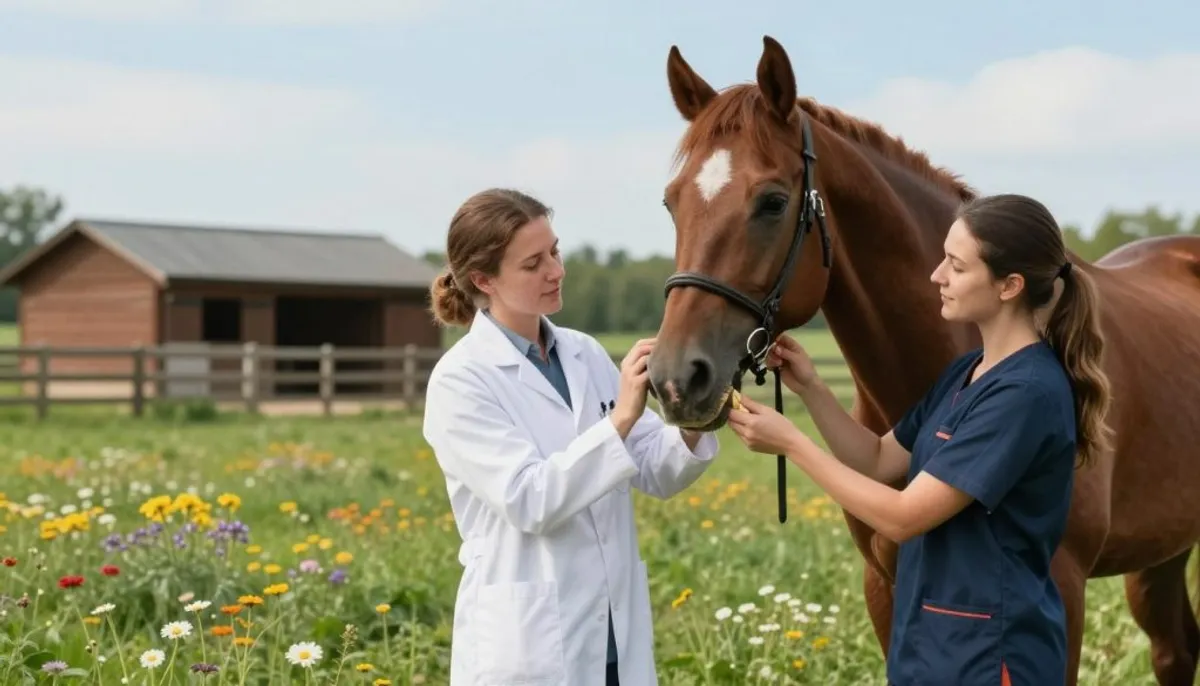
Caring for a horse relies on three key points: proper nutrition, daily care, and regular veterinary follow-up. A balanced diet keeps the horse fit for work and its well-being. Preventing diseases is essential to avoid small problems becoming serious.
Nutrition of Foals: Key Needs and Post-Weaning Dietary Transition
The mother's milk is vital at the beginning. Then, good hay and special food for their growth are gradually introduced. This establishes a solid foundation for their diet without disrupting their digestion.
After weaning, caution is needed with dietary changes. It is better to do it over several weeks while closely observing the foal. Nutritional supplements can be added if necessary, in consultation with a specialist.
Adult Ration: Fibers, Hay Quality, Adjustments According to Activity
Good quality hay is essential for adults, aiding digestion and overall health. The ration must be well adjusted before adding supplements. Leisure horses often only need this.
For sport horses, needs increase for recovery. It is important to ensure that the base of their diet is consistent. For draft horses, a hay-rich diet is crucial, with specific additions based on their activity.
| Profile | “Fiber” Base | Useful Adjustments | Point of Vigilance |
|---|---|---|---|
| Leisure Horse | Good quality hay, water at will | Limited concentrates, salt/minerals if needed | Avoid rapid ration changes |
| Sport Horse | Hay + regular access to forage | Dense energy, proteins and micronutrients according to load | Monitor body condition and recovery |
| Draft Horse | Ration rich in fibers, ample hay | Concentrates suitable for strength and mass | Monitor weight and locomotion |
Daily Prevention: Grooming, Hooves, Parasites, Regular Check-ups
Prevention is made up of small regular gestures. Grooming often helps detect skin problems or injuries. Checking hooves prevents lameness and is part of essential care.
A precise strategy against parasites is necessary, with suitable products. Regular veterinary visits help keep the horse healthy in the long run.
- Observe: attitude, appetite, droppings, breathing.
- Check: hooves, skin, eyes, warmth of limbs.
- Plan: dentistry, vaccinations, visits according to age and use.
Case of Economical Ponies: Limit Rich Grass, Small Mesh Nets, Exercise
Ponies, like the Shetland, benefit well from grass. But in spring and autumn, excess can cause laminitis. It is important to manage their time in the pasture to avoid this.
Paddocks with less grass, small mesh nets, or increasing their physical activity can be used. A muzzle can be helpful if the grass is too rich. Always adjust food and care according to the pony's weight.
Stable and Pasture Infrastructure: Safety, Comfort, and Management
Stables play a key role daily. A well-ventilated building helps keep the air fresh. This is crucial, especially in winter, for the well-being of the horses.
Choose durable and easy-to-clean materials for better management. A slightly sloped concrete floor helps avoid puddles. Treated wood walls withstand shocks and frequent cleaning well.
Comfort is seen in the details. Automatic waterers ensure clean water all the time. And rubber mats in stalls help horses rest comfortably.
Openings to the outside can calm horses. They do not feel trapped and can observe outside. This helps them stay calm, even when their routine changes.
Pastures add an important balance. They provide exercise, social interactions, and time to eat grass. For certain breeds like the Shetland, limited access to grass in spring is beneficial.
A good fence is essential for safety. Smaller horses can find and test weaknesses. A well-thought-out traffic plan with gates and well-placed water points prevents accidents.
When the ground is muddy, finding drier spots is important. A shelter against bad weather and stabilized entries keep hooves in good condition. This also helps maintain the pastures.
Organizing equipment is as important as the facilities. A well-organized saddlery saves time. With a clear preparation space, working with horses is safer, even in an active stable.
| Point to Check | What We Look For | Concrete Benefit | Warning Signal |
|---|---|---|---|
| Building Ventilation | Soft drafts, renewed air, limited dust | Fewer irritations, better respiratory comfort | Ammonia smell, condensation on walls |
| Floors and Bedding | Stable floor, dry bedding, rubber mats if possible | Fewer slips, easier resting | Wet areas, slipperiness, rubbing wounds |
| Water and Distribution | Automatic waterers, regular flow, easy access | Water available, smoother routine | Warm water, algae, irregular flows |
| Fences and Gates | Visible tape or rails, solid posts, secure corners | Fewer escapes, fewer injuries | Loose tape, twisted posts, narrow passages |
| Management of Pastures | Rotation, dry areas, grass access adjusted by season | Better grass management, reduced mud | Overgrazing, holes, persistent mud |
| Equipment Storage | saddlery ventilated, stable hooks, clear aisles | Preserved equipment, safer preparation | Wet leather, clutter, straps on the ground |
Riding, Equestrian Club, Pony Rides, and Equestrian Competition
Riding offers several exciting experiences. The type of activity, whether in a club, outdoors, or in competition, often depends on the environment. The essential thing is to choose well based on the rider, level, and character of the pony or horse.
Choosing the Right Practice: Leisure, Hiking, Ground Work, Driving, Initiation
Pony rides are ideal for beginners. They allow learning to control pace and direction easily. Beginners find these activities reassuring and educational.
Ground work teaches respect and patience. For driving, choosing a Shetland or a draft horse depends on the course. Each option offers specific advantages for a good start.
In an Equestrian Club: Educational Goals, Safety, Supervision, and Progress
In a club, learning occurs gradually. Children often start with ponies. This helps them become more confident and find good balance.
Classes mix ground exercises and riding. Clear objectives like managing speed or stopping enhance safety. The regularity of these exercises makes riding more enjoyable.
Preparing a Pony/Horse for Outing: Behavior, Endurance, Regularity
Before going out, a calm and sociable animal is needed. Taking care of the hooves is as crucial as physical condition. One must ensure they are kept clean and monitor any sensitivity.
For driving, gradually increasing effort is essential. A well-fitted harness is needed, and heavy loads should be avoided. This way, the pony remains dynamic and ready for activity.
Equestrian Competition: Possible Disciplines and Importance of the Mentality of the Pair
There are many disciplines in competition for ponies and horses. One finds pony games in clubs or dressage for sport horses. The choice depends on preferences and objectives.
Modern horses combine energy and elegance. However, the mentality of the rider and horse is crucial. A focused and consistent duo has a better chance of success than a nervous pair.
| Practice | For Whom | Key Strengths | Points of Vigilance |
|---|---|---|---|
| Pony Rides | Children, families, beginners | Confidence, outdoor discovery, simple pace | Supervision, helmet, pony accustomed to bikes and dogs |
| Riding in Equestrian Club | Beginners to advanced | Structured progression, safety, pedagogy | Choosing the right mount size, appropriate saddle, regularity of sessions |
| Ground Work | All levels | Respect, connection, emotion management | Clarity of requests, consistency, secure space |
| Leisure Driving | Adults, rural tourism | Friendly activity, traction, calm endurance | Well-fitted harness, gradual start, weight control |
| Equestrian Competition | Supervised riders, sports objectives | Motivation, technical benchmarks, team spirit | Mental of the pair, stress management, recovery and hoof follow-up |
Conclusion
In summary, a pony is defined by its size: less than 1.48 m at the withers without shoes. The choice depends on the intended use: leisure, club, sport, or driving. It is crucial to assess its energy, health, and temperament.
Longevity is essential. Choosing wisely, ensuring good pastures, a suitable saddlery, and a balanced diet avoids many problems. Good veterinary follow-up, weight control, hoof care, and parasite management contribute to their lasting well-being.
The Shetland is a good example: small (up to 1.07 m), robust, and very adaptable. It excels in initiation, driving, and pony games. However, care must be taken to prevent obesity and laminitis, especially with rich grass. Varying its diet and maintaining an exercise routine is beneficial.
The equipment must be well chosen, especially for small ponies or for use in clubs. La Sellerie Française offers high-quality equipment, made in France by artisans. Whether custom-made or in limited series, each piece enhances the comfort of the pony and the safety of children, in addition to prolonging the quality of their work together, even in driving.
FAQ
What is the official definition of a pony?
A pony is an animal that measures less than 1.48 m at the withers. This measurement helps differentiate ponies and horses, especially for competitions.
Why is it said that size isn't everything between pony and horse?
Even though 1.48 m is a limit, there are exceptions. For example, some ponies are almost as tall as horses. Their structure and capabilities can be very diverse.
Do ponies have a different character than horses?
Yes, ponies are often more robust and have a more marked character. Saddle horses aim more for performance, which affects their training and feeding.
Why is the search for “pony horse” so frequent?
This search is popular because many are looking for an animal that can do multiple activities. Riders want a versatile partner, for leisure or competition.
For which riders is a pony most suitable?
Ponies are perfect for beginner children, with the right training. Adults and families also love ponies for leisure activities. Clubs look for docile ponies for teaching.
What disciplines are well-suited for ponies and small horses?
They are ideal for leisure, hiking, and teaching. Ponies also excel in pony games, for their fun and technical aspect.
Which pony breeds are popular in France for versatility?
The Connemara is famous for its reliability. The Welsh varies in size, from small to larger. The Haflinger and Shetland are also appreciated for their versatility and robustness.
Which saddle horse breeds are often found in sport and leisure?
The Selle Français excels in show jumping. The Thoroughbred is known for its speed. The Anglo-Arab and Lusitano are remarkable in eventing and dressage competitions.
How can draft horses be recognized, and what modern uses do they have?
Draft horses are very large and heavy. The Percheron, Breton, Comtois, and Ardennais are used in driving, tourism, and logging.
What size does a Shetland pony have, and what is its typical morphology?
The Shetland measures at most 1.07 m. It has a compact body and solid hooves, perfect for difficult terrains.
Where does the Shetland pony come from, and why is it so hardy?
Shetlands come from Scotland, from a harsh environment, explaining their small size and endurance. They were even used in mines in the 19th century.
Is the Shetland suitable for initiation in an equestrian club?
Absolutely, with good training, it is ideal for beginners. In clubs, they are perfect for learning, playing, and driving.
What are the main health risks for Shetlands and economical ponies?
They are prone to overweight, so their diet must be monitored. Especially limit rich grass and adjust their diet according to their activity.
How to limit grass intake for a pony prone to obesity?
Use small mesh nets and areas with less grass. Sometimes a muzzle is necessary. Monitoring weight helps adjust feeding.
What does equine breeding cover on a daily basis?
Breeding includes selecting breeders, feeding, and daily care. It ensures the health and future of the animals, whether for sport or leisure.
What professions are essential around a horse or pony?
The farrier and veterinarian are crucial for their well-being. Stable management is also essential for their daily comfort.
What obligations and traceability rules apply to equine breeding?
Breeding must comply with welfare and monitoring rules. This includes registering births and ensuring good living conditions. Certifications and accreditations demonstrate commitment to quality.
How to feed a foal during the transition after weaning?
After milk, gradually introduce hay and specific foods. This prevents digestive issues. Special foods are recommended for this phase.
What is the basis of a good ration for an adult horse?
Fibers and quality hay are essential. Depending on activity, adjust for energy needs. Sport horses may require more protein.
What daily horse care should be done to prevent problems?
Grooming, checking hooves, and observing their general condition are fundamental. Regular veterinary checks are recommended to prevent diseases.
What stable facilities improve comfort and reduce risks?
Good ventilation and easy-to-clean materials are important. Automatic waterers, comfortable bedding, and rubber floors improve their well-being.
How to secure pastures and paddocks, especially with Shetlands?
Strong fences are necessary, and access areas must be well managed. Shelters are needed for protection against the elements.
How to properly prepare a pony or horse for an outdoor outing?
Ensure it is calm and accustomed to outings. Taking care of its hooves and health is crucial. In driving, start gently and check the equipment.
What competitions are possible with horses and ponies?
Horses participate in Olympic events like jumping and dressage. Ponies are stars in pony games and driving.
What equipment should be prioritized for comfort and safety, especially in clubs or driving?
Choose custom equipment: saddles, harnesses, must fit the animal well. La Sellerie Française (https://laselleriefrancaise.com) offers quality equipment to ensure their comfort and safety.
How to equip oneself in saddlery when having a “non-standard” pony (Shetland, large pony, small horse)?
For unique sizes, precise adjustment is key. Choosing the right sizes reduces discomfort during activities, essential for rides or competitions.
RelatedRelated articles
- 16 Mar 2026·19 min readMeeting the largest horse in the world!General
 Horses captivate everyone with their strength and elegance. In France and elsewhere, they are admired. But when standing in front of a very tall horse, one notices that there are exceptional sizes. We are talking here about the largest horse in the ...