
Welcome to our comprehensive guide dedicated to black horses, these majestic creatures that have captivated equestrian enthusiasts for centuries. Here, we delve into the fascinating world of the black horse, highlighting the natural elegance of this coat that fascinates riders around the globe.
The horse, in its purest form, embodies unmatched nobility. This article invites you to explore the genetics, history, and care needed to enhance the beauty of your equine companion. We will also discuss the specifics of the most emblematic breeds that proudly bear this dark and mysterious coat.
Famous horses like Cass Ole, Jappeloup, and Totilas illustrate the presence of this coat. The black coat is a base color in horses, where the skin and coat are completely black. The term "solid black" refers to a black horse that is entirely devoid of white hairs on its entire body.
Key Points
- Discover the natural elegance of black horses.
- Learn about the history and genetics of this fascinating coat.
- Explore the specifics of emblematic breeds.
- Understand the care needed for your equine companion.
- Admire famous horses that embody this presence.
Introduction to the World of Black Horses and French Saddlery
Discover the rich universe of black horses and bespoke saddlery creations. These magnificent animals have long been at the heart of myths and legends. Their black coat, a symbol of power and mystery, has inspired major literary works such as The Black Stallion and Black Beauty.
History and Symbolism of Black Coats
Since antiquity, the black horse has held a central place in cultural narratives. It is often associated with superstitions and ancient beliefs. For instance, in many societies, the black coat was seen as a sign of strength and mystery.
Added Value of Bespoke Products
Choosing bespoke equipment for your horses combines optimal comfort with refined aesthetics. Customization ensures that each piece fits perfectly to the morphology of your horses. This meets the growing demand for high-end accessories for black horses.
| Era | Symbolism | Cultural References |
|---|---|---|
| Antiquity | Power | Greek Myths |
| Middle Ages | Mystery | European Folklore |
| 19th Century | Elegance | Children's Literature |
French Saddlery: Artisan Excellence in France
Immerse yourself in the refined world of French saddlery, where each piece tells a story. French Saddlery, accessible via laselleriefrancaise.com, embodies excellence by offering high-end products made by passionate artisans.
Each saddle is designed to provide unparalleled technical precision. This meets the needs of the most demanding riders worldwide. Our commitment goes beyond the Made in France label, ensuring total traceability and manufacturing from A to Z in France.
- We value traditional craftsmanship to create unique equipment.
- Each creation respects the morphology of each breed of horse.
- By choosing our products, you support local craftsmanship.
- Provide your horses with equipment of exceptional and durable quality.
Origin and Mystery of the Black Coat in Horses
The fascinating history of the black coat in horses dates back thousands of years. This iconic color has been present for about 5,700 years BC. The earliest traces of this coat show its evolution over time.
Archaeological studies reveal that the black coat does not appear in Siberia or Central Europe at the end of the Pleistocene. This raises questions about its origin and development. The appearance of this coat may be linked to an adaptation to the increase in forest cover after the glacial period.
The myths surrounding the black horse are often related to its rarity and imposing appearance. In many cultures, it is seen as a symbol of power and mystery. Understanding the genetic and historical origin of this coat allows us to appreciate its rarity in modern populations.
- The black coat dates back over 5,700 years BC.
- The myths associated with the black horse reinforce its prestigious status.
- This coat may have provided a camouflage advantage in dense forests.
- Popular beliefs often link the black horse to supernatural forces.
The Genetics Behind the Black Coat
The fascinating color of the black coat in horses comes from a unique genetic combination. This phenomenon is primarily due to the dominant allele of the Extension gene, noted as E, associated with the absence of the dominant allele of the Agouti gene, noted as A.
To be considered a black horse, the animal must possess a specific genotype. This is generally noted as EE aa (homozygous) or Ee aa (heterozygous). This genotype prevents the expression of red or brown pigments, allowing for the black color.
Here are some key points about the genetics of the black coat:
- The black coat results from the interaction between the Extension and Agouti genes.
- Black horses have a genotype that inhibits non-black pigments.
- Mutations of the Agouti gene, when absent, favor the expression of eumelanin.
- DNA tests are used to confirm the purity of the black coat.
- Understanding these mechanisms is crucial for the selection of breeders.
Distinctive Characteristics of a True Black Horse
A true black horse is distinguished by specific traits that make it an exceptional animal. These characteristics are not limited to the color of its coat, but also encompass other important elements.
Coat, Eyes, and Mane: Marks of Authenticity
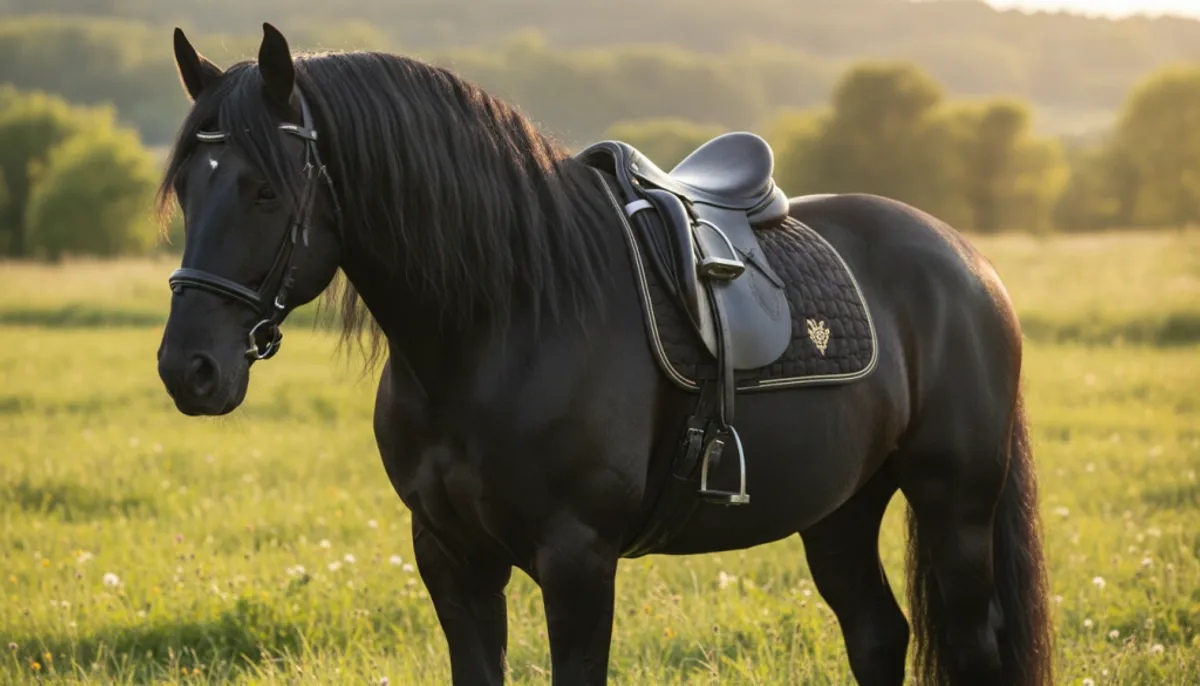
The authenticity of a black horse is recognized by its dark eyes, pigmented skin, and deep, glossy black mane. The hooves of black horses are generally black, reinforcing the uniform appearance of their coat.
Horses known as solid black, devoid of any white markings, represent the aesthetic ideal sought by many enthusiasts of the black coat. Although white markings may exist, the standards of certain breeds like the Friesian strictly prohibit them to preserve uniformity.
A close examination of the mane and skin allows for the distinction between a true black horse and a bay-brown or chestnut horse. The pure black coat offers a velvety appearance that requires special attention to maintain its natural shine.
- Very dark eyes and black skin.
- Deep, glossy black mane.
- Hooves generally black.
- Aesthetic ideal of solid black horses.
- Special care to maintain the shine of the coat.
Emblematic Breeds of Black Horses
The emblematic breeds of black horses embody elegance and power in the equestrian world. Among them, the Friesian, the Mérens, and the Minorquin stand out for their unique characteristics.
The Friesian, originating from the Netherlands, is globally recognized for its luxurious black coat and royal head carriage. This ancient breed dates back to the Roman era, without crossbreeding with other breeds.
The Mérens, a small robust horse from the French Pyrenees, is famous for its docility and ability to thrive in high mountains. Each summer, it migrates to pastures at 2,500 meters altitude.
The Minorquin, a Spanish breed, is selected exclusively for its black color to preserve its unique standard. These breeds illustrate the diversity of black horses, ranging from powerful draft horses to elegant saddle horses.
Associations like the Royal Friesian Horse Association and the National Mérens Association play a crucial role in the conservation of these prestigious lineages.
Black Horses: Characteristics and Purity of the Spanish Breed
The Spanish breed, with its black horses, embodies a unique and prestigious equestrian tradition. In Spain, owners often confuse black and bay horses under the name "prieto." This confusion reflects the cultural importance of these magnificent equines.
The pure Spanish breed is distinguished by its natural elegance and morphology suited for the most demanding dressage disciplines. Breeders of this breed place paramount importance on the transmission of genes ensuring the depth of the black coat.
Choosing a black horse from the pure Spanish breed means opting for an animal that combines a lively temperament with great emotional intelligence. This breed continues to influence international standards, proving that pure breeding is a guarantee of quality and performance.
- The pure Spanish breed embodies a centuries-old equestrian tradition.
- It combines impeccable aesthetics with exceptional sporting abilities.
- Breeders ensure the preservation of the depth of the black coat.
| Characteristics | Importance | Impact |
|---|---|---|
| Natural elegance | Essential for dressage | International recognition |
| Gene transmission | Preservation of the black coat | Guaranteed quality |
| Lively temperament | Ease of learning | Sporting performance |
Comparison of Coats: Black, Bay-Brown, and Chestnut
Understanding the nuances between black, bay-brown, and chestnut coats enriches our appreciation of equines. The bay-brown, often confused with the black coat, has also been known as "black pangaré" in France since 1999. Although the two coats may seem similar, key differences exist.
Bay-brown horses have a brown eye contour, unlike the black horse whose contour is perfectly black. A DNA test can detect the Extension and Agouti genotypes, allowing differentiation between black and dark bay or chestnut.
| Characteristics | Black Coat | Bay-Brown |
|---|---|---|
| Eye contour | Black | Brown |
| Depigmented area | Absent | Present |
| DNA test required | Yes | Yes |
The distinction between the black coat and bay-brown relies on the precise observation of depigmented areas around the eyes and nose. Moreover, chestnut and dark bay coats may appear black to the naked eye, but their genetic reality is fundamentally different.
Since 1999, the French classification has clarified the status of black pangaré, although confusions persist in certain breeds. The use of DNA tests has become essential for breeders wishing to confirm the black coat and avoid identification errors.
Understanding these phenotypic differences allows owners to better maintain the coat of their horses according to their true genetic nature.
Impact of the Environment on the Black Coat
The environment plays a crucial role in the appearance of horses, especially for those with black coats. Prolonged exposure to the sun can alter the velvety appearance of this coat, causing reddish reflections on the mane. These changes, although visible, do not alter the deep genetics of your horses.
Black horses living outdoors require appropriate management to limit the effects of the weather on the pigmentation of their coat. For example, a 19th-century hippologist documented the case of a jet-black mare that changed color after a month in the sun.
It is important to note that discoloration only affects the surface of the mane and coat. A clipping can easily reveal the horse's true black nature. Knowing these environmental phenomena helps owners better protect their horses' coats from external aggressions.
- Black horses may take on brown or reddish reflections under the sun's action.
- This discoloration is superficial and does not change the genetic color.
- Proper management is essential to preserve the shine of the black coat.
Exceptional Craftsmanship in French Saddlery
French Saddlery is synonymous with exceptional craftsmanship. Each piece is designed to enhance the natural beauty of your horse. French artisans, passionate about their craft, create unique saddles that combine tradition and innovation.
These bespoke and limited edition creations reflect unparalleled know-how. By choosing a saddle from French Saddlery, you opt for a product made from A to Z in France, thus ensuring superior quality compared to standard certifications.
Here are some advantages of our products:
- Discover unique pieces on laselleriefrancaise.com, designed to enhance the natural presence of your horses.
- Our artisans use ancestral techniques to create saddles tailored to each morphology.
- Each limited edition reflects our commitment to excellence, offering aesthetic and functional equipment.
- Manufacturing from A to Z in France ensures exceptional durability, making each saddle a valuable investment.
- We believe that exceptional craftsmanship is the indispensable complement to the beauty of horses, guaranteeing comfort and performance.
| Feature | Advantage | Impact |
|---|---|---|
| Artisanal manufacturing | Superior quality | Increased durability |
| Bespoke | Perfect fit | Optimal comfort |
| Limited edition | Exclusivity | Added value |
Cultural and Literary Influence of the Black Horse
The black coat of the horse has captivated the imagination of artists and writers throughout the ages. This symbol of strength and mystery has marked iconic narratives, notably the first animal novel, Black Beauty. This book profoundly influenced the perception of the black horse in popular culture.
In the 19th century, the companies of musketeers and the royal guard exclusively favored black horses. This preference aimed to enhance the image of prestige and authority of their mounted troops. Additionally, the Royal Canadian Mounted Police breeds a lineage of black horses for its famous carousel, thus perpetuating this tradition.
- The black horse has always exercised cultural fascination, symbolizing strength and mystery in 19th-century narratives.
- Literature, with works like Black Beauty, has helped humanize the black horse in the minds of the general public.
- Royal cavalry regiments used the black coat to reinforce the image of prestige and authority of their mounted troops.
- The Royal Canadian Mounted Police perpetuates this tradition by selecting black horses for their artistic performances and presence.
- This cultural influence explains why the black coat remains a symbol of distinction in the international equestrian community today.
Sporting and Practical Uses of the Black Horse
Black horses are often at the heart of equestrian competitions, where their talent shines. Their elegance and power make them formidable competitors in various disciplines.
Dressage is a discipline where the black horse excels, showcasing its natural presence and great concentration ability. These captivating animals often attract the attention of judges due to their grace on the rectangle.
In addition to dressage, driving also benefits from the power of the black horse. This demanding practice requires endurance and perfect obedience, qualities that these horses possess in abundance.
Modern equestrian sport values the versatility of black horses, whether in show jumping or eventing. Breeds like the Friesian and the Thoroughbred are particularly recognized for their exceptional performances in these disciplines.
- Dressage is a discipline where the black horse excels, showcasing its natural presence.
- Driving requires endurance and obedience, qualities that these horses possess.
- Modern equestrian sport values their versatility in show jumping.
- Riders often choose black horses for their captivating elegance.
- Proper equipment, like that from our saddlery, optimizes communication between the rider and their horse.
| Discipline | Characteristics | Recognized Breeds |
|---|---|---|
| Dressage | Elegance and concentration | Friesian, Thoroughbred |
| Driving | Endurance and obedience | Friesian |
| Show Jumping | Versatility | Thoroughbred, Morgan |
Care and Maintenance of High-End Black Horses
To ensure the shine of black horses, rigorous maintenance is essential. These magnificent animals require specific care to prevent their black coat from losing its velvety appearance under the sun.
Here are some practical tips to preserve their shine:
- Maintaining the shine of the black coat requires a rigorous care routine, including regular brushing to remove dust.
- The use of suitable products helps protect the skin and mane of your horses from the drying effects of the sun.
- A regular examination of the black coat helps quickly detect any discoloration due to weather or prolonged exposure.
- High-end black horses benefit from a balanced diet that promotes the natural shine of their dark and deep coat.
- We recommend practical tips to preserve skin health, ensuring your black horse always remains radiant.
Current Trends in the High-End Horse Market
The high-end horse market is undergoing an exciting transformation. The evolution of demand reflects changes in the preferences of modern buyers. Increasingly, riders are seeking animals that combine aesthetics and performance.
Current trends favor horse breeds that stand out for their versatility in international competitions. Modern buyers are not satisfied with a beautiful coat; they also desire a balanced temperament.
Here are some key points about market trends:
- The market is evolving towards increased demand for horse breeds that combine aesthetics and sporting abilities.
- Selective breeding in the 21st century emphasizes genetic health, ensuring the sustainability of prestigious horse lineages.
- We observe a constant valuation of black horses, confirming their status as a preferred choice for today's discerning riders.
Testimonials and Inspiring Stories from Enthusiasts
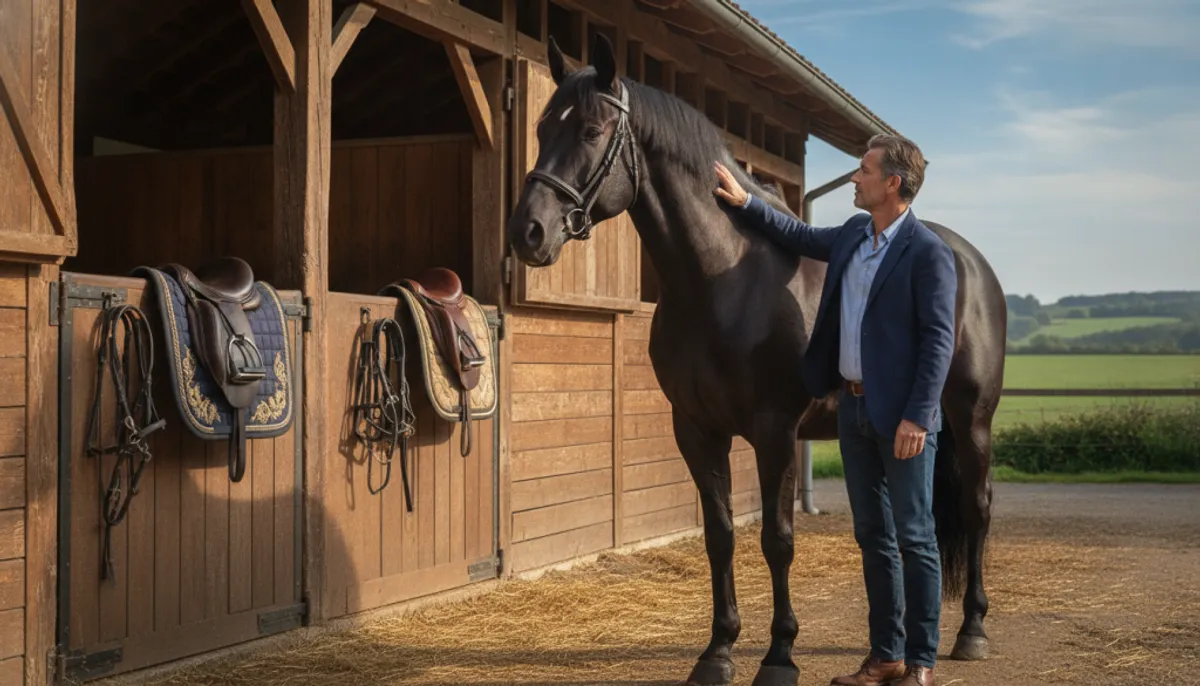
The touching stories of black horse owners illustrate the unique bond that unites them with these creatures. Many enthusiasts share moving experiences that reveal the magic of these animals. These stories of excellence testify to the central place that black horses occupy in the lives of those who interact with them daily.
The Friesian is very popular and appears in many films and cartoons, including one from Disney. Children often discover the magic of black horses through these animated films, thus developing a lasting passion for riding. On the other hand, the Mérens is ideal for children due to its docility and modest size.
The transmission of equestrian tradition to children is facilitated by the calm temperament of certain breeds of black horses. Each testimony highlights the importance of respecting the deep nature of these animals to build a relationship based on trust.
Future Perspectives for Breeding and French Saddlery
The future of breeding and French saddlery looks promising, marked by conservation efforts. These initiatives have allowed the Canadian horse to repopulate after nearly disappearing in the 20th century. Additionally, selective breeding continues to shape the future of horse breeds, ensuring the preservation of the characteristics of the black coat.
Here are some key points to consider:
- Preservation of historical breeds: The future of breeding relies on the preservation of horse breeds, ensuring that the black coat remains a symbol of prestige.
- Innovation in saddlery: French saddlery is committed to innovating to meet the future needs of riders while respecting centuries-old artisanal traditions.
- New technologies: New reproductive technologies allow for better management of genetic diversity within global black horse populations.
- Growing demand: We anticipate a growing demand for durable equipment designed to support horses in the challenges of the next century.
- Essential collaboration: Collaboration between breeders and artisans is key to maintaining the excellence that characterizes the high-end horse world.
Conclusion
In conclusion, the black horse remains an iconic figure in the equestrian world, combining grace, power, and a rich history of symbols. Whether you are drawn to the small rustic horse or the elegant thoroughbred, the black coat offers a diversity of fascinating breeds.
The rigorous selection of coats and respect for the temperament of each animal are essential to ensure a harmonious and lasting relationship. We have explored how films and popular culture have immortalized the black horse, inspiring children and passionate adults alike.
Investing in quality saddlery, crafted with care, is the best way to honor the natural beauty of your horses every day. Preserving these exceptional lineages for the next century remains a priority for all stakeholders in the equine industry.
Thank you for following us in this in-depth exploration of black horses, these companions who continue to inspire us every day.