
The fascination for pure speed has inspired horse enthusiasts for centuries. Identifying the ultimate equine athlete, the one who surpasses all others, is a captivating quest.
This guide immerses you in the heart of this extreme performance. We analyze historical records and feats that have marked history.
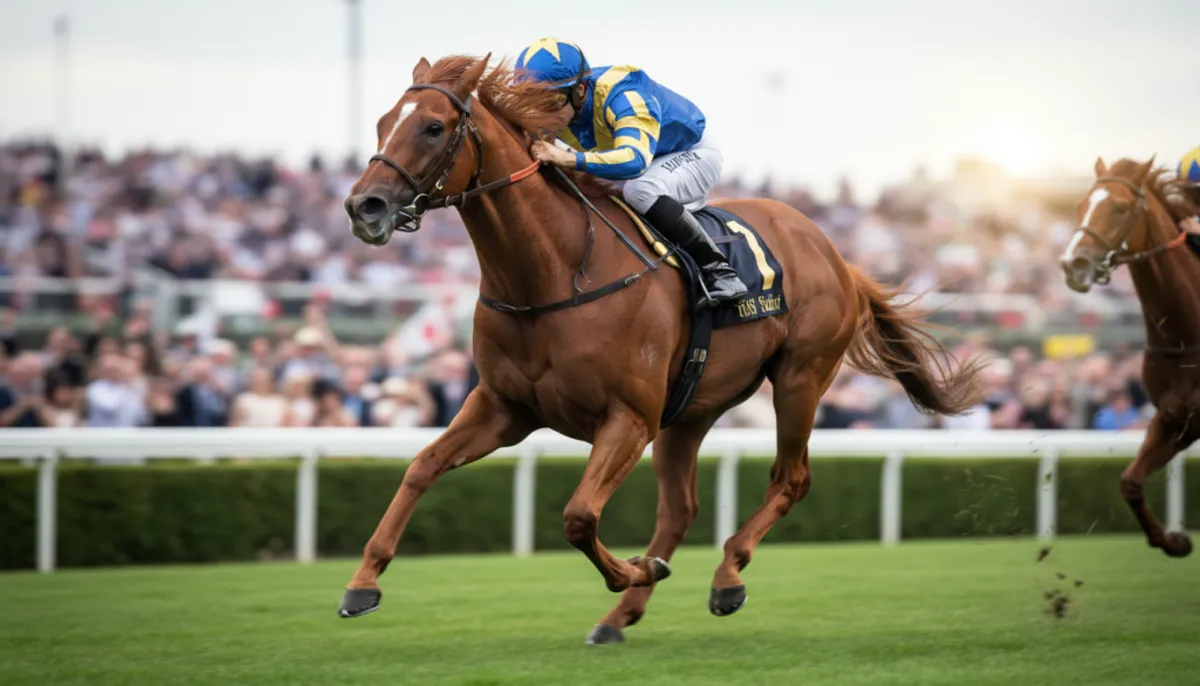
In 2008, a stallion named Winning Brew made history. He set an official Guinness record by reaching 71 km/h at the Penn National Race Course.
This performance illustrates the pinnacle of equine athletic ability. It results from a unique alchemy between exceptional genetics and rigorous training.
We will explore the breeds predisposed to this feat and the biological mechanisms behind this power. Understanding these animals is to celebrate the culmination of a centuries-old relationship between man and horse.
From racetracks to pastures, the quest for performance continually pushes the limits. This analysis is designed for you, the enthusiast, who seeks to grasp the very essence of speed.
Key Takeaways
- The Guinness speed record for an equine is held by the thoroughbred Winning Brew.
- He ran at an impressive speed of 71 km/h in 2008.
- Genetics and a specific training program are decisive factors for reaching such peaks.
- The official measurement of performance is a strict process, validated by organizations like the Guinness World Records.
- These animals represent the pinnacle of athletic performance in the animal kingdom.
- The pursuit of speed has evolved with selection and breeding techniques over the centuries.
- Understanding these records also means appreciating the unique bond between man and animal in the pursuit of excellence.
Introduction to the Equestrian World and Speed
The world of horse racing is founded on a millennia-old quest: the mastery of speed. At a gallop, a horse generally moves between 15 and 21 km/h.
However, champions can shatter this meter and surpass 60 km/h. This spectacular difference highlights the extraordinary athletic potential of these animals.
Historical and Modern Context
Historically, man has selected horses for their speed. This characteristic has transformed racing into a leading global sport.
Today, this selection leads to prestigious international competitions. Speed has become the ultimate criterion for evaluation.
The Importance of Speed in the Equestrian World
On the track, power and grace meet. This is what allows the fastest horses to reach phenomenal peaks.
Understanding this evolution is to grasp why the horse is a top-level athlete. The horse speed combines biology, training, and an unwavering human passion.
While their elegance captivates, it is their speed that makes them fascinating. It is the beating heart of the modern equestrian universe.
The Determining Criteria for Speed
Behind every speed feat lies a combination of anatomical and physiological factors. Ultimate performance arises from the perfect interaction between several key elements.
Analyzing these components allows us to understand how equine athletes achieve phenomenal peaks. It is a science of locomotion.
Stride Length and Stride Angle
The speed of a horse primarily depends on the distance it covers in a single leap. This is the stride length.
A wide stride angle, measured between the limbs, is crucial. It maximizes forward propulsion and the power of each push.
Horses selected for speed naturally possess this advantageous anatomy. Their legs are designed for efficiency.
Stride Rate and Gallop Cadence
The cadence, or the number of strides per minute, is the second pillar. A standard gallop counts 130 to 140 strides.
Champions, on the other hand, can reach a frantic pace of 160 strides per minute. This high frequency multiplies momentum.
The gallop remains the premier gait for pure speed. It combines a long stride and sustained cadence for record performances.
| Criterion | Description | Impact on Speed |
|---|---|---|
| Stride Length | Distance covered in a single leap during the gallop. | Determines ground coverage per movement. |
| Stride Angle | Opening measured between the front and rear feet. | Influences the power and efficiency of propulsion. |
| Cadence (Stride Rate) | Number of complete stride cycles per minute. | Increases the frequency of impulses, boosting velocity. |
The final speed is the product of these two forces: a long stride and a fast tempo. The best horses excel in both areas.
This mechanical synergy explains how a horse can maintain such explosive pace. It is the culmination of millennia of selection.
History and Origins of Racehorses
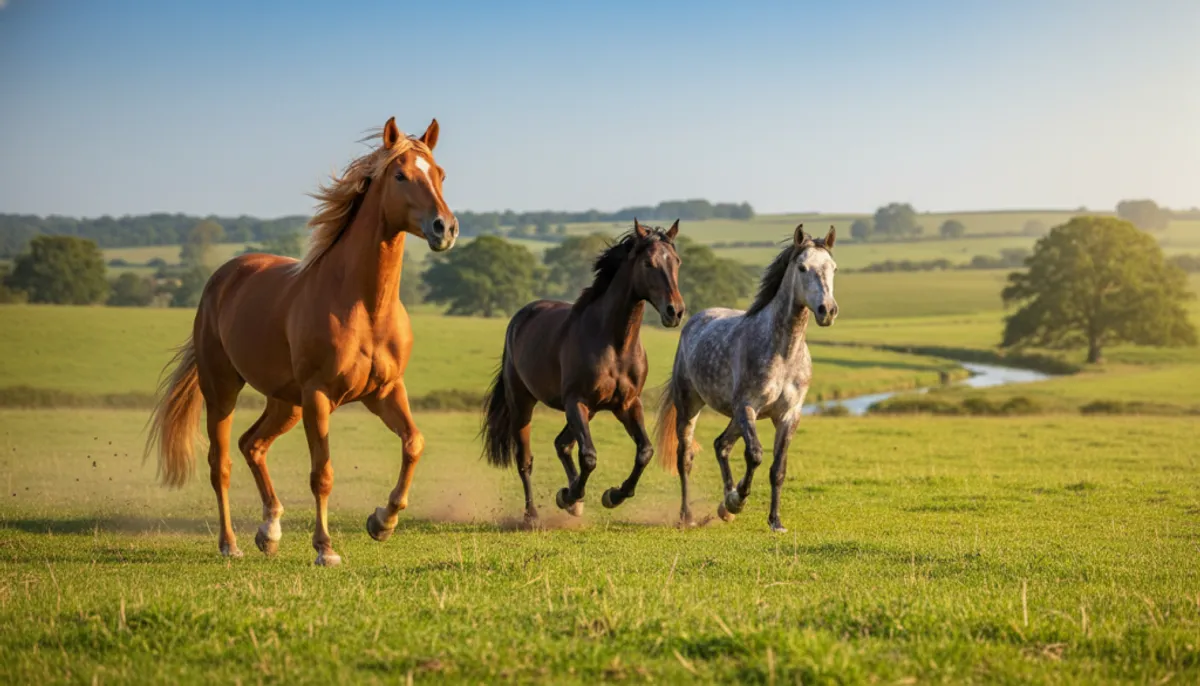
The epic of modern racing finds its roots in 17th and 18th century England. It is there that rigorous selection, focused solely on performance, gave rise to an exceptional lineage.
The Birth of Thoroughbred and English Horses
Breeders of the time crossed local mares with renowned eastern stallions. Their goal was clear: to create a horse capable of dominating the racetracks.
This quest resulted in the Thoroughbred. This type of athlete quickly became the global reference for racing.
The Influence of Historical Ancestors
The genetic heritage of this breed rests on three legendary founding stallions. Their influence still shapes today’s horses.
Their blood runs in the veins of most modern champions. They have passed on unique morphology and athletic ability.
| Name of the Stallion | Origin | Main Contribution |
|---|---|---|
| Darley Arabian | Syria | Transmission of pure speed and elegance of line. |
| Godolphin Barb | North Africa | Contribution of power, endurance, and a strong constitution. |
| Turk Bjerlei | Turkey | Contribution to robustness and competitive qualities. |
These ancestors forged enduring horses. Selection created a breed capable of sustaining intense efforts over distance.
The English Thoroughbred: Champion of the Racetracks
At the top of the equestrian hierarchy, the English Thoroughbred reigns supreme over the racetracks. This breed produces the most famous athletes, whose feats define the notion of pure speed.
Winning Brew's Performance and Guinness Records
The stallion Winning Brew made history in 2008. His official Guinness record of 71 km/h remains unmatched.
This performance was established at the Penn National Race Course. It validated his status as the fastest equine in the world.
Anatomical and Genetic Characteristics
The success of Winning Brew is no accident. He embodies the culmination of rigorous genetic selection.
Thoroughbreds possess a large heart and powerful legs. These traits optimize oxygenation and propulsion.
This ideal morphology is a direct legacy from the founding stallions. It allows the breed to maintain exceptional peak speed.
Each record like that of Winning Brew underscores the crucial role of anatomy. Ultimate performance arises from this alchemy between genetics and training.
The Quarter Horse: The Specialist of Short Races
For fans of equestrian sprints, the Quarter Horse represents the absolute reference for explosive speed. This breed is globally recognized as the fastest over short distances, reaching peaks of 86 km/h.
Physical Assets and Record over 400m
The Quarter Horse stands out for its impressive muscular power, particularly in the hindquarters. This strength is ideal for sprint racing horses.
Its morphology, with solid legs and muscular thighs, provides the necessary stability during fast races. This build allows for lightning-fast accelerations.
The official record over 400 meters attests to its capabilities. This horse reaches a speed of 86 km/h, an achievement that places it at the forefront of short-distance performances.
This performance is the result of genetic selection focused on power and speed. Breeders have thus shaped this horse to excel over short distances.
Comparison with Other Breeds over Short Distances
Unlike Thoroughbreds, optimized for endurance, the Quarter Horse specializes in sprints. Over 400m, it clearly outperforms other horses.
Owners have relied on selection to create an athlete capable of dominating short distances with ease. This approach has paid off.
Consequently, the Quarter Horse sets the standard for sprint racing, where other breeds are less competitive. The speed of the Quarter Horse is a major asset that makes it versatile.
It excels in many equestrian disciplines in the United States, from racing to ranch work. Thus, sprint racing horses find in it a model of efficiency.
The Arabian Thoroughbred and Endurance in Competition
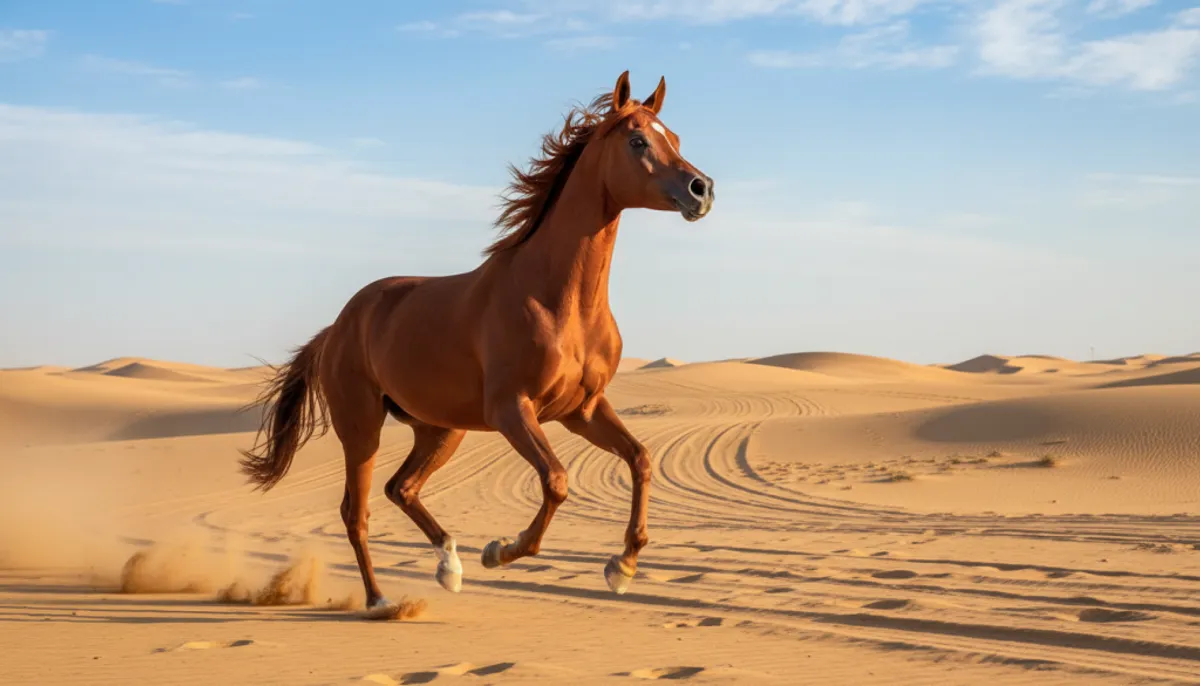
The Arabian Thoroughbred embodies a different philosophy of performance, where consistency takes precedence over explosiveness. Recognizable by its modest size, between 1.40 m and 1.55 m for about 400 kg, it is built for endurance.
Endurance versus Speed: A Subtle Balance
This breed demonstrates that success in competition is not limited to sprinting. Its major asset is phenomenal endurance, allowing it to maintain a steady pace over dozens of kilometers.
The balance between cruising speed and energy preservation is key to its success. It prioritizes the longevity of effort over peak speed.
Role in Endurance and Gait Races
In endurance events, these horses are unbeatable. They cover long distances over varied terrain without showing signs of weakness, dominating global rankings.
Their role also extends to improving other breeds. They bring their robustness and ability to manage prolonged effort, enhancing the equestrian genetic heritage.
Modern competition thus values both endurance and the quality of being fast. The Arabian Thoroughbred shines as a complete athlete.
Standardbred: The Legend of Harness Racing
The Standardbred has forged its reputation on the trot tracks, combining power and consistency. This discipline requires perfect coordination between the animal and its driver.
Harness races showcase specialized athletes. Their talent lies in a specific and highly technical movement.
Trot Characteristics and Performance over 1600m
The trot is a symmetrical two-beat gait. It allows these horses to maintain a constant speed over long distances.
This endurance fundamentally differs from the gallop. It relies on a regular stride and optimized energy expenditure.
The official record for the Standardbred over 1600 meters is 1 minute 46 seconds. This performance demonstrates remarkable horse speed for a trotter.
Another champion, Homicide Hunter, ran 1609 meters in 1 minute 48 seconds. These feats confirm the superiority of this breed in its discipline.
| Horse | Distance | Record Time | Average Speed |
|---|---|---|---|
| Standardbred | 1600 m | 1 min 46 s | Approx. 54 km/h |
| Homicide Hunter | 1609 m | 1 min 48 s | Approx. 53.5 km/h |
The Standardbred is the result of a cross between the Thoroughbred and the Norfolk trotter. This selection optimized its power for the trot.
Horses of this lineage are therefore the fastest in the world in their category. They combine elegance and efficiency in every stride.
Their success in harness racing makes them ambassadors of equine performance. They perfectly illustrate the mastery of a demanding gait.
Comparison of Champions: The “Fastest Horse in the World” in Perspective
Historical records provide a fascinating benchmark for evaluating modern performances. Declaring a supreme champion is complex, as disciplines and distances vary.
Analysis of Records and Notable Performances
Beach Rakit marked 1945 with a record of 69.69 km/h over 400m. This performance remains a milestone for the fastest horses of the last century.
Secretariat, on the other hand, wrote legend in 1973. His speed and power illustrate the success of rigorous genetic selection.
| Horse | Year | Distance | Performance |
|---|---|---|---|
| Beach Rakit | 1945 | 400 m | 69.69 km/h |
| Secretariat | 1973 | Classic race | Historic record |
Selection Criteria and the Impact of Technology
Selection enhances specific characteristics. The strength for a sprint differs from that required for long distances.
It can be difficult to compare horses of other breeds. GPS tracking now analyzes speed with unprecedented accuracy.
These exceptional animals show that the title of fastest horse in the world is relative. Technology pushes the limits of the equestrian world.
Conclusion
At the end of this journey, it is clear that speed manifests in different forms. Designating a supreme equine is therefore a complex challenge.
The coveted title is contested by breeds with unique capabilities. Each excels in its discipline, from sprinting to trotting to endurance.
Top equestrian performance arises from a subtle blend. Rigorous genetic selection, tailored training, and optimal nutrition allow each athlete to shine.
Whether it is pure speed or endurance, each type plays an essential role in the world of racing. The records set by champions continue to inspire enthusiasts.
The magic of these animals lies in this alchemy. They transform raw power into a true poetry in motion on the tracks.
FAQ
What is the name of the holder of the world speed record on a racetrack?
The official Guinness record is held by the mare Winning Brew, an English Thoroughbred. She reached a speed of 70.76 km/h over a distance of 402 meters in 2008. This performance remains the absolute reference on track.
Is the Quarter Horse really faster than the Thoroughbred over a short distance?
Absolutely. In a 400-meter sprint, the Quarter Horse is generally unbeatable. Its explosive musculature allows for lightning-fast starts. While a Thoroughbred excels over longer courses, the Quarter Horse is the undisputed specialist in short races.
Can an Arabian Thoroughbred compete with these champions of pure speed?
Not in a sprint. Its strength lies in exceptional endurance. It can maintain a good pace over long distances where other breeds would tire. Therefore, it is the champion of endurance competitions, a domain where lasting power takes precedence over instant speed.
What is the fastest breed in harness racing at the trot?
The Standardbred is the king of this discipline. Selected for its ability to maintain a very fast trot or amble over the mile (approximately 1600m), it displays impressive performances in harness. Its cadence and endurance make it a legend in specialized racetracks.
Does genetics play a more important role than training?
Both are inseparable. Optimal anatomy and genetic predisposition (large heart, big lungs, suitable musculature) are the foundation. However, scientific training, appropriate nutrition, and cutting-edge veterinary care are essential to reveal the full potential of the animal and achieve records.