
The equestrian world is full of natural beauties, among which the piebald coat stands out for its unique brilliance. This fascinating characteristic, studied by hippologists, is defined by the presence of white patches spread over a darker base color.
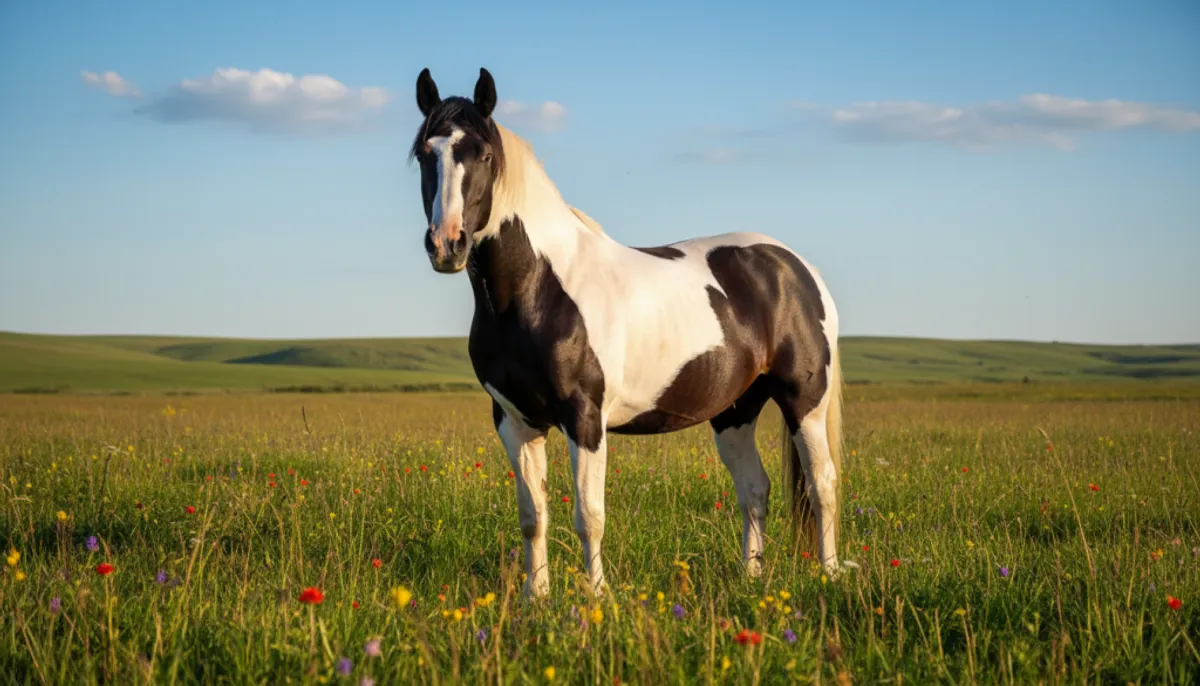
This captivating pattern immediately draws the eye. There are several types of coats among these equines, each telling a particular genetic story. Our guide invites you to explore this diversity to better understand these magnificent animals.
A major distinguishing sign is the pink skin located beneath the white hairs. This visual characteristic allows for clear identification of individuals belonging to this very special category.
Each pattern is the result of a rich history. The base coat interacts with the white patches to create spectacular and unique designs on the animal's body. This alchemy of colors makes every encounter with these horses truly memorable.
Key Points to Remember
- The piebald coat is characterized by large white patches on a base color.
- It exists in several types, defined by the distribution and shape of the markings.
- The pink skin under the white hairs is a key distinguishing feature.
- Each coat has a unique genetic story that influences its appearance.
- The final pattern results from the interaction between the base coat and the depigmented patches.
- This characteristic makes each animal easily identifiable and remarkable.
Introduction and Context
In the French equestrian landscape, the alliance between artisanal tradition and equine beauty occupies a central place. This harmony is essential for fully appreciating each mount.
Presentation of La Sellerie Française and Its Made in France Products
Founded on centuries-old know-how, La Sellerie Française stands out for its total commitment to local production. Each item is designed and crafted from A to Z in our workshops in France.
This approach goes far beyond a simple label. It guarantees exceptional quality and absolute respect for noble materials. The selected artisans create unique pieces or limited series.
Their expertise allows them to meet all requirements, from the most precise custom work to timeless classic lines. Here’s how their creations compare to standard equipment:
| Criterion | La Sellerie Française | Standard Product |
|---|---|---|
| Manufacturing Origin | Entirely in France | Often internationally assembled |
| Customization | Custom-made and limited series | Standard mass production |
| Materials | Selected high-end leathers and fabrics | Variable quality, often average |
| Craftsmanship | Made by master artisans | Industrial manufacturing |
| Durability | Exceptional, designed to last | Faster wear |
Importance of the Piebald Horse in the Equestrian World
The aesthetic rarity of certain equines, such as those sporting a piebald coat, makes them remarkable ambassadors. Their unique appearance captivates attention at every presentation.
Preserving this natural beauty requires special attention. Proper, gentle, and high-quality equipment is crucial. It prevents harmful friction on delicate areas.
Choosing products from a site like La Sellerie Française means providing your mount with the comfort and elegance it deserves. It is a tribute to its uniqueness.
Complete Guide to the Piebald Horse
The equine genetics offers a fascinating panorama, particularly through the study of coats composed of extensive white patches. Understanding these patterns allows for a greater appreciation of each animal.
Definition and Characteristics of the Piebald Coat
A piebald coat is defined by the presence of large patches of depigmented areas on a base color. A distinguishing feature is the pink skin located beneath the light hairs.
This characteristic is hereditary. It results from a complex interaction between genes. Each pattern is therefore unique to the individual.
The Different Types of Piebald Patterns
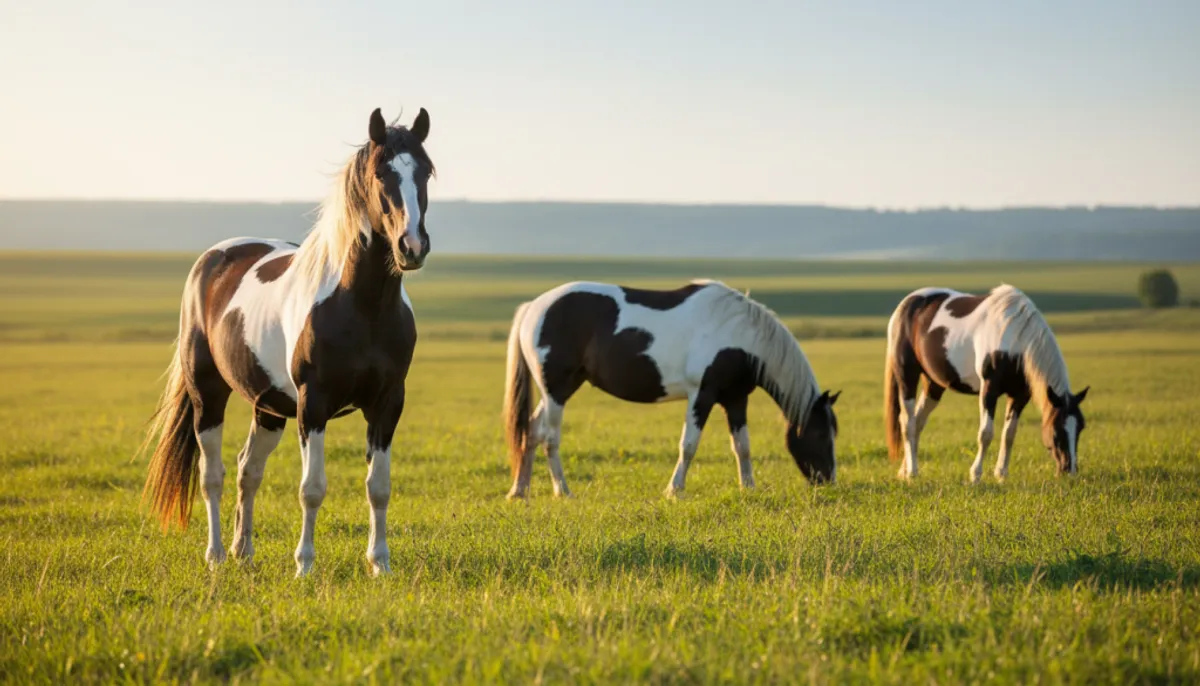
Several main types exist, classified according to the distribution of white. The tobiano type often shows a light line that crosses the back.
The overo, rarer, features a very light head and colored limbs. Caution: crossing two overo horses carries significant genetic risks.
The tovero combines traits from both. The balzan and the sabino offer very sharp or jagged visual effects.
| Type of Piebald Pattern | Main Characteristics | Location of Markings | Particularities |
|---|---|---|---|
| Tobiano | Colored head, white limbs | Continuous white patch on the back | Regular boundaries |
| Overo | Very white head, colored limbs | Side markings, does not touch the back | Genetic risk in crossing |
| Tovero | Combination of patterns | White head, markings on the flanks | Hybrid of both types |
| Balzan (Splashed White) | Very clear "wet" effect | Underbelly, lower limbs, head | Precise borders |
| Sabino | Jagged lace borders | Spread across the body | Frequent light eyes |
This classification helps to precisely identify each mount. It also guides breeders in their breeding choices.
Care and Practical Advice for the Piebald Horse
Caring for an equine with a piebald coat requires practical knowledge and an adapted routine. Its unique beauty necessitates special attention on a daily basis.
Daily Maintenance and Specific Care
The pink skin beneath the white hairs is very fragile. It burns easily in the sun. Protect these light patches with an appropriate equine cream.
A meticulous grooming removes dust. This prevents the patches from yellowing. Use a special shampoo for light coats.
Expert Tips to Preserve and Enhance the Coat
A diet rich in fatty acids nourishes the coat. The white patches then become more vibrant. The base coat gains depth.
In summer, cover the belly and flanks with a light blanket. This limits UV exposure. Detangle the tail daily to maintain its natural shine.
Adjust care to the season and activity of your mount. A rigorous follow-up ensures its health and lasting shine.
The History and Evolution of the Piebald Coat
While the piebald coat captivates today with its aesthetics, its historical journey is marked by changing perceptions. This rich history spans millennia and continents.

Historical Origins and Cultural Influences
The earliest traces date back to ancient Egypt, over 5000 years ago. This distinctive coat later traveled with explorers.
In 1518, Cortés' conquistadors introduced these mounts to America. Indigenous peoples quickly adopted them for their unique appearance in battle.
Photographs by Edward S. Curtis, in the early 20th century, immortalized this cultural preference. Thus, the legacy is profound and global.
The Role of the Piebald Coat in Equestrian Art
For a long time, European armies shunned these horses. The white patches made them too visible, a strategic disadvantage.
In literature, Victor Hugo made it a symbol of artificial oddity in "The Man Who Laughs." However, this uniqueness eventually charmed artists.
It became a favorite subject in painting and equestrian shows. Its evolution reflects the constant dialogue between man and animal.
Breeds and Specificities of Piebald Horses
The world of mounts with a piebald coat includes iconic breeds, selected for their beauty and abilities.
The Iconic Breeds and Their Characteristics
The Paint Horse was born in the United States in 1965. It values Quarter Horse lines featuring large white patches.
The Gypsy Vanner, chosen by Irish travelers, is renowned for its lush mane and abundant feathers.
In France, the Pinto has been officially recognized since 2018 by the Haras Nationaux. This breed allows for clear classification for all colored horses.
The powerful Clydesdale, a draft horse, often displays a sabino coat.
| Breed | Origin | Main Characteristics | Typical Piebald Pattern |
|---|---|---|---|
| Paint Horse | United States (1965) | Quarter Horse lineage, sporty morphology | Tobiano or Overo |
| Gypsy Vanner | Ireland / United Kingdom | Abundant feathers, thick mane, medium size | Piebald (various types) |
| Pinto | French recognition (2018) | Color registry, all morphologies accepted | All piebald patterns |
| Clydesdale | Scotland | Powerful draft horse with feathered legs | Sabino |
The Genetics and Influence of the Coat on Appearance
The genetics of these horses differs radically from that of spotted equines. It involves specific genes such as tobiano or overo.
These genes dictate the distribution of white patches on the base color. They also influence the skin under the light hairs.
This genetic diversity enriches the appearance of the coats. It offers an infinite variety of unique patterns.
Conclusion
In summary, the piebald coat represents much more than a simple aesthetic characteristic in the equestrian field. It embodies a fascinating genetic and cultural heritage that deserves to be understood and preserved.
Knowing the different types of coats, from tobiano patterns to delicate sabino, allows for better appreciation of your mount. Rigorous maintenance, suited to the fragility of the skin under the light hairs, is crucial for maintaining its shine.
Investing in quality equipment, such as those made by La Sellerie Française, enhances the animal's natural elegance. Whether you engage in leisure or competition, each breed adds its unique touch to this beautiful equestrian adventure.
FAQ
What precisely defines a piebald coat?
A piebald coat is characterized by the presence of large white patches on a colored base coat, such as black or chestnut. These well-defined white patches often cover the flanks, back, and head. This unique pattern is the result of a specific genetic combination.
What special care does an equine with this type of pattern require?
The skin under the white hairs is often more sensitive to the sun. Daily maintenance with suitable products, such as those from La Sellerie Française, is essential to protect the body and make the coat shine. A specific shampoo preserves the brightness of the colors.
Where does this distinctive pattern come from in history?
Its history is ancient and fascinating. Represented in equestrian art for centuries, these animals were highly valued. Their striking visual effect made them famous, particularly through iconic breeds like the American Paint Horse.
What are the main breeds known for displaying these beautiful patches?
Several breeds are renowned for this. The Paint Horse and the Gypsy Vanner are perfect examples. Each type presents specificities in the distribution of patches, whether on the limbs, belly, or tail.
How does genetics influence the appearance of these patterns?
Genetics determines the type of pattern, such as tobiano or overo. It governs the distribution of white on the base coat. The presence of certain markings, such as a very white head, is directly linked to these hereditary factors.