
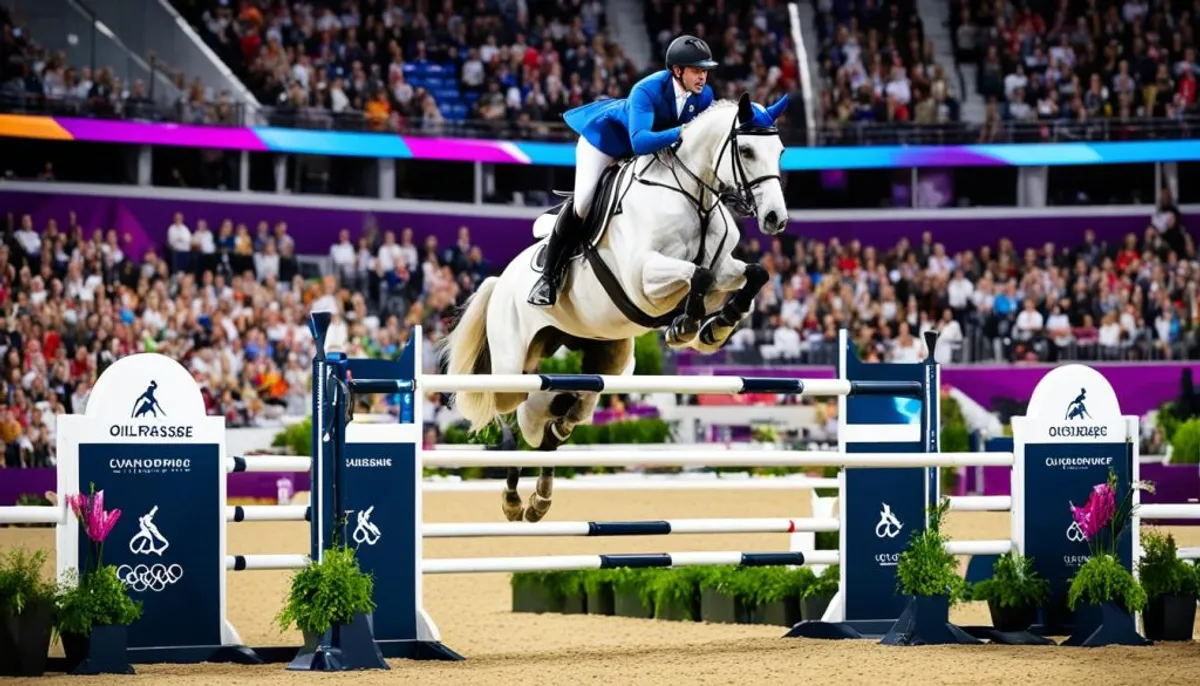
Equestrianism is a fascinating discipline, often linked to the Olympic Games. Since 1912, equestrian events have attracted the whole world. They combine grace, finesse, and athletic prowess. Paris is preparing for the 2024 Games, highlighting this discipline. This generates excitement among millions of fans.
Main points to remember:
- Equestrianism has been an integral part of the Olympic Games for over a century.
- The flagship disciplines of equestrian events are dressage, show jumping, and eventing.
- The Olympic Games in Paris 2024 will showcase the excellence of riders and horses.
- The Parisian competition venues will provide a prestigious setting for these events.
- The preparation of riders and horses is essential to shine on the Olympic stage.
History of Olympic Equestrianism
Equestrianism has been an Olympic sport since 1900. It was in Paris, during the first Modern Games. However, it was in 1912, in Stockholm, that the three main disciplines became official.
These disciplines are dressage, show jumping, and eventing. Since then, equestrianism has gained importance at each Olympiad. It brings together athletes of various ages and genders. This is due to the unique interaction between riders and horses.
Origins and integration into the modern Games
The history of Olympic equestrianism begins long before the Modern Games. Even in ancient times, equestrianism was present. But it was in 1896 with the Modern Era Games that equestrianism made its comeback.
The 1900 Games in Paris were the first where equestrianism had an official place.
The three flagship disciplines
Today, the three main events of Olympic equestrianism are well-known. They are dressage, show jumping, and eventing. Each showcases a unique aspect of the bond between rider and horse.
Dressage highlights harmony and grace. Show jumping tests agility and precision. And eventing combines these qualities with cross-country.
Since 1912, these three events have been at the heart of the Games. They testify to the variety and beauty of equestrianism.
Olympic Equestrian Disciplines
Equestrianism is incredible at the Olympic Games. It shows how humans and animals can work together in a magical way. Dressage and show jumping are very important. They shine during the Games.
Dressage: The art of grace
Dressage is like a dance on horseback. It requires the rider and their horse to be truly connected. Riders perform precise movements, called “tests,” and must do so with style.
What matters is how the horse and rider perform together. Judges closely observe the quality of the movements, flexibility, and how effortless everything appears.
Show jumping: The ultimate challenge
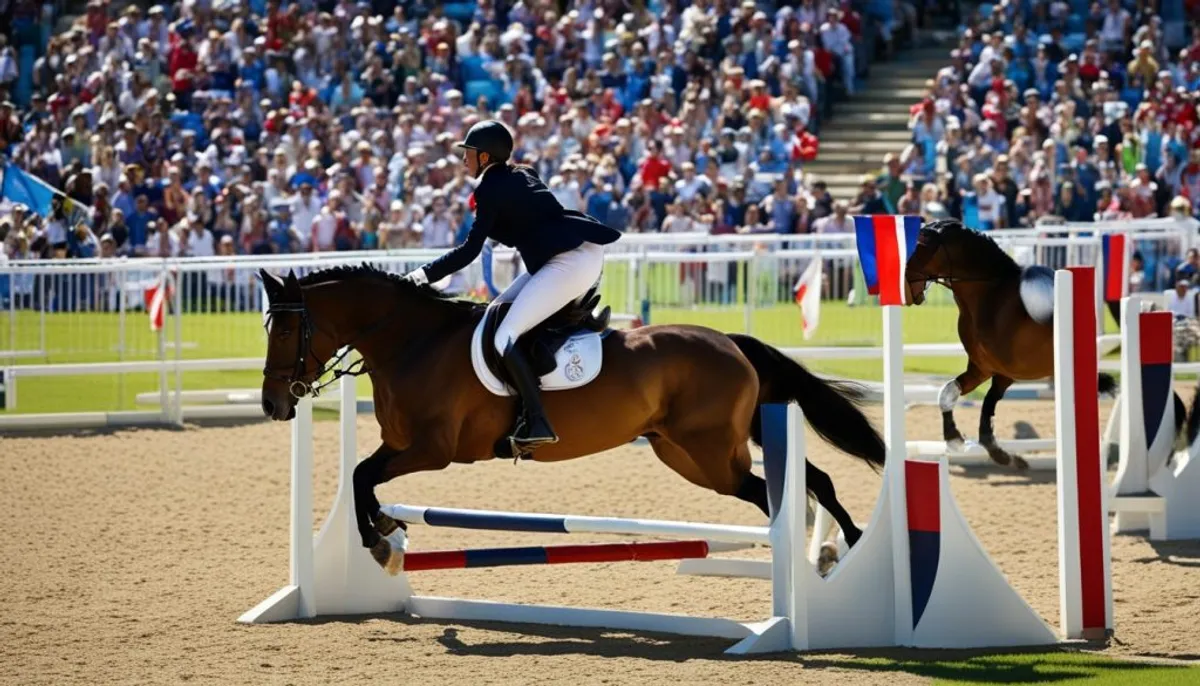
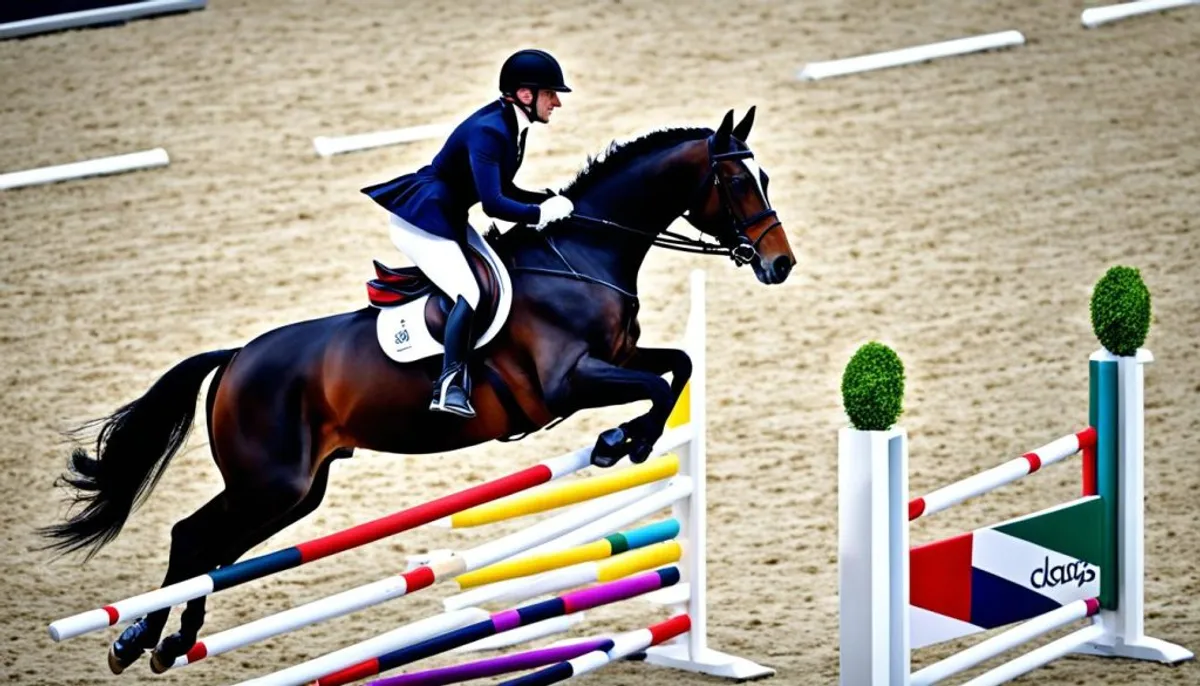
Show jumping is super exciting. Riders must jump over obstacles without knocking any down and within the time limit. If they make mistakes, they incur penalties.
This is really difficult and requires a great deal of skill. It includes a good relationship with the horse, fearlessness, and a lot of strategy.
| Discipline | Key characteristics | Main stakes |
|---|---|---|
| Olympic equestrian dressage | Harmonious relationship, fluidity, precision | Execution of tests, elegance, cooperation |
| Olympic equestrian show jumping | Clearing obstacles, speed, no faults | Technique, courage, strategy |
Eventing: The queen event
The eventing is like a triathlon but for equestrianism. It is very demanding and impresses with its spectacular nature. It combines dressage, show jumping, and cross-country. Thus, it highlights the great versatility and extraordinary talent of riders and their horses.
The cross-country is the final part of this competition. It is an endurance test where the rider and horse must overcome numerous obstacles. This course is long and features both natural and artificial obstacles. It also showcases the incredible relationship that must exist between the rider and their horse.
- The dressage showcases the grace and precision of movements.
- The show jumping is a challenge of agility and fluidity through obstacles.
- The cross-country tests endurance and mastery over a challenging course.
Succeeding in this competition requires extensive preparation and a unique connection. It is a major challenge for athletes and their horses. It highlights their strength, endurance, and skills in the art of equestrianism.
| Discipline | Objective | Main challenge |
|---|---|---|
| Dressage | Demonstration of grace and precision | Mastery of complex movements |
| Show jumping | Smooth clearing of a succession of obstacles | Agility and power of the horse |
| Cross-country | Endurance test on a demanding course | Coordination and mastery of the rider and horse |
Equestrianism Olympic Games: Towards Paris 2024
The Paris 2024 Olympic Games highlight equestrian sports, offering a magnificent stage. With world-class infrastructure and a passionate audience, the event will take place at the Palace of Versailles. This adds a grandeur to the equestrian competitions.
Prestigious competition venues
Paris 2024 offers exceptional venues for equestrian sports. They provide the utmost comfort for riders and their horses. The conditions are perfect for performance in Olympic equestrianism.
Preparation of riders and horses
Preparing for the Games requires a lot of work from riders and their horses. Athletes must refine their technique and strategy. And horses must be in great shape, both physically and mentally. To be at their best in the Olympic events, they go through qualification competitions, rigorous training, and attentive care.
| Preparation steps | Riders | Horses |
|---|---|---|
| Qualification competitions | Refine technique and strategy | Maintain physical condition |
| Intensive training | Develop coordination and focus | Build muscle and endurance |
| Care and veterinary follow-up | Manage stress and mental well-being | Ensure optimal health and well-being |
The teams and riders in contention
The Paris Olympic Games bring together the best riders from around the globe. They proudly represent their nation in equestrian disciplines. Each country fields three riders per discipline, plus individuals. The level is high, with countries such as Germany and the United States at the top of the rankings.
Leading equestrian nations
In the Olympic competitions, certain nations particularly shine:
- Germany, rich in Olympic titles and a strong equestrian tradition
- The Netherlands, a newcomer excelling in dressage
- Great Britain, known for its strong team and experience
- The United States, a reference in equestrianism on a global scale
| Nation | Olympic equestrian medals | Flagship disciplines |
|---|---|---|
| Germany | 148 medals (including 53 gold) | Dressage, Show jumping |
| The Netherlands | 73 medals (including 25 gold) | Dressage |
| Great Britain | 67 medals (including 22 gold) | Eventing, Show jumping |
| United States | 70 medals (including 21 gold) | Eventing, Show jumping |
These nations often rank high in team Olympic equestrianism and nation Olympic equestrianism. They impress with their high-level performances in various disciplines.
The stakes and importance of the Olympic Games
The Olympic Games are the pinnacle of the equestrian world. Winning an Olympic medal is a great honor for riders. They spend years working hard, sacrificing much, to reach this level.
Olympic equestrianism greatly helps to develop and popularize the sport. It attracts new fans and encourages everyone to get involved. It is a key event for Olympic equestrianism and its stakes.
- Prestige and international recognition for medal-winning riders
- Development and popularization of equestrianism on a global scale
- Encouragement of participation at all levels, from amateur to professional
- Technological advancements and improvement of animal welfare
- Accessibility and inclusion in the practice of Olympic equestrianism
The Olympic Games showcase the importance of equestrianism. They highlight its challenges and growth opportunities. These Games help to promote this sport on a global scale.
| Stakes | Importance |
|---|---|
| Prestige and international recognition | Development and popularization of equestrianism |
| Technological advancements and animal welfare | Encouragement of participation at all levels |
| Accessibility and inclusion | International showcase for equestrianism |
Innovations and future perspectives
The future of Olympic equestrianism is bright thanks to innovation and environmental concern. New technologies are being integrated into the training and care of horses. This improves both their performance and their animal welfare.
Technology and animal welfare
The welfare of competing horses is crucial. There is a focus on maintaining their physical and mental health. Heart rate sensors, cameras, and GPS help monitor their condition.
Accessibility and inclusion
Olympic equestrianism strives to be more accessible and inclusive. It promotes responsible practice. This is done by emphasizing animal welfare and making the sport accessible to all.
Diverse initiatives are being implemented to improve accessibility and inclusion. Programs, specific equipment, and awareness campaigns provide more opportunities for those wishing to practice this high-level sport.
In summary, Olympic equestrianism is moving towards a bright future. It emphasizes innovation, respect for animals, and openness to all. Thus, it creates an ethical and inclusive sports experience for lovers of this fascinating discipline.
Conclusion
Equestrianism has three disciplines: dressage, show jumping, and eventing. These sports are highly appreciated at the Olympic Games. Paris 2024 will be an unforgettable moment for fans of this sport.
It showcases the beauty and talents of riders and their horses. These athletes demonstrate the strong connection between humans and horses.
Riders display grace, strength, and determination. They are a source of inspiration for all fans. The Olympic equestrian sports celebrate excellence and passion in the equestrian world.
Under the spotlight in Paris, these athletes will give their all. They will deliver unforgettable performances. The equestrian olympic games 2024 promises to bring magical moments to watch and cherish.
FAQ
What are the main equestrian disciplines present at the Olympic Games?
At the Olympic Games, the three main equestrian disciplines are dressage, show jumping, and eventing.
When was equestrianism integrated into the modern Olympic Games?
It began at the 1900 Games in Paris. However, it was in 1912, in Stockholm, that the current three disciplines were firmly established.
What characterizes Olympic dressage?
Dressage is a kind of dance. It highlights the harmony between the rider and the horse, with precision and elegance.
What are the particularities of Olympic show jumping?
Show jumping is highly loved. Riders must jump obstacles without faults, within a limited time. This requires skill, understanding of horses, courage, and strategy.
Why is eventing considered the triathlon of equestrianism?
It is a complete test in equestrianism. It combines dressage, show jumping, and an endurance cross-country. Teams face natural and artificial obstacles over several kilometers.
Where will the equestrian events of the Paris 2024 Olympic Games take place?
The competitions will take place at the Palace of Versailles. A historic site that will further beautify the events.
What are the stakes for riders at the Olympic Games?
Winning an Olympic medal is a great honor. It signifies the culmination of a lifetime of hard work, dedication, and passion for equestrianism.
What are the innovations and future perspectives for Olympic equestrianism?
Today, technology helps to better train and care for horses. There is also work being done to make equestrianism more open and diverse. This aims to enrich the equestrian community.