
The excitement builds as you approach your first equestrian competition! Whether you are passionate about show jumping, dressage, or other disciplines, it is essential to prepare well. La Sellerie Française, an expert in quality products, supports you at every step. This way, you can embark on this adventure with peace of mind.
Main tips to remember:
- Understand how a show jumping competition works
- Prepare your horse and yourself for the competition
- Manage stress and focus on performance
- Follow the dress code for competitions
- Care for your horse's recovery after the event
Understanding how a show jumping competition works
The show jumping competition, or CSO, is very popular in the equestrian world. It takes place in an arena or on a riding surface. Riders and their horses must jump over numbered obstacles.
Before starting, participants can walk the course. This helps them remember the order of the obstacles.
Did you know? The first known show jumping competition dates back to 1865 in Ireland.
On the course, the rider receives a score based on penalties and time. The goal is to jump all the obstacles without faults and within the time limit.
| Steps of a show jumping competition | Description |
|---|---|
| Course walk | Riders discover and memorize the course on foot before they start. |
| Jumping round | Riders navigate the numbered obstacles on the course, timed. |
| Preliminary ranking | The rider's score is calculated based on penalty points and time. |
This overview helps you understand the CSO. Prepare well for your first event!
Preparing your horse for the first equestrian competition
The preparation of the horse for a first competition is essential. You should work the day before the event according to the level of the competition. This prepares both you and your horse mentally.
A light training session, such as ground pole exercises, is useful. It conditions the animal without tiring it too much. However, do not keep your horse in the stable for too long. It needs to expend energy to avoid being too anxious the next day.
| Goals of the training session | Recommended activities |
|---|---|
| Finalize the last details | Ground pole exercises |
| Mentally prepare | Light work, without overexerting the horse |
| Avoid excess energy | Let the horse expend energy, but not all day in the stable |
In conclusion, the preparation of the horse for the first competition requires appropriate work the day before. This helps you start the competition under the best conditions.
Points to check before the competition
Before heading to your first equestrian competition, make sure you have everything in order. Preparation is the key to success for this big day!
Check travel time
Allow ample travel time depending on traffic. Complications on the road can occur. Arrive at least 4 hours before the competition begins to settle in comfortably.
Gather necessary equipment
- Protective gear for your horse
- Well-maintained tack
- Halter, saddle pad, and other accessories
- Spare clothes for you and your mount
Ensure everything is clean and in good condition. Gather the necessary documents: horse passport, license, first aid kit, grooming bag, rewards for your horse, and a cooler.
Prepare transport conditions
Prepare everything at least the day before the competition. This way, on the day itself, you will only need to drive your horse to the trailer or truck.
The training session the day before the competition
The training session the day before is very important for your horse. It should be adapted to the level of the competition. This prevents overexertion.
Adapt the work to the level of difficulty
Observe how your horse felt previously. If it was hard, reduce the effort so it doesn’t get too tired. If it was easy, train more for the next round.
Don’t overexert the horse
Don’t keep your horse in the stable for too long. It needs to expend energy to be ready. The training session the day before finalizes the last details and mentally prepares you and your horse.
Mental preparation to manage stress
Horses are very sensitive to emotions. They can sense your stress, especially during a competition. Therefore, good mental preparation is crucial for proper readiness.
Breathing and visualization techniques
Breathing and visualization exercises are very helpful. They improve your concentration. Breathe deeply and imagine yourself succeeding.
Role of the coach and support
A coach can help you a lot. Their presence can reduce your tension and that of your horse.
Being mentally well is essential. It gives you more confidence and calmness for the competition.
The dress code for a CSO competition
An official competition of the French Equestrian Federation (FFE) requires impeccable attire. This applies to club or regional level competitions. You must be careful about your appearance to comply with the rules.
Dress code requirements for the rider
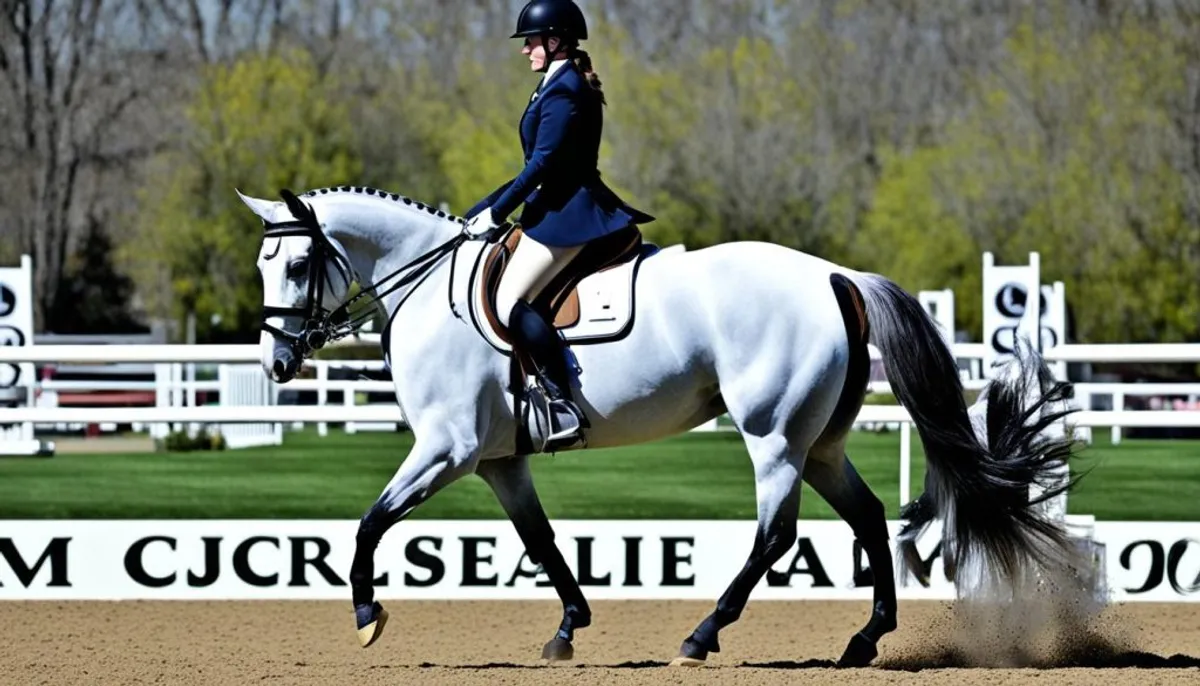
The rider must wear special attire. This includes black boots or boots with mini-chaps, white riding breeches, white shirt, white tie, and a black competition jacket. A certified helmet is also essential for safety.
Mandatory equipment for the horse
- Boots
- Fetlock boots
- Bells
- Girth with flap
- Clean white saddle pad
- Clean and well-maintained bridle
- CSO or all-purpose saddle
This equipment for both rider and horse is crucial for the competition attire image during an equestrian event.
Horse recovery after the competition
After an equestrian competition, it is crucial to ensure that your horse recovers well. Recovery is essential for its well-being and preparation for upcoming competitions.
Start by properly hydrating your horse. This is important if it has sweated a lot. Provide fresh water and light feed, such as unlimited hay and a salt block. This will help replenish its reserves.
A rest period is crucial. Do not ride it the day after the competition. Let it relax on a lunge line. This will allow it to recover physically and mentally.
| Step | Recommendation |
|---|---|
| Hydration | Offer fresh water and light feed |
| Feeding | Unlimited hay and salt block |
| Rest | Avoid riding the next day, let it relax on a lunge line |
By following these tips, you will help ensure optimal recovery for your horse. This will prepare it best for its upcoming performances.
Conclusion
Preparing for an equestrian competition requires attention to several points. This includes tack, protection, clothing, feeding, mental preparation, and recovery. Each point is crucial for success.
It is important to prepare well, train, and relax before the competition. Be patient and enjoy this moment with your horse. Our tips will help you feel ready and confident.
The preparation for a competition is a long process that requires rigor and perseverance. Continue to train and work with your horse. With our competition preparation tips, you will have every chance of success.
FAQ
How can I prepare well for my first equestrian competition?
For your first competition, you need to train your horse well. Also check the equipment and dress code. Arrive early and be mentally prepared for the stress.
Our guide will help you prepare with confidence.
What are the main steps of a show jumping competition?
In a CSO, riders jump over numbered obstacles. They can walk the course on foot before starting. Their performance is evaluated based on penalties and time.
How to prepare my horse for an equestrian competition?
The day before, adjust your horse's training according to the difficulty of the competition. Avoid overexciting it. Ensure it is well hydrated and well fed.
What are the key points to check before the competition?
Before the competition, plan the travel time and gather the necessary equipment. Ensure everything is ready the day before. Arrive 4 hours early to be calm.
How to mentally prepare for an equestrian competition?
Good mental preparation is crucial. Use breathing and visualization exercises to focus. Having a coach or a trusted person with you on the day can also help.
What is the mandatory outfit for a show jumping competition?
The rider's attire must be impeccable: black boots, white breeches, white shirt, white tie, black jacket, and certified helmet. The horse must be properly equipped with boots, fetlock boots, and a white saddle pad.
How to recover my horse after a competition?
After the competition, hydrate your horse and reduce its food intake. Provide unlimited hay. A little work on a lunge line will help relax it. Avoid riding the next day to allow it to rest.