
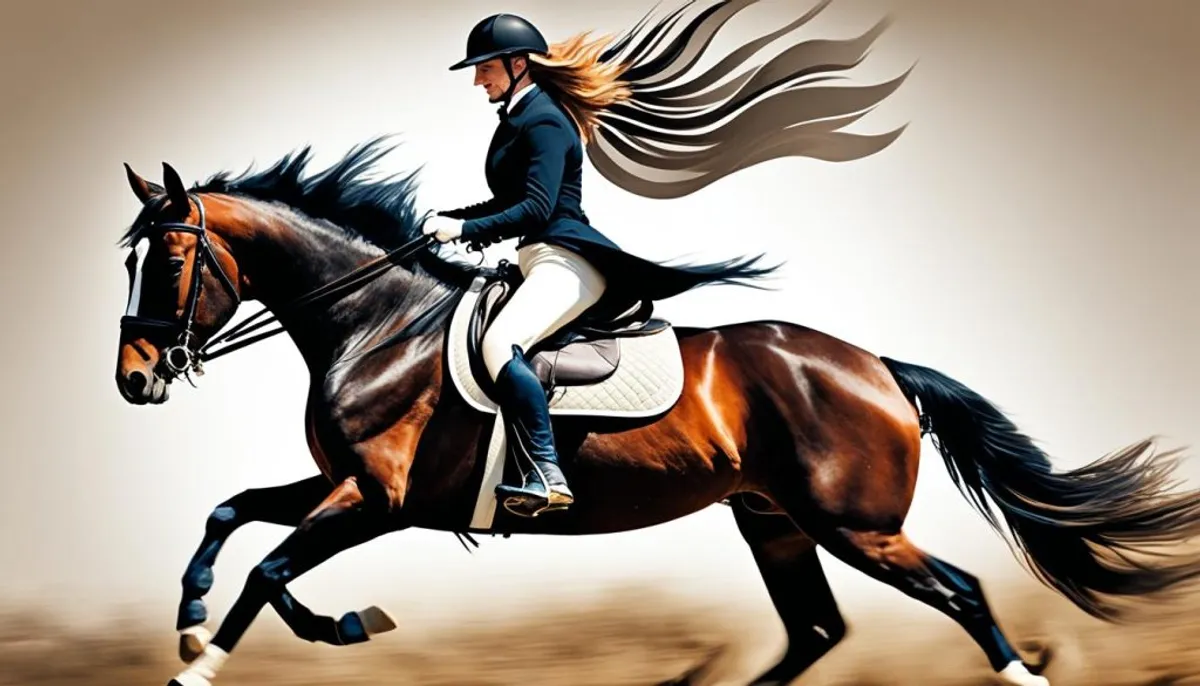
The world of horseback riding is full of opportunities for enthusiasts. The federal guide Gallop 3 is a key tool for those who want to improve. It includes a detailed program with training sessions, tips for caring for horses, and information to ride better.
Main points to remember:
- The federal guide Gallop 3 is a comprehensive tool for perfecting horseback riding
- It offers a structured training program with session sheets
- Ground work and riding, care, and knowledge are detailed
- This guide allows riders to progress to a more advanced level of practice
- Gallop 3 is an important step in equestrian development
Introduction
You hold in your hands a crucial guide for your equestrian journey. Designed for riders aiming for Gallop 3, it covers the vast official program of this level. You will discover everything you need to master to become a true pro.
No matter your level, this guide will be your ally. For beginner riders or experienced riders, it helps you improve your skills. You will progress toward your success at Gallop 3.
With this book, you will have all the elements to advance. It is not just a simple guide, but a road partner in your equestrian adventure. Together, let’s aim for excellence at Gallop 3!
| Themes covered | Objectives |
|---|---|
| Equestrian practice on foot and horseback | Master the basic techniques of horseback riding |
| Care and knowledge of the horse | Develop a deep understanding of the horse |
| General knowledge | Acquire theoretical knowledge about horseback riding |
Official program of Gallop 3
Gallop 3 helps riders progress step by step. They learn by facing four major challenges. They practice on foot and horseback, care for the horse, and acquire knowledge.
Equestrian practice on foot
On foot, riders discover how the horse reacts. They make it walk backward, shift its weight. They also learn to communicate better with their mount. These lessons are crucial for gaining trust and control over their horse.
Equestrian practice on horseback
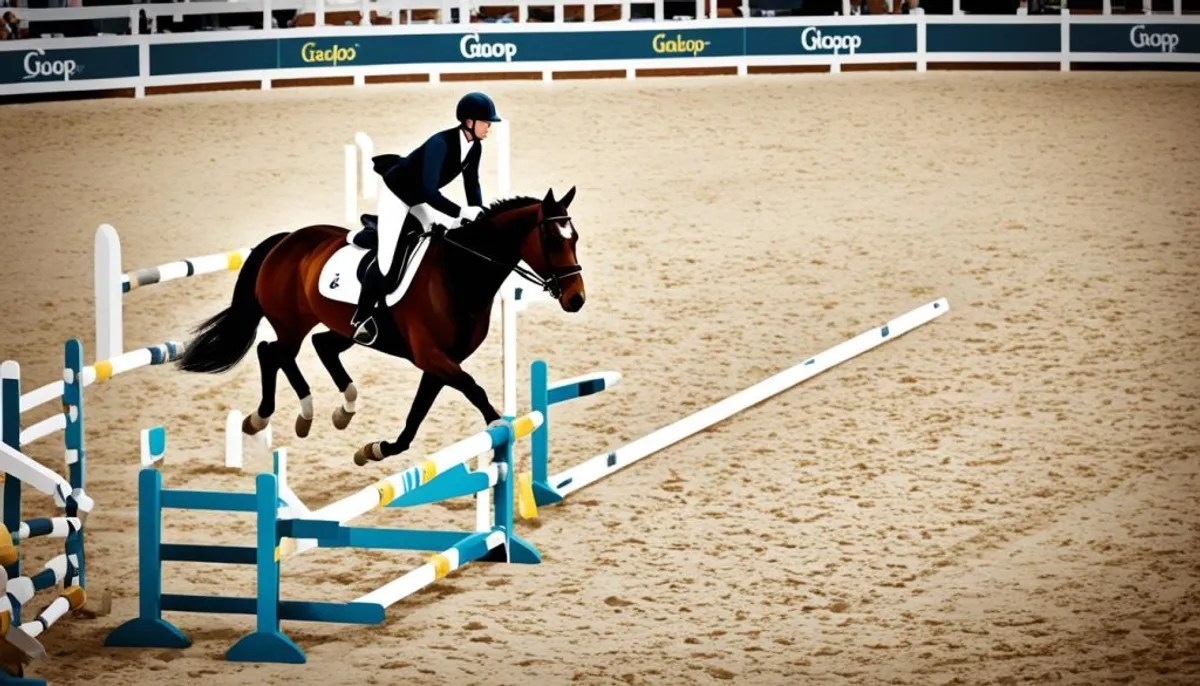
Mounted on the horse, they learn more advanced movements. Such as rising trot, starting to gallop, and jumping obstacles. Through this, they improve their balance, technique, and courage.
Care
Caring for the horse is also very important. They learn to brush it properly and to maintain the saddle and bridle well. This part helps them become responsible for their horse.
Knowledge
Finally, the theoretical aspect educates them on topics like aids for riding. The proper position of the rider and the different gaits are also part of the program. This knowledge is key to succeeding in both ground work and riding for Gallop 3.
This comprehensive background prepares them for the Gallop 3 exam. They are ready to take on this challenge thanks to well-thought-out training.
General knowledge
When preparing for Gallop 3, important things about horseback riding are learned. The different equestrian disciplines are discovered, and ring figures are learned.
The equestrian disciplines are varied, and each requires a particular skill set. We talk about dressage, show jumping, eventing, and endurance. Knowing these disciplines is essential for understanding horseback riding well.
The ring figures are also very important. Movements like circle, serpentine, and volte are studied. Being able to perform these figures helps to better coordinate with one’s horse.
By learning all this in Gallop 3, riders prepare well. They lay the foundation for excellent practice. Knowing the disciplines and ring figures helps them to improve further.
Knowledge of the horse
Reaching Gallop 3 requires a good understanding of the horse. One must learn about its natural activities and its life with others. One also discovers its coats and markings, and the various breeds. These details help us to better understand and communicate with the animal.
The horse's natural activities
Horses are made to live together. They spend time eating, moving, and resting with their friends. These moments are crucial for them:
- Grazing, to eat grass
- Moving to find food
- Resting moments, for their health
- Social interactions, important for their group life
The life of horses in groups
Horses enjoy living in herds, with rules of hierarchy. They protect and help each other. Knowing how their group functions helps to understand their behavior.
Coats and markings
The coat of a horse, along with the markings, makes it unique. It’s like its fingerprint. This helps us differentiate horses and learn about them.
Breeds of ponies and horses
There are many breeds of horses and ponies. Each has its physical and mental characteristics. Knowing these differences is key to serving the needs of each horse.
By learning about the horse, Gallop 3 riders create special bonds with their mount. This makes horseback riding more natural and enjoyable.
Caring for the horse
If you are at Gallop 3, it is important to take good care of your horse. This includes doing a full grooming and taking care of the tack. These actions are crucial for keeping your horse healthy and in a good mood.
Performing a full grooming
The full grooming is vital for your horse's well-being. It allows you to:
- Detect any health issues or injuries
- Maintain the horse's coat and skin
- Stimulate the overall well-being of the animal
To groom your horse properly, follow these steps:
- Brush its body to remove dirt and dead hair
- Clean its hooves with a hoof pick
- Comb its mane and tail
- Take care of its skin with creams or oils if necessary
Doing this regularly will keep your horse in top shape.
Maintaining the tack
After grooming, also think about maintaining the tack. It’s crucial for your horse's comfort and safety during riding.
Here’s how to properly maintain your equipment:
- Frequently clean the tack (bridle, saddle, etc.) with mild soap and a cloth
- Check the straps, buckles, and attachment points, replacing them if necessary
- Use appropriate products (grease, oil…) to maintain the leather
- Store everything in a dry place, away from light
By taking care of your tack this way, it will last you a long time for enjoyable riding moments.
Gallop 3 riding
Doing Gallop 3 means learning a lot about riding, control, and jumping. A rider must know many things. They must be able to rise in trot, gallop correctly, jump obstacles, and perform close jumps. All while maintaining perfect posture and balance.
To achieve Gallop 3, a rider must be able to:
- Rise in trot smoothly without sitting
- Gallop starting on the right lead
- Navigate obstacles skillfully
- Perform different jumps close to each other
- Stay upright and stable in the saddle
The importance of control is key at Gallop 3. Riders must guide their horse with precision. They need to remain flexible and balanced. Regularly practicing Gallop 3 helps improve equestrian riding and jumping.
| Skills | Required level |
|---|---|
| Rising trot | Master rhythm and consistency |
| Starting to gallop | Begin on the right lead |
| Jumping obstacles | Have good riding and jumping control |
| Posture and balance | Be stable and balanced |
By knowing these skills, riders will be able to progress in Gallop 3. They will improve their riding, control, and jumping.
Preparation for Gallop 3
Passing Gallop 3 requires good preparation. A guide outlines the objectives to achieve. It helps the rider to improve. A self-assessment sheet allows them to see their progress.
Session objectives
Riders should aim for several objectives for Gallop 3. For example, they should:
- Master the transitions between walk, trot, and gallop
- Change direction precisely at a gallop
- Perform complex figures in the ring
- Have a stable position on the horse
- Communicate clearly and gently with the horse
- Understand how to care for the horse
Self-assessment
The rider can use a sheet to assess themselves at Gallop 3. This covers all aspects of horseback riding. It helps them know what they do well and where they need to improve.
Preparing for Gallop 3 is an important moment. By following the objectives and self-assessing, one becomes better. It is a crucial step in the world of horseback riding.
Conclusion
This comprehensive federal guide has helped you prepare for your Gallop 3. Thanks to it, you have learned theoretical and practical things about horseback riding. It has given you the confidence needed to progress with horses.
It doesn’t matter if you are starting or already have experience. This course has helped you understand all the elements of Gallop 3. Now, you are ready to face new challenges and improve your equestrian practice.
Congratulations on your commitment and desire to always learn. Your love for horseback riding will take you far. We know you will continue to excel in riding.
FAQ
What is the federal guide Gallop 3?
It is an essential tool for riders aiming for the Gallop 3 level. It also helps instructors. This guide offers an organized program. It contains session sheets and practical information about horseback riding. One also learns to care for the horse and knowledge to progress.
What are the parts of the official Gallop 3 program?
The Gallop 3 program has four components. It includes ground practice. This involves leading the horse and moving its shoulders.
Next, there is horseback practice like rising trot and galloping. One must also jump obstacles.
Horse care, such as grooming, is also included. And finally, there is theoretical knowledge, for example, aids and posture.
What general knowledge is covered in the guide?
This guide discusses the different equestrian activities. It also explains important terms like ring figures. These basics help to understand Gallop 3 well.
What skills are related to horse knowledge?
For Gallop 3, knowing about horses is key. The guide talks about horses' habits, their life in groups, and their various characteristics.
One learns about colors and pony breeds. This knowledge helps to get along better with horses.
What practical skills are related to horse care?
Being at Gallop 3 means knowing how to take care of horses. For example, one must groom the horse very well. It is also crucial to maintain the horse's equipment properly.
What skills are related to Gallop 3 equestrian practice?
In practice, Gallop 3 requires riding and jumping. One must rise in trot, gallop, and jump obstacles. One must maintain good posture and be balanced.
How does the federal guide support preparation for Gallop 3?
This guide is an ally for Gallop 3. It provides the knowledge and practical exercises needed. With 30 detailed objectives, riders can check if they are progressing properly.