
Horseback riding is highly appreciated by women in France. However, during pregnancy, one must be more vigilant. The risks of falling are greater. Additionally, the body undergoes many changes. This article provides information so that pregnant women can continue horseback riding safely.
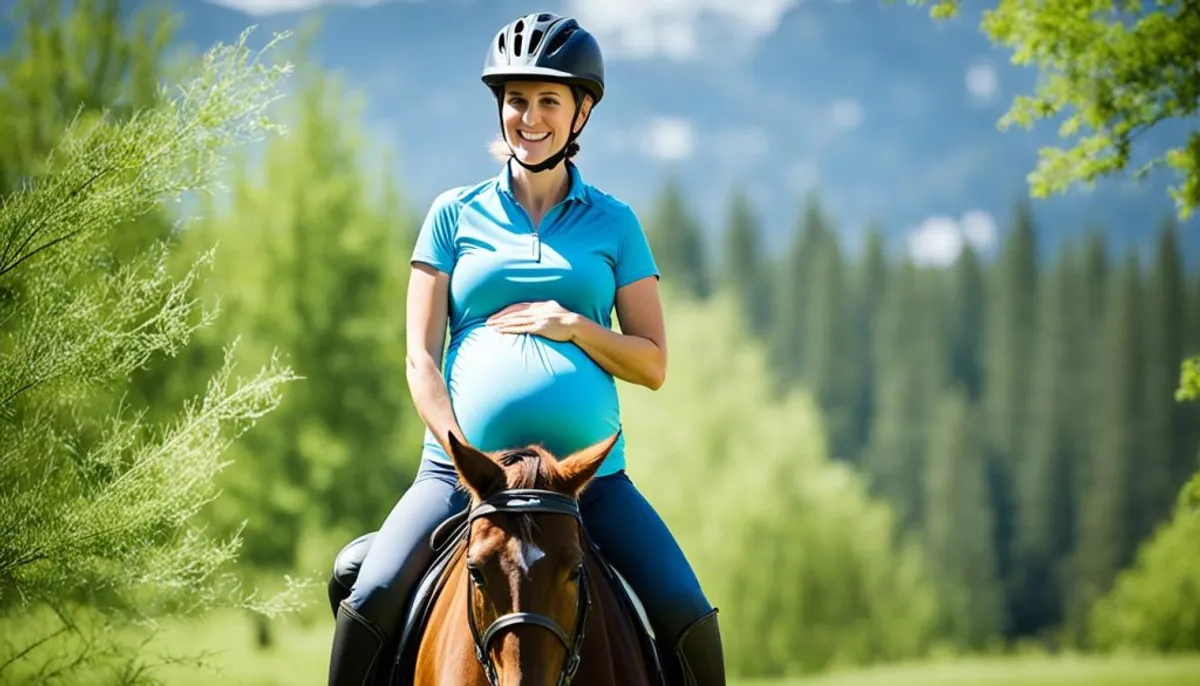
Key Points to Remember
- Horseback riding can be beneficial for pregnant women, but it requires precautions.
- Choose calm and suitable mounts, avoid trotting, especially in the first trimester.
- Inform healthcare professionals about practicing horseback riding during pregnancy.
- Prefer walking rides starting from the second trimester.
- Stop horseback riding in the third trimester to reduce risks.
- Wear appropriate protective equipment (helmet, protective vest).
- Stay vigilant during foot activities around horses.
Benefits of Horseback Riding During Pregnancy
Riding can be good for pregnant women. It is important to follow some safety rules. It is a safe physical activity during pregnancy. It helps mothers to become or stay fit and to
Adapted Physical Activity
Riding is gentle on the bodies of future mothers. Unlike other sports, horseback riding does not cause shocks. The movements are smooth. They help exercise all muscles safely.
Maintaining Fitness and Relieving Stress
Horseback riding is good for health. It helps to stay fit and manage stress. Communicating with the horse can be relaxing. Taking care of it provides a change of scenery. This improves the well-being of the mother.
| Benefits of Horseback Riding During Pregnancy | Description |
|---|---|
| Adapted Physical Activity | Smooth movements, without shocks or impacts, allowing gentle work of all muscle groups |
| Maintaining Fitness | Helps to maintain good physical condition during pregnancy |
| Relieving Stress | The contact with the animal and the care given to the mount allow for relaxation and distraction |
Precautions must be taken if one wants to ride while pregnant. It can be beneficial for pregnant women. It helps them maintain good shape and reduce stress.
Horseback Riding for Pregnant Women: General Precautions
The practice of horseback riding carries risks, especially the risk of falling. It requires strict precautions for pregnant women. Adapting equestrian activities is key to avoiding these fall risks horseback riding pregnancy and staying safe.
Fall Risk and the Need for Adaptation
When a woman is pregnant, her center of gravity changes. This makes balance more difficult to maintain. Pregnancy hormones can also reduce reflexes and coordination. Therefore, taking the precautions horseback riding for pregnant women is crucial to avoid falling.
- Choose calm mounts that are accustomed to pregnant women
- Adapt gaits by avoiding trotting and galloping
- Prefer walking rides
- Wear appropriate protective equipment
By making these necessary adaptations, horseback riding remains safe during pregnancy.
| Risk | Precaution |
|---|---|
| Fall | Calm mount, slow gaits, protective equipment |
| Loss of balance | Adaptation of the center of gravity |
| Reduced reflexes | Increased vigilance |
With the appropriate precautions for horseback riding pregnant women, future mothers can still ride safely.
First Trimester: Limit Risks
In the early months of pregnancy, caution is essential with horseback riding. The risk of miscarriage is higher. It is better to minimize horseback activities.
Ride a Calm Mount and Avoid Trotting
Choosing calm and gentle horses if one continues to ride is crucial. Trotting should be avoided. This gait can cause strong jolts, endangering the fetus.
Notify Healthcare Professionals
- Inform your doctors and midwives if you are riding during pregnancy.
- They will provide advice to stay safe by adapting your practice.
Talking with health specialists is vital. It helps to protect the health of the mother and child during this critical stage.
Second Trimester: Adapt the Practice
In the second trimester, the risk of miscarriage decreases. It is the ideal time to resume horseback riding more calmly. Prefer gentler activities and reduce exercise intensity. Walking rides horseback riding pregnant will be perfect for this.
Prefer Walking Rides
In the second trimester, horseback riding is still possible. But focus on calm walking rides. This maintains physical activity without risks of sudden movements. It’s a safe and enjoyable way to benefit from horseback riding while pregnant.
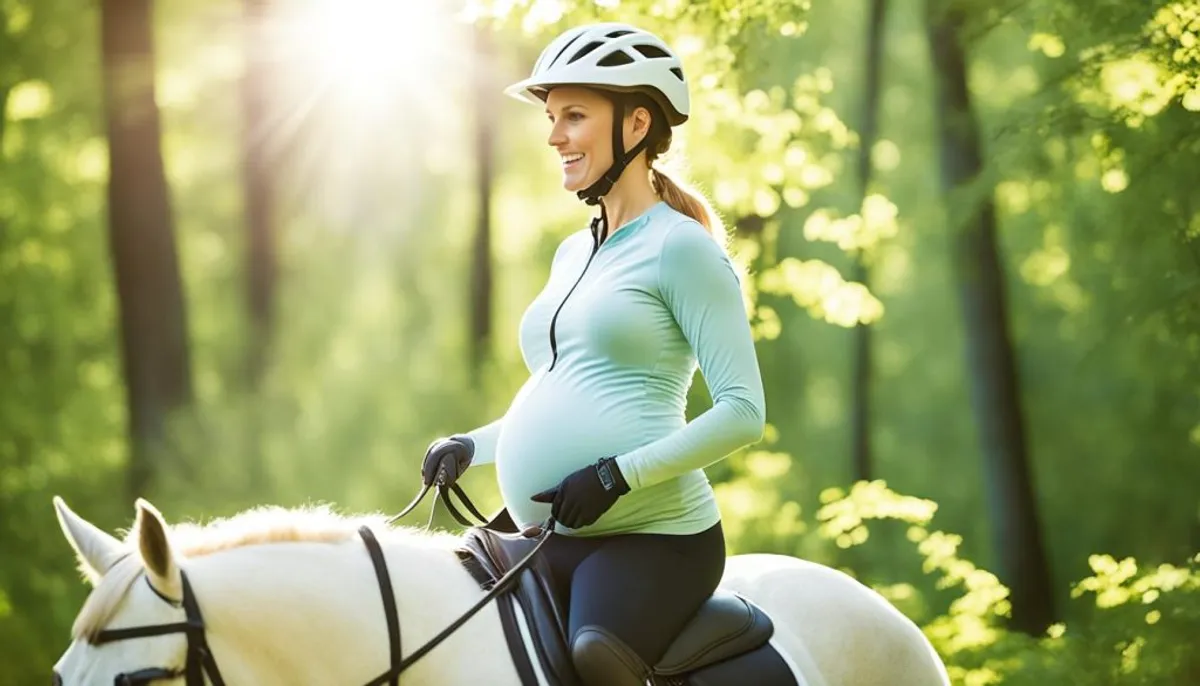
Always listen to your body and adapt your riding sessions. Do this according to your comfort and physical condition. This period should be enriching, relaxing, and positive for the future mother.
Third Trimester: Stop Riding
From the seventh month of pregnancy, horseback riding becomes risky. It is better to choose other activities from this point on. Swimming and walking are good options.
During pregnancy, the security of the mother and child is essential. The risks of falling while riding are significant. This comes from changes in balance and center of gravity. Opting for safer activities is the right choice.
Preferring swimming and walking helps to maintain fitness while avoiding risks for the baby. These exercises also help manage stress and prepare the body for childbirth.
With the physical adjustments of the third trimester, giving up horseback riding is wise. One must prioritize the safety of the mother and baby at this stage of pregnancy.
Preventing Risks Related to Horseback Riding While Pregnant
During pregnancy, great care must be taken. Safety is essential. One must carefully choose their mount and be attentive around horses.
Choose Familiar Mounts
The choice of horse is vital for pregnant women who ride. Opt for calm animals that are accustomed to beginners. This reduces the risks of falling or injury.
Stay Vigilant During Foot Activities
Even when not on the horse, staying cautious is important. Horses are unpredictable despite their training. Be careful when approaching or staying near the horse.
Following these tips allows pregnant women to enjoy horseback riding safely. It protects both the mother and child.

Appropriate Equipment for Horseback Riding While Pregnant
When riding while pregnant, safety is paramount. It is essential to have appropriate safety equipment. This reduces risks in case of a fall. The helmet and protective vest are indispensable.
Wearing a Helmet and Protective Vest
A rider, even if she is expecting a baby, must always wear a helmet. This prevents serious head injuries. A protective vest adds a layer of safety. It protects the torso and back, which are vulnerable areas during pregnancy.
- Ensure that the helmet meets safety standards and fits well on your head.
- The protective vest must be certified and perfectly fitted. This guarantees its full effectiveness.
In addition to essential safety gear, appropriate clothing is crucial. They should be comfortable and protect delicate areas.
The safety equipment ensures a calm practice of horseback riding while pregnant. It decreases the risk of injuries for both the mother and baby.
Conclusion
In summary, horseback riding while pregnant can be very good for health. However, it is important to listen to doctors and adjust practices according to pregnancy.
Being attentive to one’s body is sound advice. It is also important to choose gentle and well-trained horses. And of course, wearing the right safety equipment is essential.
Until the end of the third trimester, continuing to ride can be beneficial. It helps to stay fit and relax. But it is necessary to stop after that for the well-being of all.
In conclusion, horseback riding can be a wonderful activity for future mothers. If they take care of themselves and follow medical advice, they can experience joyful moments on the back of a horse.
FAQ
What are the benefits of practicing horseback riding during pregnancy?
Horseback riding while pregnant offers several advantages. It allows for movement without risk, helps to stay fit, and reduces stress.
What precautions should be taken when practicing horseback riding while pregnant?
It is crucial to modify one’s riding to avoid falls. Pregnant women must be very cautious regarding this risk.
What recommendations for the first trimester of pregnancy?
At the beginning of pregnancy, it is wise to reduce riding sessions. Riding a calm horse is important if continuing. Trotting should be avoided. Always inform a doctor.
What practice to recommend in the second trimester?
In the second trimester, one can consider riding more often. However, calm rides should be prioritized. Intense activities should be avoided.
What to do from the seventh month of pregnancy?
After the seventh month, it becomes too risky to ride. Horseback riding should be stopped. Opt for other sports like swimming or light walks.
What specific precautions for horseback riding while pregnant?
To reduce risks, choose well-trained horses and remain attentive when near horses. Wearing a helmet and a protective vest is essential.