
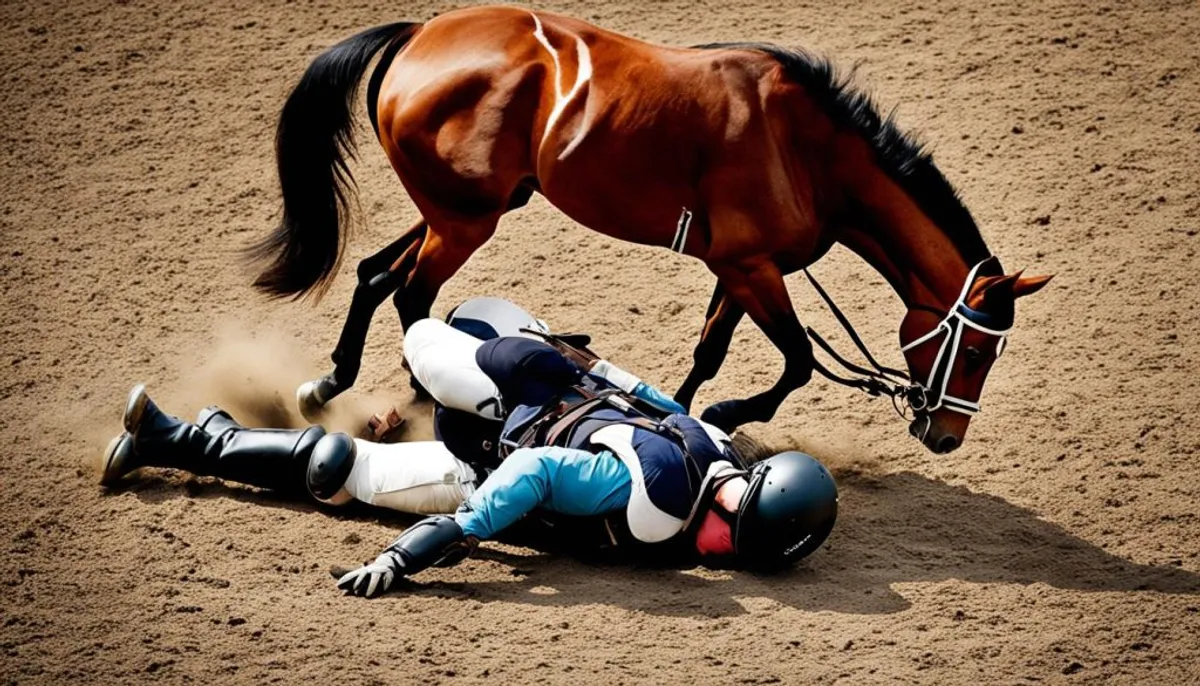
Horseback riding is an exciting and popular sport in France. However, it is true that it involves risks. Every year, many accidents occur in equestrian sports, sometimes with serious consequences.
The most common injuries affect the chest, arms, legs, and abdomen. They may require hospitalization. The risk of injuries related to horseback riding is higher than in other sports like football or skiing.
On the other hand, with the right protective equipment and proper training, horseback riding becomes much safer. The safety of riders is an essential priority, whether for leisure or competition. Although risks exist, horseback riding remains an exciting sport accessible to all, provided that necessary precautions are taken.
Key Points to Remember:
- Horseback riding carries risks of injuries, particularly to the head, neck, and torso.
- The risk of hospitalization is higher than in other sports like football or skiing.
- It is essential to use appropriate protective equipment to practice horseback riding safely.
- Proper training and horse training are also key factors in reducing risks.
- With the necessary precautions, horseback riding remains an exciting sport accessible to everyone.
Introduction
Horseback riding is considered one of the most dangerous sports in the world. Riding a horse presents many risks. These risks can have serious consequences on the safety of riders. However, for many, it is also a passion.
This article aims to explain the dangers of horseback riding. It also shows how to avoid them to enjoy this sport safely.
The main risks of horseback riding include:
- Falls can cause serious or fatal injuries.
- The fear of the horse can put the rider in danger.
- Accidents can occur due to technical or mechanical failures.
- Health issues may arise from intensive or inappropriate practice.
To avoid these dangers, one must train, equip themselves properly, and follow safety rules. This is the goal of this article. It explores the safety of riders in this dangerous sport.
The Risks Associated with Horseback Riding
Horseback riding is thrilling but presents risks. Statistics on equestrian accidents are alarming. An American study reveals that falls from horses cause over 45,600 injuries each year. Injuries mainly affect the chest, arms, legs, and abdomen.
The risk of hospitalization for equestrian injuries is higher than for other sports. Out of 320 deaths related to equestrian accidents, 237 are due to neck and head injuries. This highlights the importance of protecting these vital areas.
Alarming Statistics
These figures reveal the risks of horseback riding that riders are exposed to. They underscore the importance of reliable equestrian accident statistics. This helps understand the most common rider injuries and take safety measures.
- Over 45,600 injuries caused by falls from horses each year
- Higher risk of hospitalization than for other sports
- 237 deaths out of 320 related to neck and head injuries
These statistics show that horseback riding is not without danger. It is crucial to consider the risks of horseback riding. Adopting appropriate safety measures is essential to avoid rider injuries and enjoy horseback riding.
Horseback Riding is a Dangerous Sport
Horseback riding is an exciting sport but full of risks. Horses, weighing around 600 kg, can react unpredictably. This can lead to dangerous falls for the rider. The most frequent accidents often occur during collisions or in stables, especially if riders are not cautious.
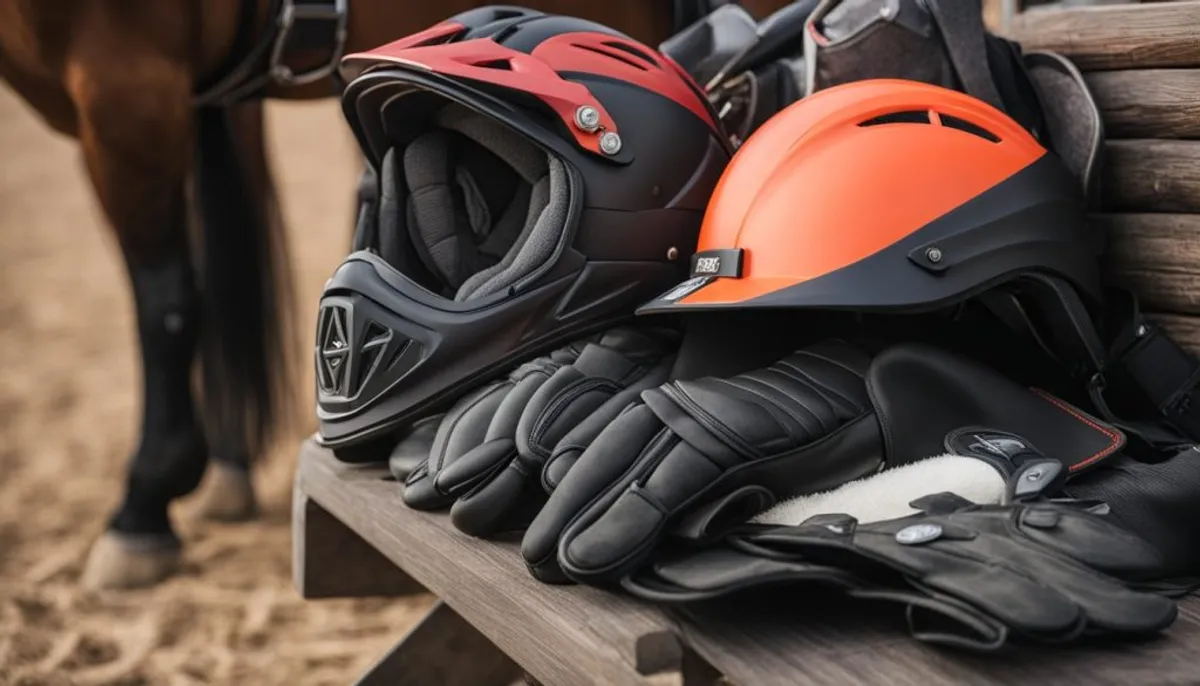
The main danger is head trauma in case of a fall. That is why using protective equipment is crucial. The dangers associated with horseback riding must be taken seriously. This helps avoid horse accidents and fully enjoy this sport.
- Risk of collision with vehicles on the road
- Unpredictable reactions of horses that can lead to falls
- High risk of head trauma in case of a fall
Even though horseback riding is a risky sport, it is possible to minimize these dangers. Using protective equipment, receiving proper training, and managing horses well are key to safe practice.
Essential Protective Equipment
For horseback riding, certain protective equipment is crucial. The helmet is essential to protect the riders' heads in case of a fall.
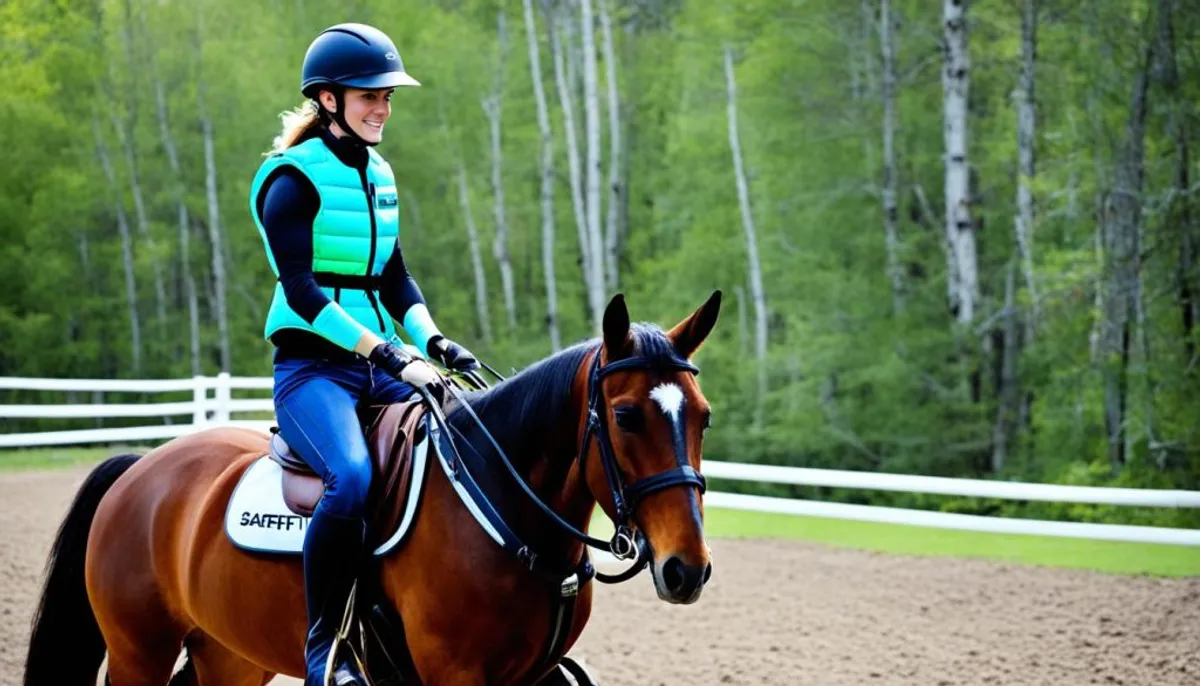
A new product has changed the game: the SAFETFIT airbag vest. Designed for equestrians, this vest protects vital areas of the body.
The SAFETFIT Airbag Vest
The SAFETFIT airbag vest has been tested and certified. It reduces the chance of serious injury by 94 to 81% in the event of an accident.
- The SAFETFIT vest is lightweight, breathable, and fits all body types.
- It deploys in 0.1 seconds to provide maximum protection for riders.
- The SAFETFIT airbag vest is comfortable and discreet, without limiting movement.
The SAFETFIT airbag vest enhances equestrian safety equipment. It ensures superior rider protection in this exciting sport.
Training and Horse Training
Training and horse training are essential to reduce the risks of horseback riding. It is important to understand their behavior, motivations, and personality. This helps create a safe environment during riding sessions.
Properly preparing horses and using protective equipment is crucial. This helps limit the dangers of horseback riding. Here are important points to consider:
- Horse education: Socializing horses, familiarizing them with various situations, and teaching basic commands make horses more docile.
- Riding training: Regular training strengthens the bond between rider and horse. It also improves gestures and reflexes.
- Equestrian safety: Properly managing horses, especially when they are moving, improves everyone's safety.
In conclusion, educating and training horses are key for safe horseback riding. They help better understand and control horses. This makes the experience more enjoyable and safe for riders.
Managing Fear and Enjoyment of Horseback Riding
Fear is normal for riders. Refusing to admit it can lead to dangerous behaviors. It is important to normalize and accept this fear as a natural reaction.
By learning to manage fear, riders can continue to find pleasure in horseback riding.
Normalizing and Accepting Fear
Managing fear is essential for the safety of riders. Here are some tips for managing this emotion:
- Recognize that fear is natural and healthy.
- Communicate with your instructor about your fears.
- Practice breathing and relaxation exercises.
- Invest in an airbag vest to feel secure.
- Progress at your own pace and do not force yourself.
By taming their fear, the rider will regain the pleasure and passion for horseback riding.
Conclusion
Horseback riding is a risky sport, but it can be practiced safely. It is important to wear protective equipment like the SAFETFIT airbag vest. Proper training and adequate horse training are also crucial.
By following these tips, riders can fully enjoy horseback riding. Safety is essential. By adhering to best practices, horseback riding becomes a fulfilling sport.
By taking the right precautions, horseback riding becomes a safe sport for everyone. Enthusiasts can fully enjoy this activity. By focusing on safety, riders can concentrate on enjoyment and challenges.
FAQ
What are the main risks associated with horseback riding?
The most common injuries affect the chest (37%), arms (26%), legs (23%), and abdomen (13.5%). Equestrian accidents can lead to more frequent hospitalization than in other sports. Neck and head injuries are often fatal.
Why is horseback riding considered a dangerous sport?
Horses, which are impressive in size, can react unpredictably. This can lead to dangerous falls for the rider. Frequent accidents often occur during collisions or in stables, often due to carelessness.
The main risk is head trauma in case of an unfortunate fall.
What protective equipment is essential for practicing horseback riding safely?
Wearing a helmet is crucial. A new airbag vest, the SAFETFIT, offers protection for vital areas. It has been tested and certified for its effectiveness. Wearing this vest reduces the chance of serious injury by 94 to 81%.
How does training and horse training help reduce accident risks?
Understanding horse behavior and motivations is vital for safe practice. Proper preparation of horses, along with protective equipment, is essential to minimize dangers.
How to manage fear related to horseback riding?
Fear is normal and common among riders. It is crucial to accept it and learn to manage it. By facing fear in a healthy way, riders can continue to love this sport.