
Equestrianism is an exciting sport that offers numerous challenges and opportunities for personal development. Whether you are a beginner or an experienced rider, this article will guide you. We will explore the different levels of equestrianism, training, and equestrian disciplines. This will help you achieve your goals, whether for leisure or competition.
Main Ideas to Remember
- Discover the different levels of equestrianism in France, from beginner to advanced.
- Learn to progress through the training and teachings provided in stables and equestrian centers.
- Explore the equestrian disciplines, from leisure to competitions, to find the one that suits you.
- Develop your technical skills and confidence in the saddle to fully enjoy your practice.
- Find the resources and support needed to achieve your equestrian goals.
The Fundamentals of Horse Training
The training of the horse is crucial in equestrianism. It is based on key principles from the French Equestrian Federation. The Progression Scale and the equestrian lexicon are essential.
The Progression Scale
The Progression Scale helps riders improve their riding skills. It offers six key points for horse training:
- Correction of gaits
- Flexibility and relaxation
- Quality of contact
- Impulse
- Straightness
- Collection
Definitions of Lexicon Terms
The equestrian lexicon includes specific terms related to equestrianism. Understanding these terms is crucial for training and horse education. Key definitions include:
- Gaits: the ways a horse moves (walk, trot, canter)
- Flexibility: the horse's flexibility, essential for its balance and performance
- Contact: the connection between the rider's hand and the horse's mouth
- Impulse: the propulsive force of the horse's hindquarters
- Straightness: the alignment of the horse in a straight line
- Collection: the concentration of the horse's energy forward and upward
By understanding these basics, riders can progress in a structured and effective manner.
Correction of Gait
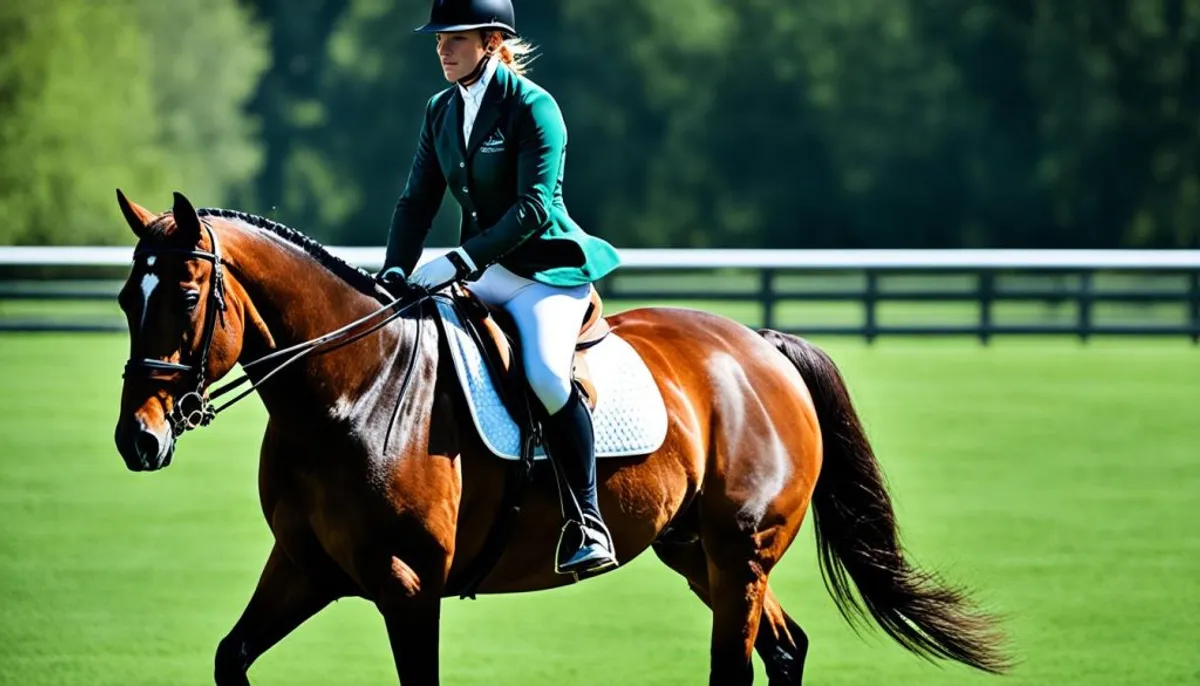
The correction of gaits is essential in equestrianism. It allows for the creation of clear, regular, and balanced gaits. This is the foundation of training. This step is very important, at the beginning of the Progression Scale.
The rider must work on several key points for quality gaits:
- The regularity of gaits: the horse must maintain a constant rhythm.
- The clarity of gaits: reactions must be clear and without hesitation.
- The balance of gaits: the horse must move with ease.
This foundational work is patient and methodical. It creates the basis for successful training. By correcting the gaits, the rider prepares their horse for the next steps.
| Objective | Means | Result |
|---|---|---|
| Develop the regularity of gaits | Transition exercises, changes of pace | Horse that maintains a constant rhythm |
| Achieve the clarity of gaits | Work on hand, aids, and flexibility | Horse that reacts clearly and promptly |
| Ensure the balance of gaits | Gymnastic exercises, work on two tracks |
Horse that moves with ease and stability |
Flexibility and Relaxation
Flexibility and relaxation are crucial in equestrianism. They help the horse move easily and in harmony with its rider.
Horse Flexibility Exercises
Equestrian flexibility exercises are essential for horse flexibility. They help to free the joints and improve mobility. Here are some exercises to do:
- Flexion/extension exercises of the neck
- Lateral movements of the neck
- Shoulder mobility work
- Hip unlocking exercises
Relaxation
Horse relaxation is as crucial as flexibility. It means physical and mental relaxation. This helps the horse focus on the rider.
By working on flexibility and relaxation, both rider and horse become more harmonious. This is reflected in fluid movements and better communication.
Quality of Contact
The contact with the horse is crucial in equestrianism. It creates a subtle communication between the rider and their horse. To achieve this, one must develop a lightness of the forehand and a permeability to the horse's aids.
The rider must learn to gauge their aids. This allows the horse to respond in a supple and quick manner. Regular flexibility work helps the horse relax and open up to requests.
When the horse reaches this level, it can perceive and respond to the slightest variations in rein pressure. The contact becomes light and always adjusted. This gives the rider a stable support to guide their horse.
By mastering this principle, the rider improves their precision and effectiveness. The quality of contact is essential for progressing and harmonizing with their horse.
Equestrian Level: Impulse
Impulse is essential in equestrianism. It is the fourth step of the Progression Scale. It allows the horse to move with ease and elegance. Developing this impulse is exciting for riders.
The impulse is related to the horse's locomotion. It shows its ability to move forward with strength. This energy of the horse requires patient work to stimulate the hindquarters.
- Encourage the engagement of the hindquarters
- Work on flexibility and relaxation
- Develop a light and balanced contact
- Perfect the horse's straightness
By working on these points, the rider can improve their impulse. This leads to high-quality riding.
Learning about impulse takes time and patience. But it greatly improves both the horse and the rider. Once mastered, their progress can become even better.
Straightness
Straightness is the fifth point of the Progression Scale. It is crucial for the training of the horse. It consists of keeping the animal straight, with the head, neck, and body aligned. This improves lateral movements and ensures perfect horse straightness.
Two-Track Movements
Two-track movements help to work on straightness. They make the horse's hips and shoulders move without moving the rest. This helps to become more flexible and better control lateral movements.
| Two-Track Movement Exercises | Benefits |
|---|---|
| Shoulder-in | Develops the horse's flexibility and suppleness |
| Shoulder-in | Improves control of lateral movements |
| Hip passage | Strengthens horse straightness and alignment |
By practicing these movements, the rider ensures optimal horse straightness. This is essential to continue training.
Collection
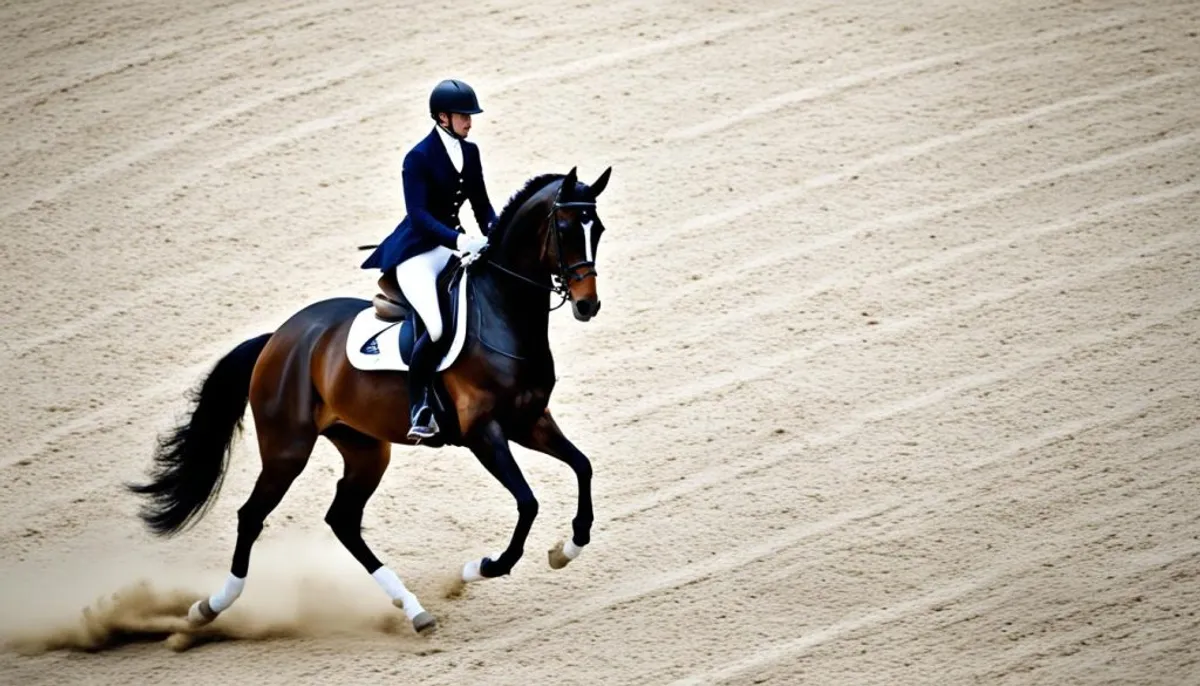
Collection is the sixth and final point of the Progression in Equestrianism. It aims to improve the horse's balance and impulse for perfect collection. This allows the horse to show its power while remaining supple and full of energy.
Developing Balance
Working on balance is crucial for collection. It helps the horse move lightly and maintain good posture. For this, regular training on the horse's flexibility and relaxation is necessary.
Developing Impulse
The development of impulse is also essential. It is a force that propels the horse forward and upward. By combining this impulse with good collection, a lifted position is achieved. This allows the horse to remain supple and free.
By mastering balance and impulse, the rider can guide their horse towards perfect collection. This is the pinnacle of dressage training.
Conclusion
This article explored the levels of equestrianism in France and how to progress. The Progression Scale of the French Equestrian Federation is key. It guides riders, trainers, and judges towards logical progression.
By following these principles, riders can improve their equestrian skills. This is true for leisure or competition. This method ensures that riders learn the necessary skills.
The method allows the world of equestrianism in France to grow. It empowers riders to progress and enjoy their time with horses.
FAQ
What are the different levels of equestrianism in France?
In France, equestrianism ranges from beginner to expert. Riders learn in stables or equestrian centers. They can choose between leisure or competition.
How to progress on horseback, from beginner to advanced level?
The French Equestrian Federation created the Progression Scale. It defines six key points for training. These points help riders improve and advance, regardless of their level.
What are the specific terms of the equestrian lexicon?
The equestrian lexicon uses terms such as gait correction and flexibility. Understanding these terms is crucial for progressing in equestrianism.
Why is it important to work on the correction of gaits?
The correction of gaits is essential. It allows the horse to walk in a balanced and regular manner. It is the foundation of training.
How to work on the horse's flexibility and relaxation?
Flexibility and relaxation help the horse move easily. This improves communication with the rider. Different flexibility exercises should be practiced for the horse's well-being.
Why is the contact between the rider and the horse so important?
Good contact is crucial for effective communication. A light contact allows the horse to respond to the rider's aids. This improves coordination.
What is impulse and how to develop it?
Impulse is the horse's energy. It is essential for training. It allows the horse to move with power and fluidity.
Why is it important to maintain the horse's straightness?
Straightness is important for the horse's balance and alignment. It facilitates movements and is crucial for performance.
How to work on the horse's collection?
Collection improves the horse's balance and impulse. It allows the horse to remain in motion while staying supple and energetic.