
Your first experience in the saddle is a magical moment. It marks the beginning of an exciting adventure. Rigorous preparation is the key to ensuring that this memory remains positive.
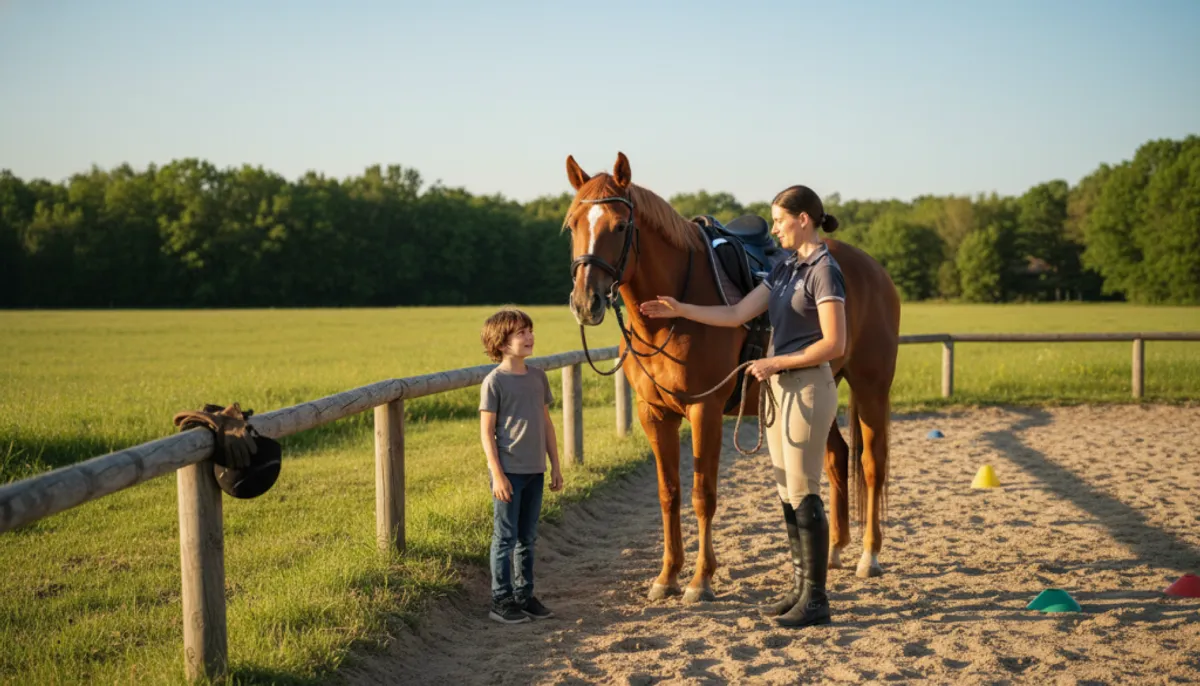
As confirmed by 80,460 consultations of a popular guide, approaching riding with the right foundations is fundamental. Don't rush. Take the time to get to know your partner.
The cornerstone of all learning is safety. A calm and well-equipped rider conveys their serenity. This helps to build essential mutual trust.
This first time is a milestone. Patience is your best ally. Every progress will make you more independent and comfortable in this new universe.
Key Points to Remember
- Thorough preparation is essential for a successful start.
- Safety, for both you and the animal, is the top priority.
- Advance gradually, without rushing the steps.
- Establishing a trust bond with your mount is crucial.
- This first experience should remain a pleasant and motivating memory.
Introduction and Context
According to a specialized article from late August 2025, knowing how to ride a horse forms the fundamental basis of any serious equestrian practice. This demanding discipline requires learning each gesture with great precision.
Taking regular lessons with a professional is essential. They correct poor postures from the very first sessions. This prevents you from developing bad habits that are difficult to lose later.
Trust between human and animal is built through calm and assured actions. A horse is very sensitive to the emotions of its rider. Your serenity becomes theirs.
Tailored advice for your progression helps decipher the behavior of the horse. This understanding is the key to advancing quickly and well in riding.
A good introduction relies on the repetition of basic movements. The unknown then transforms into a reassuring and enjoyable routine.
Preparing the Horse and Equipment
Before thinking about mounting your partner, a thorough check of the equipment is necessary. This step ensures your safety and the comfort of the animal.
Check the Girth and Equipment
Start with the saddle. A properly adjusted girth is fundamental. You should be able to slide two fingers between it and the flank.
This check is a crucial step. After a few minutes, the animal may swell its chest. Then, tighten the girth slightly.
Prioritize quality equipment. La Sellerie Française manufactures its products from A to Z in France. This excellence guarantees optimal comfort for your mount's back.
| Item to Check | Before Mounting | After a Few Minutes |
|---|---|---|
| Saddle Girth | Slide 2 fingers between the girth and the flank. | Tighten slightly if necessary. |
| Stirrups | Adjust the length to the right height. | Check that they haven't slipped. |
| Environment | Choose a closed and calm space. | Ensure no disruptive elements have appeared. |
Choose a Safe and Suitable Environment
Opt for a closed place, like an arena. This limits distractions for your partner.
Use a mounting block with two or three steps. You can easily access the stirrup from the left side. This also avoids unnecessary pressure on the animal's back.
Take your time. A good start involves these meticulous preparations.
Practical Techniques: How to Mount a Horse Safely
A good start in the saddle begins long before you lift your foot, with thoughtful positioning and calm execution.
Importance of Using a Mounting Block
Using a mounting block is a key step for your safety and the well-being of your partner. It significantly reduces the strain on the saddle during the effort.
This practice protects the animal's back. It also allows you to settle in with more ease and stability.
Positioning from the Left Side and Learning to Mount from Both Sides
Tradition dictates that one approaches the animal from the left side. This habit comes from knights who wore their sword on the right.
However, learning to mount from both sides is valuable advice. It helps develop your mount's musculature symmetrically.
Stand near the front shoulder. Hold the reins firmly in your left hand for gentle control of the mouth. Your assured position conveys confidence.
These simple techniques, repeated with patience, establish a relationship of respect and ensure a serene practice.
Mounting Steps and Positioning in the Saddle
The success of your first installation in the saddle relies on a precise sequence of movements. Each gesture must be thought out for your safety and the well-being of your partner.
Placing the Foot in the Stirrup and Gradual Hoisting
Insert your foot into the stirrup, ensuring that the weight rests on the ball. A light contact with the animal's mouth via the reins keeps its attention.
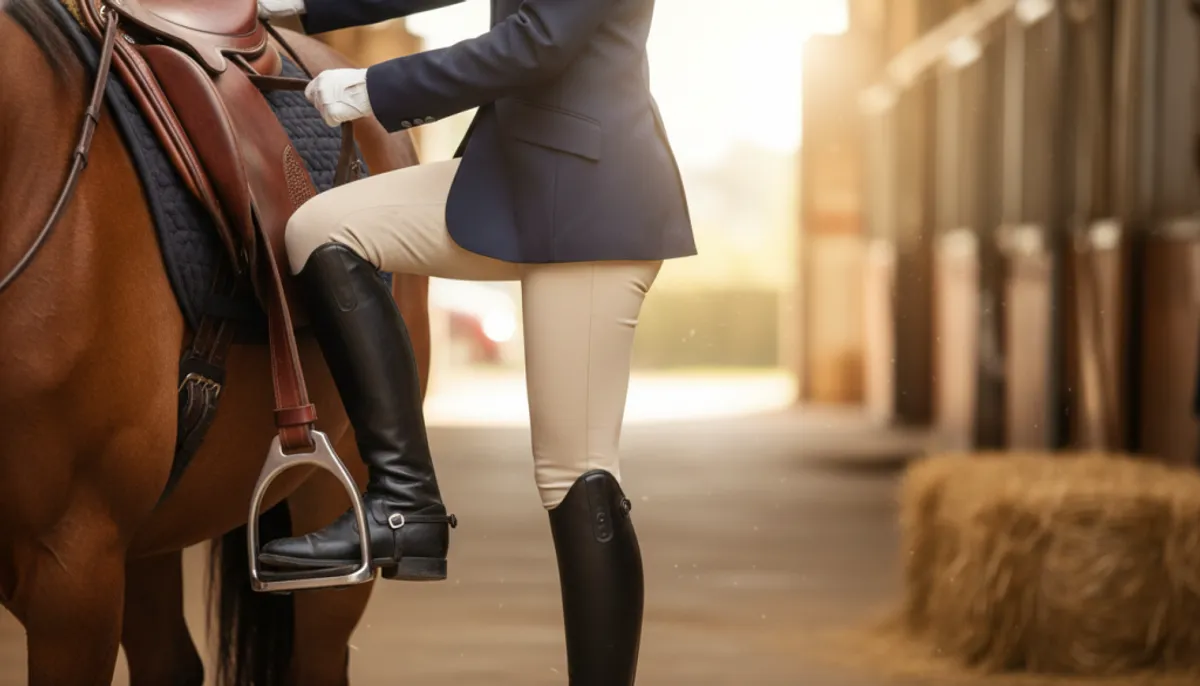
The hoisting should be gradual. Distribute your weight to avoid unbalancing the saddle. This step is fundamental for a smooth ascent.
Using Manual and Body Aids to Hoist Up
Your right hand rests on the pommel of the saddle for stabilization. This is especially useful if you are mounting without external assistance.
Use the impulse from your left leg to gently pass over the neck. Coordination improves with practice and time.
Quickly Adjusting Your Position to Preserve the Horse's Back
Once seated, adjust your position without delay. Check the girth, as the animal's thoracic volume may have changed.
Keep your gaze forward. Your head naturally guides your balance. A correct posture preserves your mount's back and strengthens mutual trust.
These solid foundations in riding ensure a successful and comfortable start for everyone.
Mastering Posture, Balance, and Equipment
The comfort of the rider and their mount directly depends on meticulous adjustment of the equipment. A good position in the saddle enhances communication and protects the animal's back.
Imagine a straight line connecting your ears, shoulders, hips, and heels. This alignment is the basis of perfect balance.
Correctly Adjusting Stirrups and Girth
An improperly adjusted stirrup creates instability. To check, sit normally. Your stirrup should reach your ankle.
The girth of the saddle should be checked after a few minutes. An animal relaxes and its thorax changes in volume.
This simple step is crucial for the safety of all. A slipping saddle poses an unnecessary risk.
Optimizing Posture for the Rider's Optimal Comfort
Your position should be active but relaxed. Let your weight sink into your heels to stabilize your leg.
Keep your gaze forward. The head naturally guides balance. Avoid staring at the ground.
Your hands should remain flexible on the reins. A rigid hand blocks the movement of your partner's back.
This mastery develops mutual trust. You thus progress towards a higher level in riding.
| Posture Element | Good Practice | Risk of Poor Practice |
|---|---|---|
| Body Alignment | Ears, shoulders, hips, heels aligned. | Imbalance and premature fatigue. |
| Length of Stirrups | Stirrup reaching the ankle. | Instability and loss of contact with the flank. |
| Tension of Reins | Flexible hands, light contact. | Discomfort for the mouth and blocking of the back. |
| Position of the Head | Gaze forward and up. | Imbalance forward and poor direction. |
| Weight Distribution | Weight down in the heels. | Unstable legs and weak seat. |
Safety Tips and Tricks for Beginner Riders
Risk prevention involves a combination of suitable equipment and wise behaviors. These simple principles allow you to approach each session with serenity.
Your ease will grow quickly if you always prioritize safety. This also protects the well-being of your equine partner.
Wearing Certified Protective Equipment
A certified helmet is non-negotiable. It must be worn every time you are in the saddle.
This equipment absorbs shocks in case of a fall. It is your first barrier against trauma.
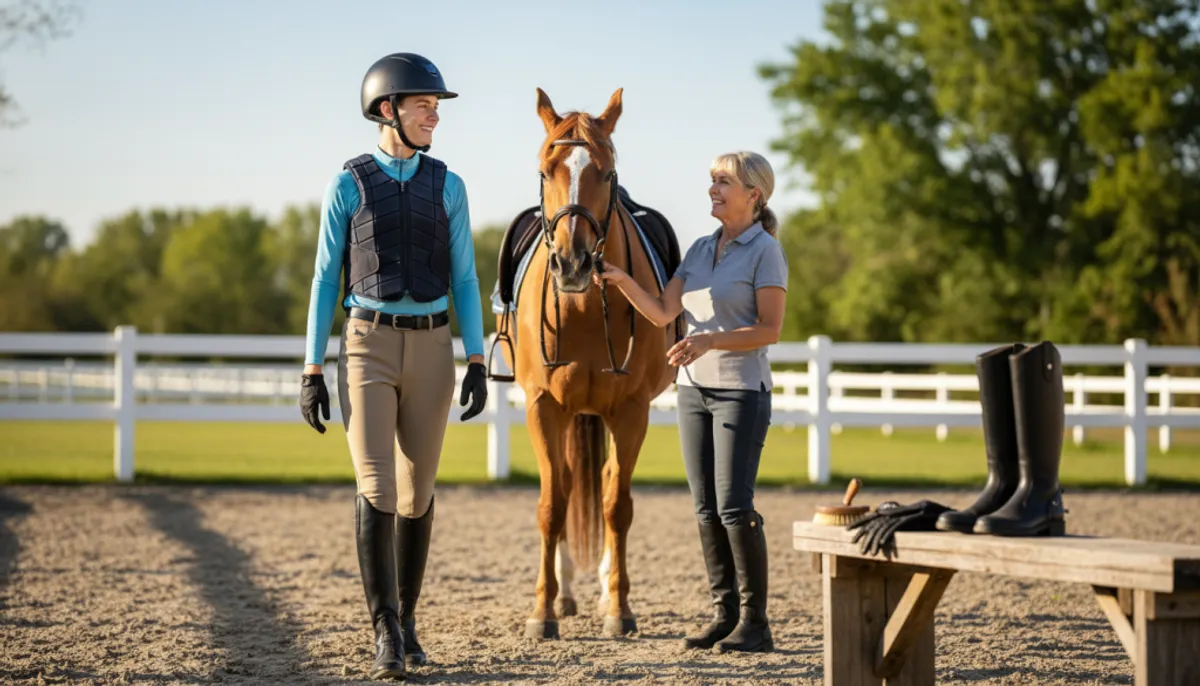
Choose boots with a small heel. They prevent the foot from slipping through the stirrup.
This simple precaution enhances your stability. It is essential for all exercises.
Ensuring Control of the Horse with Help or Self-Control
Always seek the help of an instructor for your first attempts. A professional anticipates unpredictable reactions.
They guide you to establish gentle and consistent control. Mutual trust thus naturally develops.
Also learn to dismount quickly if needed. This vital skill should be practiced calmly.
On the track, stay vigilant. Anticipate obstacles and other riders to avoid any incidents.
Never take unnecessary risks with a lively animal without assistance. This golden rule preserves your progress safely.
Conclusion
Riding is an art that is learned step by step, with patience and observation. This enriching experience requires rigor and a deep respect for your equine partner.
By following the preparation and mounting steps, you ensure your safety and that of your mount. Never forget to check your equipment, especially the girth and stirrups, before settling in the saddle.
Regular practice with a qualified instructor is the best way to progress. It helps you gain confidence and ease.
Enjoy every moment spent with your horse. It is in the bond and calm that the most beautiful relationships and the most harmonious riders are forged.
FAQ
How to properly prepare your mount before getting in the saddle?
First and foremost, it is crucial to check all equipment. Ensure that the girth is properly adjusted so that the saddle does not tilt. Also check the length of the stirrups and the condition of the reins. Good preparation guarantees your safety and the comfort of the animal.
Why is it recommended to use a mounting block?
The mounting block is a valuable tool, especially for novices. It significantly reduces the effort needed to hoist yourself up and minimizes twisting on your equine partner's back. It provides increased stability, making this first time calmer and safer.
Should I always approach my mount from the left side?
Traditionally, one approaches from the left side. This is a habit that the animal often understands. However, learning to mount from both sides is excellent practice. It improves your flexibility and prevents unbalancing your four-legged companion's back.
What is the correct method for placing your foot in the stirrup?
Insert only the front part of your foot into the stirrup, keeping the heel lower than the toes. This gives you a stable base. To hoist yourself up, push off with your left leg, using the mane or the pommel of the saddle for support, without pulling on the mouth with the reins.
How to optimize your posture once seated?
A good position is key. Your shoulders, hips, and heels should be aligned. Look straight ahead, keep your back supple, and your arms relaxed. A good balance distributes your weight harmoniously and allows you to communicate clearly with your natural aids.
What protective equipment is essential for beginners?
A certified helmet is absolutely non-negotiable. Proper shoes with a small heel prevent the foot from slipping through the stirrup. For the first sessions, a protective vest can also provide additional safety and boost your confidence.
How to maintain control of the animal during the first attempts?
It is wise to ask an experienced person to hold your partner's head, especially at first. They can keep it calm and guide you. Also learn to hold the reins correctly for gradual self-control, maintaining a gentle contact with its mouth.