
The impulse is fundamental in classical riding. It is the horse's desire to move forward, whether natural or acquired. It encompasses energy, cadence, and balance of movement, showing the engagement of the hindquarters.
It is vital for harmonious movements. It is obtained naturally or through work, but remains essential.
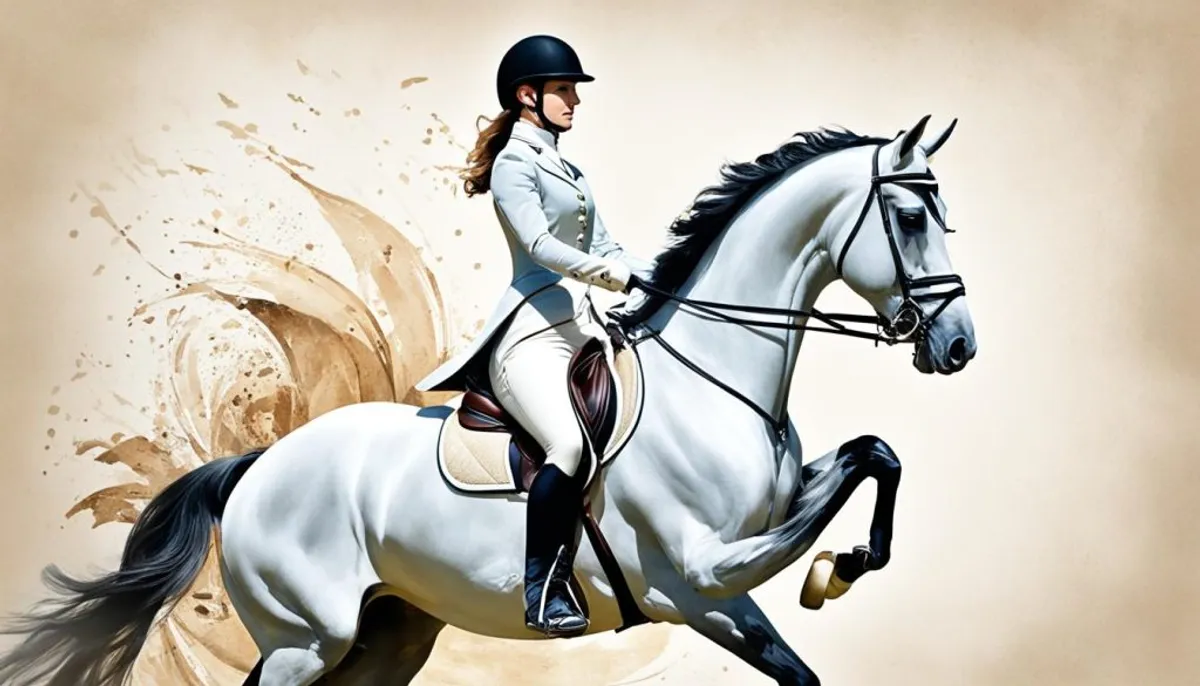
Key points to remember:
- The impulse is the horse's natural or acquired desire to move forward
- It is an essential physiological quality of the riding horse
- It is characterized by energy, cadence, and balance of gaits
- The impulse is the foundation of all dressage work
- A horse in impulse maintains the same attitude and cadence
Definition of impulse
The impulse is a natural force in the horse that pushes it forward. It is a state of mind of the horse. It shows the desire to react quickly when the rider asks.
If a horse does not have enough impulse, the rider must help it develop it. It is as much a physical force as a moral force. This means that the horse has the desire to go fast to obey the rider without assistance.
The characteristics of impulse
- The horse naturally wants to go forward
- It is a state of mind, showing the willingness to react quickly to requests
- A force that combines physical aspects and mental
The impulse is crucial in riding. It shows if the horse is ready to move quickly, according to the rider's indications. Without impulse, it is difficult to perform certain tasks on horseback.
Importance of impulse
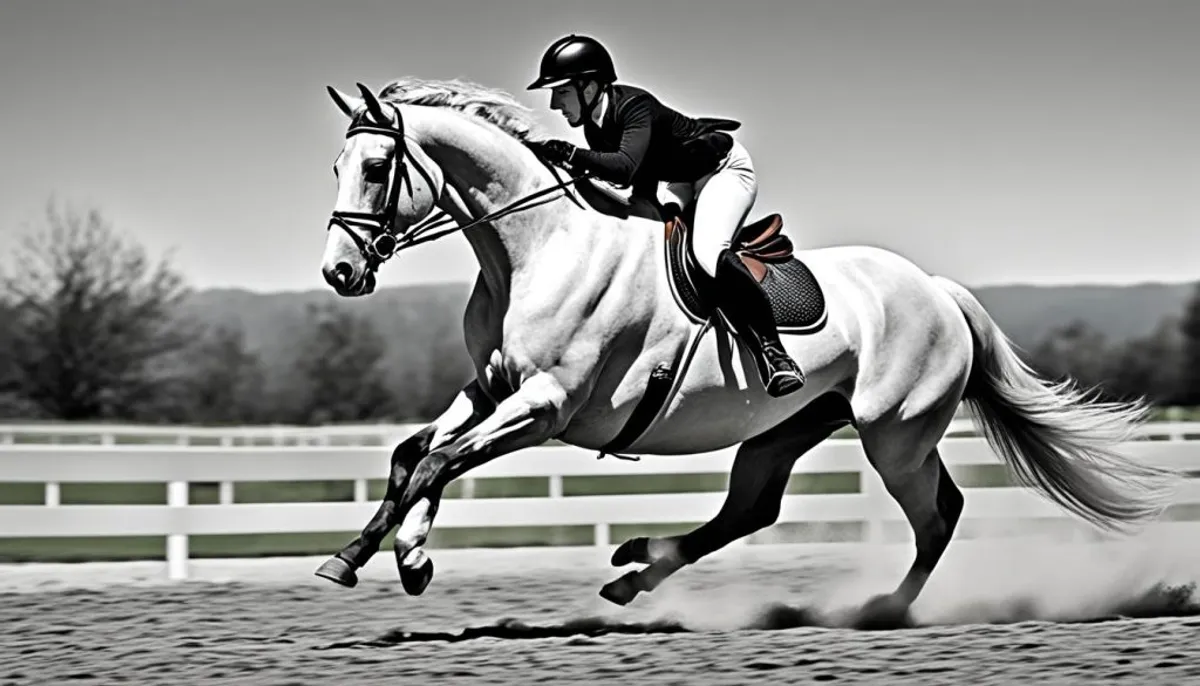
The impulse is crucial for the riding horse. It is about maintaining a constant rhythm and holding its energy. Without this, the horse would struggle to perform as expected.
For any equestrian competitor, the impulse is vital. It helps maintain balance. Without it, the horse would not execute the dressage movements or jump obstacles well.
It is indeed the key to quality movements. It enhances the rider's control over the mount. In every case, the impulse is necessary for success.
| Characteristics of a horse in impulse | Consequences of a lack of impulse |
|---|---|
| Same attitude and same cadence | Difficulties in responding to the rider's requests |
| Energy maintained in cadence | Limited engagement in dressage figures |
| Essential physiological quality | Difficulties in jumping obstacles and changing gaits |
Impulse riding definition
The impulse is when the horse wants to move forward by itself. It is very important for all horses used for riding. If a horse does not know how to move forward properly, the rider must teach it.
It is a major goal from the beginning of training. It is achieved by making the horse obey well. It must also give its maximum effort while remaining very disciplined.
Impulse, a state of mind and energy
The impulse shows that the horse wants to do what the rider asks quickly. It is as if it says: “I’ll do it right away, I want to move well forward.” This shows how motivated the horse is and that it wants to do well.
When in impulse, the horse maintains the same rhythm, even with new commands. This strength and energy it expends are crucial for success in dressage.
Developing the horse's impulse
Sometimes, the horse is not naturally impulsive as it should be. When this is the case, the rider must work with it. This involves making the horse more submissive, respecting the rider's signals, and mastering its hips.
The idea is that the horse moves strongly and steadily on its own. It must be ready to follow the rider's instructions. This is truly the first step towards high-level dressage.
Overall dressage scores
In the dressage competitions of the French Equestrian Federation (FFE), the impulse is very important. It is one of the major overall scores. Its coefficient is 1. It indicates key elements in a dressage horse.
Characteristics of impulse in dressage
The impulse means that the horse wants to move forward. We see this through:
- The horse's desire to move forward
- The elasticity of strides
- The engagement of the hindquarters
At the Amateur 3 level, judges look to see if the horse truly wants to move forward and if its hindquarters are active. But for Pro 1, Pro 2, Pro 3, Amateur Elite, Amateur 1, and Amateur 2, they also note the flexibility of the back.
| Level | Overall scores with impulse |
|---|---|
| Amateur 3 | 6 scores, coefficient 1 (desire to move forward, engagement of the hindquarters) |
| Pro 1, Pro 2, Pro 3, Amateur Elite, Amateur 1, Amateur 2 | 4 scores, coefficient 1 (desire to move forward, elasticity of strides, flexibility of the back, engagement of the hindquarters) |
Thus, the impulse has great importance in FFE competitions. It shows how motivated and strong the horse is to move smoothly and actively.
The impulse and movement
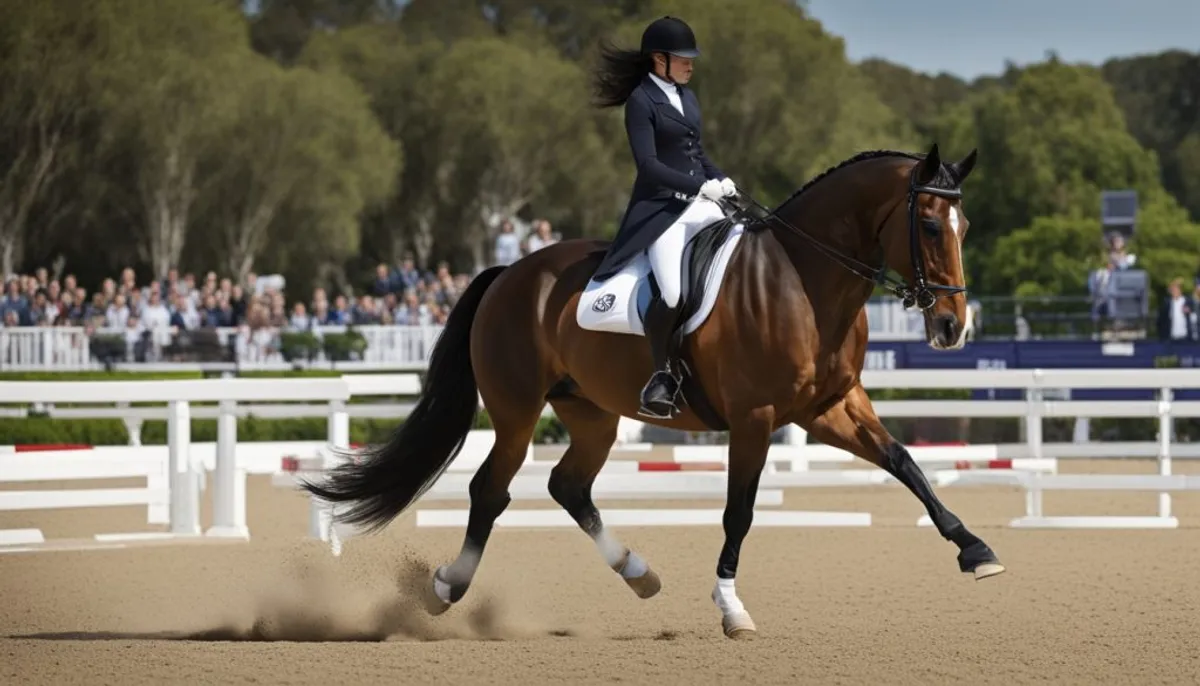
The impulse is what drives a horse to move forward. It comes from the activity of the hips. The back of the horse pushes the rest of its body forward. However, speed is not the only sign of impulse. When a horse has impulse, it responds well to its rider regardless of its pace, not just by going fast.
Reducing speed often allows for an increase in impulse. The impulse is very important for riding horses. It helps to communicate better and work together in harmony.
To achieve more impulse, the rider must focus on the engagement of the hindquarters. They must also work to improve the horse's propulsion. This is done with exercises to encourage hip activity. These exercises help the horse to want to move forward.
Finally, impulse provides high-quality riding. It allows the horse to show all that it is capable of. It also gives the rider the precision and fluidity needed to guide their horse. Understanding impulse is crucial for improving in riding.
Conclusion
The impulse is crucial for a riding horse. It is its desire to move forward. Self-regulated, it helps the horse maintain its attitude, rhythm, and balance without the rider.
This force is the foundation of equestrian dressage. It ensures the horse will be dynamic, light, and responsive. This allows for smooth communication between the rider and their horse. They become united in their movements.
By controlling the impulse, the rider can improve other aspects of dressage. Such as the precision of position and contact. The impulse is therefore the cement of fluid and precise riding.
FAQ
What is impulse in riding?
The impulse describes the horse's natural desire to move forward. It is a deep desire, whether encouraged by training or not. This force is seen as crucial for the horse.
Why is impulse important in riding?
The impulse is fundamental because without it, the horse cannot move properly. By having the right rhythm and remaining energetic, the horse can compensate to maintain its balance.
How can the rider develop their horse's impulse?
If the horse lacks impulse, the rider can work with it to develop it. This depends on the collaboration between the horse and the rider. Through subtle control of the hips and firm direction, the impulse can be strengthened.
How is impulse scored in dressage tests?
In dressage, the impulse is one of the four important scores. Judges look to see if the horse is willing to move forward. They also consider the fluidity of movements and the effort in each stride.
What is the difference between impulse and speed?
The impulse is not the same as speed. It refers to the horse's willingness to move forward. Speed is not taken into account when measuring impulse. In fact, reducing speed can increase the perceived impulse.