
Dive into the world of a fascinating equine, whose name resonates like a sweet echo from the plains of Central Europe. Its name, derived from Polish, literally means "little horse", perfectly reflecting its modest stature but well-tempered character.
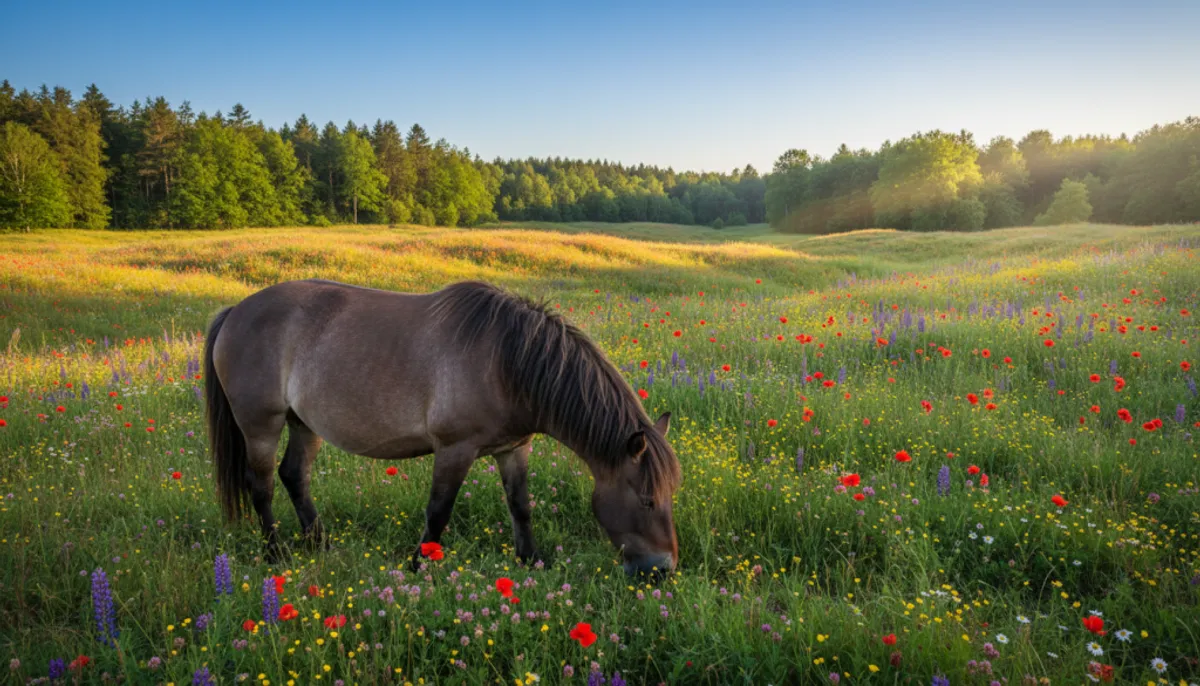
The history of this breed is rich and intimately linked to vast wild landscapes. It embodies remarkable resilience, having traversed centuries to establish itself as a symbol of tenacity.
Today, this robust pony plays a crucial role in biodiversity preservation. It has become a key partner for ecological management of natural spaces across Europe, demonstrating a utility that far exceeds mere equestrian contexts.
This guide offers a comprehensive exploration of its temperament, needs, and unique place in our ecosystem. Discover an animal whose simplicity is matched only by its strength.
Key Points to Remember
- The name "Konik" is of Polish origin and means "little horse".
- This breed is historically rooted in the landscapes of Central Europe.
- It is recognized for its great robustness and legendary sobriety.
- The Konik plays an important role in nature conservation projects.
- Its balanced temperament makes it an ideal partner for habitat management.
- Its breeding actively contributes to the preservation of European biodiversity.
- It is an animal with an ancient and valuable genetic heritage.
Origins and History of the Konik Horse
Behind its current robustness lies a genetic heritage directly descended from wild horses of Europe.
The roots of the Tarpan and the primitive heritage
The Polish Konik is officially recognized as the descendant of the Tarpan. This primitive breed became extinct during the 19th century.
Its origins are found in the Polish forests. The last specimens were captured there to ensure their survival.
Historical evolution and post-World War II revival
During World War II, breeding suffered major losses. The equines were requisitioned for military needs.
After this global conflict, conservation programs revitalized the population in Poland. This tumultuous history has forged a rustic character.
The adaptability of this pony is now exceptional.
Physical and Morphological Characteristics
At a glance, the morphology of this pony reveals centuries of adaptation to life in the wild. Its characteristics are a living heritage, perfectly designed for robustness.
The "mousy" coat and the emblematic dorsal stripe
The most typical coat is referred to as "mousy". This gray-brown hue directly evokes forest landscapes.
It is often highlighted by a dark dorsal stripe running along the back. This dorsal band is a primitive mark.
The presence of this stripe, along with zebra-like markings on the limbs, confirms an ancient genetic link. The dorsal stripe is a valuable distinguishing feature.
Size, proportions, and robustness
Its modest height, around 1.35 m at the withers, and its weight of approximately 400 kg illustrate a compact and powerful build.
A robust morphology, with a broad chest and strong cannons, allows it to withstand all climates. This strength is the result of demanding natural selection.
These physical traits define a functional equine, ideal for outdoor work. The Konik horse thus embodies the perfect balance between endurance and sobriety.
Temperament and Natural Behavior
Observing these ponies in freedom offers a fascinating lesson in group dynamics and adaptation. Their psychology is a perfect blend of innate calm and social intelligence.
Sociability within the herd
This breed possesses a thoughtful and composed temperament. This serenity facilitates its integration into groups living in semi-freedom.
Community life follows a stable hierarchy. A strong social cohesion unites herd members.
Attitude in freedom and under breeding conditions
Their natural balance makes them reliable partners for hiking. This cautious nature is a major asset outdoors.
In breeding, this gregarious behavior enhances their resilience. Managers of natural habitats greatly benefit from this.
| Behavioral Aspect | In Total Freedom | In Semi-Freedom | In Managed Breeding |
|---|---|---|---|
| Group Cohesion | Very strong, natural hierarchy | Stable, with defined grazing areas | Maintained, with human interactions |
| Reaction to Humans | Cautious observation from a distance | Curiosity and gradual acceptance | Calm and confident cooperation |
| Adaptation to Environment | Excellent, fully autonomous | Optimal for ecological maintenance | Guided, while retaining instinct |
This table summarizes the nuances of their behavior according to context. The horse thus demonstrates great versatility.
Traditional Uses and Historical Roles
Long before becoming an ecological symbol, this animal was a cornerstone of agricultural economy. Its practical history is rich and underappreciated.
From draft horse to farmer's ally
For many years, Polish farmers relied on its strength. They used it for plowing and transporting crops.
The name of this breed, meaning "little horse", aptly reflects this role. It was an tireless and modest worker.
In every country where it settled, its utility evolved. It transitioned from fields to leisure activities.
Its power, surprising for its size, made it an asset. It pulled carts and assisted with daily tasks.
This adaptability, while retaining its wild instinct, explains its lasting popularity. Rural areas have always appreciated it.
Breeding of the Konik horse in France and Europe
The preservation of this emblematic breed is now organized at the European continent level. From historic studs in Poland to large protected areas in France, a dedicated network ensures its sustainability.
Semi-freedom practices and breeding in nature reserves
The heart of traditional breeding still beats in Poland. Institutions like the National Studs of Sierakow or Popielno are its historical guardians.
In other countries, like France, the strategy has evolved. Many nature reserves now host herds in semi-freedom.
This method is truly crucial. It allows animals to express their natural gregarious behaviors and maintain their legendary robustness.
Rigorous veterinary and zootechnical monitoring accompanies this freedom. It ensures the well-being of each individual and the genetic health of the entire population.
Ecological Impact and Management of Natural Spaces
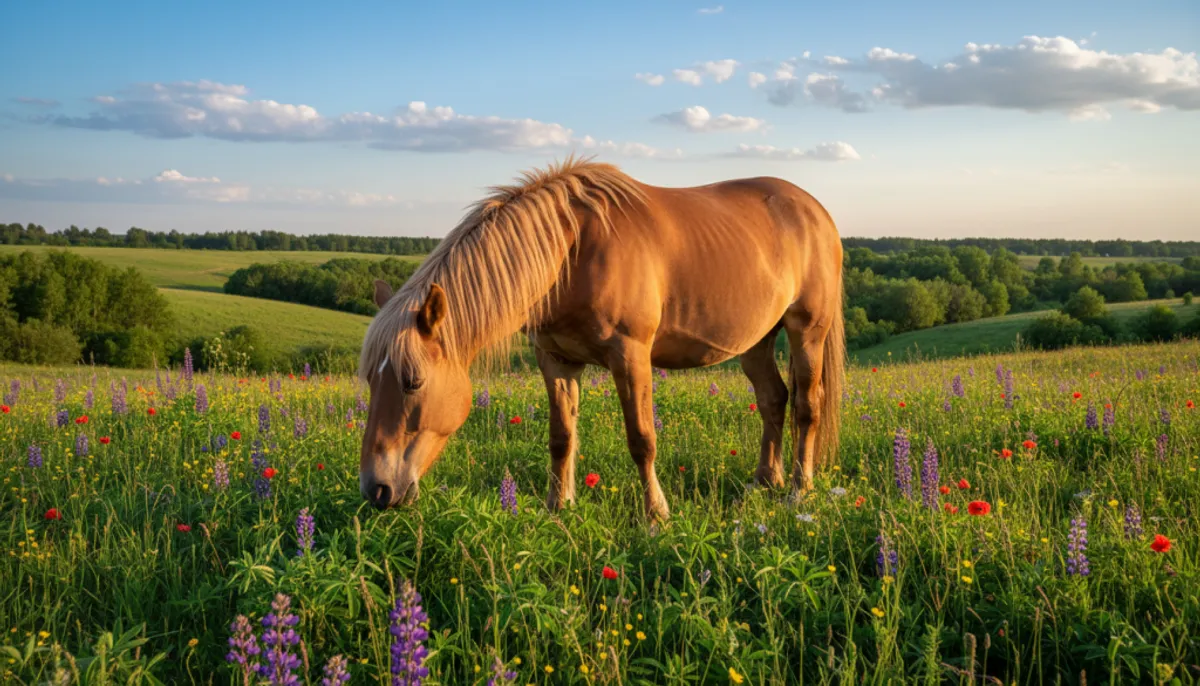
The vast wetlands of Europe find in it an unflagging and ecological gardener. Its role goes beyond mere presence to become a tool for gentle and sustainable management.
Role in renaturation and maintenance of wetlands
The Oostvaardersplassen reserve in the Netherlands uses it to maintain large spaces. Its grazing naturally controls vegetation.
Since 1995, in the Kleine Weerd reserve, it has been working on the renaturation of the banks of the Meuse. It consumes coarse plants and limits bush encroachment.
This action creates a mosaic of habitats. Wildlife and flora benefit directly.
| Reserve | Location | Main Objective | Impact on Biodiversity |
|---|---|---|---|
| Oostvaardersplassen | Netherlands | Maintenance of large open spaces | Preservation of meadows for nesting birds |
| Kleine Weerd | Belgium (banks of the Meuse) | Renaturation of river banks | Development of diverse riparian vegetation |
| French wetland | France (e.g., Camargue, Marshes) | Extensive grazing to control reeds | Creation of open areas favorable to amphibians |
These nature reserves prove that a rustic horse is a sustainable solution. It restores local balances without machines.
Comparison with Other Primitive Breeds
The European equestrian landscape includes several ancient breeds, whose paths offer a striking contrast. Comparing their histories reveals radically different selection objectives.
Similarities and differences with the Trakehner
The Trakehner was born in the 15th century in East Prussia. Unlike the Polish pony, its selection has always been oriented towards high-level equestrian sports.
The famous stallion Abdullah illustrated this potential by winning two Olympic medals in Seoul in 1984. This breed thus demonstrates exceptional athletic capabilities.
| Comparison Criterion | The Trakehner | The Polish Konik |
|---|---|---|
| Historical Origin | 15th century, East Prussia | Direct descendant of the wild Tarpan |
| Selection Objective | Sporting performance and refinement | Robustness and nature conservation |
| Morphological Characteristics | Fine and slender morphology | Compact and robust build |
| Main Use | Show jumping, dressage | Ecological management, extensive grazing |
Relationships with other rustic and conservation horses
Other primitive lines share a natural robustness. However, their role in renaturation projects is often less central.
Each type possesses unique traits, inherited from its adaptation to a specific environment. The comparison highlights how the little pony of the plains is a unique management tool.
Its breeding responds to genetic and ecological preservation imperatives, distinct from the needs of modern equestrian sports. This horse thus embodies a philosophy of active conservation.
Modern Evolution and Crossbreeding
In response to the changing demands of the equestrian world, the selection of this rustic lineage is experiencing subtle evolutions. Breeders must reconcile heritage and modernity.
Influence of crossbreeding with warmblood horses
Crossbreeds with warmblood equines are sometimes attempted. The goal is to obtain more refined ponies, suited to current leisure riding.
These experiments aim to improve certain abilities, such as engagement or maneuverability. The legendary robustness of the breed must, however, be preserved.
The risk is to dilute the original primitive characteristics. This is a delicate exercise for selectors.
Balance is crucial. The horse must maintain its rusticity while meeting riders' expectations.
Modern selection thus navigates between two poles. It must preserve the historical type while shaping a versatile pony. This horse evolves, but its resilient spirit remains its foundation.
Feeding, Health, and Care of the Konik Horse
A natural diet and appropriate care are essential pillars for preserving the legendary robustness of this breed. Their sustainable well-being depends on a preventive and reasoned approach.
Natural management of feeding
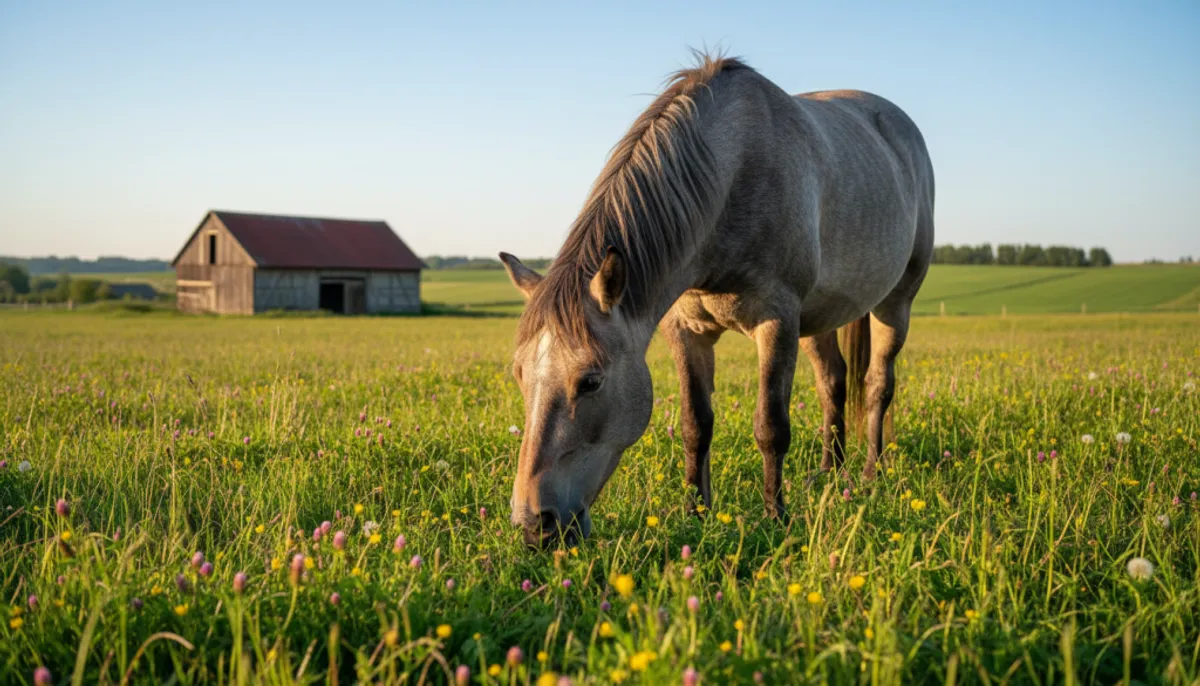
Their metabolic health is fragile in the face of overly rich pastures. A rigorous management of feeding is therefore essential.
Excesses that could lead to obesity should be avoided. This problem is common among these rustic ponies living outdoors.
For herds, management must be collective. It includes pasture rotation and controlled access to fodder.
Veterinary monitoring and daily well-being
Health monitoring relies on regular veterinary check-ups. Preventing parasitic diseases is a priority.
Foot management is a key aspect. Regular trimming prevents balance and locomotion issues.
For this pony, reasoned deworming and dental care complement this monitoring. This vigilance ensures its comfort and longevity on a daily basis.
Cultural and Symbolic Aspects of the Konik Horse
Its image evokes resilience and the simple grace of Europe's wild landscapes. This rustic equine has transcended its utilitarian role to become a strong cultural symbol.
It embodies a deep and authentic connection with the biodiversity of the plains. Its presence tells a story of co-evolution between humans and nature.
Representations in European equestrian culture
In the world of equestrianism, this breed offers an alternative to sport mounts. It provides a leisure experience focused on simplicity and respect.
Equestrian practice with these ponies values the grace of natural movement. It prioritizes harmony over pure performance.
Their integration into conservation projects reinforces their status as icons. They remind us of the urgency to preserve our living heritage for future generations.
This gentle equestrianism and their role for biodiversity make the horse a true cultural ambassador. It symbolizes a balanced relationship with our environment.
Conclusion
The future of this rustic lineage rests on a unique alliance between passion and preservation. With barely two thousand individuals recorded, this precious breed requires constant vigilance.
Its lifestyle in semi-freedom demonstrates an essential truth. Nature can regain its balance with a suitable partner.
Versatile, this pony also appeals to riders. Whether for hiking or driving, it offers an authentic experience.
Its primitive characteristics are a living reminder of the wild origin of our equines. By protecting it, we safeguard a part of our rural history.
This equine remains an indispensable ally for the management of natural habitats and biodiversity. Its robustness and temperament will continue to inspire future generations.
FAQ
What is the ancient origin of this pony breed?
This rustic pony directly descends from the Tarpan, a wild equine from Europe. Its primitive origins are visible in its morphology and characteristic coat. Conservation programs after World War II have allowed this unique lineage to be preserved.
How to recognize a Polish Konik?
Its coat is always "mousy" in color, a gray-brown shade, and it has a dark dorsal stripe along its back. Modest in size and very robust, its build reflects its adaptation to life in semi-freedom under demanding natural conditions.
What is the temperament of these equines?
They are known for their great sociability within the herd and their calm demeanor. Their behavior in freedom is balanced, making them reliable partners for leisure riding and hiking.
What are their uses today?
Beyond equestrian activities such as driving, their main role is ecological. They are used in nature reserves for landscape management through grazing, thus contributing to biodiversity and habitat maintenance.
How are they bred in France?
Breeding often favors semi-freedom in large spaces, such as reserves. This practice respects their nature and promotes robust health. Passionate breeders continue this breed while ensuring the purity of its characteristics.
What is their impact on the environment?
Their grazing helps maintain wet meadows and control invasive vegetation. This role as an "ecological mower" is crucial for the renaturation of many ecosystems and the maintenance of diverse flora and fauna.
What specific care do they require?
Very rustic, their needs are simple. A diet based on grazing, standard veterinary monitoring, and adequate space are sufficient. Their great resistance to diseases simplifies their daily management.