
The horse lunge is this “rope” connected to the halter to guide the animal from a distance. It is used for going out, going to the pasture, or during grooming. A good lunge ensures safe control, making the experience more enjoyable for everyone.
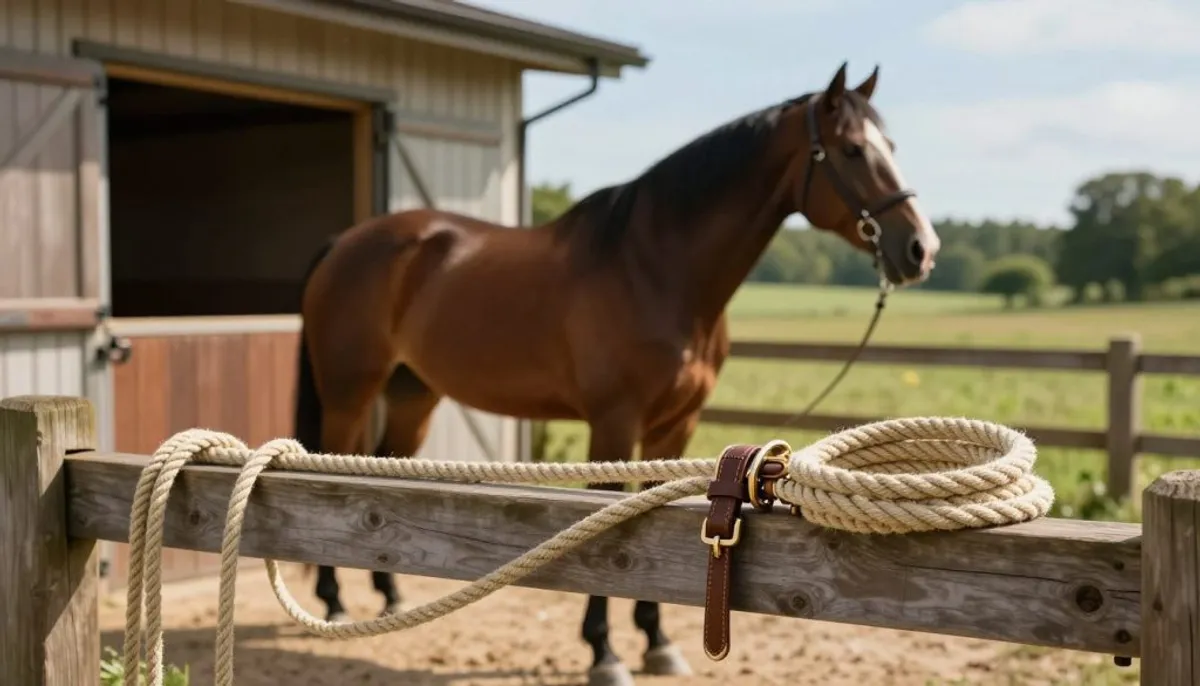
Our guide explains how to choose the right lunge. We discuss length, material, and snap hook for an ideal fit. The goal? To increase safety, comfort, and control effortlessly. The perfect equipment is that which goes unnoticed, ensuring calm and serenity.
In France, the secret is in the details. La Sellerie Française (laselleriefrancaise.com) excels with its custom products, all made in France by excellent artisans. Each piece is a promise of superior quality, far beyond a simple label.
Key points to remember
- A horse lunge is used to guide from a distance, both daily and at work.
- The right horse lunge improves safety, especially during movements and handling.
- Length, material, and snap hook are the three most important choices.
- A pleasant equestrian accessory in hand limits slipping and burns.
- A quality equestrian equipment reduces the risk of breakage and incidents.
- In France, La Sellerie Française highlights a handcrafted production, from A to Z.
Why the lunge is an essential equestrian accessory
In the stable, everything happens quickly: opening doors, encountering other horses, managing noise. The lunge offers distance and serenity. It simplifies things, from the first halter to the return to the box.
Guiding the horse safely daily: box, pasture, shower, grooming
Every day, we use the halter and lunge to take the horse out, bring it to the pasture, return it, or tie it to the shower. They are also used to tie the horse, groom, clean its feet, or let it graze. During transport, they help get the horse into the trailer and secure it while putting on the protective gear.
The simplest way is to attach the lunge under the throat. This allows for guidance without unbalancing and avoids surprises. A good equestrian accessory is easy to use, not complex.
Assisting the horse's work from a distance: warming up, training, lunging
During “round” training, the lunge creates space but maintains a connection. It helps with warming up, following vocal commands, and basic education. On a calm horse, training in a halter is possible, but it offers less control than with a bridle.
We prefer equipment that does not damage the hands and slides well. A clean and well-stored lunge avoids knots when quick reactions are needed.
Difference in use between lunge, halter, and bridle (bit): avoiding mistakes
The halter surrounds the head to hold and direct. The lunge attaches to the halter to guide from a distance. The bridle with a bit is for riding and providing precise instructions.
Confusing their use can create bad habits: a halter is not meant to replace a bridle. Choosing the right equestrian equipment and using the lunge correctly is essential.
How to choose a horse lunge according to your practice
Choosing a lunge depends on your daily activities with your horse. It is often used, whether in the box, in the pasture, for grooming, or walks. A good lunge makes these moments more enjoyable and reduces jolts if the horse moves.
To choose well, consider the length, material, and weight of the lunge. A good lunge is easy to hold, does not hurt the hands, and remains flexible even after several cleanings.
Leading by hand, tying, transporting: needs and constraints
When holding the horse by hand, tying or transporting, precision is key. You need a lunge that slides well without snagging, with a good snap hook and strong seams. A sturdy lunge reduces the risk of breaking, especially if the horse suddenly backs up.
- Length easy to manage without the risk of stepping on it.
- Material that does not slip, even in wet weather.
- Lightweight to avoid wrist fatigue.
Lunging in a circle: more freedom, but control to anticipate
When lunging in a circle, the horse moves more freely. Thus, the way to manage the lunge differs. A longer lunge for work allows for maintaining a stable distance. It helps to follow the horse's movements without pulling. Conversely, a short lunge can force the handler to get too close to the horse.
| Situation | What matters most | Practical choice |
|---|---|---|
| Leading by hand daily | Grip, flexibility, close control | Versatile lunge with good grip and secure snap hook |
| Tying in the box or shower | Durability, strong seams, comfort of the halter | Quality lunge, pleasant material, coherent set lunge + halter |
| Working in a circle | Distance, fluidity, managing the loop | Lunge for horse work, longer and easy to slide |
Calm horse vs sensitive or “hot” horse: adapting equestrian equipment
A calm horse can do well with a versatile lunge. It should be comfortable to hold. For a more sensitive or lively horse, it is important to have a reliable snap hook. The lunge should not slip and should provide a constant feeling in the hand. A good quality lunge with a suitable halter prevents friction and unpleasant reactions.
Lunge length: 2 m, 4 m, 8 m, and long working lunges
The length of the lunge changes a lot of things. In France, lunges of 2 to 8 meters are often used. Short ones allow for direct and precise action. Long ones offer more freedom to the horse while requiring good control.
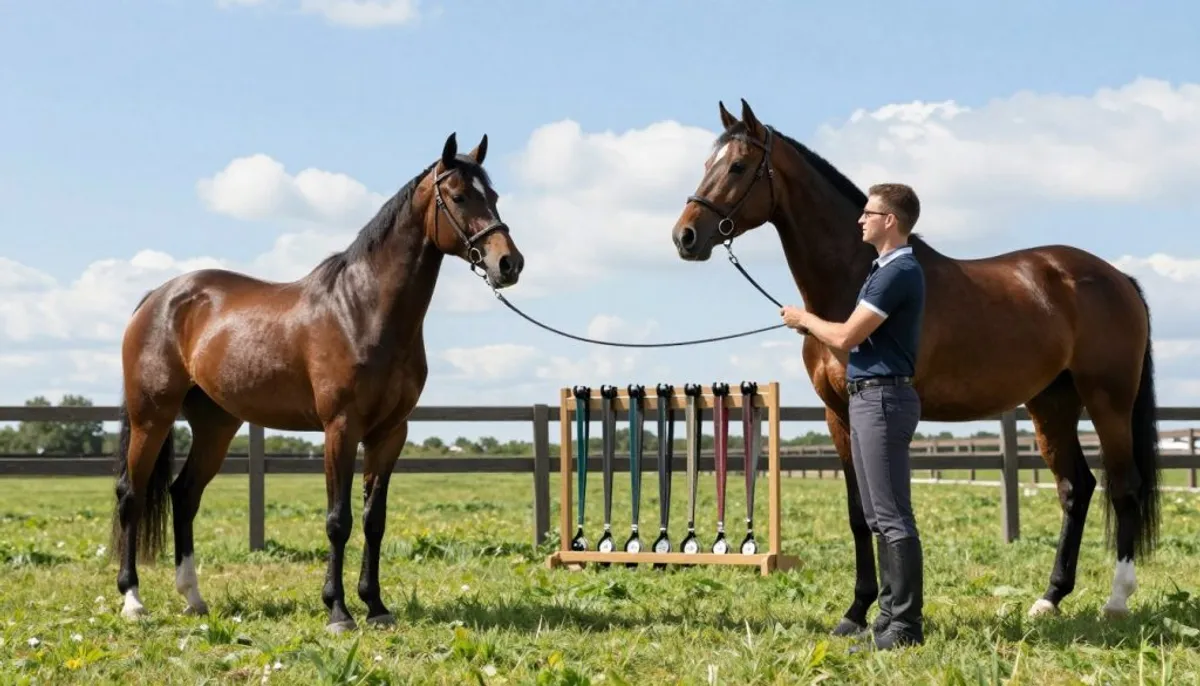
To work in a circle, a longer lunge is needed. It allows for maintaining a regular trajectory, avoiding jolts, and following the pace without forcing. This is a good criterion for making the right choice.
Short lunges (e.g., 2 m): close and precise actions
A 2 m lunge is ideal for daily use: taking the horse out, showering, grooming, keeping it still. It avoids excess rope and reduces the risk of being stepped on. For energetic horses, it is perfect for maintaining control.
Concrete example: Cheval Energy Flat Work Lunge 2 m, from €9.86. It is suitable for short movements and a firm grip.
Intermediate lunges (e.g., 4 m): the right balance for everything
The 4 m lunge is very versatile. It gives space to a nervous horse but allows you to stay close to control it. It is useful outside to maintain a good connection without being too close.
Example: Cheval Energy Flat Work Lunge 4 m, from €12.43. It represents a good balance between maneuverability and ease of use.
Long lunges (e.g., 8 m, flat lunge): ideal for training
With 8 m, you have the perfect equipment for training. A horse work lunge designed to create a good-sized circle and promote fluidity. Long lunges are often flat. This shape makes them easier to use and avoids discomfort in the hand.
Example: Cheval Energy Work Lunge 8 m, from €18.43. You can also find models from Supra, Shedrow, Waldhausen, Val du Bois, Jack’s, and Mondega. They vary depending on equestrian sports and the specific needs of stables.
| Length | Most common use | Practical advantages | Market reference examples |
|---|---|---|---|
| 2 m | Leading by hand, care, handling in the box | Little slack, quick actions, close control | Cheval Energy Flat Work Lunge 2 m (from €9.86) |
| 4 m | All-in-one daily use | Good compromise, useful for maintaining a comfortable distance | Cheval Energy Flat Work Lunge 4 m (from €12.43) |
| 8 m | Working in a circle, education, showcasing | More freedom, more accurate trajectory, often flat lunges | Cheval Energy Work Lunge 8 m (from €18.43); ranges from Waldhausen, Supra, Shedrow |
Materials: nylon, cotton, biothane lunges, and resistance criteria
The material of a lunge is crucial: it affects weight, grip, maintenance, and safety. To choose a resistant lunge, you need to look at the material, braiding, seams, and finish.
Nylon lunge: sturdy, lightweight, easy to maintain
The nylon lunge is a good choice for the stable. It dries quickly and holds up well to use.
It is perfect for walks and short training sessions. Make sure it has tight braiding and a uniform texture.
Woven cotton lunge: pleasant grip, wear to monitor
Woven cotton is soft and comfortable, ideal for sensitive hands. It offers good grip, useful when the horse pulls.
However, it can wear out more quickly. The Shedrow woven cotton lunge is an example of a product to keep an eye on.
Biothane: durable and practical alternative (consistency with certain halters)
Biothane is appreciated for its ease of cleaning and water resistance. A simple sponge wipe is enough to clean it.
It can aesthetically match certain halters. The Biothane Halter from Maréchal is available in several colors.
Polypropylene is another option. Some models are reinforced for more resistance, ideal if you want a durable lunge.
| Material | Grip | Maintenance | Points to monitor | Typical use in France |
|---|---|---|---|---|
| Nylon | Good, sometimes more “slippery” depending on the braiding | Quick rinse, dries fast | Heating from friction, rigidity if low quality | Daily stable use, transport, grooming |
| Woven cotton | Very pleasant, good grip | Can retain water and dirt | Fraying strands, wear in folding areas | Leading by hand, sensitive horses, calm work |
| Biothane | Stable, firm grip even when wet | Sponge + water, very simple | Variable flexibility depending on thickness, marked folds if poorly stored | Outside, wet weather, matching halter set |
| Polypropylene (sometimes reinforced) | Correct, depends on braiding and diameter | Easy, less sensitive to water | Rigidity, control of reinforced areas | Intensive use, seeking longevity |
To choose well, think about balance: nylon for versatility, cotton for comfort, biothane for quick cleaning. A quality lunge is felt from the first contact and by the consistency of the material.
Comfort and safety: key criteria for a quality lunge
A quality lunge is easy to use and reliable. It avoids sudden movements and maintains good communication with the horse. Whether on foot or in transport, this is essential.
Strength and comfort: priorities to limit incidents
It is important to choose a strong and comfortable lunge. A resistant lunge reduces the risk of breakage. This is crucial if the horse pulls near a door or during its shower.
Comfort extends beyond the hand. A well-fitted halter avoids irritation and discomfort. For sensitive skin, a synthetic “sheep” padding on the halter is a good idea. This is especially useful for long journeys. A quality, flexible, and stable lunge is then essential.
Weight, flexibility, grip: avoiding burns and slips in hand
The choice of weight and material is crucial. A lunge that is too heavy or slippery can cause problems. A good grip allows for maintaining constant tension without excessive effort.
To avoid burns, it is best to choose a lunge that offers a good grip. It should be flexible enough to follow movements without effort. This is vital for managing the horse closely or from a distance.
Finishes and seams: what makes a lunge durable over time
Details matter for the longevity of a lunge. Strong seams, clean ends, and a good connection with the snap hook are essential. A durable lunge does not wear out quickly, even after several washes.
Regular maintenance ensures the durability of your equipment. Just rinse off the mud, let it air dry, and check metal parts to avoid rust. This way, your lunge will stay in good condition, use after use.
| Criterion to check | What you should feel/see | Risk if neglected | Good reflex |
|---|---|---|---|
| Overall resistance | Dense material, stable traction, no sudden elongation | Accidental breakage, loss of control | Test progressive traction and inspect before each outing |
| Comfort in hand | Regular grip, pleasant touch, no “burning rope” | Burns, involuntary release | Choose a quality lunge suitable for your frequency of use |
| Flexibility and weight | Falls well, bends without stiffness, does not “pull” the wrist | Jerky movements, horse leaning | Prioritize stable handling for tying and transporting |
| Seams and finishes | Tight stitches, clean edges, no fraying areas | Rapid wear, weakening near the attachment | Opt for a resistant lunge and check tension areas |
| Maintenance and metal | Clean snap hook, no rust, smooth rotation | Jamming, breakage, snagging | Rinse, dry, and regularly check all equestrian equipment |
Snap hooks, chains, and attachments: choosing the right hardware
Choosing the right hardware for a lunge is crucial. It ensures better control and limits jolts. It also extends the life of your equestrian equipment. Therefore, we look for a clear closure, snag-free rotation, and quality metal.
The parts of a resistant lunge should remain easy to use, even with gloves. A snap hook that jams can be problematic. The sound of metal can also disturb some horses during grooming or tying.
“Firefighter” snap hook, rotating Mexican snap hook: benefits and uses
The “firefighter” snap hook is popular for its quick opening and good grip. The Cheval Energy Firefighter Snap Hook is ideal for daily use, at an affordable price. The rotating versions prevent the lunge from twisting, like the Cheval Energy Square Rotating Mexican Snap Hook.
The eye of the snap hook should fit the ring of the halter for perfect stability. The Cheval Energy Round Eye Lunge Snap Hook and the Cheval Energy Square Eye Snap Hook offer different options. The goal is to have smooth movement without twisting.
Lunge chain: better control in presentation, to be used with discernment
The lunge chain offers better control during presentations. It is often used in equestrian beauty contests. The Harry’s Horse Horse Lunge Chain with Snap Hook is a perfect example of this product.
It should be used carefully, maintaining a soft hand. The chain should be adjusted precisely and removed when no longer needed. The goal is to control without constraining.
Rings, swivels, and metal parts: fluidity, anti-twist, rust prevention
Rotating parts ensure fluidity during use. This reduces wear on the lunge and offers a better feel in hand. For durable equipment, these parts must rotate freely.
Rust is easily detected. A check after exposure to water can prevent problems. Clean parts ensure the safety and comfort of using the lunge.
| Element | Main advantage | Most common use | Examples (indicative prices) |
|---|---|---|---|
| “Firefighter” snap hook | Quick opening/closing, good grip | Box, grooming, short tying | Cheval Energy Firefighter Snap Hook (from €3.65) |
| Rotating Mexican snap hook | Anti-twist, smoother lunge | Leading by hand, work where the lunge twists easily | Cheval Energy Square Rotating / Round Rotating (from €4.25) |
| Eye snap hook (round/square) | More stable mounting depending on the ring, more regular pull | Dedicated lunges, halter + lunge sets | Cheval Energy Round Eye (from €8.47); Square Eye (from €4.58) |
| Lunge chain / chainette | Fine control in presentation | Model competitions, leading presentation | Harry’s Horse Lunge Chain with Snap Hook (from €16.01) |
Matching lunge and halter: nylon, leather, ethological, presentation
A good match between the halter and the lunge is important. It prevents jolts, improves contact, and reduces stress. These choices are visible in the details: flexibility, adjustments, and the horse's reaction.
Nylon halter
Nylon is very common in equestrianism for its resistance to moisture and ease of cleaning. It is perfect for daily use and comes in several colors.
Among available products, the Cheval Energy Nylon Halter offers various colors starting at €9.86. The NORTON Adjustable Nylon Halter in green is around €5.34. For those looking for a sturdier feel, the Maréchal Triple Thickness Nylon Halter starts at €15.26.
Leather halter
Leather offers a sleek style and ensures a good grip. To last, it needs care, cleaning, and conditioning, especially after rain or contact with sand. Leather allows for more consistent control and avoids a plastic feel.
For example, the Cheval Energy Leather Halter in black starts at €55.25. There are also special models like the Cheval Energy Heavy Draft Leather Halter starting at €55.54. Some prefer a softer lunge to avoid irritation on the horse's skin.
“Ethological” halter (knot halter) and presentation halter
The correct term is knot halter, a precision provided by Dr. Aude Lhérété. This type of halter, popularized by professionals, allows for better communication by applying precise pressure points. It requires gentle handling and an appropriate lunge.
The Cheval Energy Ethological Halter in black and white is sold starting at €10.08. For competitions, an adjusted leather halter is preferred, sometimes accompanied by a chainette. Competition accessories can be found, such as the Harry’s Horse Presentation Horse Lunge starting at €24.95, and the Waldhausen Cozy Halter in cream/silver starting at €21.70.
| Type of halter | Daily advantages | Points of vigilance | Examples (indicative prices) |
|---|---|---|---|
| Nylon | Simple maintenance, wide color choice, good usage/price ratio | Can rub if poorly adjusted, check buckles | Cheval Energy Nylon Halter from €9.86; NORTON Adjustable Nylon Halter from €5.34; Maréchal Triple Thickness Nylon Halter from €15.26 |
| Leather | Aesthetic, good grip, longevity if maintained | Requires greasing/cleaning, fears abandonment in moisture | Cheval Energy Leather Halter from €55.25; Cheval Energy Heavy Draft Leather Halter from €55.54 |
| Knot halter | More precise communication, lightweight, useful for hand education | “Direct” actions, requires gentleness and consistency | Cheval Energy Ethological Halter from €10.08 |
| Presentation | Neat finishes, better presentation, control in competition context | Precise adjustment, use reserved for dedicated moments | Harry’s Horse Presentation Horse Lunge from €24.95; Waldhausen Cozy Halter from €21.70 |
To make the right choice of halter and lunge, first think about your needs. Whether for daily use, more precise work, or competitions. Good equipment will ensure the horse follows you without resistance.
Adjustment and use: simple gestures for more control
Using a horse lunge correctly makes a big difference: it helps the horse better understand your requests while maintaining safety. Before starting, take a moment to check how everything is adjusted and how you hold the lunge. Often, it is the equipment that plays a major role, not the strength used.
Adjusting the halter: adjusted throat latch, less tight noseband (mouth free)
The halter should be loose enough but not so much that it slips. Adjust the throat latch so that it is close without tightening, so the horse cannot easily remove the halter. The noseband should be less tight so the horse can open its mouth without difficulty.
A good tip is to check: if the halter leaves marks or restricts movements, it is too tight. If everything moves too much, it is too big. A correct adjustment of the lunge makes your requests clearer and reduces tension.
Attaching the lunge to the ring under the throat: why it’s the norm
The lunge is usually attached to a ring under the throat. This position helps guide the horse straight without pulling the halter sideways. It also reduces the risk of losing contact if the horse jumps, keeping the pull stable.
You should also check the condition of the metal parts. A snap hook that jams or shows signs of rust can be problematic. These details can prevent issues during grooming or ground training.
Common mistakes: tying too short, equipment unsuitable for temperament
Classic mistakes happen, especially if you are in a hurry. A lunge that is too short creates too much pressure and makes training confusing. A lunge that is too long quickly becomes a mess that reduces your control.
- Tying too short: the horse may feel trapped and react.
- Misuse of the halter: a regular halter does not replace a bridle.
- Choice not suited to temperament: a sensitive horse requires solid and reliable equipment.
- Forgetting the state of equestrian equipment: watch for signs of wear such as weakened seams or a damaged snap hook.
To manage well, just keep the lunge in orderly loops, without wrapping it around your fingers. This allows you to be responsive while maintaining flexibility, ready to act if necessary.
Product overview and market references: concrete examples of lunges and sets
Let’s compare prices and finishes of lunges. We notice that a lunge is not just a rope. The material and type of cut change the feel in hand. It is important to choose a lunge suited to your need: guiding, lunging, or both.
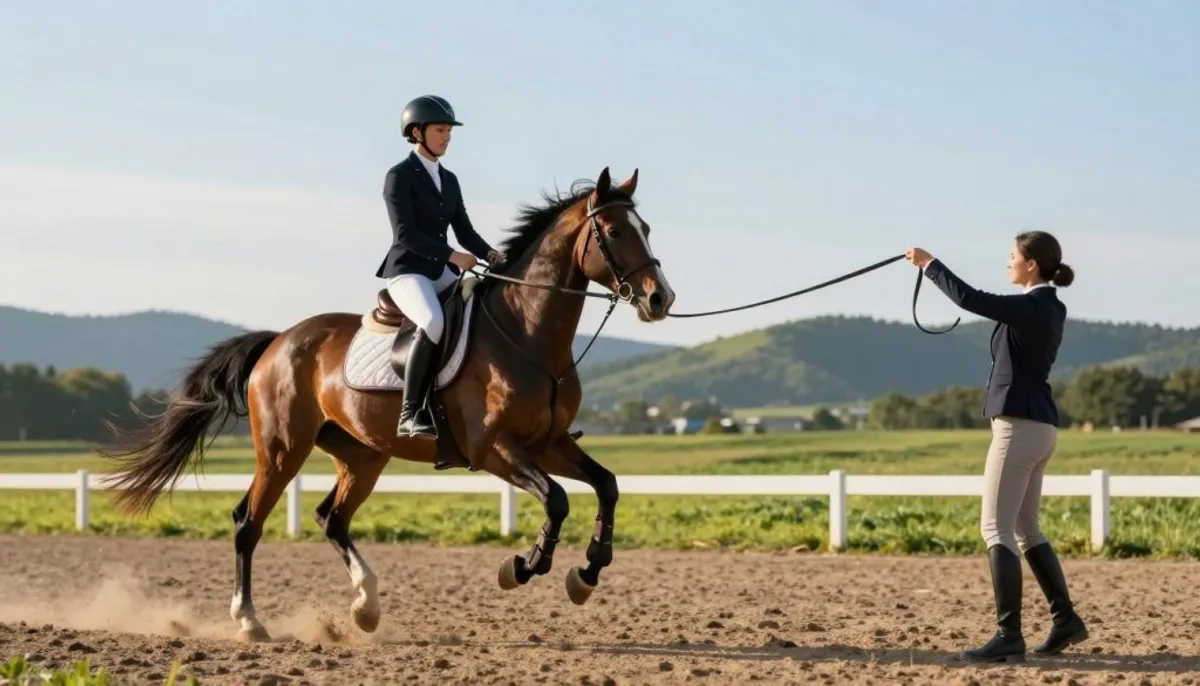
The choice of model depends on its width and length. Nylon lunges are popular for their resistance. They are easy to maintain, especially outdoors. Flat versions reduce twists for better contact.
Work lunges: flat models and long lengths (2 m, 4 m, 8 m)
To work closely, a 2 m lunge is often sufficient. With 4 m, you benefit from daily flexibility without losing control. 8 m lunges are suitable for more intense work, such as warming up.
| Model | Length | Usage profile | Indicative price |
|---|---|---|---|
| Cheval Energy Flat Work Lunge | 2 m | Leading by hand, precise gestures, horse already settled | From €9.86 |
| Cheval Energy Flat Work Lunge | 4 m | Option for versatile lunge for stable, paddock, small exercises | From €12.43 |
| Cheval Energy Work Lunge | 8 m | Working on the circle, transitions, distance control | From €18.43 |
| Harry’s Horse Work Lunge | Long length (depending on version) | “Work” orientation, good compromise for stable grip | From €12.95 |
| Norton American Lunge | Common use | Practical in the stable, color choices (gray/black, turquoise, black) | From €9.74 |
| EQUITHEME Tie Lunge | Tie | Ideal for showering and grooming, reserved for this use | From €19.90 |
Choosing a nylon lunge? Look at the grip and thickness. If it is too thin, it slips. If too rigid, it tires the hand.
Halter + lunge sets: practical option (e.g., triple thickness halter + lunge)
Packs offer the advantage of avoiding sizing problems. For example, the Maréchal Range offers several colors. This makes life easier, especially for mixed use.
If working on the circle is your priority, choose a specific lunge. Use the pack for regular tasks. This preserves the equipment.
Additional equipment for work: cavesson, surcingle, side reins (depending on goals)
There are also ranges to organize a complete session. Brands like Waldhausen and Mondega offer several tools for this.
- Supra Lunge Cavesson: perfect for guiding without pulling on the halter.
- Supra Nylon Training Surcingle and Shedrow surcingles: useful for adjusting the draw reins.
- Waldhausen Side Reins (D-rings) and Val du Bois Side Reins with Donut: for controlling the horse's attitude.
- Waldhausen Push Aid: ideal for focusing work on a specific goal.
- Mondega Lunge System: for effectively structuring a training session.
If you are looking for quality, La Sellerie Française is a high-end option. Everything is made from A to Z in France. The choice of material depends on your preferences but keep a consistent approach.
Conclusion
Choosing a good lunge for your horse depends on its use. Whether for leading by hand, tying, transporting, or working in a circle. The ideal choice is based on simple but crucial criteria. A quality lunge allows for maintaining clear communication with the horse without having to pull.
The length of the lunge is just as important as the material. Use 2 m to stay close, 4 m for daily use, and 8 m or more for lunging work, often opting for flat lunges. Between nylon, cotton, biothane, or polypropylene, each material offers a different grip, weight, and maintenance. For a durable lunge, also examine the seams and how it feels in hand.
The choice of hardware is essential: whether a firefighter snap hook, rotating Mexican snap hook, swivel, or chain, each type alters control and fluidity. For safety, prioritize strength and comfort with a well-fitted halter. Ensure that the throat latch and noseband are not too tight. And remember to securely attach the lunge to the ring under the horse's throat.
To maintain your lunge, rinse it after use in mud and let it air dry. Regularly check the metal parts to avoid rust. If you are looking for a high-end option, La Sellerie Française offers handcrafted lunges of great quality, fully made in France. It is an investment in a durable, aesthetic, and reliable lunge, usable season after season.
FAQ
What is a horse lunge used for daily?
The horse lunge is a rope that attaches to the halter to guide the horse while staying at a distance. It is used for various activities: taking out of the box, going to the pasture, or showering the horse. This allows for maintaining a safe distance while controlling the animal. It is an essential tool in equestrian equipment.
What is the difference between halter, lunge, and bridle (with bit)?
The halter is used to direct the horse. It is placed around the animal's head. The horse lunge attaches to the halter to guide the horse from a distance. The bridle with bit allows for giving more precise instructions and offers more control in the saddle. The halter, without a bit, offers less precision and safety compared to the bridle.
Where to attach the lunge on the halter for safe use?
It is advisable to attach the lunge to the ring under the horse's throat. This helps guide the animal without the risk of losing control too easily. Ensure that the snap hook works properly to avoid any accidents.
What length to choose for a lunge when leading by hand?
The ideal length depends on the environment and the desired level of control. Lunges generally measure from 2 to 8 meters. A shorter lunge allows for close interactions, while a longer one gives more freedom to the horse, ideal for maintaining a certain distance.
What length is needed for a proper round lunging session?
To work in a circle, a much longer lunge is necessary. It allows for maintaining control while offering more freedom to the horse. Lunges dedicated to work are often flat, making them suitable for this use.
What is a 2 m lunge used for?
A 2 m lunge is perfect for close manipulations like grooming or showering. The Cheval Energy Flat Work Lunge 2 m (from €9.86) is a good choice for these activities.
Is a 4 m lunge a versatile option?
Yes, 4 m lunges offer a good balance between reach and ease of management. They are useful for various situations, providing more safety. For example, the Cheval Energy Flat Work Lunge 4 m (from €12.43) is a versatile option.
What is an 8 m lunge used for?
An 8 m lunge provides more freedom for distance work or education. It requires good technique to avoid tangles. The example of the Cheval Energy Work Lunge 8 m (from €18.43) illustrates this use well.
Why prioritize a resistant and comfortable lunge?
Choosing a resistant lunge and comfortable ensures safety and control. A quality lunge reduces the risk of accidents and lasts longer, which is important for daily use.
What criteria make a lunge versatile?
To choose a versatile lunge, consider the length, material, and weight. Ease of use and reliability of components are important, especially for a sensitive or reactive horse.
Why choose a nylon lunge?
The nylon lunge is chosen for its resistance, lightweight, and ease of maintenance. It dries quickly and withstands regular use, making it a wise choice in equestrian equipment.
What about a woven cotton lunge?
Woven cotton lunges are soft and comfortable to hold. They can wear out more quickly with friction and moisture. An example is the Shedrow Woven Cotton Lunge.
Is polypropylene and reinforced blends interesting?
Yes, polypropylene and reinforced blends offer good resistance and durability. The choice depends on needs between lightness, flexibility, and easy handling.
Is biothane suitable for a horse work lunge?
Biothane is a good option for a durable and easy-to-maintain lunge. It fits well with equipment sets for horse work. The Maréchal Biothane Halter (from €62.50) shows its usefulness in harmonizing equipment.
What snap hook to choose for a horse lunge?
The choice of snap hook is crucial for safety. Options include the Cheval Energy Firefighter Snap Hook (from €3.65) and rotating models. These prevent the lunge from twisting, improving comfort.
What is the purpose of a lunge chain in presentation?
A chain on the lunge increases control during presentations or competitions. It should be used carefully, especially with well-trained horses. Harry’s Horse Horse Lunge Chain with Snap Hook (from €16.01) is an example.
Why choose a rotating snap hook and monitor for rust?
Rotating snap hooks facilitate movement and avoid twists. It is essential to regularly check their condition to prevent rust and ensure proper functioning.
How to properly adjust a halter for working with a lunge?
Properly adjusting the halter ensures comfort and safety. The noseband should allow the horse to open its mouth without difficulty. A good adjustment also prevents unnecessary friction.
Which halter to pair with a lunge: nylon, leather, knot halter?
A nylon halter is practical and easy to maintain. A leather halter offers aesthetics and durability. The knot halter, promoting gentle communication, is recommended for a more subtle approach.
What common mistakes to avoid with a lunge and halter?
Avoid using a halter for riding, choosing a lunge that is too short for round work, and ignoring the suitability for the horse's temperament. Choosing appropriate equipment for each situation improves safety and efficiency.
What concrete products provide good price and format references?
For lunges, Cheval Energy offers options in 2 m, 4 m, and 8 m. Harry’s Horse Work Lunge (from €12.95) and Norton American Lunge (from €9.74) are also references. For tying, EQUITHEME Tie Lunge (from €19.90) is a good option. For presentations, the Harry’s Horse Presentation Horse Lunge (from €24.95) is ideal.
Are halter + lunge sets worth it?
Yes, choosing a halter + lunge set ensures consistency and simplifies the choice. It is useful to have a ready-to-use kit. The Maréchal Triple Thickness Halter + Lunge (from €24.72) is an example of this practicality.
What additional equipment can help for lunging according to objectives?
For specific work, add a cavesson, a surcingle, or side reins. Dedicated systems can also be useful for targeted training. Brands like Supra, Shedrow, and Mondega offer good equipment for these needs.
How to maintain a lunge to prolong its lifespan?
Clean the lunge according to its material and let it dry properly. Regularly check the condition of seams and hardware to avoid rust. Regular care preserves the longevity and safety of the tool.
Where to find a premium lunge made in France?
A: La Sellerie Française (laselleriefrancaise.com) offers high-end lunges, made in France. It is a great option for those looking for quality and durability in their equestrian equipment.