
A quality leather halter is easy to recognize. It secures handling and respects the horse's skin. Moreover, it gives the animal a neat appearance. In France, riders want durable and comfortable leather halters.
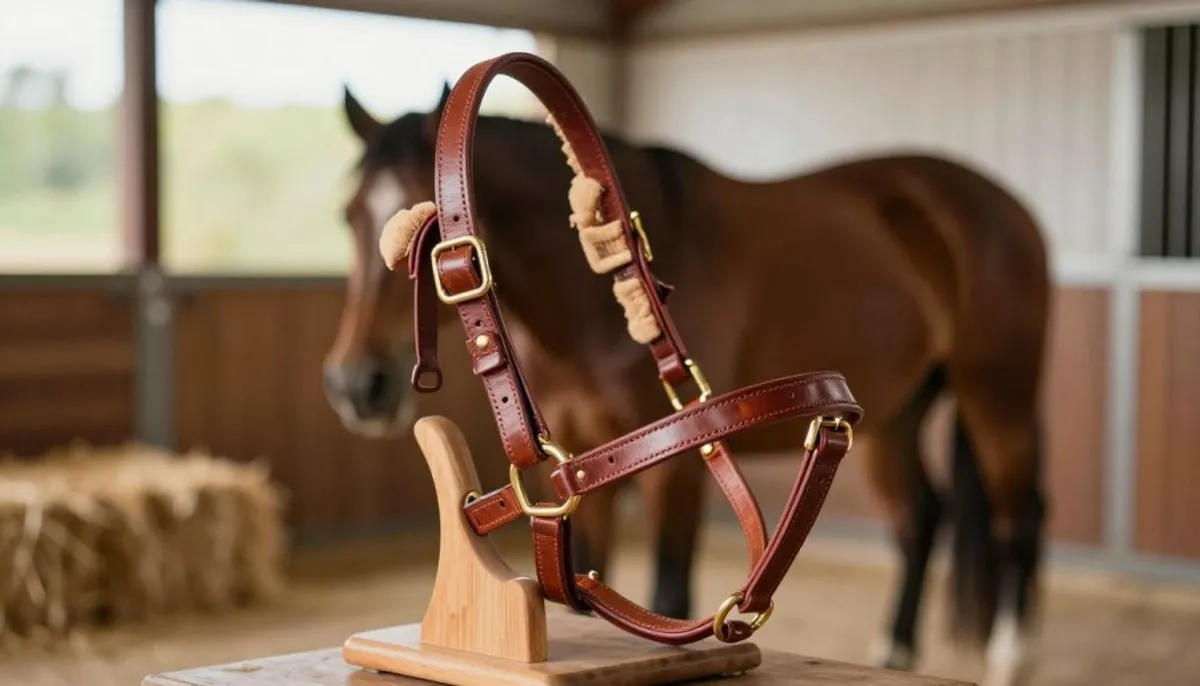
The French Saddlery chooses high-end products. You will find unique pieces, custom-made items, and limited editions. The models are entirely made in France, by skilled artisans. This quality goes beyond mere “made in France,” as details make the difference.
The market offers a wide variety, with over 300 items in the “halters and leads” range. We will examine the different colors, sizes, and uses. We will also identify the characteristics of a quality halter. We will discuss padding, customization, brands, stocks, materials, and daily maintenance.
To Remember
- A leather halter provides safety, comfort, and style on a daily basis.
- A well-fitted leather halter for horses minimizes friction and pressure points.
- The French Saddlery offers a high-end, unique, and often custom-made selection.
- Manufacturing from A to Z in France values artisanal know-how and traceability.
- The choice is vast in the market, with over 300 items in halters and leads.
- The next points cover leather quality, finishes, sizes, uses, and maintenance.
Why Choose a High-End Leather Halter for Your Horse
A quality leather halter stands out easily. It is recognized by its soft leather, precise stitching, and perfect adjustments. With such a halter, every detail matters, whether at the stable or traveling. The French Saddlery offers expertise from A to Z in France. This guarantees consistent quality, designed to last and be easy to use.
Everyday Safety: Sturdy Buckles and Reliable Closures
The safety of a halter primarily depends on its secure closure. Strong and well-fitted buckles prevent accidental openings. This is essential when the horse moves or rubs against something. Having a good fit around the head and nose also ensures that the halter stays in place.
Some halters use pressure point principles for better communication. They provide safe and clear handling. The goal is to have a stable and reliable halter in hand.
Comfort and Well-Being: Minimizing Friction and Irritation
The horse's well-being often comes from attention to small areas. Such as the jaws, the bridge of the nose, or behind the ears. A good quality leather halter reduces friction. This is true during walking, grooming, or when tying up. A lightly padded halter distributes pressure and prevents irritation.
| Point to Check | What You Feel in Use | What It Changes for the Horse |
|---|---|---|
| Flexibility of the leather at the fold | The halter fits without forcing, even in cool weather | Less pinching, better horse comfort |
| Quality of stitching and edges | No hard edges on contact | Less friction and irritation |
| Precise adjustments | Stable fit, no slipping | Better hold, reinforced halter safety |
| Hardware | Smooth handling, clean closure | Reliable closures, sturdy buckles for everyday use |
Durable Elegance: A Patina That Improves Over Time
High-quality leather ages well, remaining classic and elegant. A good leather halter gains flexibility and character over time. With simple maintenance, it keeps its appearance even after several seasons. The lasting appearance is important, both for aesthetics and for the precision of adjustments.
A halter of this quality retains its shape and reliability over time. This means fewer replacements and a lasting impression of quality.
Overview of Available Halters: Colors, Sizes, and Uses
Before choosing a leather halter, consider the style, fit, and use. A halter for horses varies depending on the use, from hardware to fit. Colors and sizes help make the right choice without difficulty.
Most Sought-After Colors
In France, black is easy to find, with options like brass black or edition black. Brown is also popular, with shades such as brass tobacco, brass ebony, or brown / rose gold. These colors harmonize well with most equipment.
For something different, navy blue and burgundy are more unique. They are appreciated for a touch of elegance in competitions. Also used in accessories, they offer comfort and style.
Common Sizes
Halters come in various sizes: shetland, pony, cob, horse, and draft horse. It is crucial to have a stable noseband and a comfortable headpiece. There are also sizes for large horses and foals, useful for specific needs.
| Halters Sizes | Observed Availability (References) | Quick Adjustment Reference |
|---|---|---|
| Shetland | 6 | Short straps, buckles close to the jaws |
| Pony | 36 | Noseband rather thin, useful adjustment under the throat |
| Cob | 33 | Good option for wide but short heads |
| Horse | 55 | Most common standard, often multiple adjustments |
| Draft Horse | 3 | Reinforced width, attention to headpiece length |
Features and Uses
Halters vary according to their use. A transport halter is sturdy, easy to adjust, and quick to handle. A presentation halter stands out for its neat finishes, especially around the noseband.
The ethological halter is used for groundwork. It works through pressure and must be well adjusted. It can be added to a leather halter for routines, as long as each model is used for its specific purpose.
Leather Halter: How to Recognize Superior Quality
A good leather halter is easily noticeable if you know where to look. It should be soft to the touch, without rough parts. Visually, the cut, finishes, and how it sits on the head should be perfect.
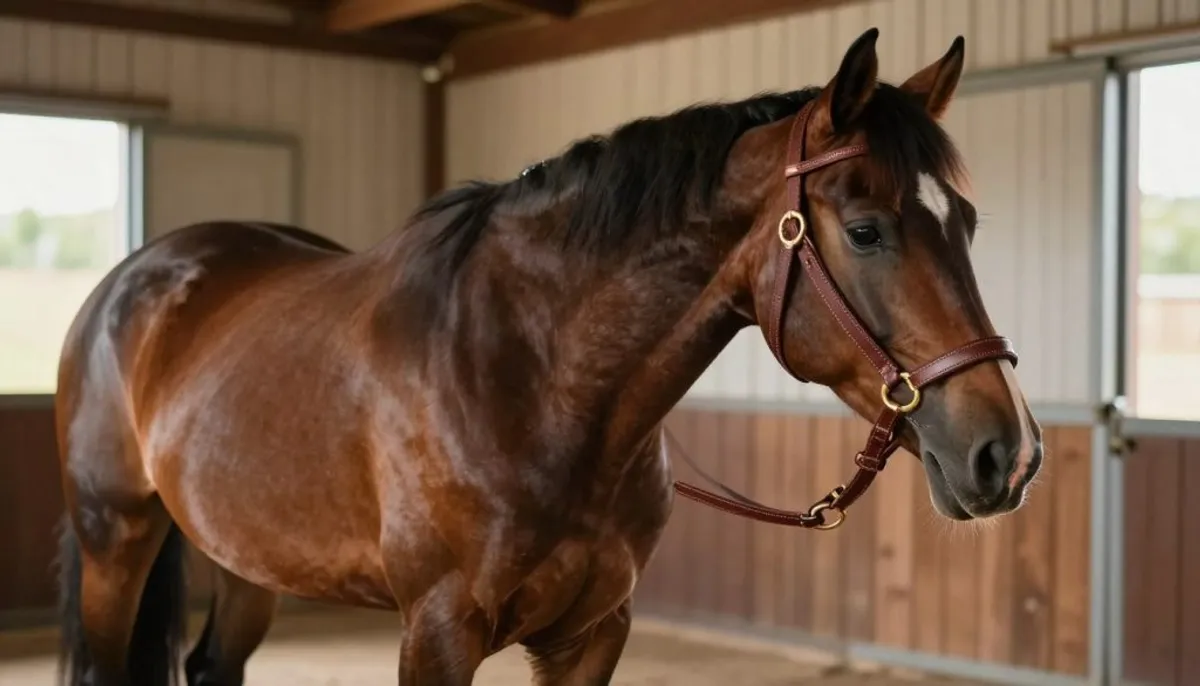
Leather Quality: Softness, Thickness, Grain Uniformity
It all starts with the feel of the leather. It should be soft, bend without leaving marks, and return to its original shape. It is important that it does not crack, even when it is cool.
You should also examine the grain of the leather. It should be uniform, without irregularities or overly smoothed areas. For a high-end halter, the thickness is consistent everywhere. This contributes to its durability, whether at work or in the paddock.
Finishes: Neat Stitching, Worked Edges, Durable Hardware
The small details matter a lot. The stitching should be straight, even, and tight, with no loose threads. The edges should be smooth and clean as they wear out first.
Regarding metal, choosing durable hardware is essential. Waldhausen often chooses stainless steel buckles. Kentucky also offers models in brass or steel, ideal for frequent use in humid environments.
| Point to Check | What You See on a Nice Item | What It Changes in Daily Use |
|---|---|---|
| Stitching | Regular line, tight stitches, no slack | Less risk of opening at tension areas |
| Edges | Smooth edges, evenly dyed | Less snagging, slower wear |
| Buckles | Stainless steel or brass, smooth rotation | Easier adjustment, better corrosion resistance |
Adjustment: Adjustment Points and Stability on the Horse's Head
A good halter should not be too tight but should adjust well. Ensure there are enough adjustment points at the headpiece and noseband. This allows the halter to fit the shape of the horse without pressing.
Once in place, the halter should remain fixed, even if the horse eats, lowers its head, or moves. Models with multiple adjustments, like those from Canter or Kentucky, allow for a custom fit. French manufacturing, like that of The French Saddlery, often promises superior quality in cutting and assembly.
Horse Comfort: Details That Change Everything on a Leather Halter
A leather horse halter of quality is felt by its absence of discomfort. It should be soft to the touch, flexible, and fit perfectly. Details like avoiding friction are crucial, especially after periods of exercise or transport.
Sensitive Areas: Headpiece, Noseband, Straps
The headpiece should distribute weight without pressure behind the ears. The noseband should adapt to the horse's movements when eating. And the straps should not rub against the jaws, which can happen if the leather is too stiff.
A halter that is soft to the touch and has neat finishes is preferable. Clean stitching and smooth edges make a difference for comfort.
Padding and Linings: Benefits of Sheepskin and Soft Reinforcements
A good lining prevents marks on the skin. Using sheepskin or similar padding can protect delicate areas. A protective kit for the noseband and straps offers extra protection where needed.
This is often what buyers are looking for, a sign of the growing interest in comfort. This choice helps limit friction without having to change the entire halter.
Choosing According to Morphology: Avoiding Too Tight or Too Loose
The halter should be adjusted correctly: not too tight, nor too loose. If too tight, it can cause irritation. If too loose, it moves and rubs, even if it is of high quality.
Start by choosing the right size, from shetland to draft horse. Then, adjust precisely using the adjustment points. A well-fitted halter does not slip and remains comfortable at all times.
| Point to Check | What You Should Feel | Alert Indicator | Simple Adjustment |
|---|---|---|---|
| Headpiece | Soft, stable support, no pinching | Horse shaking its head, warm area after use | Raise/lower one hole and check symmetry |
| Noseband | Clear fit, not slipping towards the nostrils | Mark on the nose bone, rubbing at the front | Slightly tighten then test at a walk |
| Straps | Aligned, no twisting of the leather | Mark near the jaws, halter turning | Rebalance left/right and smooth the straps |
| Lining / Padding | Soft contact, especially during transport | Broken hairs, redness despite soft leather | Add sheaths or switch to sheepskin padding |
Custom Leather Halter: Custom Options and Premium Finishes
A custom leather halter makes daily life more pleasant. It fits better and remains comfortable throughout the day. With customization, it ensures an elegant look while respecting the shape of the horse's head. It’s the perfect balance between comfort and style, without compromise.
At The French Saddlery, our method is simple. Each leather halter is a unique creation, made in France by talented artisans. We start by defining the right proportions, then refine the details. The goal? A halter that fits well, with a beautiful patina that harmonizes with the rest of the equipment.
The customization is ideal for horses with specific shapes. Whether for a wide forehead, prominent jaws, or a fine head. It is also perfect for sensitive skins, reducing pressure points and friction. The high-end finishes offer a clean and precise look, perfect for competitions.
- Optimized Adjustments: precise adjustments for better stability.
- Harmony Choices: leathers in different colors to match your equipment.
- Details That Signify Style: brass or rose gold accessories, to add character.
In the market, color combinations like brown/rose gold are common. Kits and sheaths in various colors allow for changes in appearance without changing the halter. Black, chocolate, cream, navy, or fuchsia: they adjust comfort and style while being practical.
| Rider's Need | Custom Option | Choice of Premium Finishes | Expected Benefit |
|---|---|---|---|
| Horse with atypical morphology | Adjusted headpiece and strap length, repositioned adjustment points | Black brass or brass ebony, regular stitching | More stable hold, less slipping, clean silhouette |
| Sensitive skin, quickly marking areas | Targeted padding, adjusted sheaths | Neat finishes, soft edges, pleasant hardware | Less friction, lasting comfort at work and on the move |
| Competition or presentation goal | Precise adjustment for a balanced look | Brown / rose gold or brass tobacco for a touch of luxury | Elegant appearance, remarkable details, total harmony |
| Desire to easily change style | Choice of interchangeable kits/sheaths | Varied colors according to the season | Quick change, adjustable comfort, simple maintenance |
Brands and Inspirations: From Classic to Luxury Leather Halters
Choosing a halter means opting for a style and how you feel with it. A luxury leather halter stands out for its quality. It is soft, well-cut, and its buckles are perfectly adjusted. On the other hand, a high-end halter may be more discreet. But it remains very sturdy and ideal for busy stables.
Frequently Present Brands
Some brands like Dy’on and Kentucky are very present. Norton also appears frequently. LeMieux, HKM, and Horze add to this diversity. Stübben, on the other hand, is rarer.
| Brand | Observed Occurrences | What Is Often Remembered | Usage Idea |
|---|---|---|---|
| Dy’on | 7 | Cared leather, clean finishes, “saddlery” feel | Presentation, daily work if the leather is maintained |
| Kentucky | 7 | Premium leather, brass or stainless steel buckles, refined look | Outings, competitions, stables where style matters |
| Norton | 9 | Wide choice: nylon, leather, rope, ethological halters | Material rotation, practical and versatile use |
| LeMieux | 4 | Neat design, comfort details, nice presence | “Clean” daily, outings and transport |
| HKM | 5 | Diverse range, accessible and easy-going options | Stable, club, horses changing halter sizes |
| Horze | 3 | Practical, simple options, good choice for equipping multiple horses | Daily, backup, supplementary equipment |
| Stübben | 1 | More classic signature, durable spirit | Seeking longevity and traditional cut |
The market also offers Waldhausen, Equithème, and Canter. They provide good options, whether in terms of buckles, prices, or adjustments. This is very useful for comparison, especially if you hesitate between different materials.
Styles: Simple Black, Traditional Brown, Brass or Rose Gold Finishes
The basic colors are black and brown. These colors go well with equestrian equipment. Navy and burgundy add a modern touch. On a luxury halter, brass or rose gold details are very pretty.
Paying attention to leather quality, cut, and stitching is crucial. These elements make a big difference, whether in the stable or outside, or for photos.
Between High-End Leather Halters and Daily Use: How to Decide
A luxury leather halter is perfect for sensitive skins or for a nice patina. It is also secure for transporting and presenting the horse. Good quality buckles are essential in these cases.
For intense daily use, some use a nylon halter for ease of maintenance. They reserve the leather halter for special moments. This method limits wear while enjoying the comfort of leather.
Availability, Stock, and Delays: Buy Calmly in France
Before buying, it is good to check if the leather halter is available. Size, color, and hardware can influence stock. Especially when in competition season.
Differences Between “In Stock” and “On Order”
An in stock product is ready to be shipped. Thus, it arrives more quickly. On the other hand, an on order item may take more time. It may be waiting for its manufacturing or restocking.
The indications on product sheets, such as Out of stock or Last items in stock, are important. They give an idea of when the product can be shipped. This is essential if you are looking for something specific.
Observed Delay Indicators
Delays vary depending on several factors. Usually, you can see delays like 48h, 5 to 7 days, or even more. It all depends on whether the product is ready or not.
| Displayed Status | Frequent Announcement | What It Implies for Shipping | Ideal If You Need the Halter |
|---|---|---|---|
| In Stock | Shipped within 48h | Quick preparation, priority departure when the depot is stocked | This week, before a lesson or an unexpected departure |
| In Stock / low stock | Shipped within 5 to 7 days | Possible batch processing, size/color verification, then shipping | In the short term, without immediate urgency |
| Variable Availability | Shipped within 7 to 10 days | Restocking in progress, delay depending on arrival at the warehouse | Before a planned outing, with a little margin |
| On Order | Shipped within 10 to 15 days | Waiting for supplier, then preparation and departure | When you can plan over two weeks |
| On Order (customization possible) | Shipped within 4 to 6 weeks | Manufacturing, checking, then shipping once the product is finalized | For a precise choice, without a tight deadline |
Anticipate According to Season, Competitions, and Demand Peaks
For competitions, order when it is in stock. Thus, even with an announced delay, you are sure. Periods like holidays or back-to-school increase the risk of seeing Currently unavailable.
If the halter is personalized, it will be on order. Do not count on quick shipping. Even if the product sheet says “5 to 7 days” for standard versions, allow yourself some margin.
Comparing Leather, Nylon, and Synthetic: Which Leather Halter for Your Practice
The choice of a halter depends on your routine and the time spent outdoors. Leather halters are appreciated for their feel and classic style. They are perfect for outings and where durability is important.
A well-fitted leather halter is comfortable for the horse. It adapts easily and becomes more flexible over time. With simple care, it remains supple and becomes even more beautiful.
The nylon halter is ideal for outdoor life. It is lightweight, dries quickly, and is easy to clean. It is a good choice for varied and frequent use.
Synthetic halters are economical and practical for daily use. They are perfect if you have multiple horses. It is also a good choice for a backup halter to keep in the trailer.
The ethological halter is made for specific groundwork. Often made of rope, it targets certain pressure points. It is recommended for precise exercises with an adapted technique.
- Practical Tip: think of the halter + lead duo according to use, with common lengths of 2.20 m, 2.30 m, or 2.50 m.
- To limit friction, sheaths on the noseband and headpiece can help, especially outdoors.
| Material | Strengths | Ideal in France for | Caution |
|---|---|---|---|
| Leather halter | Durability, comfort, hold, elegant patina | Presentation, careful transport, structured daily use | Requires regular cleaning, sensitive to prolonged humidity |
| Nylon halter | Lightweight, easy to maintain, dries quickly, good value for use | Pasture, outdoors, rain, active stables and frequent changes | Can irritate if poorly adjusted or if seams rub |
| Synthetic halter | Practical, economical, versatile, rinses easily | Second halter, club, trailer, backup and intensive use | Variable finishes depending on the range, check buckles and adjustments |
| Ethological halter | Precision in groundwork, good feel, lightweight | Education, respect in hand, groundwork dressage exercises | To be used with technique; avoid fixed tying and sudden movements |
Maintenance of a Quality Leather Halter: Cleaning, Storage, and Checks
A high-quality model lasts long if cared for regularly. Maintaining a leather halter is simple and quick. It protects the horse's well-being, the quality of the leather, and the accessories.
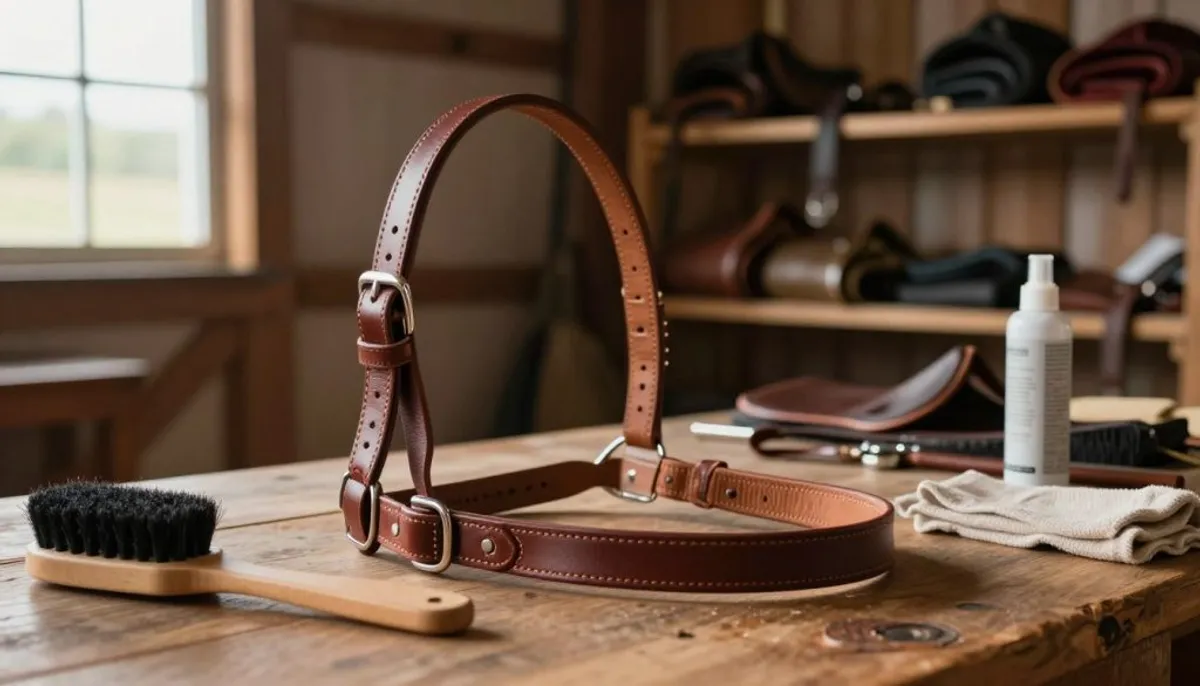
Regular Cleaning: Removing Sweat, Dust, and Residues
Clean the halter after intense use or at least once a month. Start by removing dust with a slightly damp sponge. Then, apply a mild soap or a specific leather product.
If necessary, rinse sparingly. Dry well with a clean cloth, especially around metal parts and seams. Clean leather stays beautiful longer.
Conditioning the Leather: Maintaining Softness and Preventing Drying
When the halter is dry, it is necessary to condition the leather. Use a balm or specific product in small quantities. Massage well, especially on the parts that bend like the headpiece and noseband.
This prevents cracking and keeps the leather supple. Regular maintenance also maintains the shape and fit of the halter.
Storage: Dry, Ventilated Place, Protected from Humidity
It is crucial to store your equestrian equipment properly. Hang the halter on a smooth support, in a dry and well-ventilated place. Avoid humid areas and surfaces that could damage it.
When folding it, avoid compressing the metal parts. A breathable storage bag protects against dust and humidity.
Safety Checks: Stitching, Buckles, Wear, and Repairs
Before putting it back on the horse, check the buckles and the overall condition. Watch out for buckles that catch, loose stitching, or fragile attachments. These problems can worsen the wear of the halter.
| Point to Check | What to Look For | Simple Action | Recommended Frequency |
|---|---|---|---|
| Stitching | Loose thread, opened stitches, frayed edges | Set aside and have repaired as soon as it moves | Before each use |
| Passers and Straps | Thinned leather, marked folds, cracks near holes | Clean leather then apply a treatment to condition leather, replace if cracked | Every 2 to 4 weeks |
| Buckles and Tongues | Deformation, play, rust, less clean closure | Clean, dry, and change the part if it catches | Before transport and competitions |
| Noseband and Headpiece | Stiff area, hard leather, embedded sweat marks | Light cleaning then conditioner, let air dry | After intense use |
Conclusion
A good leather halter is easily recognized. It should be safe, comfortable, well-fitted, and elegant. The buckles should be sturdy, the stitching precise, and the leather should be supple to avoid issues.
For the horse, it is important to have a headpiece that does not hurt. Padded parts of the halter can really make a difference in its well-being.
There are many choices in stores. You can find up to 300 different types of halters and leads. They come in all sizes, from small shetland to large draft horse. And there are plenty of colors, like black, brown, navy blue, or burgundy. Some even have brass or rose gold finishes.
A good leather halter should fit perfectly. It should neither pinch the horse nor slip off its head.
When you buy a halter in France, pay attention to its availability. Some are in stock, others on order. Delivery times vary greatly: from 48 hours to 6 weeks. For high-quality halters, consider The French Saddlery. They offer unique products, made in France.
The choice of halter depends on its use: in the stable, for transporting the horse, or for presentation. And don’t forget to maintain it well. Clean it, condition it, and regularly check the buckles. Well-maintained leather lasts longer, remains beautiful, and safe.
FAQ
Why invest in a high-end leather halter rather than a standard model?
A high-end leather halter offers more safety and comfort. It has sturdy buckles to prevent accidents. As it ages, it becomes even more beautiful.
Is a leather halter for horses really safer?
Absolutely, if well made. It should be sturdy and without loose parts. Always check the quality before buying.
How to avoid friction and irritation with a quality leather halter?
Opt for a soft and padded halter for sensitive horses. Protect sensitive areas for more comfort.
What colors of leather halters are most sought after in France?
People like black and brown. Navy blue and burgundy are in fashion. Brass or rose gold finishes attract those looking for a particular style.
What sizes to choose for a leather halter (shetland, pony, cob, horse, draft)?
Start by choosing the size of your horse. A good halter should fit well. Adjustable models are convenient, especially for intermediate sizes.
What is the difference between a transport halter, a presentation halter, and an ethological halter?
The transport halter is made for comfortable travel. The presentation halter is more elegant. The ethological halter helps communicate precisely with your horse.
How to recognize a high-quality leather halter?
Look for soft and uniform leather. Good stitching and quality accessories are key. A good halter should be comfortable and stable.
What buckles and metal parts to prefer on a leather equestrian halter?
Prefer stainless steel for its durability. Brass gives a traditional look. Closures should be sturdy.
Does a leather halter fit a horse with sensitive skin?
Yes, with soft leather and padded parts. These details make all the difference for comfort.
What are sheath kits (noseband, headpiece, straps) for?
They increase comfort and prevent irritation. Available in several colors, they allow for customizing the halter.
What does a custom leather halter (tailor-made, limited series, premium finishes) allow?
This ensures a perfect fit and a unique style. Ideal for special horses or for special events.
Where to find a high-end leather halter made from A to Z in France?
At The French Saddlery, you will find unique and custom-made products, made by talented artisans. Everything is made in France.
What brands are often found for a quality leather halter?
Brands like Dy’on, Kentucky, and Norton are well-known. Waldhausen, Equithème, and Canter also offer excellent options.
Is it better to have a luxury leather halter or a nylon halter for daily use?
For durable style and comfort, leather is top. Nylon is better for frequent outdoor activities. Many have one for each use.
What is the difference between “in stock” and “on order” for a leather halter?
“In stock” allows for quick delivery. “On order” requires a manufacturing time. Understanding this helps in your purchasing schedule.
What shipping delays are frequently observed for a leather halter?
Delivery times vary. They can range from 48h to a few weeks, especially for special orders.
Why anticipate the purchase of a leather halter before a competition or training departure?
Ordering early avoids stockouts on desired models. This ensures you have what you need on time.
Is leather always the best choice compared to synthetic?
Leather is superior for quality and aesthetics. Synthetic can be an economical and easy-to-maintain option.
What length of lead to choose with a halter?
Lengths vary according to use. For regular handling, a medium size works well. For specific work, a longer lead may be useful.
How to maintain a high-end leather halter for it to last?
Clean and condition the leather regularly. This maintains its quality and prevents premature aging.
How to store a leather halter to preserve its shape and safety?
Keep it dry and well-hung. This helps maintain its shape and functionality.
What safety checks to perform on a leather halter before use?
Inspect thoroughly before each use. Worn parts should be repaired or replaced for your horse's safety.
Is there really that much choice in halters and leads on the market?
Yes, the offer is wide. This allows you to find the ideal product according to your needs and preferences.