
The world of equestrianism often fascinates with its financial heights. Enthusiasts regularly question the extraordinary value of certain equines.
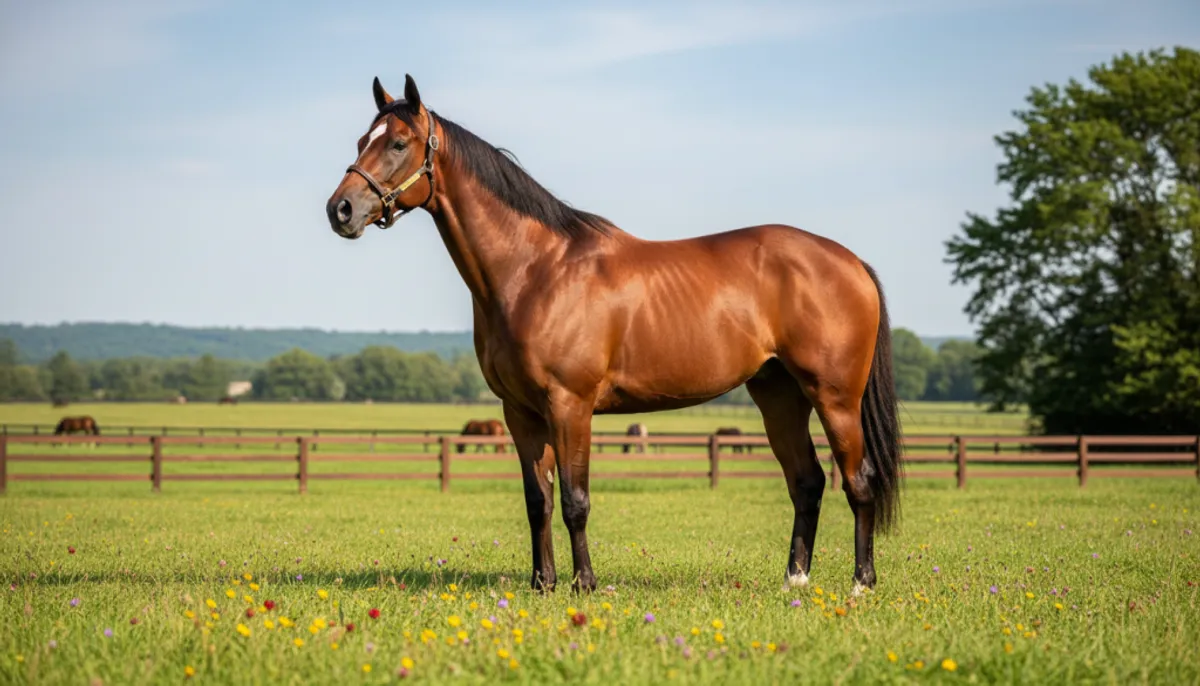
The absolute record is held by a thoroughbred named Fusaichi Pegasus. He was sold for the astronomical sum of 70 million dollars in the year 2000. This historic transaction followed his brilliant victory at the Kentucky Derby.
Such a price can be explained by several decisive factors. The exceptional pedigree and breeding potential play a major role. The luxury market and the expectations of buyers push bids to records.
Every year, high-level mounts are exchanged for millions. This sport thus transforms into a genuine investment. Iconic cases, like The Green Monkey, illustrate this complex dynamic.
The final price depends on the career, health, and genetics of the animal. The equestrian universe forms a very select club where rarity and performance dictate the rules.
Key Points to Remember
- Fusaichi Pegasus holds the sales record at 70 million dollars.
- The thoroughbred racing market reaches extremely high values.
- Pedigree and breeding potential are determining price factors.
- High-level equestrianism is an important financial investment sector.
- Cases like The Green Monkey show the volatility of this market.
- The career and health directly influence a horse's value.
- This environment remains an exclusive club, governed by rarity and performance.
Introduction to the Luxury Horse Market
The high-end equestrian industry has structured itself over the decades into an ultra-specialized international market. This fascinating world exchanges exceptional equines for millions of dollars.
Historical Context and Evolution
Historically, the sales of yearlings and sport mounts have created a global economy. It now weighs several billion each year.
Prestigious stables, like Godolphin, dominate this sector. Their genetic selection work is rigorous. Price records have continued to soar for years.
The Stakes of the High-End Equestrian Market
International buyers seek higher performing horses. They target racing or jumping competitions. Each sale represents a significant financial risk.
The career of a thoroughbred is analyzed for months. Experts evaluate its pedigree and potential. This very exclusive club requires sharp expertise.
| Market Segment | Average Price (in millions $) | Key Players | Risk Level |
|---|---|---|---|
| Thoroughbred Racing | 1 – 5 | Coolmore Stables, Gulf Investors | High |
| Jumping Horse | 0.5 – 3 | European Owners, Professional Riders | Medium |
| Dressage Horse | 0.3 – 2 | Private Collectors, Equestrian Nations | Moderate |
This table illustrates the diversity of cases and investments. The value depends on the level of competition and rarity. High-level equestrianism is a sport where luxury and performance meet.
The Criteria That Influence a Horse's Record Price
The valuation of an equestrian champion relies on an inseparable tripod. Genetics, performance, and future potential define its cost in high-end. This price reflects much more than a mere whim of luxury.
The Pedigree and Genetics
The pedigree is the first criterion scrutinized. A prestigious lineage, like that of Mr. Prospector, acts as a true bible for breeders. For a thoroughbred, these origins guarantee a very high initial valuation.
Physical conformation is equally crucial. Veterinarians conduct thorough examinations before each significant transaction. X-rays and endoscopies validate the quality of limbs and locomotion.
Sports Performance and Breeding Potential
A victory in a major race changes everything. It can add several millions to a horse's value. Each success in competition builds its career and records, propelling it to a higher level.
Breeding potential is a long-term investment. A promising stallion generates income in euros for years after its retirement. It is a source of sustainable income for its owner.
| Determining Criterion | Impact on Price | Verification Method |
|---|---|---|
| Pedigree & Genetics | High | Genealogy analysis |
| Sports Performance | Very High | Competition record (racing, jumping) |
| Physical Conformation & Health | Moderate to High | Veterinary examinations (X-ray, endoscopy) |
This table summarizes the pillars of evaluation during major sales. Buyers analyze each point to manage their risk. Equestrianism, whether in racing or jumping, rests on these fundamentals.
The club of elite breeders uses these tools to select the best horses. Their goal is to produce the next champion, whose value will be measured in dollars.
What is the Most Expensive Horse in the World - Focus on Fusaichi Pegasus
In the year 2000, a thoroughbred set a sales record that remains unmatched to this day. This champion, named Fusaichi Pegasus, was acquired by the famous Coolmore Stud for the staggering sum of 70 million dollars. This transaction marked a turning point in high-level equestrianism.
The Reasons for the Record and Its Story
The extraordinary price of 70 million dollars was justified by several factors. His exceptional pedigree, stemming from winning lines, promised immense breeding potential. The buyers at Coolmore bet on his ability to pass on his racing qualities.
His brilliant victory at the Kentucky Derby sealed his value. Although his racing career was short, it brought in about 2 million euros in winnings. He retired shortly after to focus on breeding.
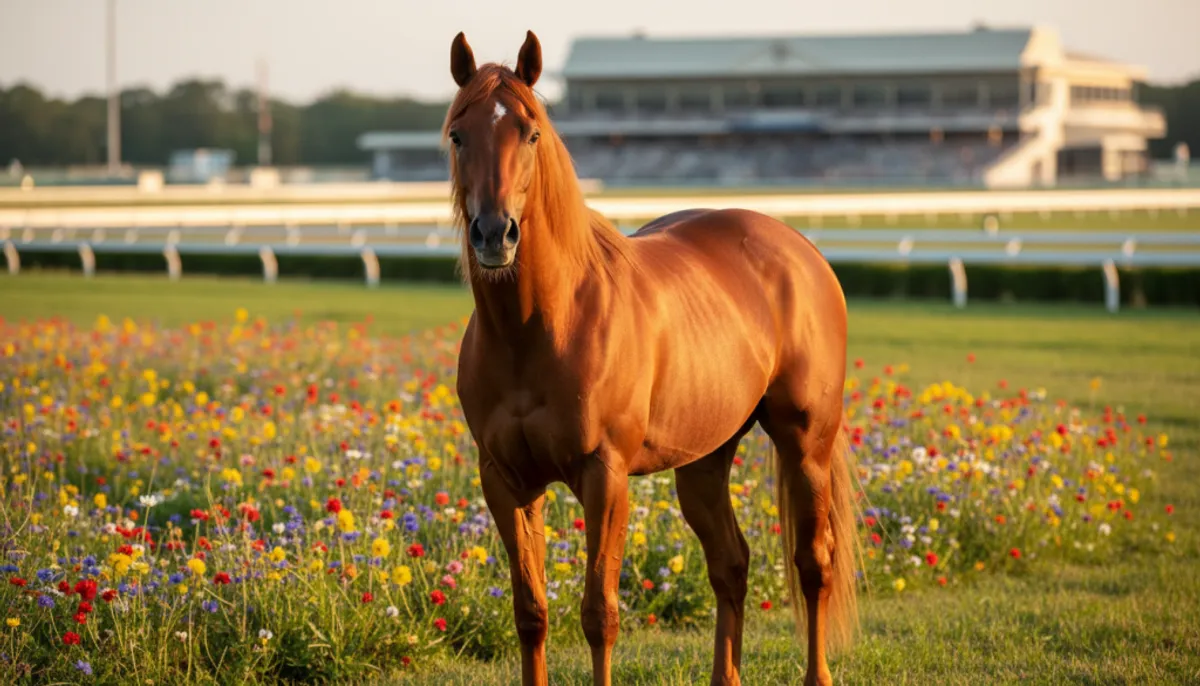
This unique case shows how a well-prepared animal becomes a financial asset. The risk taken by investors was rewarded. Fusaichi Pegasus proved that genetics can be worth fortunes in this very exclusive club.
| Financial Aspect | Key Figure | Impact on Valuation |
|---|---|---|
| Record Sale Price | 70 million $ | Establishes the absolute market benchmark |
| Race Earnings | ~2 million € | Confirms sports potential before sale |
| Breeding Potential | High | Justifies long-term investment |
| Active Career Duration | Short | Emphasizes rarity and uniqueness |
This table summarizes the pillars of his extraordinary valuation. He remains the perfect example of an investment in equestrian luxury. His story continues to inspire enthusiasts of this sport.
Iconic Sales and Their Stories
Two emblematic cases perfectly illustrate the extremes of this speculative market. Their very different stories show how passion and risk meet during major sales.
The Green Monkey: A Surprising Record
The thoroughbred named The Green Monkey surprised everyone in 2006. He was sold for 16 million dollars at a Florida auction. Despite this colossal price, his racing career did not achieve major success.
This case remains studied in the club of investors. It proves that a horse can reach an extreme valuation level without guaranteed results. High-level equestrianism always carries a degree of uncertainty.
Palloubet d’Halong and Its Impact in Show Jumping
On the opposite side, the French saddle horse Palloubet d’Halong justified its cost through performance. It was sold for 15 million dollars in Qatar in 2013, after international victories.
Its career in show jumping marked the discipline. This horse became a reference, showing that an investment in equestrian luxury can pay off. Buyers seek this kind of winning profiles.
These two sales records are part of the top of the most publicized transactions. They remind us that the market for sport horses is both fascinating and unpredictable.
Dressage Stars: Totilas and Other Legends
Equestrian dressage has its own icons, whose value rivals that of the greatest thoroughbreds in racing. This discipline of dressage generates transactions worth several millions.
The Career of Totilas and Its Records
The black stallion Totilas is an emblematic case. He was sold for around 10 million euros in 2010. This sale made a lot of noise in the select club of equestrian sport.
His meteoric career was marked by impressive record scores. He achieved 90.70% at the European Championships. Every time he entered the arena, he demonstrated perfect technique.
Unfortunately, his premature retirement came after just a few years. Limb problems ended his domination. International buyers had, however, invested a record price.
This horse proved that dressage could reach a valuation level comparable to the luxury market. It justifies its cost through its media aura and breeding potential.
The top high-level mounts also include legends like Valegro. Experts estimate it at around ten million dollars. These high-end horses turn major sales into global events.
High-level equestrianism shows its other face here. Far from show jumping, dressage requires months of analysis. The financial risk remains high, but the reward can be historic.
The Impact of Auctions and Prestige Buyers
Institutions like Keeneland orchestrate crucial meetings between breeders and billionaires. Yearling sales attract the wealthiest buyers from around the globe, such as Sheikh Mohammed bin Rashid Al Maktoum.
Investment Strategies in the Equine Field
Investment strategies rely on a meticulous analysis of pedigree. This approach, crucial for a thoroughbred like Fusaichi Pegasus, assesses risk and career potential.
The exclusive club of investors uses sharp statistical data. The goal is to secure mounts at a price of several millions of dollars. This vision spans several years.
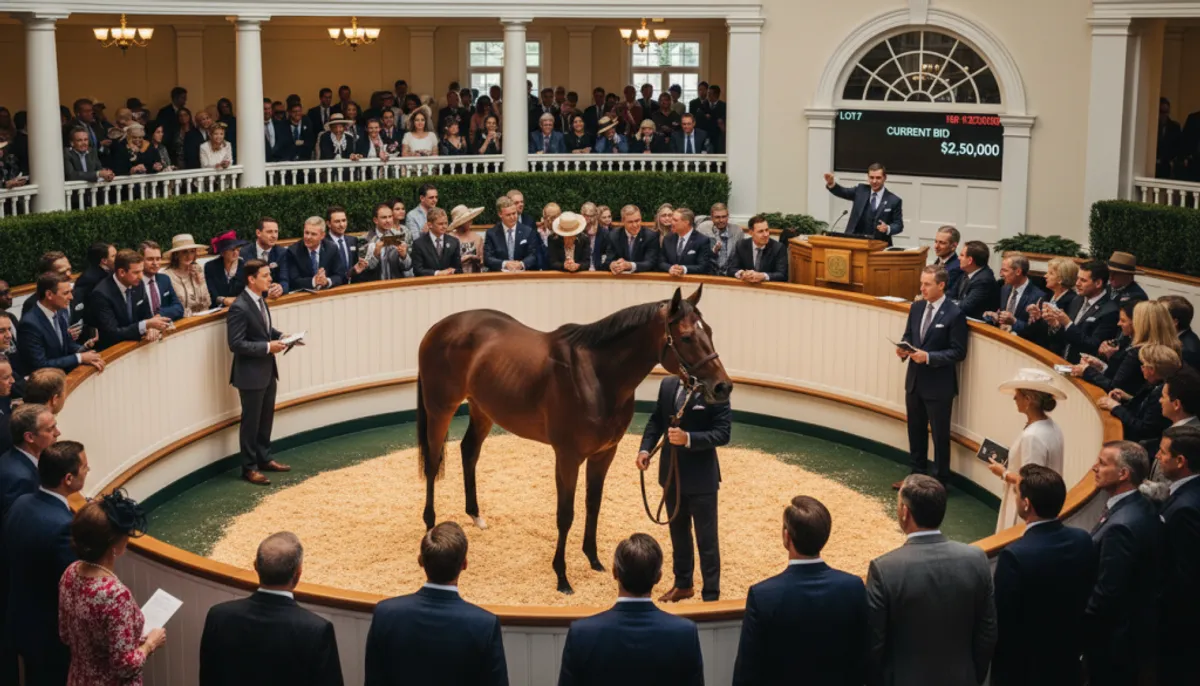
The Role of Sales Such as Keeneland
The horse sales in this context are the engine of the high-end economy. In just a few minutes, public auctions can dramatically raise bids.
Every detail, from health to genetics, is scrutinized before the sale. This sophisticated industry allows breeders to value their best products. It transforms acquisition into a global event.
Other Equestrian Disciplines and Their Influence on the Market
Elite Friesians, with their black coats and noble bearing, illustrate the value of dressage. This discipline generates transactions over 100,000 euros for the best subjects. It is part of a larger ecosystem.
Racing, Jumping, and Dressage: Diversifying Investments
Wise buyers spread their risk across several equestrian sports. The thoroughbred for racing, the jumping horse, and the dressage specialist form a strategic trio. This approach protects against the uncertainties of a single discipline.
Unlike the case of The Green Monkey, some equines offer a stable career over several years. They provide regular income before a well-planned retirement. This is a preferred option for cautious investors.
The market is now seeking more versatile horses. An animal in excellent health, capable of performing at a high level in two disciplines, sees its price rise. Major international sales testify to this every month.
This club of investors closely follows sales records in each sector. It adjusts its strategies to capture the value of equestrian luxury. High-end equestrianism is thus a dynamic and diverse landscape.
The French Saddle: Excellence to Support Equine Investment
The French Saddle embodies the craftsmanship of excellence that perfectly complements an equine investment. A high-level horse deserves equipment that reflects its value and prestige.
Custom Accessories and Made in France Products
This house offers high-end products entirely made in France. Each saddle, bridle, or blanket is designed by the best artisans. They meet the specific needs of each mount.
Superior quality guarantees optimal comfort for the animal. This is essential to maintain its performance in racing or jumping. The most demanding buyers appreciate this custom approach.
The Alliance Between Artisan Tradition and Innovation
Ancient know-how meets modern technologies. This fusion allows for the creation of accessories that are both durable and innovative. They support a horse's career over several years.
Choosing The French Saddle is to value the excellence of French craftsmanship. It is also a strategic choice to support one's investment. The club of prestigious owners recognizes this added value.
Comparison of International Markets
The economic geography of the luxury horse reveals well-defined regional dynamics. Three main hubs structure sales and set prices on a global scale.
United States, Europe, and the Middle East: Dynamics and Differences
The United States dominates the yearling segment. The Keeneland complex sets records for thoroughbreds in racing. Transactions are concluded in dollars and influence the entire sector.
Europe excels in training. Germany and France produce champions in dressage and jumping. Their expertise justifies sales in euros for horses at the Olympic level.
The Middle East energizes auctions. Buyers like Sheikh Mohammed invest millions. The Godolphin stud thus influences global prices through its financial power.
This diversity creates a very active international club. The career of an equine can begin in the United States and continue in Europe. Understanding these flows is crucial for managing risk.
The final price of the most expensive horse in the world depends little on a single region. It results from this complex interaction between the major markets of high-end sport.
The Risks and Opportunities in Equine Investment
Investing in an exceptional equine represents both a bold bet and a unique financial opportunity. This market combines passion and economic calculation, where each decision weighs several millions.
The club of savvy buyers knows that success depends on careful analysis. They must assess the risks while identifying real opportunities.
Market Fluctuation Analysis
The sales of thoroughbreds experience significant variations. A case like The Green Monkey perfectly illustrates this phenomenon.
Sold for sixteen million dollars, his racing career did not meet expectations. This shows that one should avoid paying an equine more expensive than its real value on the market.
Conversely, Fusaichi Pegasus justified its cost through exceptional performances. Its success demonstrates that records can be profitable in this high-level sport.
Determining Criteria to Secure One's Investment
Securing a placement requires rigorous verification. The examination of limbs by a specialized veterinarian is crucial.
These checks prevent the risks of chronic injuries. They ensure the sustainability of the sports career, whether in racing or dressage.
Potential earnings, in euros or dollars, depend on this long-term health. Management over several years is necessary to maximize the return on investment.
| Risk Factor | Potential Impact | Safety Measure | Effectiveness |
|---|---|---|---|
| Health of Limbs | Chronic injuries, career halt | Thorough veterinary examinations | High |
| Market Fluctuations | Overvaluation, loss of value | Historical analysis of sale prices | Medium |
| Unrealized Potential | Significant financial loss | Rigorous study of pedigree and performances | High |
| Lack of Transparency | Poor purchasing decision | Independent assessments before the transaction | High |
This table guides investors toward informed decisions. Each case requires a tailored approach in this demanding world.
A deep understanding of the market and performance criteria remains the best protection. It transforms a calculated risk into a solid opportunity.
Conclusion
Owning an exceptional equine represents the culmination of a passion, but also of a thoughtful financial strategy. The most expensive horse in the world, Fusaichi Pegasus, and other legends like The Green Monkey show the diversity of prices.
Each investment in this luxury world requires rigorous analysis. The risk of disappointment exists, but savvy buyers know how to manage it. They study the career, health, and pedigree of thoroughbreds.
The total value includes maintenance and high-end equipment. Brands like The French Saddle meet this need. Their craftsmanship supports performance in racing, jumping, or dressage.
In summary, this select club continues to follow major sales. The quest for the next champion, which could be worth millions of dollars or euros, still drives high-level equestrianism.
FAQ
What is the thoroughbred that holds the highest sales record?
The absolute record is held by Fusaichi Pegasus, a stallion sold for the phenomenal sum of 70 million dollars in the year 2000. His price is explained by an exceptional pedigree and a resounding victory at the Kentucky Derby, promising a brilliant breeding career.
What factors justify such astronomical amounts for an equine?
The cost is primarily dictated by genetics and pedigree, ensuring exceptional breeding potential. Competition performances, such as in jumping or dressage, along with the youth and health of the animal, are decisive criteria for buyers.
Was the purchase of The Green Monkey a good investment?
The sale of The Green Monkey for 16 million dollars is often cited as a surprising case. Despite its record price at birth, its racing career was brief. This example illustrates the inherent risks in the thoroughbred market, where potential does not always materialize.
Which show jumping horse made history with its price?
In jumping, the mare Palloubet d’Halong set a record for a female, selling for around 15 million euros. Its sporting success at the highest global level and excellent genetics legitimized this exceptional valuation in the European market.
How do auctions influence this luxury market?
Major sales like those at Keeneland in the United States create an intense competitive environment among buyers. They crystallize the value of an animal based on immediate demand, sometimes pushing millions to acquire a future flagship stallion.
Are there differences between the American, European, and Middle Eastern markets?
Yes, the dynamics vary. The American market is heavily oriented towards racing and thoroughbreds. Europe excels in Olympic disciplines like dressage and jumping. The Middle East, with its massive investments, acts as a powerful financial engine across all three sectors.
What are the main risks to consider before investing?
Equine investment involves fluctuations. The risk of injury, failure to realize sporting or breeding potential, and market trends can affect value. A rigorous analysis of pedigree, health, and performances is crucial to secure capital.
Why is quality equipment important for these valuable athletes?
For horses worth several million, custom and high-end equipment is essential. It optimizes their comfort, safety, and performance. Excellent saddleries, offering artisanal craftsmanship, are indispensable partners in this demanding universe.