
When going to the club or a competition, having a riding bag is essential. It holds everything: boots, pants, gloves, and a whip. This prevents scattering your belongings. Thus, nothing is forgotten, and you are ready faster.
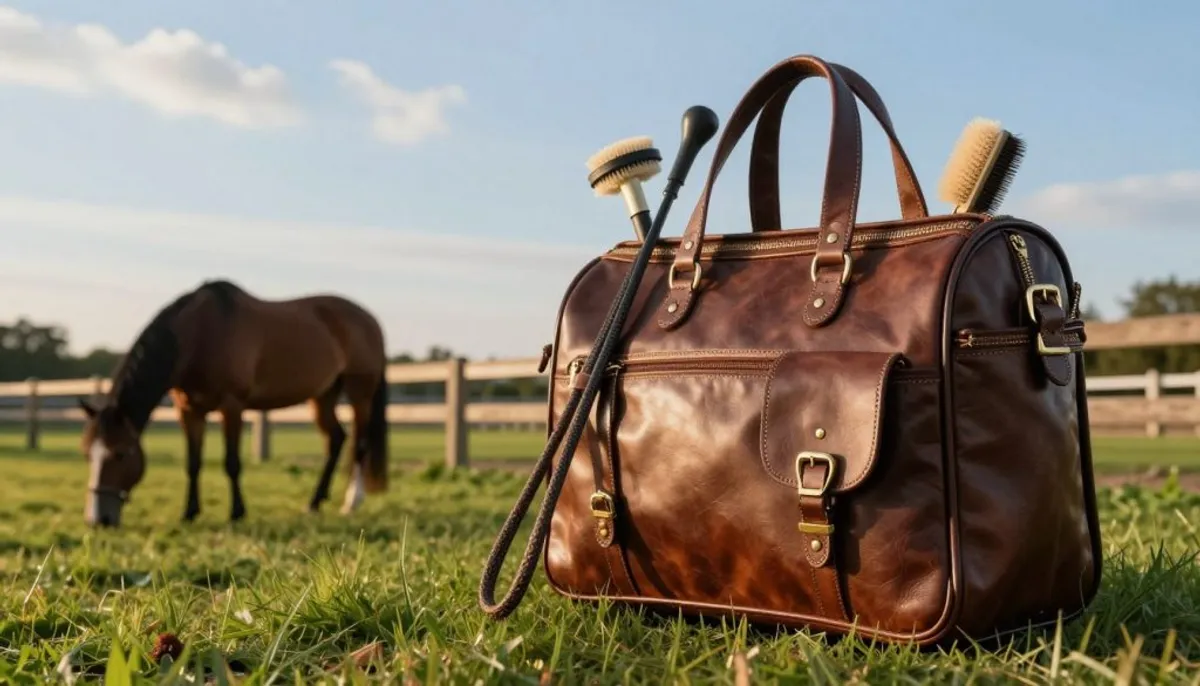
In riding, two things are very important: safety and comfort. One must always wear a helmet. And depending on the activity, add a protective vest. Properly storing your equipment helps keep it in good condition.
When choosing your bag, whether in a store or online, being well-organized is crucial. An effective bag separates clean items from dirty ones. It also protects against dirt, dust, and moisture. It’s like a checklist: you know where everything is, and you can relax.
Next, we will examine the different types of bags and what makes them special. We will discuss the type of bag, how it is carried, its size, durability, and how to clean it. We will also talk about brands, colors, and budget, with a special focus on La Sellerie Française and its products made in France.
Key points to remember
- A riding bag simplifies travel and limits forgetfulness.
- Safety starts with a helmet well protected in the bag.
- A good equestrian gear lasts longer when stored and ventilated.
- Equestrian accessories benefit from being separated by zones and compartments.
- Choosing in horse tack helps compare materials, seams, and finishes.
- Key criteria: format, carrying, capacity, resistance, and maintenance.
Why a good bag is essential for equestrian equipment
Equestrian equipment, like boots and pants, takes up a lot of space. A rider's bag prevents everything from mixing in the trunk. This simplifies departure and allows you to know where everything is, even early in the morning.
Gaining comfort daily at the club and in competitions
A good transport bag for horses reduces trips between the car and the stable at the club. In competitions, being organized saves time for grooming and equipment. Accessories remain accessible without the need to search.
Protecting and organizing equestrian accessories (helmet, gloves, whip)
The helmet is crucial for safety. Ensure it has the CE mark. A structured bag offers better protection against shocks. It also keeps gloves dry and preserves the whip.
| Item | Risk without storage | What a well-thought-out bag provides |
|---|---|---|
| Helmet (CE standards) | Shocks, pressure, scratches | Protection, support, quick access |
| Gloves | Loss, moisture, odors | Dedicated pocket, ventilation, cleanliness |
| Whip | Torsion, breakage, snag | Long compartment, stable support |
Avoiding dirt in the car and separating clean from dirty after the session
Mud and sweat dirty everything after a session, especially the boots. The compartments in the bag help to separate clean from dirty. This preserves the cleanliness of the car. Thus, the equipment remains healthy and pleasant for next time.
The different types of bags used in horse tack
In the world of tack, there are many types of bags. You can find simple cotton bags or special models for equipment. The choice depends on what you need to transport, the distance, and how you organize your belongings. The goal is to make things easier: save time, avoid forgetting something, and protect your gear.
To choose well, consider a few tips. Look for a sturdy closure, a bottom that cleans easily, and separate storage spaces. If the bag is made of water-resistant fabric, that’s even better, especially after a rainy day. It keeps your belongings dry, even when everything mixes.
Equestrian backpack for walking and cycling trips
Backpacks are great if you come by foot, bike, or public transport. They allow you to keep your hands free and distribute weight better. It’s ideal for carrying a helmet, a water bottle, and a jacket. Side pockets are handy for keeping gloves or treats within reach.
Comfort comes from padded backs and adjustable straps. For going to the club, a medium-sized bag is often sufficient. It’s perfect if you leave your boots in a locker.
Multi-compartment rider's bag to group everything
The rider's bag is perfect for staying organized. It has a large space for your clothes, special spots for the helmet, and small areas for accessories. After exercise, a ventilated area to separate clean from dirty items is very useful. It also avoids spending time searching for the whip in the bag.
Sturdy closures and a reinforced bottom make all the difference. A clear interior allows for quick finding of what you’re looking for, even in a dark place.
Saddle bag to keep essentials within reach
The saddle bag is designed to keep essentials close during the session or while riding. You can put your phone, treats, or a small brush in it. This helps you stay focused on what’s important, having everything in one place.
Choosing a stable bag that is easy to open and close is important. A material that resists dust and water is very practical for daily use.
Pony bag suitable for children and small items
The pony bag is designed for children. It is lightweight, not too big, and easy to carry. It can hold essentials like gloves, a small brush, a water bottle, and a snack. An easy zip and well-visible pockets help children be more independent.
Its size and an adjustable strap are well-suited to children's physiques. This also helps avoid losing small items between the stable and the arena.
| Type | Ideal for | Best for carrying | Detail to check |
|---|---|---|---|
| equestrian backpack | Walking, biking, public transport | Helmet, jacket, water bottle, gloves, treats | Comfortable straps, padded back, quick-access pockets |
| rider's bag | Club and competitions with many items | Complete outfit, boots, separated accessories | Compartments, clean/dirty separation, reinforced bottom |
| saddle bag | Sessions and outings where quick access is needed | Small essentials within reach | Stability, easy opening, durable material |
| pony bag | Children, beginners, small routines | Small items, brush, water bottle, snack | Lightweight, adjustable straps, simple zip |
Choosing a riding bag based on your discipline and frequency
Choosing the right bag for riding is like finding the right session partner. It must match your routine, the terrain, and your main needs. Thus, your equipment stays clean, protected, and within reach, whether you are in a trailer or at the arena. In terms of riding bags, one can quickly distinguish a daily bag from a less durable model.
If you enjoy outdoor rides, opt for a lightweight and easy-to-use bag with quick access. Bring only the essentials: gloves, phone, small pocket knife, and something to reward the horse. For riding, a small bag is ideal as it doesn’t snag on branches and stays in place.
For dressing and flat work, organization is key. Use specific pockets to separate your gear like the dressage stick and gloves. A padded compartment for your helmet can reduce shocks and scratches, especially during transport.
In disciplines like show jumping and cross-country, your bag needs to be robust. It should hold protectors, wraps, and even a protective vest or an airbag vest. Choose a bag with space and easy-to-open closures. After a fall, it’s handy to have a dedicated space for the airbag, thus avoiding forgetting to replace the cartridge.
For intensive use, check the seams, attachments, and bottom. Sturdy materials and an easy-to-clean fabric last longer against dust and mud. Regular cleaning helps keep the bag in good condition, ensuring your equipment is always ready for use.
| Practice | Main expectation | Useful storage | Details to check in horse tack |
|---|---|---|---|
| Ride / outdoor | Carry essentials without hindrance | Accessible pocket for gloves and treats, bottle holder | Stable strap, fast-drying fabric, compact format like horse transport bag |
| Dressing / flat work | Order and protection | Whip/stick sleeve, helmet compartment | Soft lining, clear separations, smooth closure |
| Show jumping / cross-country | Robustness and quick access | Large pocket for protective vest or airbag vest, sturdy zips | Reinforced bottom, strong handles, double-stitched seams |
| High frequency (club + competitions) | Long lifespan and easy maintenance | “Dirty” compartment, ventilated pocket, label space | Washable coating, reinforcement parts, upright shape |
Compartments and organization: what a rider's bag should really offer
A good rider's bag makes things much easier. It should have a simple organization with well-defined compartments. This allows you to forget nothing and prepare quickly before leaving.
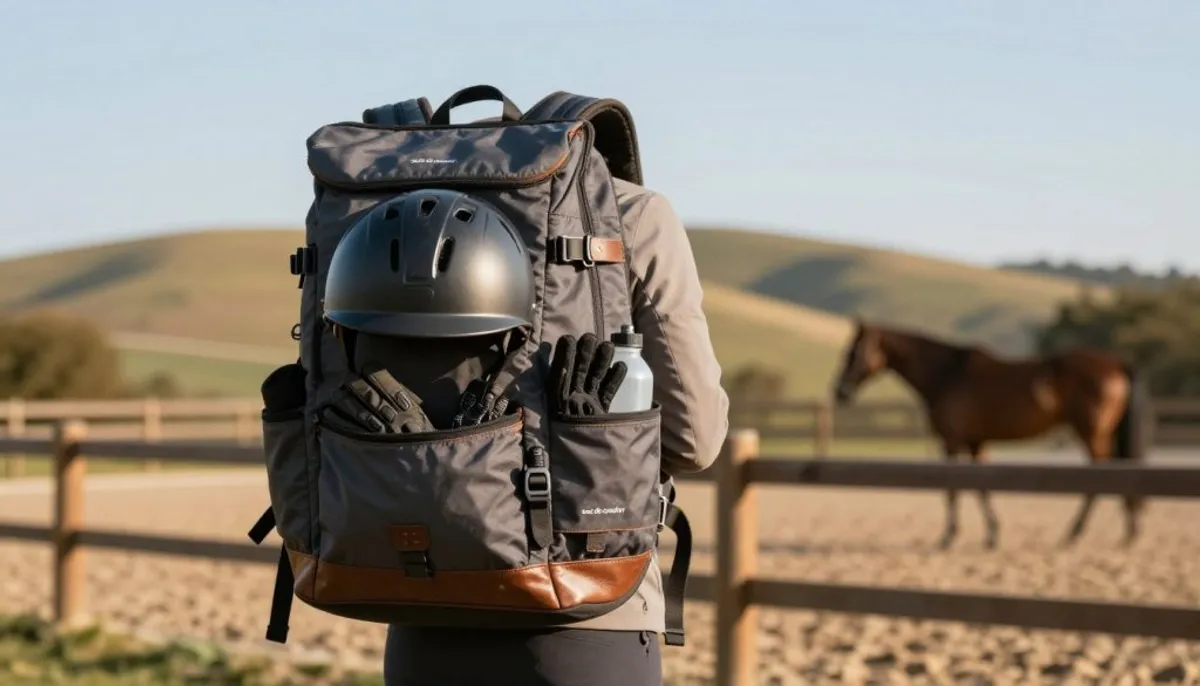
The first important thing is a dedicated space for the helmet. A semi-rigid protection maintains its shape and protects it. Always look for the CE label to ensure its safety.
Having a separate space for shoes is super useful. Whether they are boots or tall boots, they do not dirty the rest. This also helps keep the rest of the gear clean and odor-free.
Small pockets for accessories are very practical. A pocket for gloves keeps them away from items that could damage them. A case for the whip (which costs between 5 and 30 €) keeps it straight and avoids snags.
It’s good to have a space to keep your clothes uncompressed. This includes riding pants, a comfortable top, and socks. This keeps a clean and ready change of clothes, even after a busy day.
| Useful compartment | What it holds | Why it’s practical |
|---|---|---|
| Helmet space | Helmet with CE label, hairnet | Less shock, preserved shape, quick visual check |
| Separate shoe area | Boots, tall boots, mini-chaps | Less mud on the outfit, better odor containment |
| Accessory pockets | Gloves, whip, elastics, small gear | Direct access, less loss, stable storage |
| Protection volume | Protective vest (70–200 €) or airbag vest (300–600 €) | Less wrinkling, less wear, safer transport |
| Small dedicated pocket | Spare cartridge (20–30 €), locker key, bandages | Quickly spotted, avoids mixing with the rest |
A final tip: make sure to have a “clean/dirty” area. A special pocket for wet laundry prevents everything from getting dirty. It also serves to isolate used gloves or spare socks.
The secret to not forgetting anything? A well-organized bag. Everything in its place becomes a visual checklist: helmet, shoes, gloves, whip, outfit, protection. Thus, you immediately notice if something is missing before leaving.
Carrying comfort: how to choose your equestrian backpack
It is crucial that an equestrian backpack remains comfortable, even when full. A good bag makes walking easier, keeps hands free, and reduces stress upon arrival. It also better protects equestrian equipment, preventing damage due to movement.
Straps, padded back, and weight distribution
Choose wide, flexible, and sturdy straps. Padding on the back reduces pressure, especially with a helmet, water bottle, and other accessories. To reduce fatigue, place heavy items close to the back and in the center.
A chest strap also helps stabilize the bag during fast walking or on difficult terrain. Small details often improve comfort, especially with multiple trips per day.
Quick access to essentials (phone, treats, gloves)
Easily find your belongings thanks to well-placed pockets. A pocket on top for the phone, another for gloves, and one for rewards after sessions. These accesses facilitate keeping up with the pace of lessons and the club.
A good layout prevents forgetting things. Having everything well organized allows you to focus on the horse, not the bag.
Volume suitable for the outfit: pants, technical top, riding coat
Ensure you have enough space for a complete outfit: pants, breathable top, and warm layer if needed. A riding coat can take up a lot of space, especially if it has pockets and is waterproof. A bag with a large main compartment helps with storage without wrinkling clothes.
If you use an airbag vest, avoid hooded tops. The hood can cause problems with the neck during deployment. A neat arrangement of your clothes and equipment promotes comfort and safety for a better session.
| Item to check | What it changes daily | Simple marker |
|---|---|---|
| Padded straps | Less shoulder pain, more stable carrying | Comfortable width, easy adjustments |
| Padded back | Less friction, better ventilation | Soft contact, support without stiffness |
| Quick-access pockets | Phone, gloves, and treats available in seconds | Easy-to-reach zipped pockets while standing |
| “Clothing” volume | Complete outfit + riding coat without forcing | Wide opening, neat storage |
Dimensions, capacity, and practical formats for the club
In a club, the size of a bag can really make a difference. A well-chosen riding bag prevents compressing the helmet or gloves. It also avoids rummaging to find your equipment. Make sure to have compartments to separate clean from wet.
Useful size markers: L 42 x W 26 x H 27 cm and L 67 x W 34 x H 32 cm
The format L 42 x W 26 x H 27 cm is perfect for essentials. It easily fits in a locker or a car. It’s ideal for the needs of a rider during a regular session.
The format L 67 x W 34 x H 32 cm offers more space. It is useful for storing a complete outfit and accessories. This bag is suitable for long days needing multiple outfits.
| Format | Dimensions | What fits easily | Most useful in the club |
|---|---|---|---|
| Compact | L 42 x W 26 x H 27 cm | Helmet, gloves, whip, soft brush, fine halter | Fits anywhere, quick to carry |
| Large volume | L 67 x W 34 x H 32 cm | Boots, protective vest, complete outfit, grooming kit | Less compromise when accumulating |
Choosing based on contents: boots, helmet, protective vest, outfit
First, think about shoes. Boots adapt easily, but tall boots require more space. Especially with thick socks in winter. An aerated compartment helps against bad odors.
Then, protect the helmet. A special padded compartment keeps it safe. With a protective vest or airbag, a large bag is more suitable.
For the outfit, don’t forget the pants and a breathable top. A pocket for wet laundry is useful after rain. This keeps the equipment clean and organized.
Compact format vs. large volume: finding the right compromise
A compact bag is easy to carry and doesn’t hinder in hallways. It’s good if you leave items in the locker. It’s a good choice for daily use at the club.
A large bag is better for those who move a lot, between the stable and competitions. It can hold more items, offering comfort and safety. The best compromise allows for easy closure of the bag.
Wheeled bags: when transport becomes simpler
When moving from one club to another, the weight increases quickly. A wheeled bag for riding simplifies things as soon as you walk, especially on a gravel parking lot or in long hallways. Many catalogs offer wheeled models (5), indicating that it has become a must-have.
Advantages of wheeled models for heavy equipment
These bags protect our backs. Instead of carrying, you easily pull the bag, saving energy for mounting. They are practical for transporting boots, a helmet, a protective vest, or small accessories.
A good wheeled bag also allows for separating dirty items from clean ones. You often find a compartment for dirty laundry. Thus, everything remains clean and organized, especially in competition.
For whom: competitions, stables without lockers, long walks
This option is ideal for active riders. It’s perfect in competition, where you often need to move around. A wheeled bag makes transport easier without weighing down the shoulders.
It is also useful if your stable doesn’t offer personal lockers. You can drop everything near the arena and leave quickly. For long walks, it’s the easiest solution.
Points of vigilance: stability, handle, wheels, and bottom resistance
Before making your purchase, check the bag's stability; it should remain upright. Ensure the handle extends well and is sturdy. Additionally, the wheels must work properly on all terrains.
Don’t forget to check the bottom resistance. This is essential as it is the most exposed part to damage. Choose a model with a solid bottom to best protect your equipment.
Brands, ranges, and availability: markers for a stress-free purchase
In horse tack, options often change. For a stress-free purchase, simply look for a bag that protects and organizes your riding gear. It should also allow for quick access at the club.
A good tip is to check the range, color, and if the product is in stock. This avoids choosing a bag that is too small or impractical for competitions.
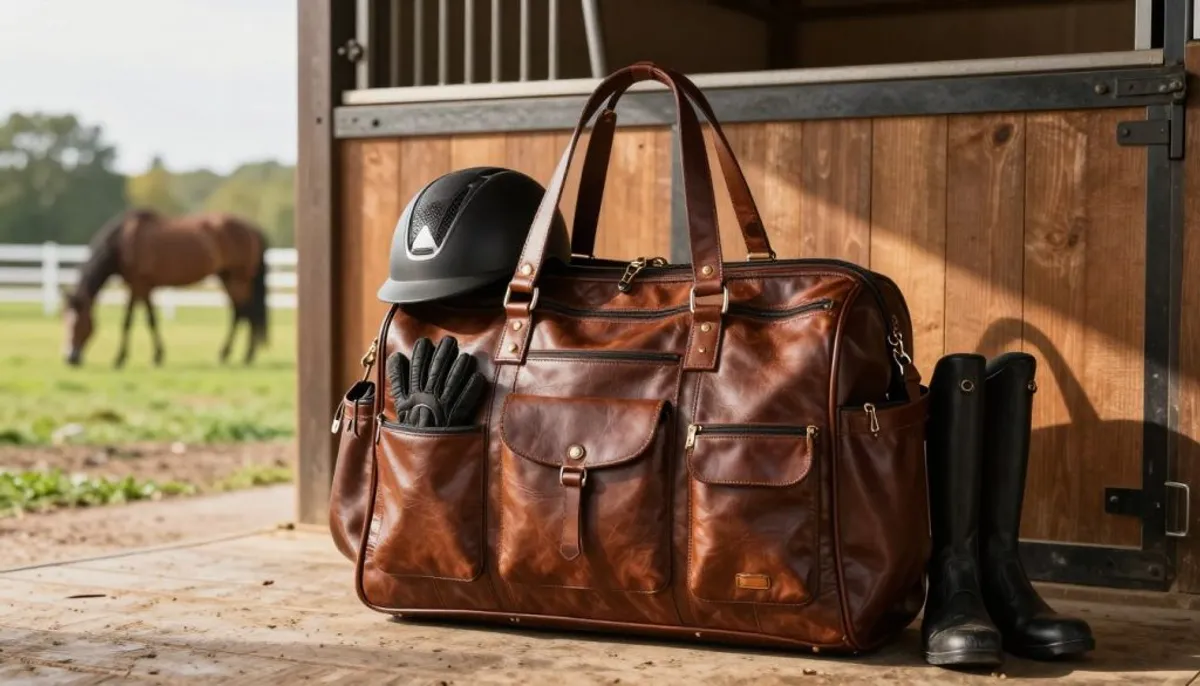
Examples of brands encountered: Equithème, Kentucky
Equithème is a common brand offering many models. Kentucky is also available, especially for specific needs. Their Urban range is designed for daily use with a simple and practical design.
Before choosing, carefully examine the main opening, the quality of seams and zippers. Small details can make a big difference on a riding bag, especially when it is full.
Common colors: black, brown, blue, gray
Black is popular because it is discreet and shows less dirt. Brown, blue, and gray are also options, remaining easy to coordinate with your outfits and equipment.
A dark color is practical for equestrian accessories that may be wet or dirty. A light bag, on the other hand, requires more maintenance, especially during winter.
Stock, promotions, and selection criteria before ordering
Using the In stock filter saves you time, especially during a restock or a move. If no promotions are available, following restocks can be more advantageous than waiting for a discount.
- Measure the volume: helmet, boots, outfit, and small grooming kit.
- Choose the right type: backpack or wheeled depending on walking distance and weight.
- Check the compartments: separation of clean and dirty, quick pocket for phone.
- Examine durability: reinforced bottom, neat seams, smooth closures.
- Align with discipline: daily practice, competition, or outdoor.
A good choice of bag prevents rapid wear and facilitates transport. A well-chosen bag in horse tack keeps everything in order. This transforms your riding bag into a useful tool, not a burden.
What budget to plan for a riding accessories bag
The cost of a bag varies depending on its use. A simple model, like a tote bag or cotton bag, starts at 5 €. They are good for transporting small items but do not protect helmets or boots much.
For a bag more suited to club life, you need to plan more money. A good bag with special compartments can cost several dozen euros. Reserved spaces for each item (for example, for the helmet, boots, treats, phone) help a lot in daily life. Especially if you carry your gear everywhere.
| Expense item | Price markers in France | What it serves daily |
|---|---|---|
| Simple solution | Tote bag / cotton bag from 5 € | Transport light equestrian accessories, without structure |
| Dedicated solution | Riding bag with compartments: several dozen euros | Organize, separate clean from dirty, limit shocks to equipment |
| Helmet | From 30 € up to several hundred euros, with CE mention | Safety while riding, to be protected in the riding accessories bag |
| Boots | From 50 € (plastic) up to several hundred (leather) | Comfort and support, often the most cumbersome item |
| Mini-chaps | Budget comparable to boots | Alternative to tall boots, easy to store with the rest of the equestrian equipment |
| Pants | From 25 € up to several hundred (brands) | Regular outfit, often to be transported with a jacket or technical top |
| Protective vest | 70–200 € | Protection during sessions, volume to plan in a suitable riding bag |
| Airbag vest | 300–600 € + cartridge 20–30 € | Enhanced safety, requires clean and flat storage |
If you have a small budget, prioritize safety and comfort first. You can adjust the choice of bag later. There are also economical options in supermarkets. Or you can take advantage of sales organized by equestrian centers, often in June or September. It’s a good idea to find additional equipment without breaking the bank.
Maintenance and durability: extending the life of your equestrian equipment bag
A bag for riding is subjected to a lot: sand, moisture, friction, travel. By adopting a few simple gestures, you can keep your equestrian equipment clean and pleasant, even during competitions.
Cleaning after the session: mud, dust, sweat
After your return, empty the bag well and shake each pocket. Use a soft brush to remove dry mud and dust, paying attention to the seams and bottom of the bag.
To clean stains, a damp sponge may be enough. If the bag has parts similar to leather, treat it as you would with tack: use the right product, avoid too much water, and let it dry naturally. It’s also good to wipe accessories like gloves and the helmet before putting them back in the bag.
Dry storage: avoiding moisture and bad odors
Never keep damp clothes in the bag. Take them out, open all the zippers, and let air circulate well for a few hours.
Then, store the bag in a dry and well-ventilated place, away from any direct heat source. If the bag gets wet during a downpour, a quick wipe can prevent odors and reduce signs of wear.
Regular checks: zippers, seams, handles, and friction areas
Do a quick check once a week. Look for difficult zips, loose straps, or damaged seams. This small check can prevent losing your belongings at the least opportune moment.
Pay attention to areas that rub a lot, such as corners or the bottom of the bag. If you carry heavy items, ensure to distribute the weight well to avoid damaging the bag and its contents.
| Maintenance gesture | Simple frequency | Area to treat | Concrete benefit |
|---|---|---|---|
| Shake, empty, and brush | After each session | Bottom, pockets, seams | Less wear due to sand, cleaner bag |
| Wipe the inside and let air out | 2 to 3 times a week | Clothing compartment, helmet pocket | Reduces odors and moisture |
| Gentle cleaning of leather-like patches | Once a month | Handles, reinforcements, edges | Neat appearance and better longevity, equestrian spirit |
| Check closures and handles | Every week | Zips, pulls, straps, attachments | Less breakdowns, safer transport of the riding bag |
| Monitor friction and bottom | Before competitions and long trips | Corners, underside, contact areas | Limits tears and protects equestrian accessories |
High-end tack focus: La Sellerie Française and made in France
Horse tack bags are not just simple accessories. They accompany on paths, withstand shocks, and protect important belongings. A quality riding bag offers notable comfort, especially if used often.
High-end products, unique, custom-made, or in limited series
At La Sellerie Française, the goal is to provide luxury equestrian gear designed to last. They offer unique items, custom-made, and even in limited editions. The choices of materials, cuts, and details make each piece special, avoiding a “basic” look.
Manufacturing from A to Z in France by the best French artisans
La Sellerie Française promises more than a made in France label. They ensure fully French production, carried out locally from start to finish. This guarantees perfect traceability and consistently high-quality finishing.
| Checked point | Manufacturing from A to Z in France | Partial chain |
|---|---|---|
| Origin of key steps | Cutting, assembly, finishing done in France | Assembly possible in France, but steps outside the country |
| Quality monitoring | Close control, quick adjustments in the workshop | More spaced controls, longer returns |
| Result on a bag | Precise assemblies, clean edges, well-aligned pieces | Finishes sometimes less homogeneous depending on batches |
Why prioritize artisanal quality for a durable bag
High-end bags endure tough moments: placed on the ground, opened and closed quickly, various frictions. Artisan manufacturing strengthens critical elements such as seams and linings. For luxury equestrian gear, this also means maintaining its aesthetics longer.
Useful link: https://laselleriefrancaise.com
To learn more about La Sellerie Française and their specialization in horse tack, here is the link: https://laselleriefrancaise.com. This shows their commitment to French quality, designed for use and not just for appearance.
Conclusion
Choosing a good bag for riding makes life easier. It prevents forgetfulness and saves time. There are many choices: multi-compartment bags, backpacks, and wheeled bags. The important thing is to find a bag suited to your needs.
A well-designed bag facilitates your routine at the club or in competitions. It should not hinder your movements. The essential criteria are simple. You need practical compartments, a zone to separate clean from dirty, and a comfortable bag to carry.
The size of the bag is crucial. It must be able to hold all your equipment. Choose durable material: a sturdy canvas, a reinforced bottom, and strong closures.
The most important remains safety and comfort. Your protective equipment must be well stored and easily accessible. An appropriate bag also prevents material damage.
Before buying, carefully check the bag's volume, the organization of storage, and its sturdiness. Also, ensure that the product is available. If you want superior quality, consider La Sellerie Française. A good bag makes every visit to the stables more enjoyable.
FAQ
Why invest in a riding bag rather than using a regular bag?
A riding bag is very practical. It allows you to carry everything you need: helmet, gloves, whip, boots, pants, and more. It helps to remember everything and protects the gear thanks to its special compartments.
What are the priority points to consider before choosing a rider's bag?
To choose a rider's bag, think about safety and comfort. It must safely carry the helmet and, depending on the discipline, a protective vest. It should also be easy to carry.
How does a horse transport bag help avoid forgetfulness?
A well-organized bag with specific compartments quickly indicates if something is missing. This reduces stress and unnecessary trips, especially during competitions.
Why is the “clean/dirty” separation so useful after a session?
This separation in the bag prevents mixing dirty items with clean ones. It keeps the car clean and simplifies laundry management after training.
What types of bags are found in horse tack?
There are various types of bags: tote bags, equestrian backpacks, multi-compartment rider bags, saddle bags, and pony bags for children. Some bags even have wheels to facilitate transport.
When to choose an equestrian backpack?
The equestrian backpack is perfect for those who move by foot or bike. It is also useful for crossing large clubs as it keeps hands free and distributes weight well.
What is the use of a multi-compartment rider's bag?
This type of bag allows for organized storage: helmet, gloves, whip, outfit, boots. The compartments protect the gear and provide quick access to items.
What is a saddle bag used for?
The saddle bag is ideal for keeping essentials close at hand. It is perfect for small items like gloves or treats.
What is a pony bag and why is it suitable for children?
The pony bag is smaller and lighter, ideal for children. It allows them to carry their belongings without difficulty.
What bag to choose for riding and outdoor?
Choose a bag that is not too bulky, with easy access to essentials like horse treats.
What bag to prefer for dressage and flat work?
For dressage, organization is key. Opt for a bag with specific pockets for whip, gloves, and helmet.
What bag for show jumping and cross-country, where the gear is bulkier?
For show jumping and cross-country, a large and sturdy bag is needed. Choose a model that can carry a protective vest or airbag without worry.
What compartments are really essential in a riding bag?
Important spaces are for the helmet, shoes, gloves, whip, and clothes. A pocket for the protective vest and a small pocket for the spare cartridge are very useful.
How to know if my helmet is well protected in the bag?
Make sure the bag has a special area for the helmet. This protects it from shocks and crushing.
What carrying comfort to aim for with an equestrian backpack?
Look for a bag with comfortable straps and a padded back. This helps carry the gear better and avoids pain.
Which quick-access pockets are the most useful daily?
Pockets for the phone, gloves, and treats are very practical. They allow for quick access to items without opening the entire bag.
What volume to plan for the outfit, especially in winter?
Think about space for a riding coat in addition to the rest. If you have an airbag vest, avoid hoodies that can interfere.
What dimensions are good markers for a rider's bag?
For a compact bag, aim for about L 42 x W 26 x H 27 cm. For more space, choose a bag of L 67 x W 34 x H 32 cm. The choice depends on your belongings and frequency of use.
Compact format or large volume: how to decide?
A compact format is practical for few items. A large volume is better for a complete outfit and more accessories. Choose according to your needs.
Why choose a wheeled bag for equestrian equipment?
A wheeled bag facilitates the transport of heavy equipment like boots or a helmet. It relieves the back during long walks.
For whom is a wheeled bag most useful?
It is ideal for riders in competitions, those without lockers at the stable, and for frequent transport on foot.
What points to check before buying a wheeled bag?
Check that the bag is stable, that the handle, wheels, and bottom are solid. The seams and closures should also be robust.
What brands of riding bags are commonly found?
Common brands include Equithème and Kentucky. There are also options in the Urban range. The important thing is to find a bag that meets your personal needs.
What colors are most common in tack?
Black, brown, blue, and gray are popular. Black is often chosen because it hides dirt better.
How to buy calmly considering stock and promotions?
Before buying, check the characteristics of the bag and its availability. Promotions are sometimes rare, so stay attentive to new arrivals.
What budget to plan for a riding accessories bag?
Prices vary. A simple bag starts at 5 €, while a model with more functions can cost much more. The budget depends on what you are looking for.
How to place the “bag” budget in relation to the rest of the rider's equipment?
Compared to other equipment, a bag is often a moderate investment. Helmets, boots, and riding pants have varied prices, just like protective vests.
Are there budget-friendly solutions to equip without making mistakes?
Start simple and evolve according to needs. Tack sales are a good option to find equipment at a good price.
How to maintain a riding bag to keep it longer?
Clean the bag after use and avoid leaving damp items inside. Regular maintenance extends its lifespan.
Where to store the bag to avoid bad odors and moisture?
Keep the bag in a dry and ventilated place. This prevents odors and mold.
What checks to regularly perform on a horse transport bag?
Look at the seams, attachments, closures, and often worn areas. Repairing small issues prevents unpleasant surprises.
What does La Sellerie Française offer for a high-end bag?
A: La Sellerie Française offers luxurious and customizable bags. They are made in France by qualified artisans, promising exceptional quality.
Why choose a premium bag made in France for intensive use?
A high-quality bag withstands difficult conditions better. It’s a good choice for those seeking durability and reliability.
Where to find La Sellerie Française online?
The official website is: https://laselleriefrancaise.com.
What is the link between bag, safety, and performance while riding?
A good bag protects the equipment and ensures everything is well organized. This allows for riding safely and comfortably.
Can a riding bag also serve for horse tack accessories?
Yes, some bags are perfect for transporting small tack accessories as well. The important thing is to maintain good organization.
Does a rider's bag replace a helmet cover?
A bag with a space for the helmet may suffice. But for more safety, a separate cover can be useful.
Is a horse transport bag useful even if you have a locker at the club?
Yes, it is very practical for transporting items between home and the club, and for competition or training days. It keeps everything organized.
Which equestrian accessories are often forgotten without a well-organized bag?
Gloves, the whip, and socks are often forgotten. A good bag helps a lot to remember everything.