
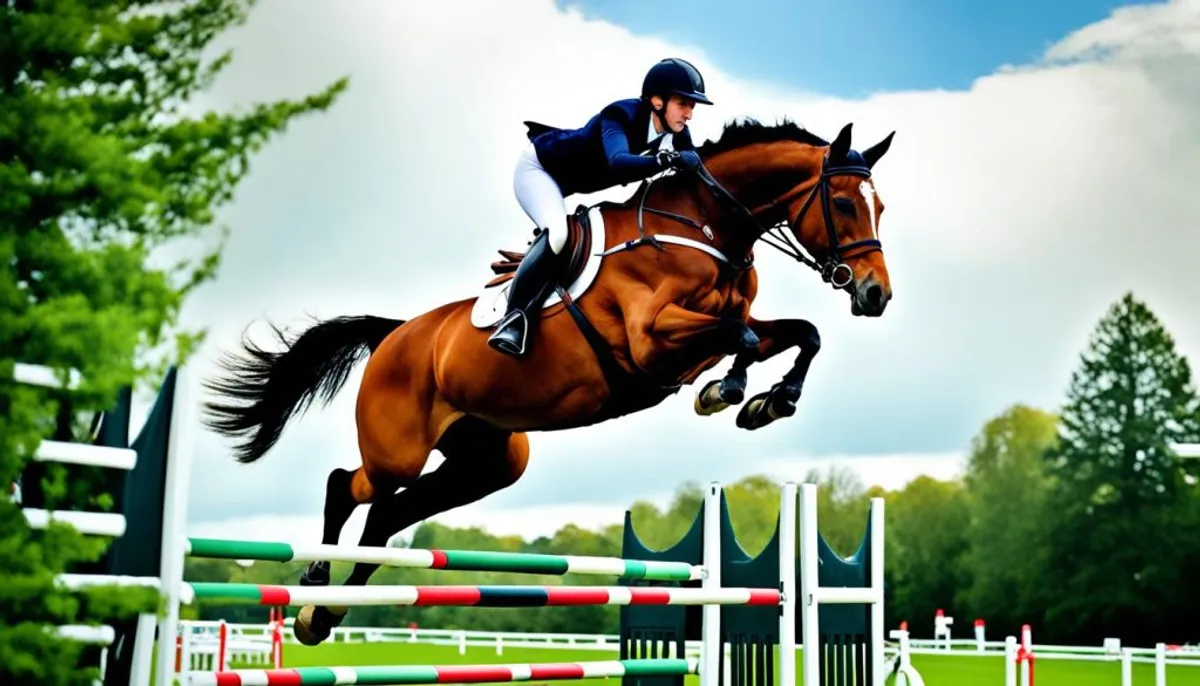
The show jumping is an iconic equestrian sport. It combines the passion of riders and technical skill. Over the centuries, it has become a demanding Olympic sport. It requires agility, acrobatics, and a perfect partnership between rider and horse.
In France and beyond, many enthusiasts follow show jumping. They participate in equestrian competitions or international events. This discipline fascinates fans of equestrian sports. They admire the feats of professional riders and the training of their horses.
Key Ideas
- Show jumping, a flagship discipline of equestrianism combining passion and technique
- A historical evolution of show jumping to become a demanding Olympic sport
- A strong appeal in France and internationally, in competition and for leisure
- From equestrian competitions to international jumping events, a discipline that fascinates enthusiasts
- The meticulous training of competition horses, an essential component of show jumping
Origins and Evolution of Show Jumping
The earliest images of show jumping date back to antiquity. Riders jumped over obstacles to move or fight. Xenophon, a disciple of Socrates, already spoke of classical riding in his writings.
The Middle Ages saw riders mount large warhorses. They used aids to jump obstacles.
The History of Show Jumping Through the Ages
During the Renaissance, equestrianism became an art. The high school appeared in equestrian academies. In the 20th century, show jumping became an Olympic sport, loved by more and more people.
The Tournaments and Equestrian Games of the Middle Ages
The Middle Ages were not known for show jumping. Riders primarily jumped over natural obstacles during fox hunting. The first tournaments and jousting events began to appear.
From the 15th century onward, these events became more popular. They transformed into demonstrations of show jumping, especially at the cavalry school of Saumur.
Federico Caprilli and the Modern Position
Federico Caprilli, known as the “father of modern equestrianism”, changed show jumping. He introduced a new rider position. He advised moving the torso and arms to follow the horse.
This position was refined by Danloux at the school of Saumur. It is now the standard in modern equestrianism.
The Qualities of a Good Show Jumping Horse
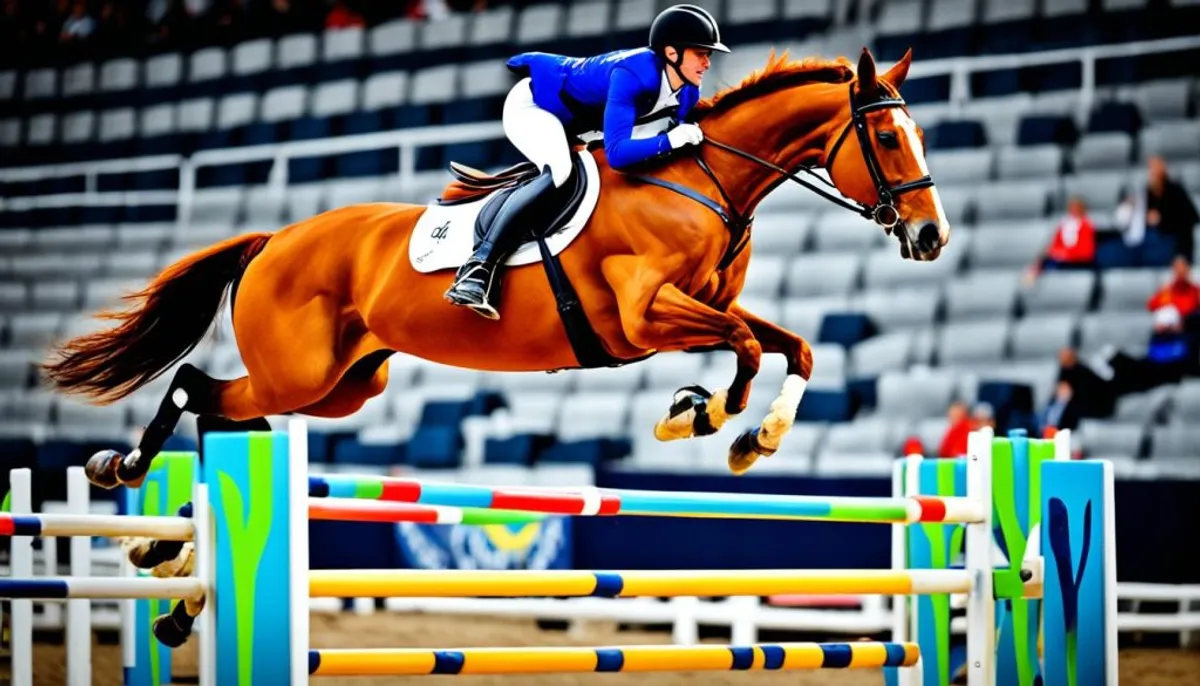
To excel in show jumping, the show jumping horse must have special physical and mental qualities. It should be harmonious, well-proportioned, with strong limbs and an elegant neck. A powerful hindquarters is also crucial.
The gaits, especially the canter, must be smooth and extended. The temperament of the horse is very important. It must be attentive, willing, and have a “warrior's mentality” for the obstacles.
Desired Model, Gaits, and Temperament
The physical qualities of the show jumping horse are essential. A harmonious model and strong limbs allow for jumping far and well. The gaits must be smooth, especially the canter, to easily clear obstacles.
The temperament of the horse is also crucial. It must be attentive, willing, and have a “warrior's spirit” for the challenges of show jumping.
Cautious Selection of Competition Horses
The careful selection of horse genetics has improved breeds for show jumping. Since the Middle Ages, horses have been enhanced, with the importation of oriental breeds and the establishment of national studs by Colbert. In the 20th century, sport riding refined the selection for muscular and enduring horses.
| Desired Qualities in a Show Jumping Horse |
|---|
| Harmonious model |
| Strong limbs |
| Powerful hindquarters |
| Smooth and balanced gaits |
| Attentive and willing temperament |
Show Jumping: A Flagship Discipline
In France, show jumping is very popular. It represents over 80% of competition activity. This includes competitors, events, and entries.
This discipline attracts many fans. The outcome is clear: the fallen bars and the clock are easy to understand. This makes the sport accessible to everyone.
Technical Evolution of Jumping Courses
Show jumping is constantly changing. Organizers want to make the courses more challenging. They lighten the bars, alternate between long and short strides, and add complex technical options.
This evolution pushes horses and riders to improve their performances. They are always looking to surpass themselves.
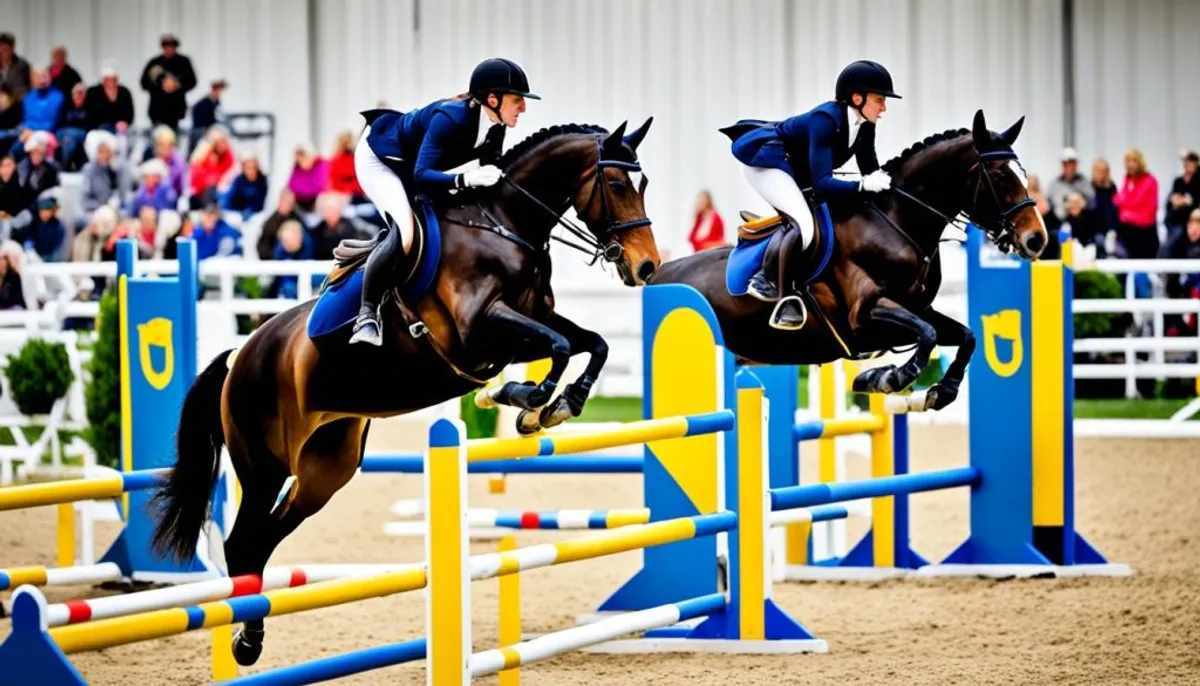
Show jumping remains a major sport in France. It attracts a large number of spectators thanks to its dynamism and constant evolution.
The Fascination for Show Jumping
Equestrianism, especially show jumping, attracts many enthusiasts. This ancient discipline creates a special relationship between man and horse. It is based on trust, respect, and partnership. Horses inspire us with respect, admiration, and love, offering unique moments full of emotion and freedom.
A Special Relationship with the Horse
Show jumping riders form a unique partnership with their horses. This connection is created after long hours of training and care. It establishes a strong relationship of trust. Together, they become a united team, ready to face the challenges of competition.
The Adrenaline of Competition
Equestrianism is also an exciting sport that provides adrenaline, challenge, and pride. Enthusiasts, whether riders or spectators, feel a rush of adrenaline during major events. The sports betting allows fans to fully experience the equestrian competitions.
Show jumping fascinates with its unique relationship between man and horse. It offers adrenaline and challenge of competition. This discipline provides a rich experience of emotions and freedom, offering riders an unforgettable sporting adventure.
Conclusion
Show jumping is an equestrian sport that blends passion and technique. It has a rich history and continues to evolve. We have seen the qualities of competition horses and the passion for this discipline.
In France, show jumping is very important. It pushes the technical limits and offers a unique experience to riders and spectators. This discipline combines the beauty of the horse and the skill of the rider, creating a captivating spectacle.
In conclusion, show jumping is a passion that mixes technique, emotion, and partnership with the horse. It is an art that fascinates and renews itself, proving its importance in equestrianism.
FAQ
What are the origins of show jumping?
The first show jumps date back to antiquity. Riders cleared obstacles to move or fight. In the Middle Ages, knights rode heavy warhorses and used artificial aids.
It was during the Renaissance that equestrianism became an art. The emergence of high school marks the beginning of this era.
What were the tournaments and equestrian games of the Middle Ages?
During the Middle Ages, show jumping was not widely practiced. Riders primarily jumped over natural obstacles during fox hunting.
The first tournaments and equestrian games appeared during this time. They showcased the skill of riders in combat. From the 15th century, these events became more democratized.
They turned into demonstrations of show jumping, especially at the cavalry school of Saumur.
What was Federico Caprilli's role in the evolution of show jumping?
Federico Caprilli, nicknamed the “father of modern equestrianism”, changed the practice of show jumping. He introduced a new position for the rider.
He advised advancing the torso and arms to follow the horse during the jump. This method was improved by the rider Danloux in Saumur. It is now the standard in modern equestrianism.
What qualities are sought in show jumping horses?
To succeed in show jumping, a horse must have special physical and mental qualities. It should be harmonious, well-proportioned, with strong limbs.
An elegant neck and powerful hindquarters are essential. The gaits must be smooth and extended. The temperament of the horse is crucial: it must be attentive, willing, and have a “warrior's mentality”.
How has the selection of competition horses evolved?
The selection of competition horses has evolved due to a focus on their genetics. Current breeds are adapted for show jumping.
Since the Middle Ages, horses have been improved, thanks to the importation of oriental breeds and the establishment of national studs by Colbert. In the 20th century, selection was refined to produce muscular and enduring horses.
What is the place of show jumping in France?
In France, show jumping is very popular. It represents over 80% of competition activity in terms of competitors, events, and entries.
This discipline is appreciated by the public for its ease of understanding. The verdict of fallen bars and the clock is easy to follow, even for beginners.
How is the technique of show jumping evolving?
Show jumping is constantly evolving technically. Organizers seek to make the courses more complex.
They lighten the bars, alternate between long and short strides, and offer increasingly difficult technical options. This quest for performance pushes horses and riders to improve their performances.
Why does show jumping fascinate so many enthusiasts?
Equestrianism, and particularly show jumping, fascinates many enthusiasts. This discipline maintains a special relationship between man and horse.
Horses inspire respect, admiration, and affection. They offer the opportunity to share unique moments, full of emotion and freedom.
What adrenaline does equestrian competition provide?
Equestrianism, and particularly show jumping, is an exciting sport. It provides adrenaline, challenge, and pride.
Enthusiasts can feel a rush of adrenaline, whether as a rider or spectator. Major events like the Olympics or the World Cup amplify this sensation. Sports betting also allows fans to experience the thrill of competitions.