
Do you dream of riding a horse but don't know where to start? Do you have a bit of experience but want to improve? This guide is for you. It shows you the 3 basics of horseback riding to get started properly.
Learning these basics will help you progress in complete safety. You will also develop a good relationship with your horse.
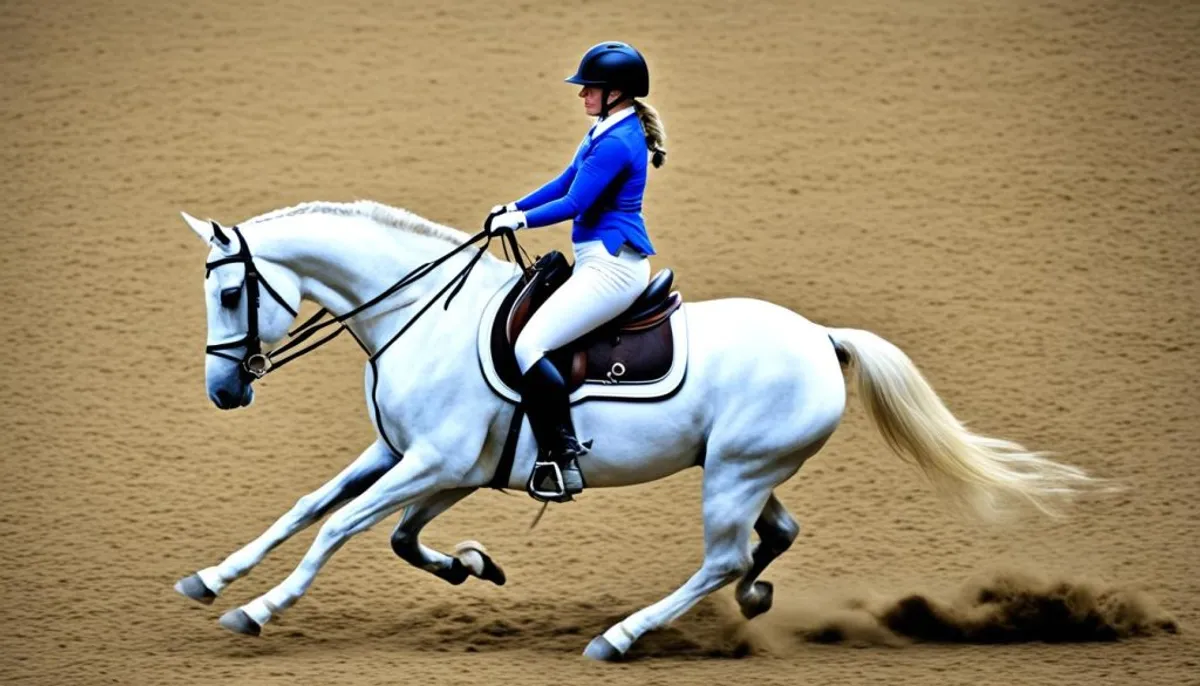
Main lessons to remember:
- The 3 basics of horseback riding are longitudinal balance, lateral balance, and vertical balance.
- Working on these 3 balances will help you position yourself better in the saddle and communicate effectively with your horse.
- Appropriate exercises will allow you to develop these skills step by step.
- Taking the time to acquire these solid foundations is essential for a calm progression in horseback riding.
- Combining these 3 basics will open the door to more advanced and fulfilling exercises.
What are the 3 basics of horseback riding?
In horseback riding, there are three important fundamental balances. They are longitudinal balance, lateral balance, and vertical balance. Each is crucial for riding a horse well.
Longitudinal balance
Longitudinal balance deals with the horse's balance from right to left. It ensures that the weight is well-distributed. This helps in making precise and fluid movements.
Lateral balance
Lateral balance helps the horse remain stable side to side. This helps the rider to stay well-seated and to control the horse effectively.
Vertical balance
Vertical balance concerns how the horse stands. It is crucial for collection and is a significant challenge in equestrian technique.
It is important to work on these fundamental balances separately or together. This allows for progress in horseback riding and mastery of the 3 basics of horseback riding.
How to work on longitudinal balance?
Working on longitudinal balance is crucial in horseback riding. The rider can achieve this by making transitions between gaits. For example, moving from walk to trot and then back to walk. These changes help improve the rider's position and stimulate the horse's extensions.
The extensions are also a good exercise, but the horse must remain straight and tense. The rider must maintain a good posture, avoiding leaning forward. It is necessary to use the legs to guide the horse forward.
- Make frequent transitions between gaits (walk-trot-walk)
- Work on extensions while keeping the horse straight
- Adopt a balanced position without leaning forward
- Use your legs to help the horse move forward
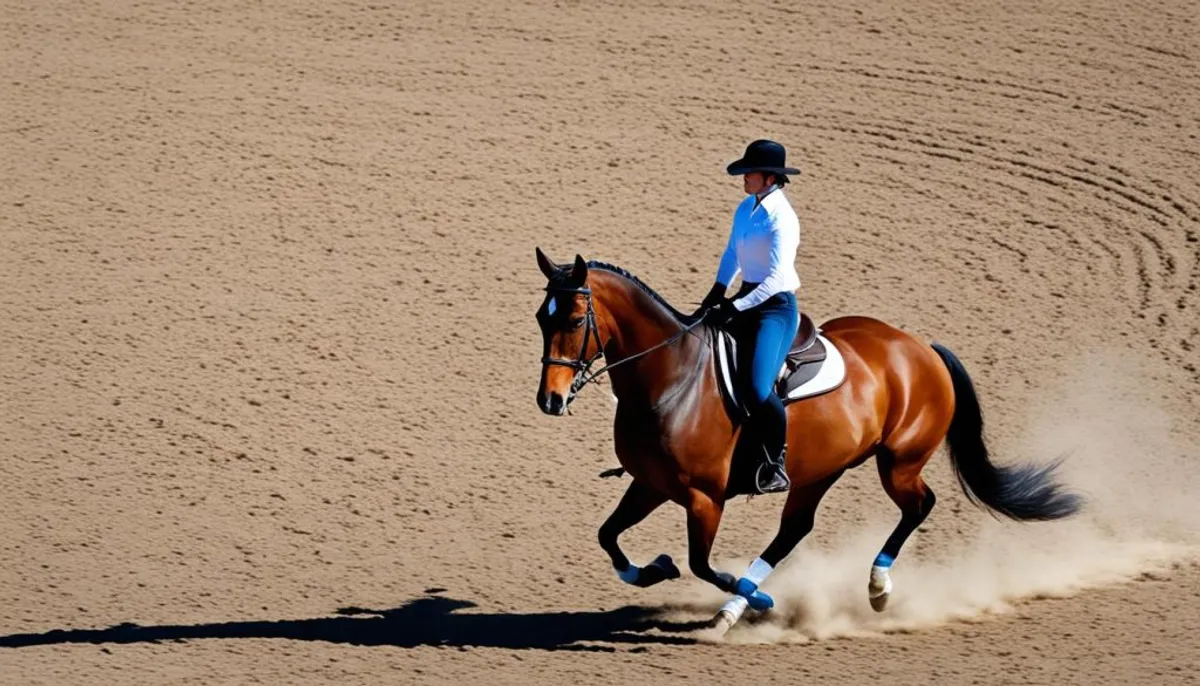
By practicing these exercises, the rider will improve their longitudinal balance. It is an essential skill in horseback riding.
Exercises to develop lateral balance
It is crucial to work on the horse's lateral balance for its stability and straightness. Several exercises exist for this, such as circles, figures of the arena, and shoulder-in.
Circles and arena figures
Circular exercises, such as circles and figure eights, help keep the horse straight and balanced. The goal is to maintain its alignment and lateral balance during the figure.
Shoulder-in
Shoulder-in reinforces the horse's longitudinal balance and lateral balance. This exercise requires great mastery but offers many benefits. The horse learns to collect, engage, and remain aligned despite the bend.
| Exercise | Objective | Benefits |
|---|---|---|
| Circles | Maintain alignment and lateral balance | Develops lateral balance |
| Shoulder-in | Work on longitudinal and lateral balance | Improves collection and alignment |
These exercises improve the horse's lateral balance, increasing its responsiveness and suppleness. They help develop a more precise and harmonious horseback riding.
Improving vertical balance
Vertical balance is crucial in horse training. It is seen through the verticality of the horse's attitude and gaits. For this, collection and exercises like piaffe, passage, and pirouette are essential. The bounce of the gaits also helps improve verticality.
Collection
Collection helps work on vertical balance. It places the horse in a collected position, with the neck forward and the weight balanced. This helps develop verticality and bounce.
The verticality of gaits
The verticality of gaits shows a vertical movement with a good bounce. The horse must piaffe and passage well to show good verticality. This demonstrates excellent vertical balance.
By working on vertical balance, the rider improves their horse's movements. This makes the gaits more vertical and the collection more effective.
3 basics of horseback riding: how to combine them?
Working on the three balances of horseback riding – longitudinal, lateral, and vertical – separately is often recommended. However, it is also possible to combine them in more advanced exercises. The goal is to master these balances together to succeed in complex movements.
The pirouette
The pirouette is an exercise that combines longitudinal balance and lateral balance. To perform a pirouette, the rider must push their horse upward and make it turn. This requires good mastery of aids and balance.
Ground poles
The ground poles arranged in a semicircle help work on longitudinal and vertical balance. The rider must adjust their position and aids to cross these obstacles. It is important to maintain good quality of gaits.
It is better to work on these balances separately, especially for beginners. This allows for mastering the basics before combining them. Then, one can tackle more complex exercises.
Why work on the 3 basics?
The three fundamental balances – longitudinal, lateral, and vertical – are crucial for advancing in horseback riding. They allow for controlling a light and responsive horse. This improves safety and helps the rider grow.
The mastery of the horse depends on these three basics. They are the foundation of training. Without them, advanced exercises are impossible.
- Longitudinal balance ensures the horse's front-back stability, essential for safe riding.
- Lateral balance allows for good responsiveness to aids and flexibility in changes of direction.
- Vertical balance guarantees energetic and balanced gaits, conducive to the rider's progression.
Mastering these 3 basics is vital for progressing in horseback riding. It ensures the safety of everyone. It is essential in training.

| Longitudinal Balance | Lateral Balance | Vertical Balance |
|---|---|---|
| Front-back stability | Responsiveness to aids | Energetic gaits |
| Safe riding | Flexibility in changes of direction | Rider's progression |
Progression for beginners
For beginner riders, it is better to focus first on the three fundamental balances. After that, one can try collection. Collection requires a good mastery of longitudinal and lateral balances. A step-by-step progression helps beginners position themselves well and communicate with the horse.
Acquire the basics before collection
Before starting collection, one must learn the basics of horseback riding. This includes:
- Learning longitudinal balance to stay stable and follow the horse
- Mastering lateral balance to guide the horse
- Working on vertical balance to prepare for collection
By following this step-by-step progression, beginners can learn the basics before tackling more difficult challenges.
Conclusion
The three fundamental balances – longitudinal, lateral, and vertical – are key in horseback riding. Learning to master them, separately or together, is crucial for becoming a good rider. By practicing these 3 basics of horseback riding, you will learn to position yourself well, communicate with your horse, and stay in safety.
It is advisable to progress step by step, starting with the basics. This ensures a pleasant and serene horseback riding experience. This summary of essential tips will help beginners get started with confidence.
Whether you are a beginner or experienced, mastering these balances will help you advance with your horse. You will also develop a unique relationship with it.
FAQ
What are the 3 basics of horseback riding?
The three fundamental balances in horseback riding are:
– Longitudinal balance, which concerns the horse's horizontal balance and the distribution of weight between the forehand and hindquarters.
– Lateral balance, which is distributed between the left and right sides of the horse.
– Vertical balance, which affects the verticality of the horse's attitude and gaits.
How to work on longitudinal balance?
To work on longitudinal balance, the rider can perform numerous transitions between gaits (walk-trot-walk) or within the same gait (working trot – medium trot – working trot). Extensions are also a good exercise, provided the horse remains straight, forward, and tense in its top line. The rider must also pay attention to their own position, avoiding leaning too far forward, and use their legs to encourage the horse to move forward.
What exercises can help work on lateral balance?
Many exercises can help work on lateral balance, such as circles, serpentines, figure eights, shoulder-in, lateral movements, or leg yields. The goal is to keep the horse perfectly straight and balanced, without allowing it to lean on the inside shoulder or become counter-bent. Shoulder-in is an excellent exercise that works on both longitudinal and lateral balance.
How to improve vertical balance?
Vertical balance, often overlooked, plays an essential role in horse training. This balance concerns the verticality of the horse's attitude, with variations in the neck position, as well as the verticality of its gaits. Collection specifically works on vertical balance, as do exercises like piaffe, passage, or pirouette. The bounce of the gaits is also a key element in developing the horse's verticality.
Is it possible to combine the three fundamental balances?
It is possible to combine the three fundamental balances, although this is more complex. The pirouette, for example, works on both longitudinal balance (upward propulsion) and lateral balance (rotation on itself). Exercises on ground poles arranged in a semicircle can also help develop both longitudinal and vertical balance. However, it is generally wiser to work on these balances separately before combining them to master the basics well.
Why is it important to work on the 3 basics of horseback riding?
Working on the three fundamental balances – longitudinal, lateral, and vertical – is essential for progressing in horseback riding and becoming an accomplished rider. Mastery of the basics allows for a light, well-balanced horse that is responsive to aids, which improves safety and fosters the rider's growth. This is the very foundation of horse training, which should not be neglected before moving on to more advanced dressage exercises.
What is the recommended progression for beginners?
For beginner riders, it is best to focus initially on acquiring the three fundamental balances before tackling collection. Collection, which involves vertical balance, indeed requires prior mastery of longitudinal and lateral balance. A step-by-step progression, starting with the basics, allows beginners to develop a correct position and good communication with the horse, essential elements for progressing smoothly.