
Equestrianism has a long history in France. It reflects the changes in society and equestrian culture. From the domestication of the horse to current innovations, France has created a unique equestrian tradition. Horse breeding, equestrian sports, and famous riders are essential to this history.
Equestrian traditions and important events have always been significant in France. They illustrate the evolution of equestrianism, from the Eurasian steppes to the arenas. This evolution showcases the richness and diversity of equestrian cultures.
Main takeaways
- Equestrianism has ancient origins, dating back to the domestication of the horse in the Eurasian steppes
- France has played a key role in the development of equestrianism, from the innovations of Italian and English horsemen to the emergence of competitive riding
- The horse has held a central place in many civilizations, whether in armed conflicts, rites and celebrations, or mythology
- The evolution of riding equipment, from saddles to stirrups, has also shaped the history of this practice
- Equestrianism remains an essential part of French culture today, through its equestrian traditions and renowned riders
The dawn of equestrianism: a cultural heritage born in the Eurasian steppes
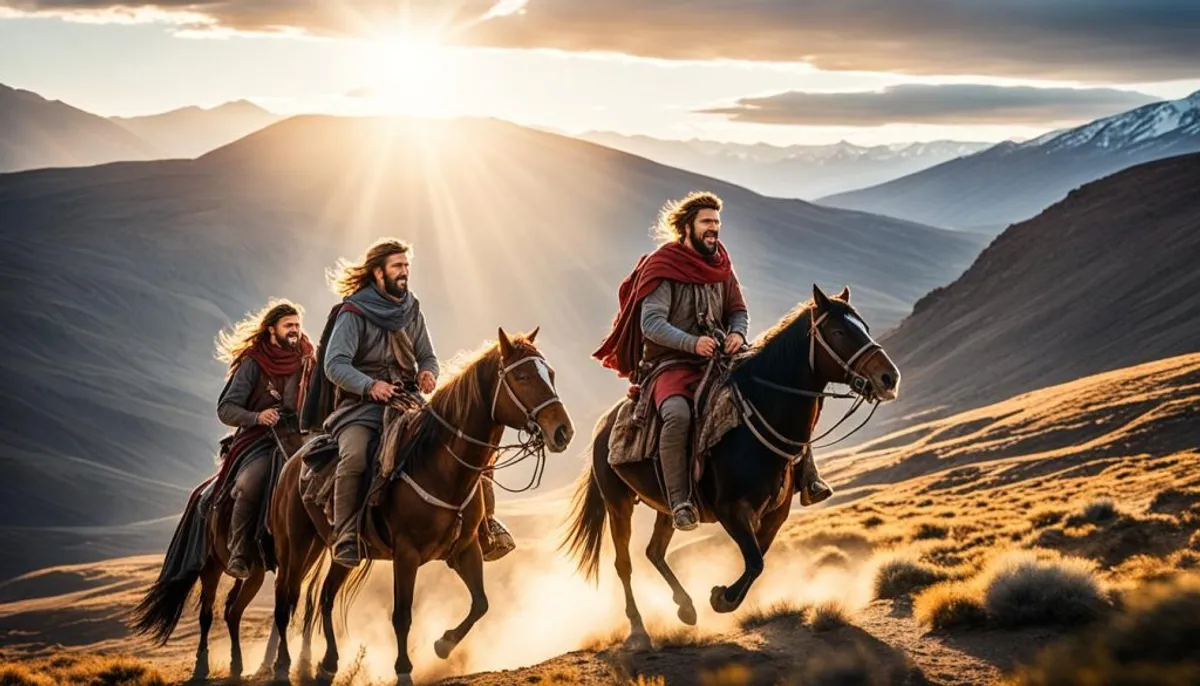
The history of equestrianism begins in the vast Eurasian steppes. It is here that the first horsemen created a unique equestrian art. They brought forth great innovations.
The domestication of the horse
The Eurasian steppes, with their continental climate and open landscapes, facilitated the domestication of the horse. The nomadic peoples learned to tame these animals. They became essential for their travel and activities.
The invention of stirrups and primitive training
- The invention of stirrups changed equestrianism by making control easier.
- Primitive training created a harmonious relationship between man and horse.
The horse, a key player in ancient societies
Horses played a crucial role in ancient societies. They influenced culture, rituals, and conquests. They helped shape the identity and power of several civilizations.
Equestrian renaissance: when equestrianism became a sublime art in Europe
Medieval and Renaissance Europe experienced a revolution in equestrianism. The Italian and English horsemen brought elegance and finesse to this art. France became a major center of equestrian knowledge, thanks to academies rich in tradition.
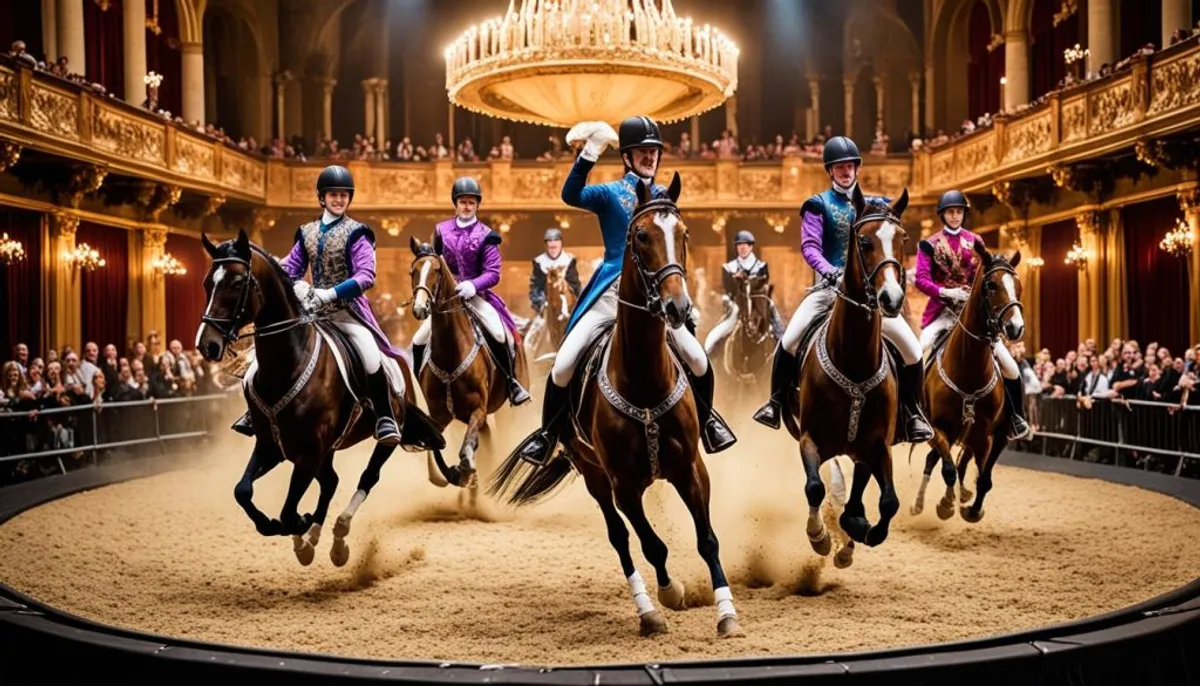
The equestrian theater, ancestor of the modern circus, emerged in royal courts. These performances transformed the horse into an artistic tool.
The innovative methods of Italian and English horsemen
- Italian horsemen emphasized the elegance of the rider and the grace of the horse, introducing sophisticated movements.
- English horsemen developed precise training techniques focused on the rider's dominance over their mount.
France, a nerve center of equestrian knowledge
French equestrian academies played a key role in transmitting equestrian tradition. Their teachings made France a leader in equestrianism.
The equestrian theater, ancestor of the modern circus
The equestrian theater flourished in royal courts, offering unique performances. This ancestor of the modern circus made the horse an actor in the performance.
The contemporary origin of equestrianism
The 19th century saw equestrianism take on a new breath. Show jumping, dressage, and schooling became popular. Leisure riding also gained popularity, allowing everyone to bond with horses.
The emergence of competitive equestrianism
The 19th century transformed equestrianism into a competitive sport. Riders participated in show jumping and dressage events. This made equestrianism an art recognized in major competitions.
Schooling and leisure riding
Schooling also evolved, opening equestrianism to more people. Schools and equestrian centers offer courses for everyone. Leisure riding allows for a special relationship with the horse.
The societal role of the horse: at the heart of civilizations
The horse has always been essential in the evolution of societies. It played a key role in wars, trade, and exchanges. It was also important in ceremonies, symbolizing the link between the human world and the divine.
The horse in armed conflicts and trade
The horse was crucial on battlefields. It helped charge troops and transport artillery. Its mobility and strength were essential for military strategies.
The horse in trade was also very important. It transported goods over long distances and facilitated exchanges between peoples.
The integration of the horse into rites and celebrations
The horse was integrated into many rites and celebrations. It symbolized power and nobility. It participated in numerous ceremonies, reinforcing the bond between the divine and the human.
It was present in parades, religious processions, and festivals. The horse played a key role in social and cultural life.
Horses in mythology and their symbolism
Horses in mythology have been very important. They symbolized power, freedom, and courage. They were often linked to deities or heroes, conveying important values.
The evolution of riding equipment over the centuries
The history of equestrianism is linked to the evolution of equestrian equipment. Since the domestication of the horse in Asia, equipment has changed significantly. The first horsemen used simple bridles and saddles.
The Domestication of the Horse: The Origins
In 4000 B.C., the nomads of Eurasia began to domesticate the horse. This paved the way for equestrianism. The first equestrian equipment was simple, with bridles and saddles made from hides or vegetation.
Antiquity: Saddles and Stirrups
In antiquity, ancient saddles and stirrups were invented. They gave riders more control over their horses. These innovations helped equestrianism become a sport and a military tool.
The Middle Ages: Armor and War Saddles
The Middle Ages saw the evolution of equestrian equipment for heavy cavalry. Medieval armor and war saddles were more robust. They helped knights fight better.
Conclusion
The history of equestrianism in France is truly captivating. It showcases a rich and ever-evolving cultural heritage. From the domestication of the horse in Eurasia to today's innovations, equestrianism has evolved with society. It has become a national passion.
The innovative methods of Italian and English horsemen have marked French equestrianism. France has become a major center of equestrian knowledge. It has managed to preserve its traditions while evolving them, blending heritage and novelty.
The horse has always been important in civilizations, for trade, wars, or celebrations. Today, equestrianism, whether in sport, education, or leisure, continues to captivate the French. It highlights the significance of this ancient art.
FAQ
What are the origins of equestrianism?
Equestrianism began in the vast steppes of Asia. The first horsemen used stirrups for more stability.
How has equestrianism evolved in Europe?
In Europe, equestrianism changed during the Middle Ages and the Renaissance. Italian and English riders brought elegance and finesse. France became a center of equestrian excellence.
When did competitive equestrianism emerge?
The 19th century saw the emergence of competitive equestrianism. Show jumping and dressage became popular. Schooling also democratized the activity.
What role did the horse play in human societies?
The horse was crucial for human evolution. It helped in war, trade, and ceremonies. It symbolizes the link between the human and divine worlds.
How has equestrian equipment evolved over the centuries?
Equipment has evolved since the domestication of the horse. The first horsemen used simple bridles and saddles. Stirrups were invented for more stability. In the Middle Ages, war saddles and armor were created for heavy cavalry.