
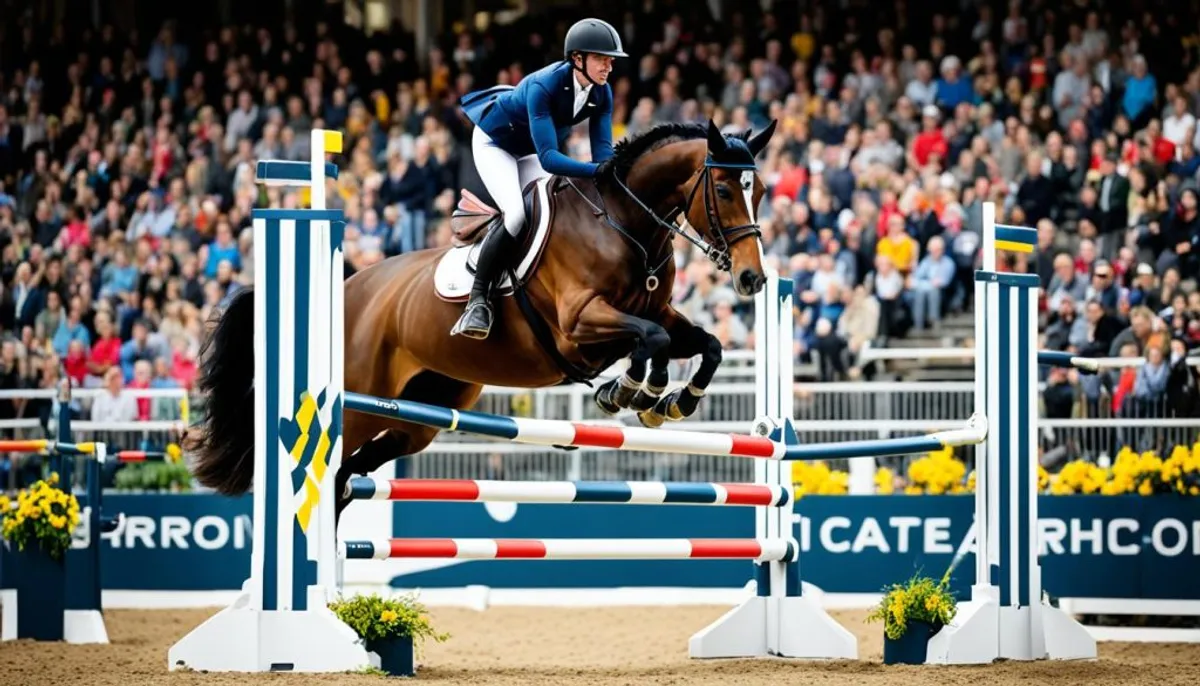
The show jumping is an exciting equestrian discipline. It highlights the relationship between the rider and their horse. The oxer, with its two parallel planes, is a unique challenge. It tests the agility, coordination, and trust of the pair.
Learning to jump an oxer is essential in equestrianism. This is true for beginners, intermediates, and advanced riders. This article will show you how to approach an oxer. We will cover preparation and execution, with specific training strategies.
Main Teachings
- Understand the nature and importance of the oxer in show jumping
- Identify the different types of oxers and their characteristics
- Learn the basic techniques to jump an oxer safely
- Develop a suitable physical and mental preparation
- Adopt improvement strategies to perform in competition
Introduction to the Oxer in Show Jumping
Show jumping courses include obstacles such as verticals and oxers. A vertical is a single plane vertical obstacle. The oxer, on the other hand, has two spaced parallel planes, forming a wide obstacle. This type of obstacle is a equestrian challenge because the horse must jump high and cover the width between the bars.
What is an Oxer in Equestrianism?
The oxer is a show jumping obstacle with two spaced parallel bars. This creates a wide and imposing obstacle. Course designers use it to vary challenges and test the skills of riders.
The Importance of Mastering the Oxer in Show Jumping
Successfully clearing an oxer demonstrates good preparation and perfect technique. It is crucial for riders to master this key obstacle in show jumping. It proves the good communication and trust between the rider and the horse.
| Obstacle | Characteristics | Challenge |
|---|---|---|
| Vertical | Single plane vertical obstacle | Clear the height of the obstacle |
| Oxer | Two spaced parallel bars | Clear the height and the width of the obstacle |
The Different Types of Oxers
Show jumping is full of exciting challenges. Oxers are a good example of this. They uniquely test the skills of horses and riders.
The square oxer is symmetrical, with the front and back bars at the same height. This offers a straightforward approach. The ascending oxer has the back bar higher, creating a staircase effect. This helps the horse adjust its stride.
The Polish oxer has bars placed diagonally, forming an "X" from the front. This requires great concentration from the rider to guide their horse. The narrow oxer emphasizes the finesse of the jump. It forces both horse and rider to be very coordinated.
| Type of Oxer | Characteristics | Main Challenge |
|---|---|---|
| Square Oxer | Front and back bars at the same height | Straight approach |
| Ascending Oxer | Back bar higher than the front bar | Stride adjustment |
| Polish Oxer | Bars placed diagonally forming an "X" | Visual concentration |
| Narrow Oxer | Reduced width | Precision of the jump |
Each type of oxer has its unique challenges. They provide riders and horses the opportunity to improve. From the square oxer to the narrow oxer, these show jumping obstacles are essential for training and success in competition.
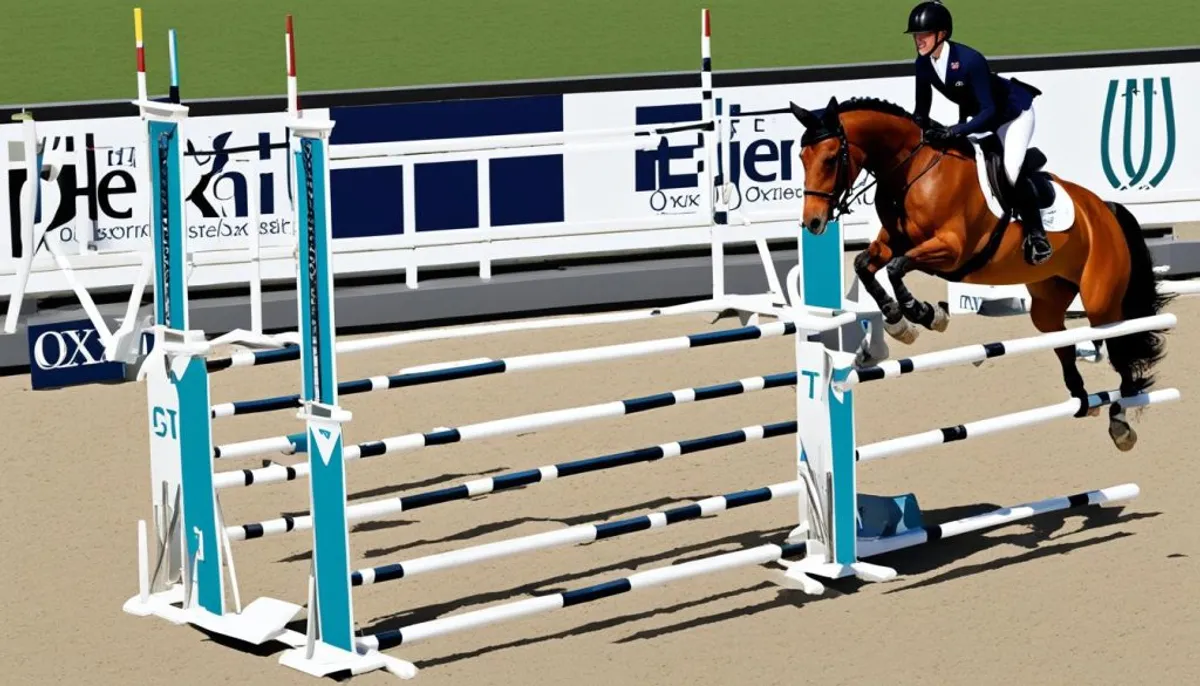
Oxer Equestrianism: The Width of the Oxer
The width of oxers is very important in show jumping. It varies according to the level of competition and the categories of riders and horses. Generally, it is at least as wide as the height of the course.
Club or amateur level competitions have oxers ranging from 50 centimeters to 1.2 meters. However, as the level of competition increases, the obstacles become wider. They can reach up to 2 meters for international competitions.
The regulations regarding the size and width of obstacles vary among equestrian organizations. Course designers must ensure fair and safe challenges for horses and riders.
In conclusion, mastering the oxer, especially its width, is crucial for riders who want to excel in show jumping.
How to Jump an Oxer with Your Horse?
Clearing show jumping techniques like the oxer requires perfect coordination. The approach to the oxer is crucial for success. A smooth approach and a steady rhythm are needed for the horse to gather energy.
Jump Preparation
The jump preparation is essential. The approach distance must be just right to avoid unbalancing the horse. The physical and mental preparation of both rider and horse is crucial for success.
Exercises to Improve Clearing Oxers
Two exercises are very helpful for improving the clearing of oxers:
- A line of oxers at one stride
- An obstacle with ground bars before and after
These exercises help improve technique, timing, and communication between rider and horse. They make clearing the oxer easier.
Training and Preparation to Master the Oxer
Success in clearing an oxer begins well before taking off. Adequate physical and mental preparation is essential for the rider and their horse. Anticipation and visualization of the course strengthen confidence and reduce anxiety.
Choosing suitable equipment is crucial. A comfortable saddle for the rider and protective gear for the horse's limbs enhance performance. This also ensures the safety and well-being of the pair.
Physical and Mental Preparation
A regular physical and mental training is vital to overcome the oxer. The rider must work on their preparation for both the rider and the horse. Strength, balance, and flexibility must be developed. The horse should also have an exercise program to strengthen its muscles and endurance.
Selecting Suitable Equipment
Choosing suitable equipment is crucial for the safety and well-being of the pair. A comfortable and well-fitted saddle helps the rider stay stable. Appropriate protections for the horse's limbs protect them from shocks and impacts.
| Equipment | Characteristics | Benefits |
|---|---|---|
| Saddle | Comfort, optimal fit | Stability and balance for the rider |
| Horse Protection | Boots, gaiters, bell boots | Protection against shocks and impacts |
Improvement Strategies for Jumping the Oxer
To excel in show jumping, a multidimensional approach is essential. Three key elements stand out: a balanced diet, video analysis, and course management in competition.
The Importance of a Balanced Diet
A balanced diet, for both rider and horse, plays a crucial role in improving performance. A nutrient-rich diet, tailored to the specific needs related to intense physical activity, optimizes energy, recovery, and concentration.
Video Analysis for Technical Perfection
Video analysis is a valuable tool for refining show jumping technique. By watching their own jumps, the rider can identify strengths and areas for improvement, allowing them to fine-tune their movements and synchronization with the horse.
Course Management in Competition
A thorough course walk before a competition is crucial for success. This step allows the rider to plan their strategy, anticipate changes in direction, and mentally prepare for the challenges ahead.
By combining these three elements – a balanced diet, video analysis, and course management in competition – riders can significantly improve their performance in show jumping, particularly in clearing the oxer.

Conclusion
Learning to jump an oxer is crucial for riders and their horses. This obstacle is challenging, both physically and mentally. It requires hard training and precise technique. However, the passion for equestrian sport and the connection between rider and horse are essential.
The mastery of the oxer is a long journey, with small successes at each step. Embracing this journey with enthusiasm and perseverance is key. True success comes from every moment spent with our horses.
The quest for improvement makes equestrian development so rich. Competition performances are very rewarding. Let’s continue to face this challenge with passion and dedication.
It is in these moments of overcoming that we discover the beauty of our bond with horses. Rider and horse, together, let’s push the limits and celebrate our progress. Thus, we will reach new heights in equestrian excellence.
FAQ
What is an oxer in equestrianism?
An oxer is a jumping obstacle with two parallel planes. This creates a challenge for the horse in width and height.
Why is it important to master jumping the oxer?
Learning to jump the oxer is crucial in equestrianism. This obstacle tests the agility, coordination, and trust between the rider and their horse.
What are the different types of oxers?
There are several types of oxers, such as the square oxer and the ascending oxer. Each offers unique challenges for riders and horses.
How does the width of oxers vary according to the level of competition?
The width of oxers increases with the level of competition. It ranges from 50 cm to 1.2 m for amateur competitions, up to 2 m for international competitions.
What are the key steps to successfully jump an oxer?
To succeed, a smooth approach and a steady rhythm are needed. An appropriate approach distance and physical and mental preparation are crucial.
What are the most effective exercises to improve clearing oxers?
The most useful exercises are the line of oxers at one stride and the obstacle with ground bars. They help improve technique and confidence.
What is the importance of preparation before a show jumping competition?
Good physical and mental preparation is essential. Walking the course is also crucial for successfully jumping obstacles, including oxers.
How can nutrition and video analysis help perfect show jumping?
Good nutrition is important for performance. Video analysis helps to see strengths and how to improve technique.