
In France, transporting horses is often stressful. There are concerns about safety on the road and unforeseen events. Even a short trip can disturb the horse, especially if the trailer is not well-suited.
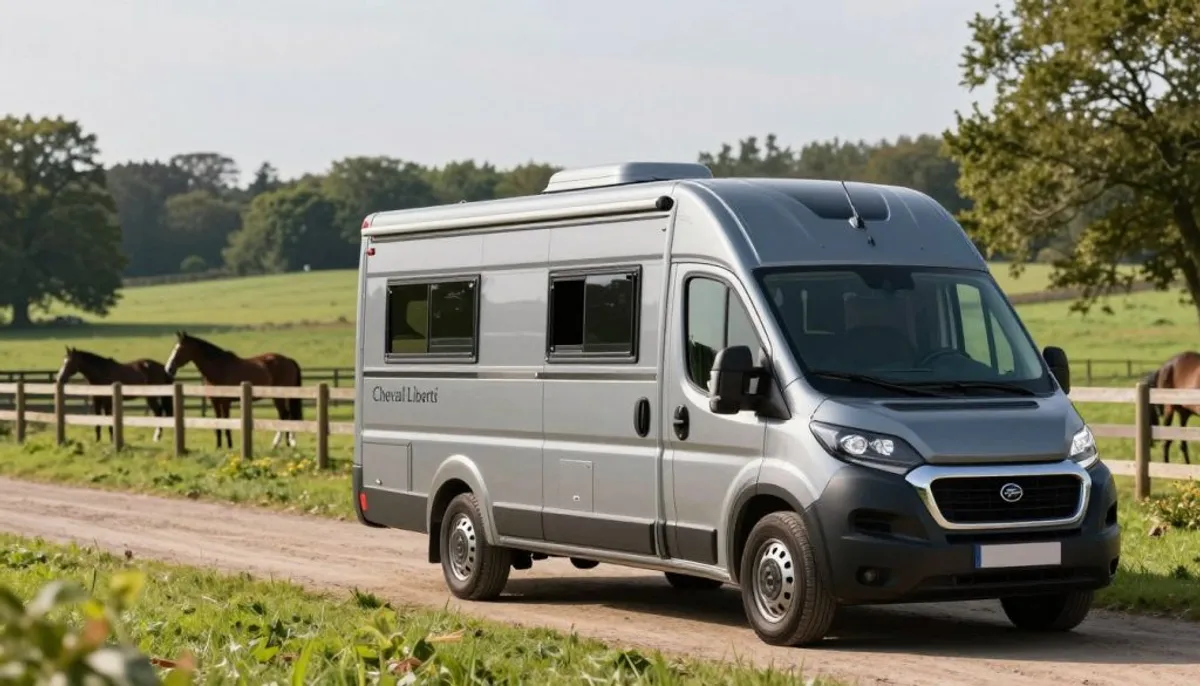
In response, Cheval Liberté offers a calm travel experience, prioritizing the well-being of both the horse and the driver. The brand has supported riders for over 25 years, focusing on comfort and safety. Choosing a Cheval Liberté trailer means opting for details that truly secure the journey.
This article explores the theme of comfort and safety. We will discuss materials, braking, and stability. Not to mention ventilation, brightness, and accessories like doors and closures. We will also examine the choice between a single horse trailer or a two-horse trailer, and what to know before buying or renting a trailer.
Cheval Liberté also values its network of partners to reassure owners. Coho for monitoring and Cheval Assur for insurance are part of these partners. To contact the brand, the details are: BP 10117, 88804 Vittel Cedex, tel. 03.29.08.69.88, email client@clib.fr. This is useful for preparing your equestrian trailer project and seeking advice before departure.
Key Points to Remember
- Transporting horses in France often causes stress from the moment of loading.
- A suitable trailer can improve stability and reduce jolts.
- Cheval Liberté stands out with over 25 years of experience and a specialized design office.
- The article discusses comfort, safety, ventilation, accessories, and closure systems.
- The choice of a trailer depends on the intended use: one or two places.
- Coho and Cheval Assur are mentioned as partners for a more peaceful journey.
Why Choose a Horse Trailer for Transporting Equines in France
In France, transporting horses is common for going to competitions, training, or the veterinarian. The horse trailer is often seen as the best option. It is easy to hitch, park, and use near stables.
When comparing different models, one realizes something important. The safety of a horse during transport does not rely on a single element. It depends on everything: from the floor to the bars, from stability to visibility during the journey.
The Priorities of Riders: Comfort and Safety Rated Over 80%
A study by GRANDPRIX / Horse Development (October 2023) shows two key points: comfort and safety. Over 80% of the 494 respondents chose them as priorities. After that, price is considered, even with the current inflation.
The survey outlines a very "ground-level" market. Most riders have a Galop 7, own one or two horses. They often participate in Amateur jumping competitions. Thus, choosing a horse trailer often means finding the right balance. One must think about the horse's well-being and the ease of movement.
| What Riders Look For | Why It’s Decisive in Transport | What Is Often Checked Before Purchase |
|---|---|---|
| Comfort (over 80%) | A more stable horse stands better, tires less, and moves less in turns | Ventilation, brightness, usable space, access to forage |
| Safety (over 80%) | Reduces the risk of falling, injury, and emergency situations on the road | Healthy floor, solid bars, secure closures, road handling |
| Budget (after comfort/safety) | Leads towards used options or simpler equipment levels | General condition, maintenance history, tires, brakes |
Two-Horse Trailer: The Most Common Format Among Private Owners
64% of non-professionals equipped with a trailer own one. Mostly, it is a two-horse trailer (74%).
This choice is reassuring for daily use. It allows for traveling with a second horse, having more space when alone, or keeping a margin for equipment. However, professionals often prefer vans or trucks. They are suited for more frequent trips.
Reducing Horse Stress for a More Serene Drive: The Virtuous Circle
Fears are real: fear that the horse will break the floor, that the breast bar will give way, that it will fall. Not seeing it during the journey and road accidents are also strong concerns.
Trailer manufacturers say: less stress means more control. A calm horse in a two-horse trailer makes driving easier and smoother.
Providing forage is a key gesture. It occupies the horse, stabilizes its attitude, and makes the journey more pleasant.
Cheval Liberté Trailer: The Comfort & Safety Approach at the Heart of Design
A Cheval Liberté trailer is designed as a safe and obvious place for the horse. It should quickly understand where to position itself. Details like easy access and a calming atmosphere are crucial. They make transport safer by soothing the animal.
A Vision Focused on Equine Well-Being and Owner Peace of Mind
Comfort benefits both the horse and the driver. A well-designed trailer absorbs shocks and reduces noise. The presence of a camera allows monitoring of the horse. In case of a problem, one can stop to check.
Some add insurance to protect against accidents and fires. This allows for managing emergencies without unpleasant surprises.
Key Elements Checked: Brakes, Suspension, Wheels, and Accessories
The safety of a horse trailer depends on reliable parts. Cheval Liberté emphasizes the importance of monitoring brakes, suspension, and wheels. These elements ensure good stability and a safe stopping distance. Certified accessories, such as bars and closure points, are also essential.
In a horse trailer, overall sturdiness is sought. A stable floor and a robust structure ensure smooth journeys.
European Approval and Announced Guarantees on Cheval Liberté Trailers
The European approval of Cheval Liberté trailers ensures safety during towing. The brand also offers guarantees: two years for parts and labor, and five years for aluminum boards and walls.
Specific insurances can accompany trips. They cover many needs, ranging from veterinary costs to mortality. Options available for the interior, towing, and more.
| Design Point | What It Changes for the Horse | What It Changes for the Owner |
|---|---|---|
| Checked Brakes | Less jolting, safer support during deceleration | More consistent stopping distance, calmer driving |
| Monitored Suspension | Less vibration, reduced fatigue on long trips | Felt stability, fewer corrections at the wheel |
| Checked Wheels and Tires | More stable road handling, limited movements | Less risk of uneven wear and drift |
| Approved Accessories | Fewer attachment points, more reliable holding | Simpler actions during loading, quick checks |
| Trailer Camera | Discreet monitoring, stop at any unusual behavior | Faster decision-making, less stress during the trip |
| Transport Insurance (as needed) | Financial protection in case of accident or fire | Possible coverage: veterinary, mortality, theft, liability, tack |
Materials and Structure: Towards Lighter and Stronger Horse Trailers
In France, horse trailers are improving. There is a push to make them lighter, stronger, and easier to maintain. These improvements are important for horse transport. They influence stability, noise, and comfort from the start of the journey.
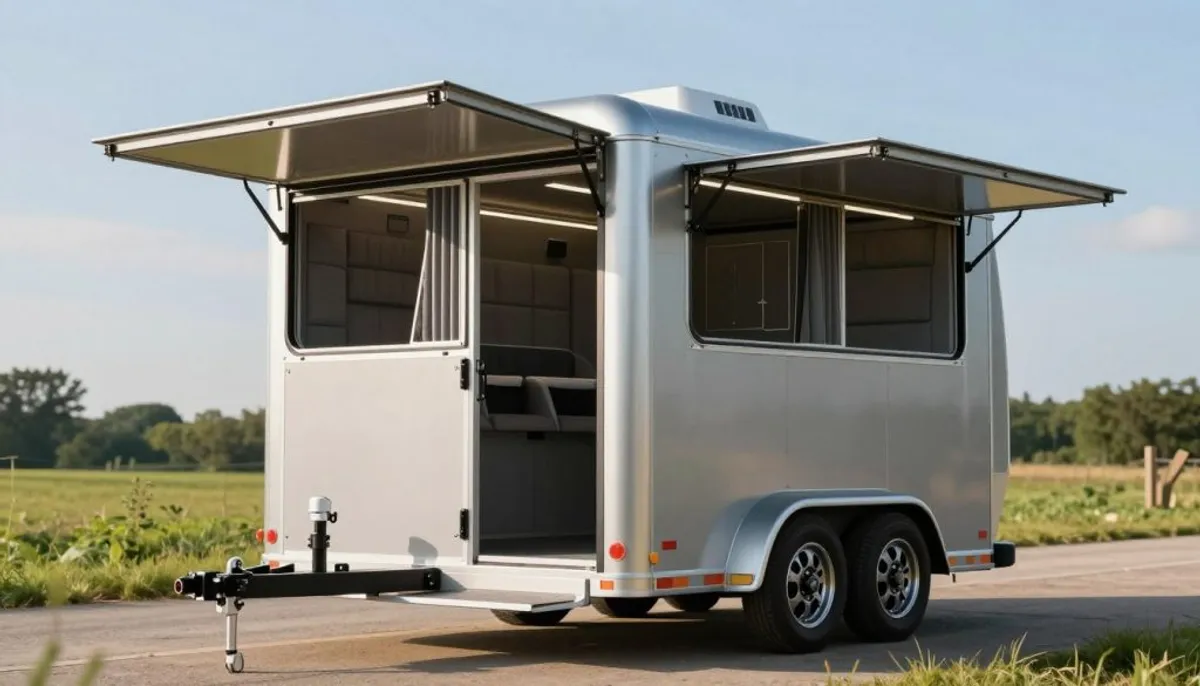
The safety of a trailer depends on several details. For example, the floor, walls, reinforcements, and interior. Manufacturers prioritize materials that better withstand shocks. This way, they avoid weighing down the trailer.
Floors: Decline of Wood and Rise of Modern Materials, Especially Aluminum
Previously, the floor was often made of wood. Now, aluminum is preferred. This is because it is lightweight and durable, two essential qualities for transporting horses.
An aluminum floor allows for better weight distribution. This is useful when transporting a lot of equipment. Aluminum also helps to create openings more easily. This improves air quality inside during the journey.
Padding and Walls: Composites, Rubber, and Solutions Limiting Shocks and Temperature Variations
Inside, composite materials are used for padding. They absorb shocks and remain stable with temperature changes. There are also rubber reinforcements. They are good for reducing impacts and vibrations.
Some trailers have polyethylene panels. This material is flexible and reduces noise. Steel is often chosen for the frame. It adds to the sturdiness and safety in case of a shock.
Plant materials like flax or coconut fibers are being explored. They could improve acoustics and durability while remaining easy to maintain.
Interior Design: Limiting Angles and Protruding Parts to Reduce Injuries
The shape of the interior matters a lot. Sharp angles and protruding parts should be avoided. This facilitates movement and reduces the risk of injury for horses. These precautions prevent snagging the horse's halter or injuring it.
At Cheval Liberté, adapted designs can be found. They use a round tube instead of a U-rail. This minimizes the risk of cuts if the horse moves suddenly. This is a plus for safety.
| Element | Materials Often Highlighted | Desired Effect in Use | Concrete Impact on Horse Transport |
|---|---|---|---|
| Floor | Aluminum | Reduce weight, limit wear, facilitate maintenance | Smoother towing and better load management on a horse trailer |
| Walls / Padding | Composites, polyethylene | Withstand shocks, better manage temperature and noise | Calmer atmosphere and less stress during horse transport |
| Interior Reinforcements | Rubber | Dampen impacts and vibrations | Fewer bumps on the walls, better protection in a horse trailer |
| Frame | Steel | Add structural rigidity | Better handling in case of shock, consistent with horse transport safety |
Horse Transport Safety: Braking, Stability, and Road Handling
On the road, ensuring the safety of horse transport relies on three important things. Precise driving, gentle stops, and a horse that remains calm are essential. Every little detail is crucial because a slight jolt can affect the entire transport. The goal, whether with a trailer or a horse van, is to drive smoothly to maintain stability.
Stability Systems and Suspensions Derived from Automotive Technology: Limiting Body Movements
Modern suspensions, drawn from automotive technology, help reduce jolts. This makes the journey less tiring for the horse. Thanks to this, the horse remains calm, and the transport is smooth, improving stability.
Some models are equipped with an anti-sway system to control sudden movements. This system is very useful for keeping a trailer stable, especially on busy roads or in strong winds.
Braking Technologies Mentioned on the Market: ABS, ESP, Assisted Braking Depending on Configurations
Regarding braking, technologies like ABS and ESP are available on the market. They help maintain good steering when braking hard. This prevents the trailer from deviating from its path. Some trucks even offer assisted braking, making stops smoother.
For horse trailers, these technologies are very beneficial. They prevent sudden movements that can unbalance the horse. Thus, the journey is smooth, and driving is facilitated.
| Safety Point | What It Changes in Driving | Expected Effect in Horse Transport |
|---|---|---|
| More Effective Suspensions | Less bouncing and vibrations, better road handling | Calmer horse, reduced fatigue, more consistent stability |
| Anti-sway System at the Hitch Head | Limits oscillations and stabilizes the horse trailer | Less lateral deviation, calmer driving |
| ABS / ESP-type Distribution (depending on equipment) | More controlled braking, better trajectory | Smoother stops, fewer sudden movements in the horse trailer |
| Assisted Braking (depending on configurations) | Easier modulation, better pedal progression | Fewer jolts, calmer horse during braking |
Good Driving Practices: Anticipation and Caution as the Best Prevention
Good equipment matters, but driving is essential to safety. The key is to anticipate: look far ahead, maintain a safe distance, and start braking early. Driving steadily is safer than driving fast.
- Enter roundabouts and turns more slowly to avoid swaying.
- Accelerate smoothly, especially after stopping or leaving a parking space.
- Plan for braking by lifting your foot off the accelerator early, then braking gently.
- Adjust your speed according to wind and traffic, especially with a trailer.
If the horse is relaxed during the journey, it will move less. This makes the trailer more stable. Good road handling makes the journey safer and ensures easy driving from start to finish.
Onboard Comfort: Ventilation, Brightness, and Soundproofing for Stress-Free Travel
A comfortable trailer for horses makes the journey more pleasant from the start. In horse transport, the importance of air, light, and sound is as significant as the technology used. If the horse feels good, it makes the journey safer because it is calmer.
Choosing a trailer for the horse's freedom means opting for more openings, improved airflow, and easy-to-clean materials. The goal is clear: to ensure a peaceful journey from start to finish.
Ventilation and Thermal Regulation
Nowadays, designs prioritize lightweight structures, often in aluminum. This facilitates the installation of grilles and openings for better ventilation. It allows for better air circulation, even at low speeds, helping the horse breathe steadily.
- White Roof: a simple insulation that is said to be capable of reducing temperature by up to 10°C.
- Air Extractors: very useful when it’s hot, or when the vehicle is stationary, to prevent the accumulation of hot air.
- Multiple Openings: allow for adjusting airflow according to weather and humidity.
Brightness
A bright trailer is more reassuring. Adding windows and openings in horse trailers brings soft light. This helps some horses to load and travel without stress.
More light also improves air circulation. A well-placed window can provide a constant airflow, avoiding strong drafts. A good trailer seeks a perfect balance between visibility, comfort, and safety.
Soundproofing
Noise can quickly become tiring: the noise of the ground, the whistling of the wind, the noise of accessories. Manufacturers are working to reduce these noise nuisances with effective solutions for safer transport.
- Deflectors on Openings: reduce whistling, like when avoiding driving with the windows open in a car.
- Absorbent Mats: reduce footstep noises and echo in the trailer.
- Windbreak Nets: protect against drafts that can stress some horses.
Installing a camera onboard is a good idea. It allows monitoring without disturbing, identifying any problems, and securing the journey.
| Comfort Point | What It Changes for the Horse | What the Owner Can Check Before Departure |
|---|---|---|
| Ventilation (openings, extractors) | Less heat and heavy air, more stable breathing | Functional openings, clean grilles, airflow without direct drafts |
| Brightness (windows, portholes) | Less apprehension, calmer loading and holding | Clean windows, secure closures, absence of sharp edges |
| Soundproofing (deflectors, absorbent mats) | Less jumping and stomping, better stability | Well-placed mats, bridge without play, accessories that don’t rattle |
| Monitoring (camera) | Less unnecessary interventions, reduced stress during the trip | Secure mounting, view angle on the neck, reliable battery or power supply |
Arrangements and Accessories for Horse Trailers: Securing Delicate Horses
In a horse trailer, the interior arrangement matters a lot for an anxious or sensitive animal. In a two-horse trailer, every little detail counts to keep the journey calm. Having the right equipment is crucial to ensure safety throughout the transport.
Separations and Protections help maintain the horse's balance. If the horse feels stable, it moves less, tires less, and allows the driver to drive steadily. This is particularly advantageous on small roads and in roundabouts.
Head Separations: Limiting Contact Between Two Horses During Transport
At Cheval Liberté, some head separations prevent two horses from touching. They are useful if one horse is agitated or trying to bother its neighbor. In a two-horse trailer, these separations reduce tensions and maintain a better disposition.
There are also more flexible separations that offer more space and feel less confining. They allow the horse to adjust if the ground becomes less stable. This helps keep the journey secure, adapted to the size of the horse, without compromising safety.
Foal Grille: Dissuading the Young Horse from Rising or Jumping Over the Back Ramp
Cheval Liberté offers the foal grille to prevent risky behaviors from young horses. It keeps them from rising or wanting to jump over the back of the trailer. This device secures without requiring too much action, especially useful when loading alone.
The grille provides a clear visual frame, so the foal quickly understands its limits. Well-adjusted, it allows air and light to pass while securing the back of the vehicle during braking.
Protective Mats and Padding: Cushioning, Comfort, and Floor Protection
For horses that scratch or are nervous, a protective mat is a good idea. With 18 mm thickness, it cushions, protects the floor, and reduces vibrations. In a two-horse trailer, it also decreases noise and makes the journey more comfortable.
These equipments often come with easy-to-clean protections for better grip. The goal is to have a stable floor, limit slips, and ensure safety during the journey.
| Accessory | Role in the Horse Trailer | For Which Horse Profiles | Point of Vigilance |
|---|---|---|---|
| Head Separations | Reduces direct contact, limits mood gestures, channels alignment | Sensitive, dominant horses, prone to kicks | Check height and absence of sharp edges, adjust to size |
| Soft Separations | Gives some play, helps balance, can reduce certain loss of support | Horses that tense up, need space, possible diagonal transport | Monitor tension and fastening to maintain stable horse transport safety |
| Foal Grille | Dissuades rising, limits the desire to cross the back ramp | Foals, young horses, horses testing during loading | Install without hindering ventilation or exits, keep a neat adjustment |
| 18 mm Protective Mat | Cushioning, floor protection, reducing vibrations and noise | Horses that scratch, stomp, or tire quickly | Monitor grip and maintenance to avoid moisture and slipping |
Openings, Closures, and Emergency Interventions: Gaining Serenity
In a horse trailer, access is very important. A well-designed trailer keeps everyone calm. This is crucial, especially during morning transports, rainy days, or after a competition.
Transport safety is paramount. One must act calmly and precisely. It should be possible to react quickly if the horse is agitated or panicked.
Multiple Exits (Front, Side, Rear): Reassuring Even If They Are Little Used
Having multiple exits in the trailer can be reassuring. For example, a front door can be useful for a difficult horse. Especially if one wants to avoid backing it up over a long distance.
It is important to know that the angle at the front can be difficult. Generally, it is easier to exit from the back. The horse can then better position itself and gauge its steps.
Closures and Locking Mechanisms: Avoiding Risks of Snagging and Unintended Opening
Closures are essential for the driver's peace of mind. Modern trailers have integrated hooks. This limits the risks of snagging with equipment or clothing.
Opening sensors, similar to those in cars, are available on some models. They alert if a door or ramp moves during the trip. This addresses the fear of an opening while moving.
| Point to Check | What We Aim For | Why It Helps |
|---|---|---|
| Handles and Latches | Clear grip, without play | Less hesitation during loading, better horse transport safety |
| “Recessed” Closures | Elements that protrude little | Reduces snagging when handling equipment around the horse trailer |
| Visual Locking Check | Clear marker (closed position) | Limits forgetfulness before departure in horse transport |
| Opening Alert on the Vehicle Side | Sound or visual signal | Allows for quick reaction if an exit is not properly closed, especially with a horse trailer |
Flexible and Removable Breast Bars from the Outside: Quick Driver Intervention
In case of an emergency, one must avoid any danger. That’s why flexible bars, removable from the outside, are available. They allow for creating space quickly without risking safety.
This function is decisive for safety during transport. With a nervous horse, it can prevent sudden movements. And it helps keep the trailer stable during the journey.
Choosing Between a Single Horse Trailer and a Two-Horse Trailer: Usage, Stability, and Horse Morphology
The choice between a single horse trailer and a two-horse trailer depends on several factors. These factors include the type of horse, the distance of trips, and the vehicle that will tow the trailer. It is important that the trailer allows the horse to balance properly.
A trailer of the right size helps reduce the horse's stress. This is true both for the loading moment and for the trip.
Market Evolution: Wider Formats and Boxes Adapted S/M/L/XL According to Horses
Single horse trailers are becoming less common. They were considered less stable. Now, there are trailers offering from 1.5 to 4 places. These trailers have boxes adapted to different horse sizes.
The width of the boxes has increased, often going from 2.20 m to 2.40 m over 20 years. This may seem small, but it is very useful for both the horse and the driver. Sizes S/M/L/XL indicate that different horses need different spaces.
Stability and Towability: The Interest of Modern Materials to Limit Weight
The stability of a trailer does not solely rely on its number of places. It also depends on weight, weight distribution, tires, and suspension. The use of modern materials has allowed for creating larger trailers without adding weight. This facilitates transport on less well-maintained roads.
Some models, close to a single or two-horse trailer, can be towed by modest SUVs. It is essential to check this carefully, considering the GTW and the trailer weight. A good choice of trailer respects these limits to avoid overloading the towing vehicle.
| Point to Compare | Single Horse Trailer | Two-Horse Trailer |
|---|---|---|
| Typical Use | Short trips, single horse, simple logistics | Two horses or more space for one, versatility for daily use |
| Perceived Stability | Varies greatly depending on box width and suspension | Often more “stable” due to size, to be checked according to load |
| Manoeuvrability | Easy to park, ideal for narrow access | Turning radius and length to anticipate on small roads |
| Weight and Compliance | Can remain lightweight, but GTW/TGW control is essential | Can remain accessible, but useful load margin to monitor |
Adapting the Configuration to the Horse: Traveling Straight or Diagonally Depending on Its Balance
Some horses prefer to travel straight while others feel better at an angle. The goal is to help the horse remain stable, especially during braking and turns.
In a two-horse trailer, adjustable equipment can make a big difference. They allow for better space management and offer better support. Even in a single horse trailer, good design and careful adjustments reduce sudden movements. These details greatly improve the horse's comfort during transport.
Buying a Horse Trailer, Renting a Horse Trailer, and Equestrian Equipment: Preparing Your Project Well
Planning horse transport requires examining a few key details: frequency of trips, distance traveled, and horse comfort. Before deciding, think about how many times you will use it in a year. Then, check what your car can tow while complying with the law.
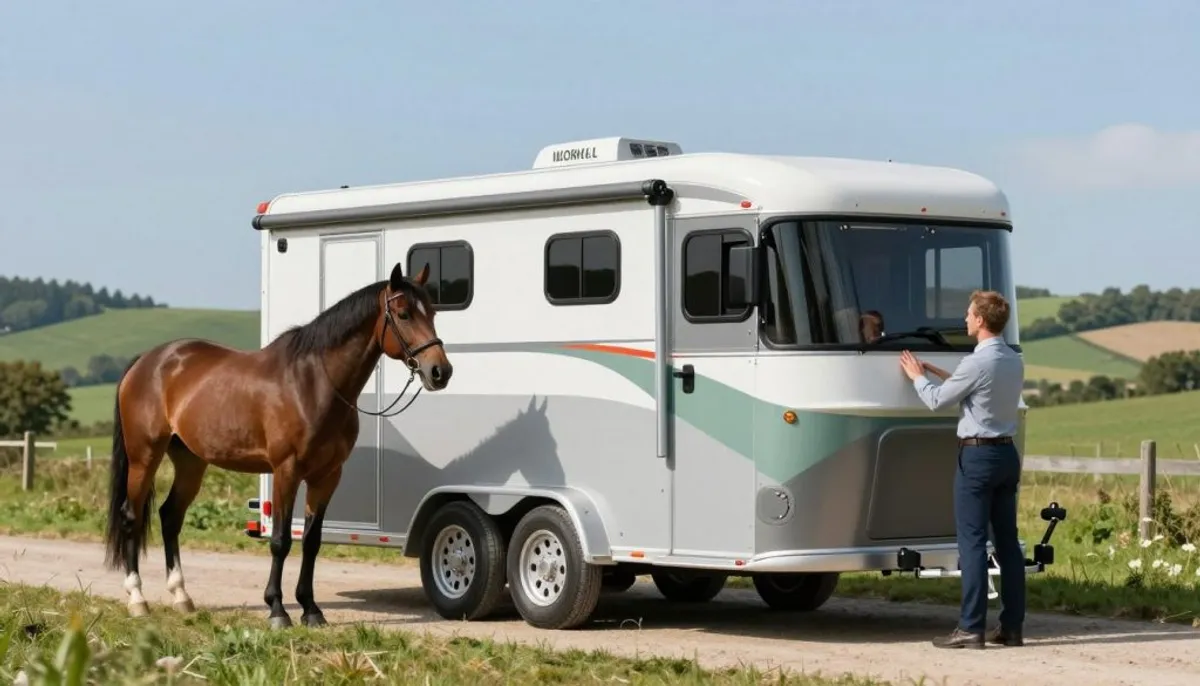
In France, you can drive a light vehicle of 3.5 tons without a special license. Many converted trucks weigh around 2.7 tons. There is therefore nearly 800 kg of margin before being overweight. With two horses, this margin decreases quickly. Being overloaded can have serious consequences during a check or an accident.
Sometimes, opting for a C1 license can be a good idea, just like choosing a more suitable vehicle. On the other hand, a lighter trailer often provides a solution to avoid problems. This is especially true if you only bring the essentials in equestrian equipment.
Decision Criteria: Budget, Frequency of Horse Transport, Level of Equipment, and Useful Options
The comfort and safety of horses are paramount for riders, even before price. For those who travel often, such as for training or competitions, buying a trailer becomes logical. One must choose reliable and suitable equipment.
For those who use a trailer only occasionally, renting may be more flexible. Choose a recent model that is well-ventilated and well-lit. This allows you to pay only when you need it, without blocking a large budget.
- Safety: healthy floor, good condition bars, secure closures, stable ramp.
- Comfort: ventilation, windows, noise reduction, suspensions that limit jolts.
- Useful Options: camera in the trailer, head separations, foal grille, 18 mm protective mats, anti-sway systems, deflectors, air extractors, door opening sensors depending on the vehicle.
- Compatibility: GTW, useful load, height, hitch, and real margin with the loaded horse transport.
| Point to Compare | Buying Horse Trailers | Renting Horse Trailers |
|---|---|---|
| Usage Rhythm | Cost-effective as outings become regular (competitions, coaching, clinics) | Ideal for a few weekends a year or a recovery period |
| Budget Control | Higher initial expense, then maintenance and insurance costs to consider | Cost per outing more readable, with variable deposit and conditions |
| Quality of Horse Transport | Customization possible: adjustments, separations, ventilation choices | Depends on available fleet: aim for a clean, ventilated, and well-suspended trailer |
| Equestrian Equipment Onboard | Stable organization: storage, protections, routine identical for each trip | Plan for simple bags and easy-to-install protections |
| Weight Management and Legality | Easy control if you know the useful load and your habits | Check GTW, empty weight, and margin before loading |
Maintenance and Checks: Anchor Points, Locking Mechanisms, and General Condition to Avoid Unpleasant Surprises
Always check your trailer before leaving. Ensure that everything is properly secured and closes well. If the floor is wet, the ramp moves, or a hinge seems damaged, act immediately.
A good seller takes the time to explain how to use and maintain the vehicle. This demonstration can last up to 1.5 hours. Ask for the dates of the last checks and test everything yourself before renting a trailer.
Focus on La Sellerie Française: High-End Equestrian Equipment, Made in France, Manufactured from A to Z in France
Quality equipment reduces risks for the horse and facilitates preparation. La Sellerie Française offers high-end and custom equipment. They are made in France by excellent craftsmen.
La Sellerie Française aims higher than simple quality labels. Its products are entirely made in France. They ensure safe and comfortable transport for horses, without compromise.
Conclusion
In France, choosing a horse trailer is based on specific criteria. Over 80% of respondents prioritize comfort and safety. Among amateurs, the two-horse model is the most popular, representing 64% of choices.
Trailers appeal with their modern equipment. They use aluminum, composites, and rubbers. They have no dangerous angles and are stable on the road. Some even include ABS and ESP to improve safety.
A pleasant transport experience for horses also depends on the immediate environment. Good ventilation, strategic openings, and adequate soundproofing make a difference. Equipment like head separations and thick mats are crucial for horse comfort.
Technology is useful but not sufficient by itself. Proper vehicle maintenance, regular checks, and careful driving are essential. Reliable protections and quality equipment, like those from La Sellerie Française, made in France, guarantee peace of mind from the start.
FAQ
Why does horse transport worry owners so much?
Transporting horses poses several problems: stress during loading, agitation during the trip, and the risk of accidents. Owners also fear incidents like a horse going through the floor or a bar breaking and falls in the trailer. Not to mention the stress of not being able to monitor the horse.
What are the number one criteria for choosing a horse trailer, according to riders?
According to a GRANDPRIX / Horse Development survey from October 2023, 80% of the 494 respondents value comfort and safety. Price comes after, even with inflation. This shows that the safety of horses is paramount.
What is the profile of the riders surveyed in the GRANDPRIX / Horse Development poll?
The respondents are often riders with Galop 7, owning one or two horses. They regularly participate in competitions, especially in show jumping. This profile explains why they value the reliability and ease of use of a horse trailer so much.
Why is the horse trailer so central among individuals in France?
Among non-professionals equipped, 64% own a trailer, generally for two horses. Professionals prefer trucks, adapted for more horses and different constraints.
How does “a calmer horse” improve safety on the road?
A calm horse helps ensure safer driving. It allows for better management of turns and braking. Offering forage during the journey is a trick for the comfort and calm of the horse.
What is Cheval Liberté's approach to comfort and safety?
Cheval Liberté has focused on the comfort and safety of horses for over 25 years. They emphasize safe and practical designs, from material selection to details that soothe the mind.
What components are checked as pillars of safety on a Cheval Liberté trailer?
Trailers incorporate certified and regularly checked elements such as brakes and suspension. The goal is to improve safety on the road and avoid surprises.
What approvals and guarantees are announced for Cheval Liberté trailers?
Trailers benefit from European approval and guarantees of 2 years on parts and labor. Additionally, 5 years of warranty for aluminum floors and walls, ensuring durability and peace of mind.
Where to contact Cheval Liberté for a question about a single horse trailer, a two-horse trailer, or customer service?
Public contact details for Cheval Liberté: BP 10117, 88804 Vittel Cedex. Phone: 03.29.08.69.88. Email: client@clib.fr.
Why are wooden floors becoming less common on recent trailers?
Wooden floors are being replaced by more reliable and lighter materials like aluminum. This choice better meets the transport needs of animals.
What materials improve comfort in a modern horse trailer?
Composites, resistant to shocks and temperature variations, enhance the interior. They dampen noise, just like rubber reinforcements and some polyethylene elements. Steel is used for the structure, providing sturdiness in case of shock.
Are there “green” materials for horse trailers?
Some are exploring plant materials like flax or coconut for trailers. These eco-friendly alternatives are under study, promising lightness and performance.
How does interior design limit injuries to the horse?
To avoid injuries, sharp angles and protruding parts are minimized. Cheval Liberté prefers round tubes to U-rails, avoiding sharp edges.
What improves the road handling of a horse trailer?
Automotive technologies, like advanced suspensions, contribute to better stability. Adding an anti-sway system also improves safety by neutralizing swaying.
ABS, ESP, assisted braking... what should be remembered for horse transport safety?
Some trailers offer advanced equipment like ABS or ESP. For trucks, assisted braking is common. However, nothing beats attentive and preventive driving.
How to better manage heat and air in a horse trailer?
Thanks to aluminum and modern design, there are more openings to control temperature. A white roof and air extractors are also effective for keeping a cool and well-ventilated environment.
Does brightness really matter during transport?
Yes, the presence of windows improves light and comfort for the horse. They also promote better ventilation.
What solutions exist to reduce noise in a trailer?
To reduce noise, deflectors, special mats, and nets are used. These solutions help make the journey less stressful for the horse.
Is a trailer camera useful or just a gadget?
A camera in the trailer allows monitoring the horse during the journey. It can help identify and react quickly to any problems.
What do Cheval Liberté head separations do in a two-horse trailer?
These separations prevent two horses side by side from touching. They are useful for horses that might be agitated or aggressive, thus improving safety.
What is a Cheval Liberté foal grille and when should it be installed?
The foal grille prevents a young horse from rising or jumping over the back. It secures the young animal's first transport experiences.
What is the purpose of a protective mat, and why is it referred to as 18 mm?
A protective mat of 18 mm protects the trailer floor and offers more comfort. It is especially used for horses that scratch, adding a layer of safety.
Why have multiple exits on a horse trailer?
Having multiple doors offers more options in case of emergency. This can facilitate quick evacuation or a necessary stop for safety.
Front exit or rear exit: which is safer?
For some horses, the front exit is preferable, especially in an emergency. However, the rear exit is often safer as it allows for better assessment of movements.
What developments have been made in the closures and locking mechanisms of trailers?
Modern closures are safer. They include internal hooking systems to avoid snagging. Some vehicles have sensors to detect unintended openings, addressing safety concerns.
Why are flexible and removable breast bars from the outside important?
These bars allow for quick and safe intervention in case of an emergency, without entering the trailer. It’s an essential safety measure.
Single horse trailer or two-horse trailer: how to choose?
The choice depends on your transport needs and the size of your horses. Single horse trailers are less popular as they are considered less stable. The range extends from 1.5 to 4 places, adapted to different types of horses.
Have trailer boxes really changed in size?
Yes, trailer boxes have increased in size for more comfort and better driving. Modern materials allow this without increasing weight.
Traveling straight or at an angle: what to prefer for the horse?
There is no universal answer. It all depends on the horse and its stability. Traveling at an angle offers more space, which is often preferred.
Can a 1.5 or 2-horse trailer be towed by an SUV without a special license?
Some lightweight trailers can be towed by small SUVs without needing a special license. It is essential to check the technical specifications of the trailer and the SUV before deciding.
Buying a horse trailer or renting a horse trailer: what strategy according to usage?
If you transport often, buying a trailer may be wise. For occasional use, renting a recent and well-equipped trailer is a good option.
What options are really useful for securing a horse trailer?
A camera, head separations, and a foal grille are useful. Other options like an anti-sway system and ventilation devices also enhance safety.
What basic checks should be made before hitting the road?
Check attachment points, locking mechanisms, and general condition. Some suppliers take nearly 1.5 hours to explain maintenance. This shows their seriousness.
What are the risks related to weight on a 3.5-ton light truck?
With a truck weighing 2.7 tons, it is easy to exceed the authorized weight of 3.5 tons in France. This can lead to fines and insurance problems. Opting for a C1 license or a 4.5-ton vehicle may be a solution.
What transport insurance can protect a horse during the journey?
Insurance can cover the horse against accidents and fires. It can include veterinary costs, mortality, and more. There are options to cover trailer fittings or towing.
Can a one-off transport be insured instead of annually?
Yes. For a one-off need, there are temporary insurances available. Cheval Assur, for instance, offers contracts from 24 hours to 7 days.
What role does Coho play in ensuring peace of mind during equine transport?
Cheval Liberté partners with Coho to better monitor and secure horse transport. The goal is to anticipate risks and ensure a serene journey.
What equestrian equipment should be prioritized for more serene travel?
Quality equipment ensures comfort and safety for frequent trips. La Sellerie Française (https://laselleriefrancaise.com) offers high-end and custom choices, crafted by French artisans.