
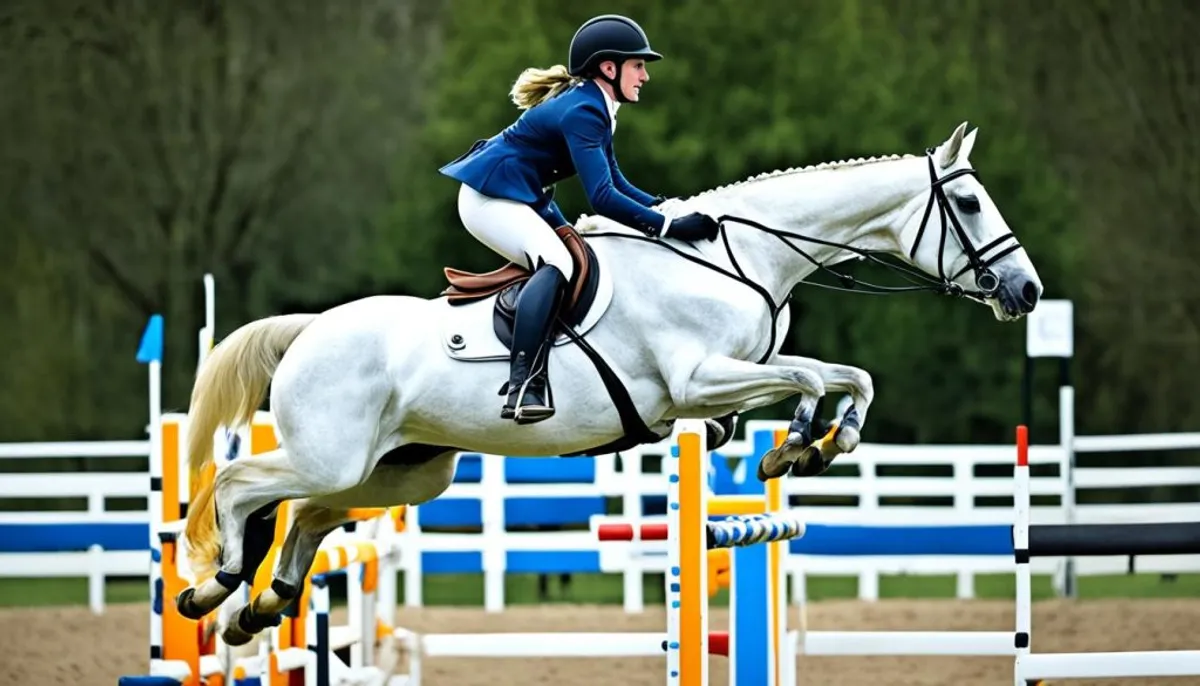
Vertical show jumping, or show jumping (SJ), is an exciting and challenging equestrian discipline. Riders and their horses navigate courses with obstacles such as hedges and bars. This activity is featured in the Olympic Games and major equestrian competitions.
It requires perfect harmony between the horse and the rider. They must be precise, powerful, and agile to succeed. This event is a test of their ability to work together.
Main Areas of Focus
- Vertical show jumping, a captivating Olympic discipline
- Mastery of equestrian technique for show jumping
- Equipment and preparation essential for competition
- Training methods for professional riders
- Succeeding in vertical show jumping in competition
Introduction to Show Jumping
Show jumping, or equestrian competition, is an exciting sport. It tests the relationship between the rider and their horse. They must navigate fixed obstacles on a cross course. This showcases their vertical show jumping.
What is Show Jumping (SJ)?
SJ is a discipline where the rider and the horse jump over obstacles. They must clear bars of varying heights without knocking them down. The goal is to complete the course as quickly as possible while maintaining perfect style and technique.
Different Types of Vertical Obstacles
Show jumping includes several vertical obstacles:
- The straight obstacle or vertical obstacle, a simple straight barrier to jump over
- The oxer, an obstacle made up of two bars placed one behind the other
- The spa, a vertical obstacle with a double line of clearance
- The Polish oxer, an oxer with an additional bar placed high
- Double and triple obstacles, consisting of several elements to be cleared in succession
- The water jump, a ground-level obstacle with a contraction at the start of the jump
- The earth obstacle, a fixed obstacle built on the ground
Each obstacle presents unique technical challenges. The rider and their horse must master them to succeed in their equestrian competition.
Equestrian Technique for Vertical Show Jumping
Show jumping requires a special technique. The rider must adapt to jump well over the vertical obstacle. It is important to focus on several key points.
Rider's Position
A good equestrian technique for show jumping requires the right position. The rider should sit with short stirrups, a straight body, free arms, tight thighs, and a low heel.
Physics of Show Jumping
The physics of show jumping includes several key elements. This encompasses movement, trajectory, jump height, and the highest point of the arc.
Breaking Down the Jump
The show jump is divided into phases such as the take-off and landing. Each phase requires the rider's particular attention.
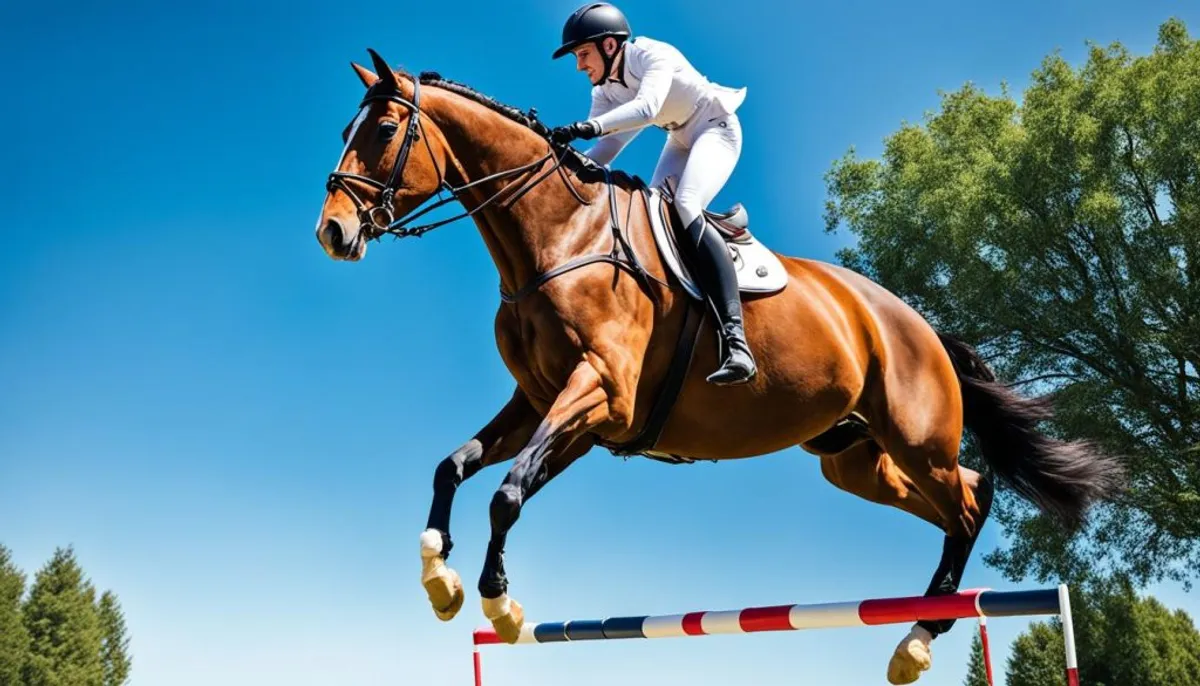
Mastering these aspects of equestrian technique is crucial for excelling in vertical show jumping. It also helps the horse jump better.
Schools and Methods for Vertical Show Jumping
The world of vertical show jumping is rich and varied. There are many schools and methods. Xavier Delalande and Jean d'Orgeix are two important figures. Each has their own way of seeing and teaching.
Xavier Delalande: The Metronome
Xavier Delalande is known for his rigor and precision. He recommends using a metronome to work on the flat and over obstacles. This method helps develop a steady rhythm and consistent impulsion. It is essential for jumping well.
Jean d'Orgeix: Approaching the Obstacle
As for Jean d'Orgeix, he emphasizes the importance of properly approaching the obstacle. He focuses on the visual and physical aspects of the jump. How one approaches and clears the obstacle is key to success.
The methods of Xavier Delalande and Jean d'Orgeix showcase the diversity of vertical show jumping. Each rider must find the method that suits them best. This depends on their sensitivity, experience, and horse.
Equipment and Preparation for Vertical Show Jumping
Choosing the right equipment is crucial for excelling in vertical show jumping. A comfortable saddle, leg protection for the horse, and an appropriate bit are necessary. The physical and mental preparation of both the rider and the horse is also essential.
Selecting Suitable Gear
It is important to choose equipment that fits the rider and the horse. A comfortable saddle helps the rider stay stable. Leg protection for the horse ensures their safety and performance. An appropriate bit facilitates communication between the rider and the horse.
Physical and Mental Training
Physical and mental preparation is crucial for success in vertical show jumping. Muscle strengthening and flexibility exercises improve physical condition. Stress management techniques, such as visualization, help maintain calm.
Good equipment and solid physical and mental preparation increase the chances of success in vertical show jumping.
Mastering Vertical Show Jumping in Competition
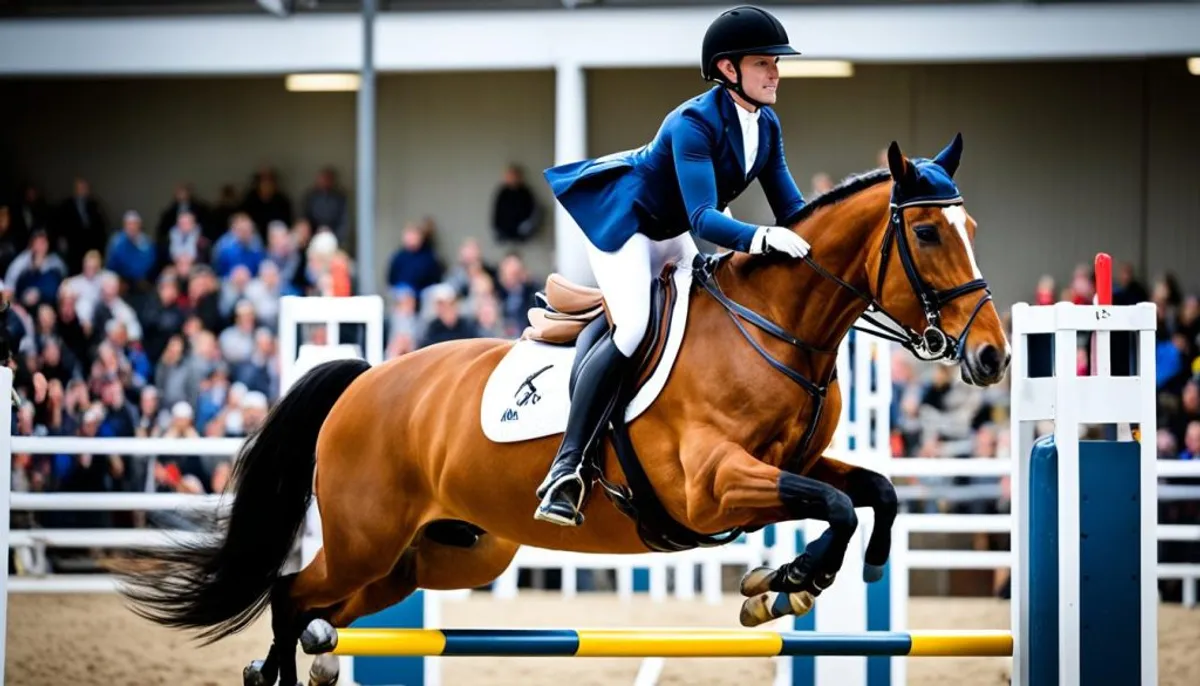
The key to succeeding in vertical show jumping is careful preparation. It is important to know the course well before the competition. This helps face each obstacle with confidence.
Understanding the course allows for planning a strategy. This enables anticipation of changes in direction. It helps in choosing the best moments to urge the horse.
- Carefully study the competition course
- Identify the key points to memorize
- Define an approach strategy for each obstacle
- Mental rehearsal of the course layout
- Train physically and mentally to be ready on the big day
| Element | Importance |
|---|---|
| Course recognition | Essential for defining a winning strategy |
| Course memorization | Allows anticipation of changes in direction |
| Choosing impulse points | Key to approaching each obstacle with confidence |
| Physical and mental training | Indispensable for performing on competition day |
By mastering these points, the rider will be ready for competitions. They will be able to face challenges with serenity and achieve optimal performance.
Conclusion
Show jumping is a world where every detail matters. This ranges from the rider's physical and mental preparation to the appropriate equipment. Balanced nutrition and modern technologies, such as video analysis, also play an important role.
The passion and connection between the rider and their horse are essential. They make this discipline so special.
The path to improvement is long and filled with small successes. Each progress is a reason to celebrate. Let us embrace this journey with enthusiasm and perseverance.
True triumph comes from our moments with the horses. Whether in competition or training, show jumping pushes us to grow. It develops our agility and mastery.
Equity between performance and well-being is crucial in this discipline. By participating with passion and respect, we discover the joys of vertical show jumping. It is a fusion of techniques and personal growth.
FAQ
What is Show Jumping (SJ)?
Show jumping, or SJ, is well-known in the equestrian world. It is featured in the Olympic Games and major competitions. It is a discipline where riders and their mounts showcase their talent, strength, and precision.
What are the different types of vertical obstacles?
There are several obstacles, such as the straight obstacle, the oxer, the spa, and the Polish oxer. There are also double & triple obstacles, the water jump, and the earth obstacle.
What is the equestrian technique for vertical show jumping?
To succeed, the rider must ensure they have a good position. This includes short stirrups, a straight body, free arms, and secure thighs. The technique also requires good control of movement and jump height.
The jump is divided into several stages, from take-off to landing. Each phase is crucial for success.
What are the different schools and methods for vertical show jumping?
Xavier Delalande uses a metronome to improve precision. Jean d'Orgeix emphasizes the approach to the obstacle, in terms of vision and posture.
What equipment and preparation are necessary for vertical show jumping?
Choosing the right equipment, such as a suitable saddle and protection for the horse, is crucial. The physical and mental preparation of the rider and the animal is also essential. Specific exercises and stress management techniques are recommended.
How to succeed in vertical show jumping competition?
Understanding the course before the competition is key to success. This allows the rider to plan their strategy and anticipate changes. Good strategic preparation is essential to face each obstacle with confidence.