
Nutrition plays a fundamental role in the vitality and longevity of your equine. Among the many essential nutrients, ascorbic acid, more commonly known as vitamin C, holds a very special place.

This powerful antioxidant is a cornerstone of your animal's health. It actively supports its natural defenses and contributes to the well-being of its connective tissues.
This comprehensive article aims to enlighten you. We will explore the major biological functions of this indispensable nutrient. You will understand how it plays a role in your companion's metabolism.
We will also discuss its specific needs and the situations where supplementation can be beneficial. At La Sellerie Française, our commitment to equine well-being also involves a deep understanding of their fundamental needs.
Key Points to Remember
- Ascorbic acid is an essential nutrient for your equine's daily well-being.
- It plays a key role as an antioxidant and supports the immune system.
- The horse's metabolism requires it for many vital processes.
- Needs may vary based on age, activity, and health status of the animal.
- A natural synthesis exists, but certain situations require additional intake.
- Understanding these mechanisms is the first step towards optimal management of its nutrition.
Introduction to Vitamin C in Horses
Among the essential nutrients, ascorbic acid stands out for its multiple functions. This compound is synthesized by your equine's body, but its needs may increase in certain situations.
It plays a central role in several fundamental biological processes. Its action supports the vitality and overall functioning of the animal.
Why Vitamin C is Essential for Equines
This substance actively participates in the synthesis of certain hormones. It allows for fine regulation of internal functions.
Its antioxidant power protects cells against oxidative stress. This preserves the integrity of tissues and supports natural defenses.
It also plays a role in the mineralization and strength of the skeleton. This is crucial for young animals in full growth.
| Main Function | Mechanism of Action | Benefit for the Equine |
|---|---|---|
| Hormonal Synthesis | Facilitates the production of cortisol and other hormones. | Regulation of metabolism and stress response. |
| Antioxidant Protection | Neutralizes harmful free radicals. | Prevention of premature cellular aging. |
| Bone Health | Promotes the conversion of vitamin D into its active form. | Development and maintenance of a robust skeletal structure. |
Each of these actions makes this vitamin an indispensable pillar. Understanding its roles guides informed nutritional management.
The Benefits of Vitamin C for Horses
The properties of this essential substance translate into tangible effects on the health of equines. Its action manifests through several fundamental biological mechanisms.
These processes directly support the vitality and resilience of the animal on a daily basis.
Antioxidant Effects and Collagen Synthesis
The antioxidant power of this nutrient protects cells against free radicals. This defense preserves the integrity of tissues against external aggressions.
Its role in collagen synthesis is equally crucial. It helps strengthen connective tissues, tendons, and ligaments.
This function is vital for equines engaged in intense activity. It also promotes faster and more effective healing of injuries.
Hormonal Support and Bone Regulation
The ascorbic acid participates in the production of various hormones. It helps regulate complex metabolic processes within the body.
This hormonal support is valuable during periods of stress or exertion. The bone regulation constitutes another major benefit.
It contributes to the strength of the skeleton, essential for animals subjected to significant physical demands. These functions combined ensure lasting overall well-being.
Vitamin C in Horses: Impact on the Immune System
Your equine's natural defense system is a complex and valuable barrier. Its proper functioning determines the animal's ability to resist infections and maintain optimal health.
Combatting Oxidative Stress
Oxidative stress occurs when the production of free radicals exceeds the body's defense capabilities. These unstable molecules are generated by intense effort, stress, or the environment.
The antioxidant action of ascorbic acid allows for combating this threat. It directly neutralizes free radicals before they can damage cells.
This cellular protection is fundamental. It preserves the integrity of the immune system and contributes to robust health.
| Threat | Role of the Antioxidant | Benefit for the Equine |
|---|---|---|
| Accumulation of Radicals | Neutralization of unstable molecules | Protection of immune cells |
| Oxidative Damage | Prevention of cellular degradation | Maintenance of defense efficiency |
| General Weakness | Reduction of stress on the body | Increased resistance to infections |
By eliminating these aggressors, the vitamin thus preserves the body's resources. It allows it to focus on its true challenges.
Natural Sources and Quality of Feeding
The choice between fresh forage and dry forage has major consequences on the daily ration. The nutritional value of each source directly determines the intake of essential nutrients for your equine.
Fresh Herbs versus Hay: Understanding Vitamin Content
Green pastures provide natural levels of this precious antioxidant. Conversely, the process of haymaking and drying leads to rapid oxidation of the compound.
Stored hay can thus be completely devoid of it. This loss directly impacts the animal's overall health in the long term.
Industrial feeds undergo a similar phenomenon. Their initial concentration decreases rapidly after production.
Understanding this dynamic is essential for accurately adjusting the diet. Informed management of forages allows for stable intake.
Prioritizing fresh and quality sources is therefore a winning strategy. This nutrient is extremely sensitive to atmospheric conditions.
A diet rich in green grass or well-preserved forage thus supports optimal natural intakes. This contributes to your companion's daily well-being.
Recommended Dosages and Precautions for Use
An effective supplementation relies on two pillars: an optimal dosage and increased vigilance regarding the risks of imbalance.
Optimal Quantities for an Adult Horse (grams per day)
The needs for ascorbic acid for a mature equine generally range between 4 and 20 grams per day.
This wide range is explained by several individual factors:
- The level of physical activity and stress.
- The age and overall health status of the animal.
- The quality of its basic diet.
It is crucial not to administer higher amounts than necessary. Excessive doses can, in the long term, inhibit the natural production of the body.
Risks of Over-Supplementation and Gradual Weaning
A true deficiency is rare in horses, as their liver produces it. The main risk therefore comes from an overly generous intake.
Monitoring blood levels may be advisable during a prolonged course. This helps avoid metabolic imbalances.
For supplemented horses, a sudden stop is not recommended. A gradual weaning over several weeks is imperative.
This method allows the body to gently restart its own synthesis. Respecting its needs without exceeding them preserves this precious balance.
Risks of Deficiency and Health Consequences
The rarity of proven deficiencies should not obscure the potential dangers of prolonged deficits. Insufficient intake of ascorbic acid can trigger a cascade of serious health problems.
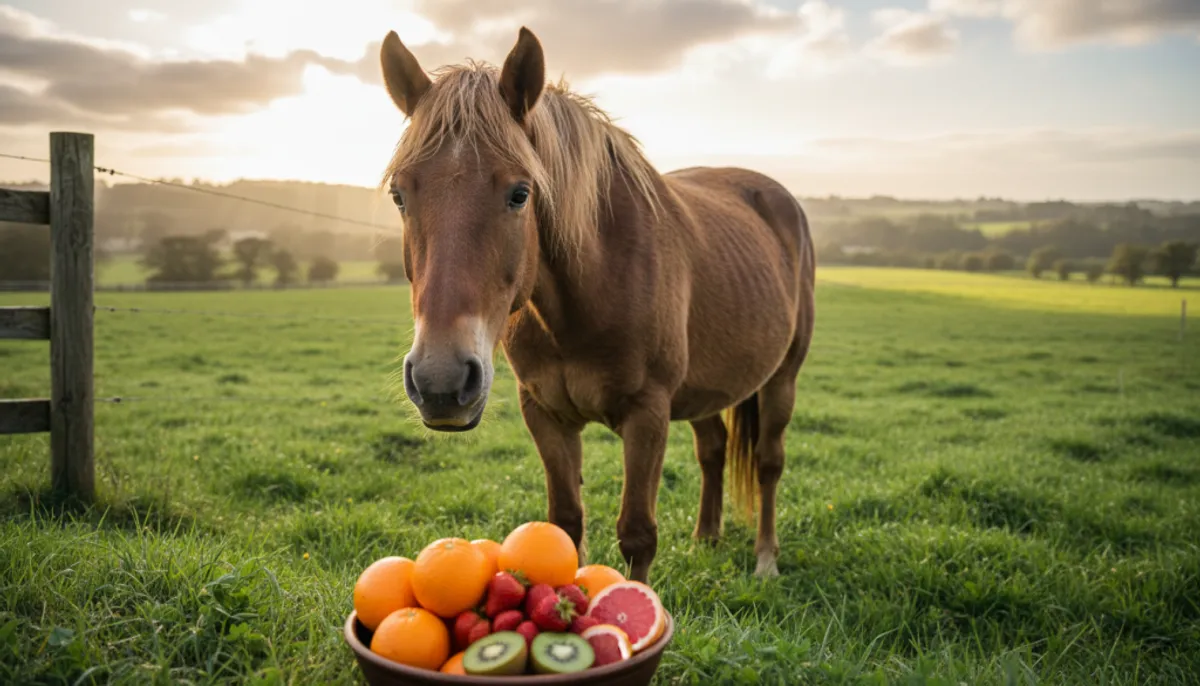
A vitamin C deficiency first compromises natural defenses. It inhibits the immune system, making the animal more vulnerable to infections.
Wound healing then becomes slower and less effective. This slowing generally weakens the equine.
Horses with chronic pathologies are particularly sensitive. A too-low level of this nutrient often exacerbates their existing health problems.
The condition of the coat often serves as the first alarm signal. Dull and brittle hair may indicate a lack of this precious antioxidant.
In the long term, severe deficiency leads to more serious lesions. Internal bleeding or degeneration of the adrenal glands may occur.
These situations seriously compromise your companion's health. It is therefore crucial to prevent these health problems through a constant intake.
Ensuring a stable level supports all vital functions. This nutritional vigilance preserves the daily well-being of the animal.
When and How to Opt for Vitamin C Supplementation
Several circumstances in an equine's life may justify an additional intake of ascorbic acid. This decision should be made judiciously, based on the animal's actual needs.
Stress, Competition, and Recovery Situations
Vitamin supplementation may be necessary when the immune system is weakened. Intense or prolonged stress depletes the body's natural reserves.
During competition, sustained physical effort generates an increased need. Additional intake then aids in faster and more effective recovery.
For an animal in recovery, this intake supports better overall health. It promotes rapid healing of damaged tissues.
Young equines with growth delays may also benefit from it. Age-related digestive difficulties sometimes justify this assistance.
In summary, vitamin supplementation may prove to be a valuable tool. It fills a deficit when needs exceed the capacity for natural synthesis.
Comparison of Available Supplements and Formulas
Given the diversity of products on the market, choosing the right supplement can be complex. An analysis of compositions and concentrations guides you towards an informed decision.
The quality of the supplementation directly influences your companion's well-being. Understanding the differences between formulas is therefore essential.
Natural versus Synthetic Vitamin C
Synthetic ascorbic acid is common in standard supplements. However, the natural source derived from rose hips offers a much higher concentration.
This plant is known to be twenty times richer than oranges. Its use promotes better assimilation by the body.
Research confirms its role in combating free radicals. It also optimally supports immune functions.
Formulas Enriched with Lithothamnium and Rose Hips
Some products combine these active ingredients for a synergistic effect. Lithothamnium, a marine algae, is added to regulate gastric acidity.
It thus protects the digestive system against potential irritations. This combination is valuable for sensitive equines.
Guaranteed levels vary by brand. For example, one formula may display 666,000 mg per kilo, while another offers 340,000 mg.
These high concentrations meet the vitamin needs during demanding situations. They can help in cases of intense oxidative stress.
Although equines can synthesize this antioxidant, a quality external intake reinforces their health. Collagen synthesis and recovery greatly benefit from it.
Choosing a product with natural ingredients and an appropriate concentration is a guarantee of effectiveness. Your choice directly impacts the health of the horse in the long term.
Recent Research and Case Studies
Recent studies reveal precise mechanisms of internal synthesis in large herbivores. Science refines our understanding of their fundamental nutritional needs.
These works explore the complex interactions between diet and metabolism. They offer new perspectives for optimizing animal well-being.

Discoveries on Natural Synthesis and Health Effects
Current research confirms that the horse's body produces its own ascorbic acid. This natural synthesis uses glucose as a raw material.
This natural production can drop significantly. Situations of intense oxidative stress or illness often cause this.
For equines with pathologies, an additional intake can help. Clinical observations show a reduction in unpleasant symptoms.
This acid plays a central role in many metabolic functions. Its impact on overall health remains an exciting subject of study.
Maintaining optimal levels is therefore crucial. A reasoned supplementation supports the animal during critical periods.
Practical Tips for Integrating Vitamin C into the Daily Ration
The practical implementation of successful supplementation relies on precise actions and careful monitoring. Incorporating this nutrient into your equine's daily diet requires a thoughtful approach.
Addition to Forage and Feed Supplements
For a 550 kg animal, the recommended dose is 30 g per day. It is best to add it in the morning to the main ration.
Mix it thoroughly with quality forage or a base feed. This method promotes optimal absorption by the body.
A gradual integration avoids digestive disturbances. Observe your companion's reactions during the first few days.
Monitoring Intake and Veterinarian Recommendations
Monitoring by a professional is crucial. Your veterinarian can assess the specific needs of the animal.
Before an official competition, stop all supplementation 72 hours in advance. This precaution eliminates any risk of a positive doping test.
Adjust quantities based on health status and activity level. In case of doubt, always consult your veterinarian for a personalized approach.
Conclusion
Ensuring the well-being of your four-legged companion relies on wise nutritional choices. Managing this essential antioxidant is a pillar for its health and vitality throughout its life.
Although synthesized naturally, maintaining optimal levels is crucial. A balanced ration forms the foundation, and a targeted supplementary intake can support the equine during demanding periods.
Monitoring its needs and following veterinary advice ensures robust health. This attention is a valuable investment in its longevity and sustainable performance.
FAQ
Can my equine produce its own ascorbic acid?
Yes, most healthy equines synthesize this substance in their liver from glucose. This natural production generally covers their fundamental needs. However, in certain situations, this internal synthesis may become insufficient.
In what cases is supplementation recommended?
An additional intake is often advised during demanding periods. This includes preparation for a competition, recovery after illness or injury, or during significant environmental stress. Older animals or those with a weakened immune system also benefit from it.
What are the signs of a potential deficiency?
A deficiency may manifest as abnormal fatigue, dull coat, slow wound healing, or increased sensitivity to infections. In severe cases, it can affect the health of connective tissues and bone strength. A veterinary consultation is essential for an accurate diagnosis.
Are there natural sources in the diet?
Absolutely. Fresh green herbs in pastures are an excellent source. However, the content decreases significantly in dried hay. Some complementary feeds, such as rose hip pulp or certain algae like lithothamnium, can also provide it.
What is the difference between natural and synthetic forms?
The synthetic version, often in the form of pure ascorbic acid, is well absorbed and effective. The so-called natural forms, extracted from plants, may offer beneficial cofactors. The choice depends on the specific needs of the animal and professional recommendations.
Is there a risk in giving too high a dose?
A significant and prolonged excess is rare but can potentially disrupt digestive balance or interfere with the absorption of other micronutrients. It is crucial to respect the recommended dosages and always proceed with a gradual weaning to allow the body to readjust its own production.
How does this nutrient support immune defenses?
It plays a key antioxidant role by neutralizing free radicals generated by metabolism or stress. By protecting cells, it helps the body combat aggressions and maintains the effectiveness of immune responses.
Have recent studies provided new information?
Yes, studies continue to explore its impact on athletic performance, muscle recovery, and inflammation management. They help refine supplementation protocols for very specific situations, such as for high-level athletic horses.