
Choosing a well-fitted saddle pad can make all the difference. It reduces pressure points and makes exercise more enjoyable for both the horse and the rider. It's a simple yet essential element in equestrian equipment.
There is a wide variety of equitation pads on the market. You will find models without a wither cut, with cushioning, made of wool, cotton, or technical materials. Choosing from all these options can be complex.
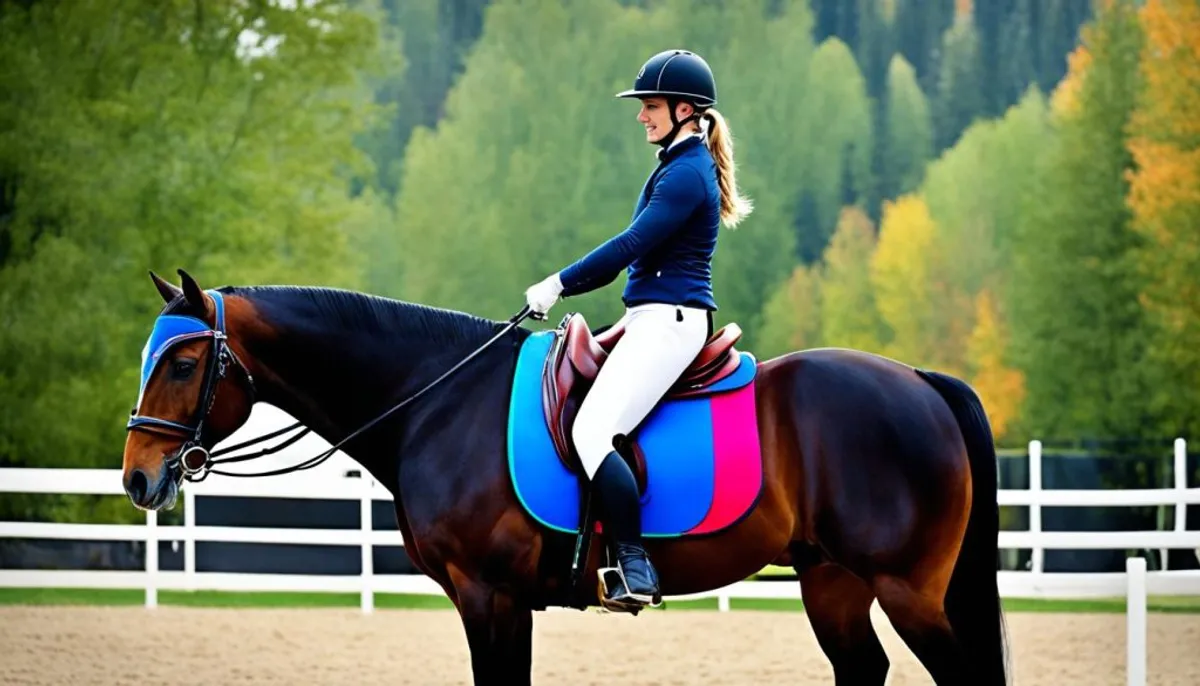
We want to help you find the right saddle pad. This will depend on the shape of the horse, your discipline (dressage, jumping, trail riding, western), and how you use your horse. We will discuss the wither cut, thickness, and sweat management.
Those looking for durable quality will find it interesting to lean towards high-quality handcrafted products. La Sellerie Française (https://laselleriefrancaise.com) offers high-end equipment. They are entirely made in France by local artisans, available custom-made or in limited editions. It's a smart choice for equipment designed to last.
Key Takeaways
- A suitable saddle pad enhances comfort and helps reduce pressure areas.
- The right equitation pad depends on the horse's morphology and the wither cut.
- The discipline (dressage, show jumping, trail riding, western) influences the shape and needs.
- Materials affect cushioning, breathability, and everyday maintenance.
- Given the diversity of models, a simple method avoids “random” purchases.
- A quality equestrian equipment made in France can make a difference over time.
Why a saddle pad is essential for comfort and performance
A saddle pad is crucial between the horse's back and the saddle. It reduces shocks, stabilizes, and enhances performance. This helps both the rider and the horse to be more harmonious.
It is easy to adjust in equestrian equipment. When well chosen, the difference is quickly felt in movement and contact.
Pressure distribution and shock absorption
The saddle pad balances pressure under the saddle. It mitigates intensive pressure points during increased effort.
During a sitting trot or transition, shock absorption protects the horse's back. A good design and suitable material make a significant difference.
Prevention of chafing, overheating, and irritation
The pad forms a protective layer between the saddle and the horse's coat. This reduces friction and prevents irritation.
A well-maintained pad is crucial. It must be clean, dry, and smooth. Paying attention to sensitive areas is important.
Saddle stability and reduction of slipping
A well-fitted saddle pad helps keep the saddle in place. This prevents lateral movement, especially on uneven ground or during an active session.
Specific models have anti-slip elements for better hold. The goal is to have a stable saddle without unnecessary pressure on the back.
Sweat management and saddle protection
A good pad absorbs sweat and helps keep the back dry. This is essential for the horse's skin during prolonged effort.
It also preserves the saddle by reducing exposure to moisture. This is an effective way to protect your equipment daily.
| Work Needs | What the pad provides | Detail to check |
|---|---|---|
| Comfort under the horse saddle | Better pressure distribution, freer back | Anatomical cut, wither clearance |
| Efforts and impacts | Shock absorption, more stable sensations | Homogeneous padding, resilient material |
| Sensitive skin | Less friction and overheating | Soft lining, flat seams, absence of folds |
| Dynamic sessions | Reduction of saddle pad slipping | Well-placed anti-slip zones, adapted shape |
| Sweating | Better moisture wicking | Breathable material, absorption capacity, and quick drying |
| Durability of equestrian equipment | Protection against moisture and wear | Simple maintenance, wash resistance |
Understanding the horse's morphology before buying
Choosing an equitation pad is not just a matter of saddle size. You need to look at the shape of the horse's back, how the saddle fits, and even consider changes with the seasons. Taking a moment to observe the horse's back can really make a difference.
Wither shape: pronounced, flat back, marked shoulders
A well-defined wither requires a special cut to avoid compressing the sensitive area. For a flat back, avoid a pad that is too rigid, which can create folds. And if the horse's shoulders are developed, ensure that the pad does not restrict its movements while walking or trotting.
A good test is to check the pad once the horse is saddled. If the pad moves backward or forward, or if its edge rises on the wither, it is probably not suitable. This simple test is often more useful than choosing a pad for its color.
Clearance along the spine: avoid pressure points
It is essential that the pad leaves a free space along the spine. If the pad compresses, it can generate too much pressure on the horse's back. A good pad helps maintain this space clear, even after exercise.
An indicator after exercise is the horse's sweating. If it is uneven, it may signal poor pressure distribution.
Muscle development: changing back, asymmetries, and specific needs
The back of a horse can change for various reasons, such as returning to training or changes in its diet. Asymmetries may appear, especially if the saddle shifts to one side. Pads with adjustable fittings can be a practical solution without adding too many layers.
Sometimes, adjusting a saddle pad is simpler than changing all the equipment. The goal is to stay in harmony with the horse's movements while maintaining stable contact with the saddle.
| Quick Observation | What it may indicate | Adjustment to prioritize |
|---|---|---|
| The pad moves back at the start of the session | Active shoulders, too straight a cut, lack of grip | More anatomical cut and control of the straps |
| Front edge pressing near the wither | Pronounced wither, too high padding in front | More clearance and a shape that “opens” the front |
| Irregular marks after work | Pressure points, folds, compression in the center | Wider channel and more stable surface |
| Saddle tilting slightly to one side | Muscle asymmetry or uneven support | Wedge pads or adjustable inserts, placed carefully |
Equitation pads: essential criteria for making the right choice
Choosing a good equitation pad is crucial, just like choosing an essential piece of your daily routine. It must provide protection, stay in place, and allow the skin to breathe. Combined with a well-fitted saddle, this improves the relationship with the horse, making it more agile.
Thickness: avoid too thick or too thin
A pad that is too thick can create pressure, especially with a fitted saddle. On the other hand, a pad that is too thin does not absorb shocks well. Aim for a balanced thickness, adapted to the horse, the practice, and your equipment.
Dimensions: the pad should slightly exceed the saddle
The pad should slightly extend in front and behind the saddle. This avoids direct contact with the hair and protects the bearing area. Ensure that the strap passers are well placed so that the saddle does not move.
Wither area: sufficient clearance to limit friction
A free space around the wither reduces friction and irritation. Especially for lean or high-withered horses. When saddling, lift the pad to ensure ventilation. This simple action increases the horse's comfort.
Objective: comfort, correction, stability, or aesthetics
Determine your priority before purchasing. A comfortable pad reduces pressure. A more technical model can provide slight correction without replacing a professional fitting.
Keep these criteria in mind for an informed choice:
- Comfort: uniform padding, flat seams, good sweat wicking.
- Correction: moderate solutions, compatible with your equipment.
- Stability: good shape, secure fastenings, anti-slip material.
- Style: choice of colors and finishes, without compromising fit.
| Criterion | What to aim for | To avoid | Impact on use |
|---|---|---|---|
| Thickness | Regular cushioning, without excess thickness under the horse saddle | Stacking layers that “block” the saddle | Better contact, fewer pressure points |
| Dimensions | Slight overflow around the bearing area | Pad that is too short that rides up, or too long that creases | Protection of the back and cleaner fit during sessions |
| Wither clearance | Free channel, equitation pad raised before girthing | Pressure on the wither, edge that rubs | Less overheating, smoother locomotion |
| Stability | Aligned passers, adapted cut, fabric that does not twist | Lateral slipping, folds under the horse saddle | Safety and more precise aids |
| Purchase objective | Comfort, slight correction, or well-thought-out aesthetics | “Heartfelt” choice that ignores fitting | A coherent equestrian equipment, adapted to the horse |
Materials to prioritize based on use and back sensitivity
Choosing a saddle pad often depends on the material. This influences comfort depending on the session, sweating, and the shape of the saddle. In terms of horse tack, evaluating different textiles helps find the right balance. We seek comfort, support, and easy maintenance, without accumulating unnecessary accessories.
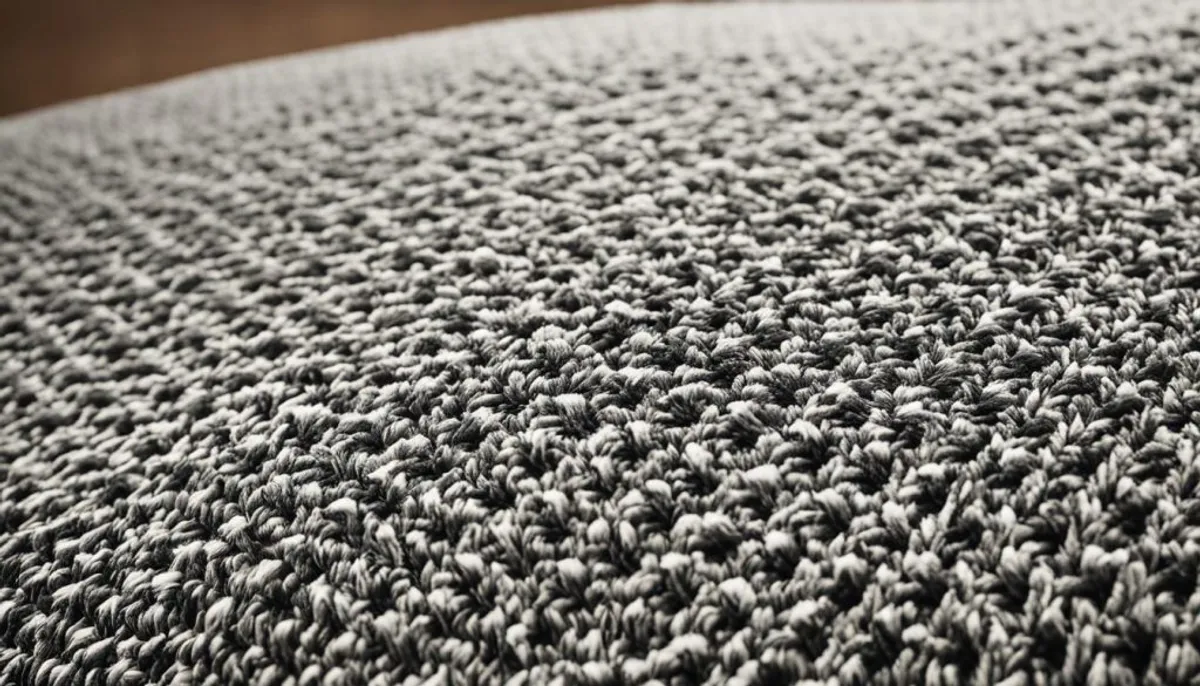
Cotton: breathable and absorbent, but cushioning more limited over time
Cotton is popular for its ability to allow air circulation and absorb sweat. It is ideal for regular use and for horses that are not very sensitive. However, it can compress over time, affecting pressure distribution, especially if the saddle tends to shift.
Felt and wool: density, natural cushioning, more demanding maintenance
Felt and wool provide appreciated density for sensitive backs. They ensure natural cushioning and uniform pressure distribution. However, these materials can be heavier. For example, felt pads made from virgin wool from 5 Star Equine Products are known for their durability.
3D Airflow technical materials: breathability and lightness for effort
For intensive sessions, technical materials promote ventilation and moisture management. Ecogold's 3D Airflow technology aims to keep the back dry while remaining lightweight. This solution often combines performance foams and airy fabrics to avoid overheating under the pad.
Anti-slip surfaces: stability without sacrificing ventilation
Anti-slip coatings aim to secure the saddle while allowing air circulation. For example, Ecogold offers an anti-slip model that lets air flow. This detail can save the purchase of other equipment, especially for horses that move under the saddle.
| Material | Strengths | To watch out for | Common use |
|---|---|---|---|
| Cotton | Breathable, highly absorbent, easy maintenance | Cushioning that compresses, less stable pressure distribution over time | Daily work, less sensitive horses, temperate climate |
| Felt / wool | Density, shock absorption, regular comfort | Weight, more demanding maintenance, sometimes longer drying time | Sensitive horses, seeking natural cushioning, ongoing use |
| 3D Airflow | Ventilation, lightness, moisture management | Crucial choice of cut, often higher price | Effort, competition, horses that sweat a lot |
| Breathable anti-slip | Stability, reduced slipping, more consistent contact | To adjust with the girth and cut to avoid tension | Mobile horses, shifting saddles, dynamic work |
Protection pads, shock absorbers, and saddle cushions: how to navigate
It is easy to get lost with terms regarding the comfort of the horse's back. Each option has a specific purpose, related to the saddle, the work, and the horse's skin. The goal is to protect without creating unnecessary pressure, using suitable equipment.
Difference between saddle pads and protection pads
The saddle pad acts as a daily barrier. It reduces friction, manages sweat, and protects the saddle. A good pad stabilizes the load and enhances comfort under the saddle.
The protection pad is for specific use. It is useful for intense efforts or for sensitive skin. It improves shock absorption without replacing a good saddle fit.
When to consider a saddle cushion or correction system
A saddle cushion helps adjust the horse's balance. It is useful for minor asymmetries or a changing back. The goal is to improve position without overloading.
Be careful not to create pressure on the wither or behind the shoulder. Before placing a cushion, check the space under the saddle. The goal is to promote contact, not hinder it.
Adjustable inserts: adapting equestrian equipment to the horse's changes
Adjustable systems are practical for changing horses. They allow for fine-tuning of support. There is no need to layer multiple pads.
With a compatible pad, you can target specific areas while leaving space. It's a step-by-step approach. Adjust, evaluate, then modify as needed. This ensures you always support the horse's movement well.
| Option | Main role | When to use | Point of caution |
|---|---|---|---|
| Saddle pad | Barrier, sweat management, saddle protection, everyday comfort | Regular work, daily use, seeking simple stability | Wither cut and spine channel: avoid friction |
| Protection pad | Reinforced protection and additional absorption based on intensity | Demanding sessions, sensitive skin, need for targeted protection | Possible excess thickness: check space under the saddle |
| Saddle cushion | Slight correction and balance improvement | Moderate asymmetries, evolving back, adjustment to refine | May increase pressure if the saddle is already just right |
| Adjustable inserts | Customization of support, progressive adaptation | Transforming horse, recovery, muscle variation | Adjustments to be made in small steps, monitoring marks |
Choosing a saddle pad based on the discipline practiced
The discipline you practice determines the choice of pad. The shape, comfort, and ventilation vary according to the activity: competition, long rides, etc. Good equipment reduces pressures and helps the saddle stay in place.
To choose, one also examines the shape of the wither and the size of the saddle. Even pads that look similar can be very different.
Dressage: clearance along the spine and cushioning for precision
Dressage requires precise contact without hindering the horse. A specific pad for dressage helps avoid pressure on its back.
It should be well-padded but not too thick. Materials that allow good ventilation are essential.
Show jumping and eventing: anti-slip and enhanced absorption
For jumping, a pad that absorbs shocks well is needed. It should not slip and resist wear.
In eventing, managing sweat is important. A pad that is easy to wash will be an asset.
Endurance and trail riding: breathability, moisture control, long-lasting comfort
When going on long rides, a pad that breathes is necessary. This keeps the horse's back dry, reducing irritation.
Materials should dry quickly and retain their shape after washing. This ensures constant comfort.
Western: sturdiness and cushioning suitable for heavier saddles
Western pads must support more weight. They need to be durable, with good cushioning that does not compress.
These pads also protect against friction and dust. Choices are made based on the quality and longevity of the material.
| Discipline | Priority on the pad | Detail to check |
|---|---|---|
| Dressage | Spine clearance, precise contact | Anatomical cut and regular padding of a dressing pad |
| Jumping / Eventing | Shock absorption, stability | Anti-slip zones and reinforcements at girth passages |
| Endurance / Trail riding | Breathability, moisture control | Material that dries quickly and limits overheating under the saddle |
| Western | Sturdiness, cushioning for heavy saddle | Stable density, abrasion resistance, and good weight distribution |
Focus on dressage pads: cut, style, and functionality in horse tack
Choosing a dressing pad is as important as choosing a saddle. A good pad maintains a clean line and protects the horse's back.
It stands out for its length and simplicity in the stables. Details make the difference for equipment that lasts and is coherent.
Longer format for uniform pressure distribution
Their elongated design covers the horse's back well. This allows for better pressure distribution from the saddle.
This is especially useful for long training sessions. The cut should follow the back without creating tension.
Low profile and discreet finishes for a streamlined look
Dressage pads have a low profile. Their fine edges avoid thickness under the saddle.
This style enhances the horse's silhouette. Discreet finishes easily match for a harmonious look.
Moderate padding: preserve contact and finesse of aids
The padding is never too thick. This ensures clear contact and precise aids.
A pad that is too thick can alter the feel and shift the saddle. Good tack offers stable padding, even after washing.
Colors: tradition of white/cream and modern options based on usage
White and cream dominate in competitions. For training, more subdued colors like navy are common.
Choose according to use and maintenance. White pads are dirty but offer a neat appearance.
| Criterion | What we seek in dressage | Point of caution |
|---|---|---|
| Length | Wide coverage for better pressure distribution | Avoid it sticking out too much and creating folds |
| Wither cut | Clearance to limit friction | Monitor after the session: marks and hot spots |
| Thickness | Moderate padding, precise contact | Too thick = less stable saddle |
| Finishes | Low profile, discreet edges | Rigid piping that can compress |
| Color | White/cream in competitions, subdued tones at the stable | More frequent maintenance on light colors |
Focus on jumping pads: stability, shoulder freedom, and safety
In show jumping competitions, a good saddle pad must stay in place, even at high speeds. It must protect the horse's back, allow the shoulder to move freely, and keep the saddle stable. It is a key accessory that truly enhances comfort for both the horse and the rider.
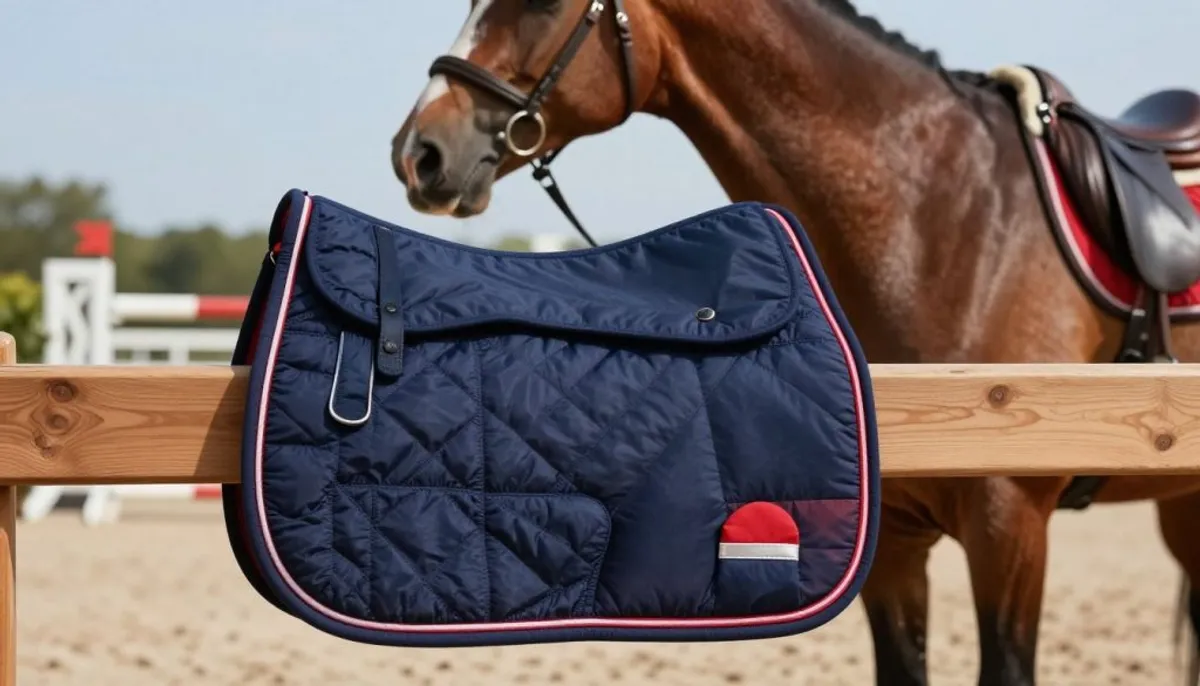
Shorter cut to free the flaps and facilitate the leg
Pads specific to jumping often have a shorter cut than those for dressage. This shape helps free the back of the saddle, ensures better contact with the legs, and prevents folds. Additionally, a special cut at the front helps avoid chafing near the shoulders.
More padding to absorb impacts
When a horse lands, the impact is felt. Thicker padding on the pad helps absorb this shock and better distribute pressure. The goal is to protect the horse's back without adding unnecessary volume that would hinder the saddle's positioning.
Technical materials: gel, neoprene, memory foam
Saddle pads for jumping are often made with advanced materials. Gel reduces pressure points, neoprene combats moisture, and memory foam adapts to the horse's back. It is crucial that these materials allow for good ventilation to prevent the horse's back from overheating.
Silicone strips and anti-slip zones: prevent slipping during courses
Silicone strips and anti-slip zones prevent the saddle from slipping. They are very useful, especially when the horse sweats or in tight turns. In choosing equipment, priority is given to stability and comfort before aesthetics.
| Point to check | What it brings in show jumping | Sign that it is not suitable |
|---|---|---|
| Short cut and shoulder clearance | Freer leg, less chafing, better mobility | Flat hair at the shoulder, visible folds under the saddle |
| Padding (density and regularity) | Shock absorption upon landing, better pressure distribution | Excess thickness that shifts the saddle, compressed areas after little use |
| Technical materials (gel, neoprene, foam) | Stability and comfort, often easier maintenance | Back too hot, “sticky” sensation, slow drying |
| Anti-slip (silicone, inserts, grip) | More fixed saddle during courses, less slipping | Clear pressure marks, pulled hair, tense horse |
| Moisture management | Drier back, better skin protection | Heavy and wet pad, irritation after work |
Pads for trail riding and long rides: breathability, durability, and storage
When outdoors, a stable and comfortable equitation pad is needed, especially for long periods. On varied terrain, choosing the right pad reduces friction. It also helps maintain a steady pace. A good protection pad is lightweight and does not make the saddle heavier.
Increased comfort and reduced pressure points over several hours
To be comfortable for a long time, the pad must distribute weight well. A well-padded pad decreases pressure, especially on the wither and behind the shoulder. It helps the horse to be more relaxed, which is crucial when climbing or descending.
A good pad makes a big difference for sensitive horses. It should be thin and breathe well. If it is too thick, it can overheat and create folds. The important thing is to protect without hindering the horse.
Durable materials: reinforced cotton, polyester, nylon
Pads can wear out quickly with dust, rain, and friction. Materials like reinforced cotton, polyester, and nylon are durable. They are also easy to wash. These are popular choices for equestrian equipment because they hold up well and dry quickly.
Some pads have reinforcements where the straps attach. This little extra prevents the pad from deforming and slipping during the ride.
Moisture wicking: keeping the back dry and limiting overheating
The accumulation of sweat heats the horse's back and can irritate its skin. A breathable lining allows air to circulate and moisture to escape. Even when wet, a good pad remains stable. It should not “stick” or harden while drying.
After a break, one can check under the pad. If it is just warm, and the horse's hair is flat, it's a good sign. These details help choose the right equipment for long rides.
Fastenings, girth straps, pockets: carrying essentials outdoors
On a trail ride, it is important that everything is well secured. Having good passers and girth straps helps stabilize saddlebags. Pads with pockets allow keeping essential items handy, like a map or a first aid kit.
- Additional fastenings: useful for stabilizing saddlebags or a water pouch.
- Reinforcements at girthing: protect the protection pad from repeated tensions.
- Discreet pockets: practical for keeping essentials within reach.
| Terrain criterion | What the equitation pad should provide | Detail to check on equestrian equipment | When to add a protection pad |
|---|---|---|---|
| 2 to 4 hour ride | Constant comfort, flat stitching, good fit under the saddle | Absence of folds, soft edges, regular padding | Sensitive back or fragile skin, especially in dry and dusty weather |
| Heat and humidity | Breathability, quick drying, limiting overheating | Ventilated lining, clear spine channel, non-sticking fabric | Heavy sweating, need to better distribute pressure without excess thickness |
| Rugged terrain | Stability, shoulder freedom, girthing support | Solid passers, reinforcements in traction areas, adapted cut | Saddle that tends to shift, or additional load (saddlebags) |
| Intensive use over several days | Durability, abrasion resistance, easy washing | Nylon/polyester or reinforced cotton, reinforced edges, quick drying | When alternating pads and wanting to preserve the skin over time |
Horse pads vs pony pads: size, cut, and saddle fit
A pony pad is often smaller. It should not hang under the saddle. For horses, the pad needs to cover well without forming folds. This ensures a nice look on the animal's back.
The shape varies according to the animal. For a pony, a cut that does not hinder shoulder movements is preferred. Horse pads leave space at the wither. Thus, the saddle does not create unnecessary pressure.
The saddle pad for ponies is often less padded. The goal is to protect the back, absorb shocks, and allow the skin to breathe. A pad that is too thick can change the saddle's balance.
Fastenings should not be overlooked. For ponies, they are designed not to create excess thickness. Details like these limit friction and make the equipment more comfortable.
| Point to check | Pony pad | Horse pad |
|---|---|---|
| Dimensions | Shorter and narrower, barely exceeds | Longer, slightly exceeds the horse saddle |
| Front cut | Often more pronounced to free the shoulder | Wider wither clearance depending on morphology |
| Padding | Moderate, designed for a lighter mass | Variable, sometimes denser for cushioning |
| Fastenings and girth straps | Reduced proportions, placement close to the pony | Longer, adapted for girthing and flaps |
| Style choice | Frequent patterns and colors, practical for differentiation | From simple to sporty, to harmonize with equestrian equipment |
Pony pads are often colorful, which attracts young riders. However, the most important thing is that the pad fits well. It should conform to the horse's back and stay in place under the saddle.
Style, customization, and equestrian accessories: combining trend and utility
A saddle pad can enhance your outfit without overshadowing the horse's beauty. Choosing the right equipment in equine tack is crucial as it affects comfort while riding. We seek a clean style, breathable materials, and useful accessories.
Colors, patterns, finishes: harmonizing with your equestrian equipment
Start by comparing the horse's color and your stable colors to match the pad. In competitions, there are rules to follow. For example, white dominates in dressage. For show jumping, contrasts are welcome, but a simple border may suffice.
Do not overlook the details: piping, padding, strap placements, and the quality of seams. These finishing elements signify quality equipment. They hold up better after several washes and maintain their nice appearance.
Customization: monograms, stable logos, and tailored details
Customization is successful when it is subtle and elegant. A small monogram, a discreet logo, or an embroidery can complement your equipment. The essential thing is to maintain overall harmony without overloading.
For more exclusive equipment, La Sellerie Française offers luxury products. These unique pieces are made in France. Artisans can thus refine every detail.
Prioritizing functionality over aesthetics: comfort, breathability, support
The primary role of a pad is to protect the horse's back. Ensure that it avoids friction and manages sweat well. Breathable material provides additional comfort.
Support is also crucial. The fastenings must be strong, and the pad should not slip. This approach ensures a good choice in equestrian equipment.
| Criterion | What we observe daily | To prioritize based on use |
|---|---|---|
| Breathability | Less humid back, quick drying after the session | Technical materials like mesh/3D for intensive work and summer |
| Comfort and friction | No overheating at the wither, no broken hairs | Clear clearance, flat seams, soft edges |
| Stability | Pad that does not slide back, girthing that stays in place | Solid passers, well-ventilated anti-slip zones |
| Style and finishes | Colors that stay clean, padding that does not deform | Discreet piping in competitions, reinforced finishes for training |
Simple tip: if the pad is beautiful but uncomfortable for the horse, it is not the right choice. Opt for practical equipment rather than a style that could hinder your mount.
Conclusion
An equitation pad is not just for embellishment. It protects the horse's back and increases its comfort. It also helps the saddle stay in place. You quickly notice an improvement in work and in the relationship with the horse.
The choice of pad should be based on the horse's shape. Consider the wither, the line of the back, and the muscles. Ensure that the pad slightly exceeds the saddle. It should provide a clear space at the wither. A good thickness avoids pressure points and friction.
The material of the pad is very important. Cotton is comfortable and allows the skin to breathe. Wool and felt provide good cushioning. Modern textiles like 3D Airflow are perfect for intense efforts. Non-slip zones add stability. This is essential for equestrian equipment.
Choose your pad based on your equestrian discipline. Whether for dressage, show jumping, trail riding, or western riding. Do not stop just at the color. Favor breathability, support, and protection. In France, La Sellerie Française offers superior quality pads. They are custom-made or in limited editions by French artisans.
FAQ
Why is a saddle pad essential for the horse's comfort?
A saddle pad reduces pressure and absorbs shocks during exercise. It also protects against friction and moisture. This ensures better stability and comfort for the horse.
How does an equitation pad reduce pressure points?
A well-fitted equitation pad distributes pressure evenly. It adapts to the horse's shape. Special models offer more comfort under the saddle.
How to avoid chafing at the wither with a protection pad?
Ensure that the pad does not pinch the wither. Choose a suitable model that avoids friction. For sensitive horses, avoid pads that are too thick.
Can a pad prevent the saddle from slipping?
Yes, if the saddle fits the horse's morphology well. Anti-slip materials help keep the saddle in place. Ecogold offers 100% breathable pads.
What is the difference between saddle pads and protection pads?
The saddle pad protects and absorbs sweat. The protection pad is for specific needs. The perfect fit is crucial.
How to choose a saddle pad based on the horse's morphology?
Observe your horse's morphology. Opt for a pad that avoids pressure on the back. A horse can change over time, so adapt accordingly.
Should a pad be chosen only based on saddle size?
No. Consider the horse's morphology and the necessary cut. The pad should slightly exceed the saddle. Properly adjusting the girth straps is important.
What thickness of saddle pad should be chosen?
The thickness should balance protection and comfort without creating pressure. Adapt it according to the saddle and the horse. An anatomical cut and good material are preferable.
When to use a saddle cushion or correction pad?
They are useful for adjusting support according to the horse's back. Adjustable inserts help during physical changes. Avoid adding too much volume.
Which material to choose between cotton, wool/felt, and technical materials?
Cotton is cool and absorbent. Felt and wool offer good cushioning. For intense activity, prefer technical materials for better moisture management.
Which dressage pad to choose to preserve contact and precision?
A dressing pad that is long ensures good pressure distribution. It should be thin for better contact. Stability and space for the legs are essential.
Which saddle pad to choose for show jumping (CSO)?
Choose a short pad for more freedom of movement. Good cushioning and anti-slip elements are important. Technical materials enhance safety.
Which pad for endurance, trail, or trekking?
For these activities, breathability is crucial. A good pad prevents friction over long distances. Some models have practical features for the outdoors.
Which pad to choose for western riding?
A thick and sturdy pad is necessary for heavier saddles. The density of the material absorbs shocks. Choose according to the activity and terrain.
What is the difference between a horse pad and a pony pad?
Pony pads are smaller and narrower. They are designed for more delicate bodies. The padding remains protective.
How to combine style, customization, and functionality in equestrian accessories?
Combine colors and patterns while maintaining efficiency. Customizations should not hinder comfort. La Sellerie Française offers quality and aesthetics in its products.
Where to buy a premium saddle pad made in France?
For a quality pad, check out the creations from La Sellerie Française. The products are unique and made by French artisans.
How to maintain a saddle pad to prolong its lifespan?
Air dry the pad after use. Brush off hair and sand. Follow the manufacturer's washing instructions. Regular care is important.
What signs indicate that a pad is not suitable?
If the pad slips or creates pressure points, it is not suitable. Change it if you see irritations or poor fitting. Check the horse's back and the saddle.