
A simple ray of sunshine reveals all the charm of the isabelle horse. Its golden, tawny coat offers a warm and distinctive appearance. The interplay of colors with darker tips captures the eye, whether in photos or in person.
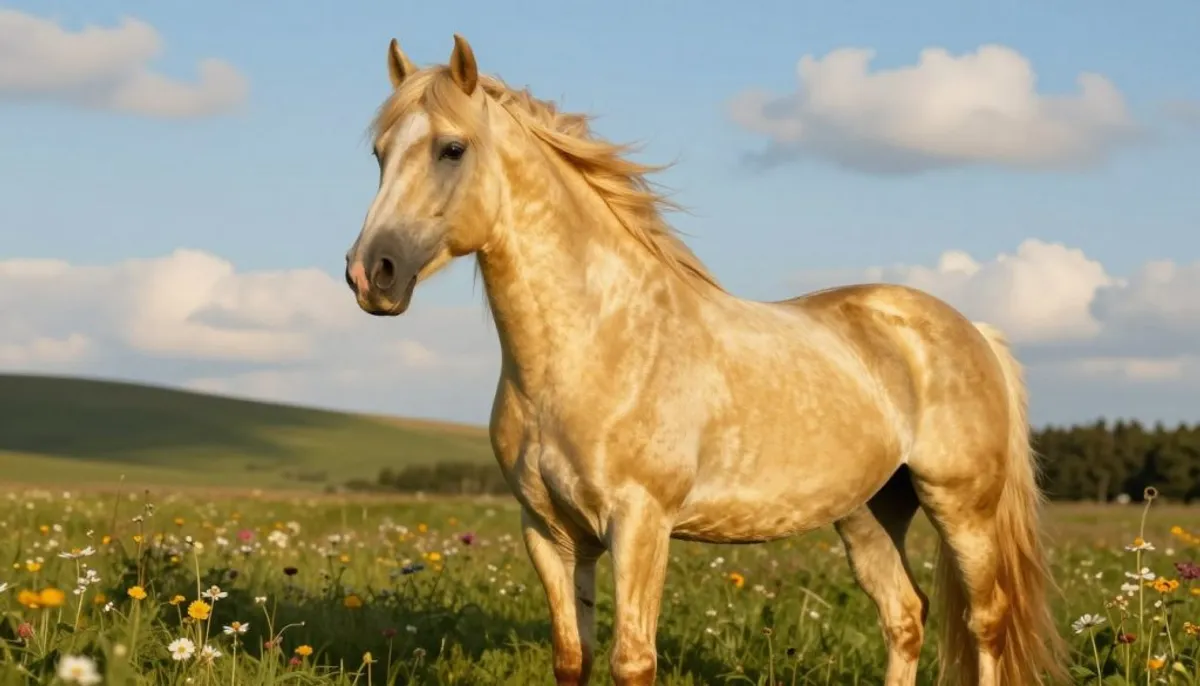
In France, finding an isabelle horse is quite rare. According to the French Institute of Horse and Riding (IFCE), they represent less than 5% of horses. This rarity makes them a preferred choice for competitions, shows, or leisurely rides.
Here is a simple introduction to the isabelle-colored horse. We will discuss distinctive signs, color variations, and the role of the specific cream gene. We will also explain how to distinguish it from other similar coats, the most common breeds, and why personality mainly depends on breed and training.
To highlight this golden coat against a dark background, nothing beats good equipment. La Sellerie Française offers luxury items, unique, customized, or limited edition. They are entirely crafted in France by local artisans, aiming for a quality that goes beyond the "Made in France" label.
Key Points
- The isabelle horse is recognized by its golden shine and darker extremities.
- The isabelle coat horse is rare in France: less than 5% of horses according to the IFCE.
- The isabelle-colored horse is very photogenic, appreciated in competitions, shows, and outdoors.
- The rest of the article clarifies definitions, nuances, genetics, and possible confusions.
- Breeds matter more than color for character and abilities.
- High-end equipment can enhance contrast and presence in presentation.
Why the isabelle coat fascinates riders in France
In France, the isabelle coat captures attention at first glance. It seems to catch the light, highlighting the horse's silhouette from afar. Riders feel an immediate charm, even before knowing more about its origins.
The distinctive features of this coat are a light body with darker extremities. This distinct contrast gives the impression that the horse is drawn. Its rarity adds to its appeal, especially when seen in person in an arena.
A golden coat that captures light from sand to copper
The coat color varies from light sand to intense gold in the sun, sometimes with coppery reflections. Outdoors, its color appears warmer; in shaded areas, it becomes softer. These nuances are highly appreciated.
The dark mane and legs create a spectacular effect in photos. The contrast remains visible even when the horse is in motion. This attracts the eye, making it easier to follow the horse.
A rare feature in the French equine landscape
Isabelle coats are uncommon and considered rare by many. According to the IFCE, they represent less than 5%. This rarity sparks interest and conversation among equestrian enthusiasts.
Experienced riders carefully study the shade and contrast of the coat. Beginners are mainly captivated by its golden shine and uniqueness.
| What catches the eye | What we observe on an isabelle coat | Why it stands out in France |
|---|---|---|
| Reflections in the sun | Variations from sand to gold, sometimes coppery depending on the time | Very visible outdoors and on a light arena |
| Natural contrast | Darker limbs and mane, "drawn" silhouette | Easy reading of the model, even for novice audiences |
| Perception of rarity | Less than 5% often mentioned (IFCE), hence few opportunities to see them | Reinforces the idea of rare coat color horse and the desire to "have one's own" |
| Details that make a difference | Shade of the body, intensity of the extremities, uniformity of the coat | Feeds the search for "ideal isabelle coat horse characteristics" |
A "wow" effect in competitions, shows, and rides
During a dressage competition, a bright coat attracts all eyes. The contrast between its light body and dark limbs creates a significant impact. Under the spotlight, this color continues to impress.
On a ride, the isabelle stands out clearly in a natural environment. Its unique characteristics shine during a simple outing. This visibility leaves a lasting impression, highlighting its rarity and memorable beauty.
Definition of the isabelle-colored horse and key visual signs
Recognizing an isabelle horse is quite simple. It has a tawny base coat, lightened and golden, with darker extremities. This distinction between the light body and dark points makes sorting easier.
The isabelle coat presents a beautiful harmony. The body is warm, reminiscent of sand or honey. The peripheral parts provide a sharp contrast, which marks the mind at first glance.
Tawny base color and dark extremities: what stands out
The base color ranges from golden beige to light brown. It changes depending on the seasons and the type of hair. The extremities are distinguished by their darker color.
The pangaré marks are light areas around the muzzle, belly, and groin. They create an interesting gradient effect.
Darker mane, tail, limbs, and sometimes muzzle
The mane and tail of an isabelle horse lean towards dark brown or black. The limbs also tend to darken. This enhances the overall contrast.
In some horses, the muzzle and ears may be darker. The eyes are often dark, but blue or green eyes can sometimes appear.
White markings, socks, and areas of pink skin: what to observe
An isabelle horse may have white markings such as stripes or socks. The skin under these markings is often pink, visible when parting the hair.
The skin under the white markings is generally pink, but it can darken with age. Examining this skin helps differentiate certain coats.
| Observed area | What we often see | What it contributes to identification |
|---|---|---|
| Body (shoulder, rib, croup) | Golden tawny to beige, sometimes "coffee with milk" | Confirms the light base without being too yellow |
| Mane and tail | Very dark brown to black, marked contrast | Reinforces the typical reading of an isabelle-colored horse |
| Limbs and hooves | Darker limbs, hooves often dark outside of socks | Avoids confusion with a more uniform coat |
| Muzzle, belly, groin (pangaré) | Lighter hair in "gradient" areas | Useful hint when the body shade varies with shedding |
| White markings (stripe, socks) | White hair, pink skin underneath, sometimes depigmented areas | Allows for checking skin/hair and comparing with similar coats |
| Eyes | Most often dark, sometimes blue or green | Secondary detail to cross-reference with the overall coat |
- Quick tip: step back a few meters to judge the body/point contrast before focusing on details.
- In case of doubt, observe the clean horse in natural light, then recheck the white markings and skin.
isabelle horse characteristics: nuances, reflections, and variations
An isabelle horse changes color with light and season. This variation makes each observation unique and interesting. It is part of the charm of accurately describing these horses.
From pronounced gold to "coffee with milk": a very vibrant palette
The base color ranges from straw yellow to dark honey. You will see horses with golden colors or brown "coffee with milk." In overcast weather, their coat appears duller.
When the sun shines, these horses shine with coppery reflections. The contrast between the body and darker mane creates this effect.
Light isabelle, smoky isabelle, spotted isabelle: main variants
| Variant | What we notice at first glance | Useful details for observation |
|---|---|---|
| Classic isabelle | Bright gold with very dark mane | Sharp contrast on the mane, tail, and limbs; often looks very "clean" in presentation |
| Light isabelle | Vanilla tone, paler | Softer contrast; the shade may seem almost cream in full summer without becoming white |
| Smoky isabelle | Depth and more shaded areas | Frequent darkening at the shoulders, chest, or flank; visible relief effect when grooming |
| Spotted isabelle | Lighter or darker spots | Round patterns that stand out depending on the angle of the sun; appreciated graphic aspect in competitions |
Influence of the sun and seasons on color perception
The color of an isabelle horse may seem stable. But it varies depending on humidity and dust. Once cleaned, its coat often appears brighter.
People wonder if these horses change color. With age, a difference may be seen. But it is mainly the light that affects their appearance.
isabelle horse: genetics, cream gene, and dilution mechanisms
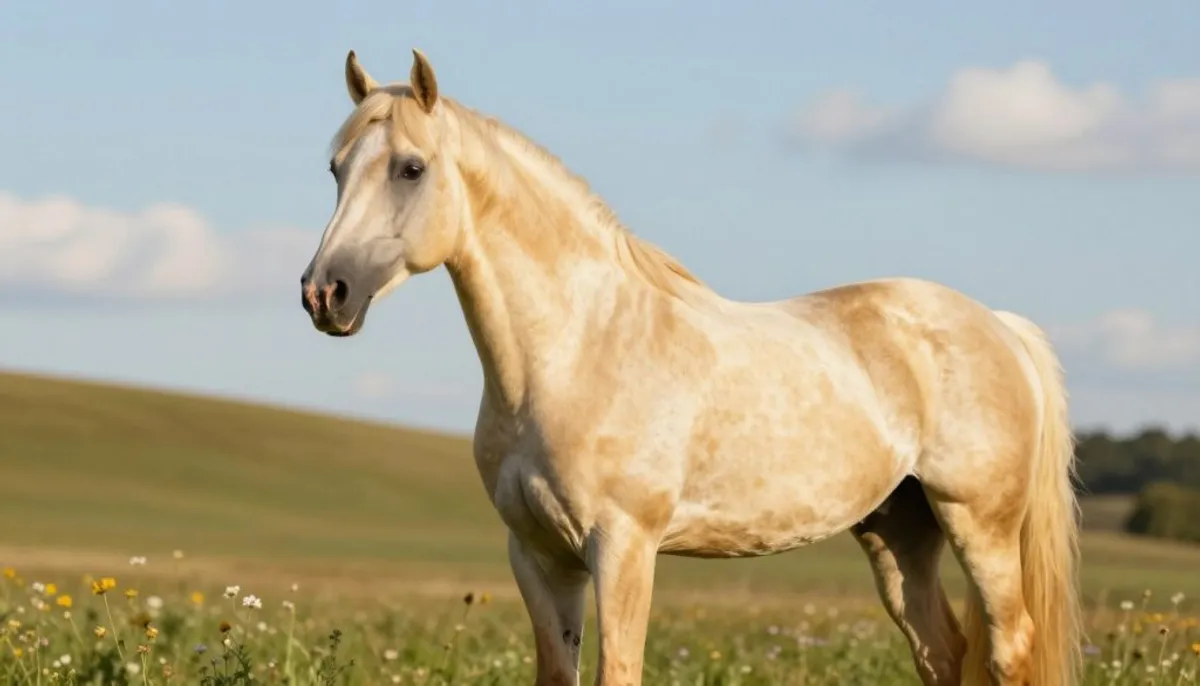
To grasp the beauty of an isabelle horse, one must delve into the world of genes. These change the shade of the coat. The key is a process called dilution. It lightens the coat while keeping the legs and head dark. This contrast gives some horses a unique and rare color.
The role of the cream gene in simple dilution on a bay base
A horse becomes isabelle when it inherits a cream gene on a bay background. Its body turns golden. But its mane and legs remain dark. This is what makes an isabelle horse so recognizable.
In summary, bay plus cream gene equals isabelle coat. The shade is warmer than classic bay. This helps us avoid identification errors.
Difference with double dilution: the case of perlino
With two cream genes, the color lightens even more. We move away from gold to very pale shades. The perlino is the perfect example with its light coat. The dark extremities are not as distinguishable.
This double dose of cream gene uniformizes the colors, making the coat "creamy." This is completely different from isabelle.
Why this genetics explains a rare coat color horse
The cream gene creates rare colors because it is quite uncommon. It is passed down in specific breeds, chosen by breeders. It may be that a stable does not see an isabelle for years.
Today, laboratory tests confirm the presence of the cream gene. They specify its location on chromosome 21. This ensures reliable identification of isabelles, regardless of seasonal variations in their coat.
| Genetic situation | Base coat | Number of cream gene copies | Body appearance | Mane and limbs | Frequent visual rendering |
|---|---|---|---|---|---|
| No dilution | Bay | 0 | Brown to tawny, darker | Black, classic contrast | Traditional "bay" profile |
| Simple dilution | Bay | 1 | Golden to warm beige | Remain dark, well marked | Isabelle coat horse, sharp contrast |
| Double dilution | Base with red and black pigments | 2 | Very light, cream to ivory | Much less contrasted | Perlino, marked lightening |
Origins and history of the name "isabelle" between legend and equestrian culture
The word "isabelle" carries stories and observations through time. Seeking the origin of the isabelle horse leads to a popular legend, then to facts in language and the arts.
This dual approach enriches how we see an isabelle horse. One should not rely solely on its golden appearance.
The legend of Queen Isabelle of Castile and the tawny hue
Queen Isabelle of Castile, known as Isabelle the Catholic, is central to this story. She supposedly promised not to change her shirt as long as Granada was besieged.
Over time, her shirt would have taken on a color between sand and cream. This color inspired the name of the coat of isabelle horses, enriching the search for their origin.
In stables, it is often said that this is an old story. Yet, it offers a striking and accessible image, illustrating isabelle horses under the sun.
Historical mentions and ancient artistic representations
Before genetics, people relied on observation. Paintings, engravings, and hunting scenes reveal golden horses with darker extremities, typical of isabelles.
The vocabulary has become more precise over time. The 17th century saw the first "official" mentions, even if the term was sometimes general.
This period sheds light on the confusion between the history of words and that of isabelle horses.
When tradition meets modern color science
Today, genetics provides clear explanations for colors. The cream gene, for example, helps accurately define isabelle horses.
Breeders appreciate these criteria for their selections. This reduces errors, capturing the essence of traditional stories without losing their magic.
| Reference | What we retain | Interest for identifying an isabelle-colored horse |
|---|---|---|
| Legend of Isabelle of Castile | Tawny hue associated with a "yellowed" garment, story passed down through generations | Gives a simple mental image, but is not enough to distinguish between similar coats |
| Ancient uses (arts and texts) | Representations of golden horses with dark manes and limbs, sometimes broad vocabulary | Shows that the coat has been described for centuries, with sometimes blurred boundaries |
| Stabilized mentions in the 17th century | The term "isabelle" appears more regularly in descriptions | Helps track the evolution of the word, useful when exploring isabelle horse origin |
| Modern approach through genetics | Explanation through cream dilution on a base, more consistent criteria | Clarifies the identification of an isabelle-colored horse and secures breeding choices |
Do not confuse isabelle coat horse with palomino, bay, or dun
When the sun shines or when shadows fall, the colors of horses can seem different. That is why the isabelle coat is often confused with a palomino, a light bay, or even a "dun." To avoid mistakes, especially in situations like competitions or sales, it is crucial to know the differences.
Visual differences: mane, extremities, overall contrast
Isabelle horses stand out due to the contrast of their color. Their body is golden or tawny, but with limbs and manes that are noticeably darker. In contrast, a palomino's mane is very light, going up to pale blonde or almost white.
The "dun" may seem similar from a distance, as its coat also tends towards sand. But it differs by the presence of primitive markings such as a dorsal stripe, stripes on the limbs, or a dark band on the shoulder. The bay, on the other hand, has a browner base color and is less "golden."
| Observed coat | Body (dominant shade) | Mane and limbs | Signs that help sorting |
|---|---|---|---|
| Isabelle | Golden, tawny, sometimes "coffee with milk" | Dark mane and limbs, marked contrast | Clear separation line between light body and dark extremities |
| Palomino | Light yellow to uniform gold | Very light mane, light tail, limbs without strong darkening | "Blond horse" look with little contrast on the extremities |
| Dun | Sand to ochre, "powdered" appearance | Often darker mane, but variable | Dorsal stripe, stripes, frequent primitive markings |
| Bay (light to standard) | Warm brown, sometimes lighter on the flanks | Typical black points (mane and lower limbs) | Less golden shine, more "brown" than "golden" impression |
Genetic differences: cream dilution versus other mechanisms
The isabelle color comes from a simple dilution by the cream gene on a bay base. This characteristic is essential to understand. Other similar colors come from different genetic mechanisms. For example, the "dun" is due to another gene, which often produces primitive markings.
Two horses may appear similar in a picture but differ genetically. This is important for breeding or accurate coat identification.
Useful identification tips before purchase or in competition
Before buying an isabelle horse, first look at it in natural light and then in the shade. In sunlight, the golden coat may seem brighter, but the contrast with the dark limbs remains. Also, examine the base of the mane. In a true isabelle, it remains dark, unlike palominos.
- Compare the body and extremities: the isabelle always has clear dark points.
- Look for stripes or a dorsal stripe if you are considering a dun.
- Inspect the skin under the white spots: this can help avoid some mistakes.
- For important situations (sale, breeding, classification), request a genetic test.
Breeds where the isabelle coat appears most often
The isabelle coat is not found in all horse breeds. The cream gene that creates it is not everywhere. In some breeds, this gene is more frequent due to selection.
In stud books, the isabelle horse is sometimes preferred for sport or leisure. For some breeders, color is a plus. For others, it is an important part of breeding.
Quarter Horse "buckskin," Paint Horse, and close lines
The Quarter Horse is well known for its isabelle coat, called buckskin. This color is popular in reining and barrel racing, thanks to American selection.
The Paint Horse has origins similar to the Quarter Horse. It can have diluted coats and white markings. Mustangs can also be isabelles, thanks to their genetic diversity. Isabelles are recognizable from afar by their appearance.
Connemara: the isabelle pony highly sought after in pony sport
In France, the Connemara is highly valued, especially for its isabelle coat. Irish selection offers a wide range of colors.
In show jumping (CSO) and dressage, isabelle ponies attract attention. Their color highlights their movements and elegance.
Lusitano and Andalusian: charisma and presentation in high school
The Lusitano and Andalusian have diluted coats less often. When present, they enhance these horses.
In shows and high school, an isabelle horse has a "sculpted" effect. This beauty comes from the tradition and aesthetics of these breeds.
More occasional presence in Selle Français and sport horses
The cream gene is rare in Selle Français and other sport horses. Performance has been prioritized over color.
An isabelle horse in eventing (CCE) or show jumping quickly stands out. Its color influences its image and value, especially in the amateur world.
Fjord and primitive markings: a visually similar coat
The Fjord appears isabelle due to its yellow tones and primitive markings. But its genetics are different. Details like the dorsal stripe avoid confusion with isabelle.
Isabelle can also be found in Highland, Dartmoor, and some New-Forest horses. Crossbreeds between Connemara and Welsh may have it. Isabelles like Spirit in films maintain this popular color.
| Breed or type | Perceived frequency of isabelle | Why we see it often (or rarely) | Useful visual hints |
|---|---|---|---|
| Quarter Horse | Rather frequent | Selection favorable to coat diversity; very visible western use | Golden body, dark mane and limbs; coat called buckskin |
| Paint Horse | Fairly frequent | Close origins to Quarter Horse; spread of cream gene in certain strains | Isabelle possible with large white markings, marked contrast |
| Connemara | Regular depending on lines | Preserved color palette; strong demand in pony sport | Golden to "coffee with milk," darker extremities, very readable silhouette in movement |
| Lusitano / Andalusian | Rarer | Diluted coats valued but less widespread; presentation culture | Warm reflections, elegant contrast, strong rendering in show and dressage |
| Selle Français (sport horses) | Rare | Historical priority on performance rather than color | Isabelle "that catches the eye" in the paddock, especially in CCE and CSO |
| Fjord (similar coat) | Very common, but different | Primitive markings linked to a different genetics than cream dilution | Dorsal stripe, stripes, two-tone mane; frequent confusion with isabelle |
Temperament and abilities: what color does not say, and what breed influences
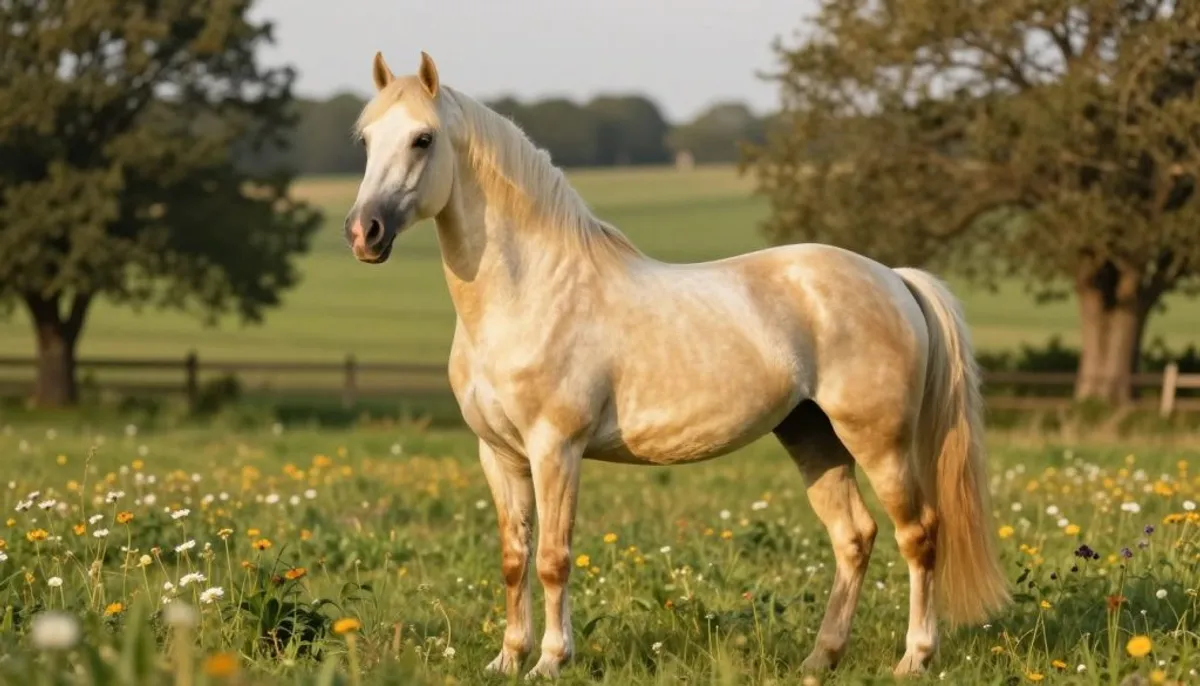
A horse with a beautiful isabelle coat may attract attention. Yet, its color does not determine its character or skills. What really matters is the breed, lineage, and how it is educated daily.
The horse's lifestyle is also crucial. If it is often taken out, well-fed, and understood, it will be calmer. This applies to all horses, not just those with an isabelle coat.
Versatility according to origin: western, dressage, CSO, outdoors
Isabelle horses are found in many different activities. For example, some lines of Quarter Horses are appreciated in competitions for their mentality and speed in short events. In contrast, Connemaras are often chosen for their ability to walk well on all terrains and their endurance.
In equestrian sports, a Selle Français can be quick and precise. A Lusitano, on the other hand, is known for its agility and ease in performing complex movements, which is great for dressage. However, the qualities of an isabelle horse do not solely depend on its color. It is mainly its breed and training that matter.
| Frequent origin | Often sought-after strengths | Terrains where it excels | Points of vigilance |
|---|---|---|---|
| Quarter Horse | Stable mentality, reactivity, short acceleration | Reining, trail, ranch, leisure | Need for precision in aids, energy management |
| Connemara | Sure-footedness, endurance, reassuring nature | Outdoors, club, TREC, pony CSO | Can toughen up if allowed to "do as it pleases," clear framework |
| Selle Français | Impulse, respect for the bar, sporty locomotion | CSO, hunter, eventing | Can be sensitive, requires a consistent routine |
| Lusitano | Balance, collection, presence in the arena | Dressage, show, groundwork | Do not rush, prioritize gradual progress |
Sensitivity and relationship with humans: interest in gentle methods
Many believe that isabelle horses are more attentive. But this depends more on the horse's character and education. A sensitive horse will quickly sense stress or changes around it.
Gentle methods, with clear signals and rewards, work well. If one is too harsh and the horse does not understand, it may shut down. Once again, education is more important than coat color.
Why isabelle stands out in "presentation" disciplines
In public, an isabelle horse literally shines. Its coat highlights its silhouette, especially when it moves. In presentation events, this attracts attention. It is not just a technical "plus"; it is truly visually impressive.
This also counts for leisure horses. In a stable, a beautiful horse attracts. Isabelles are often chosen for their appearance. Of course, their skill and behavior matter just as much.
Daily care to preserve the golden shine and contrast
Isabelle coat horses quickly attract dust and stains. To keep their beautiful golden hue clean, a simple maintenance routine is enough. This also serves to highlight their darker extremities, while respecting their unique characteristics without excessive product use.
Regular grooming: soft curry comb, body brush, friction areas
First, use a soft curry comb to remove sand and mud. Then, gently use the body brush in the direction of the hair.
Do not neglect friction areas, such as the belly and neck. These spots can quickly dull the golden color of the isabelle horse. Regular maintenance helps maintain their appearance, even during winter.
Shampoos suitable for light coats and stain management
When it is humid, use a shampoo for light coats 1 to 2 times a month. This helps maintain vibrant color and avoid unwanted reflections from urine or mud.
Before a competition or a photo session, prefer chamomile shampoos to enhance shine. Make sure to rinse and dry thoroughly to prevent dust from sticking to still damp hair.
Caring for dark manes: detangling, nutrition, preventing breakage
The dark manes contribute significantly to the contrast of the isabelle horse. A detangling and nourishing shampoo once a month is often sufficient. Use a wide-toothed comb to detangle without breaking the hair after work.
A good diet also contributes to the shine of the mane and coat. Supplements in essential fatty acids, vitamins A and E, as well as trace elements like copper and zinc can be helpful. Consider flaxseed oil or chia seeds, but always with a veterinarian's or nutritionist's advice.
- Presentation tip: dark leg wraps and a black or brown saddle enhance the coat/limb contrast without overwhelming the overall look.
- Key gesture: always detangle gently, especially at the tips, to keep the hair long and neat.
| Gesture | Simple frequency | Goal for the isabelle coat horse | Practical detail |
|---|---|---|---|
| Soft curry comb + body brush | 4 to 6 days/week | Remove dust and revive the golden shine | Focus on belly, neck, girth area; finish with a soft brush |
| Light coat shampoo | 1 to 2 times/month | Limit stains and unwanted reflections | Long rinsing; careful drying to avoid dirt sticking |
| Washing + detangling manes | 1 time/month + after work if needed | Maintain dark contrast and regular mane | Wide-toothed comb, hold the strand, avoid pulling on knots |
| Nutrition support | Daily, according to professional advice | Shine of the coat and quality of the mane | Vitamins A/E, copper, zinc; flaxseed oil or chia if suitable |
Protection, skin health, and seasonal management
The isabelle coat of the horse attracts attention. But their skin can be more sensitive. It is important to check friction areas such as the inside of the thighs and the fold of the elbow.
Signs such as dandruff, small lesions, or redness are easy to spot. After work, a quick check is very useful. This is even more crucial if the weather is humid.
For an isabelle horse, prioritize hypoallergenic hygiene products. Also, ensure thorough rinsing. Clean and dry skin helps limit irritations.
In summer, insects can cause summer dermatitis. This leads to itching and damaged manes. Using a well-fitted anti-insect blanket is good protection.
Adjust the horse's outing times: early in the morning or late in the day. This way, you avoid the hours when there are many insects.
The sun can damage and dull the coat, especially in summer. A light UV blanket helps protect the golden hue. Keep the blanket wrinkle-free for better effect.
In autumn and spring, mud and humidity should be monitored. Wet areas on the horse's body should be kept dry.
In the pasture, a rain blanket prevents stains and friction. Ensure it remains clean. In the stable, use protective gear to avoid irritations on delicate skin.
For the feet, dark hooves are often sturdy. However, cleaning them after each outing remains essential. This is especially true in rainy weather, to avoid thrush.
In case of heavy rain, Norwegian tar can be useful. On hard ground, a softening grease helps prevent cracks. It also keeps the hooves shiny.
An isabelle horse does not need specific medical care for its color. But regular checks are important. An annual veterinary visit, a dental check-up, and an appropriate deworming plan make all the difference.
When the overall condition of the horse declines, its coat quickly loses its shine. This can be due to parasites or inadequate care.
| Period | Frequent risks | Simple gestures | Useful protections |
|---|---|---|---|
| Spring | Shedding, dust, first insects, saddle irritation | Gentle brushing, rinsing after sweating, inspection of folds | Repellent spray, clean blanket, hypoallergenic soap |
| Summer | Summer dermatitis, sunburn, coat fading | Outings during cool hours, checking the base of the tail, detangled manes | Anti-insect blanket, UV blanket, fly mask |
| Autumn | Mud, maceration, small wounds on the pasterns, fragile frogs | Drying limbs, hoof cleaning, well-dried bedding | Light rain blanket, gentle antiseptic, hoof grease |
| Winter | Friction under the blanket, dry skin, cracks, mud fever | Check folds, air the blanket, inspect after rides | Breathable under-blanket, barrier cream on at-risk areas, soft brush |
Breeding and selection: rare breeding of horses, tests, and coat transmission
The isabelle coat is special and attracts attention. In France, it is uncommon and depends on the origin of the horses and their crossings. This makes breeding isabelle horses particularly interesting, as it focuses on color, but also on other qualities.
To succeed in breeding isabelle horses, one starts by studying genetics. Then, horses are evaluated on their physique, mentality, and way of moving. Choosing a horse for its color is good, but it must also be performant and healthy.
Why the coat remains minority: transmission of the cream gene and choice of lines
The isabelle coat generally comes from the cream gene that dilutes the base color. But not all breeds carry this gene. Therefore, isabelle horses are not common, and selecting for color takes time.
Breeders must consider the chances of having an isabelle foal. Even with two carrying parents, the outcome can vary. They plan matings carefully to increase their chances.
Interest of genetic tests to confirm the coat and secure crossings
Genetic tests are useful for confirming the presence of the cream gene. They also help differentiate similar coats. This guarantees the quality of identification papers, the selection of breeders, and the management of the desired color. It avoids surprises and clarifies the value of a foal.
| Checked point | What the test provides | Concrete impact on breeding |
|---|---|---|
| Presence of the cream gene (simple dilution) | Confirms the expected genetic base | More consistent crossings and better anticipated coat |
| Risk of double dilution | Identifies possible combinations | Breeding plan adjusted according to isabelle or not objective |
| Visually "neighboring" coat | Reduces confusion with similar shades | Clearer announcements and stronger files |
breeding isabelle horses: balancing aesthetics, health, and abilities
When the demand for golden horses increases, some want "gold" at all costs. But it is important to also look at the character of the horse, its utility, its physical structure, and its health. Thus, the beautiful isabelle coat is a bonus, not the only criterion.
A well-presented horse looks even more beautiful, especially with a light coat. Using equipment in subdued colors, in brown or black leather, with good finishing, enhances the coat. La Sellerie Française offers high-quality equipment made in France. This helps breeders present their horses in the best conditions.
Conclusion
The isabelle horse has a golden base color and dark extremities. Depending on the light, its color varies between sand and copper. It can be light, smoky, or spotted. This color attracts attention, especially during competitions or outings.
In France, less than 5% of horses are of this rare color. This rarity makes the isabelle horse very special. It is important for those who want to buy or breed these horses. However, it is essential to know the different coats well to avoid mistakes.
Science explains that the isabelle coat comes from a cream gene diluted. If the gene acts twice, the horse will have an even lighter coat, like the perlino. Genetic tests help accurately identify these horses. This is very useful for planning crossings.
But color does not reflect the character or talent of the horse. What really matters is the breed, education, health, and training. Even if an isabelle horse is beautiful, it requires constant care. This includes grooming, sun protection, a good diet, and suitable equipment to maintain its beautiful coat.
FAQ
What is an isabelle horse, concretely?
An isabelle horse has a golden or tawny coat. Its mane and tail are very dark, often black. Its limbs, muzzle, and ears may be darker.
Why do we talk about "golden coat" for the isabelle horse?
The golden aspect of the isabelle horse coat changes with light. It can range from sand to a bright gold. This makes it captivating in photography and during events.
Is the isabelle coat a rare horse color in France?
Yes. The French Institute of Horse and Riding (IFCE) states that less than 5% of horses in France are isabelles. This rarity adds a unique prestige.
What visual signs help recognize an isabelle-colored horse?
Isabelle horses have a golden body and darker manes and limbs. They may also have white markings, and a contrast is visible on the skin under these markings.
What are "pangaré marks" on an isabelle horse?
The pangaré marks are lighter areas around the muzzle, belly, and groin. They describe the shade of the isabelle coat.
Are the eyes of an isabelle horse always dark?
Most of the time, the eyes are dark. However, there can be cases of blue or green eyes due to the horse's genetics.
What are the most common shades of the isabelle coat?
The isabelle coat varies from gold to light brown. It has the appearance of coffee with milk or honey. It changes mainly with light.
What variants of the isabelle horse coat do we encounter the most?
Common variants include classic isabelle, light isabelle, smoky isabelle, and spotted isabelle. Each type has its own distinct characteristics.
Does the isabelle horse change color over time?
They do not change color per se. But their coat may vary with age and conditions like dust or light. These variations can create confusion.
What is the genetics of the isabelle coat?
The isabelle coat comes from a dilution of the cream gene on a bay base. This lightens the body while keeping the mane and limbs dark.
Can you give a simple example of a dilution mechanism?
An example: bay horse + a single copy of the cream gene gives an isabelle coat. With two copies of the gene, the coat is even lighter.
What is the difference between isabelle and perlino?
The isabelle is due to a simple dilution on a bay base. The perlino results from a double dilution, giving a much lighter coat.
Why does genetics explain a rare horse color?
The isabelle coat is rare because it comes from the cream gene, which is less common. Thus, one does not often find many isabelles in a stable.
Are there tests to confirm an isabelle coat?
Yes. Modern genetic tests identify the cream gene. This avoids mistakes. The chromosome 21 is linked to this gene, showing advances in genetics.
Where does the name "isabelle" come from?
It comes from a story about Queen Isabelle of Castile, who supposedly did not change her shirt during a siege. Her shirt would have turned tawny, and this color was named after her.
Is this story true or more of a myth?
It is mostly folklore. But this story has strongly influenced the name "isabelle" in equestrianism.
Since when has the isabelle coat been officially mentioned?
There are mentions as early as the 17th century. Over time, genetics has allowed for a better definition of this color.
Why is isabelle often confused with palomino?
Their golden coat can be confusing. But the isabelle retains dark extremities. The palomino has almost white manes, which makes the difference.
How to distinguish an isabelle horse from a bay?
The bay has a brown coat without a golden aspect. The isabelle shows a more pronounced gold. Natural light helps distinguish them.
Isabelle or dun: how to avoid the mistake?
The dun has primitive markings like a dorsal stripe. For the Fjord, these markings are a clue to its specific coat, different from isabelle.
What identification tips before purchase or in competition?
Look at the horse in natural light, check the contrasts. Examine the skin under the white markings. Do a genetic test to be sure.
Which breeds most often present isabelle horses?
The Quarter Horse, Paint Horse, and Mustangs often show this color. The cream gene is well present in them.
Does the Connemara exist in isabelle pony?
Yes, especially in CSO and pony dressage. These ponies capture the attention of spectators and are highly appreciated by young riders.
Are there isabelles among Lusitanos and Andalusians?
Yes. In the Lusitano and Andalusian, the isabelle adds to the charisma. Highly appreciated in shows for their beauty.
Is the isabelle coat present in Selle Français?
Yes, but it is rare. An isabelle Selle Français stands out in competitions. It attracts all eyes.
Why is the Fjord often confused with the isabelle coat?
Despite their resemblance, their genetics differ. The primitive markings help distinguish the Fjord. It is a dun coat, not isabelle.
Does the isabelle coat influence temperament?
No. Character depends on breed, education, and lifestyle. The coat color plays no role.
What abilities are often associated with breeds where isabelle is present?
The Quarter Horse excels in western, the Connemara in pony sport. The Selle Français shines in show jumping. Lusitano: perfect for high school. Color does not determine these skills.
Why do we say that an isabelle horse "makes more of an effect" in presentation?
Its shining coat attracts the eye. But performance and preparation remain paramount. The coat does not replace quality.
How to maintain an isabelle horse daily?
Clean the coat with a soft curry comb and a body brush. Pay attention to delicate areas. This keeps the coat shining.
How often to wash an isabelle horse, especially in humid season?
Use a specialized shampoo 1 to 2 times a month to avoid unwanted reflections. Before an event, opt for a chamomile shampoo.
How to care for the dark manes of an isabelle horse?
Wash the manes once a month with a suitable product. Avoid breakage by detangling gently after each session.
What dietary contributions help maintain a shiny coat?
Ensure a balanced diet, rich in vitamins A and E and in copper and zinc. Consider flaxseed oil or chia seeds, always with professional advice.
Do isabelle horses have more sensitive skin?
Some are more sensitive to irritations. Monitor the skin, especially in susceptible areas. Use hypoallergenic products.
How to protect an isabelle horse from insects and summer dermatitis?
To avoid dermatitis, use specific protections. Inspect the horse after work to prevent issues.
Can the sun "fade" an isabelle coat?
Yes, intense sun can affect the coat color. Protect the horse with a UV blanket and limit its exposure during peak heat hours.
Do the dark hooves of an isabelle horse require special care?
Regular care is sufficient. Ensure cleanliness and prevent any affliction. Specific products may be useful depending on terrain and weather.
Are there "specific" veterinary cares for the isabelle coat?
No. The coat color does not influence health care needs. Regular visits and particular attention to the coat are recommended.
Why do we talk about rare breeding of horses oriented "isabelle"?
Because this special coat depends on genetics. To obtain isabelles, breeding must cleverly manage its breeders and objectives.
Are genetic tests useful in breeding isabelle horses?
Yes. They help accurately identify the coat and plan crossings. This ensures the quality and traceability of breeding.
Should we select only based on color to produce isabelles?
No. Prioritize health, conformation, and abilities. Color is an additional asset but should not be the sole criterion.
What points to check before buying an isabelle horse?
To buy an isabelle horse, assess its temperament and abilities. Conduct a veterinary examination and, if necessary, a genetic test. Quality takes precedence over color.
What equipment best highlights the contrast of an isabelle horse?
Prefer subdued colors and quality materials. Brown or black leather enhances the coat well.
Why mention La Sellerie Française to enhance an isabelle horse in presentation?
A: La Sellerie Française (https://laselleriefrancaise.com) offers quality equipment, handmade in France. This perfectly complements the beauty of an isabelle horse in competition.
Is the isabelle coat present in popular culture?
Yes. Isabelles like Spirit and Cisco from Dances with Wolves have popularized this coat. They have marked cinema and the collective imagination.
RelatedRelated articles
- 9 Mar 2026·19 min readChic Equestrian Equipment – Equestrian ClothingGeneral
 In France, horseback riding is a matter of precision: it requires accuracy, safety, and a simple look. Good riding clothes fit the body, allow for breathing, and keep pace between the arena and the paddock. This vision of chic equestrian gear does no...