
The horse breeding farms in France are more than just simple stables. They breed, care for, and showcase horses. They also welcome riders of all levels.
People come here to learn and improve. Or to share a deep equestrian passion.
Here, tradition blends with modernity. The well-being of the horses is a priority. Every decision takes into account the calm, comfort, and welfare of the horses.
Our approach is based on equine expertise. It combines observation, rigor, and precision.
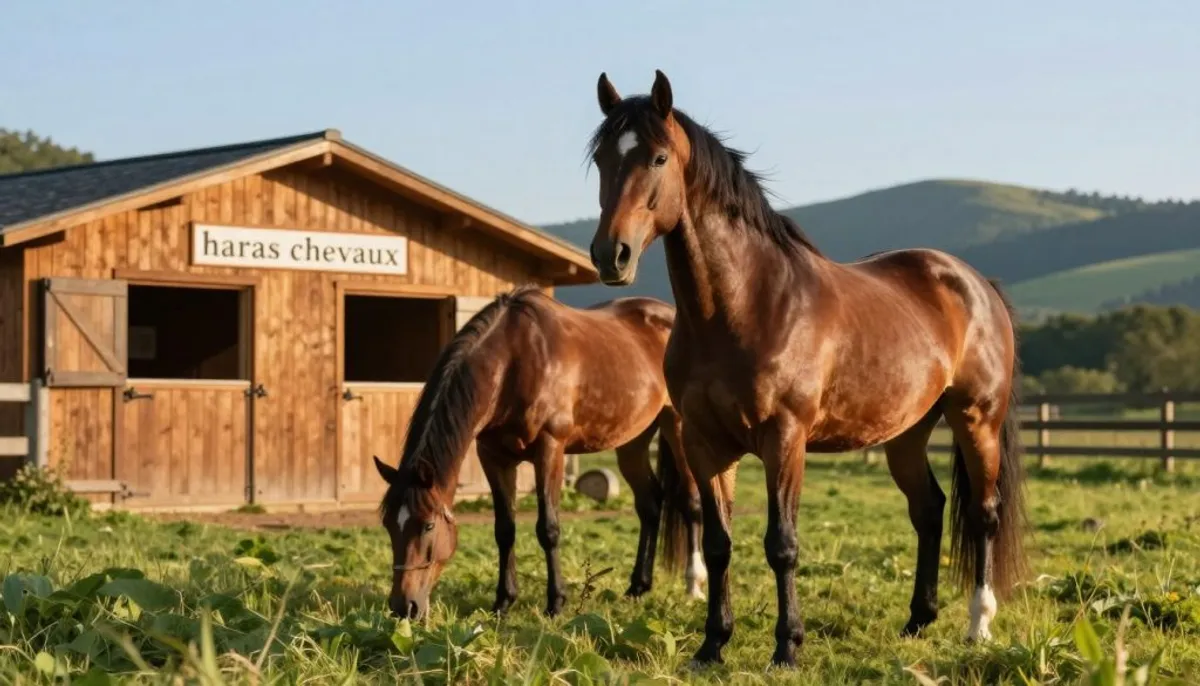
We will discuss horse breeding, from birth to the training of young horses. We will address reproduction, including artificial insemination available 24/7.
We will also discuss care, the necessary rest, and the facilities designed for the horses' tranquility. With 55 hectares dedicated to their well-being.
Come discover our boarding options for horses. Experience the atmosphere of our equestrian center and our pony club. We support riders and prepare them for show jumping and eventing competitions.
The details make the difference, especially regarding equipment and saddlery. Safety and comfort are essential.
Key Takeaways
- The horse breeding farms in France combine breeding, care, showcasing, and welcoming riders.
- Equestrian passion is built daily, with patience and respect for living beings.
- Equine expertise relies on observation, consistency, and responsible practices.
- Reproduction includes modern solutions such as 24/7 artificial insemination.
- Care, rest, and suitable facilities, including 55 hectares, support performance.
- Coaching, show jumping/eventing competitions, and equipment complete a holistic approach to horse and rider.
Overview of a horse breeding farm in France: between tradition, expertise, and passion
The horse breeding farms in France blend ancient traditions with modern methods. This harmony is observed in the fields, stables, and daily management. The Haras de Fleyres, located in Bretx near Toulouse, is known for its family atmosphere. It benefits from a preserved natural environment and over 40 years of experience.
In a good breeding farm, the small details matter a lot: tranquility in the stable, well-established routines, and regular care. This is where riding takes on its full meaning. Riders particularly appreciate this simple, clear, and secure environment.
What we call a breeding farm today: breeding, showcasing, welcoming riders
A modern breeding farm goes well beyond simple reproduction. It combines breeding, care for foals, and offers services for showcasing. Many also provide boarding or clubs, promoting ongoing equestrian practice.
The diversity of services helps riders stay connected to the horses. From young foals to competent horses, everything is based on regular training. In a breeding farm in France, welcoming visitors is just as important as the facilities.
Why patience and passion matter as much as technique
Horse breeding is both a science and an art. Selection, feeding, and care are crucial. Every decision can influence the horse's future.
Patience is essential to protect the horses and the team. A calm approach in riding results in more responsive horses. Passion is necessary in the long term, especially when faced with challenges like climate and health.
The main pillars: well-being, performance, natural setting, and transmission
A breeding farm in France focuses on the well-being and performance of horses. Actions such as ensuring clean water and monitoring hoof health are essential. The well-being of horses helps achieve better performances. Moreover, a well-managed natural environment promotes sustainability.
| Pillar | What we implement | What it changes for riders |
|---|---|---|
| Well-being | Daily outings, observation, care, stress management | Calmer horses, smoother work in riding |
| Performance | Progressive work plan, recovery, body condition monitoring | Clearer goals, fewer setbacks in progress |
| Natural setting | Maintained pastures, rotations, respect for land and seasons | More balanced horses, better daily condition |
| Transmission | Guidance, simple instructions, culture of safety | More autonomous riders, more precise and consistent actions |
Transmission also occurs through exchanges, whether next to the arena or in the stable. We learn to understand a horse, respect its tempo, and adapt our requests. Good breeding management creates harmony between horses, riders, and staff.
horse breeding farms: understanding quality equine breeding
In a horse breeding farm, nothing is done by chance. To have healthy and happy horses, we follow precise rules every day. These rules extend from the field to the stable.
We aim to produce horses that are mentally sound and physically strong. To achieve this, we use simple yet very effective methods.
Throughout the seasons, caring for horses requires attentiveness, calmness, and consistency. What matters is adjusting their diet, taking them out at the right time, and monitoring their health and posture.
From selecting breeders to birth: the foundations of equine breeding
We choose breeders with specific goals in mind. They may be intended for sport, leisure, or be versatile. We consider their physique, temperament, and health.
Next, we focus on key actions: good nutrition, time outdoors, and a stable routine. We also monitor weight, hoof care, and injury prevention.
Foaling: monitoring, assistance, and the first days of the foal
Foaling requires close attention. Before giving birth, the mare's behavior may change. It is important to pay attention to everything: appetite, posture, restlessness, etc.
During foaling, it is crucial to quickly identify any issues. If necessary, we assist, but with caution. Right after birth, we check if the foal is nursing well, is lively, and has its first stools.
The first days are critical for the foal's growth. We ensure it drinks well, receives good colostrum, and is calmly introduced to humans. Hygiene, fresh air, and monitoring temperature and movements are essential.
Foal showcasing stable: revealing potential from a young age
A showcasing stable helps the young horse learn without rushing. At the Haras de Fleyres, foals grow up with healthy habits, and we respect their pace.
Clémentine Cantin guides their education, which progresses clearly. We teach the foal to be a good horse: to wear a halter, walk on a lead, stand still, be groomed, and load into a vehicle. They receive regular care and are handled often, but briefly.
| Breeding stage | Main objective | Points of attention | Simple indicators to follow |
|---|---|---|---|
| Selection of breeders | Align the type of horse (leisure/sport) with a functional model | Model, mindset, background, consistency of bloodlines | Health history, performance consistency, observed temperament |
| Gestation | Support the mare without excess | Body condition, hooves, movement, vaccination and monitoring | Stable appetite, controlled weight, absence of lameness |
| Foaling | Ensure a safe and responsive birth | Monitoring, cleanliness, managing unforeseen events | Quick nursing, lively foal, proper delivery |
| First days of the foal | Launch regular and calm growth | Colostrum, digestion, limbs, mare-foal relationship | Sucking reflex, normal transit, stable posture |
| Showcasing the young horse | Build an easy, confident, and available horse | Short handling, outings, basic education | Calm leading, accepts grooming, loads without stress |
Reproduction and foaling: insemination centers and 24/7 support
Reproduction in horses must be done calmly, methodically, and at the right time. This reduces stress and improves results throughout the season. The Haras de Fleyres relies on a team ready at all times.
Artificial insemination center: why it’s an asset for breeding
Having an artificial insemination center on-site reduces travel and surprises. It allows for better monitoring of the mares' cycles and quick decision-making. This is very convenient for planning reproduction, especially with multiple mares.
The center at Haras de Fleyres, open day and night, is ready for intense moments. It offers a clean space, proven procedures, and constant checks. This gives breeders a sense of stability.
Experienced foaling assistance: safety, responsiveness, monitoring
Being ready 24/7 transforms the weeks leading up to foaling. At night, if a mare has problems, every second is crucial. Good monitoring and quick reactions are essential for safety.
Assistance during foaling is part of meticulous follow-up. From checking colostrum to observing the foal's first steps, every detail counts. Thus, reproduction is not just a date, but a series of important steps.
Traceability and declarations: integrating legal obligations into routine
In France, horse breeding follows strict rules, including traceability. It is necessary to handle birth declaration, identification, and health monitoring. These steps accompany the horse through all its care and changes.
If we pay attention to traceability from the start, everything goes more smoothly. The information remains clear from beginning to end. Quality certificates also enhance trust in the insemination center.
| Key Point | What it implies daily | What the breeder can better anticipate |
|---|---|---|
| Heat monitoring and checks | Regular examinations, quick decisions, consistent protocol | Insemination window, organization of care, availability |
| Monitoring the term | Rounds, observing signs, preparing the box | Prepared equipment, veterinary contact, emergency management |
| Declaration and identification | Data entry, document verification, updates | Compliance, clear history, facilitated exchanges |
| Hygiene and well-being | Appropriate bedding, clean space, gentle handling | Reduced infection risk, calmer mare, more stable foal |
Daily horse care: health, prevention, and rest
In a breeding farm, caring for horses involves simple yet regular actions. This consistency is key to their good health and well-being, regardless of the season.
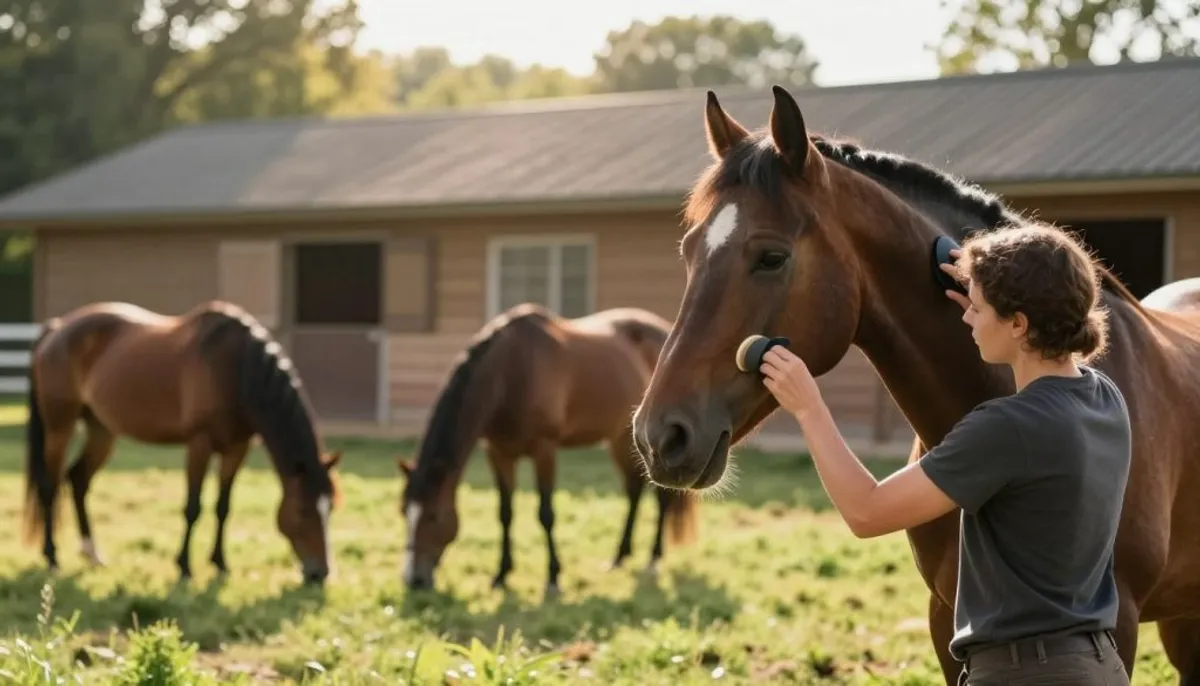
Following a horse daily allows us to notice even the slightest changes. If something changes, we see it immediately. This allows for quick and gentle action.
Care routine: observation, grooming, hooves, stress management
Upon arrival, we observe several things: alertness, appetite, water intake, droppings, and resting posture. A warm limb, a tense back, or an unmoving ear can signal a problem.
Grooming a horse involves removing dust and discovering sensitive areas. It is necessary to detangle gently and check for irritation under the girth or saddle pad.
Cleaning the hooves is essential: we monitor the frog, stones, and odors. With the help of the farrier, we ensure that locomotion remains good by adjusting trimming and shoeing.
To keep a horse less stressed, we maintain routines: fixed schedules, regular outings, social life, and shaded or sheltered areas. A relaxed horse recovers better and is more available for work.
Prevention: veterinary check-ups, parasites, common diseases
Veterinary visits are scheduled: vaccinations, dentistry, and assessments tailored to age and activity. An examination before competitions or after a dietary change helps avoid unpleasant surprises.
Managing parasites requires a methodical approach: fecal analysis, pasture rotation, and targeted deworming. This strategy also limits the development of resistance.
Common diseases are quickly detected in a clean and well-ventilated stable: cough, nasal discharge, fever, mild lameness. If necessary, we isolate the sick horse, disinfect shared equipment, and follow care in an orderly manner.
Care and rest: organizing recovery periods for longevity
Rest is as crucial as training. After a session, we plan for calm time, a light walk, and then gradual recovery. Especially if the effort has been significant.
It is good to alternate activities: a riding session, a light outing, then a day in the pasture. This rhythm preserves tendons and supports the horse's mental and physical well-being in the long term.
| Key Moment | Simple Action | What we monitor | Direct Benefit |
|---|---|---|---|
| Morning | Stable tour and observation | Appetite, water, attitude, limbs, droppings | Early detection, horse care more precise |
| Before work | Complete grooming + checking contact areas | Heat, swellings, small wounds, skin under the girth | Fewer irritations, comfort and availability |
| After work | Calm down, targeted shower if needed | Breathing, sweating, stiffness, back sensitivity | Better recovery, horse rest more effective |
| Every day | Cleaning and checking hooves | Stones, frog, odor, thrush, wear | Fewer abscesses, safer locomotion |
| Every month | Check with farrier | Hoof balance, conformation, adaptation to terrain | Stable footing, pain prevention |
| At fixed dates | Follow-up and veterinary prevention | Vaccinations, teeth, weight control, assessments by age | Fewer stoppages, more sustainable performance |
| Depending on the season | Parasite management | Analysis results, coat condition, body condition | More stable horse, reduced health risks |
Nutrition and growth: feeding foals and adult horse diets
The first weeks are crucial for the horse's nutrition. The mother's milk is essential as it provides energy and defenses. Alongside, we give the foal proteins, minerals, and vitamins in good quantities.
The key lies in gradualness. We start with quality hay, then slowly add concentrates. These steps help the young horse digest its food well without issues.
During rapid growth, supplements may be necessary for calcium and other minerals. Reverdy Equine Nutrition offers products suited for foals. The choice depends on each case.
Weaning is delicate. The dietary transition must be prepared carefully, offering regular meals. This approach reduces stress and minimizes the risk of digestive problems.
For adult horses, everything starts with fibers like hay or grass. Then, we adjust proteins and minerals according to the horse's needs. For those in sports, supplements may help, but always with expert advice.
| Profile | Daily ration base | Points of vigilance | Possible adjustments |
|---|---|---|---|
| Foal (birth to weaning) | Maternal milk, gradual access to high-quality hay, special growth concentrate | Balance of proteins/minerals, regularity of meals, hygiene of feeders | Equine nutritional supplements targeted if deficiencies are suspected or irregular forages |
| Young after weaning | Unlimited fibers, adapted concentrate, fresh water continuously | Slow transition, appetite, droppings, social stress | Split ration, reinforce mineral-vitamin intake according to the season |
| Adult leisure | Hay/pasture as priority, measured concentrate intake if needed | Overweight, lack of activity, fiber quality | More fibrous ration, simple mineralization to stabilize the adult horse diet |
| Adult sport | Fibers, modulated energy, quality proteins | Recovery, sweating, risk of acidosis if too much starch | Amino acids, vitamins and minerals, electrolytes: equine nutritional supplements adjusted to the schedule |
Equestrian boarding: box & pasture boarding, working boarding, and tailored solutions
Choosing equestrian boarding means opting for a safe, peaceful place adapted to the horse's well-being. The Haras de Fleyres offers customized care, with dedicated attention and a perfect natural setting. These elements are crucial for the horse's well-being and performance.
Box & pasture boarding: comfort, outings, daily management
Box boarding provides comfortable rest in a clean and well-ventilated environment. Managing outings is just as important as the facilities themselves. Additionally, pasture boarding allows the horse to move and interact with the environment, which is beneficial for its stress levels.
In a combined offer, the on-site team takes care of water, feeding, and adjusts everything according to the climate or the horse's physical condition. Daily monitoring checks appetite, droppings, movement, and minor injuries. Well-managed, these boardings minimize problems that could worsen.
Working boarding: guidance, progress, sports and leisure goals
This formula is intended for horses to be ridden or lunged professionally. The goal is continuous improvement, whether for fitness, maintenance, or preparation for specific objectives. Regular monitoring ensures visible progress, adapted to changes in the owner's schedule.
A good working boarding offers personalized sessions and rest days. It is important to monitor fatigue, commitment, and the horse's back health. With this approach, results improve regularly and without stress.
| Point to watch | Box boarding | Pasture boarding | Working boarding |
|---|---|---|---|
| Life rhythm | Secure rest, stable routines | Continuous movement, outdoor life | Alternating sessions and planned recovery |
| Monitoring | Easy daily control, quickly identified signs | Vigilance on body condition, pasture injuries | Monitoring fitness, session notes, and adjustments |
| Feeding & water management | Precise rations, controlled access to water | Variable grass, water secured according to the season | Rations adapted to effort, monitored hydration |
| Main objective | Comfort, safety, consistency | Well-being, relaxation, locomotion | Technical progress, availability, training framework |
Caring attention and natural environment: what an owner should check
It is advisable to carefully examine the place before committing: check the fences, shelters, stable ground in winter, and shade in summer. A serious boarding facility will clearly explain its procedures regarding outings, blanket management, and monitoring frequency. It is also important to know how they manage stress, especially for more sensitive horses.
Ensure also the balance between rest and work periods, as well as respect for the environment: pasture rotation, grass conservation, and maintenance of living areas. These aspects, though detailed, are essential for a positive long-term experience, whether in box boarding, pasture, or for work.
Infrastructure of a breeding farm: stables, pastures, and sustainable natural setting
The infrastructure of a breeding farm has a simple purpose: to allow horses to breathe, move, and relax. Good organization makes daily work more regular and care easier to manage. Additionally, a sustainable natural environment adds value, as the land and buildings together form an ecosystem.
Functional stables: ventilation, safety, essential equipment
Spacious and well-ventilated stables reduce dust and respiratory issues. Natural light is also important: it calms the horses and facilitates monitoring. Safety is essential, with wide corridors and sturdy doors.
In terms of materials, choosing durable floors like concrete makes cleaning easier. Treated wood walls resist moisture and impacts better. Automatic waterers, suitable feeders, and well-managed bedding save time without sacrificing comfort.
Installing rubber mats in the stalls reduces horse fatigue and improves their rest. Well-placed windows prevent cold drafts, reducing stress and improving the overall atmosphere.
Pastures and rotations: preserving grass, limiting overgrazing
Pastures are not just a place for horses to relax. They encourage movement, aid digestion, and promote socialization. Sturdy wooden or PVC fences minimize accident risks.
Practicing pasture rotation helps protect the grass and prevent overgrazing. This involves using plots in turn, allowing the grass to regrow. This management also promotes a sustainable environment, reducing erosion and improving biodiversity.
55 hectares dedicated to well-being and equine performance: space and serenity
With 55 hectares dedicated, space is a major asset. It allows for separating rest, fitness, and work areas. Thus, horses move better, and routines remain calm, even during intense periods.
| Key Point | Recommended choice | Direct benefit for the horse | Impact on management |
|---|---|---|---|
| Air and atmosphere | Ventilated stables, natural light, clear corridors | Fewer irritations, more relaxation | Simpler monitoring, more regular work |
| Floors and walls | Easy-to-clean concrete, treated wood, non-slip areas | Better stability, fewer slips | Quick hygiene, predictable maintenance |
| Equipment | Automatic waterers, suitable feeders, well-managed bedding | Reliable hydration, better meal distribution | Less handling, more effective checks |
| Stall comfort | Rubber mats, calming windows | Better quality rest, reduced stress | Fewer minor tensions, facilitated recovery |
| Outdoors | Pastures enclosed and visible, secure access | Movement, socialization, supported digestion | Fewer incidents, calmer outings |
| Plot rotation | Rotation of pastures with resting areas | Healthier grass, hooves on less degraded ground | Less overgrazing, more sustainable land |
Equestrian center and pony club: learning to ride in a safe environment
An equestrian center is perfect for anyone wanting to ride. It offers easy-to-understand basics and clear rules. People come here to progress calmly and enjoy time together.
Safety is essential here. It is considered in preparation, dressing, and how we approach the horse.
The pony club is great for starting, especially for children. The ponies are gentle and reliable, helping to build confidence from the start. Patience and respect are learned here.
At the Haras de Fleyres, everyone is welcome, whether you are a beginner or advanced. Instructors guide you step by step: how to sit, direct the horse, and maintain balance. The lessons are easy to understand, with simple instructions and exercises that follow your progress.
Learning doesn’t stop when you’re in the saddle. Before and after lessons, we closely observe the horse. This ensures its health and well-being. These good practices become routine for safe riding.
During the holidays, workshops allow for deepening knowledge. They last several days to better assimilate the basics and gain independence. It’s an excellent way to quickly advance in learning while remaining gentle and methodical.
| Moment at the equestrian center | Educational objective | Integrated safety habit |
|---|---|---|
| Preparing the horse | Understanding grooming, checking equipment, creating calm contact | Adjusted helmet, suitable tie knot, checking the girth |
| Work in the arena or outdoor ring | Establishing the basics for learning to ride: direction, balance, rhythm | Distances between riders, starting and stopping instructions, listening to the instructor |
| Care after the session | Calm down, identify discomfort, maintain comfort | Storing equipment, checking limbs, hydration, and walking |
| Workshops at the pony club | Reinforcing skills, gaining confidence, varying situations | Daily briefing, groups by level, reminders of rules on foot and in the saddle |
Riders and coaching: from discovery to competition goals
The journey begins with a first lesson and rises to more challenging lessons. Coaching helps establish clear benchmarks and reinforces them over time. Thus, we progress at a good pace, without rushing.
Beginners: basics of riding, confidence, and horse-rider relationship
Beginners have two main objectives: to feel safe and to build a strong bond with their horse. It is important to learn to understand the horse through its posture and gaze. Through this, riders learn to react well, even without mounting.
Learning the basics is crucial: how to hold the reins, maintain balance, and breathe correctly. A good coach quickly corrects small errors to prevent them from becoming bad habits. Progress relies on simple routines that can be practiced anywhere.
Support for experienced riders: technique, consistency, mindset
At a higher level, precision and consistency are essential. Experienced riders must have a clear plan for each session. To succeed in competition, one must not only master the technique but also be consistent.
It is also important to work on the mindset: managing stress, staying focused, and accepting less good days. In a breeding farm, the team around the rider is diverse for better support. This makes the coaching more effective in the long term.
| Objective | Point worked on | What the coaching sets up | Effect on equestrian progress |
|---|---|---|---|
| Regain confidence | Balance at walk and trot | Short instructions, exercises on large circles | More stable seat, steadier hands |
| Improve technique | Transitions, path, cadence | Repetitions on simple lines, immediate corrections | More available horse, finer aids |
| Prepare for a competition | Managing stride contracts | Progressive courses, visual markers, recovery | More consistency, fewer lapses in attention |
| Keep the pleasure | Variety and motivation | Alternating flatwork, outdoor work, gymnastics | Sustained engagement, better listening |
Workshops for young and old: progressing during school breaks
Workshops during the holidays are perfect for reinforcing what has been learned. They allow for calm practice and seeing progress day by day. Participants leave with clear goals and exercises to apply.
These workshops also help set specific goals, such as improving technique or staying calmer. By working hard while resting, we ensure better progress.
Equestrian competitions: show jumping, eventing, and showcasing sport horses
Equestrian competitions require preparation from the start. This begins with choices in breeding. A breeding farm can choose to focus on power for show jumping, or versatility for eventing. Showcasing sport horses guides everything from training to competition.
Breeding competition horses: focus on show jumping & eventing
For a show jumping horse, we look for responsiveness, respect for the bar, and good locomotion. For eventing, endurance, strong mindset, and ease in cross-country are also required. These criteria guide the choice of breeders and the education of young horses, step by step.
The Haras de Fleyres specializes in show jumping and eventing. They have performing horses and international successes. Their experience shows how to advance without rushing.
Showcasing: preparation, outings, building a record
Showcasing is based on a clear routine. We train, progress over obstacles, then participate in competitions. Each competition helps adjust details like cadence or stress management.
- Preparation: progressive work, suitable equipment, realistic goals.
- Outings: coherent tests, varied terrains, respecting the pace.
- Progression: analysis, adjustments, leveling up in show jumping or eventing.
The decisions made shape a consistent record. This reflects the duo's consistency, not just the good days. This makes a horse more reliable over time.
Excellence and results: the importance of a team and long-term follow-up
Success does not depend on a single effort. It requires the work of a team: farriery, veterinary care, stable management, coaching, and competition planning. Between competitions, it is essential to monitor locomotion and the horse's well-being.
The Haras de Fleyres boasts international successes after forty years. This shows that a high level is maintained with regular follow-up, even during busy periods.
| Work axis | Show jumping | Eventing | Impact on showcasing sport horses |
|---|---|---|---|
| Priority qualities | Explosiveness, balance, respect | Versatility, endurance, courage | Guides preparation choices and the type of equestrian competitions |
| Rhythm of outings | Short series, fine adjustments | More spaced cycles, enhanced recovery | Allows for consolidating experience without overloading |
| Points to monitor | Approaches, consistency, back flexibility | Breath, mindset, terrain management | Reduces the risk of underperformance and improves consistency |
| Building the record | Progressive height increase | Progressive levels in dressage, cross-country, jumping | Makes the sporting trajectory clear, readable, and sustainable |
Saddlery, equipment, and craftsmanship: invest in quality Made in France
In a breeding farm, the quality of saddlery is crucial. Quality equipment transforms the experience from the start. Its impact on balance, comfort, and durability is immediately noticeable.
Why equipment matters: horse comfort, precision, rider safety
A well-fitted saddle improves the horse's comfort. A properly placed bridle makes commands clearer. Reliable equipment, such as stable stirrups, increases rider safety.
Before purchasing, it is important to consider the intended use and finish quality. Maintenance is also important: well-cared leather, regular checks. This avoids regrettable choices, especially if the horse's needs change.
The French Saddlery: high-end products, made in France, unique
The French Saddlery prioritizes superior quality, with unique products. It highlights French craftsmanship in every detail, from leather selection to finishing touches.
Their goal is to provide a more precise and durable experience. Choosing this equipment also supports French craftsmanship without compromising performance.
Custom and limited series: the choice of the best French artisans, made from A to Z in France
For custom orders, the equipment is tailored to each rider and discipline. Limited series maintain a high quality level. The promise is made from A to Z in France, by excellent artisans.
| Need | What to check | Why it’s useful |
|---|---|---|
| Horse comfort | Gullet width, padding, wither clearance | Less pressure, better mobility, smooth movement |
| Precision of aids | Saddle stability, flap position, bridle adjustment | Softer contact, better control, clear instructions |
| Rider safety | Stirrups, buckles, stitching, condition of girths | Increased stability, reliable equipment, fewer risks |
| Durability | Leather quality, foam resistance, repairability | Long-term savings, better quality, reduced maintenance |
| Responsible choice | Origin, French workshops, compliance with local craftsmanship | A commitment to quality and Made in France |
Useful link: The French Saddlery
The French Saddlery offers personalized options or limited series. Comparing usage, adjustment, and maintenance shows the importance of quality. It makes all the difference, whether you are on horseback or on foot.
Conclusion
A breeding farm is not just a collection of boxes. It is a place where horses are bred, from the selection of breeders to foaling. Everything is monitored with precision. For reproduction, there is even an insemination center available all the time. This ensures more safety and speed.
The daily life of horses includes constant care, well-organized rest, and suitable food. Horses go from pasture to work according to their needs. With 55 hectares to manage, taking care of the pastures and changing the horses' places is essential for their well-being.
People are also important. In an equestrian center or a pony club, we learn the basics. Then, with coaching, we refine technique and mindset. After that, there are competitions, from show jumping to eventing. Here, success comes with method and patience.
Everything is connected: respect for the land, people, horses, and the desire to do well without rushing. The best thing is to come see for yourself. Talk to the team, check out the facilities. For equipment, choosing made in France like at The French Saddlery guarantees reliability and comfort.
FAQ
What is a "modern" horse breeding farm in France?
A modern breeding farm combines equine breeding, equestrian boarding, and equestrian center with a pony club. It blends tradition and horse well-being in an environment designed for them.
How is equine breeding "both a science and an art"?
Every decision has a long-term effect. It is necessary to carefully select breeders and manage stress. Experience and a trusting relationship with horses are essential.
What values structure a breeding farm focused on well-being and performance?
We must respect the land, people, and horses. Sustainable agricultural practices should be used. A healthy environment allows for health and performance without rushing.
What defines quality equine breeding, from selection to birth?
Quality depends on the choice of breeders and their follow-up. Good nutrition and regular attention to horses are also necessary.
How does foaling occur in a serious breeding farm?
It is closely monitored, with management of unforeseen events. The first days of the foal are critical, requiring vigilance and a calm environment.
What is the role of a showcasing stable for young horses?
It helps transform potential into real skills. It offers personalized guidance, like at the Haras de Fleyres (Bretx), under the direction of Clémentine Cantin.
Why is an artificial insemination center an asset in reproduction?
The 24/7 artificial insemination center at the Haras de Fleyres improves availability and follow-up.
What does experienced foaling assistance change in practice?
It ensures safety at every step. This protects the mare and foal by ensuring comprehensive follow-up.
What legal obligations govern equine breeding in France?
Breeding follows strict rules for the well-being of horses. This includes birth declaration and health monitoring.
Are certifications and accreditations useful for choosing a breeding farm?
Yes, they demonstrate a center's credibility. Even if they do not replace a visit, they indicate a level of quality.
What routine of horse care should be found daily?
An attentive routine prevents problems. It is necessary to observe, groom, care for hooves, and identify signs of stress.
What is the role of the veterinarian and farrier in a breeding farm?
They are essential for the health and well-being of the horse. The veterinarian manages health, while the farrier takes care of the hooves.
How does a breeding farm limit parasites and common diseases?
With veterinary visits, good hygiene, and careful management. The layout of spaces reduces the risk of diseases.
Why are "care and rest" considered a pillar?
Rest is crucial after work. It helps the horse stay motivated and perform longer.
What diet for a growing foal?
Maternal milk is the start. Then, we introduce quality hay and concentrates, rich in nutrients.
Are supplements useful for foals and young horses?
They are useful to ensure necessary vitamins and minerals. Reverdy Equine Nutrition offers special products for foals.
How to successfully wean without digestive issues?
A gentle dietary transition and careful monitoring. Stress must be minimized.
What ration for an adult horse, leisure or sport?
The base is hay, with adjustments for activity. Targeted inputs help the recovery of sport horses. Consult Equipédia IFCE for more info.
What does box & pasture boarding include in an equestrian boarding facility?
It offers a comfortable box and access to pasture. This includes organizing outings and daily monitoring.
What is a working boarding, and for what type of horse?
It is intended for horses to be trained, with personalized monitoring and progress.
What points to check before choosing an equestrian boarding facility?
Ensure the quality of care and respect for animals. A sustainable approach is crucial for horse well-being.
What infrastructure is essential in a breeding farm (stables and saddlery)?
Well-ventilated buildings, easy-to-clean floors, and an organized saddlery are essential for animal well-being.
How to manage pastures and rotations to avoid overgrazing?
Use pasture rotation and closely monitor the fences. This keeps the horses safe.
How do 55 hectares change the lives of horses in a breeding farm?
More space allows for more movement and a calmer life. This aids in breeding and sports preparation.
What does an equestrian center and pony club offer within a breeding farm?
They offer riding lessons for everyone in a friendly atmosphere. Progress is supervised and safe.
Are workshops during school breaks really effective?
Yes, they allow for rapid progress by consolidating skills. Workshops are useful for all levels.
What coaching for beginner riders, and what coaching for experienced ones?
Beginners learn the basics and communication with the horse. Experienced riders focus on specific goals, including equestrian competitions.
How does a breeding farm prepare sport horses for show jumping and eventing?
With careful preparation and regular outings. Show jumping and eventing require tailored training.
Why is showcasing key to building a record?
The accumulation of experience and a good mindset are crucial. This allows for constant and sustainable progress.
What concrete example illustrates this model in France?
The Haras de Fleyres, in Bretx, combines breeding, showcasing, and recognized expertise, in an exceptional natural setting.
Why do equipment and saddlery matter so much for the horse and rider?
A good saddle and a carefully chosen bridle provide comfort and safety. They are essential for good riding practice.
What does The French Saddlery offer, and where to find it?
A: The French Saddlery sells luxury products, made in France. Find unique pieces with them. Link: https://laselleriefrancaise.com.
Can a breeding farm also accommodate horses at rest or in recovery?
Yes, with an adjusted program and special attention. The well-being of the recovering horse is a priority.
What place do donkeys and draft horses have in a breeding farm?
They have their place in a respectful approach adapted to their needs. This contributes to the diversity and richness of the breeding farm.
RelatedRelated articles
- 16 Mar 2026·20 min readThe Most Beautiful Horse in the World: Top EquinesGeneral
 When we talk about the most beautiful horse, we see that beauty has many faces. It can come from a slender silhouette, a peaceful strength, or a color that shines in the sun. And sometimes, it’s a small detail that makes all the difference: a way of ...