
The life of horses in Europe is extending, thanks to better care. Quality nutrition, regular veterinary care, and frequent visits to the farrier and equine dentist improve their longevity. Their evolution from workhorses to pets also helps.
Today, horses often live up to 25 to 30 years. Preventive care helps them reach or even exceed 30 to 35 years. Ponies and certain breeds like Arabs and Iberians tend to live longer, unlike Thoroughbreds.
Sometimes, a horse's age is compared to that of a human. After their first 3 years, each year equates to three human years. So, a 20-year-old horse would be like a 60-year-old human. This helps in managing their daily lives better.
Older horses are mostly threatened by colic and arthritis. They can also suffer from heart diseases, respiratory issues, or tumors. Infections are less frequent. It is important to prepare for their retirement and anticipate future costs.
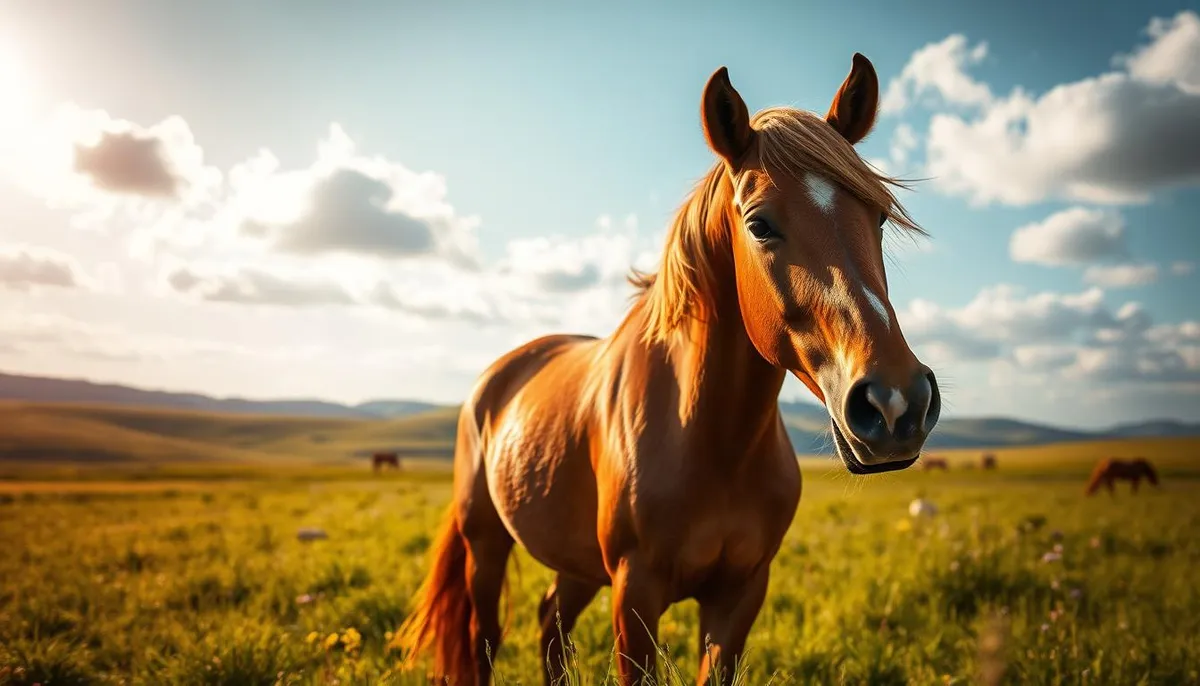
We will see how to increase the lifespan of horses with the right environment, suitable activities, and specific monitoring. You will discover practical tips for supporting a horse throughout its life.
Key Points
- The lifespan of a horse averages 25 to 30 years, with more and more horses reaching 30 to 35 years.
- Prevention (vaccinations, deworming) and suitable senior rations support horse longevity.
- Ponies and hardy breeds often live longer than Thoroughbreds and trotters.
- Useful benchmark: after 3 years, human equivalent age ≈ horse age x 3 (20 years ≈ 60 years human).
- Major risks for the elderly: colic, arthritis, heart and respiratory issues, tumors.
- Planning for retirement and budgeting throughout a horse's life is a owner's duty.
Average Horse Age and Longevity Records
The average horse age is higher than one might think. Quality care and good nutrition have increased their life expectancy. Today, it is not uncommon to see a riding horse live up to 30 years in France.
Horse Lifespan: 25 to 30 Years on Average
A horse generally lives between 25 and 30 years. Some exceed this average thanks to veterinary care and good management of their habitat. This positive evolution in their life expectancy has been observed since the 1990s.
Ponies, Draft Horses, and Hardy Breeds: Often Longer Lives
Ponies and certain hardy breeds live longer. The Fjord, Icelandic, and others benefit from slow growth and moderate activity. In contrast, Thoroughbreds and trotters may have shorter lives.
Documented Records: Old Billy (62 Years) and Other Remarkable Cases
Old Billy lived up to 62 years, which is a record. Other horses like Shayne and Badger reached 51 years. In Australia, Tango Duke lived 42 years. In France, a horse named Bayou lived 37 years, and Mokie reached 40 years in 2025.
Human Equivalent Age: Useful Benchmarks (e.g., 20 Years ≈ 60 Years Human)
To compare a horse's age to that of humans, multiply the horse's age by three after its 3 years. Thus, a 20-year-old horse is like a human of about 60 years. However, this comparison varies according to several factors, such as care and environment.
| Type / Example | Observed Age | Key Factors | Human Equivalent (approx.) |
|---|---|---|---|
| Riding Horse (France) | 30–35 years possible | Regular monitoring, balanced diet | ≈ 75–90 years |
| Hardy Ponies (Fjord, Icelandic, Shetland) | Up to +10 years vs large horses | Late maturity, moderate activity | ≈ 80–95 years |
| Old Billy (UK) | 62 years | Shire/Cob type, regular work life | 100+ years |
| Shayne / Badger (records) | 51 years | Caring management, robustness | 90–95 years |
| Tango Duke (Australia) | 42 years | Thoroughbred, careful monitoring | ≈ 80 years |
| "Wild" Horses | 15–20 years on average | Predation, scarcity, environmental stress | ≈ 50–65 years |
Factors Influencing Horse Life Expectancy
The life of a horse is shaped by several elements. Understanding these factors helps in taking better care of them. Their use, condition, and where they live play a significant role in their longevity.
Contextual Photography
Breed, Size, and Use (Sport, Leisure, Training)
Some horses, like ponies and Arabian Thoroughbreds, live longer. They mature slowly, and their average size helps. This makes their career less strenuous and prolongs their life.
Large horses and competition Thoroughbreds have a tougher life. Intensive work and a busy schedule affect their health. They may have a shorter life expectancy than other horses.
Living Conditions: Nutrition, Shelter, Pasture Management, and Stress
Access to water and good food is essential. Having shelter and clean space reduces their stress. These care aspects are important for their longevity.
Living in groups can be challenging for older horses. Therefore, it is necessary to choose their companions carefully. Taking care of these aspects helps keep horses healthy.
Regular Veterinary Care, Farriery, and Equine Dentistry
Good prevention and regular care are crucial. Farriery prevents several problems that can affect their longevity. It makes a significant difference in their lives.
Annual dental care is equally important. Good oral health helps the horse to eat better. This greatly supports their health as they age.
Environment and Gradual Physical Activity to Preserve Longevity
Regular exercise is beneficial for their health. It is essential to avoid stopping them abruptly after intense efforts. This helps maintain their health.
Taking horses out daily and varying exercises is important. A stable and active environment is key to a long life.
Horse Life Expectancy: Signs of Aging and Management Benchmarks
When a horse ages, it is crucial to understand them well. This helps to prolong their life. Early identification of aging signs allows for adjusting care. Thus, we support the horse's health and comfort without disturbing them.
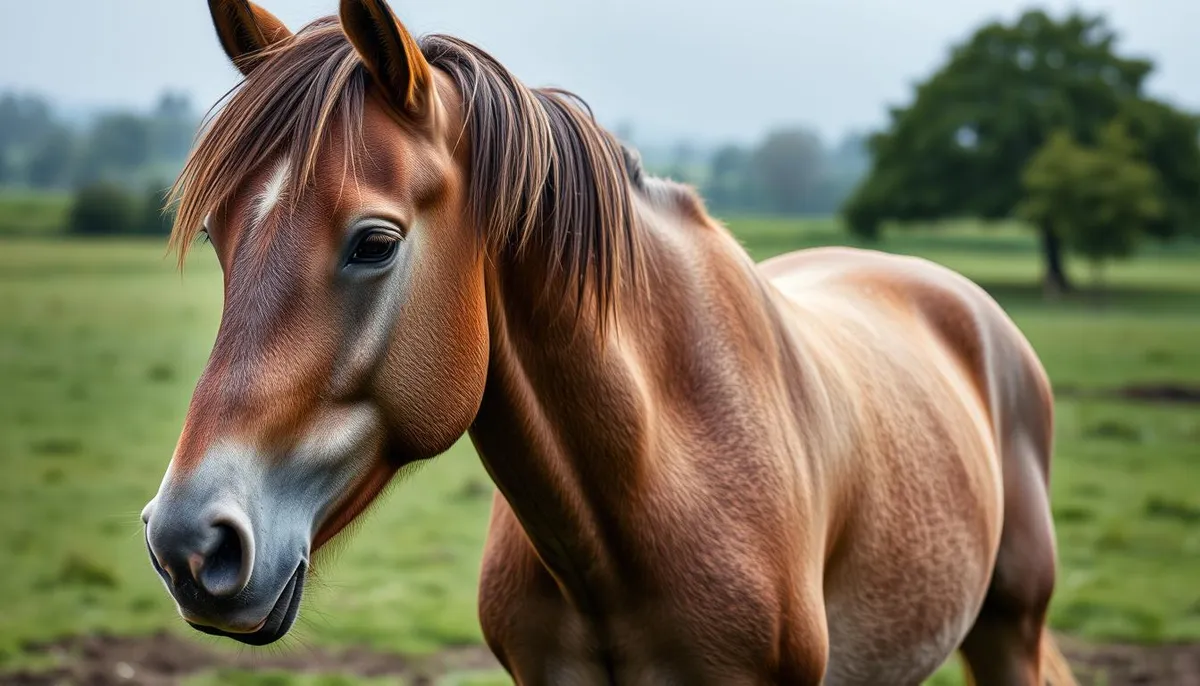
Close monitoring is essential, whether in the pasture or stable. Making small adjustments over time can greatly help. This has a positive impact on the horse's entire life.
Visible Signs: Sunken Back, White Hairs, Drooping Lower Lip, Worn Teeth
The horse's back sags, and its hips protrude more. Initially, it walks stiffly. But after warming up, it improves. White hairs begin to appear around the eyes and muzzle. Its coat becomes coarser.
Unusual winter hair growth can sometimes be observed. The lower lip may droop, and the teeth may wear down. Older horses can have protruding teeth. They also show signs like hollows above the eyes, less taut skin, and sometimes slight cloudiness of the eyes.
The horse tends to sleep more, reacts slower, and its senses are less sharp. Its digestive, respiratory, and cardiovascular systems become less efficient. All of this affects its longevity.
Common Pathologies: Arthritis, Colic, Cushing's Syndrome, Tumors
Arthritis causes stiffness and limping during work. Episodes of crises and remission can be seen. The risk of colic increases with age. Cushing's syndrome causes a shaggy coat and increased thirst.
Horses can also suffer from obesity and laminitis due to metabolic syndrome. Grays are often affected by melanomas and sarcoids. The liver and kidneys can deteriorate, leading to weight loss and decreased appetite. Vision declines, the immune system weakens, and respiratory problems may arise.
In older sport horses, there is an increased risk of heart problems. Regular veterinary monitoring helps prevent these issues.
Until What Age Can You Ride a Horse? Adjusting Activity According to Its Profile
There is no strict rule. It all depends on the horse's health and activity. For competition, many reduce intensity around 18 years; for training, around 20 years. For leisure, one can continue riding a horse well beyond 20 years, as long as it remains in good shape.
It is important to gradually reduce the duration and intensity of the activity. Emphasizing warming up and soft terrains is essential. Avoid stopping them from moving altogether, as this weakens them. Some horses, like Nobby, show that adapting activities to age is beneficial.
It is crucial to pay attention to recovery after exertion, stiffness at the start, and the quality of their movements. These are key points for properly caring for an aging horse.
Senior Nutrition: Quality Fibers, Minerals/Vitamins, Suitable Rations
It is important to carefully choose the food. Prefer quality hay and well-made silage. Favor easily digestible fibers and avoid too much straw or sugar-rich foods to limit the risk of colic.
Energy needs decrease with age, but the need for minerals and vitamins increases. INRA recommends a certain percentage of protein. For those losing weight, adding corn oil can be helpful.
Ensure that slower horses can eat peacefully. It is also beneficial to chop hay for those with dental issues. Specially designed foods for older horses are a good option. Regularly check their hydration and health status.
| Practical Benchmark | Key Observation | Management Action | Benefit for Horse Longevity |
|---|---|---|---|
| Starting Locomotion | Stiffness, short stride | Long warm-up, soft ground, shorter sessions | Less pain, better active horse life expectancy |
| Coat and White Hairs | Coarse coat, white areas around the eyes | Regular brushing, suitable blankets in winter | Thermal comfort, healthy skin |
| Dentition and Chewing | Worn teeth, food being spit out | Dental visits, chopped hay, senior rations | Better ingestion, fewer colics |
| Weight and Shape | Prominent withers/hips, weight loss | Digestible fibers, adding oils, monthly body condition monitoring | Stable energy, organ support |
| Hydration and Manure | Dry manure, drinks little | Warmed water, fibrous mash, salt lick | Fluid transit, reduced risk of colics |
| Signs of Cushing's | Shaggy coat, increased thirst | Veterinary assessment, sugar management, appropriate treatment | Better quality of senior horse life |
| Breathing During Exertion | Light cough, short breath | Limited dust, calm outings, dust-free hay | Better tolerated efforts, signs of horse aging contained |
Care to Prolong a Horse's Life and Optimize Its Well-Being
Caring for a horse means following a few simple but essential rules. It is important to focus on prevention, nutrition, exercise, and comfort. Every small effort can help extend its life.
Prevention Program: Vaccinations, Deworming, Dental and Hoof Monitoring
Stay up to date with vaccinations, established by your veterinarian, to prevent diseases. Conduct manure tests before deworming to use fewer medications.
Consult an equine dentist once a year to avoid mouth problems. Also, ensure that your horse's hooves are well cared for to prevent pain.
Start exercising slowly, gradually increasing intensity. In winter, ensure your horse has a warm place to protect itself from the cold.
Weight and Hydration Management: Monitor Chewing, Manure, and Access to Forage
Older horses easily lose weight and do not drink enough. Give them unlimited access to water and a salt lick. Monitor their weight and how they chew.
If the teeth are worn, cut the hay finely or provide alfalfa pellets. Separate slow eaters to reduce their stress.
Watch the manure and urine for any changes. If you see anything abnormal, call a veterinarian.
Adapting Life in the Pasture: Avoiding Food Competition, Companion Pairing
Feed dominated horses separately to reduce competition for food. Having a friend is good for morale and facilitates access to food.
A clean environment, dry shelter, and daily routine help keep your horse healthy. After losing a friend, closely monitor your horse to prevent it from deteriorating.
Comfort Equipment and Saddle Fit for an Aging Back
A well-fitted saddle and a comfortable pad are essential for a horse with a sensitive back. Have the equipment checked by a professional to avoid injuries.
Using suitable gear can reduce pain and keep your horse active longer, even as it ages.
Good to Know in France: Retirement, Shelters, and Owner Responsibility
There are places like the Pech Petit organization in the Lot for retired horses. Plan expenses for their well-being in advance.
Consider special insurance to cover health costs, accidents, and more. An owner's responsibility towards their horse is lifelong.
Shopping Tip: La Sellerie Française for High-Quality and Durable Equipment
La Sellerie Française offers equipment made in France, of superior quality. Good tack can truly enhance your horse's quality of life.
Investing in quality care, from harnessing to cushioning pads, makes all the difference for your horse's health on a daily basis.
Conclusion
Horses today live on average 25 to 30 years. But some, like ponies, live even longer. The record is held by Old Billy, who lived up to 62 years, proving that with good care, a healthy environment, and good genetics, horses can live long.
To help your horse live longer, follow a few simple rules. Ensure it has a fiber-rich diet, a dry shelter, and good hygiene. Do not neglect vaccinations, deworming, farriery, and dentistry. Add to this suitable physical activity and good stress management.
Look for signs of aging in your horse, such as a sunken back or white hairs. Be attentive to common health problems like arthritis or Cushing's syndrome. Adjust its activity and diet to the needs of older horses.
The owner's role is crucial for the longevity of horses. Anticipating retirement costs, choosing appropriate housing, and suitable tack are essential keys. In France, companies like La Sellerie Française offer quality equipment to support aging horses.
FAQ
What is the life expectancy of a domestic horse today?
The lifespan of a horse is 25 to 30 years on average. In France, it is common to see horses aged 30 to 35 years. This is thanks to better care, adequate nutrition, veterinary follow-up, and dental and farriery care.
Do ponies live longer than riding horses?
Yes. Ponies and hardy breeds often live longer. For example, Arabs, Iberian breeds, or Camargue. Thoroughbreds and trotters, subjected to more effort and stress, have a shorter life expectancy.
What are the documented longevity records in horses?
Old Billy from the UK lived up to 62 years. Shayne reached 51 years, as did Badger. Tango Duke lived 42 years, and Bayou lived 37 years in France. For ponies, Sancho lived 54 years and Steady Teddy 53 years. Mokie was the oldest living horse at 40 years in 2025.
How to convert a horse's age to human age?
Multiply the horse's age by 3 after its 3 years. For example, a 20-year-old horse would be like a 60-year-old human. However, the actual age can vary based on care, genetics, and environment.
What factors most influence a horse's life expectancy?
Several factors are important. For example, breed and size, use (sport, leisure, education), and quality of life. Prevention, such as vaccinations, deworming, farriery, and dentistry, is also crucial. Good physical activity and less stress help.
Do sport horses live shorter lives?
Yes, on average. Race or competition horses have shorter lives. This is due to intense training and stress. Leisure horses, on the other hand, have a more moderate workload.
Can "wild" horses really live 50 years?
No. They generally live 15 to 20 years in the wild. This is due to predators, diseases, and lack of food and water.
What signs indicate aging in horses?
A sunken back, prominent withers, and a protruding pelvis are signs. Stiffness in movements and white hairs around the eyes are also indicators. A coarser coat and worn teeth indicate the horse's age.
What pathologies are common in seniors?
In older horses, colic and arthritis are often seen. Heart and respiratory issues, along with tumors, are also common. Liver and kidney problems, as well as decreased immunity, can occur.
Until what age can you ride a horse?
There is no specific age. Competitors often ride until 18 years. For training, around 20 years. A healthy leisure horse can be ridden beyond 20 years, but with adapted sessions.
What diet should be prioritized for a senior horse?
Choose quality fibers and low sugar. For example, well-dried hay or semi-dry silage. Add vegetable fats if the horse is losing weight. And if necessary, chop the hay for those with worn teeth.
What care helps prolong a horse's life?
Follow a prevention program. Include vaccinations, reasoned deworming, and regular veterinary visits. Physical activity and good stress management are also crucial.
How to manage the weight and hydration of a senior?
Always have water available, and a salt lick. Monitor weight and meal quality. Ensure the horse can easily access forage, especially if it is dominated.
What good practices for the life in the pasture of an aging horse?
Feed the horse separately if it is dominated. Ensure clean and sufficient pastures. A shelter for bad weather and at night is essential.
What tack for an aging back?
Use a well-fitted saddle and a cushioning pad. A professional can help adjust the equipment over time.
What does retirement for a horse in France involve?
There are specialized centers, like Pech Petit. Retirement requires planning for costs and a good quality of life. Considering possible reorientations is important.
Where to find high-quality and durable equipment for a senior horse?
La Sellerie Française offers quality equipment made in France. Quality leathers and precise adjustments are key for the horse's comfort.
What are the main levers to prolong a horse's life?
Good nutrition and regular medical follow-up are essential. Farriery and dentistry, along with suitable physical activity, also help. A stable social environment improves quality of life.
What is the average age of a horse and how is it evolving?
The average age of a domestic horse is 25 to 30 years. This figure has increased due to advances in prevention and nutrition. The status of companion animals also plays a role.
RelatedRelated articles
- 12 Dec 2025·15 min readQuality Horsemeat – Your Complete GuideGeneral
 Welcome to this comprehensive guide on horse meat in France. It will help you understand everything about this meat from a nutritional, culinary, and industry perspective. It is an easy-to-follow guide for buying and cooking horse meat with confidenc...