
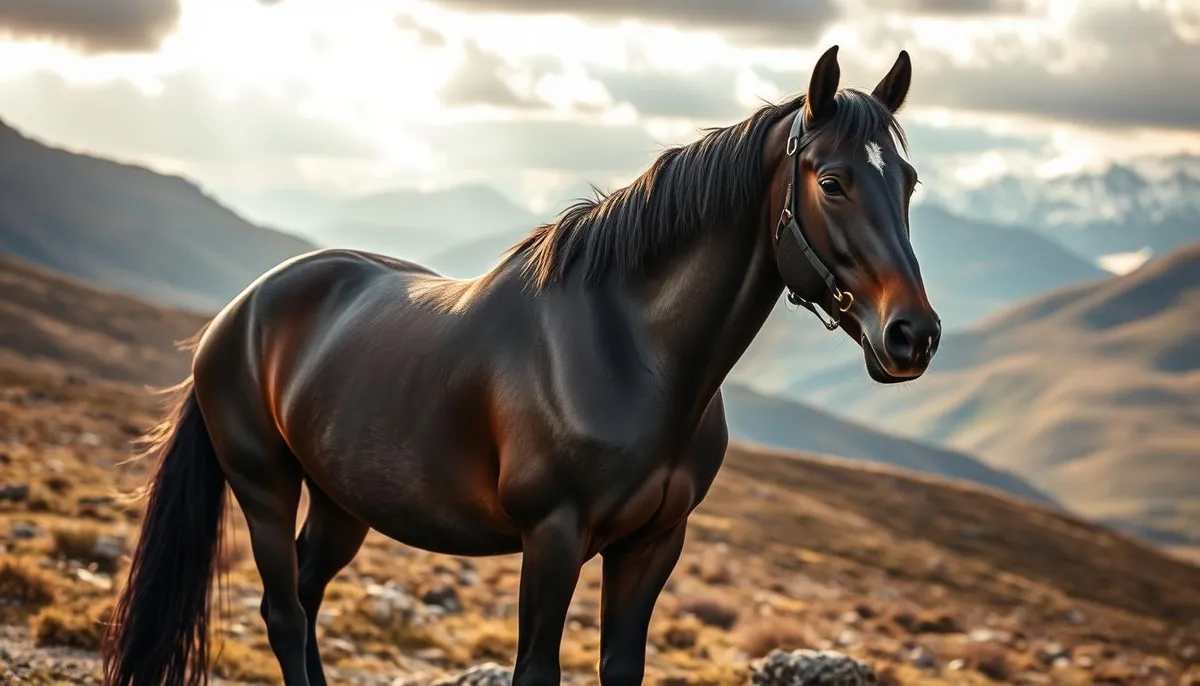
The Mérens horse is robust, simple, and reliable. It comes from the high valley of Ariège, near Andorra. This breed, also called Ariégeois, always has a black coat and a strong black horn.
It is calm and easy to handle. This horse is perfect for mountain trails thanks to its comfort, great endurance, and stability.
The Mérens is good for riding and as a light draft horse. They often measure between 1.45 m and 1.55 m and weigh between 400 to 650 kg. With the help of Mérens breeders, SHERPA, and the National Studs, this breed classified as "not threatened" by the FAO has evolved. Today, it is highly valued for leisure, driving, TREC, and vaulting.
This guide is intended for breeders and riders in France. It offers advice on choosing, training, equipping, and promoting this breed sustainably. It covers the management of transhumance to organizing treks of 4 to 6 hours.
Key Points
- French breed from the Pyrenees: black coat, straight profile, black horn.
- Mountain horse: rustic, calm, very sure-footed on rough terrain.
- Dual purpose: riding and light draft, size 1.45–1.55 m, 400–650 kg.
- Successful preservation: Ariège breeders, SHERPA, Tarbes Stud.
- Current uses: leisure, driving, TREC, vaulting, ecological maintenance.
- Mérens breeding guide: selection, purchase, equipment, and training.
- Target audience: Mérens breeders and riders looking for a reliable reference.
Origins and History of the Mérens Breed
Born on the high pastures of Ariège, this black horse grew up to the rhythm of the summer pastures, the cold, and the slopes. The DNA of domestic horses traces back to the Pontic steppe around 2000 BC. However, the local imagination often links the art of Niaux and the history of the Mérens. The merens breed still carries these mountains in its breath and assured walk.
From the Ariège Pyrenees to Modern Preservation
In the high valley of Ariège, nature created a compact, enduring, and solid horse. The first competitions in Ax-les-Thermes in 1908 helped organize breeding. After 1946, the cessation of military use and mechanization reduced their numbers.
In the 1970s, interest in leisure saved the breeding and revived the history of the Mérens.
From "Ariégeois draft horse" to leisure pony
From 1947 to 1975, they were called "Ariégeois Draft." The following decade saw the emergence of the "Ariégeois pony" and then "Mérens pony," thanks to the enthusiasm for ponies. In 1998, they were officially named "Mérens horse."
This change made the Mérens perfect companions for hiking and light driving.
Role of Local Communities and SHERPA
The SHERPA opened the stud book in 1947, supervised by the National Studs. In 1948, Lucien Lafont de Sentenac helped register the first stallions at the Tarbes Stud. In the 1970s, Michel Vidal in Saint-André promoted the Mérens for leisure.
The communities in Ariège revived breeding. In Rhône-Alpes, the SHERPA branch, led by Laurent in Besse en Oisans since 2009, has strengthened the breed's recognition.
Exports and Dissemination: Réunion, Italy, Netherlands, Rhône-Alpes
The Mérens dissemination accelerated in 1977 with the introduction of the breed to Réunion, followed by breeding starting in 1980. The Netherlands imported their first Mérens in 1983; Italy followed. In the Rhône-Alpes region, treks between 1500 and 2400 meters showcase their endurance.
Between 1975 and 1985, their numbers doubled. This shows that the history of the Mérens extends beyond Ariège while remaining rooted in its origins.
Mérens Characteristics: Morphology, Coat, and Temperament
The Mérens charms us with its simple and robust shape. This black horse, hailing from the mountains, possesses ideal qualities. These are the qualities that breeders and users seek.
Height, Weight, Profile, and Limbs: The Ultimate Mountain Horse
Mérens measure between 1.45 m and 1.55 m. They weigh from 400 to 650 kg. Their head has a straight profile, with a strong and short neck.
Their legs are fine with hard black hooves. They have broad feet that ensure stability and agility in high mountains. This makes them perfect for riding and light draft.
Mérens Coat: Always Black, Mane and Horn Black
The coat of the Mérens is always black, as are their mane and hooves. This uniformity highlights their distinct identity. It also helps to easily recognize them in competition and breeding.
Without white markings, this deep color emphasizes their muscular silhouette.
Character: Calm, Docile, Sure-footed, and Rustic
The Mérens is known for its calm and reliable character. They thrive well in herds and semi-freedom. This enhances their adaptability and sure-footedness.
They are also very enduring. The Mérens can accompany hikes of 4 to 6 hours in the mountains. This appeals to hikers and families.
Riding Horse and Light Draft Horse: Natural Versatility
The Mérens is versatile, performing well under saddle or in harness. When ridden, they are comfortable and at ease. They are also capable of pulling light loads.
There are two types of Mérens: one rustic and stocky, the other more athletic and lively. Both share the same black coat and unique characteristics of the Mérens.
Mérens Horse Breeding in the Mountains: Practices and Well-being
In Ariège and nearby mountain ranges, Mérens horse breeding relies on a natural approach. They become calm, resilient, and reliable horses. Breeders opt for outdoor living, daily walks, and careful observation of the horses.
Semi-Freedom Life and 6-Month Summer Pasture: Learning the Mountains
After weaning, many horses spend about six months in Mérens summer pastures. Between 1500 and 2400 meters altitude, in the Pyrenees or Oisans, they become more enduring. This method enhances their independence and well-being, with ample space to graze and a natural rhythm of life.
Transhumance, Herd, and Foal Socialization
Transhumance defines the season and strengthens the bond between horses. The young learn to live in groups and respect humans. This leads to peaceful, easy-to-handle Mérens, perfect for long hikes, whether in Rhône-Alpes or Ariège.
Two Breeding Orientations: Rustic Type vs. More Athletic Type
Rustic Mérens are sturdy, suitable for light work and ecological grazing. Athletic Mérens, developed since the 1980s, are ideal for driving, TREC, and endurance events. But in all cases, breeding remains deeply connected to the mountains.
Nutrition, Tack, and Harnessing Adapted to Elevations
Their diet is adjusted to the efforts at high altitude: quality forage and minerals, with constant access to water. For equipment, an English saddle fitted with panniers is used to distribute weight well. The harness includes a martingale and sheepskin for comfort and stability on slopes.
These dietary and equipment practices help during transhumance and summer pastures, improving the well-being of the Mérens. All this creates a harmonious system, adapting breeding and training to the specifics of the mountains.
Uses: Driving, TREC, Vaulting, and Ecological Maintenance
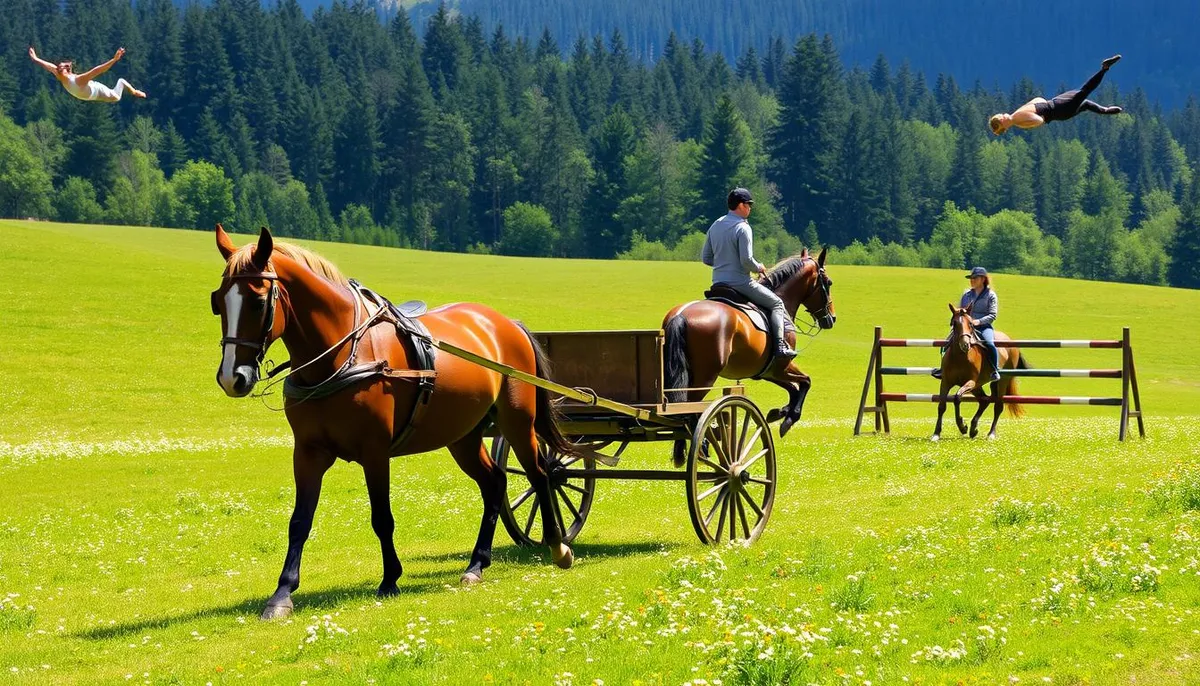
The Mérens is a versatile and reliable horse. It is comfortable in leisure riding as well as in sports. When used in Mérens driving, its strength and maneuverability make it perfect. It is ideal for strolling in the city or on hilly paths.
In competitions, its ability to remain consistent and regular is essential. Breeders from the Alps and Ariège particularly appreciate this quality. They test it in competitions where endurance and regularity count.
In TREC, the Mérens shows its reliability. It easily crosses bridges, fords, and slopes. Long hikes of 4 to 6 hours pose no problem for it. And it remains attentive to the terrain, which riders greatly appreciate.
They also value its ease of care, saddling, or watering during breaks. This makes it even more suited for leisure riding.
In circle vaulting, its stability is a major asset. Its calm allows vaulters to perform their figures without issue. Moreover, its natural balance helps absorb movements. This skill is acquired through well-thought-out training.
The Mérens also contributes to ecological maintenance. It helps keep high-altitude moors and clearings open by reducing brush, thus preserving landscape diversity. Mountain municipalities and equestrian centers choose it for this capability.
For varied use, the Mérens excels in all areas. It is perfect for long outings, the technical challenges of TREC, and the finesse of circle vaulting. Its role in ecological maintenance is also crucial. This diversity of activities strengthens the bond between the rider and their horse, rooting a lasting relationship with nature.
merens horse: purchase, selection, and price
Before buying a Mérens, a precise list is needed, and future use must be considered. It is important to choose a gentle, reliable horse that meets breed standards. Think about how you will use it, your terrain, and the time you can dedicate before making a choice.
Choosing a Foal, a Broodmare, or a Gelding
Foals born in the mountains adapt quickly to group life. Check their adaptation, the quality of their conformation, and their compliance with the standard: height between 1.45 and 1.55 m, black color, straight head, black mane and hooves.
To choose a broodmare, look at her family history and her previous foals. If you prefer a gelding, look for a horse that is already trained, calm, and ready for rides. For all types of horses, consider their temperament, way of moving, and carrying capacity.
Mérens Price: Factors Influencing Cost (age, training, abilities)
The price of a Mérens horse varies depending on its age, training, and special skills like trekking. Its lineage, competition successes, and location (such as Ariège or Réunion) also play a role in its price.
A horse accustomed to the mountains and capable of multiple tasks will cost more. Don't forget to budget for trying it out, transporting it, and its initial care after purchase.
Stud Book, Approved Stallions, and Compliance with Standards
The Mérens stud book is managed by SHERPA and follows the rules of the National Studs since 1947. Always ask to see the horse's papers, performance, and health history.
If you are considering breeding, choose a recognized stallion. Some breeders offer several options. Aligning with the Mérens stud book with a recognized stallion ensures the quality of the offspring.
Outdoor Trial: Assessing Sure-footedness and Balance
Test the horse on varied terrain to see how it behaves. Pay attention to its stability, how it breathes, and how it recovers from exertion while walking.
During a 4 to 6-hour hike, assess its endurance, reaction to stimuli, and calmness in the face of obstacles. Ensure it accepts its equipment well, such as the martingale and panniers. This will help you better choose your Mérens and understand its price.
Training and Equipment Tips for the Mérens Breed
The Mérens is a sober and enduring horse. It progresses quickly with structured step-by-step training. It is important to have a horse that is ready and comfortable outdoors, with appropriate equipment for trekking.
Preparation for Trekking and Driving Work
Vary the training by alternating climbs, obstacles, and different terrains. This strengthens the horse's breath, back, and engagement. For driving, focus on maneuverability, changes in pace, and precise stops.
Try treks at altitude, between 1500 and 2400 meters, gradually increasing the load. Alternate activities like hiking and driving to balance the Mérens' mental and physical fitness.
Tack and Comfort: Martingale, Panniers, Sheepskin Liners
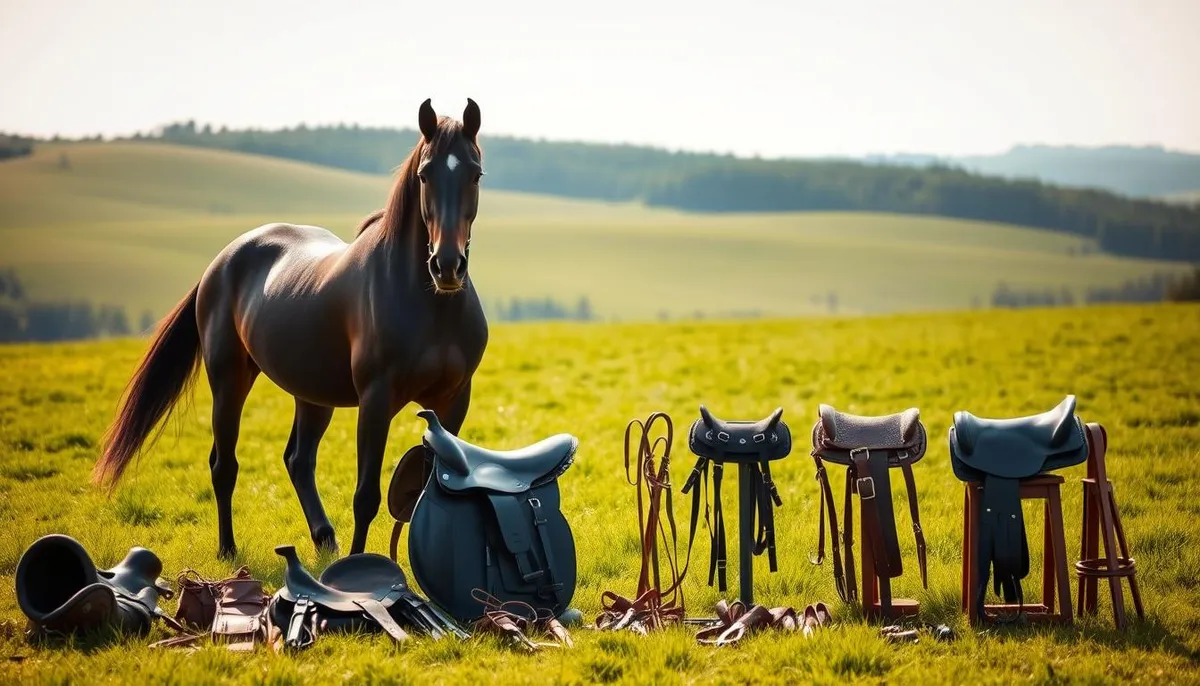
In the mountains, an English saddle with canvas panniers is recommended. Use a martingale for stability on slopes. Sheepskin liners reduce friction.
It is crucial to check the saddle fit daily. Good tack protects the horse's back and extends its career, especially with mountain equipment.
Work Rhythm in the Mountains: 4 to 6 Hours in the Saddle
During a hike, plan for 4 to 6 hours on horseback. Also, be prepared to walk alongside in difficult areas. The rider should be comfortable at all three gaits and have good balance.
Organize the effort: start slowly, then intensify, and finish calmly. For multi-day treks, plan regular stops in the shade.
Daily Maintenance: Grooming, Hydration, Nutrition
It is essential to be self-sufficient: groom, tack, and untack the horse, and check its feet and back after each outing. Monitor hydration closely and adjust nutrition based on activity level.
Whether in summer pastures or on the move, check the horse's sweating, mucous membranes, and appetite. A simple routine ensures good recovery for the Mérens.
La Sellerie Française: High-end Equipment 100% Made in France
La Sellerie Française offers equipment entirely designed in France: saddles, bridles, martingales, panniers, and protections. Their quality, traceability of materials, and durability are perfect for mountain equipment.
Their premium range, custom-made or in limited edition, is ideal for challenging terrains. It is an excellent choice for secure, comfortable, and high-performing trekking.
Conclusion
The Mérens, this small black horse from the Ariège Pyrenees, has managed to withstand the test of time. Breeders and SHERPA have saved it, benefiting from the enthusiasm for leisure riding. Today, it shines as both a saddle horse and a light draft horse. It is renowned for its reliability, robustness, and versatility. These qualities make it an ideal companion, useful in TREC, driving, vaulting, or for ecological maintenance.
Raised in semi-freedom, the Mérens is accustomed to transhumance and six-month summer pastures. This lifestyle gives it remarkable endurance and excellent sure-footedness. Even long hikes pose no problem for it. In breeding, there are rustic horses for mountain work and more athletic horses for competitions. But all share great serenity and a confident gait.
When purchasing a Mérens, it is advisable to choose an animal registered in the SHERPA stud book. It is important to prioritize approved stallions with clear compliance to the standard. Testing the horse outdoors is crucial to assess its balance and capabilities in riding or driving. Its reputation extends to Réunion, Italy, the Netherlands, and the Rhône-Alpes regions, reflecting its quality and sporting appeal.
For equipment, good harnessing adapted to the terrain preserves the horse's back and ensures its longevity. High-quality products, like those offered by La Sellerie Française, make its daily life more pleasant. For French riders and breeders, the Mérens remains a true partner. It symbolizes mountain breeding that respects traditions, combining performance and ecological commitment.
FAQ
What is a Mérens horse and where does the Mérens breed come from?
The Mérens horse, nicknamed Ariégeois, comes from Ariège, near Andorra. It is a mountain horse, versatile and robust. In the 1970s, thanks to the efforts of breeders and SHERPA, as well as the rise of leisure riding, this breed was saved.
What are the essential Mérens characteristics (size, weight, morphology)?
Generally, a Mérens measures between 1.45 m and 1.55 m at the withers and weighs from 400 to 650 kg. It has a head with a straight profile, strong limbs, and very solid feet. These feet, with their black horn, are perfect for rough terrain.
Is the Mérens coat always black?
Yes, the coat of the Mérens is always black, including the mane and horn. This uniform color is an important distinguishing feature of the breed, highly valued in competitions and breeding.
Is the Mérens breed a draft horse or a riding horse?
The Mérens is used both as a saddle horse and a light draft horse. It excels in hiking, TREC, vaulting, and driving. Its versatility makes it a great ally for leisure and work.
How is Mérens horse breeding practiced in the mountains?
The Mérens live in semi-freedom and spend about six months a year in summer pastures. Their herd life and transhumance make them enduring, sure-footed, and calm, perfect for the mountains.
What are the two current breeding orientations?
There is a rustic, stocky type, raised in semi-freedom, ideal for draft work and ecological maintenance. And a more athletic type, selected for dynamic activities like TREC and competition driving.
What disciplines are best suited for the Mérens?
The Mérens shines in mountain hiking, TREC, leisure driving, and ecological maintenance through grazing. Its endurance and sure-footedness at altitude are clear advantages.
What saddle and harnessing advice for a Mérens mountain horse?
Opt for a suitable English saddle, panniers, a martingale, and sheepskin liners. It is important to check the fit daily to protect the horse's back and shoulders.
How to choose a Mérens when buying (Mérens purchase)?
Check if the horse meets the breed standard and observe its socialization and ability to live in a herd. Test its reactions outdoors to assess its balance and temperament.
What is the Mérens price and what does it depend on?
The price depends on age, level of training, specific abilities, genealogy, and location. Factors include experience in trekking, TREC, driving, and competition successes.
What guarantees does the Mérens breed stud book offer?
Managed by SHERPA, the stud book guarantees traceability and compliance with the breed standard. Before buying or breeding, check the horse's registration, lineage, and the use of approved stallions.
How to prepare a Mérens for trekking and driving work?
Vary the terrains, work on maneuverability, and gradually increase the load, especially at altitude. This strengthens the horse's breathing and musculature.
What work rhythm do you recommend in the mountains?
Plan outings of 4 to 6 hours, with walking phases for difficult passages. The rider must manage gaits, hydration, and the horse's recovery.
What good daily maintenance practices should be adopted?
Complete grooming and foot care are essential. Be careful when saddling and unsaddling. Adjust nutrition and water based on activity level.
Where is the Mérens breed present outside of Ariège?
The breed has spread to Réunion, Italy, the Netherlands, and the Rhône-Alpes region. These places value hiking, driving, and mountain competitions.
What high-end equipment do you recommend for a Mérens in rough terrain?
La Sellerie Française offers quality equipment, tailored to the needs of mountain horses. This includes saddles, martingales, panniers, and sheepskin protections.
Is the Mérens suitable for leisure riders?
Yes. Thanks to its calmness, gentleness, and versatility, the Mérens is perfect for long hikes at altitude and for leisure activities.
Can the Mérens contribute to ecological maintenance?
Absolutely. By grazing, the Mérens helps keep mountain environments open by clearing brush, thus promoting sustainable maintenance of alpine pastures.
RelatedRelated articles
- 30 Dec 2025·9 min readJappeloup: French Equestrian LegendGeneral
 Horses change history. Jappeloup is one of them. This remarkable show jumping horse has left a lasting impression. With immense courage and a determined French rider, Pierre Durand, he revolutionized equestrian competitions. Jappeloup was born on Mar...