Equestrianism is much more than just a sport. It is about being with an animal partner. It is for everyone, even those with disabilities. It helps to be part of a group and to grow personally.
This sport has a strong impact on health. It helps to move better and feel more confident. It is really good for those in a disability situation.
Main ideas to remember:
- Adaptive riding is an inclusive sport accessible to all profiles of disability.
- It provides numerous therapeutic benefits, both sensory, motor, and psychological.
- The French Equestrian Federation works to promote the integration of people with disabilities.
- Paralympic dressage highlights the excellence of riders with disabilities.
- Riding centers adapt to welcome a diverse audience and promote inclusion.
A unique activity combining horses and inclusion
Adaptive riding is special because it connects horses with social inclusion. Horses are wonderful partners for those with disabilities or vulnerabilities. Their nature makes them perfectly compatible with these individuals.
The horse, an ideal partner for inclusion
The mediating horse is crucial for inclusion. It loves to live in groups and interact with people. As a prey animal, it is very sensitive to everyone's emotions. This sensitivity helps individuals who may be autistic, experiencing burnout, or seeking to accept their disability.
To coach executives in companies, equine mediation is popular. This type of coaching is done on foot, in freedom. Thus, everyone can participate, whether rider or not, without any discrimination.
An accessible practice for everyone, regardless of disability
In France, over 150,000 people with disabilities attend riding centers. Many engage in equine mediation, but not all. Adaptive riding offers them the chance to ride horses.
The therapeutic benefits of adaptive riding
Adaptive riding, known as equine therapy, goes beyond sport. It provides benefits for people with various disabilities, including Alzheimer's.
Alzheimer's patients show a new side when in contact with horses. Despite their difficulty in feeding themselves, they spontaneously brush the horses. This creates a special bond without words.
This form of riding also helps improve rehabilitation and motor skills in individuals with disabilities. Through practice, riders improve their posture. They feel better in their skin. Caregivers discover unexpected skills in these individuals.
For Alzheimer's patients or individuals with disabilities, adaptive riding is a space for freedom and expression. It enhances their physical and mental well-being.
| Benefits of adaptive riding | Details |
|---|---|
| Improvement of posture | Patients gain in support and self-esteem |
| Stimulation of rehabilitation and motor skills | The practice of riding allows for working on coordination and movements |
| Establishing a connection with Alzheimer's patients | The horse becomes a communication partner without the need for words |
Adaptive riding has a strong therapeutic impact. It gives disabled individuals a place to thrive and progress.
Adaptive riding: much more than just a sport
Adaptive riding is not just a sport. It brings many benefits. It helps people feel better, move, be independent, and confident, especially those with disabilities.
Sensory and motor stimulation
This activity helps the senses in several ways. Touch comes into play when petting the horse. The sounds and scents of the stable engage the hearing and smell. The eye is also very engaged. It observes the animal and looks for references. Physically, riding requires a light muscular effort. This improves balance and the way of moving.
Development of autonomy and self-confidence
In addition to physical benefits, adaptive riding helps mentally. Horses do not judge, so people feel free. This helps to be more independent and confident. Calming down to talk to the horse also helps control emotions. This is useful for daily life.
This practice offers so many benefits. It is a complete activity. It boosts the mental and physical health of those with disabilities.
Equestrian activities for all levels
The world of horses offers more than 32 activities. If you enjoy riding, are looking for activities for your team, or are simply curious, there is something for you. You can, for example, do show jumping, go for rides, or learn to communicate with a horse. The options are varied.
From animal mediation to high-level sport
Horses are used to help people at all levels. For example, they can help individuals feel more autonomous or gain confidence. For these reasons, they are also used in therapy. Additionally, there is paralympic dressage, a equestrian discipline for people with disabilities, showing that everyone can benefit from riding.
| Activity | Description |
|---|---|
| Equine mediation | Using the horse as a therapeutic support to develop autonomy and self-confidence. |
| Paralympic dressage | Paralympic equestrian discipline allowing riders with disabilities to compete at a high level. |
| Adaptive equestrian activities | Practice of equestrian activities such as show jumping, driving, or trekking, adapted to all levels and situations of disability. |
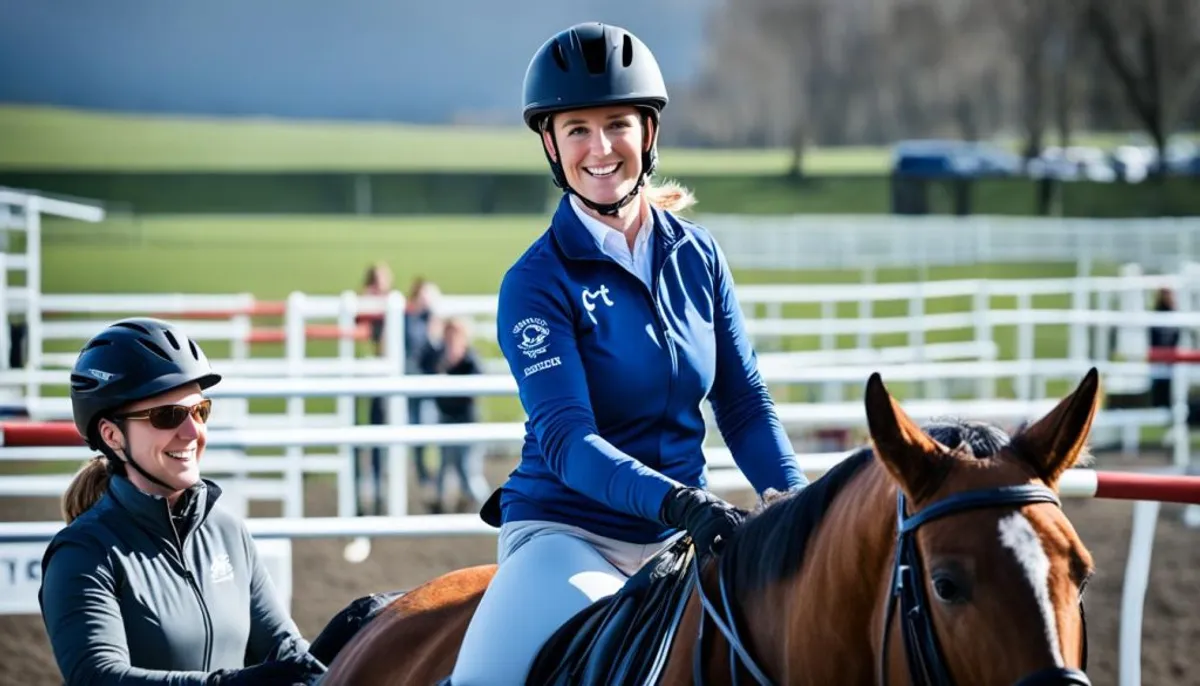
No matter your level or if you have a disability, the world of horses is open to all. You can simply go for a walk in nature or participate in competitions. There is always an adapted activity to experience something unique with horses.
The French Equestrian Federation, a driver of inclusion
The French Equestrian Federation (FFE) works hard to include everyone. It wants riding to be open to all, including those with disabilities.
The Equi Handi Club label
The FFE created the Equi Handi Club label to help. This label makes it easy to find riding centers open to all, including those with disabilities.
- The Equi Handi Club label means that the center has everything needed to accommodate people with disabilities.
- These centers offer various equestrian activities adapted. This ranges from simple rides to sports like paralympic dressage.
- It is easier for people with disabilities to choose where to go to practice riding, thanks to this label.
Thanks to this label, adaptive riding is better known and accessible. This helps to include people with disabilities in the world of horses.
Paralympic dressage, the paralympic discipline of riding
Paralympic dressage stands out in top-level riding. Unlike classical riding, the mental aspect takes precedence over physical strength. Paralympic riders express their talent through the exceptional relationship with their horse.
They show remarkable delicacy with precise gestures. These movements are the result of intense efforts and a strong connection with the animal. Paralympic dressage demonstrates that disability does not limit equestrian excellence.
| Discipline | Level of Difficulty | Accessibility |
|---|---|---|
| Paralympic dressage | Very high | High |
Paralympic dressage celebrates riding without borders. It embodies a challenge taken on with passion and determination by riders. Thus, it inspires those who seek to surpass themselves, with or without disabilities.

Opening the doors of riding centers to all
Accessibility is crucial for everyone to be able to ride, even if they have a disability. This is a major goal of the French Equestrian Federation (FFE), which works hard. It implements measures so that everyone can go to a riding center.
Adapted facilities and supervision
The FFE launched the “horse disability, care, and inclusion” program to make riding centers more accessible. It uses special adapted equipment, such as easy-to-hold reins, to make riding safe. There is also specialized staff to assist and support those with specific needs.
This makes it possible for everyone to practice riding, regardless of their needs. There are access ramps, adapted horse boxes, and tailored follow-up. All of this overcomes difficulties and makes the riding experience truly enjoyable.
Accessibility, adapted infrastructure, and the right supervision are essential to include everyone in riding centers. Thanks to the actions of the FFE, riding becomes truly accessible to all. It is a sport open to everyone.
Conclusion
Adaptive riding is not just a sport. It is a unique experience that blends inclusion and the therapeutic power of the horse. The horse helps a lot, increasing autonomy and self-confidence. It works for everyone, regardless of disability.
For a long time, the French Equestrian Federation has been helping to make this activity accessible. It implements labels, personalized support, and new programs. The goal is to offer everyone, including those with disabilities, the chance to enjoy horse-related activities. This ranges from high-level sports to paralympic dressage, a paralympic discipline.
In short, adaptive riding opens the doors to inclusion and well-being. All thanks to the charming horses and the support of the French Equestrian Federation.
FAQ
What is adaptive riding?
Adaptive riding is not just a sport. It is a unique activity combining horses and inclusion. The horse, by its nature, offers many therapeutic benefits. It helps develop autonomy and self-confidence, regardless of disability.
What qualities does the horse have that make it an ideal partner for inclusion?
The horse, a social and prey animal, prefers to live in groups. It always questions its surroundings. As a mirror, it reflects our emotions and fears.
It is ideal for accompanying those who suffer, as it does not judge. It lives in the present moment.
Is adaptive riding accessible to everyone, regardless of disability?
Yes, adaptive riding is for everyone, including those with disabilities. There is special equipment and professional supervision to ensure accessibility.
What are the therapeutic benefits of adaptive riding?
Adaptive riding provides benefits in sensory awareness. It stimulates touch, hearing, smell, and vision. Psychologically, it also works on education and strengthens autonomy and self-confidence.
What activities are offered in adaptive riding?
The equestrian world offers more than 30 different activities. From jumping to mediation, through driving and trekking, there is something for everyone. Whether you are a rider, manager, or person with a disability, you will find your place in a riding center.
What role does the French Equestrian Federation play in inclusion through riding?
For years, the FFE has been working to help everyone practice riding. It does this with its labels and innovative programs. It has even set up a service to facilitate networking. Its goal is to bring together different participants and develop new activities.
What is paralympic dressage?
Paralympic dressage is a paralympic equestrian discipline. High-level riders show incredible mental strength. Despite a physical disability, they communicate brilliantly with their horse.
What adaptations have been made in riding centers to welcome all audiences?
To welcome everyone, riding centers adapt their facilities and train their staff. They use special equipment and have a qualified team. This aims to make riding accessible to everyone, regardless of disability.