
Choosing the right brush is crucial for the cleanliness and comfort of the horse. This article shows you how to find the ideal brush for your horse. It takes into account the type of coat, the season, and your equestrian activities, all while managing your budget. Additionally, you will learn the exact order to brush your horse, a proven method in the equine world.
Grooming a horse depends on good tools. One uses curry combs, brushes, soft brushes, and other specific tools. Whether you spend €5 at Hippo-Tonic or prefer professional ranges from €15 to €35, each piece of equipment has its importance. Borstiq, Smart Grooming, and Waldhausen guarantee quality and durability.
We will explore effective grooming techniques and their frequency. This helps keep your horse clean and calm. A good grooming routine is quick, logical, and risk-free.
Key Points
- The horse brush is chosen based on the coat, season, and discipline.
- A grooming brush for horses of quality speeds up cleaning and limits irritation.
- The winning order: hoof pick, curry comb, brush, soft brush, mane, finishing with a sponge or water brush.
- Reliable brands in equestrian equipment: Borstiq, Smart Grooming, Waldhausen, Hippo-Tonic.
- Indicative budget: €5 to €35 depending on materials and durability of the equestrian gear.
- Regular maintenance: remove hair, wash with warm soapy water, dry with hair down.
Why grooming and the right brush improve health, comfort, and the bond with your horse
Grooming is a key moment that calms, protects, and educates your horse. It requires good tools, from horsehair brushes to soft brushes for horses. You should also consider essential equestrian accessories.
Daily well-being and hygiene
The curry comb removes mud, dust, and dead hair from the coat. Next, the brush removes debris towards the back of the body. With the soft brush for horses, the coat becomes smooth and shiny, even on the head, legs, and belly.
Use a clean sponge for the eyes, nostrils, and corners of the mouth. This daily care prevents irritation, parasites, and infections.
Early detection of injuries and anomalies
While brushing, you can spot anomalies such as swelling or injuries. Before and after each outing, the hoof pick removes stones and mud from the hooves. This prevents lameness.
This practice allows for the detection of sensitive areas requiring specific care. The horsehair brush reveals the horse's painful spots.
A calm moment that strengthens the relationship
Regular grooming calms the horse, creating a bond of trust. Under the soft brush for horses, many doze off. They learn to accept human contact.
A well-fitted halter makes the session safer. You should be able to fit two fingers under the noseband. Having the right equestrian accessories helps maintain a calm atmosphere.
| Objective | Main Tool | Usage Area | Key Benefit |
|---|---|---|---|
| Remove mud and dead hair | Curry comb | Neck, body, croup (excluding sensitive areas) | Breathable skin, activated circulation |
| Remove dust and debris | Brush | Entire body, long movements | Clean coat, reduced risk of irritation |
| Finishing and shine | Soft brush for horses | Head, legs, belly | Comfort, relaxation, silky coat |
| Fine observation | Horsehair brush | Sensitive areas | Quick detection of heat and pain |
| Mucous membrane hygiene | Dedicated clean sponge | Eyes, nostrils, corners of the mouth | Prevention of irritation and infections |
| Prevent lameness | Hoof pick | Hooves (sole, frog) | Removal of stones and compacted mud |
| Calm session | Equestrian accessories | Halter, lead rope, grooming bag | Safety, comfort, soothing routine |
Essential types of brushes and grooming tools
A good grooming kit makes care faster and safer. Each tool, from the curry comb to the mitt, is essential for effective cleaning all year round. Choose a brush that fits your hand and adjust the pressure according to the sensitivity of the animal.
Curry comb: rubber, plastic, metal, and uses
Use the rubber curry comb for horses on the neck, shoulders, back, and hips to remove mud and dead hair. For sensitive horses, the plastic version is better. The metal curry comb is suitable for thick winter coats and robust horses. But do not use it on bony parts and the head.
Brush (hard brush) for removing dust and debris
The brush, with its hard bristles, is perfect for removing dust and dirt. It finishes the work of the curry comb and also cleans the hooves. Its ergonomic shape and good grip reduce fatigue during grooming.
Soft brush for horses: finishing and sensitive areas
The soft brush is ideal for finishing. Its bristles, whether natural or synthetic, are gentle on the horse's coat. It is perfect for sensitive areas like the head or belly.
Horse comb and mane brush: mane and tail
Use a comb or mane brush to detangle without damaging. Start at the tips and work your way up. This keeps the mane and tail clean, keeping insects away.
Hoof brush and hoof pick: care for the sole and frog
Clean the hoof with the hoof pick from heel to toe, avoiding the frog. Then use the hoof brush to remove residues. This prevents stones from getting stuck, mud, and infections.
Water brush, sponge, and grooming mitt: targeted cleaning
The water brush for horses is perfect for cleaning without wetting the coat. The sponge is for the eyes, nostrils, and intimate areas. The mitt, made of horsehair or microfiber, gives a final shine.
Get a good set: brush, comb, and water brush. This saves time and protects the horse every day.
Choosing your brush based on the horse, season, and practice
Finding the right brush for your horse depends on several factors. You need to consider the horse's coat, climate, and your grooming habits. When choosing a brush in equestrian equipment, look for soft fibers, how it feels in your hand, and its durability. For a perfect result, opt for a soft brush at the end of grooming. Adapt your choice to your horse's sensitivity.
Type of coat and skin sensitivity
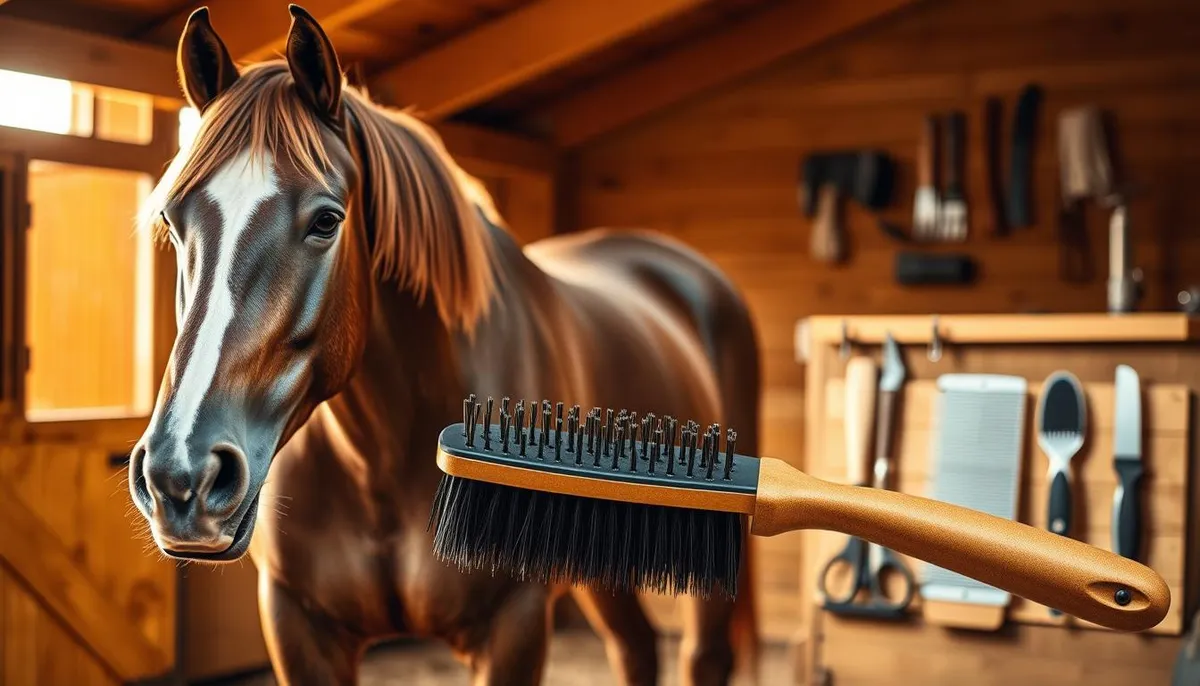
Horses with thick coats can handle a harder brush. If your horse has a fine coat or sensitive skin, choose natural bristles and a soft brush instead. This is especially important for cleaning the head and belly. Avoid metal curry combs on sensitive areas and prefer rubber ones.
If your horse is particularly sensitive, opt for brushes made of horsehair or plant fibers. These materials distribute pressure evenly. They avoid excessive friction and maintain coat shine without causing irritation.
Season, equestrian discipline, and grooming frequency
In winter, with a thicker coat, use a sturdy rubber or metal curry comb. Also choose a robust brush to remove stuck mud. In summer, a soft brush is sufficient to remove dust and make the coat shine.
Needs change depending on the equestrian activity practiced. For competitions, finishing is crucial: use a polishing brush. For training or leisure, prioritize the durability of tools. Depending on the state of the ground, adapt your choice of equipment.
Budget and durability: natural vs synthetic fibers
Entry-level brushes cost between €5 and €15. Brands like Hippo-Tonic and Cheval Energy offer good basic products. For more durable options, expect to pay between €15 and €35. Borstiq, Waldhausen, or Smart Grooming are solid choices. Natural fibers, which are more expensive, offer better quality and superior grooming results.
To assemble a complete grooming kit, include a versatile brush and a finishing brush. Choose wisely based on your needs, the seasons, and the frequency of use. This will help you find the best balance between comfort, efficiency, and cost in equestrian equipment.
horse brush
A horse brush is the set of tools used for daily care. It includes the brush (hard brush or American brush), the soft brush (polishing or finishing), the mane brush (detangler or mane comb), and the hoof brush. These tools help provide a complete grooming, from start to finish.
The brush removes dust and mud. The soft brush eliminates fine particles and makes the coat shiny. The mane brush takes care of the mane and tail. The hoof brush cleans around the coronet after using the hoof pick.
Choosing a brush depends on the horse's coat, skin, and the season. In winter, synthetic fibers are preferred. In spring, a horsehair brush makes the coat shine, especially before going out.
It should be easy to handle: a comfortable strap, an ergonomic back. A good set of brushes keeps the horse clean and comfortable. Don’t forget the sponge for delicate areas and the hoof pick for the feet.
| Tool | Main Function | Usage Areas | Recommended Fibers | When to Use |
|---|---|---|---|---|
| Brush (hard brush) | Loosen mud and dust | Body, neck, croup | Rigid synthetics | After the curry comb, at the beginning of grooming |
| Soft brush (polishing) | Finishing and shine | Sensitive areas, head, legs | Horsehair brush, plant fibers | At the end of the session, before work or competition |
| Mane brush / comb | Detangle mane and tail | Mane, tail | Smooth teeth, soft pins | After applying a suitable detangler |
| Hoof brush | Clean the coronet and exterior | Periphery of the hoof | Firm bristles, narrow head | After the hoof pick, before going out |
In summary, use a hard-bristled brush at the beginning. Then, a soft brush for finishing. There is also a special brush for the mane and a tool for cleaning the hooves. With these tools, horse care is quick, pleasant, and respectful of its skin.
Materials, shapes, and brands: what you need to know
Choosing a brush for your horse requires considering its material, shape, and brand. A good choice makes grooming more effective and protects the animal's skin. In an equestrian store, observe the quality of the bristles and how it feels in hand. It is important that this tool lasts long and remains comfortable.
Natural bristles (horsehair, plant fibers) vs synthetic bristles
Brushes made of horsehair or with plant fibers are soft. They care for sensitive areas and reduce static electricity. Synthetic bristles, which are stiffer, are perfect for removing dust and small debris.
Using both types of brushes offers complete and effective cleaning. Natural bristles polish while synthetic ones prepare the coat. This mix contributes to better hygiene while being gentle.
Shape, density, and grip for better efficiency
A well-dense brush catches more dust and maintains its shape well. A curved back and a solid handle allow for better maneuverability, especially for large movements.
For regular use, choose a brush that fits well in your hand. A rigid and well-designed brush avoids fatigue and increases precision across the body.
Brand references: Borstiq, Hippo-Tonic, Waldhausen, Smart Grooming
Borstiq is known for its quality natural fibers, perfect for a flawless finish. Hippo-Tonic offers brushes suitable for daily training. Waldhausen provides versatile tools, useful for both daily use and competitions.
Smart Grooming focuses on high-quality professional products. Kerbl is known for its durability, ideal for breeding. Cheval Energy offers an accessible entry-level range online. Each brand has its specialties, catering to all needs, from basic to high-end.
Price ranges and where to buy equestrian gear
There are horse brushes available from €5 for beginners. Models made of natural fibers cost between €15 and €30, and sometimes more at specialists.
Buying in an equestrian shop allows you to try the products. Specialized websites and retailers offer a wide selection. For horsehair brushes, check the origin of the materials and the quality of craftsmanship.
Tip: having a soft brush and a firmer one ensures complete care. This guarantees cleanliness, shine, and comfort in all seasons.
Order and grooming techniques for optimal results
Start the horse grooming by tying the horse with a halter. Make sure to stay by its side. Use each tool in its specific area: for example, a horse brush is not used like a hoof pick.
From hoof pick to polishing brush: the right sequence
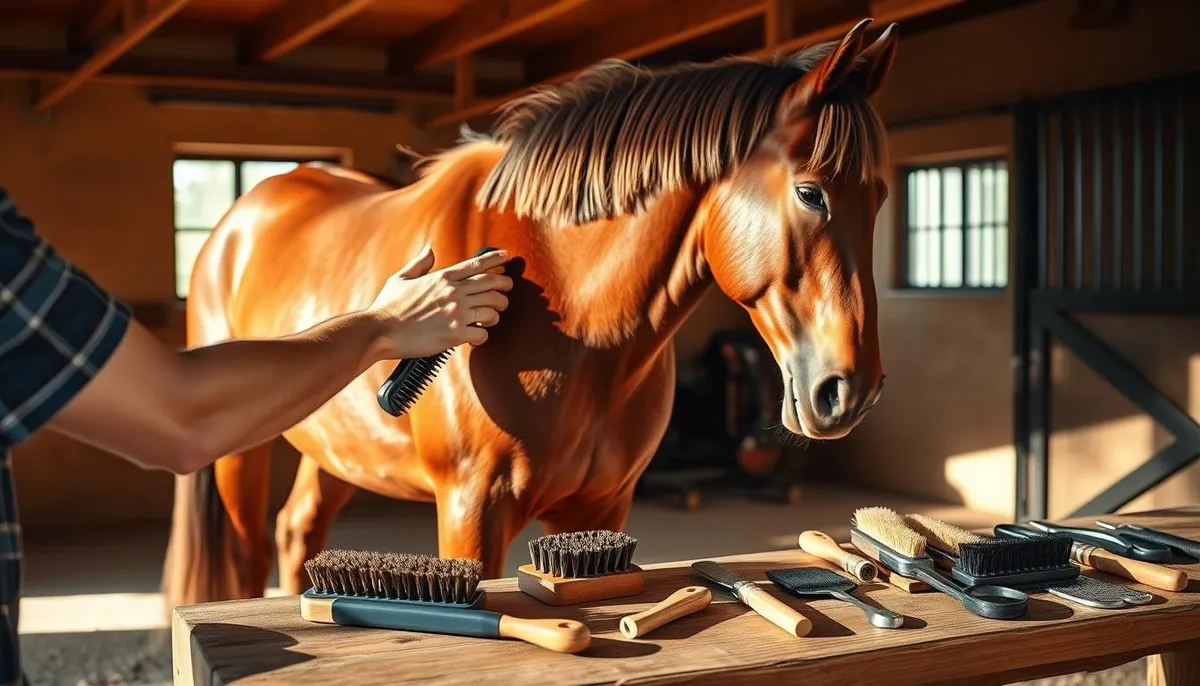
- Hoof pick: clean well from heel to toe, checking for stones and odors.
- Curry comb: use circular motions on fleshy parts to remove mud and dead hair; avoid the head and bony areas.
- Brush: go over the entire body in the direction of the hair to remove dust.
- Soft brush: make long strokes to smooth and add shine.
- Mane and tail: use a horse comb from bottom to top; if necessary, apply a detangler.
- Finishing: with a sponge, gently clean the horse's sensitive areas.
Effective movements: circular, in the direction of the hair, long strokes
Use the curry comb in small circles to avoid irritating the horse. With the brush, go in the direction of the hair to remove dust. The soft brush is for long, gentle strokes, making the horse grooming shiny.
Areas to respect and appropriate intensity
Pressure should vary: light on the neck and belly, stronger on the croup. Do not use the curry comb on the head. For the mane, a horse comb is best for detangling without breaking, starting from the tips. A clean brush increases comfort.
| Step | Tool | Key Gesture | Area | Safety Tip |
|---|---|---|---|---|
| 1 | Hoof pick | From heel to toe | Sole, frog | Keep one hand on the limb |
| 2 | Curry comb | Soft circular motions | Shoulders, back, croup | Avoid head and bony protrusions |
| 3 | Brush | In the direction of the hair | Whole body | Stand to the side, never behind |
| 4 | Soft brush | Long strokes | Sensitive areas | Light and steady pressure |
| 5 | Horse comb | From tips to roots | Mane, tail | Use detangler if needed |
| 6 | Sponge / Water brush | Targeted cleaning | Head, nostrils, limbs | Separate tools for each area |
By following these steps, your horse grooming brush will be more effective, and the horse grooming will be more comfortable. Alternate brushes and specific tools for better results.
Maintenance and hygiene of brushes: cleanliness, longevity, safety
A clean brush is better for the horse's skin and coat. After using it, remove hair and dust with another brush or a comb. Then, shake them outside.
It should be stored in a dry place. This prevents odors and mold, especially if you use it every day.
Clean it weekly with warm water and soap. This removes grease and bacteria. Dry it well, bristles down, to avoid moisture and deformation.
This simple habit extends its lifespan and ensures a good grip. It is very useful for your equestrian equipment.
It is crucial to disinfect it once a month. Use a mild antiseptic solution or vinegar water. After that, rinse well and let it air dry.
This step reduces the risk of irritation and skin infections. And the brush will remain in good condition.
It is good to have a set of brushes per horse. Mark them by color or name to avoid spreading diseases. Keep them in a clean bag, separate from sprays and ointments.
Store everything in a ventilated area. Do not leave sponges and brushes in water, as this damages the fibers. Proper storage ensures effectiveness and avoids frequent replacements.
Regularly inspect the brushes for any signs of wear. Replace them if necessary. Choosing a quality brush ensures better maintenance of your equestrian equipment.
Practical tip: organize your tools by use to save time and avoid contamination.
| Action | Frequency | Recommended Method | Key Benefit |
|---|---|---|---|
| Dusting and hair removal | After each grooming | Brush/comb, shake, store dry | Immediate cleanliness, increased lifespan of equestrian equipment |
| Washing with soapy water | Weekly | Warm water, mild soap, drying bristles down | Reduction of bacteria, more hygienic horse brush |
| Disinfection | Monthly | Antiseptic solution or vinegar water, rinsing | Prevention of skin infections |
| Management of cross hygiene | Ongoing | Set per horse, color/name marking | Less contagion, better organized equestrian equipment |
| Storage and transport | Daily | Dry and ventilated place, clean grooming bag | Dry tools, preserved fibers |
| Inspection and replacement | Quarterly or at first sign of wear | Inspect bristles and fastenings, change if needed | Consistent performance of the horse brush |
Quality equestrian accessories and saddle recommendations
To choose your equipment well, opt for quality equestrian gear. You need a brush suitable for the horse's coat, a soft comb for the mane, and other useful and durable accessories. Finding a good saddle is essential for making the right choices.
Complementary equestrian gear: halter, grooming bag, detanglers
The choice of halter depends on its use: rope for precision, nylon for everyday, and leather for comfort. Ensure it is well-fitted: the noseband should be in the middle of the bridge of the nose, and the headpiece correctly positioned.
A well-ventilated grooming bag allows you to keep your gear clean. Don’t forget to add a detangler to facilitate brushing. Hoof grease is essential for nourishing in winter and hydrating in summer.
La Sellerie Française: high-end products, made in France, 100% manufactured in France
La Sellerie Française offers high-level equestrian gear, entirely made in France. Each piece is crafted with quality materials, such as full-grain leather. This guarantees superior quality, well beyond the simple “Made in France” label.
Artisanal advantages: durability, finishes, limited series
Artisanal quality translates into durable products, with precise finishes and limited series. These accessories are customizable, comfortable to use, and designed to last. They are as effective for daily horse care as they are for training.
Where to find your horse grooming brushes and accessories: https://laselleriefrancaise.com
Visit La Sellerie Française to find everything you need: brushes, combs, halters, and grooming bags. For more options, also check specialized saddleries, high-end stores, or recognized distributors according to your preferences.
Conclusion
Good grooming relies on a simple and well-chosen kit. It contains a hoof pick, curry comb, brush, soft brush, mane comb or brush, sponge, and water brush. Each tool has a specific role.
It is important to respect the order of grooming, with smooth and precise movements. This makes grooming more effective and relaxing for the horse.
The choice of a brush is based on the type of coat of the horse, its sensitivity, the season, and the activity practiced. Natural fibers provide shine and protect the skin. Synthetic bristles effectively remove mud and sweat.
The budget for a brush ranges from €5 to €35 depending on the brand. It is important to choose equipment suitable for your routine and the horse's living environment.
To keep your tools in good condition, clean them, disinfect them, dry them, and store them dry. Use different equipment for each horse to avoid parasites. Replace damaged tools to avoid injuring the horse.
Ergonomic and durable tools protect the horse's skin and make grooming faster. This also enhances the horse's beauty. The quality of the tools makes a difference in the long run.
Choosing the right grooming brush, with a soft brush for finishing, ensures the health and shine of the coat. This relaxes the horse and strengthens your bond with it.
FAQ
What is the best brush for a horse according to the type of coat?
For a thick winter coat, use a rubber or metal curry comb. Add a hard brush. For a fine coat or sensitive skin, opt for a soft brush. Natural fibers are preferred. Always adapt the hardness to the comfort of the horse.
In what order should grooming be done for optimal results?
Start with the hoof pick, from heel to toe. Then, use a curry comb on fleshy areas in circles.
Continue with a brush on the body, in the direction of the hair. Finish with a soft brush, mane, and sponge and water brush for finishing touches.
What is the purpose of the curry comb and which one to choose?
The curry comb removes mud, dust, and dead hair. It is useful on the neck, shoulders, back, and croup.
Rubber is versatile. Plastic is for sensitive horses. Metal is for winter coats. Avoid bony areas and the head.
Brush or American brush: when to use it?
Use the brush after the curry comb to remove dust from the body and hooves. Do it in the direction of the hair. This helps reduce fatigue.
Why is the soft brush indispensable?
The soft brush provides comfort and shine. It is perfect for the head, belly, and legs.
Natural bristles are soft and respect the skin. They provide real shine.
How to detangle mane and tail without breaking?
Use a comb with long, flexible teeth. Start at the tips and gently work your way up. Then apply a detangler. This helps repel insects.
What is the difference between a water brush, sponge, and grooming mitt?
The water brush cleans without soaking too much. The sponge, with one for each area, is for mucous membranes.
The grooming mitt adds shine for finishing touches.
How to adapt brushes to the season and discipline?
In winter, use robust tools. In summer, prefer the finishing brush to remove fine dust.
In competitions, pay attention to finishing touches. For daily use, choose durability.
What budget should be planned and which brands to prioritize?
For entry-level, expect €5–15. Hippo-Tonic and Cheval Energy are options. For professional gear, €15–35 with Borstiq, Waldhausen, and Smart Grooming. Natural fibers are more expensive but more durable.
Where to buy reliable equestrian gear?
Look in specialized saddleries and online. For high-end, La Sellerie Française offers quality accessories at https://laselleriefrancaise.com. Decathlon and Amazon are also options.
How to maintain my horse brushes?
Remove hair and debris after each use. Wash them with warm soapy water weekly, then dry.
Disinfect them once a month. Keep them dry and well-ventilated.
Should there be one brush per horse?
Yes, it’s better to avoid diseases. Mark them by name or color. Store them in a clean bag.
What signs of pain to look for during grooming?
Watch for reactions to pressure, pinned ears, or trembling. Be attentive to swelling and hidden wounds. Hooves catching are also a sign.
The hoof pick helps prevent lameness.
How to keep the horse safe during grooming?
Secure it with a well-fitted halter. Stay to the side and maintain contact with the horse. Avoid positioning yourself behind.
Natural or synthetic bristles: which to choose?
Natural bristles ensure softness, polishing, and respect for the skin. Synthetic ones are good for removing dust and debris. A mix of both is ideal.
What shape and density of brush offer the best efficiency?
A dense brush catches dust better. Prefer an ergonomic shape with a good grip. Choose a size that fits your hand.
What accessories complete horse grooming?
Include in your kit a hoof pick with brush, a water brush, a dedicated sponge, and a grooming mitt. A mane comb, halter, grooming bag, and care products are essential.
How many times can I brush the head?
Reserve the soft brush for the head. Make light and brief strokes. Do not use the curry comb or brush on the head. Clean the mucous membranes with the dedicated sponge.
What does a “pro” horse grooming brush offer more?
A pro brush, like those from Smart Grooming or Borstiq, has better quality fibers. It ensures fewer passes, more shine, and lasts longer.
How to know when to replace a brush?
Replace it if the bristles are damaged or the sole is detached. A worn brush is less effective and can irritate.
Choosing quality equipment extends its lifespan.
Does a horsehair brush really make a difference?
Yes. It provides a polished finish and is gentle on sensitive skin. It pairs well with a synthetic brush.