
Welcome to the captivating world of western riding. This discipline was born in the 19th century during the great American Westward Expansion. At that time, the horse was much more than just an animal. It became an essential tool for transportation and herding livestock.
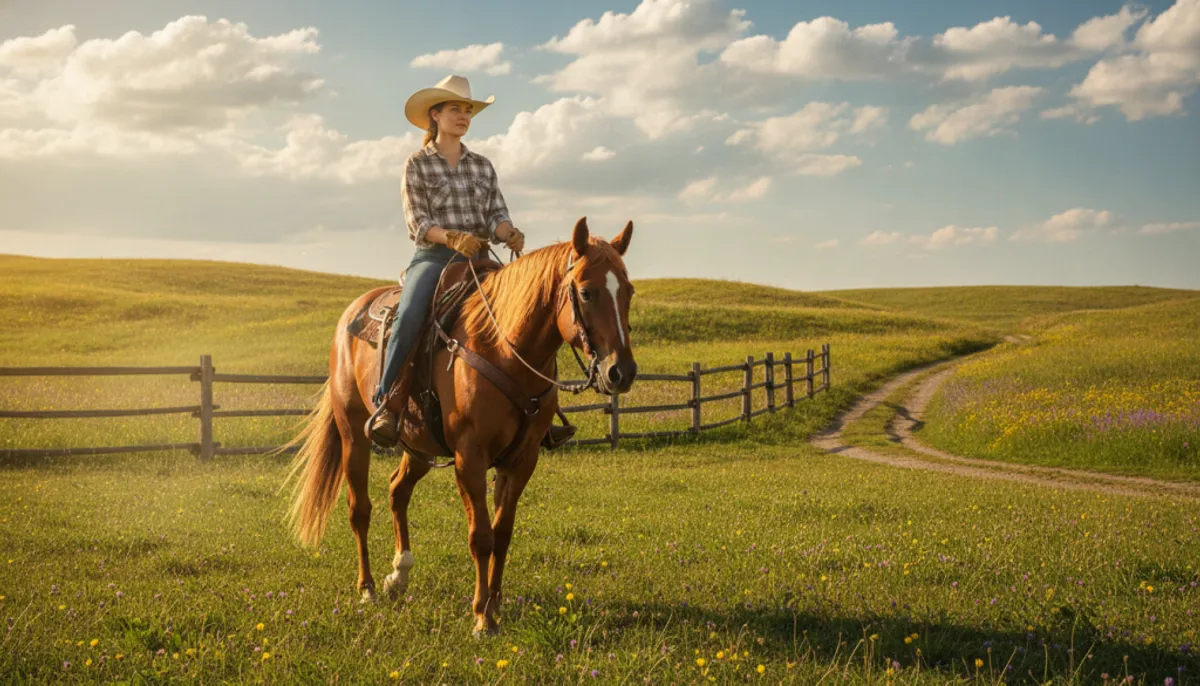
This unique practice transformed the relationship between man and his mount. The rider and the horse had to form a close-knit team to face the challenges of the vast plains. The legacy of cowboys is still very much alive today.
In France, more and more enthusiasts are discovering the joys of this approach. It offers a different philosophy, centered on harmonious collaboration and great trust. The goal is to guide your partner with finesse and lightness.
This guide is made for you. You will learn the fundamental basics to get started well. Together, we will explore the history, equipment, and first principles of this rich equestrian adventure.
Key Points to Remember
- Western riding has its roots in cattle work in the 19th century in the United States.
- It relies on a relationship of trust and subtle communication with the horse.
- This discipline is appealing for its practicality and direct connection with nature.
- Equipment, such as the western saddle, is designed for comfort and safety during long hours.
- Getting started requires patience and a good understanding of natural aids.
- It is an accessible activity that combines technique, enjoyment, and sharing.
- Every rider can find a style suited to their aspirations.
Introduction to Western Riding
Discover an approach that values the horse's autonomy and the finesse of communication.
This method aims for absolute control. This requires the rider to have forged an obedient and receptive partner.
The ultimate goal of training is permeability to aids. It involves a perfect understanding of natural signals.
Objectives of the Guide
Our main objective is to accompany you in this discovery. We structure your technical and theoretical progression.
Each person can find varied sporting goals. They adapt to your affinities and your mount's capabilities.
Why Choose This Discipline?
Choosing this practice means opting for a method where the animal acts autonomously. This fosters a deep harmony.
It is distinguished by a riding style based on impulse. Communication relies on precise signals, not on a constant connection.
By adopting it, you develop a better body awareness. This is essential for guiding with discretion and efficiency.
History and Origins of Western Riding
The history of this riding style is a rich narrative woven by the practical needs of cattle ranchers. It draws its roots from two major equestrian traditions that came from Europe.
Spanish and Anglo-Saxon Roots
As early as the 16th century, Spanish vaqueros laid the foundations for cattle handling techniques. Their expertise profoundly influenced future cowboys.
A key figure is Francisco Vasquez de Coronado. Between 1510 and 1554, he released many horses on the American continent. This act allowed for the development of large wild herds.
These animals became the cornerstone of work on vast ranches. Anglo-Saxon settlers later merged their methods with those of the Spaniards.
The Evolution Towards Competition and Leisure
After World War II, daily work on horseback declined. This discipline then began its transformation into sport and leisure activities.
Pioneers like Tom Dorrance introduced new methods that were more respectful of the horse. Their philosophy paved the way for modern figures.
Pat Parelli, John Lyons, and Monty Roberts became famous. Their ethological approaches revolutionized the world of the rider by advocating dialogue.
In Europe, Jean-Claude Dysli was a major player from the 1960s. He imported this practice and promoted the breeding of the Quarter Horse, a star breed in competition.
Today, the legacy of cowboys still lives on. It continues through spectacular events and a constant search for harmony with horses.
The Fundamentals of Western Riding Technique
Mastering the basics of this riding style means learning to communicate with your equine partner through discreet and effective signals. The clarity of your body language is crucial.
Natural Aids and Horse Control
Control is achieved through yielding to aids. Your weight, legs, and hands act punctually. They must be in rhythm with the animal's movements.
A vocal aid like "Whoa" is often combined with this body language. The goal is an immediate and precise reaction.
The following table summarizes the main aids and their use:
| Natural Aid | Main Function | Example of Application |
|---|---|---|
| Body Weight | Shift the center of gravity to indicate a direction. | Lean slightly to initiate a turn. |
| Legs | Impulse, control the horse's hips and shoulders. | A gentle pressure to ask for a canter. |
| Hands | Guide the forehand and regulate the pace. | A light tension on the rein to slow down. |
| Voice | Reinforce a request or calm the mount. | The word "Whoa" to ask for a stop. |
Position, Body Weight, and Hip Movement
The posture is inherited from long hours in the saddle. The leg is lower and more relaxed than in other styles.
For perfect balance, maintain a straight line between your ears, shoulders, hips, and heels. This aligned position allows you to naturally accompany each stride.
Working laterally, such as side movements, refines the horse's flexibility. It makes them more responsive to your slightest weight shifts.
The Essential Equipment in Western Riding
Equipment is not just an accessory; it is an extension of your dialogue with the animal. Choosing the right gear is fundamental for your safety and your partner's comfort.
The Western Saddle and Its Features
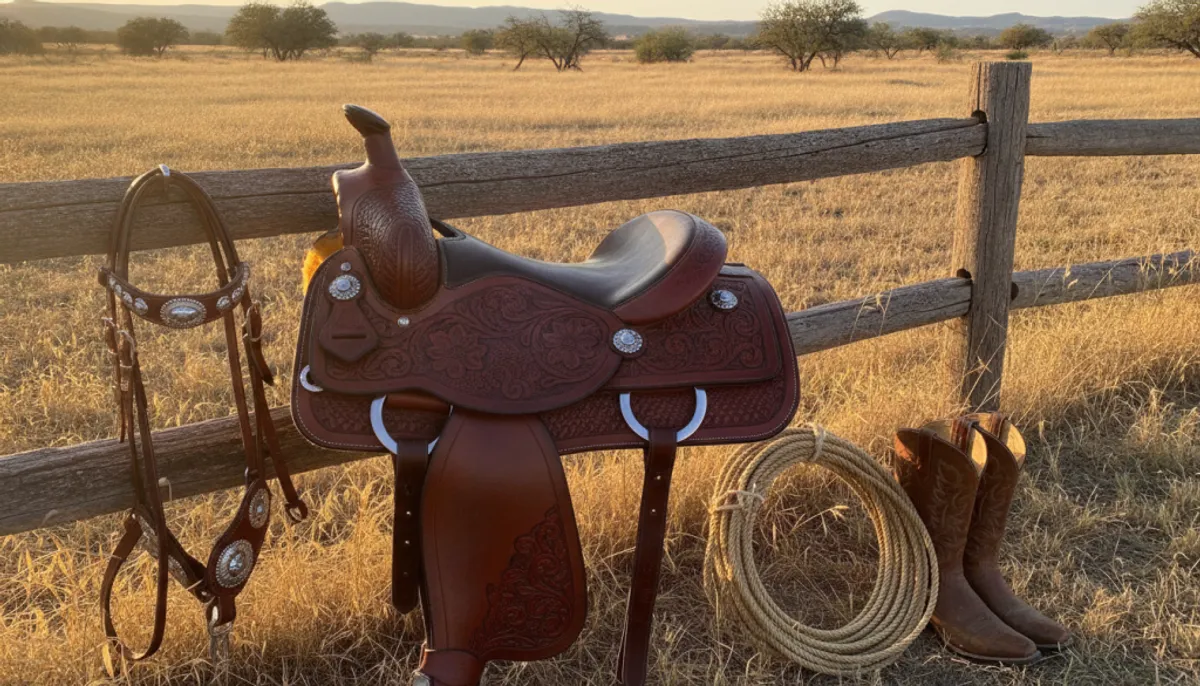
The saddle is the true cornerstone of your outfit. Its unique design, with a horn at the front, offers a stable and secure seat.
It allows the rider to remain well anchored during quick maneuvers or long rides.
Rider Accessories: Bits, Spurs, and Maintenance
The choice of bit is crucial. It must allow for fine communication while respecting the horse's mouth sensitivity. Models with shanks are common.
Spurs, with their long shanks and rowels, are precision tools. They enhance the natural aids of the rider without brutality.
A regular maintenance of all your equipment ensures its longevity. It also guarantees the safety and well-being of your mount.
| Element | Key Feature | Main Role |
|---|---|---|
| Western Saddle | Presence of a horn at the front. | Provide stability and security to the rider. |
| Bit | Often exists with shanks. | Transmit fine indications to the horse. |
| Spurs | Long shanks equipped with rowels. | Refine and specify the aids from the legs. |
The entirety of this equipment is designed to facilitate a daily practice in harmony with your horse.
The Disciplines and Events of Western Riding
Western riding offers a multitude of captivating disciplines, each with its own challenges. Riders can explore events that combine speed, precision, and harmony with their mount.
Gymkhana, Reining, and Western Pleasure
Reining is an emblematic dressage discipline. It requires the horse to execute complex patterns, demonstrating its flexibility and calmness. Barrel Racing, on the other hand, is a speed event where riders must navigate three barrels as quickly as possible.
Western Pleasure evaluates the quality of the horse's gaits. It must move with ease, grazing the ground at a slow pace while reflecting the comfort of its rider.
Rodeo, Cutting, and Other Equestrian Challenges
In the rodeo, riders must stay on the animal for 8 seconds without using their free hand to touch the mount. This event requires impressive physical strength.
Breeds like the Quarter Horse, Paint Horse, or Appaloosa are favored for these disciplines due to their morphology suited for work. These horses are designed to excel in the challenges posed by this discipline.
The Specifics of Western Riding for Beginners
Starting western riding is an enriching adventure, full of discoveries and challenges. To get started well, it is advisable to connect with structures affiliated with the French Western Riding Association (AFEW). This will allow you to benefit from qualified guidance.
Rapid progression relies on an understanding of natural aids. This enables the rider to communicate with their horse without unnecessary tension. Here are some tips to help you:
- Focus on working at the walk and trot before tackling speed events.
- Learn the basics of working with cattle, an enriching step to deepen your mastery.
- Participate in classes and workshops to improve your skills.
- Observe competitions for inspiration and to understand the techniques of experienced riders.
In 2009, the French team demonstrated its level by winning second place in the world cup of barrel racing. This proves that the discipline is thriving and accessible to all.
Conclusion
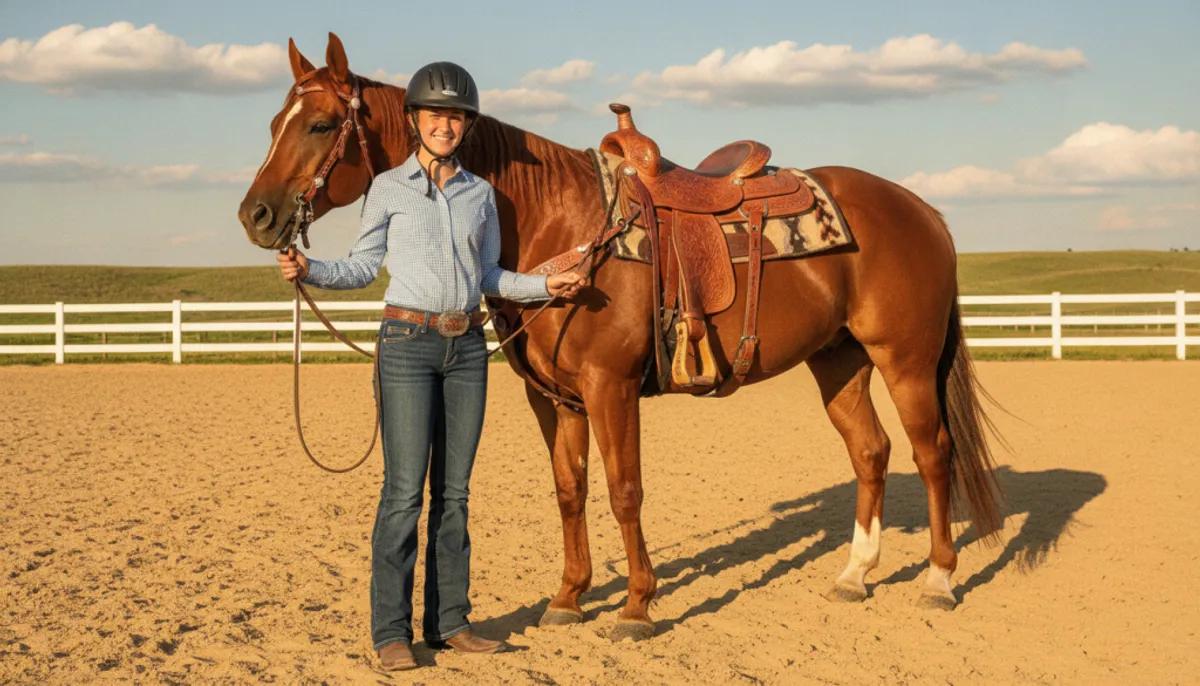
Engaging in this equestrian discipline is an adventure full of discoveries. Western riding allows riders to forge unique bonds with their horse. Whether you are drawn to competition or leisure, each experience will bring you closer to your mount.
By following the advice in this guide, you now have the keys to start your practice under the best conditions. Remember that the well-being of the horse must always be a priority. Explore the riches of this approach within specialized clubs and enjoy every moment spent in the saddle.
FAQ
What are the horse breeds most suited to this practice?
The ideal mounts are often Quarter Horses or Paint Horses. These breeds are known for their calmness, strength, and agility. Their physique and mentality predispose them perfectly to the maneuvers required, such as cattle work or speed events.
How is a western saddle different from a traditional saddle?
The western saddle is heavier and offers great stability to the rider. Its high pommel (the "horn") was originally used to tie a rope. Its wide design distributes weight across the horse's back, making it comfortable for long hours outdoors or during events.
What is "reining" and what does this discipline involve?
Reining is often referred to as western dressage. It is an event where the pair demonstrates perfect harmony. The horse executes required figures such as spins (turns on the haunches) and sliding stops. Judges score based on precision, finesse, and attitude.
Can a beginner directly learn this riding technique?
Absolutely! Many equestrian centers offer introductory lessons. The focus is on a secure position and the use of natural aids (body weight, legs). The goal is to develop a trusting relationship with the mount and to master the gaits smoothly before entering a competition.
Is barrel racing dangerous for a novice rider?
Barrel racing is a speed event that requires significant experience. For a beginner, it is essential to first solidify their position and control of their mount at all three gaits. This discipline is practiced once the pair can maneuver with precision and minimal effect, always under supervision.
Is specific equipment required for the rider, aside from the saddle?
Yes, equipment is important for safety and communication. An appropriate bit, often a type of "curb bit," allows for fine indications. Proper boots and possibly spurs (used with discretion and skill) are part of traditional work. Regular maintenance of all gear is crucial.