
Welcome to this guide that will transform your vision of the relationship with your equine partner. Ethological riding is not just a simple training method. It is a philosophy that places understanding and mutual respect at the heart of equestrian practice.
This modern approach merges proven techniques, such as American horsemanship, with discoveries from animal behavior science. Since 2015, it has been recognized by specialists as an essential pathway for any rider eager to progress.
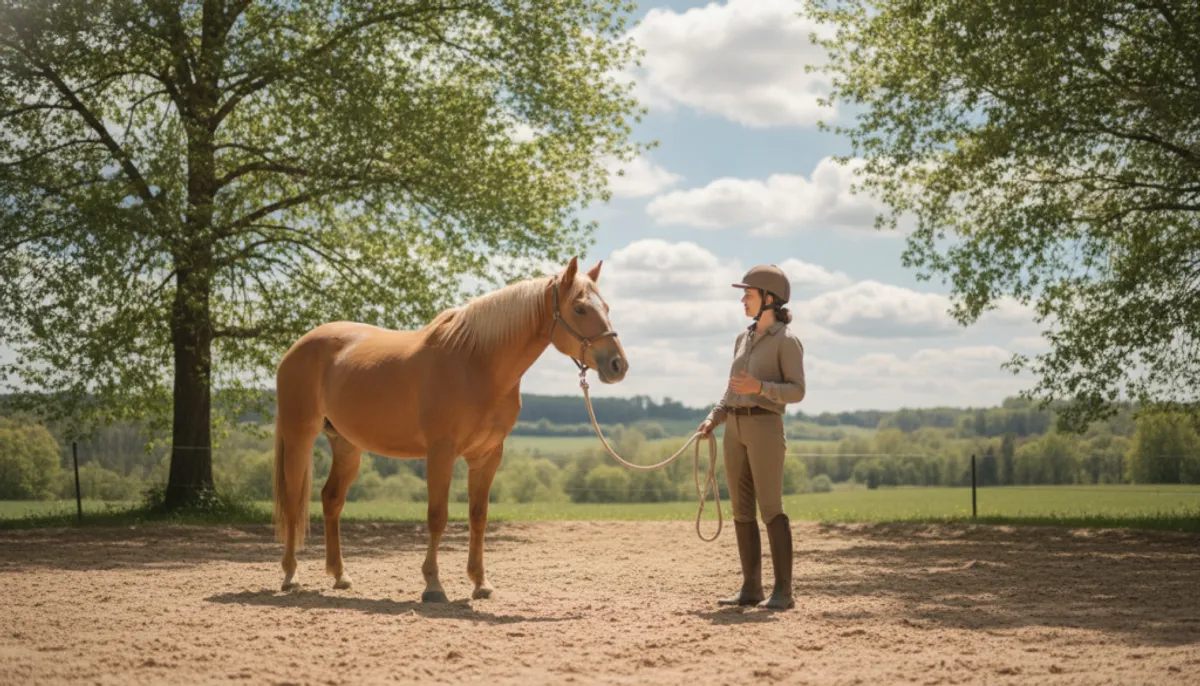
The fundamental principle? Learn to think like a horse. It involves deciphering its language, emotions, and natural needs. This allows for a benevolent dialogue, far removed from traditional power dynamics.
This discipline primarily seeks to create a harmonious and secure alliance between human and animal. It has established itself as a global reference for those who dream of an authentic bond with their mount.
Our goal is to provide you with the essential foundations to get started well. You will discover how to build, step by step, a lasting relationship of trust with your horse.
Key Points to Remember
- Ethological riding is a philosophy based on understanding and respecting the horse.
- It combines horsemanship and scientific knowledge in ethology.
- Its aim is to establish a dialogue and a relationship of trust, without coercion.
- This method has been recognized since 2015 as essential for an in-depth equestrian practice.
- It addresses the physiological and behavioral needs of the equine partner.
- It is a holistic approach that ensures greater safety and well-being for both rider and horse.
- This guide provides you with the foundations to begin with kindness and success.
Introduction to Ethological Riding
Dive into the heart of a method that redefines the connection between human and horse. This approach, often referred to as ethological riding, goes beyond the traditional framework of training.
Context and Objectives of the Guide
This manual aims to clarify the founding principles of this specific education. It will show you how to promote the well-being of your equine partner.
We will detail the steps to harmonize your shared life. The goal is to transform your practice into a sustainable and enriching experience for both of you.
The Importance of Understanding the Horse
Understanding this animal is essential. The horse is a large herbivorous mammal from the equine family. Unlike cows, it does not ruminate.
Its digestive system is fragile and requires special attention. Taking its physiological needs into account is the foundation of a healthy relationship.
Equine psychology influences every interaction. A good understanding makes work smoother and more respectful of the animal's nature.
This knowledge, derived from ethology, transforms every shared moment. It allows for a safer and fairer riding experience.
Origin and Historical Evolution
The roots of this benevolent approach go far back in history, long before it had a name. Its evolution is a fascinating tale, marked by visionary figures and a major cultural turning point.
From Pioneers to Whisperers
As early as 1858, John Solomon Rarey impressed the world. He tamed horses deemed untamable through keen observation of their nature. This was a decisive first step.
Later, figures like Bill and Tom Dorrance refined these principles. They passed on valuable knowledge, directly influencing contemporary masters. Their legacy forms the foundation of current practices.
The Influence of the Film "The Horse Whisperer"
In 1995, the film by Robert Redford changed everything. "The Horse Whisperer" popularized the term whisperer.
The general public discovered this unique connection. However, most experts today prefer the term ethological riding. It better reflects the rigor of the discipline, rooted in the science of ethology.
This evolution shows how a rich history has been brought to light by popular culture. It has paved the way for a more respectful and understood riding practice.
Understanding Horse Psychology
The behavior of the horse is not a mystery, but a rich and documented science. This discipline, equine ethology, has its roots in award-winning research. In 1973, Niko Tinbergen, Karl von Frisch, and Konrad Lorenz received the Nobel Prize for their research on animal behavior.
The Senses and Behaviors of the Horse
The horse perceives the world differently than we do. Its keen hearing picks up on ultrasound. This directly influences its psychology and reactions.
As a prey animal, its first reflex is to flee. Understanding this is fundamental. Its natural rhythm is also a guide.
It spends about 60% of its time grazing. Rest occupies 20 to 30% of its day. Respecting these needs is the basis of a healthy relationship.
The Scientific Approach of Equine Ethology
Ethology studies these mechanisms with great precision. It analyzes behaviors in their environment. This scientific approach illuminates all practice.
It allows one to adapt their riding to the deep nature of these animals. One no longer fights against instinct. One works with it, for an authentic connection.
Ethological Riding: Principles and Practices
To communicate effectively with your equine partner, first master the body language. This section explores how to implement theoretical concepts. You will discover practical applications for your daily life.
The Basics of Gestural Communication
The fundamental principle is simple. The rider must emit clear and consistent signals. The horse then interprets them as specific requests.
Groundwork is essential to establish this contact. It allows riders to observe their mount's reactions. This gentle method avoids any conflict.
It takes into account the deep nature of the animal. Each session thus strengthens the bond of trust. The ability to master this dialogue distinguishes this approach.
| Aspect | Traditional Approach | Ethological Approach |
|---|---|---|
| Communication | Verbal instructions and artificial aids | Body language and natural gestures |
| Main Objective | Immediate execution of figures | Understanding and voluntary response |
| Main Tool | Spurs, whip, tension on the bridle | Presence, intention, and ethological halter |
| Result for the Horse | Submission or resistance | Calm collaboration and engagement |
This practice transforms riding into a harmonious exchange. Your horse becomes an attentive and cooperative partner.
Differences Between Equine Ethology and Ethological Riding
To progress smoothly, start by untangling what pertains to research and what is related to training.
This distinction is fundamental to understanding the world of the horse. Many riders mix these two concepts.
Training and Methodology
Equine ethology is a university discipline. It studies animal behavior in its natural environment.
Researchers undergo rigorous academic training. Their work produces evidence and verifiable data.
Ethological riding, on the other hand, is a field practice. It is a method of training inspired by these discoveries.
It relies on the empirical experience of expert trainers. Its goal is concrete application with the horse.
Terminology and Perception
Confusion often arises from the term "ethological." It is sometimes misused for commercial practices.
The most precise name to describe this approach remains ethological riding. It emphasizes its link with riding.
Scientists seek a clear distinction. This protects the credibility of their work and better guides enthusiasts.
Understanding this nuance allows you to choose your path with full knowledge. You then know on what foundations you are building your relationship with your horse.
The Techniques and Methodologies of Whisperers
In the world of riding, certain methods stand out for their respectful approach. Whisperers, like Bill and Tom Dorrance, established techniques based on respect for the horse. Their work marked a turning point, far from the brutal methods of the time.
Ray Hunt, a disciple of the Dorrance brothers, significantly contributed to spreading this non-violent approach. This transformed how riders approach work with their mounts. Body language is the main tool of the whisperer to establish effective contact.
This method prioritizes persuasion over force. Whisperer techniques allow riders to better consider the reactions of the horse. Thus, safety is enhanced during work sessions.
The principle of non-violence is at the heart of this ethological riding. This makes the horse a willing partner, rather than an animal forced into obedience.
Practical Exercises for Beginners
Practical exercises are essential for establishing a solid connection with your horse. Groundwork is a crucial first step in ethological riding. It allows for a secure contact with your equine partner.
Desensitization is a key method that helps the horse remain calm in the face of new stimuli. This reinforces its trust in riders. Here are some points to remember:
- Groundwork introduces the horse to unfamiliar objects, gradually reassuring it.
- These exercises, often compared to agility, allow for playful work on the horse's feet and body.
- Practicing these games helps the rider better understand the principle of mutual respect.
- Integrating these techniques facilitates communication during mounted riding sessions.
- Strengthening the ground bond prepares the horse for better collaboration under saddle.
The Role of Equipment in Ethological Riding
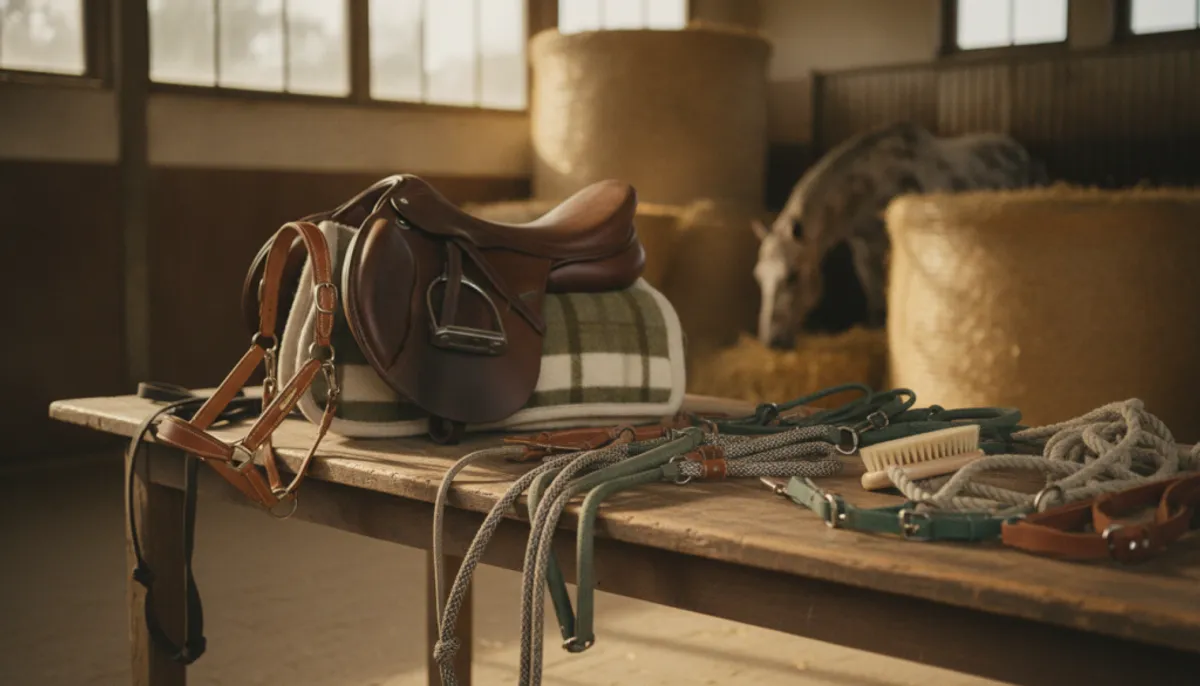
In the realm of ethological riding, the choice of equipment directly influences the relationship with the horse. The ethological halter is an emblematic tool, essential for precise communication during groundwork.
This type of equipment is designed to offer finer communication between the rider and the horse. Unlike traditional gear, this method favors tools that respect the horse's sensitivity, particularly around the head and feet.
Many riders opt for a cord around the neck, illustrating the pursuit of freedom and lightness. The choice of equipment is a principle essential to ensure that the horse feels no unnecessary pain during exercises.
By using these specific tools, you adopt a method that promotes better mutual understanding. This is crucial for advancing in your riding practice.
The Benefits for the Horse and the Rider
Adopting a respectful and caring approach in the equestrian world profoundly transforms the relationship between the rider and their horse. A harmonious connection promotes the animal's well-being while increasing the rider's satisfaction.
- Ethological riding significantly improves the horse's life by reducing its stress and fostering a trusting relationship with its rider.
- This method enables riders to better understand their mount's needs, creating a deeper connection and lasting bond.
- The principle of mutual respect transforms riding into an activity where the horse participates willingly, which is beneficial for its mental well-being.
- By working together, the horse and rider develop a harmony that reflects in every aspect of their shared life at the equestrian center.
- The benefits of this approach are numerous, proving that ethological riding is an effective method for enriching both the horse and its human partner.
The Influence of Marketing and Media
The success of ethological riding is largely attributed to well-thought-out marketing strategies. Iconic figures like Monty Roberts and Pat Parelli have managed to leverage these techniques to promote their methods worldwide.
The media have also played a key role. Articles, videos, and shows have helped popularize this method and turn it into a true equestrian trend. However, it is crucial to maintain a critical mind regarding the techniques highlighted by these campaigns.
A significant event was the release of the film "The Horse Whisperer". This film acted as a catalyst, propelling ethological riding to the forefront of global media. Thanks to this influence, many riders have been able to discover enriching alternative techniques.
| Elements | Impact of Marketing | Influence of Media |
|---|---|---|
| Iconic Figures | Monty Roberts, Pat Parelli | Articles, videos |
| Significant Events | Workshops, demonstrations | Film "The Horse Whisperer" |
| Target Audience | Beginner and experienced riders | General public |
| Critique | Evaluation of methods | Reception of techniques |
This dynamic has enriched the world of modern riding. It has also paved the way for more respectful and better-understood practices.
Training and Evolution of Practices in France
Training in ethological riding in France has seen significant growth in recent years. The French Equestrian Federation (FFE) has structured this discipline by integrating Ethological Knowledge into its training program.
The Haras de la Cense, recognized by the FFE since 2003, plays a major role in developing this method for French riders. This structured education allows riders to deepen their knowledge of equine ethology.
Here are some key points to remember:
- The FFE offers Ethological Knowledge to validate the progress of riders.
- This training is designed to enhance the observation of the horse, essential for the practitioner's development.
- The techniques taught respect the well-being of animals and promote a respectful approach.
- These initiatives ensure that ethological riding remains a serious discipline, supervised by qualified professionals.
- The goal is to provide coherent training, where each step is thoughtfully designed to maximize learning.
Tips for Getting Started Smoothly
Starting in ethological riding requires a thoughtful approach. It is crucial not to rush the steps and to prioritize groundwork before getting on your horse. This will allow you to establish a solid foundation.
A key step is observation. Take the time to observe how animals interact with each other. This will help you understand their language and better communicate with your equine partner.
This discipline requires patience. The goal is to create a relationship based on freedom and mutual trust. By following the advice in this article, you will learn to implement simple techniques that will facilitate your development as a rider.
Remember that each horse is unique. Ethological riding is a method that adapts to the life and character of your partner. Respect this journey to build a lasting and enriching relationship.
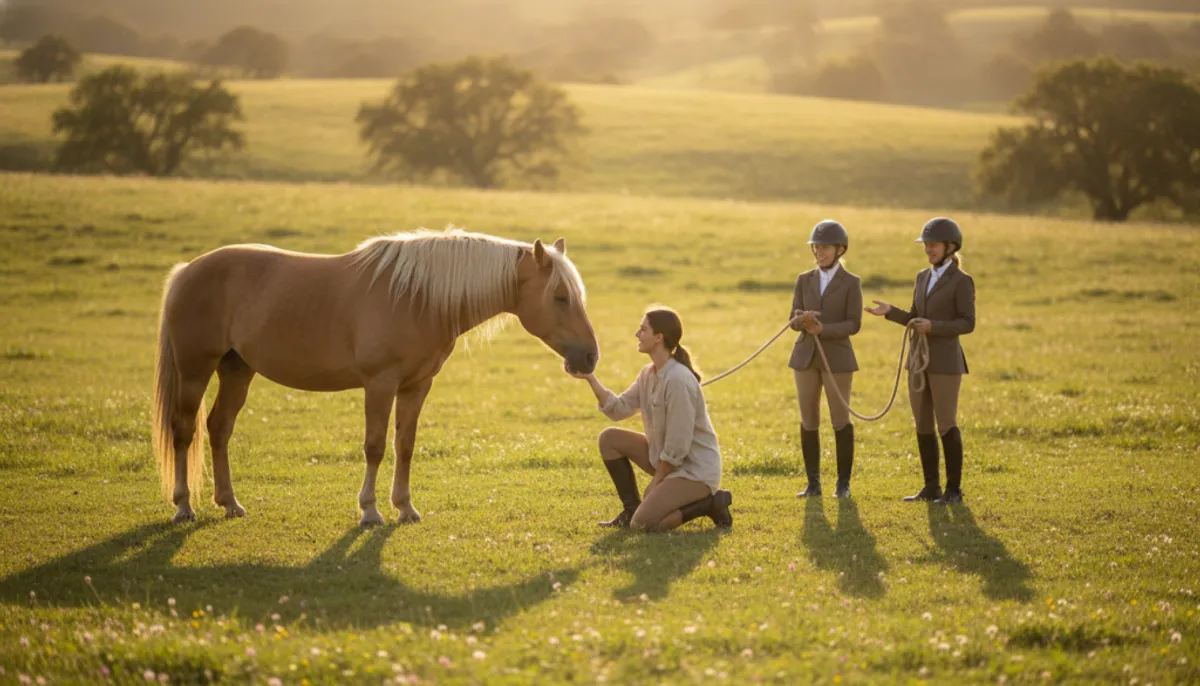
Conclusion
This method, combining respect and understanding, redefines our relationship with horses. Ethological riding represents a major advancement for the well-being of the animal. By integrating scientific principles into training, it allows riders to better understand horse psychology.
Whether you are a beginner or an experienced rider, this discipline offers valuable tools to enrich your bond with your mount. It is essential to continue learning and observing, as this journey towards a better understanding of the animal is ongoing.
By adopting these gentle methods, you contribute to a more ethical riding experience, where pleasure and safety are shared by both human and horse. Remember that each interaction is an opportunity for learning and growth for both of you.
FAQ
How is equine ethology different from classical training?
Ethology is based on observing the natural behavior of the animal in its environment. Unlike some traditional practices, it seeks to understand the horse to establish a dialogue, rather than impose discipline through submission. The rider learns to speak its language.
Did the film with Robert Redford popularize a real method?
Absolutely! The film "The Horse Whisperer" highlighted the techniques of American whisperers like Tom Dorrance and Ray Hunt. It democratized the idea of a non-violent approach based on trust and body language, although marketing has sometimes simplified their method.
Can one practice without specific equipment?
Yes, the essence of this method lies in communication and relationship, not in equipment. You can start barefoot in a round pen with a simple halter. Tools like the ethological halter or a specific rope then come to support the work by clarifying gestures.
What are the first exercises to do with my horse?
Start with desensitization exercises and movement at liberty. Invite it to follow you, to stop, to back up with light pressures. These ground games reinforce contact and establish mutual understanding before any riding.
Does this approach work on all animals?
The principles of observation, respect, and non-verbal communication are universal. Masters like Bill Dorrance have applied them with other animals. However, each species has its own repertoire of behavior. The psychology and senses of the horse are therefore studied specifically for this discipline.
How to find serious training in France?
The French Equestrian Federation (FFE) now offers certified training pathways. Look for certified instructors who emphasize animal well-being and whose methodology is transparent. The development of this practice has made the offer more accessible.