
The curly horse intrigues at first glance with its distinctive curls. Many allergic riders share positive experiences about it. Also known as the North American Curly Horse, it is considered comfortable to live with on a daily basis.
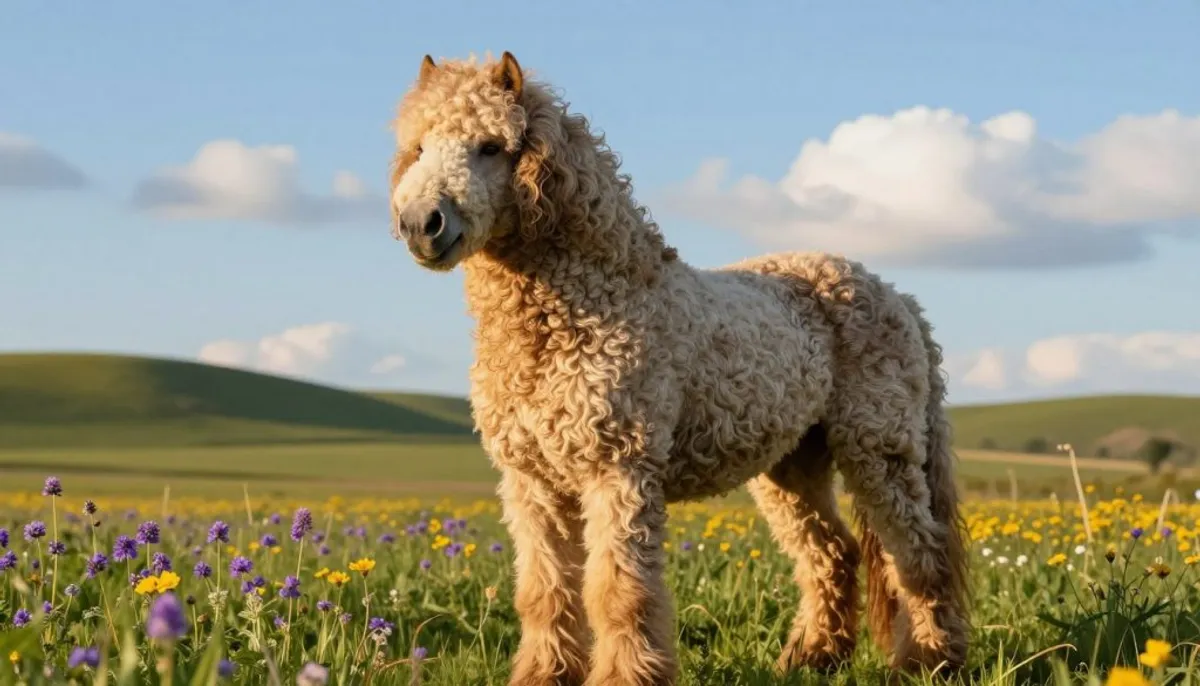
We will explore what makes curly horses unique. We will discuss their coat and scent, which is often said to be less strong. Then, we will look at important aspects to consider before choosing a horse.
You will also discover information about the curly horse breed. This includes their physical form, personality, the sports they participate in, and how to take care of them.
It is essential to choose the right equipment for the horse's comfort. In France, La Sellerie Française (https://laselleriefrancaise.com) offers high-end gear. All their products are made in France by excellent craftsmen.
We will also talk about the horse's health, necessary vaccinations, and how to buy a curly horse in France. We will cover prices, rarity, and where to find breeders. Our goal is to guide you with realistic advice.
Key Points
- The curly horse is often mentioned by allergic riders, but each case remains individual.
- Curly horses stand out for their coat and sometimes different sensations during grooming.
- The curly horse breed will be detailed: character, abilities, and points of attention.
- Care for the coat, mane, and skin is as important as the beauty of the curls.
- A clear reminder about health and vaccinations will help maintain a simple and serious schedule.
- Concrete guidelines for buying in France: prices, rarity, and breeding leads.
Why the Curly Attracts Allergic Riders
Many allergic individuals find that stables make them sneeze and their eyes itch. The curly horse is special because it often triggers fewer allergies, especially regarding hair and fine dust. These horses have earned their reputation through people's experiences, not by unrealistic promises.
Horse for allergy sufferers does not mean there will be no allergic reaction. Each person is different, and reactions can change based on various factors. The important thing is to try gradually to see what works.
A Horse Said to Be “Hypoallergenic”: What It Really Means
A horse is said to be hypoallergenic when it is better tolerated by certain riders. However, there is no absolute guarantee. Reactions can come from different sources, not just hair. Riders who choose a curly horse often find it more comfortable, especially with attentive care.
Thanks to the Lara Locatelli Association, allergic individuals can try a Curly breed horse. It is an opportunity to spend time with a horse while testing their reactions in a safe environment.
A Naturally Curly Coat, Without Genetic Modification
The first striking thing is that their hair is curly, sometimes very thick. These horses have not been modified in a laboratory. Their coat is entirely natural and changes with the seasons and grooming.
To avoid irritation, it is necessary to control dust and use gentle brushes and shampoos. Often, a little regular care is all it takes to maintain their coat and reduce allergens in the air.
A Surprising Feature: A Scent Often Described as Less “Horse-like”
Some people find that curly horses smell less strong than other horses. This varies based on many factors but is often mentioned, especially after physical exertion. To have a clear idea, it is good to compare directly, regardless of your allergies.
| Point to Observe | What It Changes for a Sensitive Person | Good Reflex on Site |
|---|---|---|
| Environment (hay, bedding, dust) | Often more triggering than the horse itself | Go outside, avoid storing hay, breathe from a distance, then get closer |
| Direct Contact with Hair | Real test of tolerance, useful with a hypoallergenic horse | Touch the neck, then the more “loaded” areas like the shoulder, observing for 30 to 60 minutes |
| Grooming and Shedding | Increases airborne particles, even in curly horses | Prefer gentle grooming, outside, and wash hands before touching the face |
| Scent and Moisture of the Coat | Sweat and moisture can heighten discomfort | Avoid contact right after exertion, let dry, check the cleanliness of the equipment |
Curly Horse: Characteristics, Size, Temperament, and Abilities
The curly horse captures attention at first sight. Its curls hide an easy-going and resilient animal. Lovers of the curly horse seek a loyal companion that is pleasant to lead and ride.
In France, curly horse breeders value its robustness. The Curly is known for its strength and ease in the outdoors, even in cold weather. A lesser-known but intriguing fact is its very rare blood type, unique to this breed.
Size and Build: From 1.42 m to 1.63 m
There is a wide variety in the size of Curly horses, allowing for the right horse for each rider. There are smaller, practical horses, as well as sportier versions. Most Curly horses are well-proportioned, with a solid back and good bone structure.
| Guide | What Is Often Observed | For What Use in France |
|---|---|---|
| 1.42 m to 1.48 m | Short, manageable model, close to a small horse | Leisure, family rides, riders looking for an easy-to-adjust horse |
| 1.49 m to 1.55 m | “All-purpose” build, balance between carrying and agility | Hiking, amateur TREC, regular outings |
| 1.56 m to 1.63 m | Longer model, sometimes more pronounced amplitude | Sport leisure, sustained outdoor activities, western riding with more frame |
Character: Docile, Kind, Quick to Learn, Energetic, and Quite Calm
The character of the curly horse is a great asset. They are described as docile and kind, learning quickly if the instructions are clear. These horses remain calm and full of energy without being nervous.
Their ability to handle stress is remarkable. They first observe, then act. This nature, both energetic and calm, makes them fantastic for outdoor activities. Curly horse breeders often seek this type of temperament, looking for versatile animals that are close to people.
Disciplines: Leisure, Hiking, TREC, Western Riding
The curly horse excels in leisure activities. They are perfect for hiking due to their endurance and willingness. TREC also suits them, benefiting from their thoughtfulness and assurance.
In western riding, their calmness and availability are highly valued. According to breeders, education and lifestyle influence as much as genetics. This is why two curly horses can offer distinct experiences, even if they are the same size.
Coat and Morphology of Curly Horses
Curly horses surprise with the variety of their colors. All colors can be found, even piebald. Chestnut is the most common color among them.
The coat becomes wavy when the curls relax, especially depending on the seasons. This captures light differently. It gives them a unique identity, even if their physique seems simple.
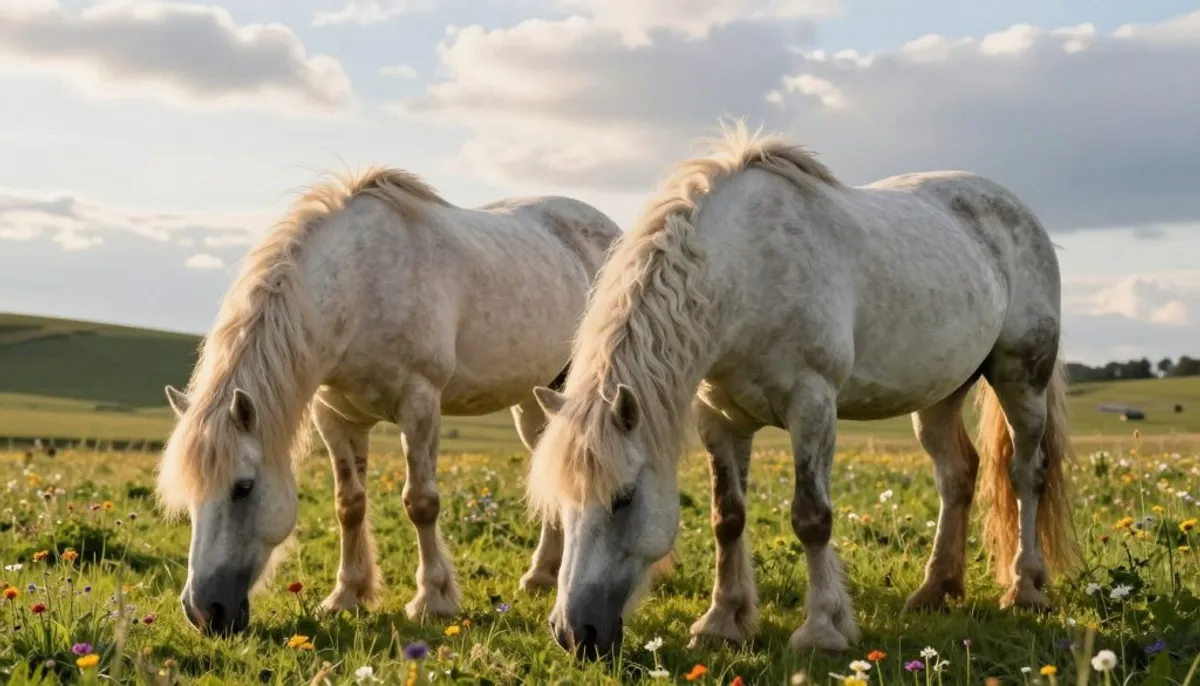
The silhouette of these horses is often seen as ordinary. They have a medium-sized head and short ears. Their back is short, the croup rounded, with slender limbs and round hooves.
Their coat also affects how their shape is perceived. In some, the curls can make the neck or back appear thicker. When the coat is flatter, the shapes are clearer. This helps to see where to groom.
| Guide | What Is Observed | Effect of Curly Hair in Daily Life |
|---|---|---|
| Coats | All colors, including piebald; chestnut very common in the curly horse breed | Color contrasts stand out; the wavy horse coat can change appearance based on weather and shedding |
| Head and Ears | Medium head, short ears | Curls around the muzzle trap dust and pollen; gentle grooming is appreciated |
| Back and Croup | Short back, rounded croup | Curls give a “fuzzy” appearance; cleanliness is better controlled before saddling |
| Limbs and Hooves | Rather slender limbs, well-rounded hooves | Feathering can wave; dried mud and small knots are easier to check |
Caring for these horses means watching and touching a lot. Grooming should be gentle. Curly horses are special, not just because of their color.
Origins and History of the North American Curly Horse Breed
Exploring the history of the curly horse leads to a captivating narrative. The true name is North American Curly Horse. This name has evolved over time. It shows how the breed has developed through stories and breeding.
A Past with Murky Sources: Russia, Nevada, and the Development of Breeding in America
The roots of the North American Curly Horse are debated. Some believe it comes from Russia, due to its unique fur. Others think the first signs come from the western United States, like Nevada.
Breeding in North America is clearer. Breeders have chosen curly-haired animals to fix their appearance. The curly horse has become recognizable. Its reproduction has been better tracked.
The Curly in Stories: Horses Present Among Mustangs, Native American Legends
The breed also appears in stories about Mustangs. Curly horses have been seen in wild herds. This has made their uniqueness even more interesting.
Native American legends sometimes speak of a curly horse seen as magical. It was thought to be for sorcerers. These tales attract curiosity towards the North American Curly Horse.
Recognition in France: Breed Officially Recognized Since 2011
France officially recognized the breed in 2011. This helps fans identify and manage breed documents. It also positions the North American Curly Horse in the French equestrian world.
Rarity: About 4000 Individuals Worldwide (2013 Data), About a Hundred in France
The breed is quite rare. In 2013, there were about 4000 curly horses in the world, and about a hundred in France. Each horse is important, and there are not many available.
This situation affects how these horses are bred and found. For enthusiasts, these numbers give an idea of what they can find and how quickly.
| Guide | What Is Retained | Impact in France |
|---|---|---|
| Official Name | North American Curly Horse, formerly American Bashkir Curly | Clarifies papers and the designation of the curly horse |
| Origins | Murky sources: hypotheses of Russia; notable sightings in the West (Nevada) | Strengthens the heritage interest around the curly horse breed |
| Stories | Reported presence among Mustangs; Native American legends around a magical horse | Contributes to the unique image of the North American Curly Horse |
| Recognition | Breed recognized in France since 2011 | Better frames the identification and dissemination of the curly horse |
| Rarity (2013 Data) | About 4000 individuals worldwide; about a hundred in France | Explains reduced availability and often a tense market |
Curly Horse Care: Coat, Skin, and Mane Maintenance
Curly horses have a special coat that requires particular attention. Their hair should be treated gently to avoid damaging the curls. The goal is to keep the hair supple without breaking it or irritating the skin.
Caring for Curly Mane: Detangling, Brushing, Managing Knots
Caring for the curly mane starts with gradual detangling. Begin at the tips and work your way up gently. In case of a knot, it is better to open it carefully before brushing.
An important tip: if you hear a cracking sound, stop. Brushing too hard can damage the curls and create knots.
Choosing a Suitable Shampoo/Detangler to Respect Skin and Curls
Avoid harsh products that dull the hair and dry the skin. The Hilton Herbs detangling shampoo is highly appreciated. It is plant-based and leaves a pleasant scent, ideal for curly horses.
To prevent the curls from becoming heavy, a gentle drying is recommended. It is important to check if the hair retains moisture, especially under the saddle.
Useful Daily Equipment: Multi-purpose Brushes and Grooming Routine
Adopt a simple care routine for longevity: start by removing dust and inspecting the skin, then brush the hair. The Magic Brush is very useful. It can be used on the coat, mane, hooves, and even on the equipment.
It is interesting to complement your care with quality equipment. La Sellerie Française offers excellent gear made in France. These pieces are crafted by skilled artisans.
| Daily Need | Simple Action | Tool/Product | Desired Effect |
|---|---|---|---|
| Limit Hair Breakage | Detangle with fingers then brush from tips to roots | Magic Brush | Clearer curls, fewer knots, and less hair loss |
| Respect the Skin | Wash locally, rinse thoroughly, dry without rubbing | Hilton Herbs detangling shampoo | More comfortable skin, softer hair, easier detangling |
| Maintain Equipment | Brush the mat and remove hair after the session | Magic Brush | Cleaner mat, less embedded hair, healthier contact |
| Finishing After Washing | Gently remove water without pulling on the hair | Magic Brush used as a sweat scraper (upside down) | Faster drying and less “stuck” hair |
To Watch During Shedding Periods: Variations in Hair and Skin Comfort
Shedding in curly horses can be surprising. The hair changes and the skin can become sensitive. During shedding, it is necessary to closely observe the horse for any changes.
When shedding is strong, caring for the mane is delicate. Regular but gentle grooming is essential to keep the horse clean without damaging its curls.
Health and Veterinary Follow-up: Vaccinations, Prevention, and Good Practices
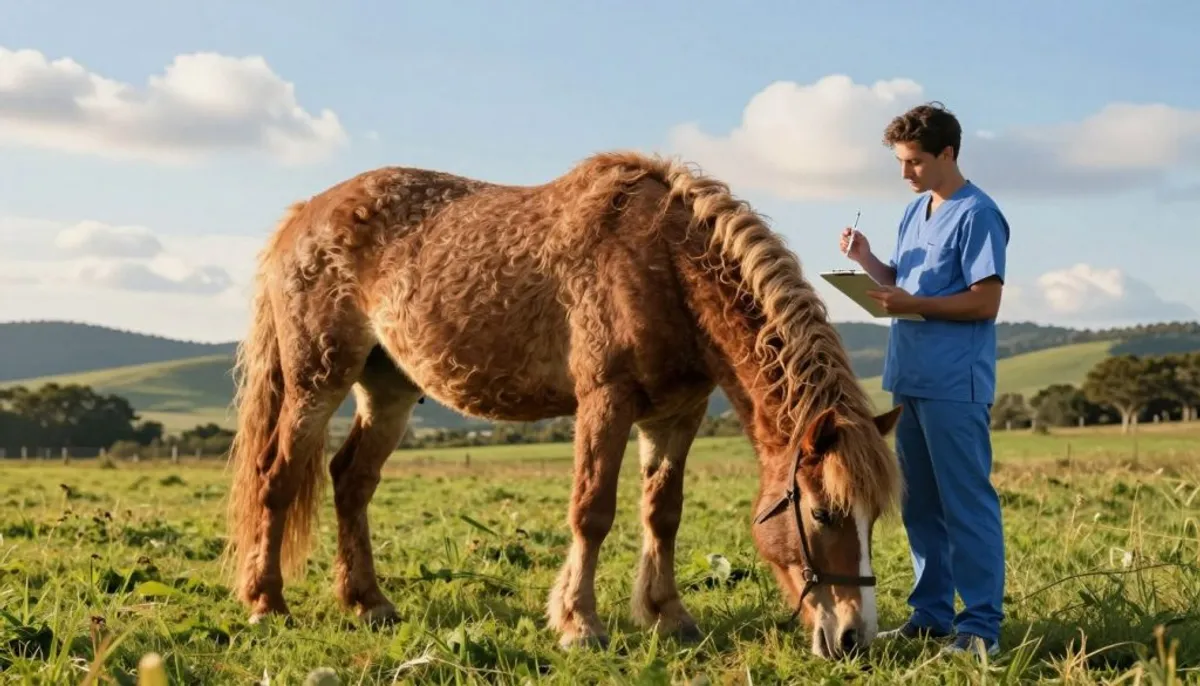
Having regular follow-up helps a lot, especially if you have a curly horse. It enjoys going out for rides or competitions. To keep your horse healthy, it's simple: follow a precise schedule and keep its health record up to date. Vaccinations help protect your horse by stimulating its specific defenses. But their effect diminishes over time, so reminders are necessary.
Vaccinations and Reminders
Vaccination against equine influenza is often required in competitions. It usually starts with two injections one month apart, followed by an annual booster. For a curly horse that travels, this avoids problems upon arrival at a site.
The tetanus vaccine is highly recommended due to the high risks of this disease, which can be fatal. A schedule of two injections one month apart is followed. Then a booster is given one year later, and every three years thereafter. Rabies vaccination is generally mandatory. For a foal, two injections one month apart are required.
Vaccination against rhinopneumonitis is strongly advised for broodmares. It helps prevent abortions. Before the first breeding, two vaccinations are given, followed by a booster at the 5th month of gestation. For other horses, an annual booster is usually recommended, depending on risks and the horse's activities.
Practical Organization
Only a veterinarian can vaccinate your horse. After vaccination, the horse's health record is updated. It contains a sticker, the date, a stamp, and the veterinarian's signature. When purchasing a horse, be sure to check its health record. This ensures that all necessary vaccinations have been done correctly.
| Vaccine | When to Request It | Common Schedule | Key Point to Remember |
|---|---|---|---|
| Equine Influenza | Competitions, active stables, travel | 2 injections ~1 month apart, then annual booster | Often required for entry to a site |
| Tetanus | For all horses, even in the pasture | 2 injections 1 month apart, booster at 1 year, then every 3 years | High risk after injury or nail |
| Rabies | Depending on local obligations and context | 1 injection (foal: 2 injections 1 month apart) | Fatal disease transmitted by bite |
| Rhinopneumonitis | Broodmares, breeding, community | 2 injections before breeding, booster at 5th month of gestation; otherwise annually | Prevention of respiratory issues and abortions |
After Vaccination
Do not vaccinate a sick or very tired horse. Sometimes, a veterinarian may decide to give multiple vaccines on the same day. Afterward, let the horse rest for two or three days, without sports, transport, or intense effort.
For influenza, some riders prefer to wait up to a week after. This is especially true if the horse has exerted itself intensely or traveled a long distance. This period of calm benefits the horse's health and helps avoid signs of fatigue.
Foals
Initially, the foal receives antibodies from its mother's colostrum for about two months. Then, several steps are followed for vaccinations. If the mother is already vaccinated, the influenza vaccination starts around six months, otherwise around four months.
The tetanus vaccination can start as early as two months, depending on the veterinarian's advice and the foal's life. For a curly horse ready to explore early, having a vaccination schedule at the stable helps to not forget important reminders.
Prices, Rarity, and Criteria for Buying a Curly Horse in France
The curly horse is rare in France, making its purchase quite expensive. A young foal can cost around €4,000, while an adult ready to ride can reach €9,000. The price varies based on several criteria such as age, character, official documents, and training.
There are about 4,000 curly horses worldwide, with about a hundred in France. This rarity contributes to high demand and limited supply. Thus, the best horses sell quickly.
The crucial moment for purchasing a curly horse is during the backing process. Buying a young foal is cheaper but requires more work. A backed adult is easier to evaluate and more practical for testing its responsiveness and comfort for daily use.
| Desired Profile | Price Guide | What You Really Pay | To Check Before Decision |
|---|---|---|---|
| Weaned Foal | ≈ €4,000 | Genetics, model, potential, work to build | Documents, identification, basic handling, growth tracking |
| Recently Backed Adult | Up to ≈ €9,000 | Training time, safety, first outings | Quality of backing, reactions outside, transport, past veterinary visits |
Before finalizing the purchase, it is crucial to obtain several documents such as official papers and the vaccination record. This information proves that the horse has been well monitored and cared for. It allows for a good comparison of available horses.
If you have allergies, it is recommended to spend time with the horse. This includes touching it, grooming it, and even riding it. This test is as important as the initial attraction, especially for a purchase in France.
Curly Horse Breeding, Availability, and Curly Horses for Sale
Finding curly horses in France can take time. Curly horse breeders have few births and closely monitor their lines. This ensures good quality but limits purchasing options.
Curly horses are quite rare, which explains their limited availability. In 2013, there were about 4,000 Curly horses worldwide and just about a hundred in France. Despite their recognition since 2011, they remain uncommon here.
Why the Supply is Limited: Low Numbers and Breed Still Rare in France
Breeders keep certain animals to improve their lines. This decreases the number of horses available for sale, especially those ready to be sold. Offers are often seasonal, linked to weaning or after initial training.
Points to Check Before Purchase: Temperament, Backing, Papers, Health History
- Temperament: The Curly is generally gentle, friendly, and calm. Observe it when handled, groomed, or in a new situation.
- Backing: Check the skills acquired such as riding, leading, stopping, and going out in a group. “Just backed” does not guarantee its outdoor autonomy.
- Papers: Ensure that the documents correspond to the designation North American Curly Horse and clearly identify the horse.
- Health History: An up-to-date record is crucial, as well as proof of vaccinations and appropriate veterinary care.
Adapting the Project to the Use: Leisure Horse, Hiking, TREC, Western
Before choosing a Curly, define its future use. Whether for leisure, hiking, TREC, or western riding, the Curly can suit. But the choice must match your needs. A beautiful curly coat is not everything; character and training level also matter.
Special Cases: Characteristics of Small Curly Ponies and Models in Curly Horses
There are small Curly horses, perfect for family or hiking. Their size ranges from 1.42 m to 1.63 m. These small models have advantages: they are compact, easy to handle, and pleasant for daily use.
| Point to Compare | Curly Horse “Small Model” | Larger Curly |
|---|---|---|
| Common Size | Around 1.42 to 1.50 m | Around 1.55 to 1.63 m |
| Sensation in the Saddle | More compact, easy to maneuver | Larger, with a wider movement |
| Frequent Use | Ideal for leisure, family, and quiet hikes | Better for more demanding hikes and western riding |
| To Check Before Purchase | Comfort for adults, carrying capacity, balance | Outdoor aptitude, reactions, and calmness |
When looking for a Curly, keep it simple: choose a model that suits you, check the papers, and the health status. This method saves you time and avoids surprises with curly horse breeders.
Conclusion
The curly horse attracts attention with its curly coat and varied colors. It is easily recognizable. Some allergic riders prefer this breed because its hair is hypoallergenic. It is also noted that it has a less strong scent than other horses. This can be pleasant on a daily basis.
This horse has a docile temperament and learns quickly. It is perfect for leisure and various activities such as hiking or western riding. With its medium size, it suits different riders, regardless of their level or needs.
Caring for a curly horse is quite simple but must be done regularly. It is necessary to maintain a clean mane and healthy skin. Using a gentle shampoo and a good detangler makes a big difference, especially during shedding. Veterinary visits are standard: vaccinations and regular follow-up.
To buy a curly horse in France, one must consider their rarity. Prices range from €4,000 to €9,000, depending on age and training. Be sure to check the documents and the horse's health status. Additionally, consider investing in quality equipment. La Sellerie Française offers high-end gear, made in France, ideal for a durable purchase.
FAQ
Is the North American Curly Horse really a “horse for allergy sufferers”?
Yes, it is often seen as a horse for allergy sufferers. Because there are fewer reactions to hair and particles in some. But it is more an improved tolerance than a total guarantee. It is advisable to test contact before making a decision.
“Hypoallergenic,” does that mean zero allergies?
No, “hypoallergenic” indicates a reduced risk of allergies in some. But it does not eliminate the risk entirely. Allergies change depending on the person, the environment, and sensitivity to various factors.
Is the Curly a genetically modified horse?
No, the characteristics of the curly horse, such as its curly hair, are natural. No genetic modification in a laboratory has been done.
Why is it sometimes said that the Curly “does not smell like a horse”?
Some find that curly horses have a less strong scent. This can vary based on several factors such as living conditions and skin condition. It is a fairly unique characteristic of this breed.
What is the typical size of a Curly horse?
Their size ranges from 1.42 m to 1.63 m. They range from pony size to larger “sport” size.
What temperament to expect from a Curly?
They are often described as docile, kind, and quick to learn. They handle stress well while remaining active and calm.
For which disciplines is the Curly most suited?
They are perfect for leisure. They are often found in hiking, TREC, and western riding. Their calmness and robustness are highly appreciated.
What coat colors are accepted in the Curly?
A: All colors are allowed, including piebald coats. Chestnut is common, but there is a great diversity.
How to recognize the morphology of a Curly, beyond the curls?
They appear quite “normal” at first glance. With a medium head, short ears, rounded croup, and short back. The limbs are slender and the hooves well-rounded. The curly hair makes their silhouette unique.
Where does the North American Curly Horse breed (formerly American Bashkir Curly) come from?
Its origin is somewhat mysterious, with links to Russia or Nevada. Modern breeding is based in America. The current name is North American Curly Horse.
Does the Curly appear in stories or legends?
Yes. Their presence has been reported in wild Mustang herds. Native American legends depict them as magical beings, sometimes linked to sorcerers.
Since when has the Curly been recognized in France?
This breed has been recognized in France since 2011 only. This is one of the reasons for their rarity and the low number of births here.
Is the Curly a rare breed?
Yes, they are rare. In 2013, it was estimated that there were about 4000 Curly horses in the world, with about a hundred in France. This affects their availability and price.
How to manage the care of a curly mane without breaking the curls?
To care for curly manes, detangle gently, strand by strand. Use water or a detangling product and be gentle in your movements.
What curly horse care should be planned for skin and coat?
Follow a simple routine. Monitor the skin, avoid harsh products, and adapt grooming. Their curly hair retains dust more easily.
What shampoo is suitable for a curly horse?
The Hilton Herbs detangling shampoo is highly appreciated. It is pleasant and useful for the skin. It helps clean without drying out the hair.
What grooming equipment is practical for a horse with curly hair?
The Magic Brush is versatile. It is useful for coats, hooves, and even equipment or clothing. It helps to clean and can serve as a sweat scraper.
Does the shedding of the Curly require special attention?
Yes, during shedding, monitor their comfort and coat. Adjust grooming to avoid irritations and dirt accumulation.
What vaccines are important for the Curly and why are reminders necessary?
Vaccines activate the body's defenses. Over time, the body needs reminders. Influenza, tetanus, rabies, and rhinopneumonitis are often discussed.
What is the vaccination protocol for equine influenza?
Vaccination against equine influenza is mandatory for competition. It starts with 2 injections one month apart, then an annual booster.
Is rabies mandatory, and what is the schedule?
Rabies vaccination is mandatory. Often, one injection is given, except for foals who can receive two. It is crucial because rabies is fatal.
Is the tetanus vaccine essential?
Tetanus is serious and often fatal, so the vaccine is advised. It is given in 2 initial injections, then regular boosters.
What is the purpose of vaccination against rhinopneumonitis?
It is recommended to protect against abortions in broodmares. Two vaccinations are given before breeding, then a booster during gestation.
How does vaccination work in practice?
It is performed by a veterinarian. Vaccine details must be noted in the horse's health record. This document is very important.
What to do after a vaccine (rest, transport, sports)?
After vaccination, the horse should rest. For influenza, plan for a week of rest without physical effort.
When to start vaccinations for a Curly foal?
The foal has initial immunity from colostrum. Influenza vaccination can start at 6 months, and tetanus as early as 2 months.
How much does a Curly horse cost in France?
Their price is higher due to their rarity. A foal can cost around €4,000, and an adult about €9,000.
Why are Curly horses rare and therefore more expensive?
Their rarity increases their price. There are few Curly horses in the world and even fewer in France. This breed is also new here.
What to check before buying a curly horse in France?
Check the level of training and if it matches your project. Carefully look at the horse's documents and health record. This information is crucial.
If my purchase is motivated by an allergy, what reflex to adopt?
Test real contact with the horse before buying. Despite their reputation, it is good to be cautious.
Is there proof of the Curly's use in activities dedicated to sensitive individuals?
Yes, the Lara Locatelli Association offers activities with Curly horses for allergic individuals. This allows them to discover the equestrian world without worry.
Where to find a breeding of Curly horses and curly horses for sale?
Look for specialized breeders and ask for the necessary documents before visiting. Good breeders will be transparent about the horse's follow-up.
Does the Curly have any notable physiological features?
They are cold-resistant and have a rare blood type. These points are interesting for breeding and veterinary follow-up.
How to choose reliable equipment to accompany a Curly (grooming, leather, use)?
For quality equipment, look at La Sellerie Française (https://laselleriefrancaise.com). They offer high-end and made in France equipment, perfect for proper maintenance.