
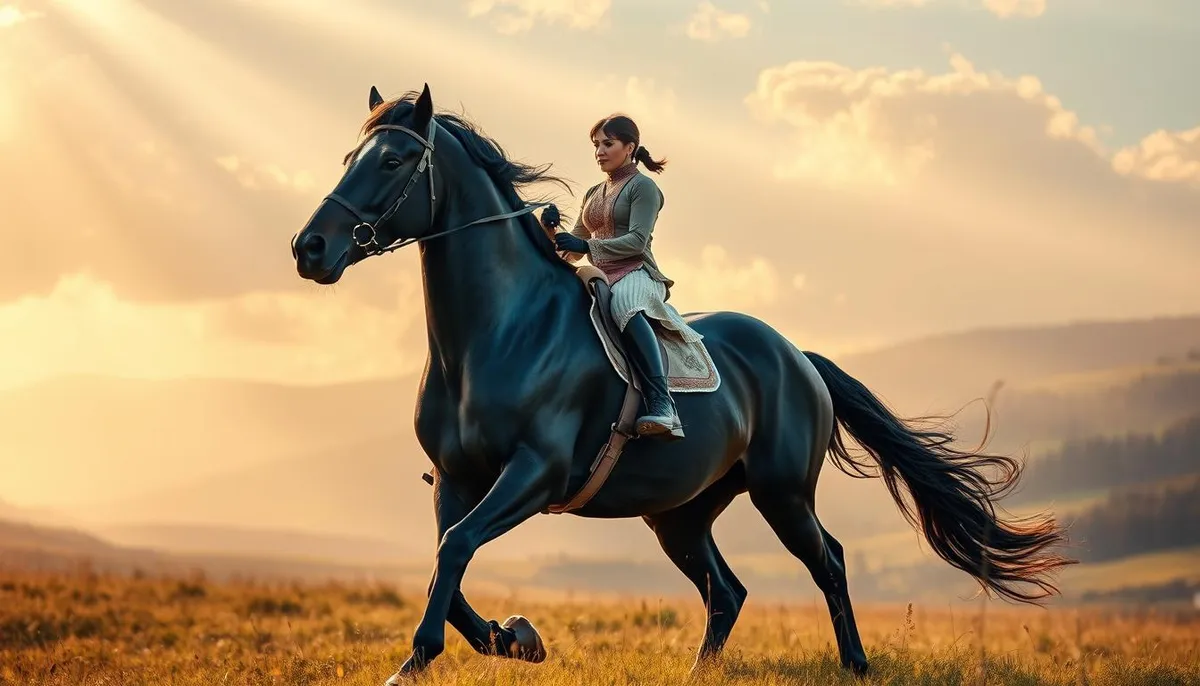
The black horse has long fascinated with its striking silhouette. It symbolizes strength, freedom, and mystery. Its image, present from Central Asia to the plains of Europe, still influences horseback riding today.
The beauty of this black coat is celebrated in myths, by chroniclers of the Middle Ages, and in sports competitions. It embodies prestige and power but can also sometimes be a harbinger. Artists, riders, and manufacturers of equestrian equipment draw inspiration from it.
Famous breeds like the Friesian, the Mustang, the black Arabian, and the Lusitano, as well as the Shire and Clydesdale, share this iconic color. Whether in parades or dressage competitions, like those featuring Totilas, black represents elegance.
The fascination with the black horse also comes from its genetics. A dominant gene produces shades ranging from deep black to "blue" black. Maintaining their coat requires special care to protect their skin from the sun. This guide explores the meanings, practices, and customs surrounding these horses in equestrianism.
Key Points
- The black horse combines visual power and legendary aura in equestrianism.
- An ambivalent black horse symbolism, between prestige, freedom, and omen.
- Flagship breeds like the Friesian, the Mustang, and the black Arabian embody the black horse coat.
- Black horse characteristics marked by a dominant genetics and subtle shades.
- A historical role as a social and political marker in the history of the black horse.
- Diverse uses: dressage, show, parade, trail riding, and draft work.
- A targeted maintenance for shine and sun management to preserve brilliance.
Origins, Symbolism, and Collective Imaginary Surrounding the Black Horse
The black horse has fascinated since prehistoric times. Its dark coat evokes night and mystery. It symbolizes strength and dynamism in equestrian culture. These stories mix power, cunning, and fate.
Greek, Nordic, Celtic, and Christian Mythologies: An Ambivalent Symbolism
In Greece, the black horse is linked to the divine with Apollo's chariots and Poseidon's horses. The rider of the Apocalypse, in the New Testament, rides a black horse that heralds famine. This symbolizes a serious warning.
The Nordic Valkyries ride towards Valhalla. The black horse in Celtic culture guides between life and death. These tales blend fear and admiration for the black horse.
Between Strength, Mystery, and Omen: White/Black Oppositions and Cultural Inversions
The contrast between white and black is ancient. White evokes protection and purity, while black represents mystery and strength. Among the Bambaras of Mali, the black horse symbolizes rain and fertility.
This duality enriches the figure of the black horse. It can be found in rituals, poetry, and equestrian culture. The dark coat symbolizes strength, secrecy, and announcement.
Messenger Between Two Worlds: Psychopomp, Visions, and Shamanic Rituals
In shamanic rituals, from northern Siberia to North America, the black horse is a spiritual guide. It allows access to the beyond, through sacrifice or vision.
The Navajos invoke a black horse for protection. It plays a role as a messenger between healing, predictions, and spiritual journeys. It is a key element of horse mythology.
From Central Asia to Europe: A Universal Presence in Art and Stories
The black horse is present from Paleolithic art to medieval miniatures. It appears in frescoes, coins, and legends, from Central Asia to Europe.
Its image is anchored in history, at the crossroads of cultures and empires. This universal symbolism of the black horse is constantly reimagined through the ages.
Black Horse and Nobility: Social Prestige from the Middle Ages to Modern Times
The black horse, from the castle to the city, showcases nobility and a unique equestrian prestige. Its captivating color commands respect and signifies social rank. In public, it demonstrates the order and good taste of the elite.
Elite Cavalry, Parades, and Tournaments: The Dark Coat as a Visual Weapon
The elite cavalry lined up with dark horses is impressive. In parade and tournament, the black coat makes the armor more striking. It conceals fatigue and highlights the grandeur of the knight.
In training, the regular movement and polished gait convey a message. The black horse becomes a powerful symbol for its rider.
Friesians, Andalusians, and Iberian Horses in Royal Courts
The Friesian, shining in black, is perfect for grand court events. The Andalusians and Iberian horses shine in dressage artistry in cities like Madrid. Their grace and elegance enchant the nobility.
In royal residences, these breeds unite aesthetics and functionality. This choice reflects an appreciated equestrian prestige both in armories and arenas.
Military and Political Symbolism: Authority, Power, and Communication
The black horse in parade highlights the uniform and visually organizes space. Riding this horse signals command. It enables communication of power and authority without words.
In the city, statues and engravings of black horses reinforce the image of authority. They anchor power in the public's mind and commemorate triumphs.
Breeds and Characteristics of the Black Horse
Black horse breeds are known for their beauty and adaptability. They are perfect for various activities like dressage, parades, or trail riding. These horses add much to the world of equestrian sports.
Iconic Breeds: Friesian, Mustang, Black Arabian, Lusitano, Shire/Clydesdale
The Friesian stands out with its black coat and abundant mane. Excelling in dressage, it has a strong medieval heritage.
The Mustang black exemplifies endurance. It loves wide spaces and is very resilient.
The black Arabian is elegant and powerful. Its speed and endurance make it an excellent choice for endurance.
The Lusitano black is known for its maneuverability, making it perfect for complex exercises.
The Shire and Clydesdale blacks are powerful and calm. They are often used to pull heavy loads in demonstrations.
Black Horse Characteristics and Uses: Dressage, Show, Trail Riding, Draft
A black coat highlights the horse's shape. This is advantageous for dressage and shows.
Outdoors, breeds like the Mustang and the black Arabian are appreciated for their endurance. They are perfect for comfortable rides.
The Shire and Clydesdale are ideal for farm work due to their strength and stable temperament.
Modern Examples in Sport: The Aura of Performers like Totilas
In equestrianism, a black coat is particularly valued. The Friesian and the Lusitano shine in artistic presentations, while the black Arabian excels in endurance.
Totilas, an exceptional horse, revolutionized modern dressage. His black coat helped popularize this color among enthusiasts.
Thus, whether for shows or endurance competitions, black horses are synonymous with performance and elegance.
Genetics of the Black Horse Coat and Color Shades
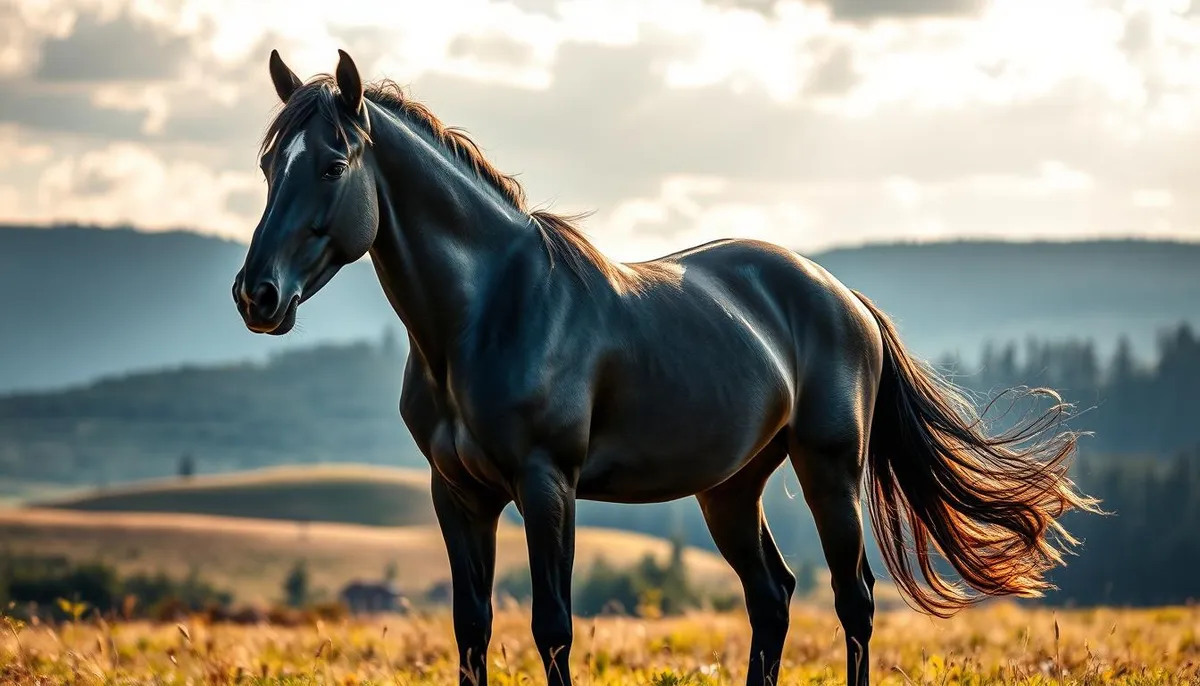
The black coat of a horse comes from a dominant gene. Only one allele is needed to produce this color. This feature explains why this color is often seen in horses. The shades of black change depending on the light and how the pigment is distributed.
There is a deep, soft, and dense black. There is also a black with metallic reflections, especially in sunlight. Conversely, black can appear almost smoky around the flanks and hindquarters. Some genes can add white markings or slightly change the black.
The way the horse is raised and lives influences its color. A good enriched diet helps maintain the coat's shine. The sun can affect the color, which is why it is important to take good care of their coat. This includes regular brushing and using suitable shampoos.
Tip: under LED lighting, black appears cooler. However, in natural light, smoky black is more pronounced. Changing the lighting during competitions can highlight these shades without cheating.
| Type of Black | Visual Signature | Genetic Influences | Key Environmental Factors | Black Coat Care Tips |
|---|---|---|---|---|
| Deep Black | Uniform, shiny, marked contrast | Fully expressed dominant black gene | Low UV exposure, balanced diet | Natural fiber brushing, neutral pH shampoo for dark coats |
| Blue Black | Bluish reflections, metallic appearance | Dense and smooth pigment expression | Cold light, short hair in summer | Anti-mineral rinsing, light polishing spray |
| Charcoal Black | Lighter areas, smoky effect | Local modulation of eumelanin | Seasonal variation, shedding, dust | Regular cleaning, lightweight mane oil |
| Black with Markings | Dominant black with white patches | Interaction of pinto genes | Lighting accentuating contrasts | Targeted cleaning of white areas, UV protection |
To maintain a beautiful coat, using an anti-UV blanket in summer is a good idea. It's also important to ensure the horse stays well-hydrated. In competitions, a simple polish highlights the horse's special black. Thus, we respect its genetics while caring for its health.
Breeding Black Horses, Prices, and Black Horses for Sale
When choosing a black horse, one must consider everything. This includes breeding, selection criteria, and budget. The following tips will guide you in reading ads and discussing with a breeder.
Black Horse Breed and Purchase Criteria: Bloodlines, Temperament, Athletic Ability
Start by checking the horse's origins. For example, choose a Friesian for dressage, a Lusitano for its maneuverability. Consider a black Arabian if you enjoy endurance or a Mustang for its robustness. The chosen breed should match your activity.
Character is also important to examine. A Friesian is calm and impressive, while a Mustang is more independent. Check what the horse knows how to do and test it in different situations. A well-conducted trial will help you make a good decision.
Price of Black Horses: Factors Affecting Value (Age, Training, Record)
The price of a black horse varies according to its age and training. An experienced horse is worth more than a young horse just starting training. Success in competitions and good health also increase its value.
A beautiful black coat can raise the price, especially for rare breeds. It's important to compare offers, request videos, and check the veterinary record.
Breeder of Black Horses and Sale of Black Horses in France: Good Practices and Ethics
In France, a good breeder provides all necessary documents and is transparent. Plan a visit and a veterinary examination. Also, make sure to conduct several trials. The breeder should consider the horse's character, not just its color.
A responsible sale includes a precise contract, an adaptation period, and advice for the start. The agreement between the rider and the horse is crucial. This reduces mistakes and ensures a good relationship.
Care and Health of the Coat: Shine, Skin Sensitivity, Sun Management
Caring for a black coat means keeping it shiny and protected. Use a soft brush every day. Employ a shampoo for dark coats and ensure the diet contains fatty acids and biotin. Be attentive to allergies and react quickly if the horse itches.
The sun can damage the coat and overheat the horse. Provide shelter, take it out when it's cool, and consider a lightweight blanket if necessary. Ensure plenty of drinking, regular hoof care, and stay alert for signs of foot disease.
| Goal | Recommended Breed/Profile | Points to Check | Impact on Black Horse Price |
|---|---|---|---|
| Dressage/Show | Friesian, Lusitano | Balance, amplitude, calm temperament | High if gaits + results |
| Trail/Endurance | Black Arabian, Domesticated Mustang | Cardio, healthy hooves, sobriety | Medium to high depending on tests |
| Draft/Driving | Shire, Clydesdale | Strength, solid back, soundness | Variable, rarity of bloodlines |
| Leisure Versatility | Crossbreeds from black horse breeding | Temperament, ease of learning | Moderate, depends on training |
Tip: for a black horse for sale, prioritize a trial in a real situation and an open exchange with the black horse breeder to adjust choices, training, and budget.
The Black Horse in Culture and Fashion: From The Black Stallion to the Art of Living
The black horse evokes adventure and elegance. It marks the fashion world and inspires in popular culture. It can be found in books, films, and even in our homes.
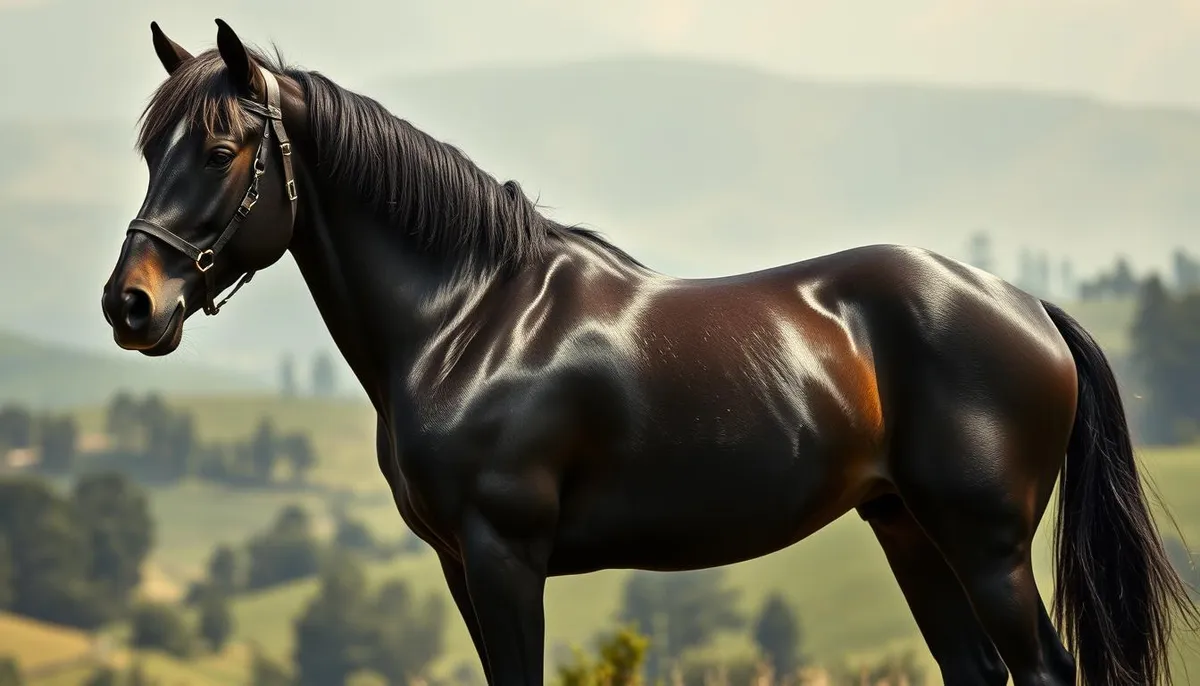
The Black Stallion by Walter Farley: The Most Famous Fictional Horse of the 20th Century
In 1941, Walter Farley presents The Black Stallion, a captivating tale of Alec Ramsay and an Arabian stallion. The book was translated and acclaimed worldwide as early as 1957. It has captured hearts everywhere.
The New York Times named it the most famous fictional horse of the 20th century. Films, series, and comics have expanded its fame. Steven Farley even continued this universe after 1998. The themes address wild nature, initiation, and passion for equestrian sport.
Pop Culture Influences: Cinema, Series, Toys, and Collections
The black horse brings mystery and strength to films and series. This interest has spurred the production of toys and figurines, collected by many.
Its image appears on posters, vinyls, and photographs. Urban fashion draws inspiration from equestrianism, with a touch of elegant black.
Equestrian Style and Decoration Inspired by the Black Horse Coat
Equestrian fashion offers elegant clothing and quality accessories. Equestrian jewelry adds a subtle yet refined touch to everyday life.
In decoration, equestrian black is reflected in various objects. Equestrian art fits perfectly into a modern and refined decor.
Premium Equipment to Enhance the Elegance of the Black Horse
Equipment for black horses designed with care enhances their silhouette. French saddlery uses high-quality leather. The materials, colors, and buckles make all the difference.
Saddles, Bridles, and Exceptional Leathers Made in France
Balanced saddles, supple bridles, and stable reins improve the horse's movements. French workshops choose slowly tanned leathers. Thus, on a black horse, each ray of light reveals this meticulous work.
Customization, Limited Editions, and Artisan Craftsmanship
Customization offers hand stitching, tailored padding, and unique borders. Limited editions are rare and designed by expert artisans. Every detail adds style.
La Sellerie Française: High-End Products 100% Made in France (from A to Z)
La Sellerie Française manufactures everything in France, ensuring quality and traceability. The leather and hardware are therefore of high quality. This ensures durability and perfect customization.
Aesthetic Match Tips for the Black Coat in Competitions and Shows
For a warm look, choose chocolate brown leathers. For a more uniform effect in dressage, opt for black on black. In parade, mix cognac piping and brass hardware for a noble appearance.
In shows, play with metallic touches to catch the light. To keep the equipment and coat shiny, use suitable products. Your black horse equipment will remain impressive for a long time.
| Element | Recommended Choice | Visual Effect on Black Coat | Technical Benefit |
|---|---|---|---|
| Saddle | Chocolate brown leather, fine grain | Warm contrast, relief of lines | Stability of the seat, durability of high-quality leather |
| Bridle | Black on black, tone-on-tone stitching | Monolithic silhouette, understated elegance | Precise adjustment, frontal comfort |
| Hardware | Polished brass or brushed steel | Measured points of light | Resistance to oxidation, easy maintenance |
| Pad | Bordeaux, pine green, midnight blue | Depth and controlled contrast | Uniform cushioning, moisture regulation |
| Customization | Cognac piping, discreet initials | Elegant signature, clear identity | Morphological adaptation, balance |
| Manufacturing | La Sellerie Française, fully made in France | Premium finish, stylistic coherence | Traceability, quality control from A to Z |
Conclusion
The black horse connects myths, history, and practice. It is present in the stories of several cultures, such as the Greeks and the Nordics. It symbolizes strength, mystery, and the passage between worlds. This horse was also very important in the Middle Ages, used in parades.
Famous breeds of black horses excel in many areas. They can be seen in dressage and trail riding, for example. Their color ranges from deep black to "blue" black. The care they require varies with the season.
When buying a black horse, one must be attentive to several things. It is essential to check its origins, behavior, and athletic skills. Their price changes with their age and experience. Every black horse sold must be well treated.
Accessories for these horses are of high quality and made in France. The black horse represents a certain equestrian lifestyle, blending beauty and tradition. It inspires a equestrianism that is both demanding and elegant.
FAQ
What makes the black horse such a fascinating figure in the collective imagination?
People find the black horse fascinating because it blends strength, mystery, and a legendary aura. From antiquity, through the Middle Ages to equestrian sports, black symbolizes power and freedom. It also carries messages in important parades and representations.
How do Greek, Nordic, Celtic, and Christian traditions interpret the black horse?
Each tradition gives it a different meaning. For example, it represents famine in the New Testament. The ancient Greeks saw these horses as servants of the gods. The Nordics and Celts assigned roles to it in the afterlife. Black counterbalances white, a sign of protection.
Are there cultural inversions surrounding black, between omen and fertility?
Absolutely. In Europe, black often symbolizes a bad omen, while in Africa, it is seen as a sign of strength and fertility. The Bambaras of Mali even consider the black horse a bearer of rain and fertility. In Siberia, it guides to the other world.
Why has the black coat been a social marker in the Middle Ages?
It was the choice of the elite, impressive in social events. Controlling a black horse was seen as a sign of dominance. This animal illustrated power during official ceremonies.
What are the iconic black horse breeds and their uses?
The Friesian, Mustang, black Arabian, Lusitano, and British horses are among the most famous. Friesians and Lusitanos are appreciated for dressage and parades. Mustangs and Arabians are perfect for long trail rides. British horses perform heavy work.
What characteristics distinguish a black horse in equestrian practice?
They are known for their expressive gaits and notable presence. Their temperaments vary by breed. For example, the Friesian is known for its quiet beauty, the Mustang for its independence, and the black Arabian for its liveliness.
Did Totilas change the perception of the black horse in sport?
Yes, in the 2010s. Totilas, with his charisma and successes, made the black coat even more desirable. Especially in dressage, he captivated a wide audience.
How does the genetics of the black horse coat work?
It is a game of dominant genes. Only one allele is needed to obtain the black color. Its shade can vary from deep black to lighter hues. Diet and care can affect its shine.
What care tips are there to preserve the shine of a black horse?
It is essential to protect it from the sun, brush it regularly, and use suitable products. A good diet and protection against skin sensitivities are also crucial. In summer, using shelters and blankets is recommended.
How to choose a black horse breed according to my equestrian project?
Consider the purpose and character of the horse. For dressage, choose Friesian or Lusitano. For endurance, a black Arabian or Mustang. Shires and Clydesdales are suitable for heavy work. Pay attention to the horse's quality when making your choice.
What are the price factors for a black horse?
Several factors affect the price: age, training, performance, health, and rarity. Even if the color is sought after, the horse's skills remain a priority.
Where to find a reliable black horse breeder and how to successfully sell in France?
Look for breeders who are transparent about the origins and health of their animals. A good breeder will also emphasize the horse's well-being. Ensure you have a clear contract when selling.
How to spot a serious black horse for sale ad?
A good ad should detail the horse's age, size, health results, and skill level. Sellers should be open to trials and verification. Consistency of the information provided is essential.
What does The Black Stallion by Walter Farley contribute to the legend of the black horse?
Since its publication in 1941, "The Black Stallion" has fascinated the world. The book made "Black," a black Arabian stallion, a true icon. With its adaptations and sequels, it introduced the beauty of black horses to many readers.
How does pop culture and fashion extend this imaginary?
Film, toys, and fashion continue to celebrate the black horse. Clothing, jewelry, and decorations inspired by them show that their impact goes well beyond stables.
What premium equipment enhances a black horse in competitions?
Choose high-quality equipment to showcase your horse. Colors like burgundy or midnight blue highlight its coat under lights. Fine leather finishes add a touch of elegance.
Why prioritize a saddlery made in France for a black horse?
French saddleries are known for their superior quality. They ensure durability and finishing that meets the standards of dressage and shows. Supporting local craftsmanship also offers ecological advantages.
What does La Sellerie Française offer to equip a black horse?
It offers custom or limited-edition equipment, all made in France. With a wide choice of leathers and finishes, each product is designed to meet specific needs and enhance your horse's appearance.
How to accessorize without "breaking" the uniformity of a black coat in a show?
Use accessories that delicately complement the coat without overshadowing it. Richly colored pads and discreet finishes highlight the natural beauty of the horse.