
A foundered horse feels intense pain in the foot. This is due to inflammation of the laminae and insufficient blood circulation. These issues can affect the front legs or all legs.
If action is not taken quickly, complications worsen. For example, the internal phalanx may rotate, abscesses can appear, and lameness may become chronic.
This guide shows you how to intervene quickly. It explains how to apply an effective and gradual treatment. Stabilizing inflammation and supporting the hoof is crucial for relieving the horse in the long term.
The causes of founder vary widely. They include too many carbohydrates in the spring, obesity, acute stress, drinking cold water after intense exertion, or metabolic diseases such as equine metabolic syndrome. This is why it is vital to work in coordination with your veterinarian and farrier.
For more comfort, choose a soft surface and ensure that trimming is done regularly. Opt for a low-sugar diet. Use quality equipment to cushion, protect the hoof, and better distribute pressure. La Sellerie Française offers ideal French artisanal solutions for quality follow-up and respectful rehabilitation.
Key Takeaways
- Act quickly: strict rest, veterinary contact, anti-inflammatories, and local cold.
- Understand the risk: inflammation of the laminae and possible rotation of P3.
- Adapt the environment: shock-absorbing surfaces, controlled rations, regular follow-up.
- Coordinate care: veterinary and farrier plans to support the foot.
- Limit carbohydrates: rich grass, grains, and sweet treats under control.
- Equip with care: La Sellerie Française, made in France products, and French craftsmanship to optimize comfort.
Understanding Equine Founder: Causes, Mechanisms, and Risks
Founder originates from a significant imbalance. It is crucial to understand the link between the horse's environment, its food, and how it reacts to stress. Good equine founder prevention begins by recognizing warning signs and avoiding everyday triggers.
Causes of Foundered Horse: Excess Sugars, Obesity, Stress, and Metabolic Diseases
The causes of a foundered horse are diverse. These causes include eating too much rich sugar grass, unlimited access to grains, and being overweight. Obese horses or those with certain equine metabolic diseases are at greater risk when faced with a large amount of sugar.
Intense stress, sudden changes in diet, and lack of activity exacerbate these problems. Equine metabolic syndrome can increase the risk of inflammation due to a poor reaction to insulin.
Internal Mechanisms: Inflammation of the Laminae, Poor Perfusion, Rotation Risks
Inflammation attacks the laminae in the hoof, which can suspend the distal bone. Blood circulation decreases, reducing oxygen supply and weakening tissues.
This situation can cause the rotation or tipping of the third phalanx as well as abscesses. Without appropriate equine founder prevention, the foot can be severely damaged, leading to persistent lameness.
Aggravating Factors: Spring Grass, Cold Water After Exertion, Colic, and EMS
Rich sugar grass after dew or frost, drinking very cold water after exertion, and colic increase the risks. Equine metabolic syndrome makes these situations even more dangerous.
Avoiding these situations, controlling weight, and distributing meals can help prevent problems in horses sensitive to equine metabolic diseases.
| Trigger | Main Mechanism | Risk Indicator | Immediate Measure |
|---|---|---|---|
| Spring Grass Rich in Sugars | Peak of fermentable carbohydrates, high insulin response | Rapid weight gain, "lump" fat on the neck | Restricted grazing, low-sugar analyzed hay |
| Overweight/Obesity and Equine Metabolic Syndrome | Insulin resistance, systemic inflammation | Hard nuchal crest, increased girth | Controlled ration, monitored gentle exercise |
| Acute Stress and Colic | Release of stress hormones, vascular disruption | Sweating, agitation, abdominal pain | Pain management, moderate hydration, rest |
| Very Cold Water After Exertion | Brutal vasoconstriction, decreased hoof perfusion | Hot and panting horse after work | Gradual cooling, water at moderate temperature |
Identifying Symptoms of a Foundered Horse and Acting Urgently
Early detection of signs that a horse is foundered is crucial. One must observe how it walks, the temperature of its feet, and its behavior. This allows for a quick response before problems worsen. The first signs may be subtle but can escalate rapidly.
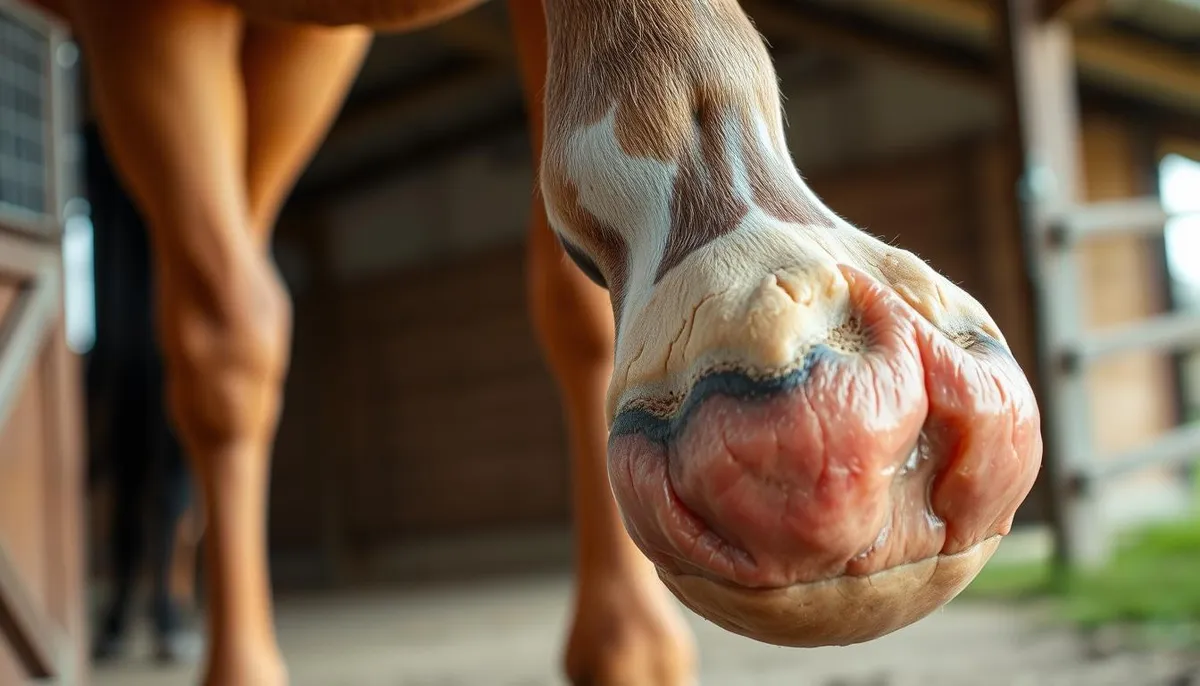
Key Signs: severe lameness, walking "on eggshells," digital pulse, and heat in the feet
A sudden lameness and very hot feet are important alerts. Touching the legs and feeling a strong pulse often indicate founder. One may also notice pain when touched, reluctance to move, sweating, and sometimes, an increased heart rate and respiration.
Typical Postures: weight shifting, camped stance, horse lying down if multiple feet are affected
The horse positions itself to shift its weight backward. It advances its front legs and avoids moving the painful parts. When multiple feet are involved, the horse may lie down to limit pressure on its limbs.
First Safe Actions: immediate veterinary contact and strict rest
If in doubt about founder, quickly contact a veterinarian. The horse should remain calm in a stall on soft bedding. Avoid excessive movement and keep fresh water accessible. It is crucial to protect its feet until the veterinarian arrives, especially if the pulse remains strong and the feet are hot.
Treatment for Foundered Horse: Veterinary Protocols, Farriery, and Daily Management
The treatment for a foundered horse relies on a coordinated approach. It aims to relieve pain, stabilize the foot, and ensure safe healing. For this, the horse must remain on soft bedding, which reduces stress on its foot and prepares for further care.
Anti-inflammatories, X-rays, and Follow-up Plan
The veterinarian uses anti-inflammatories for horses and pain relievers, with stomach protection if needed. X-rays allow checking the angle and position of the bone in the foot. They also help define the necessary support and plan follow-up.
It is crucial to have a clear protocol: mandatory rest, pain management, checking circulation in the foot, and frequent re-evaluations. Teamwork with the farrier is essential to adapt treatment.
Appropriate Shoeing and Trimming: Pressure Redistribution and Foot Support
A special founder shoe helps better distribute weight, protect the sole, and reduce pressure. Specific shoes, like those from Michel Vaillant, are chosen to better support the foot and increase its stability.
Appropriate trimming allows correcting the shape of the foot, reducing stress, and protecting the sole. The farrier adapts the support (pads, plates, soft materials) according to the X-rays and the horse's reaction.
Controlled Ration: Quality Hay, Reduced Carbohydrates, Weight Management
Good nutrition is key to recovery. Limiting sugars and using good hay helps control insulin and inflammation. It is important to reduce or eliminate foods that are too rich in sugar.
It is essential to measure food accurately, divide rations, and monitor the horse's weight. Regular follow-up adjusts the treatment for a foundered horse, the founder shoe, the appropriate trimming, and the low-sugar ration according to the horse's needs.
Natural Remedies for Horses: Relieving a Foundered Horse Safely
Simple actions can quickly relieve your horse while avoiding aggravating its condition. Using natural remedies and resting it on deep bedding are good practices. These methods help reduce inflammation while waiting for the veterinarian.

Cryotherapy: Cold Water Baths/Ice Packs to Reduce Inflammation
Cryotherapy is essential in emergencies. Immerse each hoof in cold water for 10 to 20 minutes, several times a day. Use ice packs, wrapped in cloth, on the coronet and hoof. This reduces tissue temperature and pain.
Ensure your horse tolerates the treatment well: avoid prolonged numbness or whitened skin. Change the ice when it melts and dry well between applications.
Green Clay Poultice and Gentle Solutions (Chamomile, Linden, Diluted Apple Cider Vinegar)
Apply a thick layer of green clay on the coronet and bottom of the hoof. Secure with a light bandage, to be changed every 6 to 8 hours. This helps drain and soothe, complementing the effectiveness of cryotherapy.
You can also use diluted apple cider vinegar compresses (1 for 2 liters of water). If the horse tolerates, linden or chamomile infusion baths can provide additional comfort. These methods support treatment while waiting for a more thorough examination.
Absolutely Avoid: Forcing Movement, Heating Hooves, Self-Medication
- Never force movement: the weakened foot deteriorates quickly.
- Do not apply heat or massage to the feet in the acute phase.
- No medications without prescription. Also avoid hard surfaces: prefer straw, shavings, fine sand, or rubber mats.
Suitable Exercises for Founder: Gradual Resumption After Veterinary Advice
When pain decreases, follow the veterinarian's advice to start suitable exercises. Practice short walking sessions on a shock-absorbing surface. Observe the horse's reactions to heat and pulse.
Gradually increase the duration of exercise, avoiding tight turns and slopes. Good dietary supplements, without added sugars, can help. For example, quality biotin supports the hoof. This aids natural remedies and green clay.
| Approach | Main Objective | Recommended Frequency | Points of Caution |
|---|---|---|---|
| Cryotherapy for Hooves (cold water, ice) | Reduce inflammation and pain | 10–20 min, several times/day | Protect skin, avoid prolonged numbness |
| Green Clay for Horses in poultice | Drainage, local soothing effect | Renew every 6–8 h | Light bandage, remove if irritation occurs |
| Diluted Apple Cider Vinegar Compresses | Temporary comfort, sanitization | Short applications, 1–2 times/day | Respect dilution, rinse if tingling occurs |
| Chamomile/Linden Infusions (warm bath) | Soothing | According to tolerance, brief sessions | Warm temperature, not in uncontrolled acute phase |
| Suitable Exercises for Foundered Horses | Functional resumption without overload | After veterinary approval, slow progression | Soft surfaces, monitor pain/heat |
Foundered Horse: Equine Founder Prevention and Long-Term Management
Effective prevention of founder starts with simple daily actions. It is crucial to regularly measure and observe to make the right choices. By managing these aspects well, one protects the hooves and avoids relapses.
Preventive Strategies — Keep a stable weight for your horse, ideally a score between 5 and 6/9. Limit grazing time, use mobile fencing, and as soon as the risk increases, put a grazing muzzle on it. Collaborate with your veterinarian to monitor equine metabolic syndrome and adapt physical activity according to the season.
Feeding — Choose good quality hay and soak it if necessary to reduce sugars. Serve meals in small quantities and add specific supplements. Use a sugar-free biotin for the hoof. Foods designed for sensitive horses help control insulin while meeting their nutritional needs.
Farrier/Veterinarian Follow-up — Regular trimming by your farrier ensures good posture. Frequently check the pulse, temperature of the feet, and how it moves. With past issues, have regular X-rays and adjust therapeutic shoes according to your veterinarian's advice.
Adapting the Environment — Provide comfortable bedding and well-cushioned surfaces. Use rubber mats and create pleasant resting areas. Avoid making your horse walk on hard surfaces. Organize the outdoor space with short paths and closely monitor grazing, especially when fructans are high. La Sellerie Française offers durable equipment to improve daily life and comfort.
- Key Points: equine founder prevention, grazing control, sugar-free biotin, farrier follow-up.
- Goal: a long-term management plan for foundered horses, pragmatic and measurable.
Conclusion
Every hour is crucial when facing a foundered horse. It is important to quickly recognize the signs: lameness, heat in the foot, rapid pulse, abnormal posture. Then, contacting the veterinarian, resting the horse, and applying cold are essential. Treatment may include medications, foot care, and a special diet.
The causes of founder vary: too much sugar, overweight, stress, certain diseases, spring grass, cold water after exertion, or colic. To avoid them, control the horse's weight, limit access to grass, provide good hay, and healthy dietary supplements. At home, using cold, green clay, and soft surfaces helps. Avoid forcing the horse to walk, exposing it to heat, and giving medications without veterinary advice.
Quality equipment made by French artisans, like La Sellerie Française, is important. They help protect and support the horse's feet daily. With regular help from the farrier and veterinarian, they improve treatment.
By following a coordinated plan, one can help a foundered horse move better and avoid further problems. Prevention becomes second nature: observing the horse, adjusting care, anticipating risks. Thus, we take care of the horse's health and well-being in the long term.
FAQ
What are the first symptoms of a foundered horse to recognize without delay?
Be attentive to lameness, a gait as if the horse is walking on eggshells. There is also a strong heat in the feet and a marked digital pulse. The horse tends to adopt a camped position, may sweat, refuse to move forward, and show notable pain when pinched.
In the face of these signs, limit the horse's movement on a very soft surface. And call a veterinarian without delay.
What are the main causes of founder in horses?
Several factors can cause founder. For example, an excess of certain foods, such as very sugary grass or grains. Obesity, intense stress, drinking cold water after running, having colic, or equine metabolic syndrome (EMS) are also causes.
These elements disrupt blood flow in the hooves, causing inflammation and pain.
How to relieve a foundered horse in the first hours?
It is vital to limit the horse's movements, keeping it on thick, soft bedding. Start cryotherapy immediately, with cold water or ice, and avoid hard surfaces. Important note: do not give any medication without a veterinarian's advice.
What is the recommended treatment for foundered horses by veterinarians?
The veterinarian may prescribe anti-inflammatories and request X-rays. These help to see the position of the bones in the hoof. Regular follow-up with the veterinarian is crucial.
He works with the farrier to treat the hoof. Together, they decide when and how the horse can resume activity.
Shoeing or trimming: what does farriery provide in case of founder?
The farrier can perform special trimming to help relieve the horse. This involves adjusting the shape of the hoof for less pain. Then, he can use special shoes for more comfort and stability.
What ration for a foundered horse or at risk of founder?
Good quality hay is the basis of their diet. Foods rich in sugars should be avoided. Monitoring the horse's weight is also essential. Some supplements, like biotin, can be added, but always without added sugars, especially for horses with EMS.
What natural remedies for foundered horses can help safely?
Using cryotherapy several times can help. Green clay poultices and diluted apple cider vinegar compresses are beneficial. Baths with chamomile or linden can soothe, but do not replace veterinary treatment.
What practices should be avoided during a founder episode?
Never force a horse to walk unless necessary. Avoid hard surfaces and heating or massaging the hooves. Never administer medications without consulting a veterinarian, as this could worsen the horse's condition.
When and how to resume suitable exercises for a foundered horse?
Start only after the veterinarian's approval and when examinations show improvement. Sessions should be short, on a soft surface, and stop if the horse shows signs of pain.
How to prevent equine founder in the long term?
Monitor the horse's weight and limit its access to rich pastures, especially in spring. Using a grazing muzzle may be an option. Follow recommendations for EMS, provide a low-sugar ration, ensure regular trimming, and remain attentive to warning signs.
Also, adapt its environment for more comfort.
Can founder affect all four feet?
Yes, and in this case, the pain is often very strong. The horse may even refuse to stand. Quick and serious intervention is necessary to prevent severe consequences.
What equipment can improve the comfort of a foundered horse?
Special mats, protections, and rubber surfaces help reduce the impact on the hooves. La Sellerie Française offers quality equipment to aid in the rehabilitation of the horse.
What is the effectiveness of cryotherapy in founder?
Cryotherapy can really reduce inflammation and heat in the tissues. Regularly applying cold water or ice can prevent damage to the laminae, especially at the onset of founder.
How to recognize an abnormal digital pulse?
A strong and rapid pulse at the base of the pastern often indicates an anomaly. Compare the feet to detect any differences that may indicate inflammation.
Does EMS really increase the risk of founder?
Absolutely. EMS makes the horse more susceptible to insulin resistance and other vascular problems. Regular follow-up, proper nutrition, and balanced weight are key to reducing this risk.