
The Andalusian horse, known as the Pure Spanish Breed (PRE), has captivated people's hearts for a long time. Born in Andalusia and the Iberian Peninsula, it is known for its grace and intelligence. Horse lovers admire its elegant movements, flexibility, and gentle nature.
From the time of cave paintings to the present day, the Spanish horse has always been there. It was a favorite of kings such as Charles V and Napoleon. Nowadays, these horses excel in dressage and equestrian performances.
This animal has also left its mark on European breeding. It has influenced breeds such as the Lipizzaner and the Friesian. A recent book, released in 2024, explores this precious heritage and modern interest in the Andalusian horse.
Key Points
- The Pure Spanish Breed (PRE), known as the Andalusian horse, originates from Andalusia and the Iberian Peninsula.
- Prehistoric evidence attests to the long presence of the Spanish breed horse.
- Horse of kings, it served Charles V, Francis I, Louis XV, and Napoleon.
- The Spanish horses excel in dressage, High School, doma vaquera, and shows.
- The PRE has influenced many European breeds, including the Lipizzaner and the Friesian.
- A recent publication (Gueritot Patrice, 2024) confirms the vitality and appeal of the breed.
Origins and Heritage of the Andalusian Horse
The Andalusian horse history begins in the red soil of the Iberian Peninsula. This is where the PRE origins take root, influenced by cultures, trade exchanges, and the demands of riders. Centuries of traditions have created an elegant horse, perfect for dressage and combat.
Documented Prehistoric Roots in the Iberian Peninsula
Ancient paintings show slender and agile horses everywhere, from the Atlantic to the Ebro. They prove that horses have always been present in the Iberian Peninsula, dating back to 5000 BC. This long history helps understand how the PRE origins adapted to the terrain, climate, and local equestrian practices.
From War Mount to Royal Courts of Europe
Initially, the PRE was valued for its suppleness and maneuverability. However, it lost importance in the Middle Ages, replaced by heavier horses. With the 15th century and the introduction of light firearms, it became essential again. During the Renaissance, experts like Antoine de Pluvinel elevated the Andalusian horse history to a level of prestige in the royal courts. Ridden by famous sovereigns, these horses symbolized power and elegance.
The Role of Carthusian Monks and the Cartujanos Lineage
The Carthusian monks of Jerez, Seville, and Cazalla protected the Cartujanos, a precious genetic heritage. Their rigorous work preserved the purity of the breed. Thus, even today, the Cartujanos remain among the most desired PREs, true witnesses of their PRE origins.
| Period | Role of the PRE | Historical Milestones | Impact on Royal Court Growth |
|---|---|---|---|
| Prehistory – Antiquity | Light, agile mount | Cave paintings in Iberian Peninsula | Reputation for endurance and maneuverability |
| Middle Ages | Reduced role against war horses | Preference for armor and shock | Transmission of local lineages, preserved know-how |
| 15th–16th Centuries | Return as a military mount | Lighter weapons, mobility tactics | Birth of prestige among royal courts |
| Renaissance – Modern Era | School and show horse | Pluvinel, European sovereigns | Spread of the Andalusian model and influence on other breeds |
| Carthusians and Cartujanos | Preservation of purity | Monasteries of Jerez, Seville, Cazalla | Reference for the most prized PRE lineages |
Morphology and Characteristics of the Pure Spanish Breed (PRE)
The PRE is easily distinguishable: it is elegant, proud, and agile. It has a compact shape that helps maintain its balance. It is of medium height, generally around 1.50 m, but some can reach over 1.70 m.
Sub-convex profile, arched neck, and short, supple back
The head of the PRE is well-proportioned, ranging from a straight to slightly convex profile. Its neck is long, arched, and muscular, giving it a noble appearance. The back is short and supple, allowing precision and a beautiful roundness of the croup for good starts.
These characteristics make the PRE highly appreciated by dressage riders. They enjoy its ease of impulsion and stability. This makes the horse ideal for high school competitions.
Power, natural balance, and superior agility
The PRE is powerful without being overly massive. Its strong limbs allow it to move with agility. However, being fast is not its main asset.
- It has a natural balance that aids in advanced exercises.
- It learns quickly due to its intelligence.
- Its movements are elegant, perfect for figures like the piaffe.
Its combination of agility and gentleness ensures impressive performances, whether in competition or in shows.
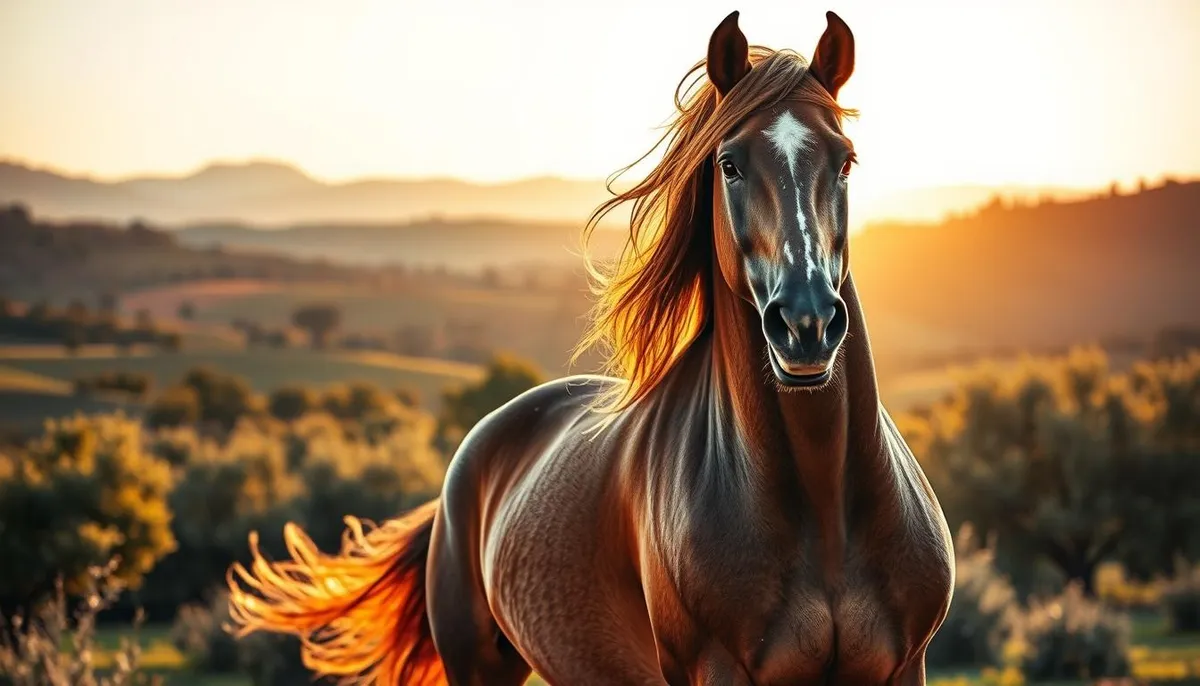
Abundant mane and natural elegance in motion
The thick and sometimes curly mane adds to its iconic appearance. In action, its well-held neck and tail give it a natural elegance.
These aesthetic details highlight its beauty and make it a star of presentations. It is admirable for its compact silhouette, balance, and stage presence.
Coats and Unique Beauty of the Spanish Breed Horse
The Spanish breed horse is famous for its varied colors. Colors like gray and bay are the most common. But the black bay gray shows how unique black can be. The chestnut and palomino, accepted by the stud book, add brightness to the PRE aesthetic.
Colors vary by region but remain pure. In Jerez, gray horses are mostly found, which lighten over time. In Cordoba, horses are more often bay and rounder. This diversity shows that there is no crossbreeding, preserving the traits of the PRE.
Their long, wavy manes catch the light well, perfect for photos and shows. In motion, their beauty is even more striking. Their proud demeanor and lively movements highlight their magnificent coat.
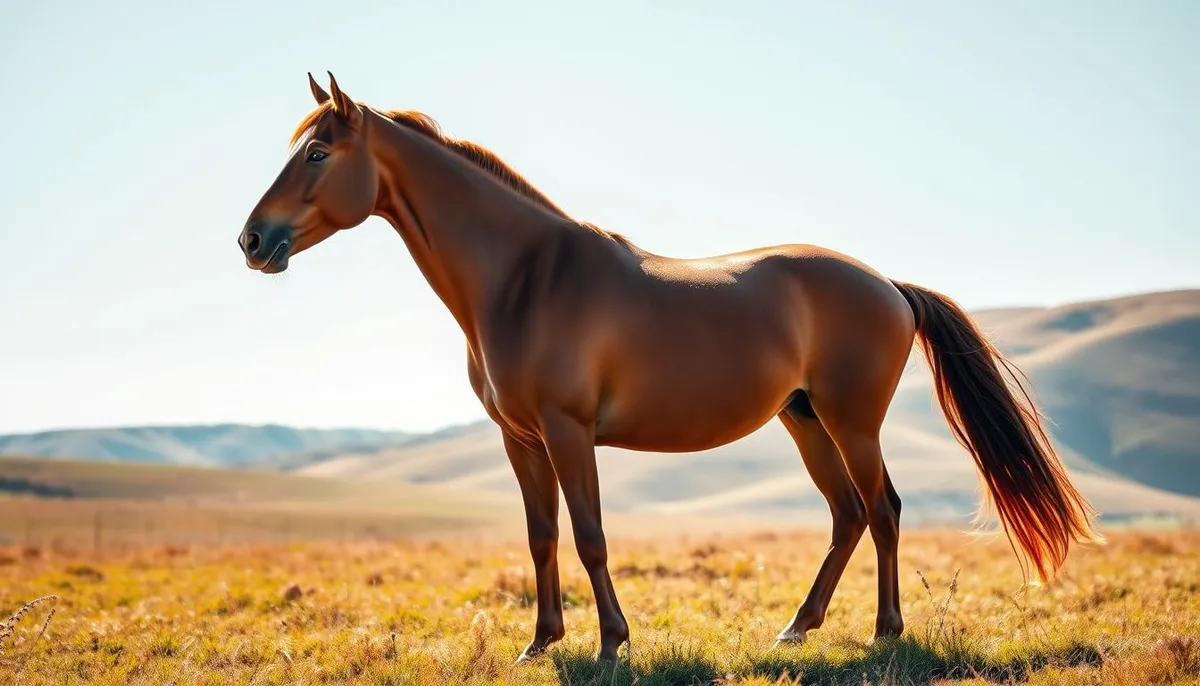
Choosing a color among the PRE coats is an act that combines preference and practicality for breeders and riders. The standard of these horses is well preserved through their various colors.
Uses and Disciplines: Dressage Spanish Horses, Doma Vaquera, and Shows
The PRE is versatile and expressive, from the arena to the stages. It has a natural balance and always shows its eagerness to participate. This makes it a valuable ally.
In dressage, it combines finesse with the sobriety of movements. This horse is appreciated by professionals and amateurs alike.
Classical Dressage and High School, a Living Tradition
It shines in dressage with its rhythmic gaits. The PRE excels in piaffe, passage, and pirouettes. The High School is its domain, thanks to specialized techniques.
Its flexibility and ability to learn quickly allow for precise work. It is truly made for this.
It maintains a light contact thanks to its flexible back. Riders value its ability to collect, crucial in Grand Prix.
Doma Vaquera and Rejoneo, Andalusian Heritages
The doma vaquera comes from cattle work. It requires quick and precise movements. The PRE shows talent in this, thanks to its agility and calmness.
In rejoneo, it demonstrates courage and precision. Its natural agility is an asset. This contributes to its reputation in Spain.
Equestrian Competitions and Presence in Cinema
It is present in dressage competitions and High School shows. Its beauty also earns it roles in cinema, such as in Cavalia.
It enjoys performing as much as exploring on trails or participating in shows. This showcases its versatility, from professional to leisure.
Spanish Horses
Every year in France, new talented Spanish horses are discovered. They have a compact silhouette, elegant gaits, and a generous spirit that pleases many. These qualities give rise to a horse passion that goes well beyond experts.
PRE horses are carefully selected: no mixing, well-kept records, and a unique character maintained. They inherit Andalusian traditions and High School techniques. The Royal Andalusian School in Jerez is an inspiration for stables in France.
In France, the Andalusian horse excels both in competition and for pleasure. It is responsive, which aids learning, and stable, which builds confidence. Its natural beauty attracts attention whether in shows or competitions, increasing interest in these horses.
Renowned breeders and trainers highlight the PRE horse for its harmony and finesse of movement. Equestrian centers offer courses where tradition and technique meet. This dynamic perpetuates an intense and demanding horse passion.
In French stables, great care is taken of the Andalusian horse: meticulous preparation, suitable equipment, and patient training. These efforts are reflected in dressage performances, making Spanish horses preferred choices for shows and expressive riding.
The Royal Andalusian School of Equestrian Arts and its Figures
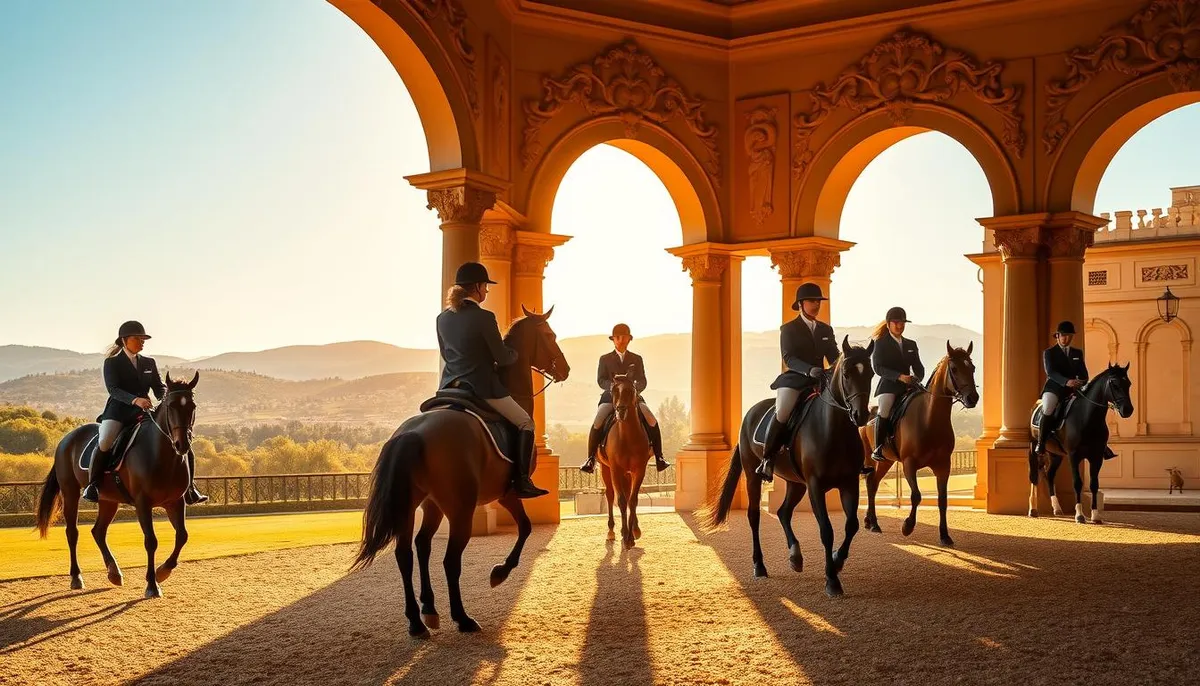
In Jerez de la Frontera, the Andalusian horse shows all its spirit. This school is famous for its discipline and artistic beauty. It brilliantly combines precise technique and grace, attracting spectators from around the world.
Foundation in Jerez, Royal Title, and International Influence
The school was founded in 1973 by Don Álvaro Domecq. He revived the tradition of Andalusian High School and doma vaquera. King Juan Carlos I awarded it the "Caballo de Oro," recognizing its excellence.
In 1987, this king became honorary president, giving the school its "royal" title. Its riding arena can accommodate 1,600 people and it has about 60 PRE horses. This makes it a key element of equestrian culture in Spain.
The Show "Cómo bailan los caballos andaluces"
The show "Cómo bailan los caballos andaluces" is noted for its rhythm and quality of movements. Played in Jerez and then elsewhere, it showcases a magnificent harmony between riders and horses with the beautiful PRE horses.
Traditional costumes, music, and High School numbers come together to evoke Andalusia. The staging highlights each performance, showcasing the expertise of the Royal Andalusian School.
Rafael Soto, Chief Horseman and Icon of Dressage
Rafael Soto Andrade, known for his Olympic experience, leads the Spanish team with passion. As chief horseman, he teaches with precision and beautiful musicality in his lessons.
His approach combines strength, delicacy, and precision. In Jerez, he motivates young riders. His work shines in the show "Cómo bailan los caballos andaluces", reflecting his talent in equestrian art and his dedication to the school.
Breeding Spanish Horses, Spanish Horse Pedigree, and Purebred Foals
The breeding of Spanish horses relies on two important things. First, the purity of their genetics. Then, a very strict selection. The PRE registry helps with this. It verifies origins, frames registrations, and defines the look of the horses. These horses are recognized by their profile, arched neck, and short back.
The colors of these horses are also special. Gray is the most common. But there are also bay, black, chestnut, and palomino. With these rules, strong, expressive, and truly beautiful horses are produced.
After difficult times in the 19th century, Jerez and Seville revitalized breeding. The Cartujanos, linked to the monks of Jerez de la Frontera and Cazalla, are crucial in this renaissance. They bring great quality and natural elegance to these horses. This is especially evident in their way of moving and their beautiful heads.
Breeders seek to have purebred foals that are brave and trustworthy. They appreciate their gentleness, cleverness, and elegant gaits. These traits are perfect for dressage and other equestrian sports. They aim for a sturdy physical build, with a broad chest and strong shoulders.
Generally, these horses are about 1.50 m tall. Some can even reach 1.70 m. But despite their height, they maintain incredible grace.
To prove a horse's lineage, the PRE registry requires precise documentation. Parentage tests and veterinary examinations are conducted. This ensures that each horse has a secure pedigree. Thus, international judges recognize the value of these horses. And they protect the quality of breeding for the future.
Breeder's advice: to choose a good horse, carefully observe how it moves. Check that it has a supple back and mobile hips. The PRE registry advises looking for a horse with a beautiful topline. This is essential for agility and performance in competition.
- Tracked origins: complete registration in the PRE stud book and verified lineage.
- Type model: sub-convex profile, arched neck, short back, free shoulders.
- Temperament: calm, sensitive to the hand, reactive but manageable.
- Gaits: spacious walk, elevated trot, balanced and rhythmic canter.
Equipment and French Style: La Sellerie Française to Enhance the PRE
To make your PRE stand out in competition, the quality of leather is essential. La Sellerie Française offers luxury equipment specially designed for these horses. They are adapted to their unique shape, providing comfort and elegance.
Every aspect of our products aims to perfect the horse's movement. This helps your horse move freely and effortlessly. Our equipment enhances performance during training and competitions.
High-end saddlery, made in France, 100% manufactured in France
All production of La Sellerie Française takes place in France. From leather selection to finishing, each step is meticulous. This guarantees unparalleled quality, visible in the durability of the leather and the finesse of the stitching.
This commitment to quality ensures a product that lasts long. It offers impeccable interaction between the horse and rider. The ergonomic design contributes to a comfortable experience from the start.
Unique products, custom-made or in limited series for dressage
La Sellerie Française creates perfect saddles for the PRE, taking into account their specific morphology. They support the horse's back and ensure a natural balance. The bridles and girths are designed to optimize performance in dressage.
Whether custom-made or in limited quantities, each item is crafted with precision. They aim to improve the rider's posture and allow for subtle movements. This equipment helps reveal the true potential of your PRE.
Supporting training, selling Spanish horses, and performance
Our high-quality equipment promotes regular practice and impeccable presentation. For the sale of Spanish horses, good equipment highlights their physique. This enhances their movement and convinces buyers of their value.
In competition and during shows, our material ensures precise management and smooth transitions. The design remains discreet, highlighting the horse's natural beauty.
| Element | Benefit for PRE | Benefit for rider | Signature La Sellerie Française |
|---|---|---|---|
| Dressage saddle | Panels adapted to the short back, adjustable arch | Centered seat, precise aids | Full-grain leather, artisanal assembly made in France |
| Anatomical bridle | Enhanced head carriage, neck comfort | Clear contact, stable hand | Hand-stitched, clean edge finishes |
| Ergonomic girth | Shoulder freedom, easy breathing | Airy gaits, increased amplitude | Profiled shape, French stainless steel fittings |
| Stirrups and accessories | Even pressure distribution | Lateral stability, safety | Numbered parts, limited series |
| Custom solutions | Adjustment to the chest and arched neck | Durable comfort, consistent performance | Complete traceability, high-end equipment |
Conclusion
Born in Andalusia, the Andalusian horse is rich in a centuries-old past. From its meticulous selection to its characteristics of excellence, it embodies perfection. Its appearance, morphology, and character attract more and more attention in France.
The PRE excels in several disciplines such as dressage and doma vaquera. Its versatility makes it valuable both on stage and in competitions. Grace and performance blend in it.
Renowned institutions, such as the Royal Andalusian School of Equestrian Arts, value this heritage. Experts work to maintain this tradition of excellence. They help preserve the beauty and precision of PRE dressage.
Equipment also plays a key role. The equipment from La Sellerie Française, designed for the PRE, combines technicality and style. They contribute to performance and highlight the union between tradition and innovation. The Andalusian horse thus stands out as an icon, a testament to its influence around the world.
FAQ
What distinguishes the Pure Spanish Breed (PRE), also known as the Andalusian horse, from other breeds?
The PRE is recognizable by its unique profile and elegant movements. It is known for its long neck, short back, and spectacular gaits. With a balanced temperament, it is perfect for dressage and shows. It has also influenced many other breeds.
Do the origins of the Spanish breed horse really date back to Prehistory?
Yes. Traces of the ancestors of the PRE can be found as far back as Prehistory in cave paintings in Spain. These discoveries prove their long history and selective breeding over the centuries. This has earned them a prestigious place among the kings of Europe.
What does the term Pure Spanish Breed mean for the pedigree of Spanish horses?
This term guarantees a purity of lineage with no outside crossbreeding. An accurate stud book ensures the preservation of their unique characteristics. The purest and oldest lineages are highly sought after.
What coat colors are accepted for the PRE?
Mainly gray and bay horses are encountered. Blacks are rarer, but chestnuts and palominos are accepted. Each region has its preferred shades, enriching the diversity of the breed.
Why is the PRE so appreciated in Spanish dressage and High School?
Thanks to its incredible balance and flexibility, it performs well in dressage. It responds well to training and masters complex movements. This makes it a star in High School competitions.
Is the PRE suitable for leisure riders?
Absolutely. Its reliable and intelligent nature makes it an ideal companion for trail rides. It easily adapts to leisure or other disciplines, such as equestrian shows.
What is doma vaquera and how does the Andalusian horse excel in it?
Doma vaquera is typical of Andalusia, an art of managing cattle on horseback. PREs excel in this due to their agility, responsiveness, and courage. They are also remarkable in rejoneo for their calmness and agility.
How to recognize a good purebred PRE foal in breeding?
Look for a well-formed head, a proportionate neck, a supple back, and strong legs. The foal should also show balance, good gaits, and a curious character.
What height can a contemporary Andalusian horse reach?
Traditionally, they measured around 1.50 m. Today, they can exceed 1.60 m, even reaching 1.70 m. However, the harmony of the body remains essential.
Where to see the excellence of the PRE in action?
In Jerez de la Frontera, the Royal Andalusian School of Equestrian Arts offers captivating shows. Under the direction of Rafael Soto, these performances celebrate the Andalusian equestrian tradition.
How does the sale of Spanish horses work and what guarantees to ask for?
Insist on registration in the stud book, pedigree, and health certificates. Viewing videos and conducting a mounted trial as well as a veterinary visit are recommended for serious buyers.
What equipment best highlights a PRE with a short back and arched neck?
Opt for a saddle suited to the short back, an appropriate bridle, and stable girths. La Sellerie Française offers custom equipment, ideal for these horses.
Do long, wavy manes require special care?
Yes, careful brushing and the use of detanglers are essential. Braids protect their mane and tail without hindering their movements.
Is the PRE competitive on international dressage arenas?
It shines thanks to its expression and ability to collect in dressage. With precise training, it also stands out at the international level.
What influences does the PRE have on other European breeds?
The PRE has enriched several European breeds with its elegance and aptitude for dressage. It has left its mark on breeds like the Friesian and the Lipizzaner.
How to optimize the training of a young PRE for dressage?
Focus on balance, flexibility, straightness, and clear transitions. Alternate short and varied exercises, including outings to maintain motivation.
What are the advantages of a breeding of Spanish horses of Cartujano lineage?
The Cartujanos are renowned for their purity, morphological consistency, and stable temperament. They are highly sought after in dressage, High School, and breeding.
What selection criteria to prioritize for a future show horse?
An attractive physique, impressive gaits, and a calm character are to be sought. The PRE naturally possesses these qualities.
Why choose 100% French-made equipment for a PRE?
La Sellerie Française offers quality equipment, perfectly suited to the specifics of the PRE for its well-being and performance.
Is the PRE suitable for cinema and international shows?
Yes, its beauty and ease of learning make it a perfect star for shows and cinema. Its ability to execute precisely under the spotlight is highly valued.