
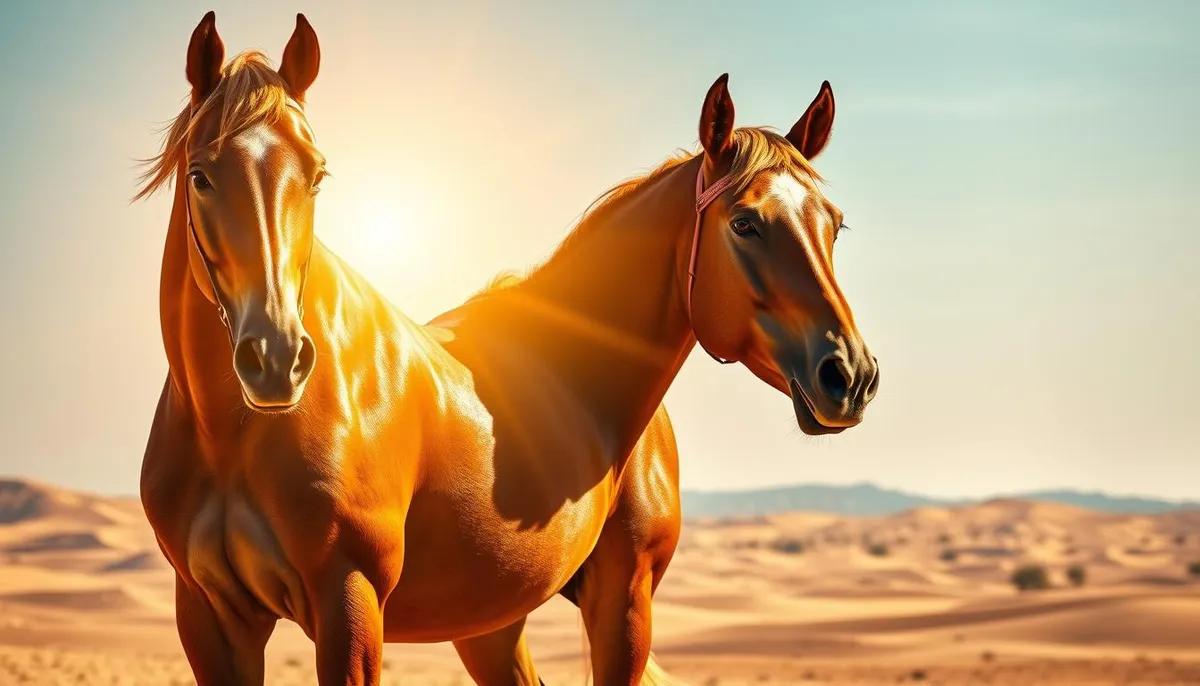
The Arabian horse is an icon of the Middle East. It combines grace and endurance. Its silhouette is marked by a head with a concave profile, a curved neck, and a high tail.
Raised in the desert by Bedouins, this horse has a strong connection with humans. It is also very resilient to effort.
Recognizing an Arabian horse is easy due to its short head and prominent cheekbones. It has round, hard hooves. Colors like gray, bay, and chestnut are common, but black is rare.
An Arabian horse measures between 1.40 and 1.60 m and weighs between 300 and 450 kg. It can live from 20 to 30 years. Its lively and affectionate temperament makes it effective in endurance, shows, and trail riding.
The popularity of the Arabian horse extends to over 80 countries. The World Arabian Horse Organization (WAHO) is responsible for its preservation.
Key Points to Remember
- Middle Eastern origin and Bedouin heritage, a guarantee of endurance and closeness to humans.
- Distinctive signs: concave profile, curved neck, high tail, round and hard hooves.
- Reference size: 1.40–1.60 m for 300–450 kg, life expectancy of 20–30 years.
- Common Arabian horse colors: gray, bay, chestnut; black is rarer.
- Remarkable Arabian horse performances in endurance, shows, trail riding, TREC, and dressage.
- History of the Arabian horse and conservation managed by WAHO in many countries.
- Characteristics of the Arabian horse: lively, sensitive, intelligent, and affectionate temperament.
Origins, History, and Global Spread
The Arabian horse began its long history in the Arabian Peninsula. It is known for its endurance and intelligence. Tribes and associations played a key role in its spread across the world.

Middle Eastern Cradle and Links with the Bedouins
The Bedouins raised the Arabian horse in the deserts of the Middle East. Living with families, the horse developed a strong bond with humans. The sought-after qualities were endurance, hardiness, and reliability.
Tribes meticulously selected their breeders. This process created a solid genetic foundation and a distinct model of the Arabian horse.
From the Expansion of Islam to European and American Stud Farms
From the 8th century onwards, the breed spread thanks to Muslim riders. Their travels around the world facilitated this diffusion.
European stud farms began importing these horses between the 17th and 19th centuries. In the United States, private breeding in the 20th century strengthened the population of Arabian horses.
WAHO and Stud-Books: Preservation of Bloodlines
The WAHO works to standardize the breed's standards internationally. The first Arabian stud-book in France dates back to 1833, later expanding globally.
Stud-books ensure the purity of bloodlines. Associations support breeders in managing and selecting Arabian horses.
Key Dates and Milestones: Over 2,000 Years of Iconographic Evidence
From representations in ancient Egypt to medieval chronicles, the Arabian horse is historically documented. Recent genetic research validates its origins.
Today, Arabian horses are bred in over 80 countries. Their popularity relies on breeding networks and the actions of WAHO.
| Period | Area | Notable Event | Impact on the Breed |
|---|---|---|---|
| Antiquity | Egypt, Near East | Iconographic evidence and written testimonies | First markers of type and military use |
| 8th–10th centuries | Islamic world, Mediterranean | Expansion of cavalry | Acceleration of global diffusion |
| 17th–19th centuries | Europe | Imports by national stud farms; imperial policies | Creation of local strains and directed crossings |
| 1833 | France | Establishment of an Arabian stud-book | Traceability and standardization of origins |
| 20th century | United States, Europe | Development of private breeding and shows | Structuring of markets and Arabian horse associations |
| Contemporary Era | Over 80 countries | International coordination by WAHO | Harmonization of stud-books and securing bloodlines |
Characteristics of the Arabian Horse: Morphology, Colors, and Temperament
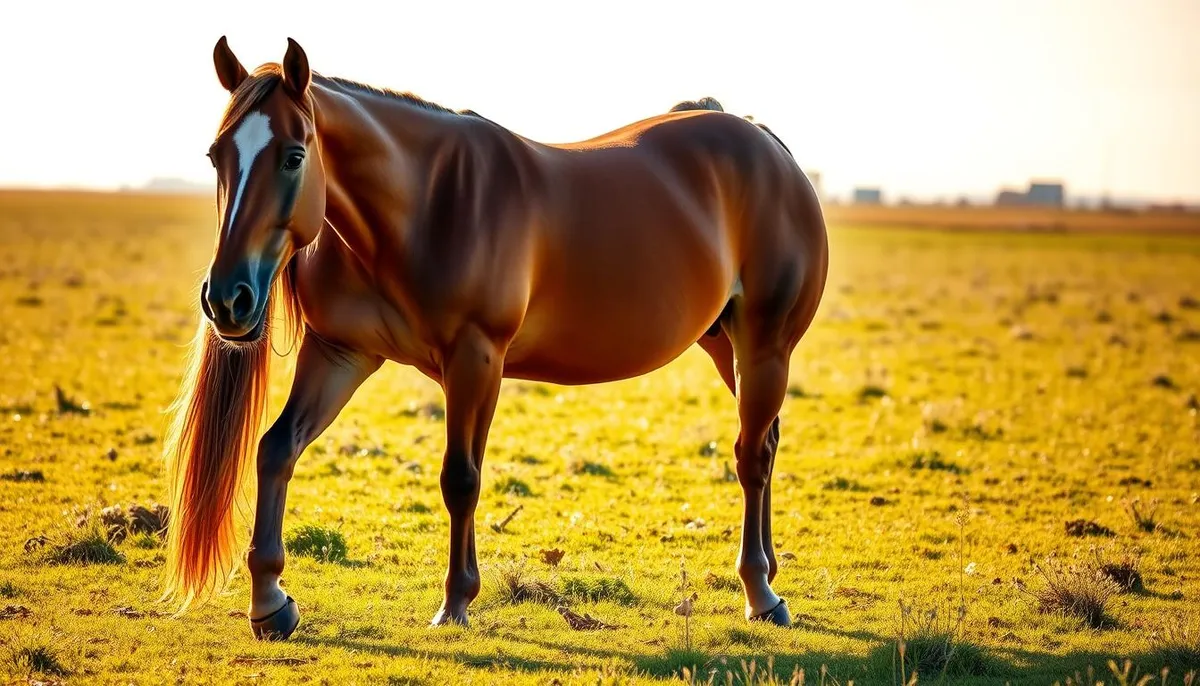
The purebred Arabian is refined and athletic with a unique appearance. Its Arabian horse silhouette blends grace and power, making it very versatile. You can see its Arabian horse characteristics in the details, from the head to the legs.
Typical Silhouette and Head: Concave Profile, Curved Neck, High Tail
The body is well-proportioned, with a short back. The head is distinctive with a broad forehead and a fine muzzle. The concave profile, curved neck, and high tail give it a noble appearance.
It has arched ribs, a sloping shoulder, and a strong back. These traits allow it to move easily while being robust. This highlights the Arabian horse characteristics in terms of shape and movement.
Size, Weight, and Longevity: 1.40 to 1.60 m for 300 to 450 kg, 20 to 30 years
On average, it measures 1.50 m and weighs 350 kg. Its bone structure and musculature explain its lightness without weakness.
It often lives between 20 and 30 years. With appropriate training, it can have a long sporting career.
Arabian Horse Colors: Gray, Bay, Chestnut (Black is Rarer)
The Arabian horse colors most commonly seen are gray, bay, and chestnut. The black coat is rarer.
Their coat may become grayer as they age. This adds to their elegance, whether in competition or outdoors.
Temperament: Lively, Sensitive, Intelligent, and Close to Humans
The Arabian horse temperament is characterized by its liveliness and curiosity. It has a strong connection with its rider.
It is docile and affectionate. This, combined with its quick learning ability, makes it an ideal partner for various equestrian activities.
Hoof Strength: Round and Hard Hooves, Few Feathering
Its hooves are compact and hard, which is perfect for endurance. The thick horn reduces wear and ensures a stable gait.
This hoof structure, combined with a well-balanced Arabian horse silhouette, allows for a safe and efficient walk.
| Criterion | Markers | Functional Interest |
|---|---|---|
| Format and Lines | Short back, concave profile, high tail | Balance, noble bearing, efficiency of gaits |
| Size & Weight | 1.40–1.60 m | 300–450 kg | Lightness, low energy cost, endurance |
| Longevity | 20–30 years | Extended career, versatile use |
| Colors | Gray, bay, chestnut, black is rarer | Visual typicality of Arabian horse colors |
| Hooves | Round and hard hooves, few feathering | Stability, limited wear, safety on varied terrain |
| Behavior | Lively, sensitive, intelligent, close to humans | Fine reactivity, quick learning, horse-rider bond |
| Overall Profile | Arabian horse characteristics in harmony | Synergy of morphology–mentality of Arabian horse temperament |
Arabian Horse: Breeding, Selection, and Genetics
The Arabian horse comes from the deserts and is known for its purity and endurance. Breeders combine traditions and modern techniques to meet sporting needs. They rely on a precise stud-book, careful selection, and genetics, with the help of associations in Europe.
Breeding Arabian Horses: Bedouin Heritage and Breeder Selection
Among the Bedouins, horses were chosen for their strength and beauty. Women often shared this knowledge.
Modern breeders maintain this spirit. They examine character, movement, and bone quality. They select stallions and mares for their functional qualities.
Arabian Stud-Book, Traditional Bloodlines, and National Variants (Egyptian, Polish…)
The Arabian stud-book helps register births and track genealogy. Records in France, Belgium, Switzerland, and Canada have established standards.
The Koheilan and Saklawi bloodlines, along with national variants, coexist. Each country has its specificities while respecting the Arabian stud-book.
Selection of Arabian Horses: Balancing Endurance, Elegance, and Mind
The goal is to combine endurance, elegance, and mind in the Arabian horse. Beauty is important in shows, but functionality also matters.
Outdoors, tests focus on heart, gallop, and the horse-rider relationship. This ensures the breed's role without compromising its utility.
Genetics and Health: Vigilance on Hereditary Diseases, Testing, and Thoughtful Breeding
Managing inbreeding in the Arabian horse is essential. Six genetic diseases are monitored.
DNA tests help choose pairings. A good diet and health monitoring support the longevity of the horses.
Role of Arabian Horse Associations and European Initiatives
WAHO works on the international recognition of stud-books. National associations organize training and breeding events.
In Europe, the European Breeders Trust aids reproduction and competition. These initiatives support the sector and the genetics of the Arabian horse.
Performance of the Arabian Horse, Uses, and Culture in France
Arabian horses are known for their delicacy, endurance, and strong bond with humans. In France, equestrianism sees the Arabian as a perfect blend of elegance and performance. Their historical roots enrich the story and current equestrian competitions.
Endurance, TREC, Dressage, Shows, and Trail Riding: Sporting Versatility
Arabians excel in endurance thanks to their steady breath and solid hooves. They also stand out in TREC, amateur dressage, shows, and long rides.
Their ability to thrive on various terrains is impressive. Riders value their quick recovery and smooth gait. These qualities are invaluable in demanding competitions.
History of the Arabian Horse in France: From the Crusades to Pompadour, Lasting Influence
Imported during the Crusades and favored by Napoleon, Arabian horses have marked French military history. The Haras de Pompadour played a key role in spreading their qualities.
Their influence endures in breeding and equestrian practice in France. The quest for an aesthetic, robust horse close to humans remains essential.
Arabian Horse Competitions: Models and Gaits, Endurance Circuits
Competitions in France combine shows and endurance events. Stud-books and associations ensure the quality and recognition of these horses.
Progression in competitions is based on specific criteria. It encourages the sustainability of the Arabian horse's equestrian performances.
High-Quality Equipment: La Sellerie Française, 100% French Manufacturing
Quality equipment is essential for the comfort of the horse and rider. La Sellerie Française offers custom products, perfect for the Arabian.
These items enhance rider control and horse well-being. They symbolize the excellence of French equestrian craftsmanship.
| Discipline | Main Advantage of the Arabian | Judging Criteria/Objective | Recommended Equipment Choice |
|---|---|---|---|
| Endurance | Effort management and quick recovery | Heart rate, regularity, metabolism | Light padded saddle, anatomical bridle from La Sellerie Française |
| TREC | Agility and precision | Mastery of gaits, overcoming challenges | Ergonomic girth, non-slip reins |
| Dressage | Balance, expression, and fine contact | Impulsion, straightness, cadence | Open-shoulder dressage saddle, suitable bit |
| Show Models and Gaits | Type, elegance, and presence | Conformation, quality of trot, tail carriage | Fine bridle, polished leather, understated presentation |
| Trail Riding | Frugality and comfort over time | Regularity of pace, absence of overheating | Trail riding saddle with suitable panels, balanced saddlebags |
Conclusion
The Arabian horse combines elegance, compactness, and power. It stands out with an expressive head, a graceful neck, and a high tail. This unique profile contributes to its effectiveness in movement.
Its solid hooves and lively character make it perfect for several disciplines. Endurance, dressage, and shows are its preferred areas. Thus, the Arabian horse proves to be a versatile and endearing athlete.
Originating from the Middle East, its breeding has been refined by the Bedouins. It has internationalized over time, especially through Islam. Today, it is bred in over 80 countries under the supervision of WAHO.
This global expansion attests to its unparalleled reputation. The Arabian horse represents a blend of tradition and modernity.
The breeding of the Arabian horse aims for a balance between aesthetics and endurance. It relies on the selection of quality bloodlines and genetic testing against diseases. With these efforts, the purity and performance of the breed are maintained.
In France, the breeding of the Arabian horse has a rich history. From the Crusades to the National Stud of Pompadour, its culture and sporting performances have flourished. Equipment, such as those from La Sellerie Française, plays an essential role in their success.
In summary, the breeding and selection of Arabian horses are focused on the future. They ensure the authenticity and versatility of these exceptional horses, ready to meet contemporary challenges.
FAQ
What distinguishes the Arabian horse morphologically?
The Arabian horse is easy to recognize. It has a short head and often a concave profile. Its nostrils are fine, and its neck is elegant and curved.
Its back is rather straight, and its tail is high. It is compact, elegant yet powerful, with solid hooves.
Where does the breed come from, and what is the role of the Bedouins?
The Arabian horse comes from the Middle East. Raised by the Bedouins, it lived with them in their tents.
This close breeding to humans, in the middle of the desert, made the Arabian robust and very close to people.
What is the history of its global spread?
Its popularity soared with the expansion of Islam in the 8th century. Subsequently, trade and treaties helped.
In the 17th-19th centuries, Europeans and then Americans contributed to its global rise. WAHO now ensures its protection.
What are the size, weight, and average age of an Arabian horse?
An Arabian horse measures between 1.40 and 1.60 m and weighs 300 to 450 kg. It can live from 20 to 30 years, remaining active due to efficient energy expenditure.
What colors are most common in Arabians?
Arabians are often gray, bay, or chestnut. Less often, they are black. As they age, their coat may change, especially for grays.
What is the temperament of the Arabian horse?
The Arabian is a lively, intelligent horse that is close to people. It enjoys gentle and patient training that respects its curiosity.
What are its preferred disciplines?
It excels in endurance but also in shows and trail rides. The Arabian is versatile, also shining in dressage and show jumping.
How do WAHO and stud-books protect the breed?
WAHO oversees the registration and conservation of bloodlines. National stud-books, since 1833, ensure traceability and authenticity.
What bloodlines and national variants can be found?
The Koheilan and Saklawi are famous bloodlines, linked to Al Khamsa. Arabians vary by country: Egyptian, Polish, Syrian, and others, all recognized by the Arabian stud-book.
How to succeed in selecting Arabian horses today?
It is necessary to balance endurance, beauty, and character. Choose healthy breeders with good abilities and nice conformation.
What genetic precautions should be taken?
Hereditary diseases are present. Use genetic tests, avoid risky crossings, and prioritize diversity in breeding.
What is the place of the Arabian horse in French culture?
Introduced during the Crusades and valued by Napoleon, the Arabian horse has marked French breeding. In France, it embodies elegance and excels in endurance and shows.
What Arabian horse competitions to follow in France?
Endurance competitions and shows are essential. Associations and stud-books organize these events.
What equipment is suitable for the curved neck and sensitivity of the Arabian?
Choose light and fitted equipment for their comfort. La Sellerie Française offers suitable gear for all disciplines.
How to maintain its hooves and preserve its strength?
Its hooves require regular care: trimming, diversity of surfaces, and good nutrition. Monitoring by a farrier is essential.
What is the historical impact of European and American stud farms?
In the 19th and 20th centuries, Europe and the United States enriched the breed. Their actions globalized the presence of the Arabian horse.
Are there ancient traces attesting to its Middle Eastern origin?
Evidence from ancient Egypt shows its Middle Eastern roots. Persian influences are also identified as early as 1100-1300 BC.
How to feed a sporting Arabian horse?
Prioritize good forage, adjust energy, portion, and hydrate. In endurance, electrolyte balance is crucial.
What associations support the sector in Europe?
WAHO, national associations, and initiatives like the European Breeders Trust provide financial support and organize events.
Is the Arabian suitable for trail riding and TREC?
Yes. Its endurance, solid hooves, and curiosity make the Arabian an ideal partner. It shines in TREC.