
Finding a good riding club is wanting more than just practicing a sport. We seek a place that is easy to reach, where we learn effectively. We also want to feel good from the very first moments. In France, each club has its own atmosphere, with unique horses and special traditions. This contributes to the diversity and richness of horseback riding in the country.
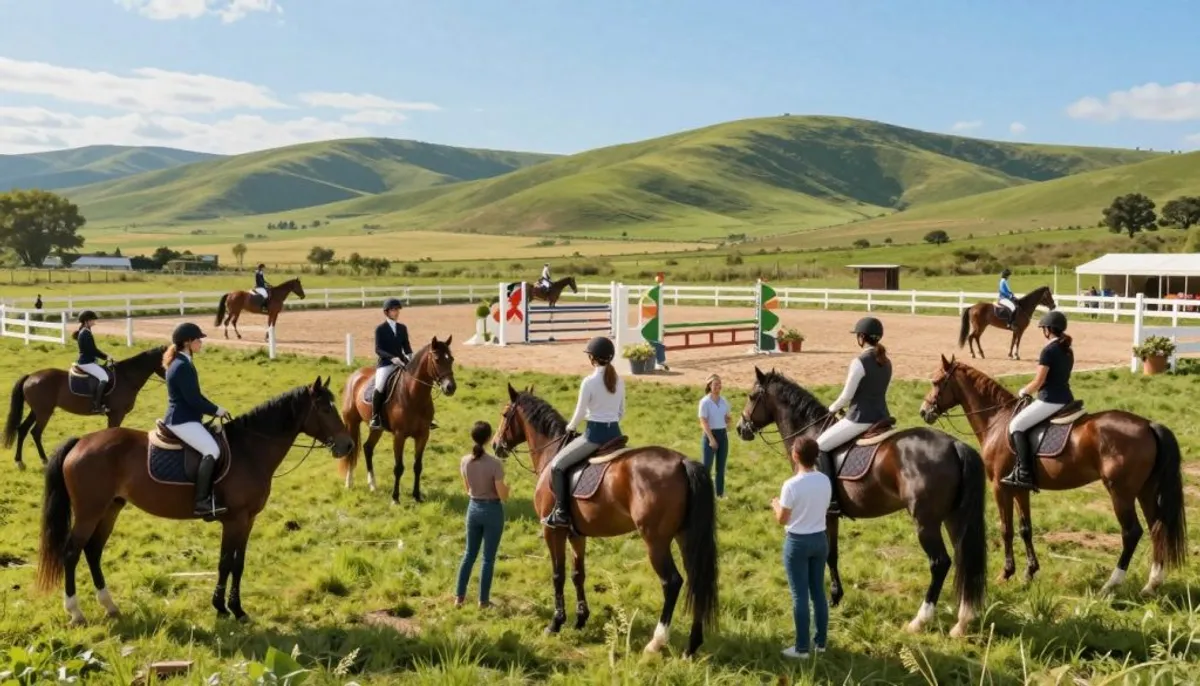
This manual guides you to find the ideal place and pursue your equestrian passion. Whether you are starting out or looking to improve. It covers club life, nature outings, lessons, and the importance of instructors.
You will also discover practical information about facilities, accommodation, youth camps, competitions, and how to equip yourself properly. The goal is to progress in harmony with willing horses and create memorable memories. Whether at the clubhouse or outdoors.
Key Takeaways
- A riding club combines learning, safety, and team spirit.
- A equestrian center is also chosen for its values and hospitality.
- The equestrian passion is nourished by lessons, as well as outings and events.
- Horseback riding in France offers various styles, from leisure to competitive practice.
- The instructors, horses, and facilities make a difference every day.
- Workshops, boarding, and equipment complete the experience, depending on your goals.
Why Join a Riding Club in France?
Joining a riding club in France means finding more than just a place to ride. It is also the ideal spot to get advice and feel a motivation that grows each week.
The friendly atmosphere makes all the difference. You don't hesitate to ask questions, which helps you progress faster. We celebrate successes together and support each other in difficult times. This atmosphere makes everything seem easier and more enjoyable.
A warm and friendly community, driven by mutual support
In a club, we help each other a lot. We show you how to prepare your horse and adjust the equipment. Everyone shares their experiences without judgment.
This warmth is also felt after lessons. Whether it's over a coffee, or discussing horse care and behavior. We learn a lot from other members, in addition to our riding lessons.
Experience horseback riding in the heart of nature: the spirit of outings and outdoor activities
Clubs often provide access to quiet trails, perfect for escaping. Horseback rides become exceptional moments, and there are often organized hikes for members.
Going out like this enhances our riding skills: we learn to better manage various terrains and paces. Safety is also better ensured in a club, especially when exploring new paths.
Activities for everyone: curious beginners, passionate riders, improvement
Riding clubs welcome everyone. Beginners find a clear path to learning, with achievable goals. More experienced riders find challenges that suit them.
When it comes to improving, clubs emphasize the relationship between the horse and its rider. We work on precision, balance, and trust. And thanks to the friendly atmosphere, we stay motivated, even in the face of challenges.
| What We Seek | What the Club Offers | What We Feel Over Time |
|---|---|---|
| Meet riders and progress together | Advice between members, exchanges after sessions, spirit of mutual help | Friendly atmosphere that puts us at ease and encourages consistency |
| Get out of the arena and breathe | Access to trails, guided outings, planned horseback rides according to the weather | More serenity outdoors and better terrain management |
| Start without pressure | Groups by level, safety basics, accompanied horse preparation | Confidence that builds and autonomy that comes faster |
| Go further technically | Improvement workshops, work on position, targeted exercises | Finer control sensation and more stable goals |
| Practice more accessible riding | Membership options, varied activities, group life that shares | More inclusive, enriching, and easier to follow practice |
Landscapes and Trails for Horseback Riding
Getting out of the arena opens up a new experience. On horseback, we closely observe the terrain, listen to the sounds of the forest. This allows the horse to find its natural rhythm. In the beauty of nature, each path offers a discovery, even for novices.
Explore varied routes at the pace of hooves in a preserved setting
The trails for horseback riding offer diversity. They include wide paths and trails hidden by trees. On these routes, we naturally learn to maintain our balance. This is thanks to climbs and different types of ground.
Depending on the time of year, the landscape changes. We can pass through wet areas or more open spaces. This makes the ride unique and allows for an escape from daily life.
Kilometers of well-maintained trails over the long term: the example of a club founded by enthusiasts
A club of enthusiasts, established in 2002, contributes to the quality of the trails. With over 120 members, maintenance is regular, not just once a year. Their goal is clear: to protect the paths so that everyone can enjoy them for a long time.
| Terrain Markers | Figures and Access | What It Changes on Outings |
|---|---|---|
| Maintenance since 2002 | More than 55 km of trails maintained since 2002 | Fewer ruts, better visibility, smoother outings |
| Access via membership | Unlimited access to over 45 km of maintained trails all year round | Varied routes, easy returns, more choices depending on the weather |
| Guidance | Guided hikes on loops suitable for all levels | Consistent pace, well-placed breaks, enhanced safety |
Access and Best Practices: Enjoying Routes from Sunrise to Sunset
The routes are open from morning until evening. Before heading out, check the weather, prepare your equipment, and choose a suitable path. If you are uncertain, participating in a guided hike is a good idea.
- Stay on equestrian trails to limit erosion and protect sensitive areas.
- Keep distances, announce your approach, and yield where the passage is narrow.
- Respect wildlife: avoid loud noises, slow down near quiet areas, and walk if necessary.
- Adjust your pace to the ground and the group so that the horseback ride remains comfortable and safe.
Equestrian Lessons: Learn, Progress, and Build Confidence
A good riding lesson is simple and clear, with specific objectives. You feel that you progress with each lesson. You learn gradually, with tailored exercises and helpful advice. It’s about mastering your breathing, finding the right position, and staying flexible, even under pressure.
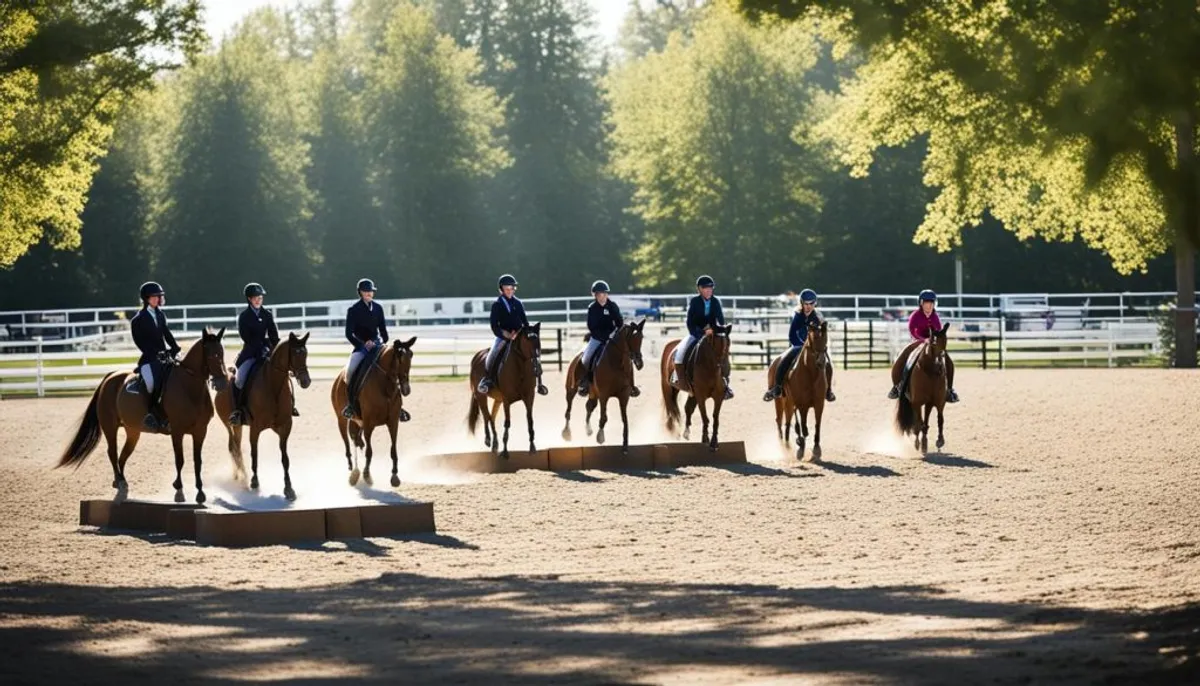
Lesson Formats: Private or Group Lessons, Depending on Age and Level
You can choose between small group lessons or individual lessons. Group lessons are dynamic, while private lessons target specific needs. Children learn while having fun. Teens and adults reinforce the basics before refining their technique at their own pace.
| Format | For Whom? | What We Often Work On | What It Brings |
|---|---|---|---|
| Group Lessons | Beginners to intermediates, families, riders who enjoy energy | Pace, trajectories, transitions, arena rules | Mutual support, consistency, habits, confidence in a group |
| Private Lessons | Resuming after a break, technical goals, lack of confidence | Position, contact, direction, stress management | Fine corrections, tailored tempo, rapid progress |
| Groundwork Sessions | All levels, riders curious about the language of horses | Leading, distances, stillness, mutual respect | Reading the horse, calmness, precision, better connection |
Teaching Method and Animal Welfare: Horses as Partners for Peaceful Progress
In a good school, the horse is a partner, not just a tool. The lessons include warm-ups, breaks, and attention to the horse's signals. We also show how to gently adjust the equipment or reward the horse at the right moment.
This method makes progress safer. With a cooperative horse, the rider takes more risks, relaxes, and corrects mistakes better. Thus, learning is facilitated through a good horse-rider understanding.
“Riding School” Atmosphere: Structured Progression and Clear Goals
A riding school offers clear learning: starting with the basics to move towards improvement. Each lesson has a clear goal and ends with a summary exercise. Between lessons, we know what to work on.
- Basics: safety, direction, balance, pace control.
- Consolidation: clean transitions, precise trajectories, stable hands.
- Improvement: finesse of aids, pace management, autonomy in the arena and outdoors.
Progress is seen gradually: more assured posture, consistent horse, and growing confidence. The atmosphere is friendly, with clear instructions and opportunities to ask questions.
Riding Instructor: The Key Role of Certified Instructors
A riding instructor does much more than give lessons. They observe closely and inspire confidence through simple instructions. This gives meaning to each session. With certified instructors, learning occurs calmly, avoiding rushing things.
Technical Guidance: Posture, Aids, Safety, and Autonomy
Maintaining a good position on horseback is essential: it concerns shoulders, hands, and balance. The instructor quickly corrects with simple words and clear exercises. This facilitates understanding of the aids, making the horse's response more refined.
Safety is always a priority as soon as you enter the stable. Instructors emphasize basic rules. Thus, the rider becomes more autonomous while remaining in a secure environment.
Personalized Support: From the First Canter to Improvement
Each rider is unique, with their own needs and goals. The instructor adapts the session accordingly. This includes a good warm-up, specific exercises, and a cool-down. This helps progress without discouragement.
Over time, the instructor helps the rider improve concretely. They work on precision, hand stability, and leg efficiency. Safety is always integrated, especially when working on jumps or outdoors.
Creating a Horse-Rider Relationship: Trust, Respect, and Consistency
Technique is important, but the horse-rider relationship is even more so. The instructor helps understand the horse's signals. This creates a solid foundation of trust and mutual respect.
Instructors also encourage taking care of the horse on the ground. This includes leading calmly and being attentive during grooming. These good habits ensure better safety and fluidity in mounted work.
| Point Worked On | What the Riding Instructor Does | What the Rider Gains | Impact on Safety While Riding |
|---|---|---|---|
| Posture | Corrects alignment, suggests short exercises, checks balance | More stable seat, calmer hands, clearer aids | Fewer imbalances, better control in transitions |
| Understanding of Aids | Explains when to act, where to place legs, and how to adjust | More responsive horse, fewer conflicts, finer sensations | More predictable reactions, calmer management of the unexpected |
| Progression and Autonomy | Sets a simple goal, increases difficulty step by step, does a quick review | Confidence, routine, ability to organize independently | Safer decisions, reliable habits in the arena and outdoors |
| Horse-Rider Relationship | Encourages consistency, calmness on foot, and respect for distances | More relaxed horse, more consistent work, better cooperation | Fewer abrupt movements, safer environment for everyone |
Equestrian Stables: Facilities, Comfort, and Welcoming Riders
A well-organized stable makes a big difference. You can practice riding regardless of the weather. Each rider finds their place and prepares their horse in peace. All this takes place on a vast area of over 6 hectares where organization and simplicity coexist.
Complete Facilities: Indoor Arena, Outdoor Arenas, and Paddocks
Complete facilities promote constant progress. Thanks to the indoor arena of 65 × 180, training all year round becomes possible, away from the whims of the weather.
There is also plenty of space to vary training. Imagine: a large outdoor arena, a total of 4 arenas, and plenty of paddocks. With 52 stalls and 11 paddocks, the horses enjoy great comfort. This makes moments in the saddle even better.
| Equipment | Key Figures | What It Changes for Riders |
|---|---|---|
| Indoor Arena | 65 × 180 | Sessions possible in any weather, more consistent technical work |
| Outdoor Arenas | 4 spaces, including 1 large outdoor arena | More variety, smooth warm-ups, better group management |
| Paddocks | 11 paddocks | More relaxed horses, simpler outings, calmer atmosphere |
| Accommodation | 52 stalls | Clear logistics, facilitated care, more comfortable circulation during peak hours |
Club Life: Clubhouse, Common Areas, and Shared Moments
The club is not just a place to ride. The clubhouse is its vibrant heart. You drop off a helmet, discuss strategy, or wait for a lesson in warmth.
A renovated clubhouse invites you to stay longer. Common areas help newcomers find their way, especially for beginners or those returning after a break.
Easy Access and Strategic Location: A Site Close to Transport Links
Easy access is important, especially during the week. Being near the DIX30 District and the REM allows for a regular routine, despite a busy schedule.
Knowing you are “on Highway 10” simplifies things, whether early in the morning or late at night. This saves time, which can then be spent with your horse, inside the arena, or outside near the paddocks.
Horse Boarding: Accommodation, Care, and Requirements to Know
A horse boarding facility is a place where they live daily. This includes accommodation in stalls and a well-established daily routine. They are entitled to water, food, bedding changes, regular outings, and attentive supervision.
These facilities also provide access to equipment for training and relaxation. This includes paddocks, grooming areas, and arenas. They allow for regular activity throughout the year.
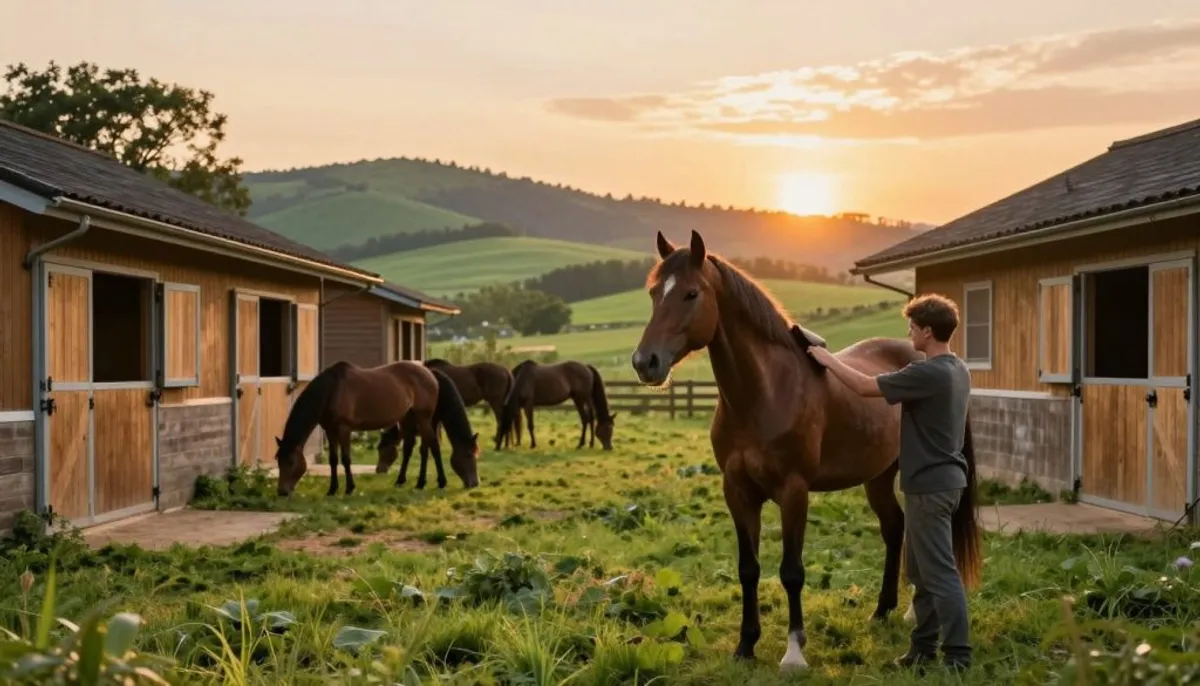
It is useful to know the accommodation capacity. For example, a place with 52 stalls and 11 paddocks offers good turnover. This ensures balanced outings and the well-being of the horses.
| Point to Check | What It Changes Daily | Concrete Reference |
|---|---|---|
| Accommodation in Stalls | More structured rhythm, easy monitoring, bedding and feed management | 52 stalls for stable organization |
| Outings and Paddocks | More movement, better recovery, calmer mindset | 11 green paddocks (grass) for varied outings |
| Access to Facilities | Regular work, preparation for rides, sessions in any weather | Arena and preparation areas depending on the club |
| Accommodation Conditions | Schedule rules, safety instructions, required equipment | Displayed schedule and care protocol |
Regarding formalities, a liability insurance may be required. This is useful for participating in activities or using common areas. This insurance also reassures other riders.
Choosing a horse boarding facility also depends on the well-being it offers. The quality of hay, cleanliness of stalls, and time spent outdoors matter a lot. With a good routine, the relationship between the horse and its rider strengthens over time.
Equestrian Camps, Camps, and Youth Programs: Progressing Differently
Participating in an equestrian camp completely changes the usual rhythm. You ride more often over a few days. You practice more to master the right gestures and become more self-assured. It is an effective way to learn at your own pace.
Camps and Thematic Days: Technique, Mounting, Flat Work
In an equestrian camp, the approach is intensive but coherent. We focus on improving posture, balance, and precision. Sessions include a warm-up, followed by short exercises and finish with a relaxation moment.
The themes vary by club and can include mounting, flat work, or managing transitions. We also learn by taking care of the horse off the saddle: grooming, observation, equipment adjustments. This helps us understand it better.
Day Camp: An Unforgettable “Horse” Experience in a Family Atmosphere
The day camp appeals to children wanting to experience the daily life of a stable. They ride, learn to care for horses, and get involved in club life. The atmosphere is friendly, safe, and family-oriented.
Free time alternates with horse-themed activities. Children learn about safety, respect for ponies, and mutual support. It’s also an opportunity to make new friends and create beautiful memories.
Sports Programs: Student-Athlete Option and Sports-Study Depending on Structures
Some structures offer a more athletic framework for enthusiasts. For example, the sports-study program allows for combining school and training throughout the year. The registration conditions may vary, so it’s important to inquire directly.
There are also special programs for those looking to be more regular and autonomous in their practice. Participating in a sports-study program requires a healthy lifestyle and a certain commitment. The important thing is to progress at your own pace, without rushing.
| Format | Rhythm | What We Work On Most | For Whom |
|---|---|---|---|
| equestrian camp | 2 to 5 days, close sessions | Position, balance, flat work, habits | Riders who want a quick and concrete goal |
| day camp | Full week, alternating horse and activities | Care, safety, discovery, trust with the pony | Children who want to experience the stable in a family atmosphere |
| sports-study equestrian | School year, planned training | Regularity, conditioning, technique, mental preparation | Young people with a sports project, with school/club organization |
Combining regular lessons, camps, and special activities creates a rich learning path. Progress comes with alternation: training, rest, then resumption. What matters is the strong bond that develops with the horse, week after week.
Equestrian Competition: Preparing and Exceeding Expectations in Club
Competition in the club means progressing without stress. We move forward step by step with simple goals. The friendly atmosphere motivates us to continue. Discussions among riders are just as important as performances.
Realistic Goals: Building a Progression Path with the Instructor
We determine goals with the instructor. Level, available time, horse condition, and budget are taken into account. The goal? To progress at your own pace without rushing.
Training combines exercises and relaxation. We refine important details for the competition day. Such as recognizing the course, managing stress, and being consistent in our actions.
Training and Events: Energizing the Season and Bonding Riders
A well-organized calendar keeps our motivation high. Group training, rehearsals, and simulations make every moment exciting. Thus, competitions become opportunities for reunions, not obstacles.
Clubs organize events to strengthen team spirit. Outings, hikes, or training in new locations. We adapt to different terrains, atmospheres, and other horses.
| Key Moment | What We Work on at the Club | Useful Effect in Equestrian Competition |
|---|---|---|
| 4 to 6 weeks before | Regular training: transitions, bending, ground poles | More stable horse, cleaner course |
| 2 weeks before | Typical course, management of stride contracts, timed relaxation | Less hesitation, better control of pace |
| Week of the event | Light session, equipment check, transport plan | Fewer surprises on the day of equestrian events |
| After the outing | Debrief with the instructor, strengths and training focus | Continuous progression, realistic adjusted goals |
Club Spirit: Encourage, Learn, Celebrate Progress
At competitions, the club spirit shines. We help with preparation, lend equipment, and refresh instructions. This mutual aid creates a calming and encouraging atmosphere.
When we discover the results, we also think of the small victories. A stronger start, improved nerve management, perfect curves. These advances come from training. They are celebrated together during competitions.
Equestrian Equipment: Equip Yourself Well with La Sellerie Française
Joining an equestrian club means you need to choose your equipment wisely. Having the right gear helps us learn better. To feel stable, protected, and comfortable. La Sellerie Française is here to help you assemble the ideal set. Whether for your first lessons or your outdoor adventures.
High-end Products, Made in France, Unique and Custom
La Sellerie Française offers top-quality equipment that is made to last. You will find limited and customizable items. This is perfect if you are looking for a particular fit, especially when you practice intensively.
This choice also ensures the well-being of your horse. Leather, finishes, cuts: every detail matters for regular riders. Good equipment should be comfortable enough to forget about it. That’s when it shows its true value.
Manufacturing from A to Z in France: Craftsmanship Requirements for Riders
La Sellerie Française takes pride in its production from A to Z in France. This goes beyond a simple label. The entire process, from crafting to assembly, follows the traditions of French craftsmanship. For a rider, this means benefiting from quality equipment. With careful stitching, quality materials, and simplified repairs.
Equestrian equipment is often put to the test: in the arena, outdoors, in the rain, or during transport. Choosing durable equipment reduces the need for frequent replacements. It also ensures a consistent experience, use after use.
Choosing Your Equipment Wisely: Comfort, Safety, Durability, and Style
Progress step by step and consult your instructor. Equipment should be chosen not only for its aesthetics but especially for its utility. Whether for lessons, camps, rides, or competitions. La Sellerie Française helps you compose a coherent set. Without having to buy everything at once.
- Comfort: freedom of movement, stable pressure points, regular contact with the horse.
- Safety: reliable materials, fit, accessories compatible with your practice and level.
- Durability: leather that ages well, easy maintenance, parts that retain their shape.
- Style: clean lines, neat finishes, coherence between elements.
| Use at the Club | Priority of Choice | What We Expect from Equestrian Equipment | Reference for Rider Equipment |
|---|---|---|---|
| Arena / Career Lessons | Comfort + Precision | Stability, regular contact, constant sensations | Elements easy to adjust and maintain |
| Rides and Outdoors | Safety + Resistance | Durability over time, weather tolerance, reliability | Choice of robust materials and careful finishes |
| Camps (intensive rhythm) | Durability + Comfort | Less warming up, better support over several hours | Progress through targeted purchases, according to instructor advice |
| Competition | Precision + Style | Fine adjustments, neat presentation, consistent performance | Coherent set, adapted to the discipline's requirements |
Conclusion
Joining a riding club in France is much more than practicing a sport. It also means being part of a team, enjoying outdoor outings. And above all, sharing a strong desire to progress together.
Activities range from rides to training in the arena, to moments spent at the clubhouse. Thus, horseback riding quickly becomes a way of life.
To choose well, it's essential to pay attention to details. For example, consider the quality of the routes: 55 km of maintained paths since 2002, accessible from morning until evening. It is also crucial to check the supervision, the well-being of the horses, and whether the insurance covers all activities.
Good riding lessons impact your posture, safety, and confidence. Qualified instructors establish a safe environment, with clear goals. Various programs, such as camps or workshops, allow for rapid and effective progress.
A good horse boarding facility is recognized by its daily routine: clean stalls, well-maintained paddocks, attentive care, and serious management. When you feel comfortable in your club, everything seems simpler. From groundwork to the first competitions. For those seeking excellence in equipment, La Sellerie Française offers high-quality gear, entirely made in France.
FAQ
How to choose a riding club in France when starting out?
Check that the club welcomes beginners and clearly explains how to learn. It should offer suitable lessons, a warm atmosphere, and secure progression. Also look at the club life, the condition of the horses, and how they teach.
Why join a club rather than ride occasionally elsewhere?
In a club, you are part of a community and learn better with fixed references. You find friends with similar interests and benefit from real support. Clubs also offer special events, outings, and hikes throughout the year.
Can a club provide privileged access to trails for horseback riding?
Yes, this is a significant advantage. Some clubs offer unlimited access to kilometers of trails and organize guided rides. It’s perfect for exploring nature at the horses' pace.
What does a well-structured “outdoor” approach look like in a club?
For example, a club founded in 2002 by enthusiasts has over 120 members. They have improved over 55 km of trails. Their goal is to keep nature open for future riders, with paths for all levels.
What are the common-sense rules for using trails safely?
The trails are open from morning until evening. You must respect animals, other people, and properties. Be cautious, anticipate encounters, and prefer a guided outing if you are a beginner outdoors.
What formats of riding lessons can be found in clubs?
Clubs offer lessons for all ages and levels, from beginners to advanced. You can choose between private or group lessons. This helps you learn and progress at your own pace.
How does a riding instructor help to progress quickly and well?
An instructor helps you improve your posture and better understand commands. They tailor lessons to your level. The goal is to achieve good technique and gain confidence.
Does the “animal welfare” approach really change learning?
Yes, because the horse is considered a partner, not just a tool. An environment that respects the animal facilitates learning. You progress better when the horse is fit and calm.
What facilities indicate a truly complete equestrian stable?
A good stable has everything to ride all year round, even in bad weather. It has large arenas, paddocks, and a renovated clubhouse. These facilities make a significant difference for comfort and safety.
Why does the clubhouse matter so much in a club's life?
The clubhouse is where everyone meets to talk and prepare. It’s important for friendliness and motivation. It strengthens team spirit.
Is site accessibility a real selection criterion?
Yes, especially if you come often. A club that is easy to reach encourages regular practice. Some are near major routes, which is very convenient.
What does horse boarding include in an equestrian structure?
Boarding includes the horse's housing, daily care, and access to facilities. With good spaces and careful management, the horses' well-being is ensured. Check details like outings and health monitoring.
Is liability insurance necessary for riding in a club?
Often required, especially for outdoor activities or group outings. Check with the club about the necessary insurances. This is important for everyone’s safety.
What is the purpose of an equestrian camp if you already take a weekly lesson?
A camp allows for rapid improvement. You work intensively on several aspects. It’s an opportunity to advance quickly and gain confidence.
What is a “horse” day camp for children?
It’s a unique experience for young people, with lessons, care, and games themed around horses. It’s ideal for starting horseback riding in a fun and educational environment.
What programs exist for very dedicated young riders?
There are special programs like Sports-Study and Student-Athlete Programs. They combine sport, studies, and progression. Each club has its own conditions for enrollment.
How to get started in equestrian competition without putting pressure on yourself?
Set achievable goals with your instructor. The club organizes preparation and training. An activity schedule helps you progress without stress.
What are the benefits of club events for progressing?
Events help you feel part of a team and set clear goals. Participating, observing, and discussing promote learning.
How to choose your equestrian equipment well when starting out?
Start with the essentials, based on your needs. A helmet, boots, and appropriate attire are the beginning. Listen to your instructor's advice to choose wisely.
Why is La Sellerie Française a reference for equipping yourself?
La Sellerie Française (https://laselleriefrancaise.com) offers high-quality equipment made in France. They use the best artisans for exceptional quality. It’s a good choice for riders looking for durable gear.
How to connect your equipment to your progress in the club?
Your equipment should adapt to your level and activities. A good club guides you in your equipment choices.
What criteria to compare between several clubs before registering?
Look at the quality of teaching and how the horses are treated. The facilities should be well-maintained. If you enjoy the outdoors, ensure that the trails are well cared for.