
Choosing a riding club is about finding a place where you feel safe and supported. You want a location that allows you to progress at your own pace. France offers many options, ranging from beginner lessons to nature rides.
This guide helps navigate without confusion. It covers lessons, how to choose a good club, and activities for more fun. You will also discover practical information about equipment and how to approach competitions without stress.
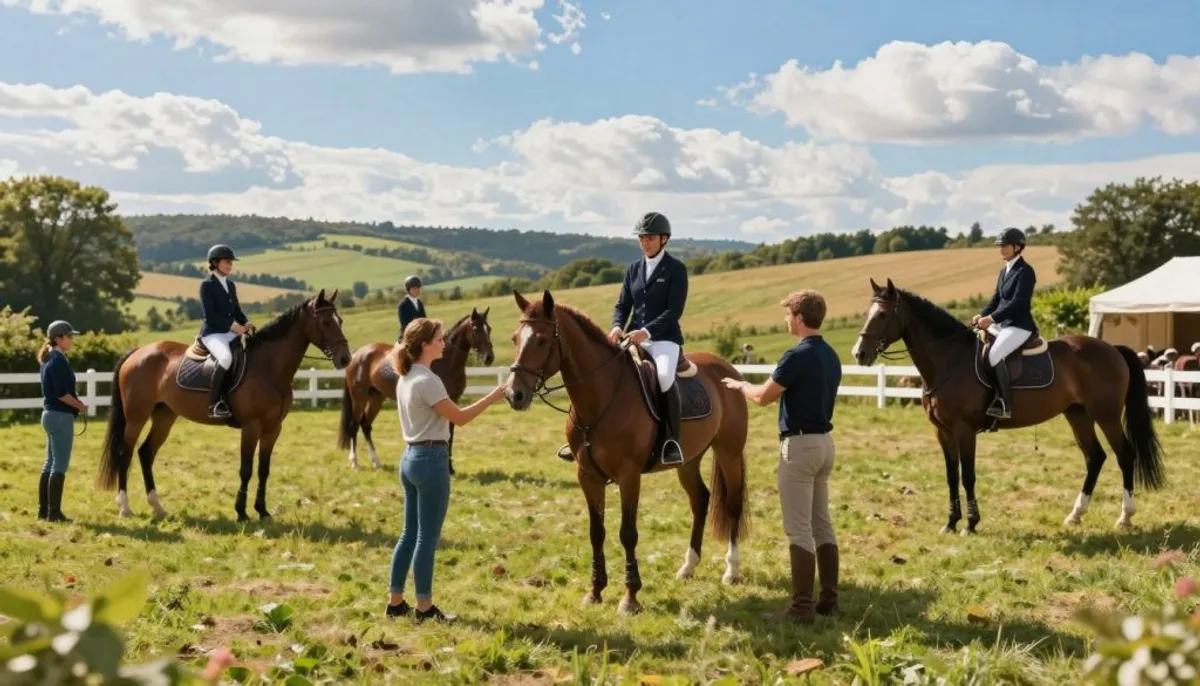
Riding also involves the horse, which sees the world differently. Sounds, movements, and distances matter. Understanding what it feels, its comfort, and how it communicates transforms the relationship. This makes life at the club easier, safer, and more enjoyable.
Key Points to Remember
- The right riding club in France depends as much on your goals as on the atmosphere on site.
- Equestrian activities are not just for fun: they also help you progress.
- Clear and regular guidance saves time, regardless of the level.
- The horse's well-being directly influences the quality of sessions at the riding club.
- Observing the horse's perception improves safety and communication.
- The guide also covers equipment and the basics for approaching competitions calmly.
Why Choose a Riding Club in France to Progress and Enjoy
In a club, you progress faster because everything is well organized. Fixed schedules help you train regularly. And the group atmosphere encourages us to do our best, even when we are very busy.
Riding lessons provide a clear and structured framework. They teach us to position ourselves correctly, control our breathing, and stay focused. Because of this, our bodies learn more easily and our confidence gradually increases.
A Safe and Friendly Environment for Beginners to Advanced Riders
Safety is a priority in a good club. Equipment is always checked, and safe distances are maintained. This helps avoid accidents and reassures those who are starting.
The spirit of camaraderie is also very important. We chat, observe, and help each other before and after training. This makes learning more meaningful and facilitates progress.
The Importance of Guidance by a Qualified Riding Instructor
An instructor can point out exactly what we are not yet realizing, such as a wrong movement or tension. They guide us to correct it simply. Thus, we improve without getting tense.
They adjust each lesson according to our state and that of the horse. They consider our fatigue, stress, or the weather. The instructor monitors the space around and reminds us to stay calm for the horse's safety.
Access to a Horse Stable, Facilities, and Suitable Horses
A good stable completely changes our experience. It should be well organized and clean, offering different places to train. This allows us to vary our exercises and not get bored.
The horses should match our levels. A good stable offers horses that provide reassurance and others that help refine our technique. This enriches the teaching and promotes gradual evolution.
A good club also teaches us to take care of the horses. We learn to detect a problem before it worsens. This helps us better understand the horses and be more attentive every day.
| What We Look For | What the Club Provides | What This Brings to the Rider |
|---|---|---|
| Safety in Sessions | Track rules, checked equipment, clear instructions from the riding instructor | Less apprehension, more stable movements, better control |
| Regular Progression | Planned riding lessons, level groups, graduated exercises | Solid benchmarks, concrete goals, growing confidence |
| Working Conditions | Equestrian stable equipped, riding arena or outdoor space, grooming areas | More comfortable practice, more comprehensive learning |
| Respect for the Horse | Observation, care routine, choice of horses according to level | Better understanding, finer riding, more serene relationship |
Riding Club: How to Find the Right Establishment Near You
To choose a riding club, you need to find a place that allows you to progress quickly, without feeling pressured. It is important to attend a session, observe how the horses rest, and talk with the team before thinking about prices. Often, the little things in daily life reveal much more than beautiful speeches.
A good indicator is how the horses are treated. They perceive the world differently from us, reacting to smells, sudden movements, noise, and lack of rest. A serious club will teach riders how to adapt, be precise in their actions, and respect the horses' rhythm.
Essential Criteria: Pedagogy, Equine Well-Being, Infrastructure, and Atmosphere
- Pedagogy: clear instructions, defined goals, visible improvement from session to session.
- Well-Being: relaxed, healthy horses, regularly turned out and handled with care.
- Infrastructure: well-maintained grounds, equipment in good condition, secure and clean care areas.
- Atmosphere: understandable rules, mutual respect among riders, welcoming environment for beginners.
Compare Options: Riding Lessons, Riding Classes, Riding Camps
Regular lessons are perfect if you prefer a routine with the same group. Individual lessons help correct a specific problem, such as improving your position or jumping an obstacle. During holidays, intensive camps offer a golden opportunity to progress quickly through a lot of practice on a specific subject.
| Format | For Whom | Rhythm | What You Observe On Site |
|---|---|---|---|
| Riding Lessons | Beginners to Regulars | Weekly | Homogeneous groups, frequent corrections, balanced time on horseback |
| Individual Lessons | Riders who want to target a point | Occasional | Measurable objective, progressive exercises, precise feedback at the end of the session |
| Riding Camps | Those who want to accelerate | Intensive | Announced theme, alternation of practice/care, recovery time for horses |
Check Options: Horse Boarding, Access to Rides and Outdoor Trips
If you have your own horse, evaluate the horse boarding based on the quality of hay, access to water, how blankets are managed, paddock turnouts, and supervision. Ask for details on rations and rest days, as this affects the horse's well-being. For rides, ensure good supervision, acceptable levels, and the frequency of outings.
In summary, choosing the right center is about finding a place where horses are happy, the teaching is of quality, and the atmosphere encourages questions. This is often what makes us want to return every week.
Riding Lessons and Classes: Content, Levels, and Goals
Riding lessons and classes are done in stages. We first learn a movement, repeat it, and then perfect it. This includes mounting the horse, working on the ground, and communicating with the instructor.
We have clear goals such as being more stable, communicating better, and having a responsive horse. We evaluate specific aspects such as trajectory, rhythm, and managing transitions.
Useful Benchmarks: we move to the next level when we master the basics, even with a different horse or in new conditions.
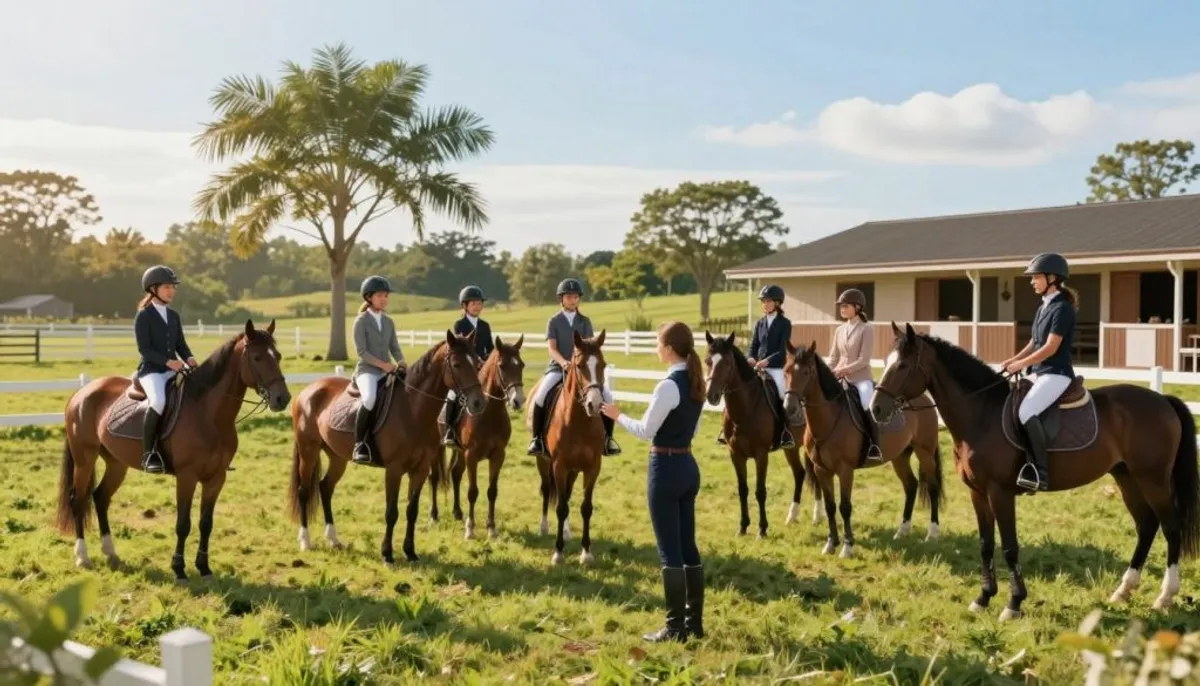
Starting Out: Balance, Direction, Safety, and Basic Horse Care
At the beginning, we focus on safety. This includes keeping distances, understanding the space around us, and staying calm. We work on our posture, balance, and how to direct the horse.
We also learn to take care of a horse daily. This includes how to approach it, lead it, tie it, and check its condition. This helps the horse to be more relaxed and ready to learn.
Intermediate: Working at Three Gaits, Managing Impulse, and Precision
At this level, we aim to be consistent in all three gaits. The goal is to stabilize the canter and make transitions smoother. We seek to control the impulse without rushing, maintaining constant contact.
We also work on precision: making correct turns, changing direction properly, and using small ground obstacles. This includes understanding the horse's signals to better adjust the training.
Perfecting: Dressage, Jumping, Flat Work, and Autonomy
When perfecting, we learn to be autonomous. This includes preparing our horse, checking its equipment, warming up properly, and cooling down gently after exercise. We focus on accuracy and balance during ground work.
This may include dressage or jumping, depending on the club. The important thing is to respect the horse and be precise in our requests. This helps to have a horse that listens and is well treated.
| Level | What We Learn | How We Evaluate | Goals to Aim For |
|---|---|---|---|
| Beginner | Position, balance at walk/trot, direction, safety rules, basics of care and handling | Stability in the saddle, controlled stop, simple trajectories, calm at the mounting block, secure ground movements | Be comfortable in a session, guide without pulling, understand the horse's routines |
| Intermediate | Three gaits, transitions, precision, impulse management, first sequences and ground poles | Regular rhythm, clear turns, more decisive canter departures, stable hands, more relaxed horse | Gain finesse, build a simple session, anticipate reactions better |
| Advanced | Autonomy, flat work, dressage or jumping, quality of aids, preparation and recovery | Straightness, balance, consistency of contact, correct approaches, realistic contract choices, available horse | Ride with precision, preserve well-being, progress with a clear plan |
Horse Well-Being: Understanding Its Physiological, Sensory, and Behavioral Needs
In a club, the better we understand the horse's daily life, the faster we progress. Their well-being is not limited to food and a clean stall. It also includes how we approach them, ask them things, and give them time to rest.
In a stable, these small details are as important as equestrian technique. They make sessions more enjoyable and interactions safer for everyone.
World Perception: A Sensory Universe Different from Humans
The horse perceives its environment through small signals. It detects movements, contrasts, smells, and sounds. Its peripheral vision is quick but can surprise it if approached from its blind spot.
A sudden movement or loud noise can stress it. To better ensure its well-being, we must act slowly, speak softly, and give it time to observe.
Observing Behavior to Respond to Daily Needs
The horse's behavior reveals a lot. Its ears, breathing, and gait communicate with us. A horse that moves a lot, avoids the saddle, or grinds its teeth often expresses discomfort, stress, or unease.
In a stable, careful and regular observation is crucial. Noting changes in appetite or behavior helps adjust the work. This allows for maintaining a stable mindset in the horse.
Good Practices in the Club: Routine, Environment, Respect, and Consistency
A well-established routine reassures the horse. It appreciates knowing the steps, gestures, and rules. Requests should be consistent from one rider to another, especially regarding transitions and personal space.
For the horse's well-being, favoring short sessions with breaks is beneficial. Adjusting the environment is also important: clean water, resting areas, and frequent outings, if possible.
- Arrive Calm: breathe, speak softly, do not rush near others.
- Ask Simply: one aid at a time, release as soon as a response is obtained.
- Finish Clean: at a walk, gradually loosen the girth, check the back and limbs.
| Situation in the Club | Horse Behavior Signal | Simple Action in the Horse Stable | Desired Effect on Equine Well-Being |
|---|---|---|---|
| While grooming, it moves and lies down on the lead | Tension, discomfort, or need to move | Take breaks, brush more gently, check the girth and sensitive areas | Less stress and better cooperation |
| At the mounting block, it moves as soon as we put our foot in the stirrup | Anticipation, lack of reference, sometimes discomfort | Request immobility for 3 seconds, reward, repeat without getting angry | Smoother mounting and a calmer horse |
| In the arena, it speeds up and contracts | Overstimulation, fatigue, or misunderstanding | Return to a walk, large circles, clearer instructions, and minimal aids | Return to calm and more accurate work |
| When tied, it scratches and pulls back | Worry or frustration, need for reference | Secure tie, short duration, occupy with hay if allowed | Less agitation and better comfort |
Equestrian Activities and Equestrian Tourism: Rides, Hikes, and Discovering Regions
In France, exploring on horseback is unique. Equestrian tourism changes our perspective on landscapes. We move slowly, look around, and discover hidden treasures.
An Attractive and Environmentally Respectful Practice
Horseback rides are both simple and respectful of nature. We follow marked paths and pay attention to the environment. We make no noise and leave no trace.
We learn to behave well in nature. Closing fences, staying on paths, and avoiding disturbing animals. These actions protect nature during our hikes.
Escaping at the Horse's Pace: A Breath of Fresh Air Away from Daily Stress
Walking at the horse's pace calms the mind. We feel less stressed and more relaxed. Horseback rides help us step away from screens and noise.
Equestrian hikes take us out of time. We discover wonderful landscapes and feel close to our horse. The journey is as beautiful as the friendship with the animal.
For All Generations: Fun, Nature, and Local Heritage
There are equestrian outings for everyone. A short ride for families or a full day for experienced riders. There are even multi-day adventures for the most passionate.
| Format | For Whom | What We Experience On the Ground | Heritage Often Encountered |
|---|---|---|---|
| Discovery Ride (1–2 hours) | Beginners, families, gentle return | Getting bearings, contact with the horse, easy paths | Washing places, mills, small villages, viewpoints |
| Half-Day Outing | Regular riders | More varied gaits, breaks, reading the terrain and ground | State forests, hedgerows, rural chapels |
| Full-Day Hike | Autonomous riders under supervision | Effort management, hydration, group organization | Vineyards, canals, towpaths, bastides |
| Itinerary (2 days and more) | Enthusiasts, adventurous spirit | Regular rhythm, horse care, stages and logistics | Natural parks, classified sites, historic routes |
What we take away from these adventures are the little things: an old stone, the scent of the forest after rain, a steeple in the distance. This is true equestrian tourism: discovering slowly, without rushing.
Ideas for Outings and Riding Camps in France: Examples of Stables and Experiences
Want to break out of the routine of the arena? Horseback outings are an excellent complement to your training. They teach you to understand the terrain, control the pace, and maintain a light contact.
We offer hikes, guided rides, and riding camps. It's perfect for a gift while aiming for progress in nature and safety.
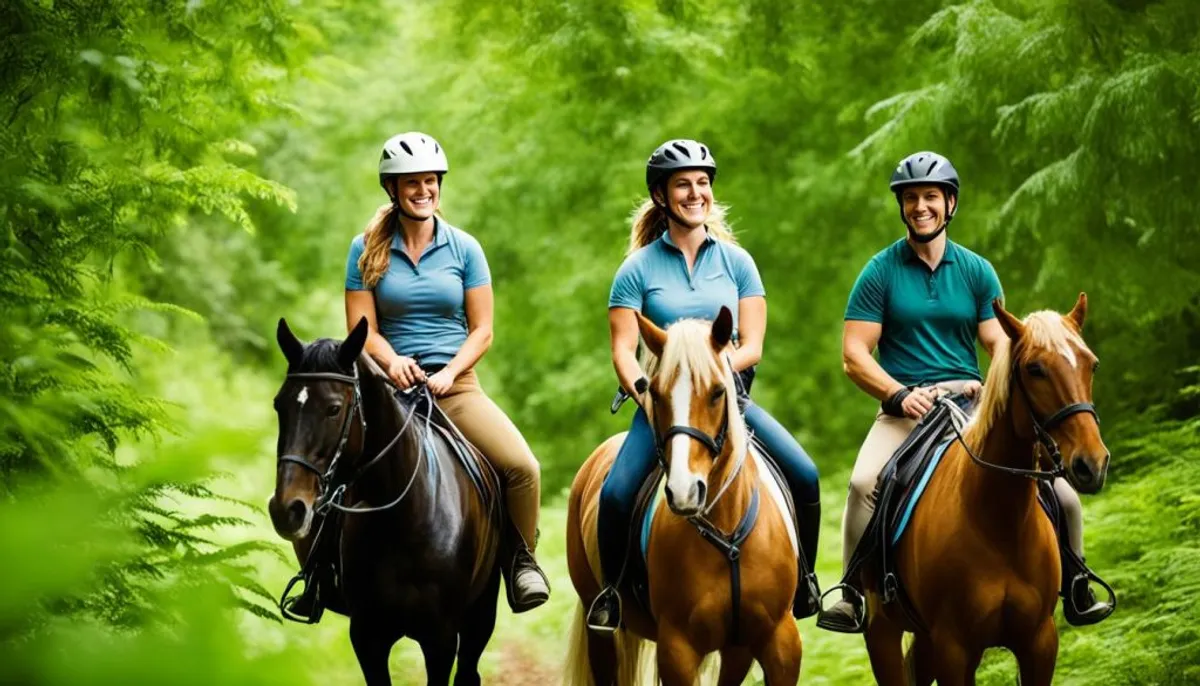
Saint-Laurent Equestrian Farm (Saône-et-Loire)
The Saint-Laurent Equestrian Farm, located in Burgundy, specializes in hiking and outdoor riding camps. The trails vary between agricultural paths, forests, and open spaces, adapted to everyone's level.
Note: a 10% discount is offered for any reservation made before January 5 using the code TE2025. It's a great idea to organize an equestrian weekend or to offer an enriching experience.
Al Andalus Stables (Yvelines)
The Al Andalus Stables offer sporty rides in the Rambouillet Forest, from Rambouillet to Fontainebleau. Their endurance horses are known to be reliable and generous, which is an advantage for long distances.
These activities are aimed at adult and adolescent riders over 15 years old, who are comfortable at all three gaits. It is also possible to bring your own horse to better apply what you have learned to your daily routine.
The Farm of Big Ears (Tarn)
The Farm of Big Ears in Tarn offers gift cards for horseback rides or hikes. The appeal lies in the diversity of landscapes: Ségala, the land of Jean Jaurès, and the Viaur Valley.
These equestrian outings help learn to let the horse walk, breathe, and stay available. It's an excellent supplement to technical training, as it also strengthens the mental aspect in addition to posture.
| Experience | Location | Format | For Whom | What It Develops | Detail to Remember |
|---|---|---|---|---|---|
| Saint-Laurent Equestrian Farm | Saône-et-Loire (Burgundy) | horseback hiking, riding camps | Riders wanting to gain confidence outdoors | Pace management, trajectories, calmness outdoors | -10% Christmas promo if booked before January 5 using the code TE2025 |
| Al Andalus Stables | Yvelines (Rambouillet Forest) towards Fontainebleau | Sporty ride | Adults, teens from 15 years old, comfortable at all three gaits | Endurance, effort management, consistency of aids | Endurance horses are advertised as reliable and generous, possible with your own horse |
| The Farm of Big Ears | Tarn (Ségala, Viaur Valley) | ride, horseback hiking, gift card | Riders looking for an easy nature outing to offer | Confidence, terrain observation, rider relaxation | Discovery of Ségala, the land of Jean Jaurès, and the Viaur Valley |
Take notes on what changes compared to your usual training: your horse's breathing, recovery, and reactions. Share these discoveries with your trainer to refine your goals. This will help combine flat exercises and outdoor outings.
Riding Equipment: Choosing Reliable, Comfortable, and Durable Gear
Good riding equipment is that which protects well and lasts long. It is also comfortable, even when on horseback. Start by identifying what you really need, such as safety or comfort. Then, ensure that the equipment fits you well. Good equipment cleans easily and does not shift, even after several uses.
Rider Essentials
The helmet is the most important element. It must be the right size and comfortable. It also needs to fit well. Boots and chaps protect the legs and prevent chafing. Good gloves help hold the reins better, especially in the rain or during a long session.
When choosing your equipment, think about moving to test mobility. Check the seams and closures carefully. Finally, durable equipment is recognized by its maintenance: it should be air-dried, brushed, and washed carefully to keep it looking new.
Horse Equipment
For the horse, you need a saddle, bridle, and pad. Choose a saddle that distributes weight well and stays in place. The bridle should be comfortable for the horse and help communicate better with it.
Maintaining the equipment is very important. Leather gear should be cleaned and conditioned regularly. Pads should be washed often to avoid irritation. Regularly check the buckles to prevent issues.
Focus on Craftsmanship
Craftsmanship offers a higher level of quality and finish. La Sellerie Française highlights French know-how. With it, you get quality materials, well-cut, and designed to last.
By choosing La Sellerie Française, you choose products entirely made in France. This guarantees quality oversight, consistent material choices, and excellent manufacturing.
Why Choose La Sellerie Française
La Sellerie Française offers unique products, custom-made or in limited series. These are equipment designed for the comfort of riders and horses. It is ideal if you want to invest in quality gear, to keep it for a long time.
| Need | What to Check | Desired Effect | Simple Maintenance |
|---|---|---|---|
| Rider Safety | Fitted helmet, stable adjustment, absence of pressure points | Reliable protection and long-lasting comfort | Gentle cleaning, air drying, strap checks |
| Leg Stability | Firm-soled boots, well-fitted chaps, solid closures | Fixed leg, less chafing, better action | Brushing, wiping after rain, flat storage |
| Horse Comfort | Stable saddle, clearance at the withers, even padding | Freer back, smoother locomotion | Dusting, checking seams, checking the girths |
| Precision of Aids | Bridle at the right length, smooth buckles, well-placed noseband | Finer contact, more available horse | Wiping after session, light greasing, checking the cheekpieces |
| High-End Durability | Choice of leathers, finishes, manufacturing from A to Z in France | Riding equipment that ages well and remains pleasant | Condition leather when it dries, avoid heat, protect from moisture |
Equestrian Competitions: Preparing, Progressing, and Staying Calm in Competitions
A good equestrian club follows a plan for competitions. This plan includes regularity, achievable goals, and constant monitoring. This helps to evolve better.
Preparation for these competitions revisits the fundamentals. Working on position, trajectories, and speed improves scores. And this is done without having to push too hard.
The role of a riding instructor is key. They adjust challenges, correct quickly, and prevent bad habits. These can be penalizing during the competition.
The horse's well-being is a priority in competitions. It is more sensitive to noises and movements around the ring.
Detecting signs of stress in the horse is crucial. A stiff neck or a fixed gaze indicates discomfort. These observations guide preparation and preserve the horse, even under pressure.
Establishing a calm routine is essential. You should warm up gradually, take short breaks, and then recover calmly. Also check the equipment.
The instructor also helps manage the rider's stress. They teach to breathe calmly, focus on one task at a time, and accept a faultless performance before aiming higher.
| Key Moment | To Do in Practice | Objective in Equestrian Competitions |
|---|---|---|
| 7 to 3 Days Before | Review transitions, curves, rhythm; repeat a typical relaxation | Stabilize the pair and secure the competition preparation |
| The Day Before | Check helmet, vest, boots; prepare saddle pad, bridle, protections; organize papers and schedules | Reduce the unexpected and arrive calm |
| Transport and Arrival | Plan for water, hay, walking time; monitor temperature and hydration | Limit fatigue and tension in the horse |
| Course Walk | Note options, count strides, spot “looking zones” | Build a clear plan, tailored to your level |
| After the Round | Debrief calmly, list 2 strengths and 1 area for improvement with the riding instructor | Transform the experience into progress |
Choosing the right equipment is crucial. It must be comfortable and suitable, not just beautiful. This prevents the horse from feeling uncomfortable or reacting negatively.
After the competition, analyzing what worked or not is very useful. This helps improve preparation for future outings. Thus, each competition helps to progress.
Conclusion
Choosing a riding club in France requires checking several things. You need to look at how the instructors are, the condition of the horses, and whether the place is nice. A good instructor explains well, corrects patiently, and respects your learning pace.
Clean stables, well-chosen horses, and simple organization matter a lot. They really change everything.
The different course offerings are also important. There are regular lessons to learn the basics. Specialized sessions to improve. And camps to progress quickly. Services like horse boarding, rides, and access to hikes should also be considered. They make riding more free and interesting.
The goal is always the same: to advance without rushing, respecting the horse. Knowing what is good for it, how it reacts, and what it feels makes riding better. And not only that. It also increases safety and pleasure, for you and the horse.
And then, equestrian tourism is an incredible opportunity. It allows you to discover different regions at a leisurely pace, get fresh air, and see something new. Good riding equipment is also key. It provides more comfort and lasts longer. La Sellerie Française offers equipment made in France from A to Z. They are designed for well-being and durability.
FAQ
How to choose a riding club in France if I want to progress, regardless of my level?
Start by seeing how the lessons are taught and the attention given to the horses. A good riding club should have a clear organization, with defined goals, evident safety, and a good atmosphere. Also, make sure that the horse stable and the horses are in good condition, as this will influence your progress.
Why does a structured environment in a club really help improve?
Being regular makes all the difference. Having planned lessons, adapted exercises, and following rules improves your safety and confidence. Learning in a group also offers dynamism and friendliness that motivate while respecting the horse.
What is the role of a riding instructor in progression and safety?
A riding instructor corrects mistakes before they become habits. They ensure that instructions are at everyone's level, organize lessons well, and prevent risks. They guarantee respect for the horse, for fair and calm riding.
How does a well-equipped horse stable change the daily experience?
Having the right equipment makes learning easier and safer. A horse stable designed well offers areas suitable for work (arena, riding hall, preparation) and horses for all levels. This helps you progress even in bad weather.
What concrete criteria to check before signing up for a riding club?
Look for the quality of lessons, use of good methods, and the importance of equine well-being. Check the state of facilities, cleanliness, and how horses are treated. A serious club is calm, well-organized, and respectful.
Why should the “horse” criterion weigh as much as price or location?
Horses see the world differently from us. Their sensory universe and needs affect their well-being and safety. A club that teaches this helps to improve faster while respecting the horse.
What is the difference between riding lessons, riding classes, and riding camps?
Riding lessons are regular and build your skills over time. Riding classes focus on a specific problem (position, contact). Riding camps are intensive, ideal during holidays to gain skills and sensations.
How to know which option to choose based on my goal?
For stable progression, opt for regular lessons. For a specific goal or competition, choose focused lessons. Camps are perfect if you have little time, offering more training and feedback.
What services to check based on my project: horse boarding, outdoor, tourism?
If you have a horse, inquire about horse boarding (turnouts, feed). If you enjoy outings, check the possibilities for rides. For equestrian tourism, ensure the club's experience in hiking.
What do you learn in riding lessons when you start?
Beginners focus on safety, proper posture, maintaining balance, and directing their mount. They also learn to care for the horse: approaching, leading, tying it. These initial skills help understand the horse from the start.
What does progression look like for an intermediate level?
Intermediates improve their skills in all three gaits, direction, and controlling the horse's energy. They learn to interpret their mount's emotional state, which refines their aids and the rider-horse relationship.
What is aimed for in advanced training in a riding club?
We aim to prepare the horse well, manage its warm-up and recovery, and use aids precisely. Depending on the club, you will perfect dressage or jumping, always ensuring the horse's well-being.
Why do we say that horses have different senses than humans?
Horses perceive their environment differently, being more attentive to small details. They can startle at a sudden sound or a change around them. Understanding this allows for a better relationship with them and avoids stress.
What signals to observe in the horse's behavior to adjust practice?
Note the horse's breathing, its gaze, whether it is chewing or showing agitation. These signs may indicate fatigue or stress. In the club, it is important to learn to understand them for daily equine well-being.
What physiological and behavioral needs should be respected in the club?
Horses need routine, consistency, and minimal stress. Their care must be adapted and gradual. A good club knows how to convey these principles, so as not to harm the horses' well-being while training riders.
What good practices can a club implement to protect the horses' well-being?
Being consistent in signals, having an adapted work rhythm, and managing the horses' rest well are essential. These rules protect the horses and promote better learning for the riders.
What is equestrian tourism, and why is it so appealing in France?
Equestrian tourism allows you to discover places in harmony with nature, on horseback. It values local heritage in an ecological way and strengthens the bond with the horse.
How are rides and hikes a “breath of fresh air”?
They allow you to leave daily life for a simpler rhythm, in nature. This break reduces stress and deeply refreshes, making riding even more enjoyable.
Is equestrian tourism accessible to all generations?
Yes, with options for everyone: short rides, day trips, or long hikes. There are routes for beginners and for experienced riders. The important thing is to find the activity suited to one's level and physical condition.
What does the Saint-Laurent Equestrian Farm in Saône-et-Loire (Burgundy) offer?
The Saint-Laurent Equestrian Farm offers hikes and camps. Enjoy a Christmas promo -10% with reservations before January 5 using the code TE2025. It's ideal for progressing and enjoying nature.
Who is the sporty hike at Al Andalus Stables (Yvelines) aimed at?
The Al Andalus Stables invite you to a sporty hike in the Rambouillet Forest. For adults and teens from 15 years old, comfortable at all three gaits. The horses are reliable and generous. You can come with your own horse.
What does The Farm of Big Ears (Tarn, Ségala) allow you to discover?
A: The Farm of Big Ears offers a gift card to explore Ségala, the land of Jean Jaurès, and the Viaur Valley. It’s an opportunity for an unforgettable experience in nature.
How can these hiking experiences help progress in the club?
Outdoor outings improve effort, balance, and the rider-horse confidence. They strengthen endurance, precision, and calmness during lessons in the club.
What are the essentials of riding equipment for the rider?
Safety first: helmet, boots, chaps, gloves, and protections. Your riding equipment should be comfortable, durable, and easy to maintain. Buying quality is important, especially for protection.
What equipment to plan for the horse, and why is maintenance so important?
You need a saddle, bridle, and comfortable pad for the horse. Taking care of the equipment ensures its longevity and prevents injuries. Clean equipment avoids discomfort and rebellion from the horse.
What does La Sellerie Française offer for high-end riding equipment?
A: La Sellerie Française (https://laselleriefrancaise.com) has high-end and made in France items, crafted by excellent artisans. They offer unique creations, either custom-made or in limited series, prioritizing finish, comfort, and longevity.
How does a club guide towards equestrian competitions without rushing the steps?
A good club plans everything: regularity, revisiting the basics, and achievable goals. Equestrian competitions require meticulous preparation. The support of the riding instructor ensures safety and helps manage stress.
In competitions, how to maintain the “horse first” approach?
Stay attentive to the horse's well-being, which may be affected by a new environment. Signs of stress require adapting the warm-up. Respecting the horse is more important than the result for sustainable progress.
What practical points to anticipate before an equestrian competition?
Check the equipment, organize transport, and plan your day. A calm walk-through and post-competition reflection are crucial for adjusting training. This organization ensures peace and stability.
What questions to ask during a first trial in a riding club?
Inquire about the organization of lessons, evaluation of progress, and respect for the horse. Also, ask about outdoor activities and services like horse boarding. Observe, as a club reveals itself through its actions more than its promises.