
The world of horseback riding is captivating. Athletes and their horses compete in demanding events at the Olympic Games. Since 1900, three equestrian disciplines have thrilled fans: show jumping, dressage, and eventing.
These events showcase the agility, technique, and control of riders and their mounts. They provide a remarkable spectacle for all spectators present.
Key Ideas
- Equestrian sports at the Olympic Games include show jumping, dressage, and eventing.
- These mixed events require agility, technique, and control from the horse-rider pair.
- Equestrianism has been part of the Olympic Games since 1900 and has been included in the program since 1912.
- Olympic medals in equestrian are coveted by the best equestrian athletes in the world.
- The dominant nations in Olympic equestrian events vary over the years.
The Olympic Equestrian Disciplines
At the Olympic Games, there are three equestrian disciplines: show jumping, dressage, and eventing. Each requires different skills from the horse and the rider. This makes the competitions interesting for spectators.
Show Jumping
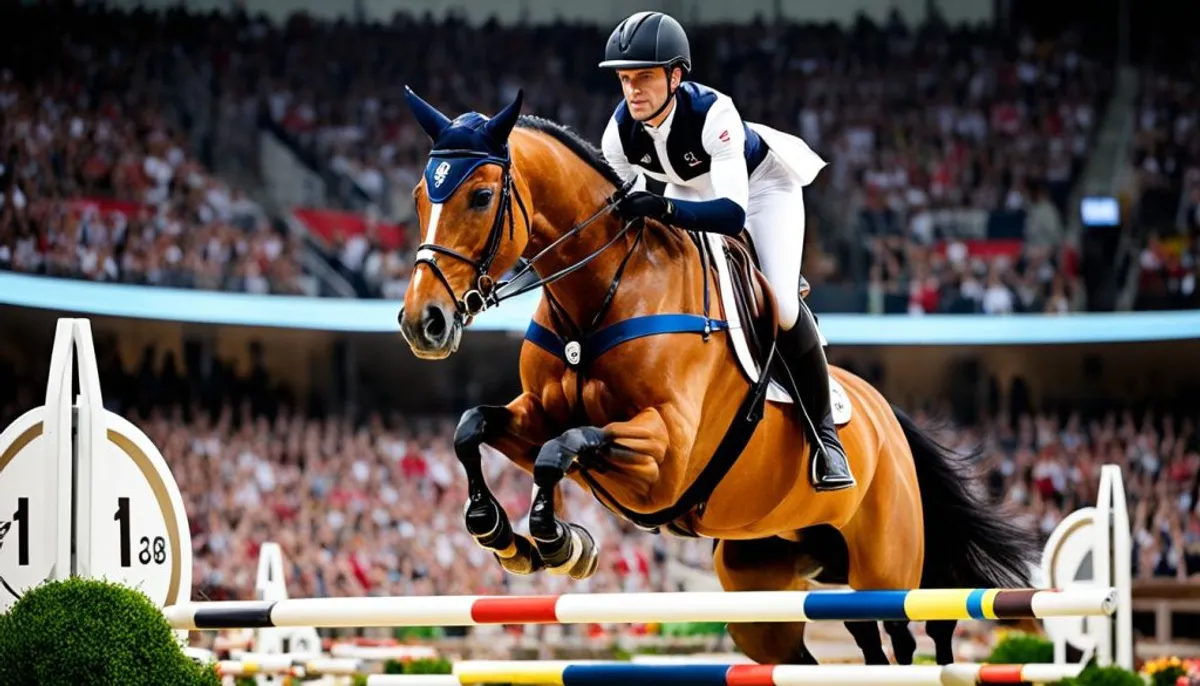
Show jumping is fast-paced and tests the agility and speed of the horse and rider. They must jump over obstacles without knocking them down. If an obstacle falls, it adds negative points. This highlights the partnership and precision of the pair in front of a demanding audience.
Dressage
Dressage is a true artistic performance between the horse and its rider. They perform precise and graceful movements in front of a jury. The jury evaluates the beauty and harmony of the duo's performance on the arena.
Eventing
Eventing is a mix of various competitions. It begins with dressage and continues with show jumping. Finally, there is the cross-country phase, which tests the endurance and skill of the pair over long distances. The one who performs best in these three events wins.
History of Equestrian at the Olympics
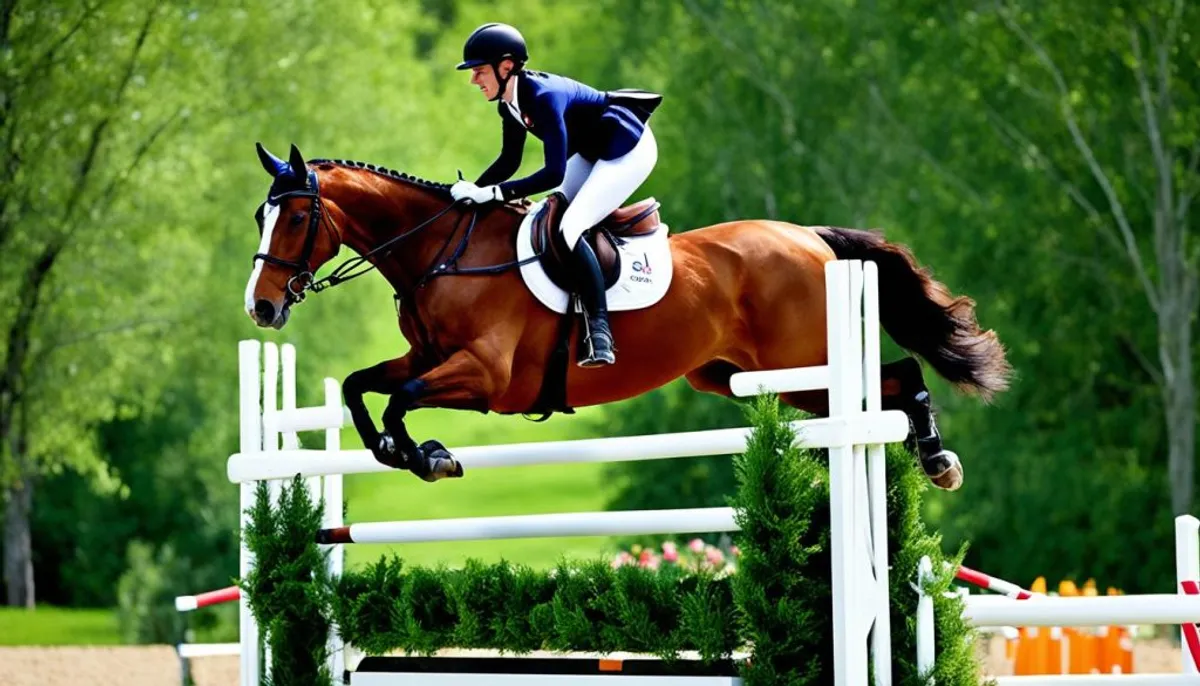
The history of equestrian at the Olympic Games is rich and shows the evolution of the sport. Since 1900, the year of its debut at the Olympics in Paris, equestrianism has been an essential part of the games. The Olympic equestrian disciplines have expanded over the years.
In 1912, dressage and eventing enriched the events, joining show jumping. This change in the program reflects the growing importance of equestrian sports at the Olympics.
The history of equestrian at the Olympics is marked by frequent adjustments to meet the needs of this sport. Each Olympiad brings new disciplines, showcasing the advancements in equestrianism.
| Year | Olympic Disciplines | Major Changes |
|---|---|---|
| 1900 | Show Jumping | First appearance of equestrian at the Olympic Games |
| 1912 | Show Jumping, Dressage, Eventing | Addition of dressage and eventing to the program |
| 1952 | Show Jumping, Dressage, Eventing | Reintroduction of Olympic equestrian events after World War II |
| 1996 | Show Jumping, Dressage, Eventing | First participation of women in equestrian events |
For over 100 years, equestrian at the Olympic Games has continuously evolved. These changes reflect the progress of the sport and its important role on a global scale.
Rules and Regulations
Equestrianism is unique. It is the only Olympic sport involving animals. It follows strict rules from the International Equestrian Federation (FEI), approved by the International Olympic Committee (IOC). These rules protect the horses and combat doping.
Each discipline – show jumping, dressage, and eventing – has its own rules. They cover course size, horse equipment, scoring, and penalties for cheating.
The fight against doping is very important in equestrianism. There are regular tests for horses and riders. If someone cheats, the penalties are severe.
Protecting animal welfare is also paramount. The rules ensure proper treatment of the horses. They prohibit causing harm or mistreating them.
| Rules and Regulations | Objectives |
|---|---|
| Technical regulations of the disciplines | Define competition standards (courses, equipment, scoring, etc.) |
| Anti-doping measures | Ensure the integrity of performances and the health of athletes (riders and horses) |
| Respect for animal welfare | Ensure ethical treatment and welfare of participating horses |
Thus, Olympic equestrian follows rules and regulations for fair, safe, and ethical competitions. This applies to everyone, humans and horses alike.
The Dominant Nations
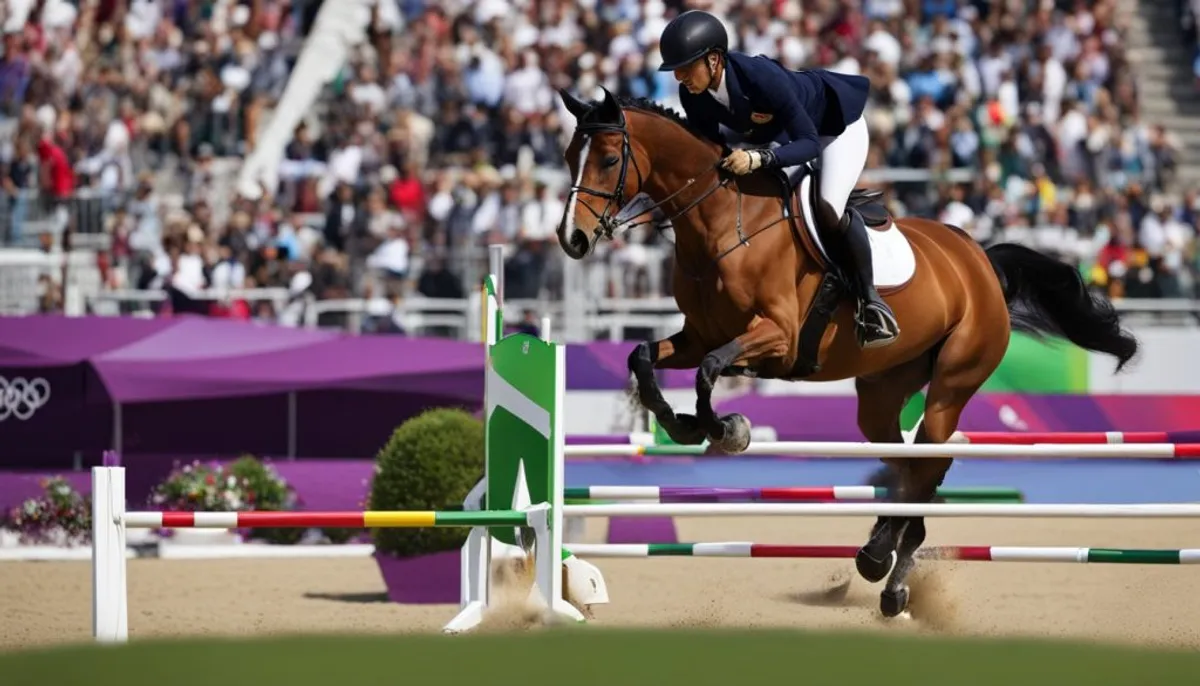
The Olympic equestrian events see athletes from around the world competing. However, some countries stand out more than others. Notably, Germany, the United States, and France.
Germany holds the record for Olympic medals in equestrian. This success is due to a strong equestrian tradition and quality training. German riders consistently shine on the Olympic stage.
The United States is also a force in the world of Olympic equestrianism. They have great infrastructure and significant resources. Thus, their athletes regularly rank among the world's best, particularly in show jumping and eventing.
France has a long equestrian tradition and quality training facilities. Thanks to the Blue Team, it has produced many Olympic champions over the years.
Speaking of great figures, Dutch rider Anky van Grunsven stands out. She holds an impressive record of nine Olympic medals. Thus, she is the most decorated athlete in the history of equestrian competitions.
| Country | Number of Olympic medals in equestrian |
|---|---|
| Germany | Most medals |
| United States | Regularly among the best |
| France | Strong tradition and training |
| Netherlands | Anky van Grunsven, most decorated rider |
Thus, even though Olympic equestrian is open to many countries, some position themselves as leaders. Their excellence and consistency at the highest level are unquestionable.
Conclusion
Olympic equestrian sports have changed significantly since 1900. Originally, there were three events: show jumping, dressage, and eventing. Since 1912, these events have never missed a single Games. Moreover, renowned riders, such as the Dutch Anky van Grunsven, have dominated these competitions.
Today, the equestrian world is continuously adjusting. It adapts to new challenges and the globalization of the sport. The rules change to fit our times. Additionally, new international talents challenge the hegemony of former champions.
Olympic equestrian goes beyond mere medals. It is a fascinating tradition that inspires people around the world. The upcoming Games promise new epic moments. These moments will further enrich the already prestigious history of these disciplines.
FAQ
What are the equestrian disciplines present at the Olympic Games?
The Olympic Games include three equestrian sports: show jumping, dressage, and eventing. Each discipline tests the relationship between the horse and the rider. It requires agility, technical skill, and control.
Since when has equestrian been part of the Olympic program?
Since the 1900 Games in Paris, equestrian has been present. Initially, three jumping events were contested. After 1912, dressage and eventing enriched the program.
What are the regulations for Olympic equestrian events?
The Olympic equestrian rules are created by the International Equestrian Federation. They are approved by the International Olympic Committee. These rules protect the horses, prohibit doping, and aim to ensure their welfare.
Which countries dominate in Olympic equestrian?
Countries like the United States, Germany, and France are always present at the Olympics. Germany has won the most medals in Olympic equestrian. Despite the increase in participants, these countries often dominate.
Who is the most decorated athlete in Olympic equestrian?
Anky van Grunsven, a Dutch rider, is the leader. She has won nine Olympic medals. Her success makes her the most decorated athlete in the history of equestrian at the Olympics.