
Choosing a good saddle pad is essential. It protects the horse's back by cushioning shocks and evenly distributing pressure. This choice also enhances the rider's stability.
There is a wide variety of riding pads. Their shape, size, and material vary depending on the discipline practiced and the type of horse. A perfect fit allows for better performance.
The materials used range from cotton to felted wool, including neoprene. Some pads utilize advanced technologies. This ensures better comfort for the horse and a long lifespan for the pad.
The cost of a pad can range from inexpensive to very expensive. But proper maintenance can extend the life of a quality pad. La Sellerie Française offers high-end and custom-made pads.
You can also combine a pad with other accessories for more style. Elements such as wraps or boots should be chosen for their functionality. The goal is to keep the gear clean, comfortable, and stable.
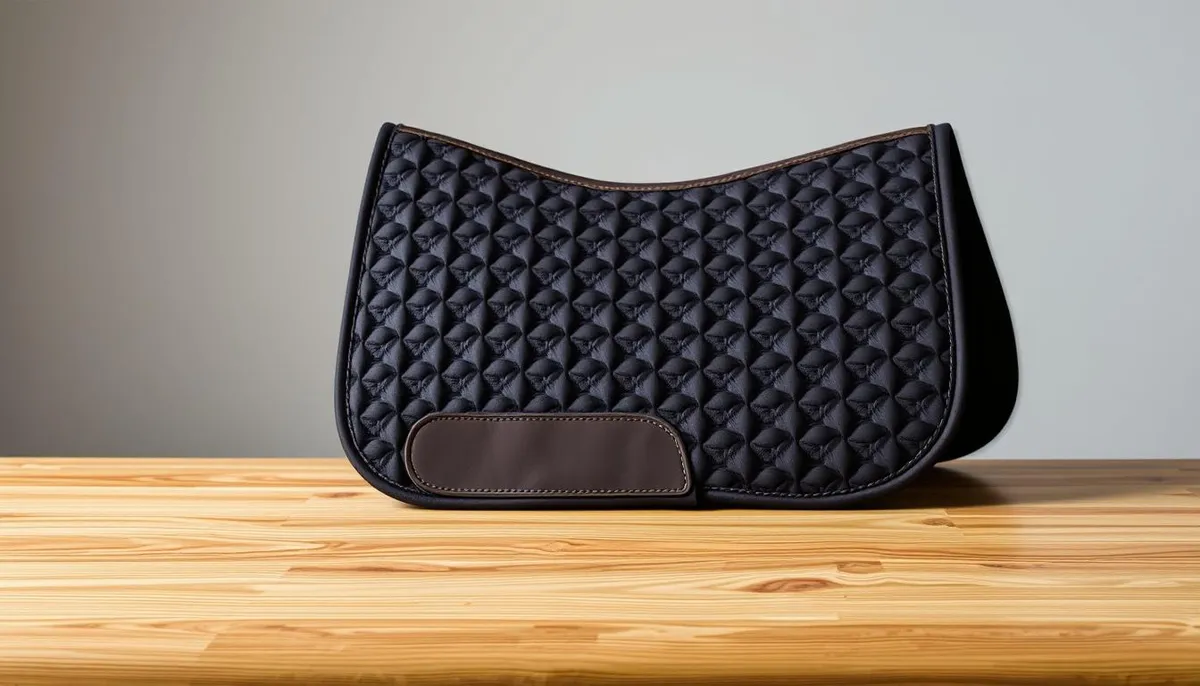
Key Points
- The saddle pad distributes pressure, cushions shocks, and limits friction.
- The choice depends on the discipline, the horse's conformation, and the saddle.
- Key materials: cotton, wool/felt, neoprene, foams, gels, breathable 3D textiles.
- Horse vs pony dimensions: direct impact on fit and stability.
- Regular maintenance extends lifespan and protects equestrian equipment.
- La Sellerie Française offers high-end, custom, and durable options.
The Role of the Saddle Pad in Horse Comfort and Well-being
The saddle pad is small but vital. It connects the saddle and the horse's back. By choosing a good pad from a reputable saddlery, you help the horse move better. It reduces friction and keeps the equipment stable without adding bulk.
Protection of Pressure Areas and Shock Absorption
A quality pad distributes weight well across the horse's back. It often uses foam, gel, or wool for protection. These materials reduce irritation and better distribute the load.
In competitions like show jumping, good support is crucial. Pads reinforced by Eskadron or LeMieux are very effective. They cushion shocks, reduce fatigue, and protect the horse's skin.
Moisture and Sweat Management
Cotton is great for absorbing moisture and stays dry against the skin. Modern materials allow air to circulate and prevent overheating during exertion.
Good airflow helps the horse stay comfortable and recover faster. Choosing a pad that wicks sweat prevents irritation and hair breakage. It also keeps the equipment light and airy.
Saddle Stability and Friction Prevention
Pads with non-slip surfaces help keep the saddle in place. This reduces the risk of irritation on the horse's skin. Well-fitted pads prevent excessive movement without blocking airflow.
A well-fitted pad also protects the edges of the saddle. It is important to avoid pads that are too thin or too thick. A good space at the withers ensures better weight distribution. This perfectly aligns the horse's equipment with the rest of the available gear.
Riding Pads for Every Discipline
Each equestrian discipline has its own needs. A good horse pad helps support the saddle and improves comfort. Choose its shape and material based on the activity practiced.
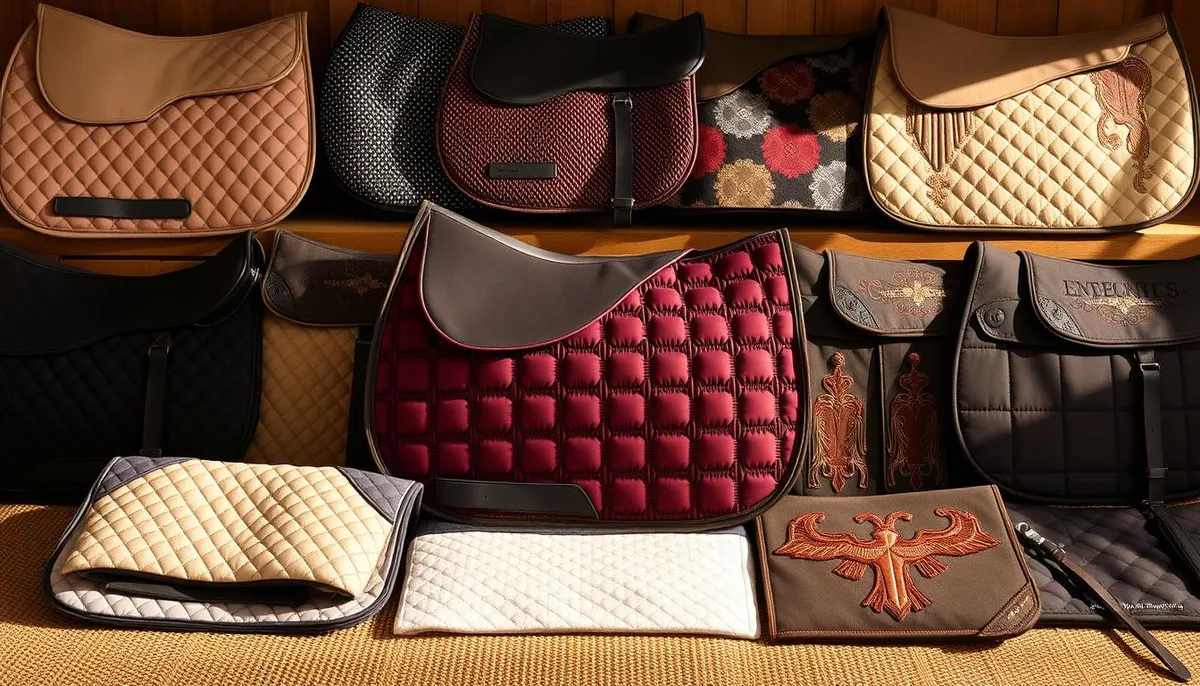
Show Jumping and Eventing
Opt for a short, sturdy, and well-padded pad. It should have anti-slip zones to stabilize the saddle.
This helps during jumps and landings. Ecogold pads absorb shocks without being too thick.
Dressage and Spinal Clearance Requirements
A long and anatomical pad is preferable for dressage. It promotes movement and maintains good cushioning.
Use a lightweight but stable pad. Saddle adjustments are easy with LeMieux or Back on Track.
Trail Riding, Endurance, and Long Rides
The key is the pad's ability to allow airflow. Materials like 3D airflow keep the back cool.
Choose a pad that lasts without flattening. It should protect without weighing down the equipment.
Western Specifics and Heavier Saddles
For Western saddles, a thick and absorbent pad is necessary. Wool felt is ideal for distributing weight well.
A wide pad with a non-slip base is recommended. Nunn Finer and Professional’s Choice offer precise adjustments.
Materials and Technologies of Saddle Pads
Starting with the right material is essential for a saddle pad. Cotton, which is both absorbent and breathable, is ideal for everyday use. It is an affordable option and widely used in equestrianism, although its cushioning level may decrease over time.
Felt and wool ensure good pressure distribution and absorb shocks well. These materials are heavier and require careful maintenance, but they provide excellent comfort for the horse's back. They are ideal for prolonged training sessions.
Neoprene and technical fibers are both lightweight and protective. They are easy to clean and perfect for performance, despite sometimes reduced breathability. They offer a good balance between ventilation and hold under the saddle.
Foams and gels come in various densities. For example, high-resilience foam like that from Ecogold retains its cushioning better. For competition, this ability to maintain its qualities makes all the difference.
3D airflow fabrics help keep the horse cool by allowing air to circulate. They combine ventilation and durability while effectively absorbing shocks. Ecogold also offers non-slip surfaces that stabilize the saddle while reducing pressure points.
The anatomical design of the pad and the space for the spine are crucial. Precise adjustments can compensate for variations in the horse's musculature. Brands like Back on Track and LeMieux offer customizable solutions for every need.
Adjustment Tip: consider the whole formed by the saddle, the horse, and the rider. Good equipment improves support and reduces fatigue, especially on varied terrain.
| Material / Tech | Main Advantages | Limitations to Consider | Recommended Uses | Brands and Options |
|---|---|---|---|---|
| Cotton | Breathable, absorbent, easy to wash, affordable | Lower cushioning over time, risk of sagging | Daily work, young horses, tight budgets | LeMieux (cotton ranges), dressage/jumping formats |
| Felt / Wool | Excellent pressure distribution, lasting comfort | Heavier, requires careful maintenance | Trail riding, endurance, sensitive backs | Professional’s Choice, Jack’s (felt pads) |
| Neoprene / Technical Fibers | Lightweight, protective, easy maintenance | Variable breathability depending on structure | Rain, cross-country, frequent training | Nunn Finer (technical pads), non-slip models |
| Foams & Gels | Modular cushioning, increased stability | Weight and thickness to control | High withered horses, sports saddles | Ecogold (HR foam), adjustable half-pads |
| 3D Airflow Fabrics | Continuous ventilation, dry back | Higher price | Competition, summer, prolonged efforts | Ecogold, LeMieux (3D mesh ranges) |
| Breathable Non-slip | Stability without heat, fewer pressure points | Requires precise saddle adjustment | Jumping, cross-country, round horses | Ecogold (non-slip surfaces), corrective pads |
| Design & Adjustments | Anatomical shape, spinal clearance | Requires careful measurement | Horses with evolving musculature | Back on Track, Nunn Finer (wedges, pads) |
Mixing materials, cuts, and inserts helps find the best saddle pad. Good equipment supports movement and helps manage temperature. Thus, comfort and stability improve with each session.
Choosing the Right Shape and Fit for the Horse's Back
A good horse pad must support the saddle well. It should not hinder the horse's movement. It should be chosen with the horse's shape, the type of saddle, and its use in mind. In saddlery, we want a pad that conforms to the back. It should also free the withers and not block the spine.
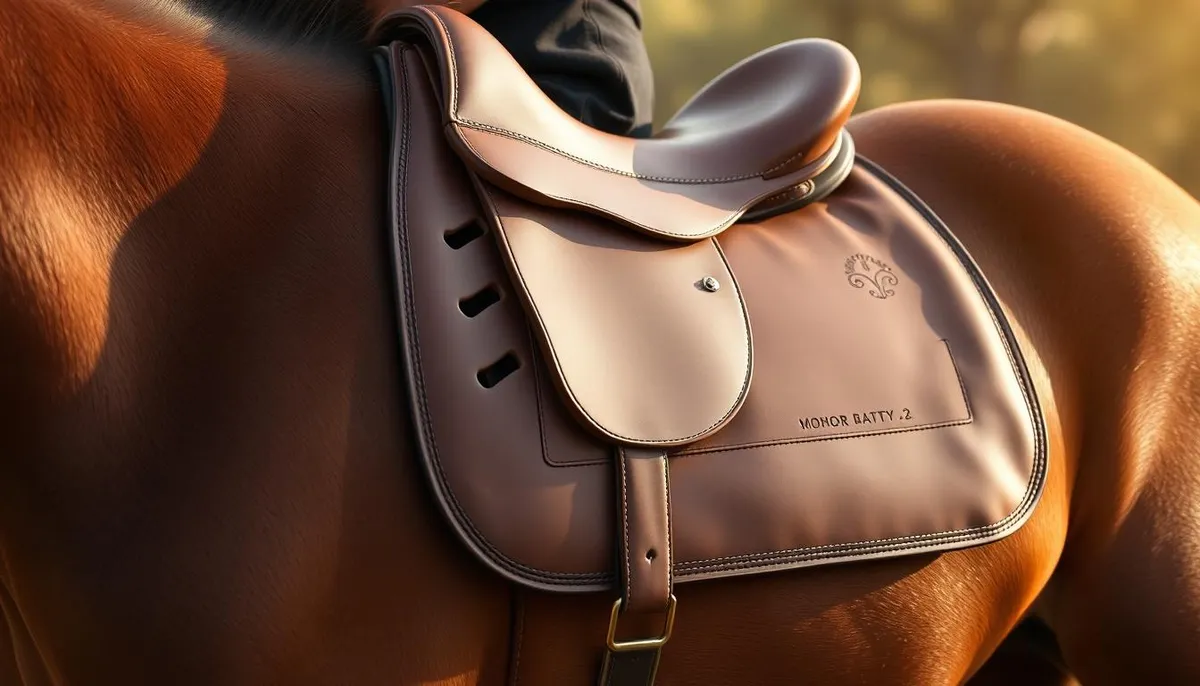
Conformation, Withers, Spinal Clearance
Look at the withers to see if they are high, normal, or low. Check if the back is flat, curved, or if the shoulders are strong. A well-chosen pad creates clear space along the spine. It avoids compressing or irritating the withers.
The horse pad should remain flat, without creating bumps. Always lift it in the dip of the saddle before girthing. This habit helps the skin breathe better. It also ensures better stability during exercise, which is very important.
Thickness, Pressure Distribution, Adjustable Inserts
A pad that is too thick makes contact hard; too thin, it creates hard points. You need to find a thickness that absorbs shocks without hindering. Special foams, gel, or dense felt help distribute weight.
Pockets for shims allow you to adjust the pad if the horse's shape changes. This helps correct small differences. This horse equipment is both discreet and adaptable.
Horse vs Pony Dimensions and Saddle Compatibility
Horses need a longer and padded pad. Ponies need a shorter and thinner version. A pad that is too short causes friction; too long, it moves. It should just extend beyond the saddle to protect without hindering.
The pad must fit the saddle, whether for jumping, dressage, or trail riding. The design should follow the shape of the saddle without adding too much thickness. Non-slip and breathable materials help keep everything in place. This is crucial for the horse's safety and comfort.
- Visible clearance at the withers and along the spine.
- No bulges or folds under the saddle.
- No slipping at walk, trot, or canter.
- Regular sweat marks after the session.
- Horse pad matched to the type and size of the saddle.
Style, Budget, Maintenance, and Matching Accessories
Choosing the right pad highlights the horse-rider pair and protects the saddle. You need to think about style, budget, and care. This way, everything coordinates with equestrian equipment, including accessories.
Color Palette According to Coat and Equestrian Equipment
On black, bay, or chestnut coats, opt for neutral colors like beige, gray, or brown. Gray or piebald horses prefer light tones like white, light blue, or soft green. For bay and chestnut coats, choose warm colors, such as burgundy and brown.
It is important to coordinate this with the saddle and other equipment for a neat look. Ensure everything harmonizes well for a clean and clear style, whether in competition or training.
Budget and Durability of Materials
Prices vary greatly, from a few dozen to several hundred euros, depending on the brand, materials, and size. Paying more can mean better quality, comfort, and durability.
There are pads in different price ranges, like Back on Track or LeMieux. Choose based on your needs, considering comfort, ventilation, and ease of maintenance.
Daily Maintenance to Extend the Life of the Pad
After each session, brush the pad and let it air out. Use the right cleaning products to avoid damaging the materials. And let it dry away from direct heat.
Regularly inspect the seams and areas that wear the most. Using two pads alternately helps reduce wear. These simple gestures help keep the saddle dry and preserve your equipment longer.
Matching Equestrian Accessories: Wraps, Bonnets, Boots, Halters
Match your pad with polo wraps, bonnets, and boots for a unique look. Look for materials that breathe and do not slip to stay practical and stylish.
Make sure everything is compatible. A good color selection makes it easier to match and highlights the horse's beauty.
Focus on French Quality: La Sellerie Française, Custom-Made and Limited Editions
La Sellerie Française offers high-quality equipment made in France. You will find traceability, meticulous finishes, and personalized options.
Choosing “Made in France” means supporting local craftsmanship. This adds value to your equipment and equestrian accessories.
Conclusion
Choosing the right saddle pad is crucial for the horse-rider duo. It ensures better pressure distribution and cushioning. It also helps manage moisture and stabilize the saddle, reducing friction.
The selection should be made according to the discipline practiced and the horse's shape. Whether for jumping, dressage, trail riding, or western, careful selection is necessary. The shape, thickness, and materials vary: cotton, felt, wool, neoprene, and others.
It is important that the pad extends slightly beyond the saddle to prevent direct contact. Avoid choosing a pad that is too thick, which could be uncomfortable. For style, it should harmonize with the rider's equipment, and regular care should be taken.
There are many choices on the market, with brands like Back on Track and LeMieux. Nunn Finer, Professional’s Choice, and Jack’s also offer good options. Ecogold stands out with its technological innovations.
If you are looking for something unique, La Sellerie Française offers custom-made options. They produce limited editions, made in France. This guarantees high-quality and stylish equipment for the rider and their horse.
FAQ
What is the purpose of a riding pad under the saddle?
It cushions shocks and distributes pressure. This pad also limits friction. It helps protect the horse's back and the saddle.
It improves saddle stability. The use of materials like 3D airflow and non-slip surfaces keeps the horse cool. It also reduces minor slips.
How to choose a saddle pad according to the discipline?
For jumping and eventing, a short pad with good grip is better. In dressage, choose a long and anatomical pad. For trail riding, breathability is key.
In western, opt for pads made of felt or wool, suitable for heavier saddles.
What thickness of pad for a good fit?
A pad that is neither too thick nor too thin is ideal. It should not create unnecessary pressure points.
Look for materials like foams or gels for good distribution. Adjustments to the pad can help for better adaptation.
Cotton, felt/wool, neoprene, or 3D textile: what to choose?
Cotton is absorbent but less durable over time. Felt and wool offer good shock protection.
Neoprene is easy to maintain. 3D textiles combine ventilation and durability.
How to ensure good clearance at the withers and spine?
Use a pad suitable for your horse. It should allow good clearance at the withers and spine.
The pad should fit without creating tension areas. It is important that it extends slightly beyond the saddle.
Horse or pony: what is the difference in dimensions for the horse pad?
The pad for a horse is generally larger and thicker. The one for a pony is smaller and thinner.
An ill-fitting pad can cause issues. It should cover well without being too thick under the girths.
How to check the compatibility between pad and saddle?
Ensure that the pad and saddle have compatible shapes. After riding, check for any folds.
Good compatibility ensures even sweat distribution. Non-slip textiles can help stabilize without blocking airflow.
What brands and technical solutions do you recommend for equestrian equipment?
For good grip, Ecogold is top-notch. For precise adjustments, look at LeMieux or Back on Track.
Brands like Nunn Finer offer good accessories to stabilize the saddle.
What budget to plan for a durable saddle pad?
Prices vary greatly, from dozens to hundreds of euros. A good pad offers better protection and lasts longer.
There are also specialized options for every need. Consider the long-term investment.
How to maintain a riding pad daily?
Brush and let the pad air out after each use. Wash it according to recommendations and let it dry away from heat.
Regularly inspect the pad. Ideally, alternate between two pads to preserve them.
What colors of saddle pads to highlight according to the coat?
Choose neutral colors for dark coats. For gray or piebald coats, light tones are beautiful.
For a bay coat, warm colors are perfect. Match the colors with the rest of the equipment.
What equestrian accessories to match with the pad?
Coordinate your equipment: polo wraps, boots, halters. Prefer consistent materials, like non-slip surfaces if necessary.
The goal is to combine style and functionality in your equestrian equipment.
Where to find a high-end saddle pad made in France?
La Sellerie Française offers prestigious items made in France. They provide quality, exceptional finishing, and customization for discerning riders.
How to avoid friction and irritation under the saddle?
Ensure that the pad is well-fitted. Use materials that control moisture and limit overheating.
Non-slip surfaces help keep the saddle in place.
Do non-slip pads heat the back too much?
Good non-slip pads, like those from Ecogold, are designed to remain breathable. They keep the horse's back cool.
They combine ventilation and stability.
Can I use a half-pad or shims to correct the fit?
Yes, for minor adjustments, half-pads and shims can help. Brands like LeMieux offer good options.
Avoid layering too many thicknesses.
What is the difference between a saddle pad for jumping and for dressage?
The jumping pad is designed to absorb shocks. The dressage pad is designed for freedom of movement.
It provides good support while being discreet.
Is a cotton pad sufficient for daily training?
For light sessions, cotton is suitable. For more intensity, prefer pads with more advanced materials.
This ensures better comfort over time.
How to know if my pad is well positioned?
Before tightening, adjust the pad so that it frees the withers well. Check for pressure marks afterward.
The pad should stay in place and cover effectively.
What are the benefits of a quality horse pad for the saddle?
A good pad increases the lifespan of the saddle. It protects the leather and keeps the saddle stable.
This reduces wear on the equipment.