
In horseback riding, choosing the right equipment is essential. It ensures safety, comfort, and enhances performance. This is true for both the rider and the horse, everywhere in France.
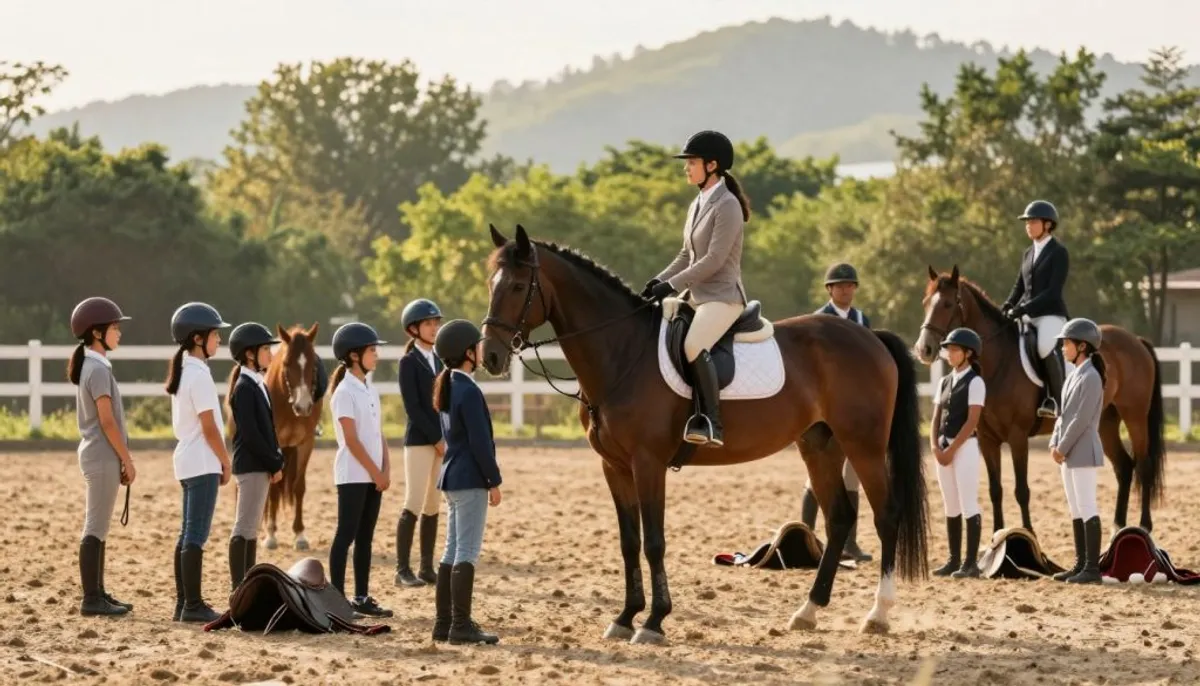
Choosing a good saddle, stable stirrups, a breathable pad, and a precise bridle is crucial. With quality equipment, friction and pressure are reduced. Thus, the horse is more comfortable, and the rider is more confident.
This guide shows how to practice horseback riding sustainably. It explains how to choose equipment based on the discipline. It provides tips for using an online saddlery, and how to evaluate La Sellerie Française at laselleriefrancaise.com.
Then it discusses specific products such as an antibacterial bamboo pad, durable blankets, a saddle cart, and even heated vests for winter. This information helps distinguish the essential from the superfluous. Thus, one invests wisely to improve riding sessions.
Key Takeaways
-
Horseback riding equipment is key for the safety and comfort of the duo.
-
Good equestrian gear improves posture and reduces the risk of injury.
-
Making choices about equipment suited to one’s discipline and level is fundamental.
-
Using an online saddlery allows for easy comparison, if one knows what to look for.
-
The best advice often concerns simple but regular adjustments.
-
In France, consulting La Sellerie Française (laselleriefrancaise.com) helps make the right choice.
Spirit of Riding: A Life Philosophy Centered on the Horse
Riding is much more than just a sport. It’s a new way of seeing the world, with calm and attention. One learns to be attentive, to breathe carefully, and to adapt to situations. The natural equestrian technique guides us in this quest for serenity rather than force.
When the equipment is well chosen, everything becomes easier. A good saddle, a comfortable pad, and a properly adjusted girth reduce discomfort. Thus, the horse's attentiveness and well-being improve through daily care.
“Dancing” with Your Mount: Understanding Without Words
Dancing with your mount means finding the right rhythm together. The position of the body, shoulders, and the regularity of movements contribute to the dialogue. With ethological riding, the aim is light and natural interactions.
Subtle signals, such as a change in ear position or a calm breath, are essential. This allows for clear communication. The relationship between the horse and its rider then becomes stronger and more respectful.
Respect, Gentleness, and Animal Welfare in Daily Life
Gentleness is a philosophy, not just a way of doing things. It involves short sessions, well-deserved breaks, and visible progress. The horse's well-being is manifested when it moves freely, without resistance, and recovers quickly.
- Progressive warm-up: gently prepare the horse’s body.
- Checked comfort: ensure total absence of pressure points.
- Calm end of session: a moment to catch one’s breath and finish on a good note.
Harmony and Horse-Human Relationship: The Foundation of Sustainable Practice
A good relationship with one’s horse is essential for long-term practice. One seeks a good balance rather than wanting to win at all costs. This helps to remain gentle and precise, even when the action intensifies.
Good equipment plays a discreet supporting role. When well chosen, it promotes movement and reduces tensions. Thus, riding becomes more enjoyable, and the harmony with the horse strengthens day by day.
| Point to Check | What We Seek | Effect on the Session |
|---|---|---|
| Saddle Adjustment | Even distribution, clear withers, stability | Available back, smoother transitions |
| Girth and Contact Points | Support without compression, free elbows | Stable breathing, more forward horse |
| Bridle or Work Halter | Symmetrical adjustment, no pinching, clear actions | Softer contact, quicker responses |
| Pad and Heat Management | Breathability, absorption, no creases | Less irritation, improved recovery |
Horseback Riding Spirits: What You Find in Saddlery for All Styles
In a good saddlery, one can fully equip themselves. At horseback riding spirits, you can find everything: from technical gear to gift ideas. The well-being of the horse and rider is essential there.
One must think in terms of specific needs: stability, movement, protection. When the equipment is suitable, communication with the horse is simplified. This avoids obstacles in contact.
Dressage, Jumping, Trail Riding: Adapting Equipment to Discipline
For dressage, the pursuit of finesse is key. A stable leg and soft leather are needed. Jumping requires support and safety. The equipment must not move even at high speed.
In trail riding, robustness and comfort are sought. It must withstand friction. This organization by discipline helps avoid unnecessary purchases. It guarantees respect for the horse and strengthens the equestrian connection.
Saddlery, Outfits, and Accessories: Style + Functionality
Style is important but should not interfere with riding. The DMH Chics Pros series 3D boots combine aesthetics and comfort. For jackets, the HV Polo and Euro-Star models allow for free movement.
In winter, HKM accessories add comfort. Staying warm and moving freely improves communication. This is especially true for transitions and trajectories.
Products Designed to Strengthen the Equestrian Connection
Some products facilitate practice while adding enjoyment. The Hobby Horse encourages a playful approach. It helps improve posture and coordination, even without a horse.
A simple selection promotes quick choices without compromising quality. horseback riding spirits offers suitable equipment. They enhance daily communication with the horse.
| Discipline | Usage Priority | Equipment by Discipline to Target | Benefits on Horse-Rider Communication |
|---|---|---|---|
| Dressage | Stability and precision of aids | Soft leathers, fine adjustments, close-fitting attire | More regular contact, clearer aids |
| Jumping | Support and safety in effort | Stable equipment, accessories that stay in place, attire that frees the upper body | Fewer distractions, clearer trajectories |
| Trail Riding | Long-lasting comfort and durability | Robust elements, anti-friction protections, warm outfits like HV Polo or Euro-Star jackets | More available horse, more relaxed rider |
| Stable/Daily | Practicality and protection against cold | DMH Chics Pros series 3D boots, HKM winter accessories | More precise gestures, better equestrian connection in groundwork |
La Sellerie Française: High-End Equipment Made in France to Discover
When riding, one seeks good equipment. La Sellerie Française offers that. It has quality leather gear, with perfect finishes.
Every detail counts, like a well-adjusted girth or soft leather. This makes everything better, even the mood when working with the horse.
Products Made from A to Z in France: A Demand Beyond Labels
The “made in France” here is more than just assembling parts. Everything is tracked, from leather selection to the final finishes.
Thanks to this approach, quality remains consistent. This ensures that each piece withstands wear well.
Unique Pieces, Custom-Made or Limited Series by the Best French Artisans
French saddlers take pride in every detail. Thanks to custom work, each piece of equipment is perfect for its rider and horse.
This way of doing things makes the equipment not only beautiful but also perfect for daily use. It remains technical and elegant over time.
Why French Riders Prefer Local Quality
62% of French riders prefer to buy local. And 50% seek artisanal excellence, even for unique or limited pieces.
This shows their pursuit of sustainability and identity. A high-end saddlery reflects a tradition and attention to the horse.
| Common Expectations | What Riders Seek | What La Sellerie Française Highlights |
|---|---|---|
| Clear Origin | Local and traceable manufacturing | Production monitored from A to Z in France, with a logic beyond labels |
| Durability | Leather, stitching, and hardware that last over time | Selection of high-end pieces suitable for regular use |
| Customization | Fine adjustment and comfort in practice | Unique pieces, custom-made or limited series from a French saddler artisan |
| Style and Tradition | Equipment that reflects a way of riding | Careful finishes and a spirit of artisanal excellence, without compromising functionality |
Choosing a Suitable Saddle: Comfort, Safety, and Performance
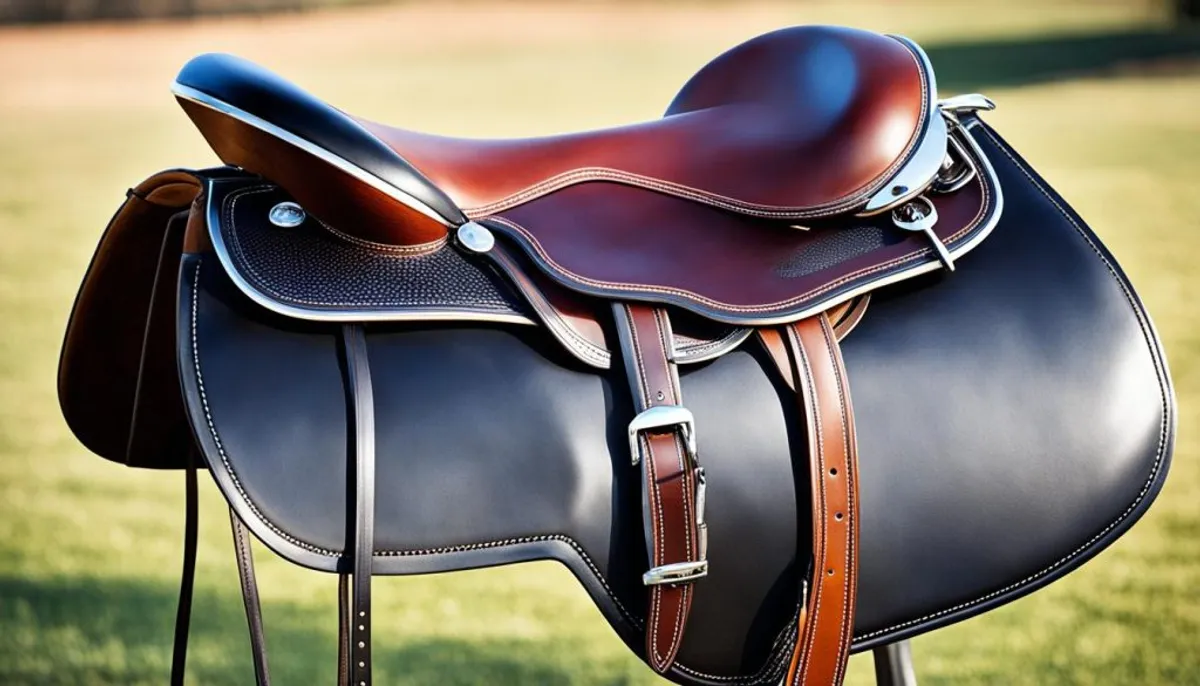
Choosing the right riding saddle makes a big difference. It allows the horse to move freely. It also ensures the stability of the rider. With good balance, the duo can improve with each training session.
Respecting the Horse's Morphology: Back, Pressure Points, Freedom of Movement
To properly adjust the saddle, one must start from the horse's back. Consider the withers, the line of the back, and the width of the gullet. If the saddle is too far forward, it hinders the shoulder and reduces stride length. Placed too far back, it overloads the kidneys and causes tension.
One must also pay attention to pressure points. Look for signs like areas without sweat, worn hair, or marks after girthing. A well-positioned saddle should not compress the spine and must remain stable. This protects the horse and maintains its availability.
Rider Comfort: Support, Balance, and Horse-Rider Communication
The rider's comfort does not only depend on a “soft” saddle. It concerns the shape of the seat, the knee rolls, and the space for the hips. If the leg position is natural, the rest of the body relaxes. Thus, the aids are finer and more effective.
A good saddle allows for better communication with the horse. There are fewer unnecessary movements and more clarity in instructions. This helps to feel the horse's movements, such as the opening of the shoulder or the rhythm of its steps. Safety is improved as balance can be quickly regained.
Choosing According to Use: Dressage, Jumping, Trail Riding
Needs vary according to the discipline practiced. In dressage, a good leg position and sustained contact are essential. For jumping, the priority is freedom of movement and safety upon landing.
For trail riding, comfort over long distances is paramount, both for the horse and the rider. And if you need to pay attention to the budget, consider looking for deals like discounted leather saddles for ponies that allow equipping a young rider without compromising comfort.
| Usage | What the Saddle Facilitates | Point to Check First | Impact on Performance |
|---|---|---|---|
| Dressage | Deep seat, long leg, fine aids | Seat stability and clear channel | Regularity of contact and better cadence |
| Jumping | Freedom of pelvis, balance in suspension, safety | Forward flaps and support without blocking | Cleaner trajectories and more stable landings |
| Trail Riding | Long-lasting comfort, natural position, endurance | Distribution of pressure and absence of friction | More consistent horse, less fatigue |
Saddle Pads and Shock Absorbers: Protecting the Back and Improving Work
A good saddle pad is not just for looks. It stabilizes the saddle and reduces friction. It also helps keep the horse's back clean and healthy.
Breathability is essential, especially during long sessions. It offers comfort to both the horse and the rider.
Choosing the right equipment protects the horse's back. This includes a well-clear withers and better sweat management. The horse is less tense and more receptive.
Key Criteria: size, cut, breathability, sweat management
-
Size and Placement: the pad must match the shape of the saddle. It should neither extend nor be pulled back.
-
Cut: a good cut frees the withers and does not hinder the shoulders.
-
Breathability: breathable materials reduce moisture. This is crucial in summer or for flat work.
-
Maintenance: choosing an easy-to-wash pad saves time. It should remain in good condition even after several washes.
Examples of Noted Products: concrete references to compare according to your usage
|
Product |
Material/Finish Advantage |
Common Usage |
Point to Watch |
|---|---|---|---|
|
DMH Antibacterial Bamboo Pad |
Bamboo, soft touch, good moisture management |
For regular use, especially for sensitive horses |
Ensure complete drying to maintain quality |
|
Saddle Pad Imperial IRH Time to Shine base VZ |
Quality finish for secure support under the saddle |
Perfect for competition or medium duration sessions |
Choose the right size to avoid slipping |
|
Pénélope New Strass Pad |
Elegant with a well-thought-out cut |
Suitable for daily work, whether for a pony or a horse |
Important to check space at the withers after girthing |
|
Saddle Pad PENELOPE Swell |
Comfortable and practical design |
Ideal for dressage or for energetic horses |
After use, check points where the pad might compress |
Shock Absorbers: when and why to use them
Shock absorbers improve comfort and protect the horse's back. They are useful if the horse changes physically or is returning after a break. They compensate for minor variations without destabilizing the saddle.
However, they should not hide a saddle problem. If the horse is uncomfortable or if the saddle moves, first check its adjustment.
The Wintec Back Shock Absorber is good for minor adjustments. When used properly, it fosters a better relationship between the horse and rider.
Girths, Bridles, Halters, and Ropes: Safety and Precision in Adjustments
Adjusting carefully is key for groundwork or riding. It makes horseback riding more enjoyable for everyone. With ethological riding, simple yet precise equipment is favored.
Properly Adjusting the Girth: Keeping Stable Without Hindering Breathing
Adjusting the girth aims to keep the saddle stable. It’s important to avoid compressing the horse's thorax too much. Tighten gradually and walk a bit before checking.
As the horse moves, the girth may loosen, especially in active horses. It’s important to check quickly when mounting, and again after walking. A durable girth, whether leather or synthetic, stays tight longer. Watch sensitive areas, especially behind the elbow.
Overview of Practical Accessories: Ropes (Anti-Panic, Ethological), Rope and Leather Ropes
The anti-panic rope is useful for calming the horse in stressful situations, such as when tied or in a trailer. The HKM (180) anti-panic snap rope is practical for its quick reaction. For daily use, choosing a classic HKM (180) rope is a reliable solution.
The ethological rope allows for precise and light contact. It’s perfect for specific exercises in ethological riding. Rope and leather ropes, like the PENELOPE Rope and Leather 1.5m (Havane/Black), are comfortable to hold.
When outside, securely tying your horse is essential to avoid trouble. The NORTON anti-fox tie rope is designed to absorb shocks. Always check snaps and wear on ropes, especially when exposed to the elements.
“Indestructible” Halters, Grooming Leather Halters, Bridles-Halters: Uses and Points of Vigilance
A halter should be comfortable and not irritate the horse. The “indestructible” Best-Rider halter is very strong for horses that like to test their gear. For a softer contact, the NORTON nylon ethological halter is perfect, provided it’s well adjusted.
Leather halters are preferred for grooming and showing. Choose a model that is easy to adjust and comfortable for the horse, like the NORTON PRO – Grooming. It’s important to regularly check seams and buckles.
Bridle-halter combinations are useful for alternating between mounted and groundwork. They prevent frequent equipment changes. The NORTON PRO – Trekking Bridle-Halter and the NORTON – TRAINING Bridle/Halter are two good options. For special needs, there’s the HKM Christmas Halter, soft on the skin.
- To check before each session: buckles, seams, wear on snaps, friction areas.
- To adapt to the horse: size, shape of the noseband, skin sensitivity, energy level.
- To adapt to use: tying, trailer, rope, grooming, ethological riding sessions.
| Equipment | Examples (Brands) | Recommended Use | Point of Vigilance |
|---|---|---|---|
| Anti-Panic Rope | HKM acrylic anti-panic snap (180) | Tying, unforeseen situations, trailer | Test the release, check the snap |
| Classic Rope | HKM classic snap (180) | Daily handling, stable | Avoid wrapping around the hand, check for wear |
| Ethological Rope | 3.5m Ethological Rope PENELOPE | Groundwork, fine codes, ethological riding | Choose an appropriate length, maintain light contact |
| Rope and Leather Rope | PENELOPE Rope and Leather 1.5m (Havane/Black) | Precise handling, grooming, short movements | Monitor the leather (drying) and junctions |
| Elastic Tie Rope | NORTON anti-fox – Rubber (Black) | Secure tying, limit jolts | Check for cracks in the rubber, anchor points |
| Reinforced Halter | Safe Control Best-Rider “indestructible” | Powerful horses, intensive use | Adjust the noseband, avoid constant pressure |
| Nylon Ethological Halter | NORTON – Diams | Groundwork, ethological riding sessions | Precise adjustment of the cheekpieces, avoid friction on the nasal bone |
| Grooming Leather Halter | NORTON PRO – Grooming, ERIC THOMAS – Pro, PADDOCK 3 snaps | Grooming, presentation, comfort in the stall | Maintain the leather, check buckles and seams |
| Bridle-Halter | NORTON PRO – Trekking, NORTON – TRAINING | Alternating mounted/groundwork, outings | Alignment of cheekpieces, stability without pinching |
| Girth | Robust leather or synthetic (depending on use) | Stable saddle, comfort in movement | Progressive girth adjustment, re-check during the session |
Rider Safety: Helmet, Airbag Vest, and Essentials Not to Neglect
When riding, surprises can happen quickly. It could be a fall or simply getting a foot stuck. Proper protection reduces the risk of injury. It also allows one to stay focused, even when tired or stressed.
Why the Airbag Vest Has Become Essential
The airbag vest for riders activates through a strap attached to the saddle. If one falls, a cartridge inflates the vest very quickly.
It protects important areas like the back, neck, and spine. For all riders, it’s an added safety measure. Because one never knows how they will land after a fall.
Comfort and Freedom of Movement: Equipping Without Constraints
A good helmet must be comfortable. It should not move or cause pain. And it should fit if one has a ponytail or a winter liner. If a helmet is uncomfortable, one tends not to wear it.
The new airbag vests are lighter and less bulky. They do not hinder movement, allow for easy breathing, and help maintain good posture.
| Equipment | To Check Before Mounting | Impact on Rider Safety |
|---|---|---|
| Equestrian Helmet | Horizontal adjustment, tight chin strap, absence of recent impact | Limits head trauma in a fall or impact |
| Equestrian Airbag Vest | Appropriate cartridge, properly secured strap, freedom at the shoulders | Absorbs impact and helps protect the torso and neck |
| Boots and Stirrups | Sole with grip, heel present, appropriate stirrup width | Reduces the risk of foot getting stuck and aggravated falls |
Higher Risk Disciplines: Jumping, Trail Riding, Hiking
When jumping obstacles, everything can change very quickly. A refusal or a ground bar can disrupt everything. The helmet and a body protector are crucial at these moments.
Outdoors, especially on trails, the terrain can be unpredictable. There may be holes or low branches. Being well protected allows for confident riding. It helps in making good decisions quickly.
- Before an outing: check the weather, the condition of the paths, and the fastening of the vest.
- During work: maintain an appropriate pace and a safe distance in groups.
- After: inspect the equipment, especially after a fall or impact.
Outfits and Equipment by Season: Staying Comfortable on Horseback All Year Round
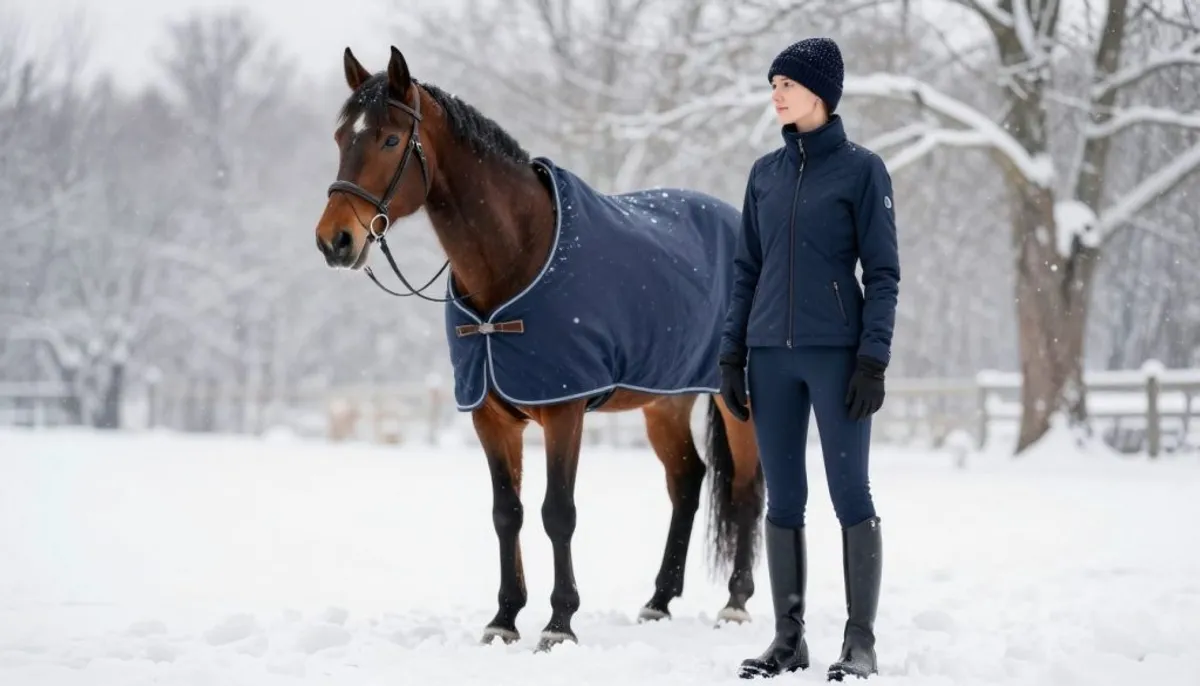
When it’s cold or wet, it’s hard to stay precise. One must remain mobile, warm, and dry for easy movements. Having the right outfit for winter helps to stay comfortable for long periods.
Winter: Heated Vests, Scarf/Gloves/Beanie Sets, Parkas, and Down Jackets
For winter, layering is key: a breathable layer, an insulating layer, and a windproof layer. Heated vests are perfect as they keep the torso warm without hindering the shoulders. This is very useful, whether at a sitting trot or jumping. The Heated Vest Comfort Style HKM with its battery and the Canada Style Heated Vest with its battery work well under a down jacket.
To protect extremities, nothing beats a complete set. The Winter Set Scarf Gloves Beanie Romeo HKM is easy to grab when heading out. For beanies and scarves, one can change according to the activity. There are plenty of options like the Alice Beanie HV Polo or the Lucy HKM Women’s Tube Scarf.
A parka is better than a short jacket when it’s very cold. The Euro-Star Dallas parka and the Euro Star Marshall men’s parka are designed to cover well while riding. A down jacket like the HV-Polo Chrissy Women’s Down Jacket keeps warm without being too thick.
Rain and Cold: Waterproof Coats and Softshell Jackets
It’s important to avoid the “plastic bag” effect when it rains. Thus, we look for jackets that breathe but protect from water. A softshell jacket, like the Aubenhausen Liora Softshell Jacket, is perfect for that.
A waterproof coat is ideal for long sessions. It keeps the upper body dry and warm. With a heated vest underneath, one stays comfortable even in cold weather.
Concrete Examples: Heated Vest, Canada Style Heated Vest, Euro-Star Parkas
This selection is perfect for staying warm in winter without losing freedom of movement. Euro-Star parkas are great outdoors. The softshell jacket is better for training.
| Saddle Need | Recommended Piece | Benefit for Rider Comfort | Examples (Brands/Models) |
|---|---|---|---|
| Immediate warmth without thickening arms | heated vest | Free shoulders, stable torso, less tension | Heated Vest Comfort Style HKM with its battery (36-XS to 46-XXL) |
| Simple heat adjustment over time | heated vest | Constant temperature, useful outdoors at a walk | Canada Style Heated Vest with its battery (XS to XXL) |
| Long protection against wind and cold | equestrian parka | Lower back covered, warmth on thighs at a walk | Euro-Star Dallas parka; Euro Star Marshall men’s parka |
| Light rain + sustained activity | softshell jacket | Breathes better, follows movements, dries quickly | Aubenhausen Liora Softshell Jacket |
| Hands, head, and neck exposed to cold | winter accessories | Less numbness, finer contact on the reins | Winter Set Scarf Gloves Beanie Romeo HKM; Alice Beanie HV Polo; Lucy HKM Women’s Tube Scarf |
Covers and Horse Protection: Outdoors, Weights, and Durability
When the weather changes daily, it’s important to choose the right cover for the horse. One must look at how the fabric withstands and retains warmth. A good cover prevents the horse from rubbing, losing heat, and staying well positioned in the paddock.
Practical Tip: Start by checking the fabric, then look at the weight. This will help you determine if it’s comfortable, if it will last, and if it won’t wear out too quickly.
Understanding Fabrics (e.g., 600D, 1200D, 1680D) and Durability
The “D” stands for deniers, which indicates the thickness of the thread. A larger number means a more durable fabric. A 600D is sufficient for a calm horse or for daily use. But for areas that rub more, opt for a 1200D.
The 1680D is top of the line in durability. It’s great if your horse spends a lot of time outdoors, especially in winter with lots of mud and wind.
Choosing the Right Weight: 0g, 100g, 300g, 450g Depending on Weather and Needs
The weight indicates how heavy the filling is. With 0g, it blocks wind and rain without overheating. It’s good when it’s not too cold. With 100g, it’s perfect when it starts to get chilly at night.
At 300g, we are ready for winter, especially if the horse doesn’t move much. And 450g is for when it’s really very cold. Details like the neck are also important.
Examples: High Neck Covers, 600D 300g Cover, Tyrex 600D 450g, Premium 1680D
High neck models are great against the wind. The HKM Chester 600D 300g Outdoor Cover is made for winter, available in various sizes. For a lightweight cover, the high neck 600D 0g blue sky is perfect against mid-season rain.
If you prefer something soft, the highneck MB 600D with fleece lining is very pleasant. The 100g version is good when it starts to get a bit colder.
For something more robust, try the highneck Glasgow 1200D, 100g. It withstands life in the paddock well. The 300g version is even warmer for cold days.
On very cold days, the Equi-Thème Tyrex 600D 450g is ideal. And for maximum durability, the Premium 1680D is top-notch, extra strong and comfortable.
Another option: the Therma Pro-P. Outdoor Cover with a detachable neck is flexible. And for the little ones, the Equithème Unicorn 600D 2025 is well suited.
| Model | Fabric (deniers) | Weight | Sizes | Strengths on Outdoor Horse Protection |
|---|---|---|---|---|
| HKM Chester Outdoor | horse cover 600D | 300g | 115 to 165 | Good balance of warmth/durability, suitable for regular winter use in the paddock |
| High Neck 0g Blue Sky | 600D | 0g | 125 to 165 | Rain/windproof cut without overheating, useful in mid-season |
| Highneck MB Fleece Lining | 600D | Fleece lining | 115 to 165 | Comfort on contact, soft warmth, limits moisture sensations |
| Highneck MB | 600D | 100g | 125 to 165 | Good choice when the thermometer drops, without going into heavy winter gear |
| Highneck Glasgow | cover 1200D | 100g | 115, 125, 155 | Reinforced durability for paddock life, mid-season insulation |
| High-Neck HKM Glasgow | 1200D | 300g | 115 to 165 | Winter warmth + more robust fabric, useful when conditions deteriorate |
| Equi-Thème Tyrex | 600D | 450g | 125, 145, 155, 165 | Very warm for clipped or sensitive horses, ideal when the cold sets in |
| Premium Teddy Lined | cover 1680D | 50g | 125 to 165 | Very strong fabric, “teddy” comfort, good compromise for cold and humid weather |
| Therma Pro-P. Detachable Neck | Durable outdoor fabric | Variable depending on configuration | 105 to 165 | Modularity with neck, practical for adjusting the cover day by day |
| Equithème Unicorn 2025 (shetland/pony) | 600D | Outdoor protection | 80, 95, 105, 110, 115, 120 | Pony cut, good reference for paddock use without complexity |
To properly protect your horse, first choose the fabric and then the weight. Between 600D covers for calm days, 1200D for more activity, and 1680D for extreme cold, you’ll be set every day.
Stable Organization: Saddle Carts and Practical Accessories
Good organization in the stable makes a big difference. It helps us avoid wasting time searching for what we need. It also prevents us from leaving equipment lying around or forgetting damp fabrics. Thus, moving equestrian gear from the stall to the arena becomes easier.
Saving Time and Preserving Equipment
A saddle cart is very useful. It keeps the saddle stable and prevents the bridles from tangling. Brushes also stay within reach. A stable service cart gathers all the essentials in one place. This avoids unnecessary back-and-forth trips.
Two popular options in France are the Imperial Riding Saddle Cart and the IRH Carry Stable Service Cart (Gray/Black or Black/Black), along with another practical cart for storing equipment (Black). The goal is to protect the leather, avoid shocks, and keep accessories clean and dry.
Small Essentials for Daily Life
When the stable is far from the water source, some accessories become very useful. The PADDOCK Folding Bucket (Black) is perfect for transporting water, rations, sponges, or small grooming tools.
The Imperial Riding Hoof Pick Brush is ideal for quick cleaning without changing tools. This minimizes mud in the grooming area. It also ensures regular maintenance before and after work.
Storage and Transport Without Loss
It’s simpler to group equestrian gear by use: for mounted work, grooming, or competitions. Products like grease, elastics, wipes, and treats are easy to reach in a dedicated pocket. Small items like snaps, gloves, and ropes should be kept in a closed box.
Thanks to a saddle cart, we avoid premature wear of the equipment. No leather left on the ground or pads against a damp wall. With a stable service cart, everything is stored in the same place. This facilitates counting equipment. It ensures stable organization, even in the busiest moments.
| Equipment | Use in the Stable | What It Prevents | Placement Tip |
|---|---|---|---|
| Imperial Riding Saddle Cart IRH Carry (Gray/Black, Black/Black) | Group saddle, bridle, protections, and brushes at a fixed point | Saddle on the ground, scratched leather, back-and-forth trips between locker and grooming area | Next to the grooming area, wheels locked, pads and shock absorber on a clean bar |
| Practical Saddle Cart + for Storing Equipment (Black) | Quick transport of equipment between stalls, arena, and shower | Forgetting an accessory, bridle lying around, mixing belongings between riders | Prepare a “work” bin and a “grooming” bin to maintain a simple logic |
| PADDOCK Folding Bucket (Black) | Carry water, rations, sponges, or grooming products | Multiple trips, bulky buckets in the aisle, splashes | Fold it and leave it in the cart, ready for the shower or competition |
| Imperial Riding Hoof Pick Brush | Cleaning hooves and quickly brushing muddy areas | Two separate tools, brushes full of sand near leather | Keep it in a washable pouch, away from greasy products |
Maintenance of Equestrian Equipment: Prolonging Lifespan and Avoiding Accidents
Clean and well-maintained equipment makes a big difference. It’s worth it for work and daily use. Performing maintenance regularly, especially after each use, makes it easier.
Regular Cleaning of Leather
When you finish riding, remove dust and sweat from the leather. Use a special leather soap. On the parts that rub the most, like the bridle, clean thoroughly and then dry.
If the leather remains wet, it hardens and breaks. Too much grease attracts dirt. It’s essential to find a balance.
Storage
How you store your equipment is as important as how you clean it. Choose a dry and well-ventilated place. Avoid cold, damp, or very hot areas. Hang bridles well so they don’t get creased, and ensure that fabrics are dry before storing them.
Use a cover that allows air to pass through to protect against dust and avoid moisture. This really helps preserve your equipment, especially during winter.
Safety Checks
Regularly check your equipment for safety. Even if everything seems correct. Check seams, fasteners, and other parts to avoid accidents.
| Point to Check | Warning Sign | Risk in Action | Useful Gesture |
|---|---|---|---|
| Seams (girth, stirrup leathers, bridle) | Thread sticking out, loose stitch, fraying edge | Break under tension, loss of control | Stop use and have it repaired or replaced |
| Buckles, hooks, and snaps | Play, corrosion, closure that catches | Unhooking, unexpected opening | Clean, dry, then change the part if in doubt |
| Leather at folding points | Cracks, hard areas, “cardboard” appearance | Clean break, discomfort for the horse | Resume leather care and monitor evolution |
| Holes and Girths | Ovalized hole, thinned leather, deep mark | Slippage of adjustments, breakage | Change before the next outing |
Always choose sturdy materials and pay attention to adjustments. Having a good routine, from cleaning to storage, helps keep your equipment in good condition and secure.
Conclusion
The spirit of riding is based on the relationship between the rider and their horse. Respect, gentleness, and consistency are essential, whether on foot or in the saddle. We must always return to the basics: observe, adjust our behavior, and listen to the horse.
Choosing the right equestrian equipment enhances this relationship daily. A helmet and airbag vest are necessary for safety, especially for outdoor outings or jumping. A good saddle, a breathable pad, and an adjusted girth protect the horse’s back and facilitate its breathing.
Seasonally appropriate clothing increases rider comfort. For the horse in the paddock, durable and well-chosen covers based on the climate are essential. Keeping the stable clean and performing regular maintenance helps avoid wear and accidents.
In France, choosing quality products is important. 62% of people prefer to buy local, and 50% seek artisanal excellence. This is where French saddlery excels. La Sellerie Française manufactures everything in France, offering unique or limited edition pieces. This represents a good investment for the horse-rider duo.
FAQ
How does equestrian equipment influence safety, comfort, and performance?
Each piece of equipment is important. A well-fitting saddle makes the position more stable. A good pad reduces friction, and protections can prevent injuries. All of this makes for a more comfortable horse and a more relaxed rider, improving their performance.
Why is “horseback riding spirits” referred to as a philosophy of life?
Riding is more than just a hobby. It teaches us to observe, listen, and adjust our behavior. This harmony creates a true connection with the horse and enriches their relationship over the long term.
What does “dancing with your horse” mean in a modern approach?
It means understanding each other without speaking. The right timing, balance, and how we breathe matter a lot. With good equipment, communication between the horse and rider becomes more precise.
How does ethological riding integrate into equipment choice?
This approach chooses a respectful relationship with the horse and a natural technique. Thus, it favors equipment that is not painful for the horse. Such equipment makes riding gentle and clear for the horse.
Should one choose equipment according to their discipline (dressage, jumping, trail riding)?
Yes, it’s important. For dressage, a good position and clear commands are essential. In jumping, being agile and safe is a priority. For trail rides, comfort over long periods and protection against weather are crucial.
Why has the “saddlery” offer become a complete universe, beyond the saddle?
Saddlery includes everything needed daily: from equipment to outfits, not forgetting accessories and maintenance. Everything, from boots to jackets, becomes a way to express one’s equestrian identity.
What distinguishes La Sellerie Française (laselleriefrancaise.com)?
La Sellerie Française specializes in high-end, offering unique or limited edition items. Their uniqueness lies in fully French production, a level above usual standards thanks to their total control of manufacturing.
Why do French riders lean towards local and artisanal products?
A survey shows that 62% of riders in France prefer to buy local. And 50% value high-quality craftsmanship, even if it means opting for custom or limited edition items. They seek durability, uniqueness, and better usability.
Why is the saddle the central element of comfort and connection?
A poorly chosen saddle can cause pain to the horse and unbalance the rider. A well-fitted saddle facilitates movement, does not hinder, and helps the rider remain stable. This greatly improves the connection between them.
What points should be checked to respect the horse's morphology with a saddle?
Attention must be paid to the shape of the horse's back, ensuring no pressure or painful friction, and leaving room to move. This guarantees that the horse can move freely and comfortably.
How does a suitable saddle help the rider communicate better?
A good saddle supports the rider, ensures balance, and stabilizes their legs. Thus, they can guide their horse more effectively. This clarity greatly improves their communication and teamwork.
Are there interesting budget or second-hand options?
Yes, good deals exist, such as discounted pony saddles. The important thing is to never compromise the comfort or well-being of the horse to save money.
What is the purpose of a saddle pad, beyond aesthetics?
The pad plays several important roles. It protects the horse's back and keeps the saddle in place. It is also crucial for absorbing sweat, especially in summer or during long exercises. A good pad makes the horse more cooperative.
How to choose a saddle pad (size, cut, material)?
The pad must fit well with the saddle and not restrict movement. Breathable and easily washable materials are better. They withstand frequent washing better.
What concrete examples of pads can help compare?
One can look at different pads to see their qualities. Models like the Weesen Pad in bamboo are good for their breathability and support. Each has its advantages in terms of support and style.
What is the purpose of a shock absorber, and when to avoid it?
A shock absorber can be useful for adjusting the saddle or for more comfort. But it should never hide a sizing issue. For example, the WINTEC Back Shock Absorber is good in some cases, but not always.
How to properly adjust the girth to stay safe without hindering the horse?
The girth should hold the saddle without hindering the horse's breathing. It should be checked often, as it can shift. Choosing a durable girth prevents wear.
What ropes to choose for groundwork and ethological riding?
The choice depends on what needs to be done. A basic rope is good for safety. For more delicate exercises, a longer rope allows for better communication with the horse.
What rope models are noted for varied uses?
There are different types of ropes depending on the use. For example, classic ropes or rope halters for different needs.
How to choose a comfortable and sturdy halter without causing friction?
Attention must be paid to adjustments and contact points to avoid irritation. A good halter is sturdy but must fit the horse well to avoid rubbing.
What halters and bridle-halter combinations are useful depending on the situation?
Halters for different activities are available. Whether for daily use or specific activities, the choice is vast. The important thing is good maintenance for all.
Why has the airbag vest become essential in riding?
It inflates quickly if the rider falls and provides good protection. Useful for all levels, as accidents can happen to anyone.
Does an airbag vest hinder freedom of movement?
The new models are designed to be comfortable and non-restrictive. Thus, the rider can move freely and communicate effectively with their horse.
Which disciplines make protection even more important?
Some equestrian sports like jumping require more protection. Good equipment can make the experience safer and more enjoyable.
How to equip for winter without losing precision on horseback?
The ideal is to stay agile, warm, and dry. Suitable clothing prevents stiffness and allows for precise movements.
What examples of winter equipment are noted for the rider?
For the cold, there are heated vests and winter sets. They help to stay warm when it’s very cold.
What jackets, down jackets, and parkas should be favored for the stable and riding?
Choose clothing that keeps warm but allows for free movement. Several models of down jackets and parkas are specially designed for the rider.
Why talk about waterproofing and breathability for riding in the rain?
A jacket should protect from water while allowing the body to breathe. This prevents feeling wet and cold later.
What do 600D, 1200D, or 1680D mean on a cover?
The “D” indicates how strong the fabric is. A higher number means a more durable canvas. This helps choose the best cover for one’s horse.
How to choose the right weight of cover (0g, 100g, 300g, 450g)?
The choice depends on the need. 0g for wind, 100g for a little cold. 300g and 450g for stronger cold. One must also consider the available shelter and the horse's lifestyle.
What outdoor cover models are noted for comparing fabrics and weights?
Diverse covers with different strengths and weights meet various needs. Each model has its advantages.
Are there specific covers for ponies or shetlands?
Yes. Small horses have their own covers, well-fitted to avoid problems. A good fit is essential.
How does good organization in the stable protect equipment?
Keeping equipment in order prevents damage and facilitates maintenance. It helps keep everything in good condition longer and reduces stress.
What examples of organizational equipment are noted in saddlery?
For proper storage, saddle carts and other solutions are useful. They prevent equipment from getting damaged by piling up.
What small essentials make life easier in the stall, at competitions, or in the paddock?
Folding buckets and hoof picks with brushes simplify daily life. They are handy for bringing water, food, or for quick cleaning.
How to maintain leather to avoid drying and cracking?
Clean the leather after each use and use a special soap. This removes dirt and keeps the leather supple. Good maintenance extends the lifespan of the equipment.
Where to store equipment to avoid mold and deformation?
Store your equipment in a dry, ventilated, and cool place. Properly hanging items prevents damage and protects your investment.
What safety checks should be performed regularly on equipment?
Frequently check all parts for sturdiness. Change worn parts to avoid risks. This ensures safe and respectful use of the horse.
What mistakes to avoid when buying or using equestrian equipment?
Neglecting adjustments, buying poor-quality materials, or forgetting maintenance can be costly. Good equipment enhances safety and comfort.
How can equi-coaching and groundwork benefit from better-thought-out equipment?
In equi-coaching, calmness and precision are essential. Good equipment reduces stress and makes the horse more receptive. This improves the connection and communication between the horse and rider.