
Equestrian sports combine strong sensations, precision, and a connection with the horse. Throughout France, horseback riding is accessible, outdoors or in arenas, for all sorts of reasons. This guide is here to explain how to practice and progress easily.
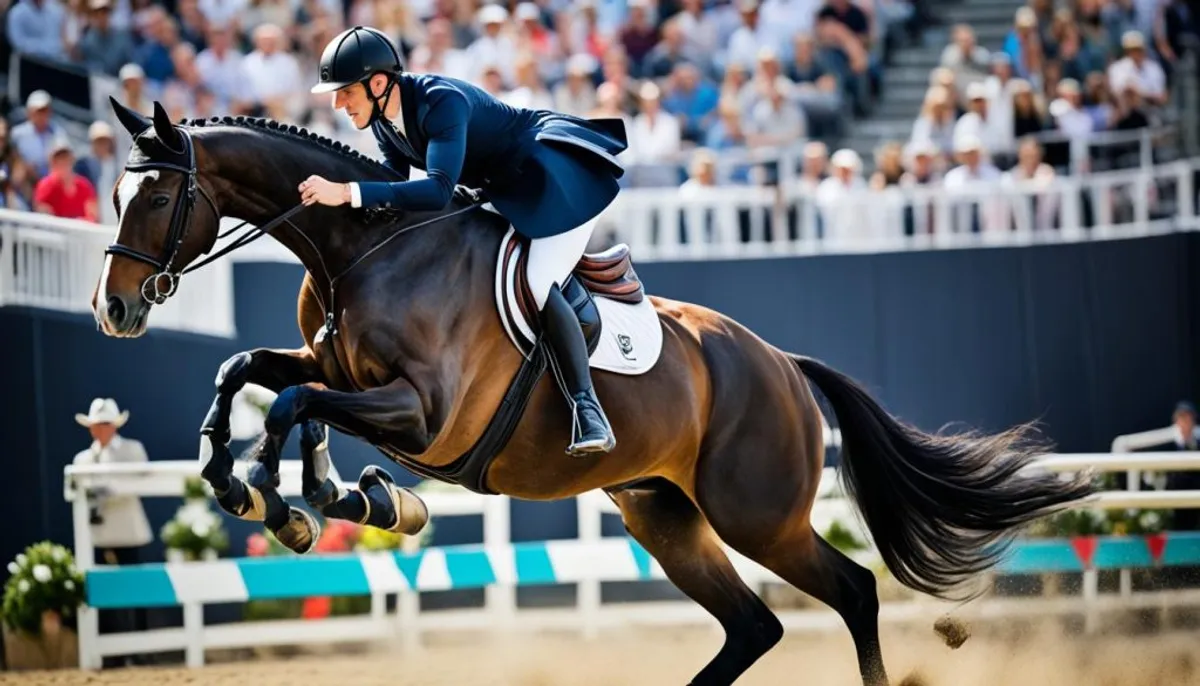
This document aims to ensure an enriching experience for everyone. It is based on the Long-Term Equestrian Athlete Development model (LTAD 2.0) from Equestrian Canada (2017). It doesn’t matter if you are a beginner, advanced, or a rider with a disability, it is possible to progress safely and motivatingly.
In horseback riding, horse and rider work as a team. Each is considered an athlete. This vision changes the training approach: one must listen to their body, respect their mind, and adjust effort according to current conditions.
You will find practical advice on how to choose an equestrian center, establish an effective progression plan, and understand the importance of appropriate equipment. We will discuss maintenance, competition, trail riding, and how to choose high-quality gear in France, such as that offered by La Sellerie Française.
Key points to remember
- Equestrian sports in France cover leisure as well as competition, with different expectations.
- The horse and the rider are two athletes: progression must respect both.
- Sustainable riding prioritizes safety, consistency, and enjoyment, not haste.
- The choice of center and coaching significantly influences the quality of the experience.
- Equipment affects safety, comfort, and performance, for both the rider and the horse.
- Proper maintenance of equipment extends its lifespan and reduces risks.
Understanding the world of equestrian sports in France
In France, equestrian sports are practiced in both clubs and nature. Techniques, sensations, and respect for animals are discussed. To progress, it is useful to clarify our actions and know who does what.
The terms “equestrian” and “equine” are often confused, but they have different meanings. “Equestrian” refers to the human, that is, the rider and their decisions. While “equine” concerns the animal, such as a horse or pony.
When practicing, the rider and horse work as a team. The rider learns to interpret movement and balance. The horse, in turn, follows directives based on its condition and mood.
Leisure and competition require different approaches. For leisure, the focus is on enjoyment and gentle progression. In competition, the goals are clearer, with rules and measurable objectives.
| Context | Main objective | Usual pace | Expectations for the duo |
|---|---|---|---|
| Active life (leisure) | Enjoyment, confidence, solid foundations | Flexible sessions, varied outings | Clear communication, comfort of the horse, safety of the rider |
| Lifetime competition | To measure oneself, progress, stay motivated | Regular competitions, simple preparation | Stable horse, effective routines, stress management |
| Path to excellence | High performance, selection, consistency | Annual plan, monitoring, recovery | Optimization of the pair, horse health, high demands for the rider |
Each equestrian discipline presents its own challenges. Dressage requires precision and lightness to achieve a responsive horse. Show jumping demands good rhythm, precision, and a lot of control.
Trail riding brings benefits such as endurance and self-control. Clubs often offer various activities throughout the year. This diversity makes the rider more competent and creates a solid foundation for all equestrian sports.
Choosing an equestrian center suitable for your level and goals
A good equestrian center is not just about a beautiful arena. It should help you progress in horseback riding. And this, without rushing. You should feel good there to want to return. The LTAD model from Equestrian Canada helps you choose. It provides a progression for everyone, from beginners to those who want to shine in competition.
This system involves everyone: coaches, trainers, parents, organizers, and horse owners. Its goal is clear: to practice horseback riding sustainably. With well-defined paths and competitions that truly make sense.
Starting calmly: coaching, school horses, progression, and safety
The goal for beginners is to have a pleasant and safe experience. A good center offers calm horses, well-structured lessons, and attentive and patient instructors. Every detail counts to build trust: simple instructions, clear rules, and respectful attention to the rider-horse duo.
To choose the best club, pay attention to certain points:
- Clear progression: clear objectives per session, appropriate levels, and precise feedback.
- Safety: good group management, clean premises, and safe routines for preparing and mounting horses.
- Well-maintained school horses: their overall good condition, well-maintained equipment, and varied and thoughtful activities.
Improving: coaching, mounted work, mental preparation, and monitoring
To advance in equestrian sports, quality coaching is crucial. Find a center that closely supports the athlete, with clear goals and consistent guidance. A rider progresses faster when they understand the “why” of the exercises, in addition to the technique.
Monitoring, even simple, should be regular. This includes a training journal, focusing on technique (balance, rhythm, trajectories), and mental preparation. It is essential for making good decisions alone, especially in competition and outdoors.
Access, cost, and “good experience”: the criteria that make the difference
The LTAD model emphasizes three criteria: easy access and affordable cost, a development path, and meaningful competitions. In summary, a good center allows you to practice regularly without breaking the bank. It offers logical learning in horseback riding. And it avoids competitions without a clear purpose.
| Key criterion | What you can check | What it changes for the rider |
|---|---|---|
| Ease of access and cost | Hours, transport, clear packages, announced costs, cancellation policy | Less stress, more regularity, smoother pursuit of equestrian sports |
| Development path | Explanations of levels, content by stage, evaluations, achievable goals | Continuous improvement in riding, solid foundations, more confidence in the saddle |
| Meaningful competition | Thoughtful calendar, goals for each competition, recovery and monitoring | An enriching experience, valuable lessons, lasting motivation |
| Role of families | Meetings, open communication, clear information, encouraged questions | Informed decisions, better understanding, secure environment for the rider |
Parents play a significant role. Asking relevant questions is essential: about group formation, managing horse fatigue, and how to set goals. A center open to discussion shows a real commitment to learning. This benefits both riding and the enjoyment of horseback riding.
Long-term development of the rider: sustainable and inclusive progression
In France, equestrian sports are often seen as a competition for the best ranking. But the LTAD 2.0 framework (Equestrian Canada, 2017) offers a better approach. It is about progression suited for all ages, levels, and situations, including for riders with disabilities.
This method makes equestrian competition more enjoyable. It allows us to understand our position, our goals, and what is truly important. What matters is learning, consistency, and the well-being of the rider and their horse.
Learning stages: from first contact to active life
The LTAD 2.0 defines clear steps for balanced progression in horseback riding. These steps help set appropriate goals based on time.
- Awareness and first contact
- Active child
- Having fun through sport
- Learning to train
- Training to train
- Learning to compete
- Training for competition
- Learning to win
- Training to win
- Active life
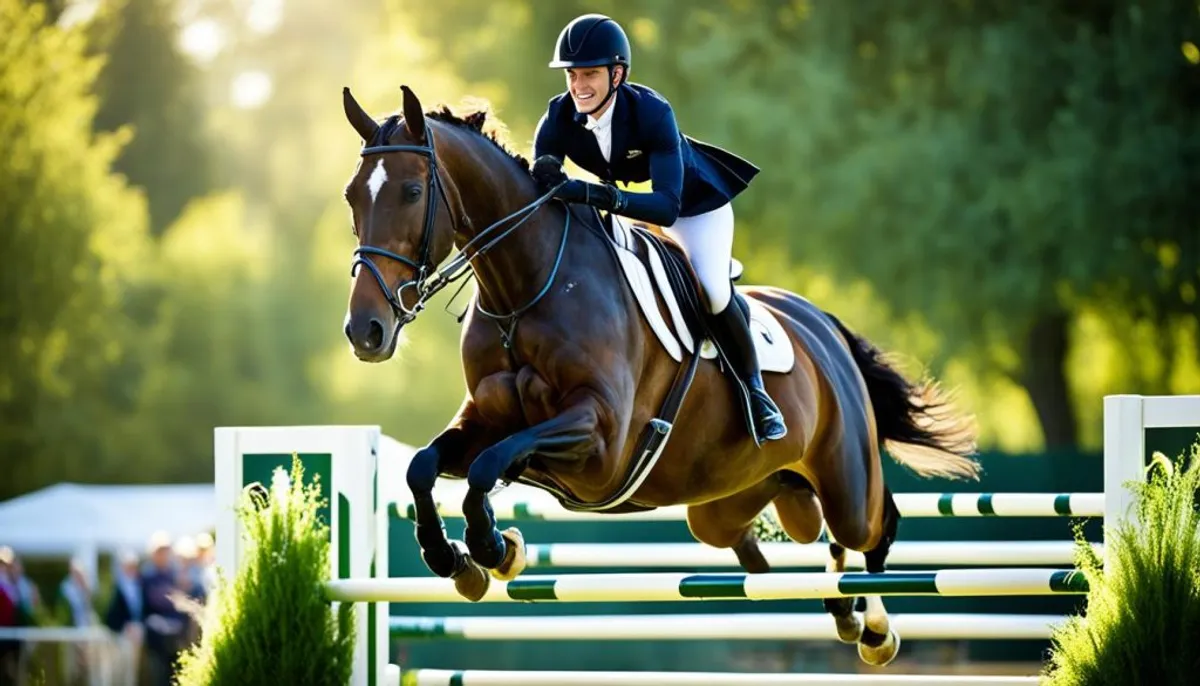
Path to excellence vs lifetime competition: how to choose your path
Riders sometimes wonder if they should aim for the top or enroll for the long term. Both options are valid but require different decisions regarding time, budget, and energy.
| Path | Objective | Pace and requirements | Place of equestrian competition |
|---|---|---|---|
| Path to excellence | High performance, sometimes international | High training volume, enhanced coaching, detailed planning and regular monitoring | Selective and structuring, with strong expectations on precision and consistency |
| Lifetime competition | Progress and challenge oneself over time | Training compatible with studies, work, and personal life, gradual increase in intensity | Regular, chosen, often oriented towards experience and mastery |
| Active life | Enjoyment, health, bond with the horse, transmission | Flexible pace, adjusted goals, variety of sessions and practices | Possible but not essential; riding remains central even outside competitions |
Para-equestrian and adapted riding: practicing with a disability, equipment and compensatory aids
Since 1996, para-equestrian is a Paralympic discipline. It addresses athletes with physical or visual impairments. They participate in mixed competitions and are classified according to their functional ability.
Para-equestrian competitions focus on dressage. They include individual and team events. Specific aids are allowed to meet the needs of athletes.
There is a distinction between congenital and acquired disabilities. For individuals with acquired disabilities, the return to activity may include different stages. Specialized centers often provide equipment and training adapted to various disabilities.
Equestrian equipment: safety, comfort, and performance for the horse and rider
Good equipment for horseback riding is essential. It helps maintain proper posture, reduces pain, and makes instructions clearer. With the right gear, the horse moves freely, and the rider is more stable. In dressage or show jumping, this improves movements and courses.
Before buying, closely observe your horse: sweat, damaged hair, stiffness. This often indicates a fitting problem. Choosing wisely protects health and facilitates communication.
The saddle is very important. It must fit the shape of the horse and allow its back to move freely. Be careful not to choose a saddle that creates pressure and destabilizes the rider.
The type of saddle varies according to the activity. For dressage, a saddle that allows for long legs is preferred. For jumping, it should help follow the movements. And for trail rides, balance and freedom of movement are priorities.
The saddle pad has a simple mission: to protect the horse's back and stabilize the saddle. It is crucial when the horse sweats. A pad that is too small can cause irritation.
Choose a pad made of breathable and easy-to-clean material. It should fit well under the saddle to avoid problems. This is important in all disciplines.
The girth must be adjusted correctly. It should not restrict breathing or rub. Check its tension regularly, especially if your horse tends to bloat its belly.
Properly maintain leather and choose durable synthetic materials for ease. The saddle should stay in place without creating uncomfortable folds.
The airbag vest is an additional safety measure. It protects vulnerable areas in case of a fall. Its use reassures and allows for riding with less tension. It is designed not to hinder movement.
To choose well, ensure that the airbag fits your equipment. It must be the right size to be effective and comfortable. With an energetic horse, a good airbag can transform your session.
| Element | To check on the horse | Desired effect in dressage | Desired effect in show jumping |
|---|---|---|---|
| Saddle | Pressure distribution, clearance of the withers, freedom of shoulder | Stable position, fine aids, back that engages without resistance | Balance in suspension, stability at the approach, smoother landing |
| Saddle pad | No folds, moisture wicking, limited friction | Regular contact, softer back, longer session without warming up | Less slipping, comfort under effort, protection under intensity |
| Girth | Free breathing, no pinching skin, stability during the session | Fixed saddle, free pelvis, sharper transitions | Saddle held well over jumps, less unnecessary movement |
| Airbag vest | Freedom of neck and shoulder, no discomfort at mounting | Confidence, relaxed posture, better release of the upper body | Protection in case of a fall, more serene engagement on courses |
Equipment maintenance and smart purchasing: investing in quality
Good equestrian equipment is essential. It is not just for looks: it also provides protection. Regular maintenance reduces the risk of breakage. This makes each outing safer for both the horse and the rider.
If the equipment is flexible and reliable, one is more precise. Commands are easier to give, and comfort improves with each session.
Cleaning leather
Cleaning your equipment after each use makes a big difference. First, remove dust. Then, apply leather soap with a slightly damp sponge on the saddle and bridle.
This prevents the leather from drying out and cracking. Well-maintained leather stays in good condition. This ensures better stability for the rider.
Storage and inspections
Store your equipment in a dry, ventilated place, away from moisture. Leather that molds can become stiff. This decreases safety.
It is important to regularly check seams, billets, buckles, and fastenings. A sudden break can surprise the horse. And this can put the rider in danger.
| Point of control | What to look at | Risk if ignored | Good reflex |
|---|---|---|---|
| Seams | Loose threads, areas that are warped | Gradual tearing, breakage under tension | Touch check, repair before the season |
| Fastenings and buckles | Oxidation, play, deformation | Unexpected opening, unstable adjustment | Drying after rain, replacement at the first doubt |
| Counter-billets and billets | Cracks, oval holes, thinned leather | Breakage at tightening, possible fall | Rotation of tightening points, light greasing |
| Contact surfaces | Hard areas, sharp edges, friction | Irritations, resistance, pain for the horse | Cleaning, flexibility check, adjustment |
Common mistakes
A common mistake when purchasing is ignoring the fit. A poorly chosen saddle or pad can cause pain. Even with good equipment, this poses a problem.
Avoid low-quality materials. They wear out quickly and can become uncomfortable. If you ride often, this can become expensive.
Neglecting maintenance reduces the lifespan of the equipment and its reliability. Investing in quality is essential. This avoids surprises and ensures safety and comfort for all.
Equestrian sports: preparing for equestrian competition without rushing
In equestrian sports, going fast does not mean rushing things. It is crucial to respect the learning time and workload. This is essential to make each training beneficial, without exhausting the horse.
The principle of meaningful competition allows for choosing the right contests. One selects those that provide real progression. This helps reduce stress and be more consistent in competition.
Building a coherent season: objectives, training volume, and meaningful competitions
A good season starts with setting specific objectives. For example, improving stability or precision. One must adjust their training, especially with many competitions.
It is advisable to master the basics before increasing difficulty. In competition, it is better to choose carefully than to rush through events unprepared.
| Progression stage | Main objective | Recommended training volume | Choice of meaningful competitions |
|---|---|---|---|
| Learning to compete | Simple routine, stress management, respect for the course | 2 to 3 sessions/week, with a light session focused on technique | Low-stakes events, same types of contracts, priority on consistency |
| Training for competition | Reproducing home in competition, stable relaxation plan | 3 to 4 sessions/week, alternating intensity/recovery | Targeted competitions, specific point objectives (time, tests, poles) |
| Refining performance | Details, strategy, consistency over multiple rounds | 4 sessions/week, micro-cycles and planned “easy” days | Benchmark events, planned breaks, selection of the most educational competitions |
Key roles around the rider: coach, parents, officials, organizers, owners
The team around the rider must communicate clearly. The coach defines the program and encourages taking initiatives. This includes course recognition and backup plans.
Parents should support without intervening in coaching. They should ask questions about risky practices. Organizers and owners also play a crucial role in the rider's success.
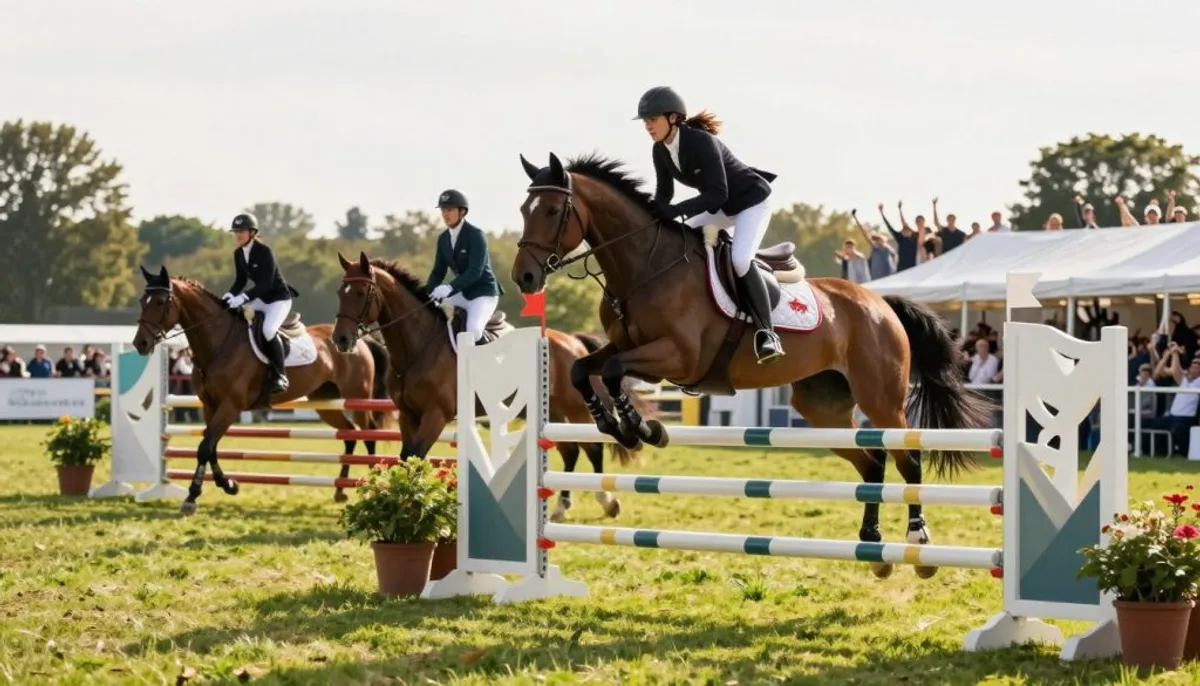
Well-being of the horse: signs of discomfort, equipment adjustments, care routine
A horse shows its discomfort through clear signs. When it shows signs like pinned ears, it is important to check its equipment.
It is necessary to ensure that the equipment does not cause pain. After exercise, a care routine helps with recovery. This includes checking sensitive areas and treating them if necessary.
This follow-up is essential for the horse's well-being and the rider's serenity in competition.
Trail riding and leisure riding: advice from experienced riders for comfort
During a day trip or a multi-day trail ride, comfort is crucial. It depends on small details. One must stay dry, have stable supports, and use durable equipment. The horse prefers a relaxed rider who gives clear signals.
Technical clothing: breathability, fitted cut, lightweight waterproof jacket
Sophie recommends breathable, fitted clothing. Technical pants reduce friction and do not stick when mounting. Julien emphasizes the importance of technical underwear, especially in warm weather. Cotton, which retains moisture, can cause irritation, even over short distances.
A lightweight waterproof jacket is often enough for rain. It protects from wind, is easy to pack, and is lightweight. Élodie likes thin gloves that grip well. They reduce blisters and improve control, especially with wet reins.
Comfort in the saddle: padded cycling shorts, saddle pad, shock-absorbing stirrups
Emma suggests wearing padded cycling shorts under riding leggings. This helps, especially after a break or if one is not used to long distances. Marie recommends reinforced socks and having spare pairs to avoid blisters.
A saddle pad helps reduce pressure without changing saddles. Marc finds that shock-absorbing stirrups reduce shocks and relieve knees and ankles. In a trail ride, these details make a big difference from the second hour onward.
Pace and recovery: regular breaks, hydration, energy snacks
Sophie and Julien take regular breaks to stretch and relax. Even five minutes is enough. Drinking often, even without thirst, helps stay alert and stable. Having a water bottle accessible allows one not to wait for breaks to drink.
Light snacks like cereal bars, dried fruits, or a nut-raisin mix are good for energy. Alexandre always carries a kit with creams to protect the skin and lips. Even on cloudy days, the sun can be strong.
| Comfort point | Recommended choice | Effect during the outing | Common mistake to avoid |
|---|---|---|---|
| Managing sweat | Technical underwear + breathable pants | Less irritation, better ventilation in leisure riding | Wearing cotton that retains moisture |
| Weather protection | Light, compact waterproof jacket | Staying mobile, without overheating in trail riding | Too heavy a jacket that tires the shoulders |
| Sitting for the long haul | Padded cycling shorts + saddle pad | Reduced pressure, better tolerance for long stages | Waiting until it hurts to adjust riding equipment |
| Supports and joints | Shock-absorbing stirrups + reinforced socks | Less impact, fewer blisters, more stable leg | Thin socks that bunch up in the boot |
| Hydration and energy | Accessible water bottle + dried fruits/cereal bars | Regular rhythm, cleaner aids for the horse | Drinking only during long breaks |
La Sellerie Française: the high-end choice for unique and durable equipment
In horseback riding, one quickly notices the quality of good equipment. It provides stability, better contact, and precise movements. Moreover, a good fit is beneficial for the horse in the long term.
La Sellerie Française promotes high-quality local manufacturing, made to last. The idea is to invest once, then maintain the equipment easily without needing to replace it often. This philosophy suits both amateur and competitive riders.
Fully made in France: manufacturing from A to Z in France by the best artisans
The brand offers fully made in France products, with everything manufactured locally. This choice highlights French craftsmanship. For saddles, this means perfect finishes and materials resistant to wear.
Custom-made, limited series, finishes: when equipment becomes a true performance partner
Whether custom-made or in limited series, every aspect is important. Good equipment improves rider stability and reduces pressure. Thus, the horse moves freely, increasing the rider's precision.
| Key point | What it changes daily | Impact in equestrian sports |
|---|---|---|
| Tree and balance | More stable position, clearer aids | Less loss of rhythm, cleaner trajectories |
| Finishes and seams | Better wear management, simpler maintenance | Reliable material over a longer season |
| Fit to the horse's back | More even pressure distribution | Increased comfort, availability for work |
| Choosing a made in France saddle | Traceability and control of steps | Confidence in material in competition and training |
Where to discover the brand: https://laselleriefrancaise.com
To learn everything about the models and production, visit https://laselleriefrancaise.com. The site showcases the brand's vision of sustainability, comfort, and demands, for the well-being of riders and horses.
Conclusion
Equestrian sports require patience and step-by-step progression. One must advance without rushing things. Progress is noticeable when the rider's balance improves. And also when the horse remains well available. Together, safety and enjoyment form an essential duo that is maintained at each session.
A good equestrian center is crucial for a good start. It offers good coaching and suitable horses. Equestrian Canada in 2017 emphasized the importance of an enriching equestrian experience for all. This through adapted riding and support from coaches and participants.
In competition, every detail of the equipment matters greatly. A good saddle, stable protections, and an airbag vest can make a difference. It is also important to maintain the equipment well: the leather must be clean, dry, and its seams well inspected. This helps avoid issues like poor fit.
For leisure activities, choosing appropriate clothing is essential. Opt for breathable clothing and special underwear. Don’t forget gloves and sun protection. Staying hydrated and taking breaks are also very important for comfort. For equipment, invest in durable, quality products like those from La Sellerie Française, synonymous with luxury and French craftsmanship.
FAQ
In France, what does “equestrian” mean compared to “equine”?
A: “Equestrian” refers to the human doing the sport, like a rider. “Equine” refers to the animal, like a horse. In the sport, we must consider the well-being of both the human and the animal.
Why is the rider-horse duo considered an athlete partnership?
The LTAD 2.0 model states that the horse and rider are athletes. Both must remain healthy and motivated. This changes how we train them and the equipment we choose.
Does equestrian sport aim solely for high levels?
No. The LTAD 2.0 aims to provide the best experience for everyone, including riders with disabilities. High levels exist, but enjoyment and sustainable progression are also important.
What is the difference between leisure riding and equestrian competition?
The LTAD talks about three paths. For active life, we ride for pleasure. Lifetime competition is competing often without aiming for international levels. The path to excellence is striving to reach high levels, like the Olympics.
What are the most common disciplines in France to progress in horseback riding?
One often starts with dressage, show jumping, and trail rides. Trying different disciplines improves balance and coordination.
How to choose an equestrian center when starting out?
Look for a center that offers good teaching, suitable horses, and prioritizes safety. It should clearly explain progression and ensure a positive experience for all.
What LTAD 2.0 criteria help evaluate a club or stable?
Check if it is easily accessible and not too expensive. Verify if the learning path is clear. And if the competition helps to learn, not just to win.
What does “improving” mean in equestrian sports, beyond technique?
Improving means working on oneself with a coach and following a plan. One enhances not just technique but also decision-making and stress management.
What is the role of parents in the progression of a young rider?
Parents must ask the right questions and choose the right coaching. They can contest practices that are not good for their child or the animal.
What are the learning stages of the LTAD for structuring progression?
The LTAD offers a step-by-step path, from discovery to advanced level. This helps choose the right training and objectives.
How to choose between “path to excellence,” “lifetime competition,” and “active life”?
A: Path to excellence requires a lot of work and resources. Lifetime competition is about competing often but not aiming for international levels. Active life is for enjoyment, with or without competition.
What is para-equestrian and who is it for?
It has been a Paralympic discipline since 1996. It is for athletes with physical or visual disabilities. Events are adapted to each individual.
How do para-equestrian competitions unfold and what aids are allowed?
Competitions focus on dressage. There are special aids allowed to adapt to each need.
Congenital or acquired disability: does the return to equestrian sport follow the same steps?
The LTAD states that there are specific steps for those returning to sport after an acquired disability. The goal is to return gently and with enjoyment.
Why can therapeutic riding centers make a difference?
They have specific equipment and trained instructors to support various disabilities. This makes practice safer and more suitable.
Why is equipment not “accessory” in horseback riding?
Good equipment is crucial for safety, comfort, and performance. One must choose well to communicate effectively with their horse and avoid accidents.
How to choose a saddle suitable for the horse and rider?
A good saddle must fit the horse's back and help the rider stay well positioned. The choice of saddle depends on the activity practiced.
What are the purposes of the saddle pad and girth, and what points to check?
The saddle pad and girth serve to protect the horse's back and keep the saddle in place. It is important to check their fit and choose breathable materials.
Is the airbag vest really useful in trail riding and show jumping?
Yes, especially in activities where one risks falling. It provides good protection and does not hinder movement.
How to maintain leather after each session to keep equipment reliable?
Clean with a specific soap to keep the leather in good condition. This prevents it from cracking and losing its flexibility.
How to store equestrian equipment to avoid moisture and wear?
Keep your equipment in a dry and well-ventilated place. This prevents mold and protects your belongings.
What safety inspections should be done regularly on equipment?
Check if everything is solid and in place. Equipment in poor condition can be dangerous.
What common mistakes to avoid when purchasing equestrian equipment?
Pay attention to fit and quality. Poor choices can be expensive and dangerous.
How to prepare for an equestrian competition season without rushing?
Follow a logical progression. The LTAD advises choosing competitions that help learn.
Who plays a key role around the rider in the LTAD?
People like parents, coaches, and specialists help the rider progress and protect the horse.
How to spot a horse's discomfort related to equipment?
Observe the horse's reactions. Check if everything is well adjusted. Take care of it after exertion.
What clothing to choose for a multi-day trail ride?
Wear breathable and comfortable clothing. Choose a good jacket for bad weather.
How to improve comfort in the saddle over long stages?
Try wearing cycling shorts under riding pants. Use a saddle pad and special stirrups for added comfort.
What simple accessories prevent blisters and pain outdoors?
Wear special socks and change them regularly. Use gloves and protect yourself from the sun and cold.
What pace to adopt in trail riding to last over time, for the rider?
Take breaks and stay well hydrated. Eat snacks to maintain energy.
When is it relevant to invest in premium equipment in France?
Invest in good equipment when you ride often. It improves safety and comfort.
What characterizes La Sellerie Française for a long-term purchase?
La Sellerie Française produces quality equipment, made in France. It is good for comfort and safety.
Where to access the official site of La Sellerie Française?
At https://laselleriefrancaise.com.
What other equestrian sports can be practiced in France besides dressage and show jumping?
Additionally, one can do driving, vaulting, and others. This improves technique and the relationship with the horse.