
Equestrianism is fascinating in its finesse. It is appreciated by riders of all levels. Each session strengthens the bond with your horse and nourishes your passion.
Our mission is to provide you with useful advice. You will discover tips for training, riding in the arena, going on trails, and participating in competitions. Techniques, safety, and connection are our pillars for progressing together.
We advocate for French know-how in equestrian equipment. La Sellerie Française offers quality products, made in France by expert artisans. This top-notch equipment enhances your sensations, protects your horse, and fosters your development.
Explore our advice to better structure your training sessions. Learn to use aids more subtly and forge a strong relationship with your mount. We aim to make you feel more comfortable, no matter your equestrian activity, while keeping your passion alive.
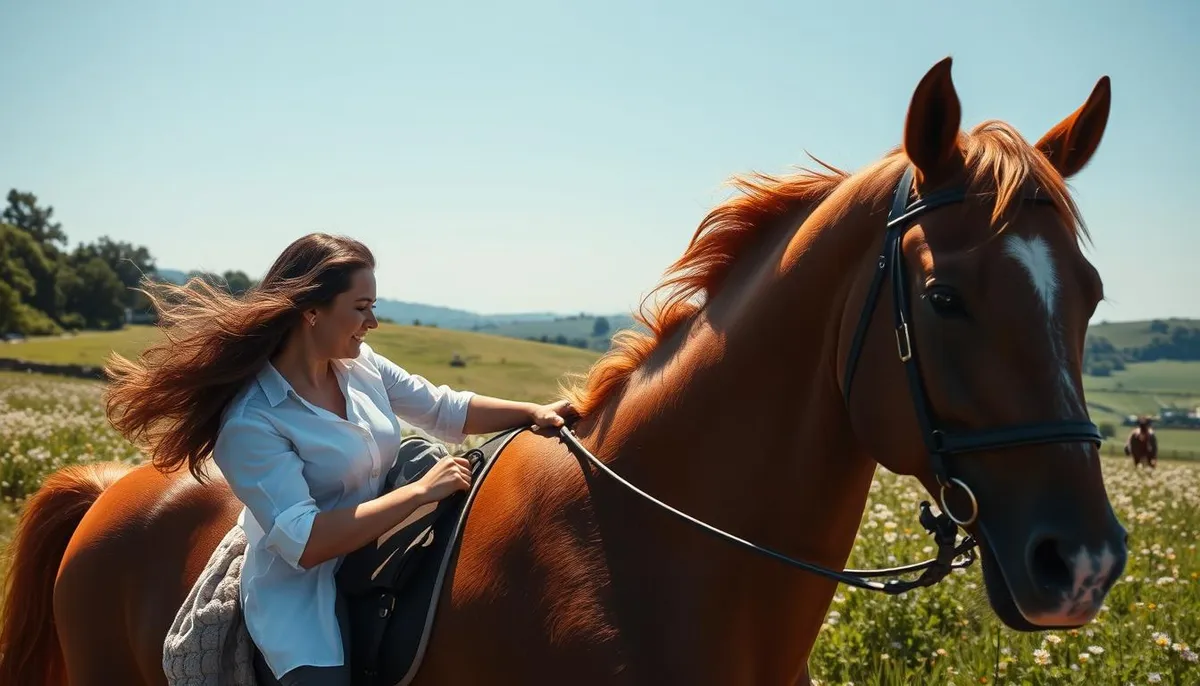
Key Points to Remember
- Practical guidelines for progressing in dressage, jumping, and leisure riding.
- A safety-focused approach, prioritizing the horse's comfort and the rider's technique.
- Simple exercises to strengthen the connection and mutual trust.
- Informed equipment choices with La Sellerie Française, from custom-made to limited editions.
- A guiding principle: pleasure, consistency, and measurable progress with each session.
- Advice tailored to every level, from the first ride to competition.
The Benefits of Equestrianism on Body and Mind
Equestrianism combines movement, attention, and breathing. It strengthens the body and calms the mind while teaching us to listen to our horse attentively. From the arena to the countryside, every moment spent on horseback enhances our overall well-being.
Muscles Engaged and Core Strength of the Rider
On the horse, our thighs, calves, glutes, and back strengthen continuously. Core strength stabilizes our pelvis, which is crucial for protecting the back, especially when changing pace.
Dressage perfects our posture and our way of guiding our horse. Learning to breathe correctly and maintain a steady rhythm increases our endurance and sense of well-being, even during brief sessions.
Perseverance, Motivation, and Personal Growth
Advancing in equestrianism requires discipline and patience. Achieving our goals reinforces our motivation and perseverance.
Equestrian lessons inspired by hippotherapy show us how contact with the horse can boost our self-confidence. This approach deepens our personal growth.
Fresh Air, Nature, and Mental Well-Being
Riding outdoors opens us up to the elements of nature. The slow walk followed by a controlled gallop dissipates our stress.
This complete immersion improves our sleep and mood. Whether in a club or during a lesson, breathing deeply in nature brings a sense of natural well-being.
Choosing Your Stable and Equestrian Center
Visit the facilities before making your decision and talk to the riders present. Observe how everything is organized, how you are welcomed, and the overall condition of the place. The goal is to improve in complete safety, transitioning from flat work to jumping with a supportive team.
Do not overlook the reputation of the center. Check online reviews, ask for opinions from those who have already participated in workshops. This will give you an idea of the quality of the teachings and the importance placed on competition.
Key Facilities: Arena, Outdoor Ring, Longeing Circle
A properly lit arena allows you to ride regardless of the weather. A well-drained outdoor ring offers optimal conditions for dressage and jumping. The longeing circle is perfect for groundwork and preparing horses and riders.
- The ground must be well-maintained to avoid accidents.
- Routes should be changeable to stay stimulated.
- Easy access to the paddock and a clean saddle room makes life easier.
Qualified Instructors and Tailored Support
Choose qualified instructors who provide clear instructions and track your progress. They should customize lessons to meet your specific needs. This way, you will know where you stand and how to improve.
- Riders of the same level should be grouped together.
- Regular evaluations help adjust goals.
- If necessary, they should refer you to other experts.
Openness to Competition and Trail Riding
A good equestrian center offers a variety of activities, such as nature rides or competitions. This allows for preparation and adaptation before each event.
| Criteria | Why It’s Useful | To Check On Site | Impact on Progress |
|---|---|---|---|
| Arena, Outdoor Ring, Longeing Circle | Train year-round to improve | Ground condition, lighting, drainage system | Allows for regular and safe work |
| Educational Support | Specific advice for consistent progress | Check diplomas and observe a lesson | Effective learning of basic techniques |
| Jumping and Sports Calendar | Define goals and assess progress | Look at the courses and the quality of coaching | Increases confidence in competition |
| Trail Rides and Outdoors | Learn to adapt to different environments | Check routes and safety measures | Makes the horse and rider more versatile |
| Reputation and Reviews | Get an idea from the experiences of others | Look for testimonials and results | Helps make an informed choice |
By considering these elements, you will find a stable that meets your expectations, from relaxation to competition, with an emphasis on the horse's well-being.
Finding the Ideal Mount According to Your Level and Goals
First, clarify your experience and what you are looking for: leisure, sport, or trail riding. A calm rider will not want the same thing as a speed enthusiast. Trying out with a qualified instructor can help you choose better.
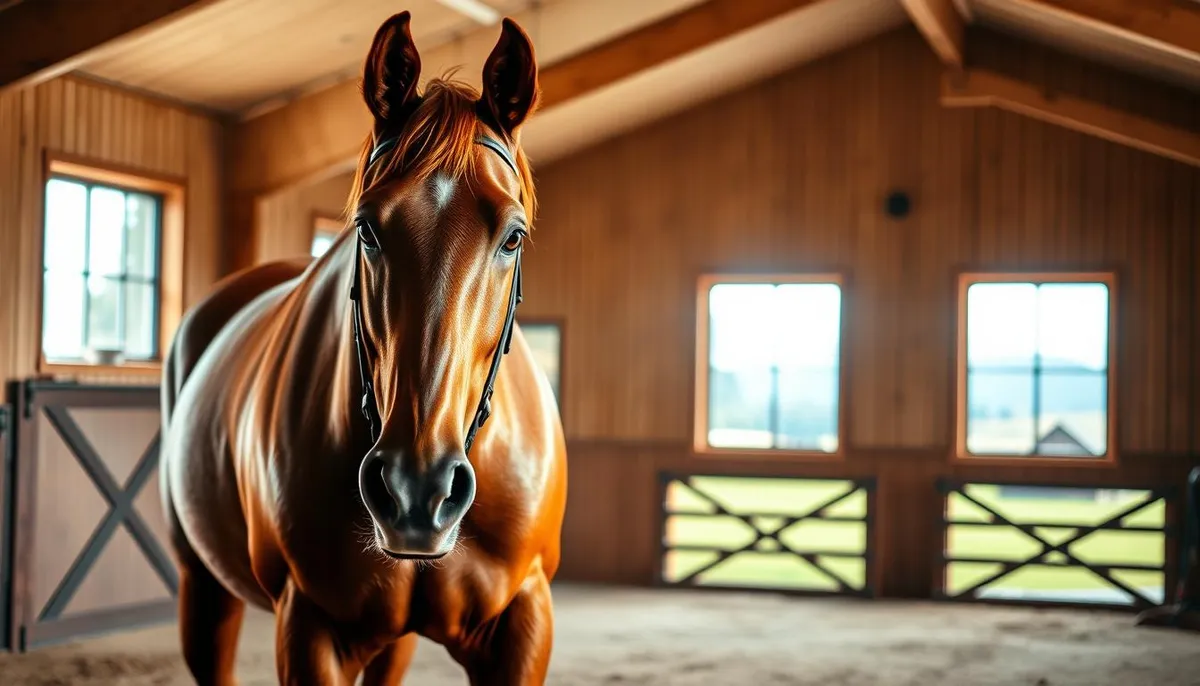
Calm Horse for Beginner vs. Reactive Mount for Advanced
If you are a beginner, choose a peaceful horse with a regular walk and trot. For the more experienced, a reactive mount is ideal for courses or outdoor riding. This affects your progress and enjoyment, whether in the arena or on trails.
Adapting the Size and Build of the Horse to the Rider
The size of the horse is crucial for good balance and comfort. A large horse is better suited for an adult. A lighter horse can be perfect for a less heavy rider, especially for fluid movements and good connection, even in trail riding.
Testing Multiple Horses to Build Trust
Try different horses: walk, trot, gallop, and even a short outing. Observe their reactions to contact and their attitude during grooming. By doing multiple trials, you find the right match for your goals. This also helps create a strong bond with your mount.
Focus and Progress in Training
Good training starts with a well-defined goal. Choose a simple priority, then take a moment to breathe and observe your horse. Progress comes from paying attention to the small details.
Quick Tip: keep a journal near the training area. Write down two things that went well and one to improve. This helps track your progress and remains very motivating.
Eliminating Distractions and Staying Present to Sensations
Turn off your phone and keep it away from the training area. Minimize conversations. Focus on your breathing, the contact of the reins, and your horse's rhythm.
Feel your horse's back stretch and its hindquarters engage. Being fully present allows for smoother transitions and prepares for a better gallop.
Listening to the Horse, Following the Instructor's Instructions
Horses communicate with small signs: a tense neck, a moving ear. Adjust your approach gently. Ask, wait for a response, and reward.
Listen carefully to your instructor. Their advice ensures your safety and improves training. They teach you to maintain a clear trajectory, relax your hands, and use your legs precisely.
Structuring Sessions: Transitions, Consistency, Goals
Vary the paces walk-trot-gallop and return to calm. Break the training into short blocks. Include breaks to maintain your horse's energy.
- Goal of the day: maintain a straight line and start the gallop without haste.
- Consistency: prefer three short and effective training sessions to one long, confusing one.
- Measure: achieve two starts out of three, then aim for perfection in the next training.
| Work Block | Key Exercise | Sensation Indicators | Progress Indicator |
|---|---|---|---|
| Warm-up | Active walk, 20 m circles | Loose neck, oscillating back | Constant rhythm for 5 min |
| Technique | Transitions trot–walk–trot | Response in 1–2 strides | 8/10 clear transitions |
| Paces | Departures at the gallop on the correct lead | Right impulsion, departure without pulling | 3 correct departures per direction |
| Calm and Breath | Shoulders in at the walk | Regular breathing of the rider | Stable rein contact for 2 laps |
| Cool Down | Forward-down stretches | Soft contact, neck lowering | Heart rate decreasing |
Equestrianism
Safety is paramount before mounting a horse. You must wear a helmet, an airbag or foam vest, and appropriate clothing. This includes boots with a treaded sole, mini-chaps or tall boots, and gloves. Approach the horse calmly, from the front, and speak softly to it. Then, prepare to mount from the left side, using safety stirrups.
Master the basics of mounting techniques. Stand tall, with your shoulders back and your gaze forward. Your heels should be low and fixed. Your hands should remain at waist height for better communication with the horse. At the walk, feel every movement; at the trot, rise on the outside support; at the gallop, keep your torso stable.
Improve step by step. Frequently alternate between walk, trot, and gallop for better control and breathing. Maintain a soft and constant contact with the horse. Practice in short sequences and take breaks. Then, set simple goals, such as improving your position or making a clean stop.
To progress in equestrianism, stay informed with magazines like Equitime. They offer advice on equipment and techniques. Compare these tips with those from your instructor. Adjust your clothing and methods based on your level, always emphasizing safety.
Building the Rider-Horse Connection
A strong connection comes from consistency, passion, and mutual respect. Spending time on the ground with your horse helps you understand it better. This strengthens the relationship, whether you are in the saddle or at the stable.

Grooming, Groundwork, and Relaxation Moments
Start with gentle grooming before mounting. This calms and relaxes your horse, strengthening your bond. Use different brushes and observe how your horse reacts.
Groundwork establishes clear rules between the two of you. It helps your horse feel secure and learn useful behaviors.
After exercise, let your horse relax. Walk with loose reins and allow it to graze a little. These moments strengthen the bond and calm your horse.
Understanding Your Mount's Body Language
Carefully observe your horse to understand what it feels. Signs like a stiff neck or tight nostrils indicate discomfort. Adjust your actions accordingly.
- Ears forward: attention and curiosity.
- Mouth chewing and long exhale: your horse is relaxed.
- Tail swishing, evasive gaze: signs of stress to consider.
To better understand your horse, stay informed. Reading about sleep, colic, or dermatitis can help you make better decisions.
Managing Emotions and Mutual Trust
Staying calm is essential. Breathe deeply, speak softly, and keep your requests simple. Good communication strengthens your connection.
Regularly repeat simple exercises. A pat or a kind word after good behavior helps. This establishes trust and keeps your bond strong.
Fundamental Techniques: Dressage, Jumping, and Gallop
These techniques are crucial and improve communication between the rider and their horse. They combine precision, flexibility, and safety. From dressage to jumping, to controlled galloping and mastering paces.
Posture, Hands, and Balance for Smooth Riding
For a stable position, align ears, shoulders, hips, and heels. Hands should remain calm, at waist height, with flexible wrists. This allows for clear instructions in dressage.
Look far ahead, keep your torso upright, and wrap your legs around the horse without squeezing. This central balance helps maintain a regular cadence and prepares for each gallop with precision.
Transitions Walk-Trot-Gallop and Pace Control
Make clear upward and downward transitions. Change between walk, trot, and gallop, then return to a lower pace if necessary.
Strive for consistency: use your legs more and your hands less, and breathe correctly. This way, the horse becomes more responsive, and pace control improves.
Approaching Obstacles: Trajectory, Impulsion, Reception
Opt for a direct trajectory, with a steady cadence and good impulsion but without rushing. Ensure constant contact to approach the obstacle with confidence.
As you approach the obstacle, slightly lift your torso. After the obstacle, look ahead, rebalance, especially at the gallop. Use safety stirrups and reins that adhere well to remain agile and effective.
Saddle, Equipment, and Excellence Made in France
The quality of saddlery and equipment is essential. It guarantees safety, precision, and durability. Leisure and competition items, made in France, provide comfort for both rider and horse.
Helmet, Vest, Gloves, Boots: Safety and Comfort
Wearing a compliant helmet is mandatory. A vest protects the back and chest, especially for jumps. Gloves ensure a good grip on the reins.
Choose boots or shoes with mini-chaps. They support the ankle and ensure a stable leg position. This reduces fatigue and improves the rider's position, whether for training or competition.
Choosing Suitable Bits, Reins, Stirrups, and Saddles
The bit should match the horse's mouth and the rider's level. A simple bridle increases clarity, while experienced riders may prefer more technical models. Opt for non-slip reins for better grip, even in the rain.
Safety stirrups offer good grip and stable support. An appropriate saddle avoids unnecessary pressure on the horse's back and improves the rider's position. Having coherent equipment helps refine commands and strengthens the trust between rider and horse.
La Sellerie Française: High-End Products Made from A to Z in France, Custom or Limited Edition
La Sellerie Française focuses on artisanal excellence. With high-quality leather and meticulous finishes, the traceability of each product is ensured. Saddles, bridles, and other accessories are made to measure or in limited series, always in France.
Their commitment goes beyond simple "made in France." They cater to riders seeking performance, style, and longevity. Their equipment stands out both in training and competition for its precision and comfort.
Maintaining Your Equipment for Performance and Durability
After each use, clean the leather and moisturize it with an appropriate balm. Keep the equipment dry and away from heat, and regularly check the seams and buckles.
Stirrups also require maintenance: rinse them, check their condition, and replace the elastics if necessary. Proper maintenance prolongs the lifespan of the equipment, ensures the rider's safety, and maintains a consistent quality of practice.
Conclusion
Equestrianism mixes physical strength and mental calm. It strengthens muscles and improves balance, while offering moments of relaxation in the open air. With perseverance and a clear method, we improve with each session.
It is important to choose a well-equipped stable. It should have an arena, an outdoor ring, and a longeing circle. There should also be instructors who know how to listen. Choosing a horse suitable for your level is crucial for progressing safely. Training should be structured with clear goals to advance.
The connection with the horse is built day by day. Taking care of it and understanding its body language strengthens trust. Knowing how to maintain the right posture and control the horse makes all the difference, and it requires good equipment.
For this experience to last, it is necessary to choose quality equipment. La Sellerie Française offers custom-made, handcrafted equipment in France. Choosing them means opting for safety, comfort, and performance. This helps to progress steadily while respecting the unique bond with the horse.
FAQ
What muscles does equestrianism work and why is core strength essential for the rider?
Equestrianism works a lot on the thighs, calves, glutes, and back. Core strength helps stabilize the body. This allows you to follow the horse's movements without disturbing it.
A firm torso and active abs help with better balance. This makes aids more precise and improves safety.
How does equestrianism develop perseverance, motivation, and personal growth?
Each equestrian session requires effort and repetition. We progress little by little, whether in dressage or jumping. These regular improvements teach us to persevere.
They also boost our motivation and contribute to our personal growth.
Does contact with nature really improve mental well-being in equestrianism?
Yes, riding outdoors reduces stress. It allows us to breathe fresh air and bond with our mount. Hippotherapy clearly shows the benefits of this practice on our well-being.
What facilities should be checked in a stable to progress safely?
To train safely, look for a covered arena and a good outdoor ring. A longeing circle is also important. These places allow for practice regardless of the weather.
They are essential for effective training and progress.
How to choose truly educational instructors?
Choose qualified and experienced instructors. They should know how to adapt to you. Attending a session and talking to students can help in the selection.
A good teacher offers tailored and clear follow-up.
Why does openness to competition and trail rides matter in choosing an equestrian center?
Diverse activities keep our passion alive. Participating in competitions or going on trails enriches our experience. It improves our technique and our bond with the horse.
Beginner or advanced: what mount to choose for serene progress?
If you are a beginner, choose a calm horse. For the more experienced, a lively horse is better. The important thing is to learn without stress.
How to adapt the size and build of the horse to my stature?
The rider and horse must be well matched. Their sizes and weights should correspond. This ensures comfort, safety, and good communication.
Should you test several horses before committing?
Yes. Try several horses to find the right one. You need to feel good with your horse to achieve your goals. The best duo forms after several trials.
How to eliminate distractions during training?
Turn off your phone and avoid talking too much. Focus on your horse and the instructor's instructions. This will make the training more effective.
Why strictly follow the instructor's instructions?
Your instructor knows what is good for you and your horse. Their advice helps progress without risks. Follow them to improve your technique safely.
How to structure a session to progress at walk, trot, and gallop?
Define a goal for your session. Work on transitions between paces. End with calmer moments. Consistency and attention to your horse are key.
In two words, what is equestrianism for a passionate rider?
It is a demanding sport that becomes a true passion. We seek to get along well with our horse and to progress. Sharing each success brings us a lot.
How do grooming and groundwork strengthen the connection?
Grooming is a moment of relaxation and trust with the horse. Groundwork helps to understand each other. These moments strengthen bonds and connection.
How to read your mount's body language?
Observe its behavior and reactions. They will indicate how to act. A good understanding of your horse is essential.
How to manage emotions to gain the horse's trust?
Stay calm and patient. Stable and respectful communication builds trust. This is beneficial for both the rider and the horse.
What posture to adopt for smooth riding in dressage and gallop?
Stand tall, with an aligned and relaxed posture. Precise movements help your horse understand what you want. This facilitates balance and control.
How to improve pace control through walk-trot-gallop transitions?
Practice short and regular transitions. This helps the horse be attentive and responsive. These exercises make riding more harmonious.
What are the fundamentals at the obstacle: trajectory, impulsion, reception?
Care for your approach and maintain good impulsion. Manage the jump and the landing well. Use appropriate equipment for added safety.
What safety equipment is essential in saddlery?
A helmet, protective vest, gloves, and boots are essential. They protect and help better control your movements.
How to choose suitable bits, reins, stirrups, and saddles?
Choose based on your needs and those of your horse. Suitable equipment ensures comfort and safety for everyone.
What makes La Sellerie Française special for rider and horse equipment?
La Sellerie Française offers luxury products made in France. Their quality surpasses basic "Made in France".
How to maintain your saddlery and boots for performance and durability?
Clean the leather and regularly check the equipment. Proper maintenance ensures durability and safety of the gear.