
The vocabulary of horseback riding is very important for those who love this sport. It covers horses, their anatomy, their gaits, their coats, and equestrian sports. Knowing these terms helps to communicate better in the world of horseback riding.
This section will show you the key words of horseback riding. You will learn about horses, their anatomy, their gaits, their coats, and equestrian sports.
Key Points to Remember
- The equestrian vocabulary is vast and covers many aspects related to horseback riding
- Mastering this specific vocabulary allows for better communication in the equestrian field
- This section presents the main terms related to horses, their anatomy, their gaits, their coats, and equestrian disciplines
- Understanding this vocabulary is essential for horseback riding enthusiasts, whether for leisure or competition
- Knowing the equestrian vocabulary allows for better expression and sharing of one's passion
The Different Breeds and Types of Horses
The equestrian world is rich in diversity. There are many breeds and types of horses, each with its own characteristics. The main categories include thoroughbreds, half-breds, draft horses, and light horses.
Thoroughbreds are purebred horses. They are known for their elegance, speed, and endurance. Half-breds are the result of crossbreeding. They combine the strength of draft horses with the agility of light horses, making them versatile.
Draft horses are massive and robust. They are perfect for heavy work such as logging or plowing. Their imposing size makes them excellent in draft competitions. Light horses, on the other hand, are more elegant and agile. They excel in dressage, , and endurance.
| Type of Horse | Main Characteristics | Suitable Disciplines |
|---|---|---|
| Thoroughbred | Elegance, speed, endurance | Racing, endurance |
| Half-bred | Versatility, power, and agility | Olympic disciplines, leisure riding |
| Draft horse | Robustness, power | Heavy work, draft competitions |
| Light horse | Elegance, agility | Dressage, show jumping, endurance |
Each breed and type of horse has unique qualities. They are suited for different uses, from competition to work and leisure riding.
Anatomy and Conformation of the Horse
Understanding the anatomy of the horse and its conformation is crucial for horseback riding enthusiasts. The horse is made up of several body parts, each influencing its capabilities. A good conformation means correct alignment, good musculature, and healthy joints. This helps to assess a horse's potential.
The Body Parts of the Horse
The horse has various parts, each important for its performance and comfort. The main ones are:
- The head, where the senses and chewing are located
- The neck, essential for power and flexibility
- The withers, support for the saddle
- The shoulders, key to the mobility of the forelegs
- The limbs, for locomotion
- The croup, source of propulsion
- The tail, defense against insects
Assessment of Ideal Conformation
The assessment of conformation helps to understand a horse's qualities. Important conformation criteria include:
| Criterion | Description |
|---|---|
| Alignment | Correct position of limbs relative to the ground |
| Musculature | Development and tone of the muscles |
| Joints | Health and mobility of the joints |
| Skeleton | Strength and robustness of the skeleton |
| Proportions | Balance of body parts |
By analyzing these elements, one can evaluate the conformation of a horse. This helps to predict its future capabilities in performance and health.
Colors and Coats of Horses
The colors of horses and their coats captivate horseback riding enthusiasts. They reflect the origins and capabilities of breeds. The coats range from simple shades like chestnut, bay, or gray to more complex ones, such as pinto or palomino. Each horse coat has a story and unique traits.
The color of the coat can also say a lot about the horse. Some shades are more common in certain breeds, while others are rarer. Knowing this enriches our understanding of horseback riding.
| Coat | Characteristics |
|---|---|
| Chestnut | Solid coat in reddish tones, ranging from light yellow to dark brown. |
| Bay | Solid coat in brown tones, varying from light brown to black. |
| Gray | Solid coat in gray tones, from light gray to dark gray. |
| Pinto | Spotted coat of white and another color, often black or bay. |
| Palomino | Coat in golden tones, ranging from light cream to golden yellow. |
The diversity of horse colors and horse coats enriches the world of horseback riding. It allows enthusiasts to discover the nuances of this passion.
The Gaits of the Horse
The horse has a variety of natural gaits and artificial or acquired gaits. Each gait has its rhythm, cadence, and dynamics. This creates a palette of movements that make the horse unique and beautiful.
Natural Gaits
The natural gaits are innate. They include the walk, trot, and gallop. Each gait has a specific movement of the limbs, offering different levels of speed and strength.
Artificial or Acquired Gaits
The horse can also learn artificial or acquired gaits through training. The amble is an example, a comfortable lateral movement. The piaffe is an elegant stationary action. These gaits demonstrate the horse's learning ability.
| Gait | Description | Characteristics |
|---|---|---|
| Walk | Slow and walking gait | 4 beats, regular cadence |
| Trot | Intermediate and dynamic gait | 2 beats, lively cadence |
| Gallop | Fast and powerful gait | 3 beats, sustained cadence |
| Amble | Acquired lateral gait | 4 beats, fluid movement |
| Piaffe | Acquired stationary gait | High cadence, elegance |
Working with the horse aims to improve these gaits, natural or acquired. This helps to optimize the capabilities and performance of the animal.
The Equestrian Disciplines
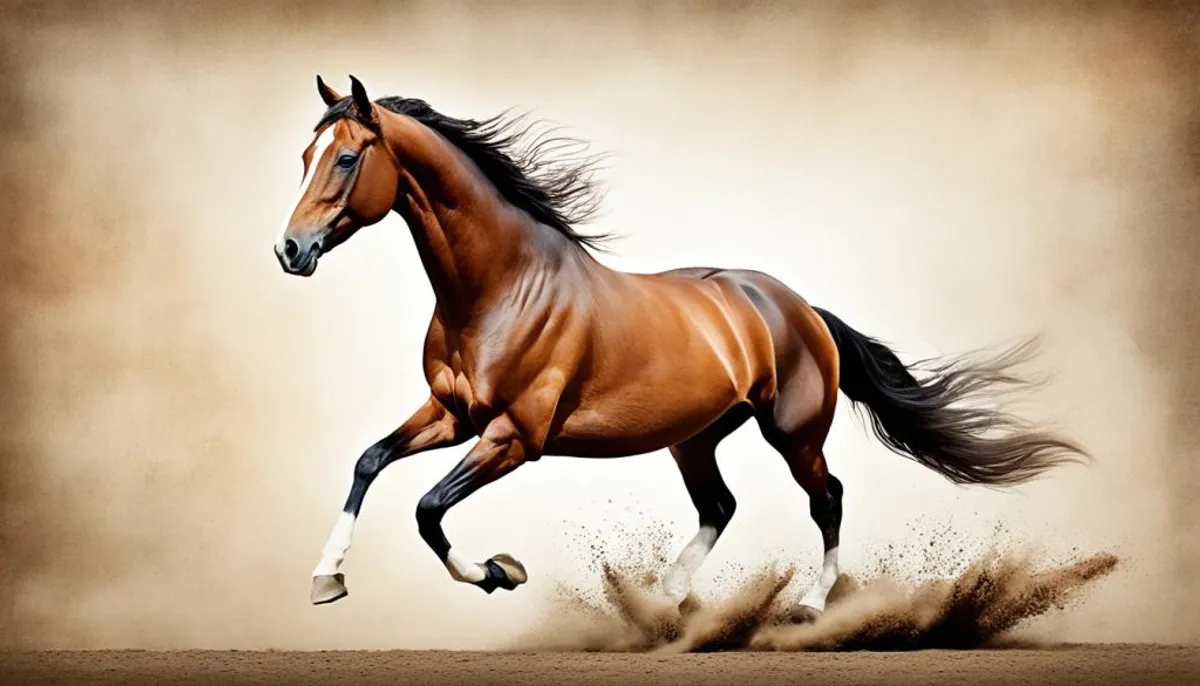
Horseback riding offers many disciplines, ranging from Olympic disciplines like dressage, show jumping, and eventing to more popular disciplines like hunter, endurance, polo, and horse racing. Each discipline highlights specific qualities of the horse and the rider, such as agility, power, endurance, or elegance.
Olympic Disciplines
The Olympic disciplines of horseback riding include dressage, show jumping, and eventing. These events require technical mastery and a bond between the horse and the rider.
- Dressage values the elegance and precision of the horse's movements.
- Show jumping tests the agility and power of the horse-rider pair.
- Eventing combines strength, endurance, and maneuverability.
Other Popular Disciplines
In addition to the Olympic disciplines, other equestrian disciplines are highly appreciated, such as hunter, endurance, polo, and horse racing.
| Discipline | Description |
|---|---|
| Hunter | Style and elegance event, where the horse-rider pair must perform a course of jumps with grace and harmony. |
| Endurance | Long-distance races, testing the stamina and endurance of the horse and rider. |
| Polo | Team equestrian sport, where two teams compete to score goals by hitting a ball with a mallet. |
| Horse racing | Speed competitions on track, pitting racehorses ridden by professional jockeys against each other. |
Mastering the vocabulary of equestrian disciplines is crucial for following and practicing horseback riding, whether as a spectator or rider.
Vocabulary of Tack and Equipment
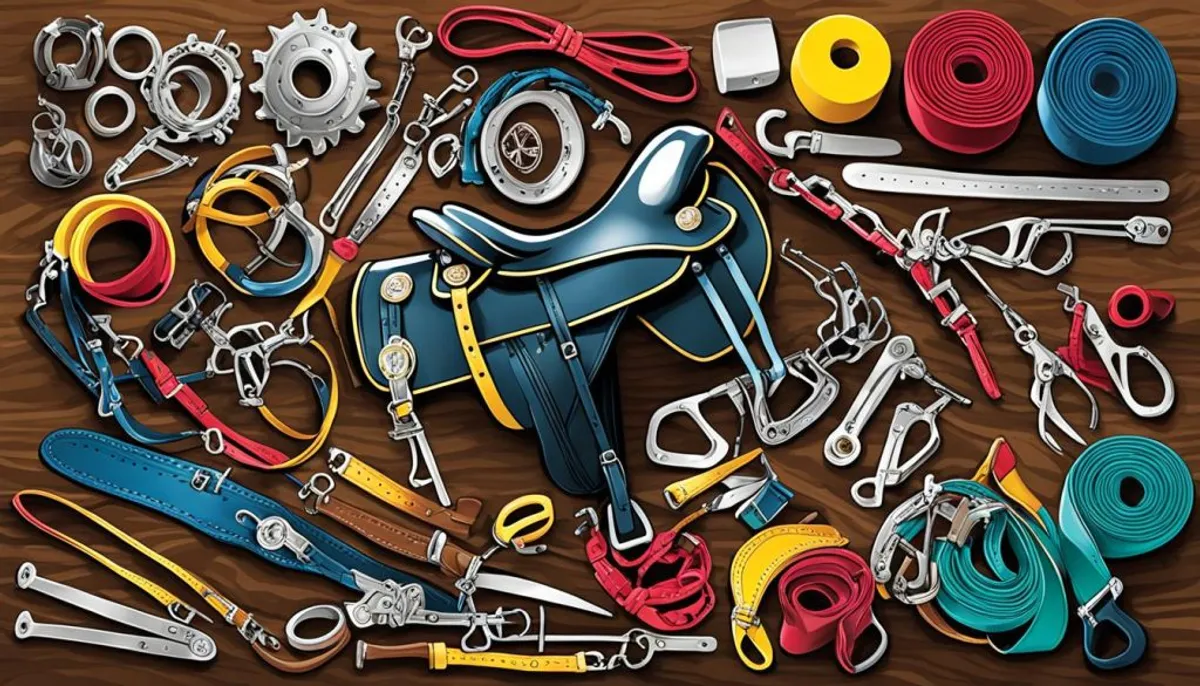
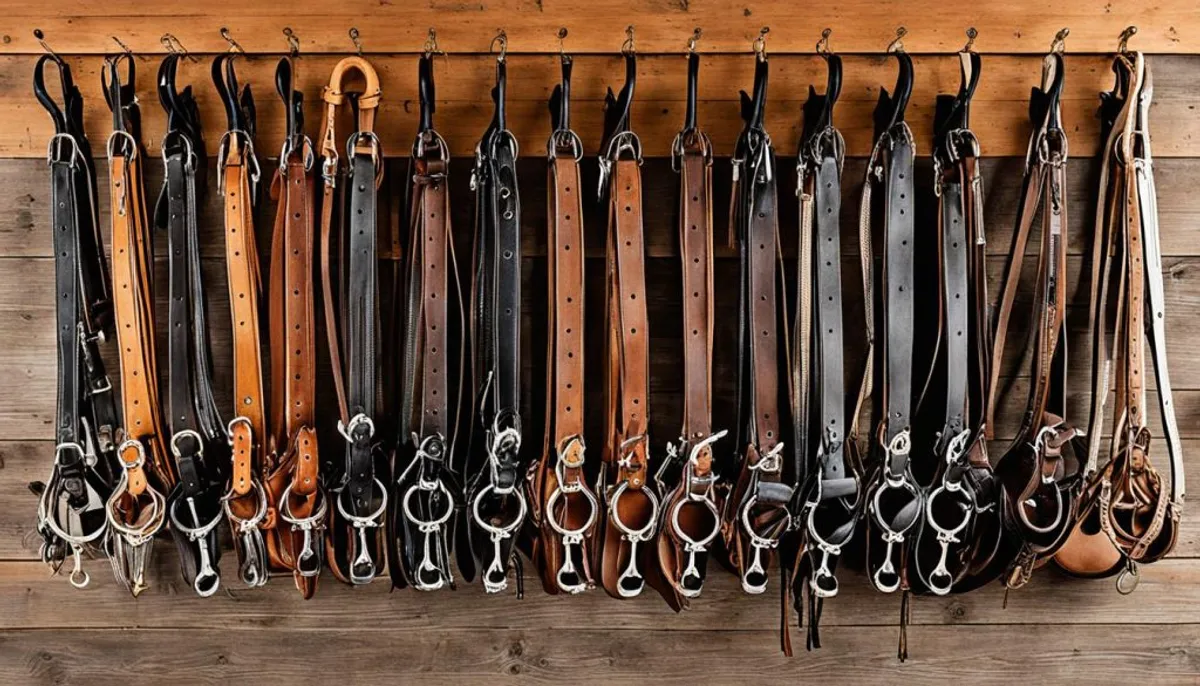
Horseback riding requires special equipment, from equestrian gear (tack for the mount) to the rider's accessories. Each piece of equipment has a name and a key role. It helps to control and comfort the horse, ensuring the rider's ease and safety. Understanding this vocabulary of tack and equestrian equipment is crucial.
The key elements of equestrian gear include:
- The bridle: which controls the horse's head
- The bit: which guides the horse
- The saddle: for the rider's comfort
- The whip: to convey aids
- The spurs: to activate the horse
Each part of the tack and equestrian equipment is crucial for horseback riding. It ensures the well-being of the horse and the safety of the rider.
| Equipment Element | Description | Function |
|---|---|---|
| Bridle | Set of leather or synthetic straps for the horse's head | Controls and guides the horse's head |
| Bit | Metal or plastic mouthpiece for the horse | Guides the horse |
| Saddle | Seat made of leather or synthetic material on the horse's back | Rider's comfort |
| Whip | Stiff stick to convey aids | Communication with the horse |
| Spurs | Small metal wheels on the heels of boots | Allows activation of the horse |
Mastering this vocabulary of tack and equestrian equipment is vital for a rider. It allows for optimal horseback riding practice.
Conclusion
The equestrian vocabulary is rich and complex. It reflects the diversity and depth of the horse world. Mastering this vocabulary is crucial for those who want to get involved in horseback riding.
It covers everything from the anatomy of the horse to equestrian disciplines, including equipment. This lexicon helps to better understand and communicate in the equestrian field. It is a key tool for progressing and exchanging with others.
Mastering this vocabulary allows for immersion in the world of horseback riding. It helps to know the breeds of horses, their anatomy, and the subtleties of the disciplines. This language shares the passion for horseback riding.
FAQ
What is equestrian vocabulary?
Equestrian vocabulary encompasses terms related to horseback riding and horses. It covers topics such as breeds, anatomy, gaits, and colors. It also includes disciplines and equipment.
What are the main breeds and types of horses?
Horses include breeds like thoroughbred and half-bred. There are also draft horses and light horses. Each type is suited for different uses, such as competition or work.
Why is it important to know the anatomy and conformation of the horse?
Understanding the anatomy and conformation of the horse is crucial. It helps to assess its capabilities. Good conformation ensures optimal performance.
What are the main colors and coats of horses?
Horses come in many colors and coats, such as black or pinto. Each coat has unique characteristics. The color can reveal the horse's origin and capabilities.
What are the different gaits of the horse?
The horse has several gaits, such as walk and gallop. Each gait has a specific rhythm and dynamics. Training aims to improve these gaits.
What are the main equestrian disciplines?
Horseback riding includes many disciplines, such as dressage and show jumping. Each discipline highlights specific qualities of the horse and rider.
What are the main elements of equestrian equipment?
Horseback riding requires special equipment, such as the bridle and saddle. Each piece has a role in controlling and comforting the horse and its rider.