
The equestrian vocabulary is rich and varied. It showcases the complexity and diversity of horseback riding. For both beginner and experienced riders, knowing the equestrian terms is crucial. This allows for effective communication, progress, and enjoyment of horseback riding.
Horseback riding is the 3rd national sport in France and the 1st for women. It is accessible to everyone, without the need for great physical fitness. However, the equestrian lexicon may seem difficult at first. This article will help you learn important equestrian keywords. You will thus master the equestrian terminology and fully enjoy horseback riding.
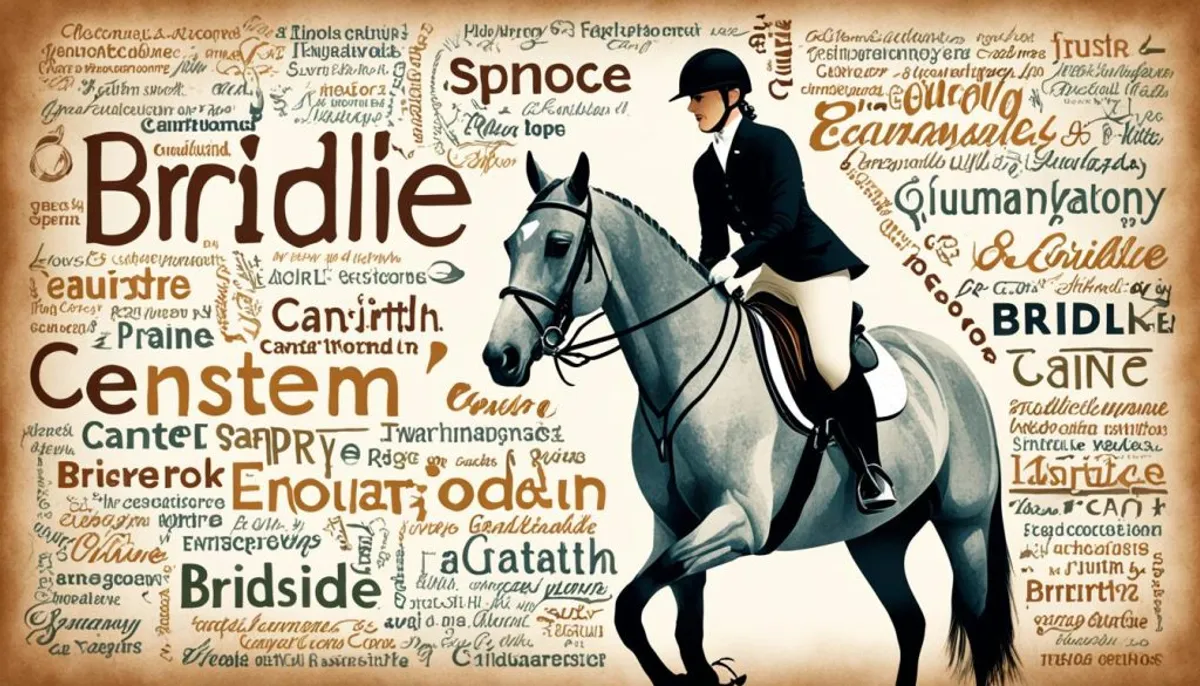
Equestrian Vocabulary: Keys to Understanding
- Discover the origins of the word “equestrian”
- Understand the different equestrian disciplines
- Know the levels of horseback riding
- Master the vocabulary of horse gaits
- Choose your discipline with the right equestrian language
- Get introduced to endurance and harmony with the horse
- Enrich your equine jargon for smooth communication
Horseback Riding: A Discipline Rich in Vocabulary
The word “equestrian” comes from the Latin “equitatio,” meaning “to ride a horse.” This discipline has changed over the centuries. It has a rich and varied vocabulary, reflecting its long history and diversity.
Origins of the Word “Equestrian”
The term “equestrian” pertains to the art of riding and guiding a horse. It has evolved from the Latin “equitatio” to our current French. This evolution shows the importance of horseback riding in history and culture.
Many words have been created to describe horseback riding, such as gaits, training, disciplines, and equipment. This vocabulary illustrates the complexity and diversity of horseback riding.
Knowing this vocabulary is crucial for riders, whether they are beginners or experienced. It helps them understand and communicate better in the world of horseback riding.
The Different Equestrian Disciplines
Horseback riding offers several exciting disciplines, each with its own challenges. We will explore three popular disciplines: show jumping, dressage, and eventing.
Show Jumping: Jumping Competition
Show jumping is the most well-known equestrian discipline. It involves clearing obstacles with precision and agility. Riders and horses must work together to win.
Dressage: The Foundation of Horseback Riding
Dressage is the foundation of horseback riding. It aims to create subtle communication between rider and horse. The duo learns to understand and synchronize with each other.
Eventing: Complete Equestrian Competition
Eventing combines dressage, show jumping, and cross-country. Riders and their horses must be versatile to meet the challenges. It tests their endurance, technique, and composure.
| Discipline | Description | Key Elements |
|---|---|---|
| Show Jumping | Jumping Competition | Clear a series of obstacles within a set time |
| Dressage | The foundation of horseback riding | Develop the bond and communication between rider and horse |
| Eventing | Complete Equestrian Competition | Tests of dressage, show jumping, and cross-country |
Equestrian Vocabulary: Understanding the Levels of Horseback Riding
Horseback riding enthusiasts who want to participate in competitions must know the levels of horseback riding and the gallops. These equestrian exams assess the skills of riders. They evaluate both their practical performance and theoretical knowledge.
The gallops include 7 tests. An examiner validates them on a track. They check if the riders can guide their horse well, on foot or mounted. They also test their knowledge of horse care.
- The gallop 1: Master the basics of horseback riding, such as holding the reins and stopping.
- Gallop 2: Demonstrate the ability to control the horse at different gaits.
- Gallop 3: Show ease and safety in movements while mounted.
- Gallop 4: Acquire skills in show jumping and dressage.
- Gallop 5: Deepen knowledge in horseback riding and horse care.
- Gallop 6: Master advanced horseback riding techniques.
- Gallop 7: Reach the highest level in the practice of horseback riding.
These levels of horseback riding help riders progress. They prepare for official equestrian exams. This opens the door to high-level competitions.
Places to Practice Horseback Riding
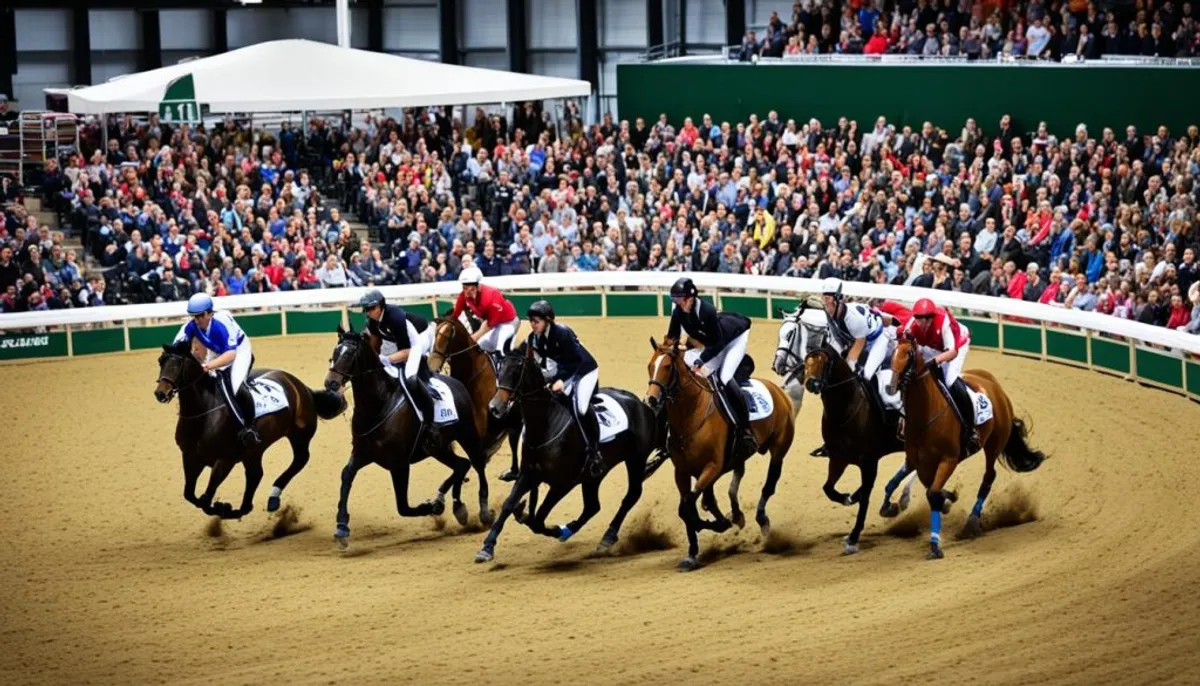
Horseback riding is mainly practiced in equestrian centers or indoor arenas. These places are perfect for learning and training. They are ideal for everyone, whether you are a beginner or an expert.
The Indoor Arena: The Ideal Covered Space
The indoor arena is a closed and covered space. It has a soft and loose surface. This allows for safe training in the best conditions.
The equestrian venues have markers on the ground and walls. This helps in performing dressage figures and other exercises.
The indoor arena has many advantages for horseback riding:
- Protection against the elements
- Surface suitable for technical work
- Absence of external distractions
- Presence of equipment and obstacles for progression
The indoor arena is an ideal place for learning and improving. It is where horseback riding enthusiasts can develop their skills. They can also strengthen their bond with their mount.
Getting Started with Gaits Using the Right Vocabulary
Horseback riding is full of gait vocabulary. For beginners, knowing the equestrian gaits is crucial. This helps in communicating well with the horse. The walk and the trot are essential to learn.
The Trot, a Cadenced Gait
The trot is very recognizable. It is a cadenced gait. The horse lifts its diagonals alternately. There are two types of trot:
- Seated trot (sitting trot), where the rider remains seated.
- Rising trot (rising trot), where the rider rises with the horse.
Learning the gait vocabulary of the trot is key to advancing in horseback riding. Instructors will help beginners master these two styles.
Choosing Your Discipline with the Right Vocabulary
Horseback riding offers many disciplines, each with its vocabulary. Trail and horseball are two interesting disciplines for riders seeking new challenges.
The Trail, Inspired by Western Riding
The trail comes from western riding. It means navigating obstacles. The rider and their horse must pass through gates, over bridges, and over ground poles.
This equestrian discipline combines the rider's technique and the horse's agility. It offers a unique experience.
Horseball, a Team Sport on Horseback
Horseball is a sport to know for horse riding enthusiasts. It is a horseback sport played by multiple riders. Each team consists of 6 players.
The game uses a ball with 6 leather straps. The horses must be small or medium-sized. A special equestrian vocabulary is necessary to understand the rules and techniques.
Venturing into Endurance Disciplines
Whether you are a beginner or seasoned, horseback riding has much to offer. Endurance riding and hunter are perfect for enthusiasts. They provide challenging experiences.
Endurance, for Experienced Riders
Endurance riding is for highly experienced riders. It is like a marathon outdoors, over distances of 20 to 160 km. One must be in good shape and well-prepared.
It is also essential to have a good understanding of horseback riding and a strong relationship with one's horse.
The Hunter, Where Riding Rhymes with Harmony
The hunter is an advanced horseback riding discipline. It involves clearing obstacles with elegance. The focus is on the rider's position and the quality of dressage.
This discipline showcases the beauty of horseback riding. It is technically demanding but offers perfect harmony.
Whether you are drawn to endurance riding or the hunter, these disciplines offer challenges. They allow experienced riders to push their limits. It is an exceptional equestrian experience.
Conclusion
Horseback riding is rich in vocabulary, reflecting its history and diversity. This guide covered the origin of the term “equestrian” to equestrian disciplines. It also addressed gaits and places of practice.
Whether you are a beginner or an experienced rider, knowing this vocabulary is essential. It will help you progress and shine in the saddle. You will be better able to follow lessons and understand your instructors' instructions.
Continue to train and practice regularly. Do not hesitate to deepen your knowledge. Mastering equestrian vocabulary will open new perspectives for you. You will fully enjoy your equestrian experience, regardless of the discipline you choose.
FAQ
What is the origin of the word “equestrian”?
The word “equestrian” comes from the Latin “equitatio,” meaning “to ride a horse.” This discipline has evolved over the centuries. It has a rich and varied vocabulary, reflecting its history and diversity.
What are the main equestrian disciplines?
The major equestrian disciplines are show jumping, dressage, and eventing. Show jumping involves jumping obstacles. Dressage improves the relationship between rider and horse. Eventing combines dressage, cross-country, and show jumping.
What are the “gallops” in horseback riding?
The gallops assess the skills of riders, both practical and theoretical. There are 7 gallops. The test is conducted in front of an examiner on a track.
What are the places to practice horseback riding?
Horseback riding is mainly practiced at equestrian centers, in indoor arenas, and in the indoor arena. The indoor arena is covered with a soft surface. The indoor arena has markers for dressage.
What are the main gaits in horseback riding?
The main gaits are the walk and the trot. The trot is faster and helps develop the horse's cadence. The rider also learns the sitting trot and the rising trot.
What are other equestrian disciplines to know?
It is essential to know about trail and horseball, two horseback sports. Endurance and hunter are also more advanced disciplines.