
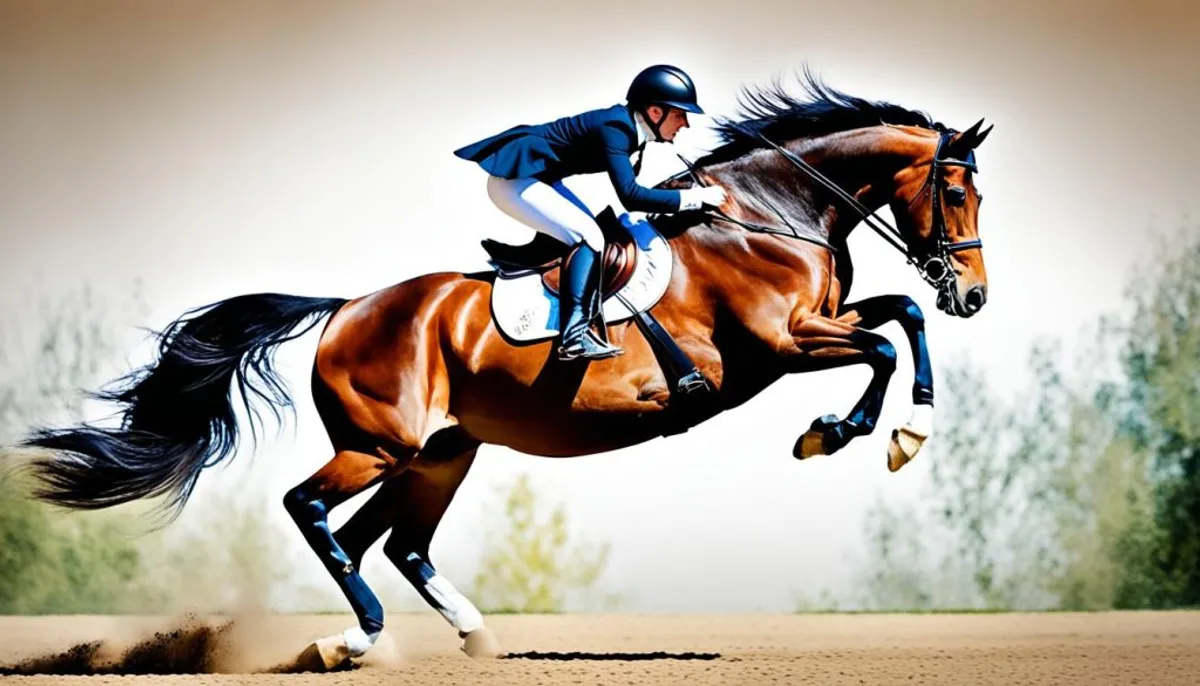
Equestrianism is an exciting activity that combines riding a horse and sport. Practiced for leisure, competition, or therapy, it captivates its followers. It creates a strong bond between the rider and their horse. At the same time, it enhances our abilities while riding.
Main ideas to remember
- Equestrianism is an activity that can be practiced both as a sport and as an equestrian art
- It can be practiced in various contexts, such as leisure, competition, or therapy
- Equestrianism requires learning riding techniques and communication with the horse
- Practicing equestrianism allows for the development of a special bond with the animal
- Equestrianism involves the use of specific equipment, such as the saddle and stirrups
What is equestrianism?
Equestrianism goes beyond simply riding a horse. It is an art, a sport. It can be practiced for various reasons. For instance, for pleasure, for work, or even for competition.
Understanding equestrianism requires knowledge of its many aspects. This helps to see the depth of this ancient practice.
Definition of equestrianism
Equestrianism is like an art. It is the way one rides a horse according to rules. The word comes from the Latin equitare, which means “to ride a horse.”
Thus, equestrianism means not only riding but also the rules that surround it.
Natural aids in equestrianism
The natural aids help riders communicate with their horse. They use their legs to ask the horse to move forward or change pace. Their weight changes the direction of the horse.
The hands hold the reins to stop. And the gaze guides these actions. It’s a complex mix to direct the horse well.
Diversity of equestrian practitioners
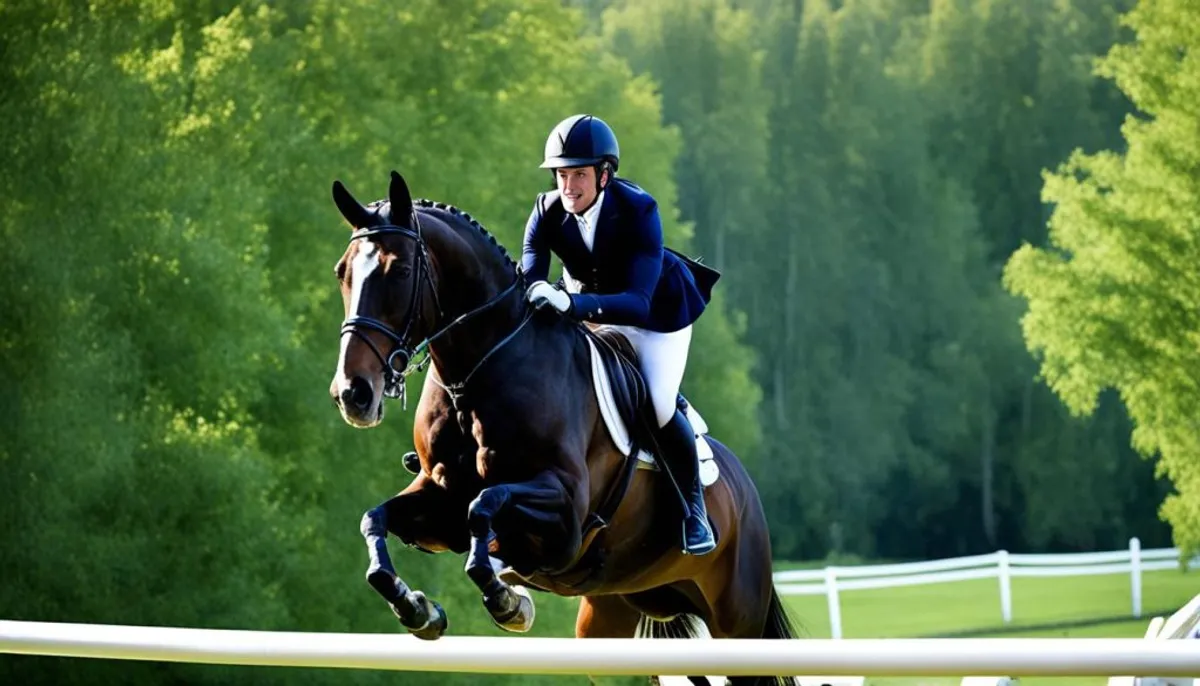
Equestrianism blends sport and art, captivating millions of people. In France, over 2.7 million people aged 15 to 70 ride horses. This represents about 5.8% of the population.
Equestrian practitioners come from all walks of life. Children can start very early, as young as 4 years old. Additionally, seniors, like Queen Elizabeth II, continue to ride. They testify to the longevity of this passion.
Equestrianism offers many equestrian disciplines, such as dressage, show jumping, or horseball. Each discipline has its own challenges. Thus, there is something for everyone.
| Age Group | Percentage of Practitioners |
|---|---|
| 15-24 years | 21% |
| 25-34 years | 16% |
| 35-49 years | 30% |
| 50-69 years | 33% |
Whether you are young or older, a beginner or a professional, equestrianism promises you a fascinating world. It offers varied and enriching equestrian ages and disciplines.
Equestrianism definition: Sports preparation and training
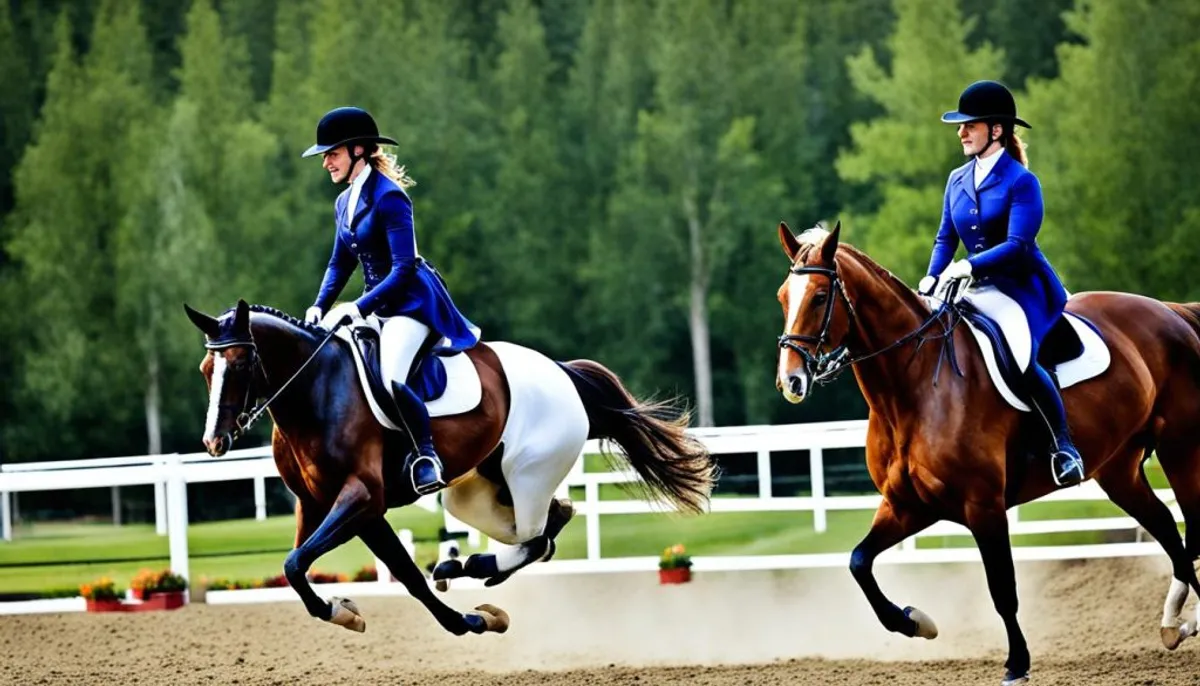
Practicing equestrianism involves being fit. It is a challenging sport that requires balance and endurance. Before starting, one must prepare physically. This includes strengthening the body, stretching, and sometimes losing weight. Patrick Teisserenc, head of the riding school, recommends two hours of sport per week.
Rider preparation
The hands of the rider show their level of skill. Being fit improves our control of the hands. It also helps to better use the aids during riding.
Horse training
The horse must get used to carrying a rider and responding to commands. For this, certain methods are used. Unfortunately, some use force. Research by Deborah Goodwin shows that it was once believed that one had to dominate the horse to train it.
But today, gentler methods are preferred. They are based on trust and communication. These methods are becoming increasingly popular in the world of competition and leisure with horses.
| Rider Preparation | Horse Training |
|---|---|
| Muscle strengthening | Acceptance of human presence |
| Stretching | Learning basic commands |
| Weight loss if necessary | Gentle methods based on trust |
Equestrianism: art or sport?
Equestrianism is a blend of art and sport. Originating from combat, it has become a unique form of creativity. This evolution has taken place over centuries.
Until the 19th century, equestrianism was seen as a way of fighting and a form of spectacle. With the advent of the circus, equestrian art found its space. Meanwhile, the military maintained a more utilitarian approach to equestrianism.
By closely examining equestrianism, one can see the technicality behind the movements of riders, especially at the trot. The way a rider holds themselves adds an artistic or sporting dimension to the activity. Dressage symbolizes this balance well, combining competition and technical finesse.
Thus, equestrianism remains between athletics and spectacle. This duality is what makes this sport so rich and captivating. It offers a unique experience, neither entirely a sport nor entirely an art.
Whether you consider equestrianism as a sport or an art, it remains an exciting adventure. It will provide you with enjoyable and beautiful moments, blending physical activity and aesthetics.
Conclusion
Equestrianism combines art and sport very well. On one side, it is the expression of lightness and elegance. On the sporting side, the discipline requires strength and endurance. This complex harmony is what makes it beautiful.
This magnificent sport involves close collaboration between the rider and the horse. Whether for winning in competition or just for a special bond, all help to maintain our heritage.
Equestrianism continues to evolve. However, its essence remains the same. It remains a unique link between man and animal. That is why it will continue to captivate future generations.
FAQ
What is equestrianism?
Equestrianism is learning to direct a horse, often a horse. People engage in equestrianism for pleasure, sport, or work. The person riding the animal is called a rider.
What are the natural aids used in equestrianism?
In equestrianism, legs are used to make the horse move forward. One asks the horse to go faster or change pace. The body weight helps the horse to turn. The hands direct and stop the horse.
Looking where one is going helps to guide the horse better.
Who practices equestrianism?
Millions of people practice equestrianism worldwide. In France, over 2.7 million people ride horses each year. One can start equestrianism very young and continue for a long time, even after 60 years.
How to prepare for equestrianism?
Before riding a horse, one must prepare physically. It is a sport that demands a lot. Strengthening muscles, stretching, and losing weight if necessary is important. Patrick Teisserenc from the Cadre noir recommends preparing for at least two hours per week.
How to prepare the horse for equestrianism?
To prepare a horse for equestrianism, gentle methods are used. The goal is to teach it not to be afraid. Thus, it will accept having someone on its back and following simple commands.
Is equestrianism an art or a sport?
Equestrianism can be seen as a sport or as an art. Some seek to win in competition, while others aim to express themselves artistically. Dressage, for example, combines competition and mastery of a skill.